Last Updated on November 27, 2025 by Bilal Hasdemir
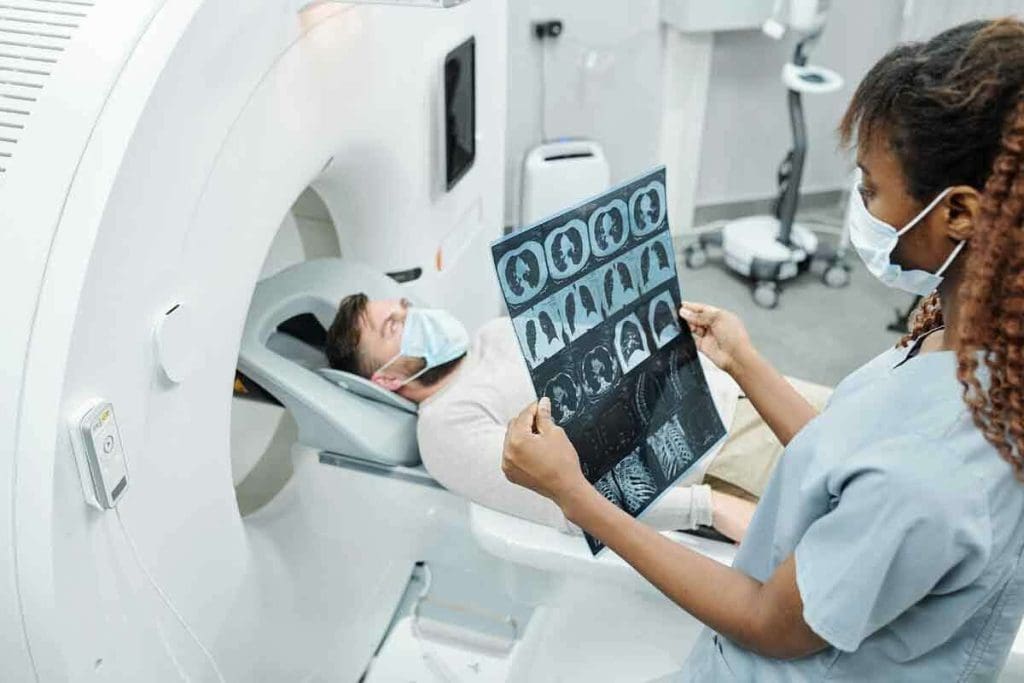
Choosing between a PET scan, MRI, or CT scan can be confusing. But picking the right test is key for accurate diagnosis and treatment. At Liv Hospital, we help you understand these options with care and focus.
PET scan vs MRI vs CT are advanced tools for diagnosis and treatment. We’ll explain what each technology offers and the 7 key differences between them.
Key Takeaways
- Understand the unique roles of PET scans, MRIs, and CT scans in medical diagnosis.
- Learn about the 7 key differences between these imaging technologies.
- Discover when to use each type of scan for accurate diagnosis and treatment.
- Gain insights into the strengths and limitations of each imaging technique.
- Make informed decisions about your diagnostic care with expert guidance.
Understanding Medical Imaging Technologies
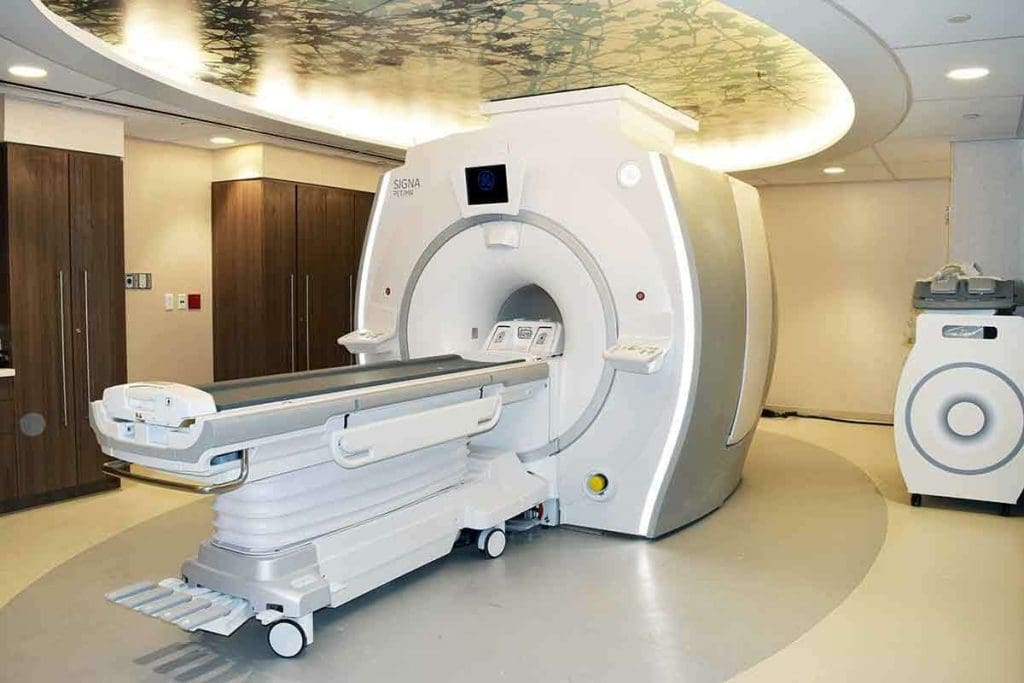
Diagnostic imaging has grown a lot over time. It’s now a key tool for finding and treating diseases. Doctors use it to spot problems without needing surgery.
The Evolution of Diagnostic Imaging
The history of medical imaging is filled with new discoveries. Wilhelm Conrad Röntgen found X-rays in 1895. Later, MRI, CT, and PET scans were developed. Each new technology has helped us see inside the body better.
Technology kept getting better, so did imaging. CT scans came out in the 1970s, showing cross-sections of the body. MRI scans in the 1980s gave us detailed views of soft tissues. PET scans later showed how the body’s cells work.
The Role of Advanced Imaging in Modern Medicine
Advanced imaging is key in today’s medicine. It helps doctors find problems early and accurately. For example, knowing the difference between CT, MRI, and PET scans is important for choosing the right test.
These tools are vital in many medical fields. They help doctors see inside the body. This lets them plan better treatments and check how well they work.
In short, medical imaging has changed how we diagnose diseases. As we keep improving these technologies, we’ll get even better at finding and treating health issues.
What is a CT Scan?
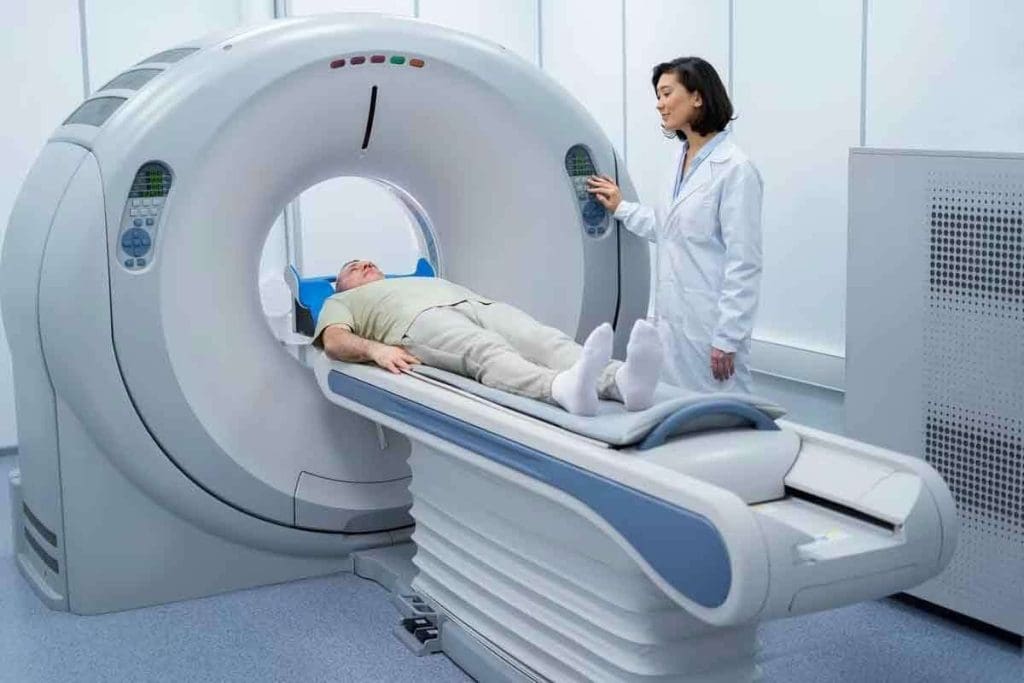
Computed Tomography (CT) scans are a key tool in medicine today. They give detailed images of the body’s inside parts. We use them to see inside, find problems, and plan treatments.
How CT Scanning Works
CT scanning uses X-rays to make detailed images of the body’s inside. A CT scanner, shaped like a doughnut, moves around the patient. It sends out X-rays.
These X-rays hit different tissues at different rates. This info helps make detailed images. The scanner has detectors that catch the X-rays that go through the body.
These detectors send the info to computers. The computers make images from this data. We can see these images one by one or as a 3D picture.
Types of CT Scans
There are many types of CT scans, each for different uses:
- Standard CT Scan: For general imaging, like checking injuries or finding tumors.
- High-Resolution CT Scan: Shows small details, like in the lungs or inner ear.
- Spiral CT Scan: Scans continuously as the patient moves, making scans faster and clearer.
- CT Angiography: Uses dye to see blood vessels and find vascular problems.
Radiation Exposure Considerations
CT scans use X-rays, which means they involve radiation. While they are very useful, we must think about the radiation. This is more important for kids and when many scans are needed.
Here are some key points about radiation from CT scans:
- The radiation from a CT scan depends on the scan type and body part.
- CT scans usually give more radiation than regular X-rays.
- New CT scanners aim to use less radiation while keeping image quality high.
We keep improving CT technology to lower radiation and keep image quality high. We’re working on new scanner designs and better protocols. This helps patients get the least radiation needed for good images.
What is an MRI Scan?
MRI scans are special because they show detailed images without using harmful radiation. They help doctors see inside the body clearly. This makes MRI scans very important in today’s medicine.
The Science Behind Magnetic Resonance Imaging
MRI scans use a strong magnetic field and radio waves to create images. First, the magnetic field aligns the body’s hydrogen atoms. Then, radio waves disturb these atoms, causing them to send signals.
These signals are caught by the MRI machine. It uses them to make detailed pictures of the body’s inside.
The science of MRI is based on nuclear magnetic resonance. By changing the magnetic field and radio waves, MRI machines can tell different tissues apart. This gives doctors important information for making diagnoses.
Common Types of MRI Scans
There are many kinds of MRI scans, each for different uses. Functional MRI (fMRI) shows how the brain works by looking at blood flow changes. Diffusion MRI is great for checking the brain and spinal cord for problems like strokes or tumors.
Other types include Magnetic Resonance Angiography (MRA) for blood vessels and Magnetic Resonance Venography (MRV) for veins. Each MRI scan type offers unique views into the body’s structures and how they work.
Advantages of Radiation-Free Imaging
MRI scans are safe because they don’t use harmful radiation. This is good for patients who need many scans or are pregnant. MRI scans are also great for seeing soft tissues clearly.
Doctors often choose MRI scans for soft tissue imaging. This is true for patients with neurological or musculoskeletal issues. MRI’s lack of radiation and detailed images make it a top choice, even when compared to MRI vs PET vs CT for diagnosis.
What is a PET Scan?
PET scans give us a peek into how our bodies work. They help find and track diseases early. Unlike other scans, PET scans show how our body’s tissues and organs function, not just their shape.
How Radioactive Tracers Detect Metabolic Activity
PET scans use special tracers to see how active our body’s cells are. These tracers are attached to glucose, which cancer cells love. When they collide, they create gamma rays that the scanner picks up.
This helps us spot where our body is working too hard. The most used tracer is Fluorodeoxyglucose (FDG). It’s great for finding and tracking cancer.
The Process of PET Scanning
First, a tracer is injected into the patient. Then, the patient waits for it to spread through their body. Next, they lie down on a table for the scanner to capture the gamma rays.
- The patient must stay very quiet to get clear images.
- The whole scan takes about 30 to 60 minutes.
- Often, PET scans are paired with other scans for a full diagnosis.
Hybrid Technologies: PET/CT and PET/MRI
Hybrid scans like PET/CT and PET/MRI mix PET’s metabolic info with CT or MRI’s detailed images. This combo makes diagnoses more accurate and complete.
PET/CT scans are great for cancer staging. They show both metabolic activity and exact locations. PET/MRI is better for soft tissue and some brain issues.
These new technologies are a big step forward in medical imaging. They help doctors get a clearer picture of what’s going on in our bodies.
PET Scan vs MRI vs CT: 7 Key Differences
Understanding the differences between PET scans, MRIs, and CT scans is key to making smart choices about medical imaging. Each type has its own strengths for different health issues.
Difference #1: Imaging Mechanism and Technology
PET scans, MRIs, and CT scans work in different ways. PET scans use special tracers to see how cells are working. MRIs use magnetic fields and radio waves to show soft tissues clearly. CT scans use X-rays to make detailed images of the body.
Key differences in imaging mechanisms:
- PET scans: Metabolic activity detection using radioactive tracers
- MRIs: Detailed soft tissue imaging using magnetic fields and radio waves
- CT scans: Cross-sectional imaging using X-rays
Difference #2: Radiation Exposure
PET scans and CT scans both use radiation, but MRIs do not. This is important to think about, mainly for people who might need to have scans done again.
Radiation exposure comparison:
- PET scans: Moderate radiation exposure due to radioactive tracers
- CT scans: Variable radiation exposure depending on the scan protocol
- MRIs: No radiation exposure
Difference #3: Tissue Visualization Capabilities
MRIs are great at showing soft tissues, while CT scans are better for bones and calcifications. PET scans help spot metabolic changes, which is key in cancer care.
Tissue visualization capabilities:
- MRIs: Excellent soft tissue visualization
- CT scans: Good bone structure visualization and calcification detection
- PET scans: Metabolic activity detection
Difference #4: Scanning Duration and Patient Experience
Scanning times and what patients feel during scans differ too. MRIs take longer and might make some feel claustrophobic. CT scans are quicker, but PET scans need time to prepare the tracer.
Scanning duration and patient experience comparison:
- MRIs: Longer scanning times, possible claustrophobia
- CT scans: Faster scanning times
- PET scans: Preparation time needed for the tracer
Clinical Applications: When to Use CT Scans
CT scans are key in diagnosing and treating patients. They offer speed and precision. This makes them essential in many medical situations.
Trauma and Emergency Situations
In emergencies, like trauma cases, CT scans are often the first choice. They quickly show injuries like internal bleeding, fractures, and organ damage. This speed and accuracy help doctors make quick decisions.
Key benefits of CT scans in trauma cases include:
- Rapid imaging
- High accuracy in detecting injuries
- Ability to image complex areas like the spine and pelvis
Bone and Joint Disorders
CT scans are also great for diagnosing bone and joint issues. They show bone structures clearly, helping spot problems like osteoporosis, fractures, and joint wear. This clarity helps plan surgeries and track bone diseases.
| Condition | CT Scan Benefits |
| Osteoporosis | Assesses bone density and structure |
| Fractures | Provides detailed images of fracture sites |
| Joint Degeneration | Helps in evaluating joint space and bone spurs |
Lung and Chest Imaging
CT scans are also great for lung and chest imaging. They help spot issues like pneumonia, lung nodules, and blood clots in the lungs. Their high-resolution images reveal problems that X-rays might miss.
The advantages of using CT scans for lung and chest conditions include:
- Early detection of lung nodules and cancers
- Detailed assessment of lung tissue and airways
- Guidance for biopsies and other interventions
Clinical Applications: When to Use MRI Scans
MRI scans are key in modern medicine, helping us diagnose complex conditions. They give us detailed images of the body’s inside parts. This helps in diagnosing and treating many medical issues.
Neurological Disorders
MRI scans are great for finding neurological problems. They show the brain and spinal cord in high detail.
“MRI has changed how we diagnose neurological issues by showing us more than ever before,”
notes a top neuroradiologist. We use MRI to spot things like multiple sclerosis, stroke, and brain tumors. This helps us start treatment quickly and right.
Musculoskeletal Conditions
MRI scans are also key for muscle, tendon, and ligament problems. They help us see injuries and long-term issues like osteoarthritis. MRI’s detailed images help us understand how bad an injury is or how a disease is growing. This guides our treatment choices.
Soft Tissue Abnormalities
MRI can see soft tissues like tumors, cysts, and other growths. We count on MRI scans for a clear diagnosis. This is vital for making good treatment plans.
When we look at CT scans, PET scans, and MRI, MRI stands out. It’s great for soft tissue imaging without using radiation. This makes MRI or PET a good choice for some diagnoses. But MRI’s non-invasive nature and lack of radiation often make it the best option for many conditions.
Clinical Applications: When to Use PET Scans
PET scans are key in modern medicine. They give us a deep look into how the body works. We use them to find and treat many health issues, thanks to their ability to show metabolic activity.
Cancer Detection and Staging
In cancer care, PET scans are very important. They show how active tumors are, helping us understand how serious the cancer is. This information helps us decide on the best treatment.
Using PET scans in cancer care has many benefits. These include:
- Accurate staging of cancer, which informs treatment decisions
- Monitoring response to treatment, allowing for adjustments as needed
- Detecting cancer recurrence early, improving outcomes
Neurological Disorders
PET scans are also great for checking on the brain. They help find problems like Alzheimer’s, Parkinson’s, and epilepsy by looking at brain activity. The good things about using PET scans for brain issues are:
- Early detection of neurodegenerative diseases, enabling timely intervention
- Differential diagnosis of dementia, helping to identify the underlying cause
- Pre-surgical evaluation for epilepsy, guiding surgical planning
Cardiovascular Disease Assessment
In heart health, PET scans are used to check on heart function. They spot areas of the heart that don’t get enough blood, which is key for heart disease. The benefits of PET scans for heart health are:
- Evaluating the viability of heart tissue, informing revascularization decisions
- Assessing myocardial perfusion, helping to diagnose coronary artery disease
- Monitoring the effectiveness of treatments, such as angioplasty or bypass surgery
PET scans help doctors make better choices for patient care. As medical imaging gets better, PET scans will likely play an even bigger role in finding and treating diseases.
Comparing Hybrid Imaging: PET/CT vs PET/MRI
PET/CT and PET/MRI are advanced imaging methods that give detailed insights into health. They combine PET scans’ functional data with CT or MRI’s anatomical details.
Technological Differences
PET/CT and PET/MRI differ mainly in their secondary imaging. PET/CT uses X-rays for detailed anatomy. PET/MRI, on the other hand, uses magnetic fields and radio waves for soft tissue images.
PET/CT is faster and more common than PET/MRI. It’s great for quick scans, like for trauma or claustrophobia. PET/MRI, with its better soft tissue contrast, is best for complex areas like the brain and pelvis.
Diagnostic Accuracy by Body Region
PET/CT and PET/MRI have different strengths by body region. PET/CT is often chosen for the chest and abdomen because it’s fast for moving organs. PET/MRI shines in the brain and muscles with its clear soft tissue images.
- PET/CT is key for cancer staging, like in lymphomas and lung cancer.
- PET/MRI is better for soft tissue tumors and complex brain issues.
Cost-Benefit Analysis
Costs are a big factor in choosing between PET/CT and PET/MRI. PET/MRI is pricier because MRI tech is more expensive. But, its better accuracy might save money by avoiding more tests.
In summary, picking between PET/CT and PET/MRI depends on the case, patient, and area being scanned. Knowing the tech, accuracy, and costs helps doctors choose the best for patients.
How Doctors Choose Between PET, MRI, and CT Scans
Doctors pick PET, MRI, or CT scans based on many factors. They look at what’s best for the patient and the disease. This helps them choose the right imaging method.
Patient-Specific Factors
Each patient’s needs are different. Some can’t have MRI scans because of metal implants or claustrophobia. But, PET scans are great for cancer or neurological issues because they show metabolic activity.
They think about:
- Medical history and current condition
- Presence of metal implants or other contraindications
- Patient comfort and anxiety levels
- Age and radiation exposure risks
Disease-Specific Considerations
The disease or condition matters a lot. MRI is best for soft tissue issues like ligament tears. It gives clear images of soft tissues.
They consider:
| Disease/Condition | Preferred Imaging Modality | Reason |
| Cancer detection and staging | PET/CT | Provides both metabolic and anatomical information |
| Soft tissue abnormalities | MRI | High resolution for soft tissues |
| Trauma and emergency situations | CT | Quick and effective for assessing injuries |
Practical Considerations: Availability, Cost, and Time
Availability, cost, and time also matter. CT scans are fast and easy to find, making them good for emergencies.
“The choice of imaging modality is not just about the technology; it’s about the patient, the disease, and the context in which we are providing care.”
Conclusion: The Future of Medical Imaging
Exploring PET scans, MRI, and CT scans shows each has its own strengths. The right choice depends on the clinical question, patient condition, and what’s needed for diagnosis.
Studies show hybrid imaging like PET/MRI is more accurate than PET/CT. It has a 97.3% accuracy, while PET/CT has 83.9%.
Medical imaging is getting better, thanks to new tech. We’ll see better diagnostics and care for patients. AI and machine learning will make MRI, CT, and PET scans even better.
The future of medical imaging looks bright. Research aims to improve image quality, cut down on radiation, and find new uses. As we keep innovating, PET scan, MRI, and CT scan tech will shape how we diagnose diseases.
FAQ
What is the main difference between a PET scan, MRI, and CT scan?
PET scans use a radioactive tracer to see how cells work. MRI shows soft tissues with a magnetic field and radio waves. CT scans use X-rays for detailed images of bones and organs.
Which imaging modality is more accurate for cancer detection: PET scan or CT scan?
PET scans are better at finding cancer early because they spot metabolic changes. But, PET/CT scans are often the most accurate. They mix PET’s metabolic info with CT’s detailed images.
Is MRI or CT scan better for diagnosing musculoskeletal conditions?
MRI is best for soft tissue like ligaments and tendons. CT scans are better for bone and joint issues.
Do PET scans expose patients to more radiation than CT scans?
PET scans use a radioactive tracer, which means they emit radiation. Both PET and CT scans use radiation, but PET/CT combines them. The total dose is often worth it for better diagnosis.
Can I undergo an MRI if I have a pacemaker or other metal implants?
It depends on the type of implant. Newer pacemakers might be safe for MRI, but older ones might not be. Always tell your doctor about any implants before an MRI.
How long do PET, MRI, and CT scans typically take?
Times vary. CT scans are fast, usually just a few minutes. MRI scans can take 15 to 90 minutes. PET scans are about 30 to 60 minutes, longer with CT or MRI.
Are there any specific preparations required for PET, MRI, or CT scans?
Yes, each scan has its own prep. PET scans might need fasting or avoiding certain foods. MRI scans ask you to remove metal and might use contrast. CT scans might use contrast and ask you to drink a liquid or avoid eating.
What are the advantages of hybrid imaging technologies like PET/CT and PET/MRI?
Hybrid imaging combines strengths for better diagnosis. PET/CT gives metabolic and anatomical info. PET/MRI adds soft tissue details. These combos help doctors make better treatment plans.
How do doctors decide which imaging modality to use for a patient?
Doctors choose based on the patient’s condition and what they need to diagnose. They consider what’s best for accurate diagnosis and treatment planning.
References
- Delbeke, D., & Martin, E. C. (2018). Positron emission tomography/computed tomography in the evaluation of cancer patients. Seminars in Nuclear Medicine, 48(6), 480-495. https://www.ncbi.nlm.nih.gov/pmc/articles/PMC6524530/