Last Updated on November 26, 2025 by Bilal Hasdemir
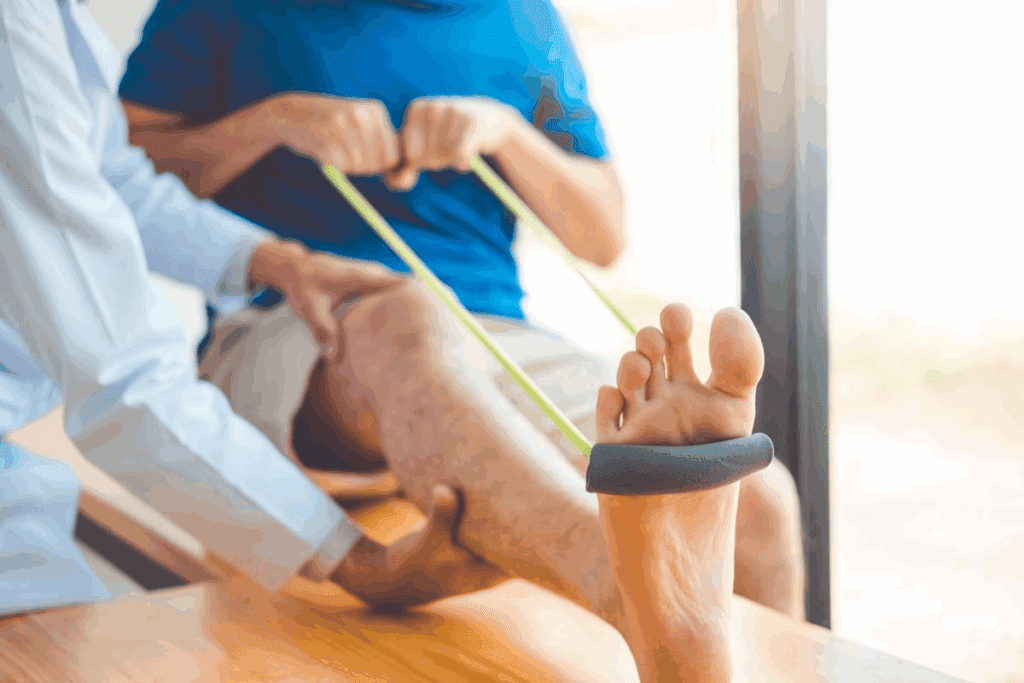
Recovering from knee surgery needs a good post surgery workout plan. This helps you get back your strength and mobility. Certain exercises can make your recovery faster.Find the best post surgery workout for faster knee recovery and improved joint flexibility.
At Liv Hospital, they stress the value of personalized post-operative exercises for quicker knee healing. Doing the right post surgical exercises can make your recovery smoother. It also improves your life quality.
Key Takeaways
- Personalized exercise programs enhance knee recovery.
- Specific exercises improve mobility and strength.
- Expert-led protocols ensure safe and effective progress.
- Patient-centered care is key for successful rehabilitation.
- Pre- and post-surgery exercises are vital for a smooth recovery.
The Critical Role of Rehabilitation After Knee Surgery

Rehabilitation after knee surgery is key to a successful recovery. A good rehab program helps patients regain strength and mobility. This leads to a faster and more effective recovery.
Starting exercises early is vital for a quick recovery. Studies show early movement after surgery reduces pain and improves outcomes. Gentle exercises boost blood flow, reduce stiffness, and strengthen knee muscles.
How Early Exercise Impacts Recovery Outcomes
Early exercise after knee surgery is beneficial. It helps patients:
- Reduce pain and inflammation
- Improve range of motion
- Strengthen the muscles around the knee
- Enhance overall functional ability
A study in a leading orthopedic journal found early exercise benefits. Patients who started exercising within a week had better outcomes. A tailored exercise program that matches the patient’s recovery stage is essential.
What Research Shows About Post-Surgical Movement
Research on post-surgical movement is insightful. A review of studies on total knee replacement patients showed early mobilization benefits. It leads to shorter hospital stays, fewer complications, and higher patient satisfaction.
| Study | Findings | Outcome |
| Early Mobilization After Knee Surgery | Reduced pain and improved range of motion | Better recovery outcomes |
| Post-Operative Exercises for Total Knee Replacement | Reduced hospital stays and complications | Improved patient satisfaction |
| Impact of Early Exercise on Knee Function | Improved muscle strength and function | Enhanced overall recovery |
The table above summarizes key findings from research on post-surgical movement. It highlights the benefits of early exercise and mobilization.
Essential Safety Guidelines for Your Post Surgery Workout
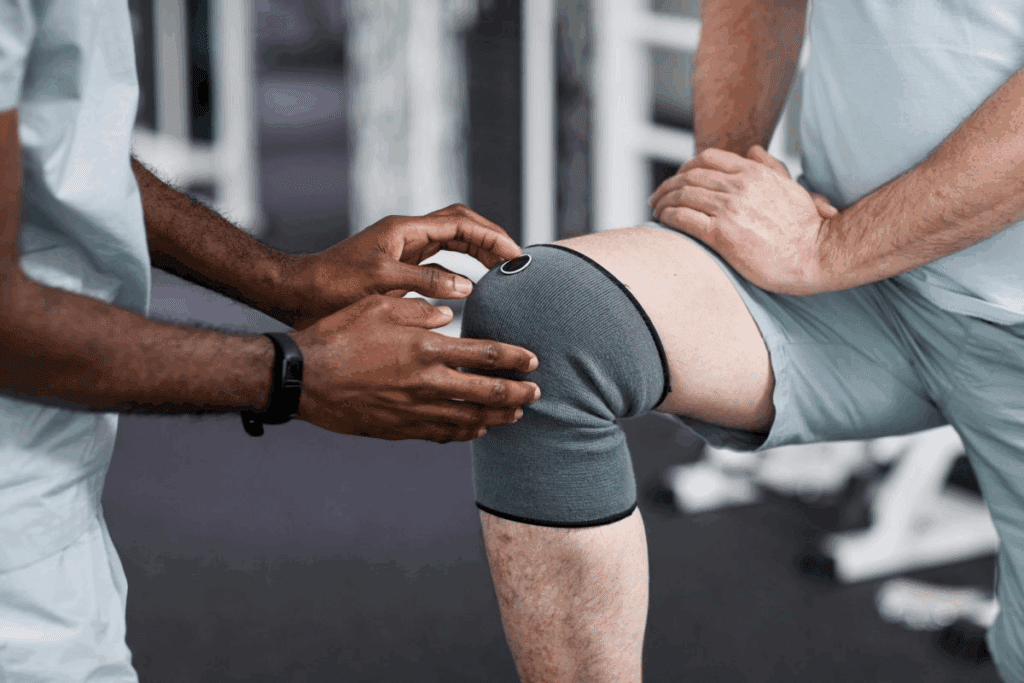
Knowing the safety rules for post-surgery workouts is key to a good knee recovery. Experts say to follow safe, tailored exercise plans for a smooth rehab.
When to Begin Exercising After Knee Surgery
Always listen to your surgeon or physical therapist about starting post op knee exercises. You can start with gentle exercises soon after surgery. But, wait for your healthcare provider’s okay first. Starting early can help avoid stiffness and aid in healing.
Warning Signs to Stop Your Workout
It’s important to know your body’s signals during knee exercises after surgery. If you feel more pain, swelling, or instability, stop right away. Talking to your healthcare provider about these signs can help adjust your workout.
Required Equipment for Safe Recovery
Having the right gear makes your post surgery exercise safer and more effective. You might need a comfy chair, resistance bands, or a walker. Make sure your workout area is clear and safe from tripping hazards.
Phase 1: Initial Recovery Exercises (Days 1-7)
After knee surgery, the first week is key for a good recovery. You need to do exercises that help blood flow and work the muscles around your knee.
Exercise 1: Ankle Pumps for Improved Circulation
Ankle pumps boost blood flow, which is important for healing. To do them, lie on your back with legs straight. Pump your ankles up and down for 10-15 reps. Do this 2-3 times a day.
Exercise 2: Quad Sets for Muscle Activation
Quad sets are great for working the quadriceps muscles. These muscles help keep your knee stable. Sit on the floor with your leg straight, then tighten your quadriceps. Hold for 5-10 seconds. Release and repeat for 10-15 reps, 2-3 times a day.
| Exercise | Purpose | Repetitions | Frequency |
| Ankle Pumps | Improve Circulation | 10-15 | 2-3 times a day |
| Quad Sets | Muscle Activation | 10-15 | 2-3 times a day |
These exercises are basic but important. They prepare you for more challenging exercises later on.
Phase 2: Fundamental Mobility Exercises (Week 2)
As you move into the second week of recovery, it’s time to start fundamental mobility exercises. These exercises help strengthen and flex your knee. They build on the first phase, focusing on quadriceps strength and knee bending.
Exercise 3: Straight Leg Raises for Quadriceps Strength
Straight leg raises are key in this phase. They work on the quadriceps muscles without stressing the knee too much. Here’s how to do it:
- Lie on your back with one leg straight and the other bent.
- Slowly lift the straight leg about 6-8 inches off the bed.
- Hold for a few seconds, then gently lower it back down.
This exercise boosts quadriceps strength. This is important for knee stability.
Exercise 4: Heel Slides for Improved Flexion
Heel slides help improve knee bending. To do a heel slide:
- Lie on your back with both legs straight.
- Slowly slide the heel of one leg towards your buttocks, bending the knee as much as comfortably possible.
- Hold for a few seconds, then return to the starting position.
Heel slides are great for getting back knee flexion. This is a key part of recovering from knee surgery.
Adding these exercises after total knee replacement to your routine can really help your recovery. Make sure to do these exercises without pain and slowly increase how hard they are as your knee gets stronger.
By doing these basic mobility exercises, you can make your knee work better. Remember, being consistent and patient is important during this time.
Phase 3: Progressive Strengthening Exercises (Weeks 3-4)
Starting in weeks 3-4 after knee surgery, strengthening exercises are key. They help bring back knee strength and function. Patients will do exercises that improve knee movement and strengthen the muscles around it.
“The key to successful knee recovery lies in gradually increasing the intensity of exercises,” says a leading orthopedic specialist.
“By focusing on progressive strengthening, patients can achieve significant improvements in knee function and overall mobility.”
Exercise 5: Seated Knee Extensions for Range of Motion
Seated knee extensions are vital in this phase. They help improve knee movement. To do this, sit on a chair or table with your legs hanging down.
Slowly lift one leg straight out in front of you. Hold it for a few seconds before lowering it back down. This exercise helps regain normal knee movement.
Exercise 6: Standing Hamstring Curls for Posterior Strength
Standing hamstring curls are important for strengthening the back of the leg. Stand with your feet hip-width apart. Hold onto a chair if you need support.
Bend one knee, bringing your heel towards your buttocks. Then slowly lower it back down. This targets the hamstrings, helping with knee stability.
Adding these strengthening exercises to your rehab program will lead to better knee function and recovery.
Post Surgery Workout Progression for Total Knee Replacement
The journey to full recovery after total knee replacement surgery is carefully planned. It’s important because it affects how quickly you can return to normal activities and how well your knee works.
Customizing Exercise Intensity Based on Recovery Stage
Changing the intensity of exercises as you recover is key. As you get better, your workouts should get harder but not too hard. It’s important to find the right balance between strengthening your knee and not overdoing it.
In the early stages, exercises are gentle and focus on basic movement. As your knee heals, you’ll do more challenging exercises. These might include moving from not putting weight on your knee to doing exercises that do.
| Recovery Stage | Exercise Intensity | Example Exercises |
| Initial (0-2 weeks) | Low | Ankle pumps, quad sets |
| Intermediate (2-6 weeks) | Moderate | Straight leg raises, heel slides |
| Advanced (6+ weeks) | High | Step-ups, stationary biking |
Monitoring Pain and Swelling During Workouts
It’s important to watch for pain and swelling during workouts. Listen to your body and adjust your routine if needed. If pain gets worse or doesn’t go away, it might mean you’re doing too much or have an issue that needs a doctor’s attention.
“Pain is the body’s alarm system; it’s a warning that something is wrong.” – Dr. John Smith, Orthopedic Surgeon
Swelling is also something to keep an eye on. Some swelling is normal after surgery, but too much or swelling that gets worse could mean you’re doing too much.
Tracking Improvements in Range of Motion
Keeping track of how well your knee moves is important. Measuring your knee’s range of motion helps you see how you’re doing and make changes to your workout if needed.
Using tools like a goniometer can give you accurate measurements. Seeing your range of motion get better is a good sign you’re doing well.
By adjusting your workouts, watching for pain and swelling, and tracking your range of motion, you can make the most of your recovery. This careful approach helps you get back to normal safely and effectively.
Phase 4: Intermediate Mobility Exercises (Weeks 5-6)
As you move into weeks 5-6 after knee surgery, it’s time to add more challenging exercises. Your knee is healing well, and it’s ready for tougher workouts. These exercises will boost your strength and help you move better.
Intermediate mobility exercises are key to getting ready for harder activities and everyday tasks. They strengthen the muscles around your knee and boost your flexibility and mobility.
Exercise 7: Step-Up Exercises for Functional Strength
Step-up exercises are vital at this stage. They work your quadriceps, hamstrings, and glutes. This helps build strength for everyday activities.
- Stand in front of a stair or step with your right foot on the step.
- Push through your right heel to lift your body up, bringing your left foot to meet your right on the step.
- Step back down with your left foot, followed by your right.
- Repeat on the other leg.
Benefits of Step-Up Exercises: They boost functional strength, balance, and prepare you for activities like climbing stairs.
Exercise 8: Wall Slides for Controlled Motion
Wall slides are great for improving controlled motion and strengthening your knee muscles. Here’s how to do them:
- Stand with your back against a wall and your feet shoulder-width apart.
- Slowly slide your back down the wall, bending your knees to a 45-degree angle.
- Hold for a few seconds, then slide back up to the starting position.
Benefits of Wall Slides: They enhance controlled motion, strengthen the quadriceps, and improve knee stability.
| Exercise | Repetitions | Sets |
| Step-Up Exercises | 10-15 per leg | 3 |
| Wall Slides | 10-12 | 3 |
A study shows that early exercise after knee surgery improves outcomes and reduces complications. Adding these exercises to your routine can greatly aid your recovery.
In conclusion, weeks 5-6 are critical for advancing your knee recovery. By focusing on step-up exercises and wall slides, you can significantly improve your strength and motion. This will help you recover successfully.
Phase 5: Advanced Strengthening Exercises (Weeks 7-8)
In weeks 7-8, advanced strengthening exercises are key. They help improve lower body stability and endurance. You’ll add more challenging movements to your workout to strengthen your knee.
Mini Squats for Lower Body Stability
Mini squats boost lower body stability. Stand with feet shoulder-width apart and lower your body 6-8 inches. Then, stand back up. Keep your back straight and engage your core while doing this.
Stationary Biking for Endurance
Stationary biking builds endurance. Start with low resistance and increase it as you get more comfortable. It improves your heart health and strengthens knee muscles.
| Exercise | Purpose | Benefits |
| Mini Squats | Lower Body Stability | Strengthens quadriceps, improves balance |
| Stationary Biking | Endurance | Improves cardiovascular fitness, strengthens knee muscles |
Adding these advanced exercises to your routine helps in recovering from knee surgery. Always listen to your body and only do what feels right and safe.
Phase 6: Return to Daily Activities (Weeks 9-12)
Now, you’re in the final stage of your knee recovery. It’s time to work on exercises that boost your stability and walking. This phase is key to feeling confident again while doing everyday tasks without pain.
In weeks 9-12, your rehab will include advanced exercises. These are aimed at better mobility and stability. Balance training and progressive walking programs are central. They help you regain your independence and get back to your usual life.
Exercise 11: Balance Training for Stability
Balance training is essential for stability and to lower fall risks. Simple activities like standing on one leg or using a balance board can greatly improve balance. Here’s how to do a single-leg stand:
- Stand on one leg, holding onto a chair or wall if you need support.
- Stay in this position for 10-15 seconds.
- Then, switch legs and repeat.
Exercise 12: Progressive Walking Program
A progressive walking program aims to increase your walking distance and speed over time. Start with short walks and gradually make them longer. It’s also good to walk on different terrains and inclines to mimic real-life scenarios.
To start a progressive walking program:
- Start with walks of 5-10 minutes.
- Every day, increase the walk time by 2-3 minutes.
- Add inclines or uneven surfaces to challenge your knee.
By doing balance training and progressive walking, you’ll see big improvements in stability and walking. These exercises are part of your post op knee exercises plan. They’re key to a successful recovery.
Overcoming Common Challenges in Knee Recovery
The journey to knee recovery is filled with hurdles. But knowing these challenges can help patients tackle them better. Knee surgery is a big step towards healing. Yet, it’s just the start of a tough rehabilitation journey.
Managing Pain During Exercise Sessions
Managing pain during post knee surgery workouts is a big challenge. It’s key to tell the difference between normal healing pain and pain that means something’s wrong. Effective pain management means adjusting how hard you exercise, taking rest days, and using pain meds as your doctor says.
Breaking Through Plateaus in Range of Motion
Getting stuck in a motion plateau can be tough. But it’s a common hurdle for those doing post operative knee replacement exercises. To get past it, try making your exercises harder or adding new ones, like strengthening exercises or flexibility exercises.
Maintaining Motivation Throughout Rehabilitation
Staying motivated is key to a good recovery. Setting realistic goals and tracking your progress can keep you going. Also, having support from family, friends, or a group can give you the push you need to keep up with knee exercises after surgery.
In summary, beating common knee recovery challenges needs a mix of pain management, breaking through plateaus, and staying motivated. By understanding these challenges and using the right strategies, patients can improve their recovery.
Conclusion
A good post surgery workout is key for those recovering from knee replacement surgery. Adding knee replacement surgery exercises to your routine can greatly improve your recovery. Studies show that custom exercise plans, like those for total knee replacement, are vital for successful rehab.
We’ve looked at different stages of post-surgery exercises, from the start to more advanced strengthening. A workout plan that gradually gets harder helps restore knee function and improves movement. It also strengthens the muscles around the knee. This way, people can deal with common recovery issues like pain and getting past plateaus.
In the end, a detailed post surgery workout plan is vital for getting your knee back to health. Sticking to a well-thought-out exercise plan helps you recover better and get back to your daily life after knee replacement surgery.
FAQ
Are there any specific exercises recommended for post-surgery recovery?
Yes, exercises like ankle pumps, quad sets, and straight leg raises are recommended. Heel slides are also suggested.
What is the importance of rehabilitation after knee surgery?
Rehabilitation helps regain mobility and strength. Early exercise is shown to improve recovery outcomes.
When should I begin exercising after knee surgery?
Start with gentle exercises within the first few days after surgery. The exact timing depends on your doctor’s advice.
What are the warning signs to stop my post-surgery workout?
Stop if you feel more pain, swelling, redness, or trouble breathing. Always check with your doctor if you notice these signs.
What equipment is required for safe recovery after knee surgery?
You might need a walker, crutches, or a stationary bike. Always follow your doctor’s advice for safe recovery.
How do I customize exercise intensity based on my recovery stage?
Adjust your workout by watching for pain and swelling. Also, track your range of motion and adjust your routine as needed.
What are some common challenges in knee recovery, and how can I overcome them?
Challenges include managing pain and staying motivated. Use pain management techniques and vary your routine. Setting achievable goals helps too.
Are post-op knee exercises essential for total knee replacement recovery?
Yes, they are vital. Exercises improve range of motion, strength, and function after a total knee replacement.
How can I maintain motivation throughout my rehabilitation?
Stay motivated by setting realistic goals and tracking your progress. Support from healthcare professionals, family, and friends is also key.
What is the role of balance training in knee recovery?
Balance training is important for stability and reducing fall risks. It’s a key part of knee recovery, mainly in later stages.
Can I do post-surgery workouts at home, or do I need to visit a physical therapist?
Some exercises can be done at home. But, working with a physical therapist is recommended for a personalized and safe recovery plan.
References
Garruti, G., et al. (2018). Cholecystectomy: a way forward and back to metabolic disease? Current Opinion in Lipidology, 29(3), 189-195. Retrieved from https://pmc.ncbi.nlm.nih.gov/articles/PMC8114797