Last Updated on November 26, 2025 by Bilal Hasdemir
Did you know that 1 in 8 men will get prostate cancer? The prostate gland is key to male health, and keeping it healthy is important as men get older. Knowing how to check your prostate is the first step to finding and treating problems early.
We’ll show you how to take care of your prostate health. You’ll learn about signs of trouble, types of prostate exams, and how to stay healthy. Our aim is to give you the info you need to manage your prostate health well.
Key Takeaways
- Understand the importance of prostate health and its impact on overall well-being.
- Learn the signs and symptoms that may indicate prostate issues.
- Discover the different types of prostate exams and screenings available.
- Find out how to maintain a healthy prostate through lifestyle changes and medical check-ups.
- Get insights into the latest recommendations for prostate cancer screening.
Understanding the Prostate Gland: Function and Importance
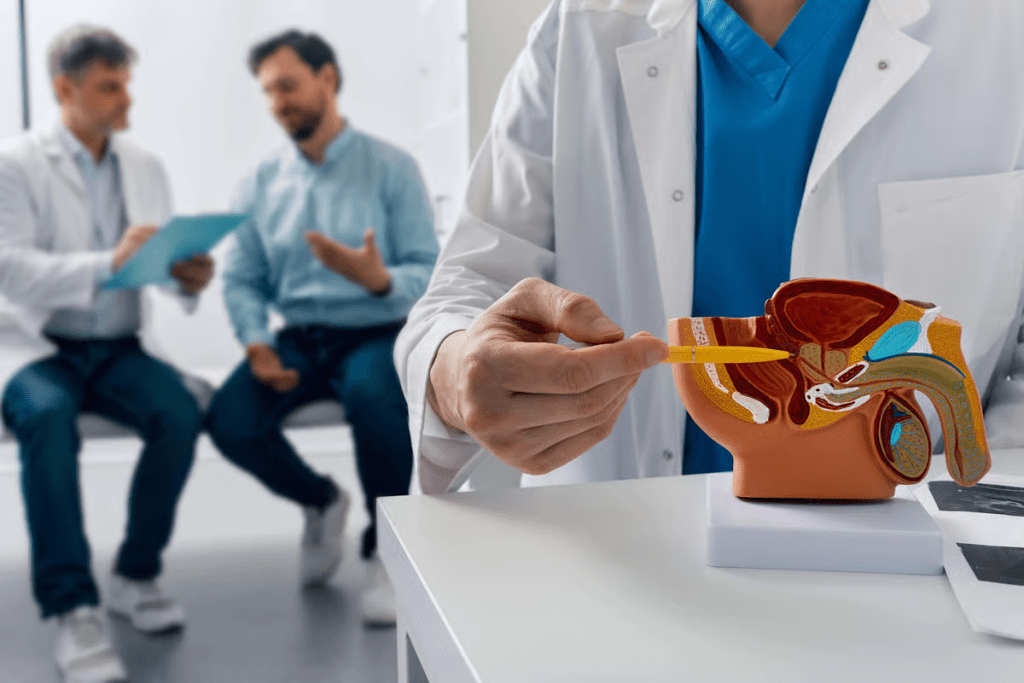
The prostate gland is a small but key organ in men’s health. It’s found below the bladder and surrounds the urethra. It’s vital for the male reproductive system.
What Is the Prostate and Where Is It Located?
The prostate gland is about the size of a walnut. It’s a key part of the male reproductive system. It makes fluids that are in semen, helping sperm during ejaculation. The prostate’s location is critical, as it wraps around the urethra, the tube that carries urine from the bladder out of the body.
Knowing about the prostate’s anatomy helps us understand its role in men’s health. The gland has several zones, with the peripheral zone being the most common site for prostate cancer.
The Role of the Prostate in Male Reproductive Health
The prostate gland is vital for male fertility. It produces a lot of the fluid in semen. This fluid is key for sperm health, giving them nutrients and a good environment. A healthy prostate is essential for optimal reproductive function.
During ejaculation, the prostate contracts to release its secretions into the urethra. This mixes with sperm and other fluids to form semen. This shows how important the prostate is for male reproductive health.
“The prostate gland is a vital part of the male reproductive system, and its health has a significant impact on a man’s quality of life.”
Common Misconceptions About the Prostate

There are many myths about the prostate gland. One is that it’s only important for older men. But, prostate health is important for men of all ages.
Another myth is that prostate problems are a normal part of aging. While age can increase the risk, it’s not a certainty. Regular check-ups and a healthy lifestyle can help prevent prostate problems.
Signs and Symptoms of Possible Prostate Problems
Knowing the signs of prostate issues is key for men to get help quickly. Prostate problems can really affect a man’s life. Spotting symptoms early is the first step to dealing with them.
Urinary Symptoms That May Indicate Prostate Issues
Urinary troubles are common signs of prostate problems. These include:
- Weak or Interrupted Flow: A weak or interrupted urine flow can be a sign of an enlarged prostate.
- Frequent Urination: Needing to urinate often, specially at night, can indicate prostate issues.
- Difficulty Starting or Stopping: Trouble starting or stopping urination can be related to prostate problems.
- Painful Urination: Pain or burning during urination is another symptom that warrants medical evaluation.
Pain and Discomfort: When to Be Concerned
Pain or discomfort related to the prostate can show up in different ways. Men should be worried if they have:
- Lower Back Pain: Persistent pain in the lower back can be associated with prostate issues.
- Painful Ejaculation: Pain during ejaculation is a symptom that should be evaluated.
- Discomfort in the Groin or Pelvic Area: Persistent discomfort or pain in these areas can indicate prostate problems.
Sexual Function Changes Related to Prostate Health
Changes in sexual function can also hint at prostate health issues. These include:
- Erectile Dysfunction: Difficulty achieving or maintaining an erection can be related to prostate health.
- Decreased Libido: A decrease in sexual desire can sometimes be linked to prostate issues.
- Pain During Ejaculation: As mentioned, pain during ejaculation is a concerning symptom.
Knowing these signs and symptoms can help men get medical help early. This can improve their outcomes. If you’re experiencing any of these symptoms, it’s important to talk to a healthcare provider.
Types of Prostate Exams and Tests
Prostate health checks use many tools, each important in its own way. These tests range from the simple digital rectal exam (DRE) to advanced imaging. Knowing about these tests helps men understand what to expect during a prostate check.
Digital Rectal Exam (DRE): The Basic Prostate Exam
A Digital Rectal Exam (DRE) is a key test for prostate health. A healthcare provider uses a gloved finger to feel the prostate gland. They look for any unusual lumps or hardness.
This exam is quick and simple. It gives immediate feedback about the prostate’s health. While it might be a bit uncomfortable, it’s a vital first step.
PSA Blood Test: Measuring Prostate-Specific Antigen
The PSA blood test checks for prostate-specific antigen (PSA) in the blood. PSA is a protein made by the prostate gland. High levels can mean prostate problems, like cancer or BPH.
It’s important to talk about PSA test results with a doctor. High levels don’t always mean cancer, and normal levels don’t rule out problems. The PSA test is often used with other tools for a full check.
Advanced Diagnostic Tools: Ultrasound, MRI, and Biopsy
Advanced tools like ultrasound, MRI, and biopsy are used for detailed checks. An ultrasound uses sound waves to create prostate images. An MRI (Magnetic Resonance Imaging) gives detailed views of the prostate and nearby tissues.
A biopsy takes tissue samples from the prostate. It’s the main test for prostate cancer. These tools are used when initial tests show possible problems or when more info is needed.
Knowing about these tests helps men feel more ready for prostate health checks. Each test has its own role, giving a full picture of prostate health.
When Should Men Start Getting Prostate Exams?
Deciding when to start prostate exams depends on age, family history, and health. We’ll guide men on making informed choices about their prostate health.
Age-Based Guidelines for Prostate Screening
Health groups suggest talking about prostate screening at 50. But, this can change based on personal risk factors.
- Men at average risk should start discussions around age 50.
- Men at higher risk, such as African Americans or those with a family history of prostate cancer, may need to start screening earlier, around age 45 or even 40.
Risk Factors That May Require Earlier Screening
Certain risk factors mean men might need to get screened earlier or more often. These include:
- A family history of prostate cancer, specially in close relatives.
- Being of African American descent, as this demographic has a higher risk of developing prostate cancer.
- Genetic mutations such as BRCA1 and BRCA2.
Men with these risk factors should talk to their healthcare provider about when to start prostate exams.
Frequency Recommendations Based on Age and Risk
How often to get prostate exams can change based on initial results and risk factors.
- Men with a normal PSA level and no other risk factors may only need to be screened every 2-4 years.
- Those with higher initial PSA levels or other risk factors may require more frequent screening.
Talking to a healthcare provider can help figure out the best screening schedule.
The choice on when to start prostate exams and how often depends on health, risk, and personal wishes. It’s best to discuss this with a healthcare provider.
The Prostate Exam Procedure: What to Expect Step-by-Step
Knowing what to expect during a prostate exam can make it less scary. Understanding the steps helps men feel ready and less worried about this important health check.
Before the Exam: Preparation Guidelines
Getting ready is important for a smooth prostate exam. We recommend that men talk to their healthcare provider about any worries or questions. It’s also good to know what the procedure is about.
- Arrive early to complete any necessary paperwork.
- Discuss your medical history, including any medications you’re taking.
- Understand that the exam is a normal part of men’s health care.
During the Digital Rectal Exam: The Procedure Explained
The digital rectal exam (DRE) is a main way to check prostate health. During the DRE, the healthcare provider will gently put a gloved, lubricated finger into the rectum to feel the prostate gland.
This exam lets the doctor check for any oddities, like lumps or irregular shapes, in the prostate gland. It’s a quick process, usually taking just a few minutes.
What Your Doctor Is Looking For
During the prostate exam, your doctor looks for several important things. They check the size, shape, and feel of the prostate gland. Any odd findings could mean there’s a health issue that needs more looking into.
“A thorough prostate exam is key for early detection and prevention of prostate-related issues.”
Is It Possible to Check Your Prostate at Home?
Checking your prostate at home is an option, but it has its limits. Some men might want to do it for privacy or personal reasons. But, it’s important to think about the risks and how accurate it is.
Self-Assessment Options and Limitations
Self-checks for the prostate usually mean manual checks or home test kits. But, these methods aren’t as good as a doctor’s exam. A doctor can find problems that you might miss on your own.
“The accuracy of self-prostate exams is a big worry,” doctors say. Without training, you might not know if your prostate is healthy. This could lead to feeling too sure or too worried for no reason.
Home Test Kits: Benefits and Drawbacks
Home test kits for the prostate have good and bad points. They’re private and easy to use. But, their accuracy can be different, and they might not catch all problems.
- Benefits:
- Privacy and convenience
- Early sign of possible issues
- Drawbacks:
- Variable accuracy
- No expert advice
When Self-Checks Are Not Enough
Self-checks and home kits can give some clues about your prostate. But, they can’t replace a doctor’s check-up. If you have symptoms or worries, see a doctor for a full check and care.
Health guidelines say regular checks and doctor visits are vital for prostate health. If you’re worried, talk to a healthcare expert. They can give you advice and care that’s right for you.
Prostate Cancer Screening: Beyond the Basic Exam
There’s more to prostate cancer screening than just a basic exam. It’s a detailed process that uses different tools to find cancer early. This makes treatment more effective.
Understanding PSA Levels and What They Mean
The Prostate-Specific Antigen (PSA) test checks for PSA in the blood. PSA is a protein from the prostate gland. Normal levels are okay, but high levels might mean prostate issues, like cancer.
But, high PSA doesn’t always mean cancer. It could also show other problems like prostatitis or BPH. It’s important to know that PSA levels can change due to age, race, and some medicines.
Key factors influencing PSA levels:
- Age
- Race
- Certain medications
- Prostate conditions (prostatitis, BPH)
When Additional Testing Is Recommended
If PSA levels are high or if a DRE shows something odd, more tests might be needed. These could include ultrasound or MRI to see the prostate better.
In some cases, a biopsy might be needed. This takes a small prostate tissue sample for a microscope check. It’s a more serious step but can confirm cancer.
Deciding on more tests should be a talk with a doctor. It depends on your risk and health.
The Debate on Routine Prostate Cancer Screening
Doctors are divided on routine prostate cancer screening. Some say it saves lives by catching cancer early. Others worry it can lead to too many treatments and harm.
We think screening choices should be personal. Age, risk, and what you prefer should guide your decision. Talking to your doctor is key to making the right choice for you.
Considerations for prostate cancer screening:
- Age and overall health
- Family history and genetic risk factors
- Ethnicity and other risk factors
- Personal preferences regarding treatment options
Common Prostate Conditions and Their Symptoms
It’s key to know about common prostate issues for early treatment. We’ll look at symptoms, risks, and why being aware is important for prostate health.
Benign Prostatic Hyperplasia (BPH): Enlarged Prostate
BPH means the prostate gland gets bigger. It’s common in older men. Symptoms include needing to pee a lot, feeling urgent, and weak urine flow. This happens because the enlarged prostate blocks the urethra.
The exact cause of BPH isn’t known, but hormones play a part as men get older. Getting diagnosed early can greatly improve life quality by easing symptoms and avoiding problems.
Prostatitis: Inflammation of the Prostate
Prostatitis is when the prostate gland gets inflamed. It can be acute or chronic. Symptoms include pelvic pain, trouble peeing, and sometimes fever. It might be due to a bacterial infection, but often, the cause is unknown.
Knowing the type of prostatitis is important for treatment. Antibiotics work for bacterial cases, but other types need different treatments, like pain relief and lifestyle changes.
Prostate Cancer: Risk Factors and Warning Signs
Prostate cancer is common in men, with risk going up with age and family history. Early prostate cancer often has no symptoms, making screening key for finding it. As it grows, symptoms like trouble peeing, blood in urine, and back, hip, or chest pain may appear.
Knowing the risks and symptoms is critical. Talking to a doctor about screening can lead to early detection and better treatment. Knowing the cancer’s stage and grade helps choose the best treatment.
Maintaining Prostate Health: Prevention Strategies
Keeping your prostate healthy is key to feeling good. Eating right, exercising, and living a healthy lifestyle are important. These steps can help lower the chance of prostate problems.
Dietary Choices That Support Prostate Health
Eating lots of fruits, veggies, and whole grains is good for your prostate. Foods like tomatoes and berries are full of antioxidants. Nuts and olive oil are also great for your health.
Some research shows that eating less dairy and red meat might help your prostate too. Drinking plenty of water is also important.
| Food Group | Examples | Benefits for Prostate Health |
| Fruits | Tomatoes, Berries | High in antioxidants, may reduce prostate cancer risk |
| Vegetables | Broccoli, Spinach | Rich in vitamins and minerals, supports overall health |
| Whole Grains | Brown Rice, Quinoa | High in fiber, may help maintain a healthy weight |
Exercise and Its Impact on the Prostate
Exercise is great for your health and your prostate. It helps keep you at a healthy weight, reduces inflammation, and boosts blood flow. All these are good for your prostate.
Try walking, cycling, or swimming for at least 30 minutes a day. This is a good way to stay active.
Lifestyle Factors That Affect Prostate Function
Other lifestyle choices also matter for your prostate. Stress can harm your prostate, so managing it is important. Try meditation or yoga to help.
Don’t smoke and drink alcohol in moderation. These habits can increase your risk of prostate issues.
Addressing Anxiety About Prostate Exams
Many men worry about prostate exams. This worry often comes from not knowing much about them. We know that fear can stop men from getting the care they need.
Common Concerns and Misconceptions
Men often fear pain or bad news from prostate exams. But, a digital rectal exam (DRE) shouldn’t hurt. It might feel a bit uncomfortable, though.
Some men also feel embarrassed. But, doctors are trained to do these exams and care about your health, not your feelings.
“The key to reducing anxiety is education and open communication with your healthcare provider.”
” Expert Opinion
Communicating Effectively With Your Healthcare Provider
Talking openly with your doctor can help you feel better. Before the exam, ask any questions you have. This includes what to expect and who will do the exam.
| Tips for Effective Communication | Description |
| Be Open About Your Concerns | Share your fears and worries with your healthcare provider. |
| Ask Questions | Inquire about the procedure and what it entails. |
| Discuss Your Medical History | Inform your provider about any previous experiences or health issues. |
Making the Experience More Comfortable
There are ways to make the exam more comfortable. Try deep breathing and relaxation. Also, talking about your worries with your doctor can help.
Preparation is key. Knowing what to expect can help a lot. Having someone you trust with you can also make you feel better.
By talking about your worries, understanding the exam, and being prepared, you can feel less anxious. We’re here to support you and make sure you get the care you need.
What to Expect After a Prostate Exam
Knowing what happens after a prostate exam can ease your worries. We’ll walk you through what to expect, help you understand your results, and tell you when you need to follow up.
Normal Post-Exam Sensations and Experiences
After a prostate exam, you might feel some discomfort or like you’ve been checked inside. This feeling usually goes away by itself. Some men might see a bit of blood or semen with blood in it. But, unless it keeps happening, it’s usually not a big deal.
It’s normal to feel a bit worried about the results. Take some time to relax. Remember, the exam is routine for many men. If you’re worried or if your symptoms get worse, call your doctor right away.
Understanding Your Results
Your doctor will talk about your results with you soon after the exam. If there’s anything unusual, like a high PSA level or something odd during the DRE, they’ll explain it. They’ll also tell you what to do next.
It’s important to ask questions if you don’t get something. Knowing about your prostate health helps you make good choices. We encourage you to ask for clarification on any doubts you have.
When Follow-Up Is Necessary
If your results show any problems, your doctor will tell you what to do next. This might include more tests, like more PSA tests, an MRI, or a biopsy. Waiting for these results can be tough, but we’re here to support you.
Keeping informed and talking openly with your doctor is important. If you have severe symptoms or concerns about your results, contact them. We care about your health and well-being.
Which Healthcare Providers Perform Prostate Exams?
The healthcare provider you choose for a prostate exam matters a lot. Both primary care doctors and specialists can do these exams. Each has their own role.
Primary Care Physicians vs. Specialists
Primary care doctors are usually the first ones you see for health issues. They check for problems and send you to specialists if needed.
Specialists, like urologists, have more training in certain areas. They focus on the urinary tract and male reproductive system.
When to See a Urologist
A urologist is a doctor who deals with the urinary tract and male reproductive system. If your primary care doctor finds a problem or if you have symptoms, they might suggest seeing a urologist.
Finding the Right Doctor for Your Prostate Health
Looking for the right doctor? Think about their experience with prostate exams, what others say, and how comfortable you feel with them.
| Provider Type | Primary Care Physician | Urologist |
| Specialization | General health issues | Urinary tract and male reproductive system |
| Prostate Exam Experience | Trained for initial exams and screenings | Specialized training for complex cases |
| Referral Needed | Often the first point of contact | Referral from primary care physician may be needed |
Knowing about different healthcare providers and what to expect from a prostate exam helps men take care of their health better.
When to Seek Immediate Medical Attention for Prostate Issues
Knowing when to seek urgent medical help for prostate problems is key. Some symptoms may seem minor but can turn serious if not treated quickly.
Emergency Warning Signs
Some prostate symptoms need immediate medical check-ups. These include:
- Severe pain in the lower back, hips, or pelvis
- Difficulty urinating or inability to urinate
- Blood in the urine or semen
- Frequent or painful urination accompanied by fever
- Sudden and severe urinary retention
These signs can point to serious issues like acute prostatitis, urinary tract infections, or even prostate cancer.
Severe Symptoms That Shouldn’t Wait
Don’t wait if you’re experiencing these symptoms:
| Symptom | Possible Indication |
| Painful urination | Urinary tract infection or prostatitis |
| Blood in urine or semen | Prostate cancer, infection, or trauma |
| Severe lower abdominal pain | Acute prostatitis or urinary retention |
Getting a diagnosis and treatment early can greatly improve your health.
Navigating Urgent Care vs. Emergency Room
Deciding between urgent care and the emergency room is important. For severe symptoms, the emergency room is best. It’s ready for life-threatening cases.
“If you’re unsure about the severity of your symptoms, it’s always better to err on the side of caution and seek immediate medical attention.” –
Medical Expert
For less severe but concerning symptoms, urgent care might be okay. But for severe pain, trouble breathing, or other serious issues, go straight to the emergency room.
Knowing the signs for urgent medical care can greatly impact your health. Always talk to a healthcare professional if you’re unsure about your symptoms.
Conclusion: Taking Control of Your Prostate Health
Knowing about your prostate health is key for your overall well-being. By spotting signs of trouble early and getting checked when needed, men can stay healthy.
Being informed and making healthy choices is important for prostate health. This means eating right, exercising regularly, and managing risks. Men should talk to their doctors about their risks and screening options to create a plan just for them.
Being proactive and informed helps men a lot in keeping their prostate and overall health good. Following tips like eating well and getting regular check-ups can really help.
We’re here to help men on their path to better prostate health. Working with doctors and making smart choices, men can take control of their health and live better.
FAQ
What is a prostate exam?
A prostate exam, also known as a digital rectal exam (DRE), is a check-up. A healthcare provider uses a gloved, lubricated finger in the rectum to examine the prostate gland for any issues.
Why is a prostate exam necessary?
A prostate exam is key to detect prostate cancer, benign prostatic hyperplasia (BPH), and other issues. It helps find problems early, when they are easier to treat.
At what age should men start getting prostate exams?
The age to start prostate exams varies based on risk factors. Generally, men should talk to their healthcare provider around age 50, unless they have higher risk factors.
What happens during a prostate exam?
During a prostate exam, a healthcare provider does a DRE to check for abnormalities. They might also talk about the need for a PSA blood test.
Is a prostate exam painful?
A prostate exam is usually not painful but might be a bit uncomfortable. The discomfort is brief, and the exam is quick.
Can I check my prostate at home?
While there are home test kits, checking your prostate at home is not a substitute for a professional exam. If you’re concerned, it’s best to see a healthcare provider.
What are the signs and symptoms of prostate problems?
Signs of prostate problems include trouble starting or stopping urination, weak urine flow, and frequent urination. Pain or discomfort in the pelvic area is also a symptom.
How often should I get a prostate exam?
The frequency of prostate exams varies based on age, risk factors, and past exam results. Men at average risk might need exams every 2-4 years, while those at higher risk may need more frequent checks.
What is a PSA test, and how is it related to prostate exams?
A PSA test measures PSA levels in the blood. High levels can indicate prostate problems, including cancer. It’s often used with a DRE for prostate cancer screening.
Who should perform a prostate exam?
A prostate exam should be done by a qualified healthcare provider, like a primary care physician or urologist. Urologists specialize in the urinary tract and male reproductive system, making them experts in prostate health.
What are the benefits of maintaining prostate health?
Maintaining prostate health through a balanced diet, regular exercise, and timely medical check-ups can prevent problems. It can also detect issues early and improve quality of life.
Are there lifestyle changes that can support prostate health?
Yes, eating a diet rich in fruits, vegetables, and whole grains, staying hydrated, exercising regularly, and managing stress can support prostate health.
When should I seek immediate medical attention for prostate issues?
If you have severe symptoms like trouble urinating, severe pain, or signs of infection, seek immediate medical attention. These could be signs of serious prostate problems.
References
Tyloch, J. F. (2016). The standards of an ultrasound examination of the prostate gland. Journal of Ultrasonography, 16(66), 143-155. https://www.ncbi.nlm.nih.gov/pmc/articles/PMC5269525/