Last Updated on December 1, 2025 by Bilal Hasdemir

Retinoblastoma is a rare but serious eye cancer. It affects about 1 in 15,000 kids worldwide. Early detection and effective prevention strategies are key to saving young lives.
As a parent or caregiver, the thought of your child getting eye cancer is scary. But knowing the risks and signs of retinoblastoma is the first step to protect your child’s vision and health.
We aim to give you the knowledge on childhood cancer prevention. We’ll guide you through the best strategies for retinoblastoma prevention.
Key Takeaways
- Understanding retinoblastoma and its risks is key for early detection.
- Knowing your family history is important for retinoblastoma prevention.
- Regular eye exams are essential for kids, even more so if they have a family history of retinoblastoma.
- Genetic testing can spot mutations that raise the risk of retinoblastoma.
- Recognizing signs and symptoms can lead to early treatment.
Understanding Retinoblastoma: A Critical Overview

Retinoblastoma is a common eye cancer in kids. It needs a full approach to prevent and treat it. This rare cancer mainly hits young children, so finding it early and knowing about it is key.
What is Retinoblastoma?
Retinoblastoma starts in the retina, the back part of the eye. It grows out of control, forming tumors. It can be inherited or not, with inherited cases often being more aggressive and affecting both eyes.
The inherited form comes from a gene mutation in the RB1 gene. Non-hereditary cases happen when the RB1 gene mutates in the retina cells.
Prevalence and Statistics in the United States
Retinoblastoma is the top eye cancer in kids, making up 3% of childhood cancers. About 1 in 15,000 to 1 in 20,000 kids get it each year in the U.S. Half of these cases are inherited, and the other half are not.
It mostly affects kids under 5, with most cases found in the first two years. Thanks to early treatment, over 95% of kids survive it today.
Impact on Children and Families
Getting a retinoblastoma diagnosis is tough for kids and their families. It’s not just the medical side; there are emotional and psychological hurdles too. The fear of losing vision or the cancer coming back is huge.
It’s important to support families with counseling, support groups, and good medical care. Knowing about the disease helps families make better choices for their child’s care.
The Genetic Basis of Retinoblastoma

Retinoblastoma is closely linked to genetic mutations, mainly in the RB1 gene. This gene is key for controlling cell growth. Knowing the genetic basis of this disease helps us find risk factors and prevent it.
Hereditary vs. Non-Hereditary Forms
Retinoblastoma can be hereditary or non-hereditary. The hereditary form has a germline mutation in the RB1 gene. This means the mutation is in every cell of the body. It often leads to bilateral retinoblastoma and raises the risk of other cancers.
The non-hereditary form happens due to a spontaneous mutation in the RB1 gene in a single retinal cell.
The RB1 Gene and Its Function
The RB1 gene is a tumor suppressor. It regulates cell division and stops uncontrolled growth that can cause cancer. If both copies of the RB1 gene are mutated or inactivated, the cell can’t control its growth. This can lead to retinoblastoma.
Mutation Patterns and Cancer Development
The development of retinoblastoma is tied to specific mutation patterns in the RB1 gene. These mutations can be inherited or happen by chance. Knowing these patterns is key for genetic counseling and finding those at risk.
| Mutation Type | Description | Impact on Cancer Risk |
| Germline Mutation | Mutation present in every cell | Increased risk of bilateral retinoblastoma and other cancers |
| Somatic Mutation | Mutation in a single retinal cell | Risk of unilateral retinoblastoma |
Understanding the genetic basis of retinoblastoma helps us identify those at risk. It also lets us develop targeted prevention strategies.
Identifying Risk Factors for Retinoblastoma
Knowing the risk factors for retinoblastoma is key to catching it early. This rare eye cancer mainly hits kids. There are several risk factors that can help manage and lower the chance of getting it.
Family History as a Primary Risk Factor
Having a family history of retinoblastoma is a big risk factor. Kids with a parent or sibling who had it are more likely to get it too. This is because of a gene called RB1, which controls cell growth in the retina.
Family History Risk Implications
| Family History | Risk Level | Recommended Action |
| No known family history | Low to Moderate | Regular pediatric eye exams |
| First-degree relative with retinoblastoma | High | Genetic counseling and testing |
| Multiple family members with retinoblastoma | Very High | Genetic testing and frequent eye exams |
Age-Related Risk Considerations
Age is a big factor in retinoblastoma risk. Most cases are found in kids under 5. Knowing this helps parents and doctors watch for signs of the disease.
Environmental Factors and Their Influence
Genetic mutations cause retinoblastoma, but research looks at environmental factors too. Some studies hint at environmental exposures affecting risk. But, more research is needed to know for sure.
Families with retinoblastoma history should know these risks. They should work with doctors to spot the disease early.
Retinoblastoma Prevention Strategies: A Complete Approach
To stop retinoblastoma, we need a full plan. This plan includes primary, secondary, and tertiary prevention. It’s key to lower the risk of retinoblastoma and help families.
Primary Prevention Methods
Primary prevention aims to lower the risk of getting retinoblastoma. It includes genetic counseling for families with a history of the disease. Genetic screening finds RB1 gene mutations. This helps families make smart choices about having kids.
For families with a retinoblastoma history, preimplantation genetic diagnosis (PGD) is an option. PGD checks embryos for the RB1 mutation before they’re implanted during IVF.
“Genetic counseling and testing can greatly lower the risk of retinoblastoma in families with a known history.”
Genetic Counselor
Secondary Prevention Through Early Detection
Early detection is key for good treatment and better outcomes in retinoblastoma. Regular eye checks are very important, mainly for kids at high risk.
- Routine eye exams from birth for high-risk babies
- Regular check-ups to watch for retinoblastoma signs
- Using advanced tests like ultrasound and MRI
Tertiary Prevention and Recurrence Reduction
Tertiary prevention works to lower the chance of the disease coming back and handle treatment side effects. It includes ongoing care and watching for any problems.
| Prevention Level | Strategies | Goals |
| Primary Prevention | Genetic counseling, PGD | Lower risk of getting retinoblastoma |
| Secondary Prevention | Regular eye exams, advanced diagnostics | Find and treat early |
| Tertiary Prevention | Follow-up care, watch for complications | Lower chance of coming back and manage long-term effects |
By using a complete plan for preventing retinoblastoma, we can greatly improve life for families with this disease.
Genetic Screening Methods for High-Risk Families
Families with a history of retinoblastoma can greatly benefit from genetic screening. Genetic testing can spot mutations in the RB1 gene. This helps figure out the risk of retinoblastoma in families with a history of the disease.
Who Should Consider Genetic Testing
People with a family history of retinoblastoma should think about genetic testing. This includes families with many cases of retinoblastoma. It’s also important if the disease has happened in multiple generations or in both eyes.
Genetic testing is also good for those already diagnosed with retinoblastoma. It can tell if the mutation is inherited.
Available Testing Technologies
There are several ways to test for RB1 gene mutations. These include:
- DNA Sequencing: This method looks at the DNA sequence of the RB1 gene for mutations.
- Deletion/Duplication Analysis: This test finds larger deletions or duplications in the RB1 gene that sequencing might miss.
| Testing Technology | Description | Application |
| DNA Sequencing | Analyzes the DNA sequence to identify mutations. | Identifies point mutations in the RB1 gene. |
| Deletion/Duplication Analysis | Detects larger deletions or duplications. | Identifies larger genetic alterations not detected by sequencing. |
Interpreting Genetic Test Results
Understanding genetic test results needs expertise. A mutation doesn’t always mean someone will get retinoblastoma. Genetic counseling is key to help people understand their risks and what their test results mean.
For families dealing with genetic testing, it can be tough to make sense of it all. Genetic counselors are there to help. They support families through this complex process.
Prenatal Genetic Testing Options
Now, families can learn about their unborn baby’s genes. This is thanks to prenatal genetic testing. It helps families with a history of retinoblastoma know if their baby might have it.
Amniocentesis for Retinoblastoma Gene Detection
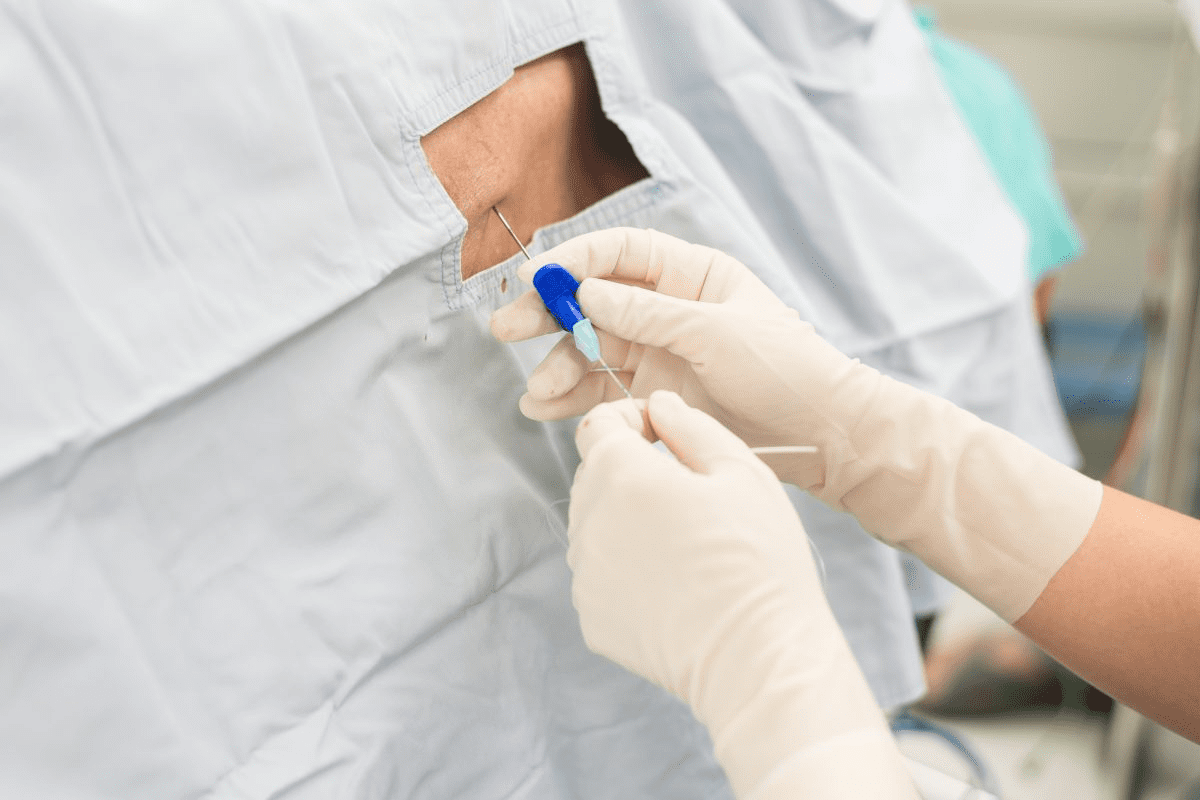
Amniocentesis is a test where a small amount of amniotic fluid is taken. This fluid has cells from the fetus. These cells can show if the fetus has the RB1 gene mutation, which causes retinoblastoma. The test is done between the 15th and 20th weeks of pregnancy.
Benefits of Amniocentesis:
- It accurately finds genetic mutations.
- It gives detailed genetic info about the fetus.
Considerations: Amniocentesis is usually safe. But, there’s a small chance it could cause a miscarriage.
Chorionic Villus Sampling (CVS)
CVS takes a small sample of cells from the placenta. These cells are checked for genetic problems, like the RB1 mutation. CVS can be done earlier, between the 10th and 13th weeks of pregnancy.
Advantages of CVS:
- It finds problems earlier than amniocentesis.
- Results come faster, helping with early decisions.
Like amniocentesis, CVS also has a small risk of miscarriage.
Non-Invasive Prenatal Testing Advances
NIPT tests the mother’s blood for cell-free DNA. It’s mainly used for Down syndrome screening. But, it’s getting better at finding other genetic issues, like the RB1 gene.
Potential Benefits:
- It’s safe, with no risk of miscarriage.
- It can be done earlier in pregnancy.
Current Limitations: NIPT for retinoblastoma is new. It’s not as common or accurate as amniocentesis or CVS for finding the RB1 mutation.
In conclusion, prenatal genetic testing gives families at risk of retinoblastoma important info. By knowing about amniocentesis, CVS, and NIPT, families can make better choices. They can prepare for their baby’s future.
Genetic Counseling for Families at Risk
Genetic counseling is key for families at risk of retinoblastoma. It helps them make smart health and family planning choices. This process can be tough and emotional, so genetic counselors offer both medical info and emotional support.
The Role of Genetic Counselors
Genetic counselors are experts in genetics and counseling. They explain the genetic cause of retinoblastoma, the risk of passing it on, and testing options. They are vital in understanding genetic test results and guiding family members.
In a counseling session, families get a detailed talk about their health history and retinoblastoma’s genetics. They also learn about the risks. Counselors create a safe space for families to ask questions and share their worries.
What to Expect During Genetic Counseling
At a genetic counseling session, families should talk about their health history and any cancer cases. Counselors will explain genetic testing options, their benefits, and limits. It’s important for families to ask questions and clear up any doubts they have.
“Genetic counseling empowers families by providing them with the knowledge they need to make informed decisions about their health and reproductive choices.”
— A genetic counselor’s perspective
Decision-Making Support for At-Risk Families
Genetic counselors play a big role in helping families make choices that fit their needs. This includes genetic testing, family planning, and managing retinoblastoma risk. They offer unbiased info and support, helping families deal with the emotional and medical sides of their situation.
| Decision-Making Factors | Considerations | Support Provided by Genetic Counselors |
| Genetic Testing | Understanding test results, implications for family members | Interpretation of test results, guidance on family screening |
| Family Planning | Risk of passing on the RB1 mutation, reproductive options | Discussion of reproductive choices, including preimplantation genetic diagnosis |
| Managing Risk | Surveillance strategies, treatment options | Guidance on surveillance protocols, treatment planning |
Families at risk of retinoblastoma greatly benefit from genetic counselors. They help families understand their risks and options, making informed decisions for their situation.
Essential Pediatric Eye Health Screening Guidelines
Pediatric eye health screening is key for kids’ health. It helps find vision problems and eye diseases early. We’ll share important guidelines for parents and caregivers.
Recommended Screening Schedule for Infants and Children
The American Academy of Pediatrics suggests eye exams at certain ages. This helps catch eye problems early. Here’s the schedule:
- Newborn screening before leaving the hospital
- Eye exam at 6 months
- Eye exam at 12 months
- Eye exam at 3 to 5 years
- Annual exams for kids with risk factors or eye conditions
Following this schedule is key for early detection and treatment of eye issues, like retinoblastoma.
What Happens During a Pediatric Eye Examination
A pediatric eye exam includes several tests. These tests check the child’s vision and eye health. Tests may include:
- Visual acuity testing to check sharpness of vision
- Cover testing to see how well the eyes work together
- Retinoscopy to find the right lens prescription
- External eye exam to look for abnormalities
The eye care professional also looks for signs of eye diseases, like retinoblastoma, during the exam.
Red Reflex Testing and Its Importance
Red reflex testing is a key part of eye exams, helping find retinoblastoma. It shines a light into the eye to see the retina’s reflection. A normal reflex means everything looks good, but an abnormal one might mean a problem.
Red reflex testing is a simple yet essential tool for spotting eye issues early. It’s done during routine eye exams and is very important for babies and young kids who can’t say if they see things right.
| Age | Screening Recommendation |
| Newborn | Screening before hospital discharge |
| 6 months | Comprehensive eye examination |
| 12 months | Comprehensive eye examination |
| 3 to 5 years | Comprehensive eye examination |
Early Warning Signs Parents Should Never Ignore
Spotting retinoblastoma early is key to better treatment. This rare eye cancer mainly hits young kids. Knowing the signs is critical for early treatment.
Visual Symptoms of Retinoblastoma
Leukocoria, or “white pupil,” is a common sign. It looks like a white glow in the eye. Watch for any unusual eye glows, mainly in the dark.
Physical Changes in the Eye
Look out for eye changes too. These might include:
- Crossed eyes or strabismus
- Redness or swelling of the eye
- Vision problems or changes in the size of the pupil
Any lasting eye changes need a doctor’s check-up.
Behavioral Indicators of Vision Problems
Some kids with retinoblastoma act differently because of vision issues. They might:
| Behavioral Indicator | Possible Implication |
| Clumsiness or bumping into objects | Potential vision impairment |
| Squinting or tilting the head | Trying to fix vision loss |
| Avoiding activities that require clear vision | Possible vision problems affecting daily activities |
Knowing these signs helps parents get help fast. This can greatly improve a child’s chances of beating retinoblastoma.
Family History Monitoring and Documentation
Monitoring family history is key to spotting genetic disorders early, like retinoblastoma. Knowing our family’s health history helps us spot risks and act early to prevent them.
Creating a Detailed Family Cancer History
It’s important to make a detailed family cancer history to understand our risk. We need to know about our relatives’ health, including any cancers they’ve had, when they were diagnosed, and their treatments.
To make a complete family cancer history, we should talk to our relatives, focusing on the older ones. We can also use online tools or get help from genetic counselors to organize this info.
Key elements to include in a family cancer history:
- Types of cancer diagnosed in relatives
- Age at diagnosis
- Treatments received
- Outcomes and survival rates
Updating Medical Records Regularly
After we’ve made a detailed family cancer history, we need to keep our medical records up to date. This makes sure our doctors have the latest info on our family’s health.
We should tell our doctors about any changes in our family’s health history, like new cancers or health changes. This helps our doctors make better decisions about our care.
| Information to Update | Frequency of Update |
| New cancer diagnoses in relatives | Immediately |
| Changes in relatives’ health status | Annually or as needed |
| Genetic test results | Upon receipt |
Sharing Relevant Information with Healthcare Providers
Telling our doctors about our family’s cancer history is vital for good care. This info helps them understand our risks and plan how to monitor and prevent problems.
“Understanding a patient’s family history is a critical component of providing complete care. It helps us spot genetic risks and plan for prevention and early detection.” – Genetic Counselor
We should actively share our family cancer history with our doctors. This ensures they have all the info they need to give us the best care.
Advanced Diagnostic Techniques for Early Detection
Diagnosing retinoblastoma has changed a lot thanks to new tech. These advanced methods help find retinoblastoma early. This makes treatment more effective.
Imaging Technologies for Retinoblastoma Detection
Imaging has changed how we find retinoblastoma. Tools like ultrasound, MRI, and CT scans give clear eye pictures. They help doctors see tumors well.
- Ultrasound: Uses sound waves to see inside the eye.
- MRI (Magnetic Resonance Imaging): Gives detailed images without harmful radiation. It helps tell different tumors apart.
- CT Scans (Computed Tomography): Shows detailed eye cross-sections. It helps see how far tumors have spread.
Molecular Diagnostic Approaches
Molecular tests are key in finding and managing retinoblastoma. Genetic tests spot RB1 gene changes. This confirms the disease and shows family risk.
| Diagnostic Method | Description | Application in Retinoblastoma |
| Genetic Testing | Looks at DNA for mutations | Finds RB1 gene changes |
| Liquid Biopsy | Checks blood or fluids for tumor DNA | Finds genetic signs of retinoblastoma |
Emerging Technologies in Cancer Detection
New tech is changing cancer detection, including retinoblastoma. We see new imaging and molecular tests.
“The integration of artificial intelligence with diagnostic imaging is set to revolutionize cancer detection, giving us better accuracy and speed.” –
A leading oncologist
As we learn more about these technologies, we can find and treat retinoblastoma better.
Family Planning Considerations for Carriers of RB1 Mutations
Family planning with RB1 mutations needs careful thought. Carriers face special challenges when thinking about starting or growing their families. They must consider the risks of retinoblastoma and the options for reproduction.
Preimplantation Genetic Diagnosis (PGD)
Preimplantation Genetic Diagnosis (PGD) is a tool for carriers of RB1 mutations. It tests embryos before they are implanted. This way, it can find embryos without the mutation, lowering the risk of passing it on.
PGD Process: It starts with IVF to make embryos. Then, a biopsy takes cells for genetic testing. The test checks for the RB1 mutation.
Choosing embryos without the mutation can ease worries and lower the risk of retinoblastoma.
In Vitro Fertilization Options
In vitro fertilization (IVF) is key in PGD. It fertilizes an egg outside the body, creating embryos for PGD. For those with RB1 mutations, IVF with PGD is a way to have biological kids safely.
- IVF lets you make many embryos, upping the chance of finding ones without the mutation.
- The process is tough, both emotionally and physically, needing careful thought and support.
Ethical Considerations in Reproductive Choices
Choosing PGD and IVF is not just about health; it’s also about ethics. Carriers must think about the benefits, their beliefs, money, and how it might affect them emotionally.
Key Ethical Considerations:
- The moral status of embryos and the choice to select or discard them.
- The emotional impact on the family, mainly the child.
- Who gets to use these technologies and if it’s fair.
These choices are very personal and different for everyone. It’s important for carriers to get full counseling and support to make these decisions.
Latest Research and Future Directions in Retinoblastoma Prevention
Genetic editing and precision medicine are changing how we prevent retinoblastoma. New studies show great hope in using these methods to catch and treat retinoblastoma early.
Advances in Genetic Editing Technologies
Genetic editing tools like CRISPR/Cas9 are making big strides in treating genetic diseases, including retinoblastoma. CRISPR/Cas9 can precisely edit the RB1 gene, which might fix the mutations causing retinoblastoma. Scientists are looking into using CRISPR/Cas9 in clinics to stop retinoblastoma in people at high risk.
Precision Medicine Approaches
Precision medicine means treating each patient based on their unique needs. For retinoblastoma, this means targeted therapies that focus on the specific genetic issues. By knowing a patient’s genetic makeup, doctors can pick the best treatment, leading to better results and fewer side effects.
Emerging Screening Protocols
Spotting retinoblastoma early is key to effective treatment. New screening methods, like advanced imaging and molecular tests, are being developed. These aim to catch retinoblastoma early in babies and young kids, allowing for quick action and better treatment chances.
As research keeps moving forward, we’ll see more breakthroughs in fighting retinoblastoma. The mix of genetic editing, precision medicine, and new screening methods is very promising. It could greatly improve care and results for those at risk of or living with retinoblastoma.
Conclusion: Empowering Families Through Knowledge and Vigilance
Teaching families about retinoblastoma is key to catching it early and treating it well. Knowing the risks and spotting early signs helps families protect their kids’ eyes. This way, they can act fast to keep their children’s vision safe.
We’ve looked at how to prevent retinoblastoma, from genetic tests to new ways to diagnose it. Being watchful and learning is essential to spot risks and prevent problems. Families can make smart health choices by staying updated and talking to doctors.
Our aim is to give families the tools and info they need to deal with retinoblastoma. Thanks to ongoing research and new medical tools, we can help kids more. Together, we can help families protect their kids’ eyes and lessen the effects of retinoblastoma.
FAQ
What is retinoblastoma and how does it affect children?
Retinoblastoma is a rare eye cancer in young kids. It starts in the retina, the back of the eye. Knowing about it helps find and treat it early.
What are the main differences between hereditary and non-hereditary retinoblastoma?
Hereditary retinoblastoma comes from a gene mutation passed down from parents. Non-hereditary retinoblastoma happens when a gene mutation occurs in one eye cell. Knowing these differences helps in understanding risk and prevention.
How can genetic screening help in preventing retinoblastoma?
Genetic screening finds RB1 gene mutations early. This helps families at risk to act fast. It’s key for early detection and treatment.
What are the available prenatal genetic testing options for retinoblastoma?
Tests like amniocentesis and CVS can find RB1 gene mutations in the fetus. Non-invasive prenatal testing is also available. These tests give families important information.
What is the role of genetic counseling in managing retinoblastoma risk?
Genetic counseling helps families understand their risk. It guides them in making choices about their children’s eye health. It’s about support and informed decisions.
What are the recommended pediatric eye health screening guidelines?
Kids should get eye exams from infancy. Look for red reflex testing. Early detection is key for treating eye issues and saving vision.
What are the early warning signs of retinoblastoma that parents should look out for?
Watch for a white glow in the pupil, crossed eyes, poor vision, or eye redness. If you see anything odd, see a doctor right away.
How can family history monitoring help in preventing retinoblastoma?
Keeping a detailed family cancer history is important. It helps spot those at higher risk. Sharing this info with doctors is vital for prevention plans.
What are the advanced diagnostic techniques used for detecting retinoblastoma?
New methods include ultrasound, MRI, and molecular diagnostics. These help find retinoblastoma early. They’re key for better treatment plans.
What family planning considerations should carriers of RB1 mutations be aware of?
Carriers might consider PGD and IVF for family planning. It’s important to understand the ethics of these choices.
What are the latest research and future directions in retinoblastoma prevention?
New tech like genetic editing and precision medicine are being explored. These could lead to better prevention and treatment. Keeping up with research helps families stay informed.
References:
- Xu, T., & Li, D. (2025). Global research trends in liver regeneration and immunomodulation: A perspective from bibliometric analysis. Frontiers in Immunology. https://pmc.ncbi.nlm.nih.gov/articles/PMC12218472/