Last Updated on November 27, 2025 by Bilal Hasdemir

We’re seeing a big move towards robotic surgery for knees. It brings better precision and less invasive procedures. This tech lets surgeons do complex tasks more accurately. It could mean better results for patients and faster healing times.Robotic knee replacement surgery uses computer-guided precision. Learn benefits, accuracy improvements, and recovery advantages.
Key Takeaways
- Robotic-assisted technology is changing knee replacement surgeries.
- It brings better precision and less invasive procedures.
- The tech allows for more accurate surgeries and better patient outcomes.
- Recovery times might be shorter with robotic-assisted surgeries.
- The global market for knee replacement is growing. This is due to aging populations and new surgical methods.
Robotic-assisted surgery has changed knee replacement procedures a lot. It brings new precision and accuracy to orthopedic surgery.
Definition and Basic Concepts
Robotic knee replacement surgery uses robots to help surgeons. It makes the surgery more precise, which can lead to better results for patients.
A robotic arm or device is guided by a computer. This system gives the surgeon real-time data and images. It helps plan and do the surgery.
Knee replacement tech has grown a lot. It started with manual methods and now uses robots. This change aims for better precision, faster recovery, and happier patients.
- Early Techniques: At first, surgeries were done by hand, relying on the surgeon’s skill.
- Introduction of Robotics: Robots came in and made surgeries more accurate.
- Advancements in Imaging: New imaging tech has made robotic surgeries even more precise.
Key Components of Robotic Systems
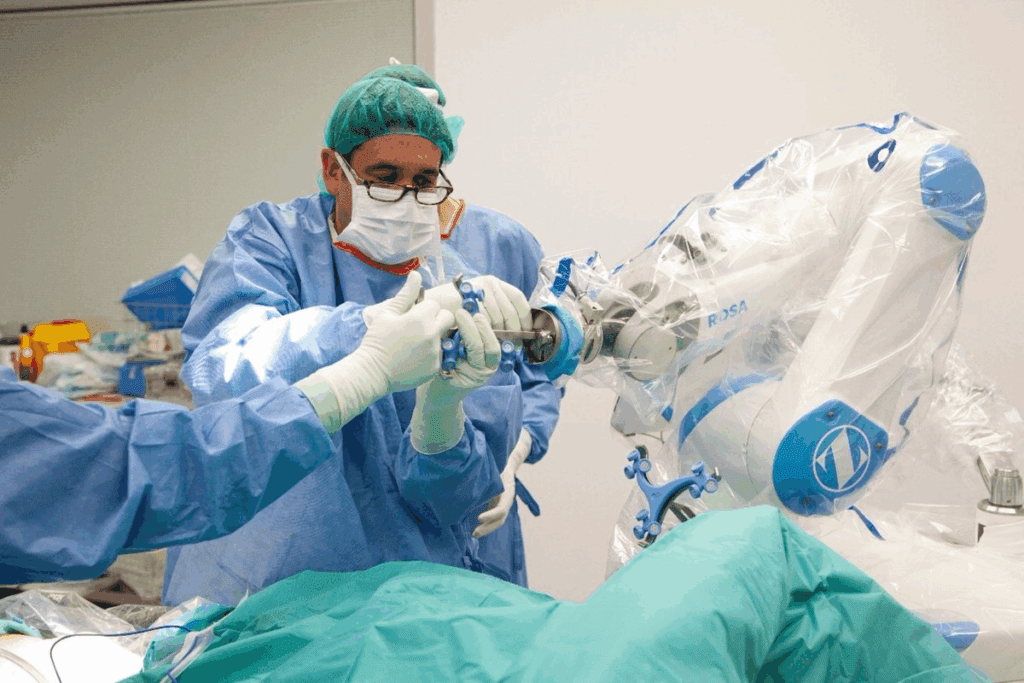
Robotic systems for knee surgery have a few main parts:
- Robotic Arm: A precise arm that helps the surgeon.
- Computer System: A smart computer that gives real-time data and images.
- Imaging Technology: Advanced tech for planning and doing the surgery.
These parts work together to improve the surgeon’s skills. This can lead to better results for patients.
How Robotic-Assisted Knee Replacement Works
Robotic-assisted knee replacement is changing orthopedic surgery. It brings precision and accuracy to knee surgeries. This leads to better results for patients.
Pre-operative Planning and Imaging
The journey starts with planning and imaging before surgery. CT scans or MRI create a 3D model of the knee. This model helps surgeons plan the surgery with precision.
These imaging tools give us detailed data on the knee. This data is key for a personalized surgical plan. It meets each patient’s unique needs.
Computer Modeling and Surgical Mapping
Computer modeling and surgical mapping are vital in robotic-assisted knee replacement. We use pre-operative imaging data to create a detailed plan. This plan outlines the implant’s placement, knee alignment, and soft tissue balancing.
The surgical mapping turns the plan into a precise strategy. This strategy guides the surgery with the robotic system’s help. It ensures the surgery follows the plan.
Real-time Feedback During Surgery
Robotic-assisted knee replacement offers real-time feedback during surgery. The robotic system monitors the procedure and gives instant feedback. This feedback lets the surgeon make adjustments as needed.
This real-time data helps the surgeon follow the pre-operative plan accurately. It’s very useful in complex cases where precision is key.
| Key Features | Benefits |
| Pre-operative Planning | Enhanced precision in implant placement |
| Computer Modeling | Personalized surgical approach |
| Real-time Feedback | Improved accuracy during surgery |
Robotic-assisted knee replacement combines advanced technologies for effective knee surgery. It uses pre-operative planning, computer modeling, and real-time feedback. This ensures the surgery is done with precision and care.
Several robotic systems are now available for knee replacement surgery. Each offers unique benefits and enhances the precision of the procedure.
Mako Robotic-Arm Assisted Technology
Key features of the Mako system include:
- Advanced 3D imaging for pre-operative planning
- Robotic-arm assisted bone preparation
- Real-time feedback during surgery
ROSA Knee System
The ROSA Knee System is another advanced robotic platform designed for knee replacement surgery. It offers enhanced precision and flexibility during the procedure.
| Feature | Description |
| Pre-operative Planning | Advanced imaging and planning software |
| Intra-operative Guidance | Real-time tracking and adjustment |
| Surgical Precision | Enhanced accuracy in bone preparation |
Navio Surgical System
The Navio Surgical System is a handheld robotic technology that provides real-time feedback during knee replacement surgery. It allows surgeons to make precise adjustments as needed.
Benefits of the Navio system include:
- Improved accuracy in implant placement
- Reduced risk of complications
- Enhanced patient outcomes
Other Emerging Platforms
Aside from Mako, ROSA, and Navio, new robotic platforms are being developed for knee replacement surgery. These emerging technologies promise to further enhance the precision and outcomes of knee replacement procedures.
As robotic technology continues to evolve, we can expect to see even more advanced systems being introduced. These will offer improved outcomes for patients undergoing knee replacement surgery.
Robotic knee surgery has changed orthopedic surgery a lot. It brings new ways to make surgeries better and recovery faster. This new method combines precision, personal care, and less invasive techniques for better patient results.
Enhanced Precision and Accuracy
Precision is key in knee surgery. It affects how long the implant lasts and works. Robotic systems help surgeons get the implant in the best spot, lowering risks and improving results.
Personalized Implant Positioning
Robotic knee surgery lets surgeons place implants just right for each patient. They use advanced imaging and 3D models to plan the surgery. This makes sure the implant fits perfectly with the patient’s knee.
Preservation of Healthy Bone and Tissue
Robotic knee surgery also helps keep healthy bone and tissue. It lets surgeons remove damaged parts more accurately and place the implant right. This saves as much healthy tissue as possible.
This method helps patients recover faster and improves surgery success. Patients can get back to their normal life sooner with better knee function.
Potential for Improved Functional Outcomes
The precision and personal touch of robotic knee surgery can lead to better results. By placing implants correctly and saving healthy tissue, robotic systems help patients move better after surgery.
Studies show robotic knee surgery can make patients happier and more functional. We’re committed to using the latest robotic tech to give our patients the best care.
Robotic vs. Traditional Knee Replacement Techniques
Robotic and traditional knee replacement have different approaches, precision, and recovery times. Each method has its own benefits and challenges.
Surgical Approach Differences
Robotic knee surgery uses advanced tech for better precision. It’s different from traditional surgery, where the surgeon plans and does the surgery manually. Robotic systems help make adjustments during the surgery.
Key differences in surgical approach include:
- Preoperative planning with advanced imaging
- Intraoperative adjustments using robotic assistance
- Minimally invasive techniques facilitated by robotic precision
Precision and Alignment Comparison
Robotic knee surgery is known for its precise alignment and implant positioning. Traditional surgery relies on the surgeon’s skill and experience.
| Aspect | ||
| Precision | High precision with robotic assistance | Dependent on surgeon’s skill and experience |
| Alignment | Accurate alignment through real-time feedback | Alignment based on preoperative planning and manual execution |
| Implant Positioning | Personalized positioning using robotic technology | Positioning based on surgeon’s expertise |
The table shows robotic knee replacement offers better precision and accuracy in implant positioning than traditional methods.
Recovery Time Variations
Recovery times differ between robotic and traditional knee replacement. Robotic surgery often causes less damage and trauma, leading to faster recovery.
Factors influencing recovery time include:
- Extent of tissue damage during surgery
- Precision of implant positioning
- Postoperative pain management
Long-term Outcome Differences
Key considerations for long-term outcomes include:
- Implant durability and survival rates
- Patient-reported outcomes and satisfaction
- Need for revision surgery
Technology is changing surgery, including knee replacement. The robotic knee surgery procedure makes surgery more precise and tailored to each patient.
Patient Preparation
Before robotic knee surgery, patients go through a lot of preparation. They have medical checks, X-rays, and MRI scans. They also talk with the surgical team about what to expect.
Pre-operative planning is key for the success of robotic-assisted knee replacement. Patients also learn about lifestyle changes needed before surgery.
Anesthesia Options
Step-by-Step Surgical Process
The robotic knee surgery procedure has several steps:
- Initial Incision and Exposure: The surgeon makes a small incision to expose the knee joint.
- Registration and Mapping: The robotic system is activated, and the surgeon’s pre-operative plan is executed, allowing for precise bone resection.
- Bone Resection: The robotic arm assists in removing the damaged bone and cartilage.
- Implant Placement: The surgeon implants the prosthetic components, ensuring accurate alignment and positioning.
- Soft Tissue Balancing: The robotic system helps in achieving optimal soft tissue balance.
- Closure: The incision is closed, and the patient is taken to the recovery room.
| Step | Description | Role of Robotic System |
| Initial Incision | Expose the knee joint | Assistance in precise incision |
| Bone Resection | Remove damaged bone and cartilage | Precise cutting and removal |
| Implant Placement | Position prosthetic components | Ensure accurate alignment |
After robotic knee surgery, a good rehab plan is key for a smooth recovery. The recovery process consists of several important stages, each crucial for achieving optimal outcomes.
Immediate Post-operative Period
The first days after surgery are vital for a good recovery. Patients usually stay in the hospital for a few days. Our team keeps a close eye on them.
Pain management is a top priority. We use medicines and other methods to reduce pain. Getting patients moving early is also important to avoid blood clots and aid healing.
Physical Therapy Protocol
Physical therapy is a big part of getting better after robotic knee surgery. Our therapists create a special plan for each patient. This plan meets their specific needs and goals.
The first steps in therapy focus on moving the knee and strengthening muscles. As patients get better, the exercises get harder. This helps improve function and prepares them for daily activities.
Timeline for Return to Activities
The time it takes to get back to normal varies. But most people follow a similar path. First, they focus on basic movements and self-care. Then, they gradually do more challenging activities.
- Within 1-2 weeks: Patients can do light household tasks.
- By 6 weeks: They can do more active things, like driving and light sports.
- At 3 months: Many are back to their usual activities, with ongoing strength and function gains.
Long-term Rehabilitation Considerations
Long-term care after robotic knee surgery includes ongoing exercise and check-ups. Staying healthy, being active, and following a balanced workout plan are key. These steps help ensure long-term success.
It’s also important to keep seeing your orthopedic surgeon. They can check on your knee and address any issues that come up.
Cost Considerations for Robotic Knee Replacement
When looking into robotic knee replacement, it’s important to think about the costs. Knowing these can help you make better choices for your care.
Average Procedure Costs
It’s key to talk to your healthcare provider. They can give you a better idea of what you’ll pay based on your situation.
Insurance Coverage and Reimbursement
Most insurance plans cover robotic knee replacement surgery. But how much they cover can vary. It’s important to check your insurance and understand how they pay back.
Talking to your insurance about what you might have to pay out of pocket is a good idea.
Cost Comparison with Traditional Surgery
Research shows that the extra cost of robotic surgery can be made up for by saving on rehab costs.
Long-term Economic Benefits
The benefits of robotic knee surgery last beyond the surgery itself. It can lead to big savings over time. This is because of faster recovery and fewer complications.
Choosing robotic knee replacement can cut down on healthcare costs in the long run. It’s a smart investment for your health and wallet.
Potential Risks and Complications
Robotic-assisted knee replacement has many benefits. But, it’s important to know the risks involved. Like any surgery, it can have its own set of complications.
Surgery-Specific Risks
Robotic knee surgery has risks tied to the surgery itself. These include:
- Infection: There’s a risk of infection with any invasive procedure.
- Nerve Damage: Nerves near the surgery site can be damaged.
- Blood Clots: Blood clots are a common risk in surgeries of the lower extremities.
Technology-Related Complications
- System Malfunction: Though rare, the robotic system can malfunction during surgery.
- Software Errors: Software errors can lead to inaccuracies in the procedure.
General Surgical Risks
Patients also face general surgical risks with robotic knee surgery. These include:
- Reaction to Anesthesia: Some may have bad reactions to the anesthesia.
- Bleeding: Excessive bleeding is a risk during or after surgery.
Risk Mitigation Strategies
To lessen the risks of robotic knee surgery, several strategies can be used:
- Pre-operative Planning: Detailed planning before surgery can help identify and reduce risks.
- Surgeon Experience: It’s important that the surgical team is experienced with robotic knee replacement.
- Patient Education: Teaching patients about post-operative care and rehabilitation can help reduce complications.
Understanding these risks and complications helps patients make informed choices. Healthcare providers should discuss these with patients and work to minimize risks.
Ideal Candidates for Robotic Knee Surgery
Finding the right candidates for robotic knee surgery is key to great results. This advanced surgery offers precision and custom implant placement. But, not everyone is a good fit for this tech.
Medical Criteria for Patient Selection
We look at several medical factors when choosing patients. These include how bad the knee damage is, any health issues, and the patient’s overall health. Those with severe osteoarthritis, rheumatoid arthritis, or trauma might benefit.
We also check the patient’s medical history. This includes diabetes, heart disease, and past surgeries. We look at bone quality and any deformities or infections too.
Key medical criteria include:
- Severity of knee damage
- Presence of underlying medical conditions
- Overall health status
- Bone quality
- Presence of deformities or infections
Age and Activity Level Considerations
Age and how active you are also matter. Age isn’t a problem, but younger people might get implants that last longer. Older folks might recover faster because the surgery is less invasive.
Being more active is another plus. Robotic surgery can make your knee last longer and work better. But, very active people or those in high-impact sports need extra thought.
Contraindications and Limitations
Robotic knee surgery has its limits. People with severe metal allergies, bone loss, or certain nerve issues might not be good candidates. Also, those who can’t do pre-op scans or have tricky anatomy might not qualify.
Talking to an orthopedic surgeon is vital. They’ll discuss the pros and cons and other options with you.
By carefully looking at these factors, we can find the best candidates for robotic knee surgery. This helps them get the best results.
Getting ready for robotic knee replacement surgery is a big step. It involves several important steps that can affect your surgery and recovery. Knowing what to expect can make the process easier.
Pre-surgical Consultations and Evaluations
You’ll need to have pre-surgical consultations before your surgery. Your healthcare team will check your health, talk about your medical history, and plan your surgery. These meetings are key to spotting any risks and finding ways to avoid them.
Your doctor will also do a physical exam to see how bad your knee is. This helps them make a plan just for you.
Required Medical Tests
Before surgery, you’ll need to have some medical tests. These tests check if you’re a good candidate and help plan your surgery. You might have:
- Blood tests to look for infections or other issues
- Imaging tests like X-rays, CT scans, or MRI to see your knee
- An electrocardiogram (ECG) to check your heart
These tests give your surgical team the info they need.
Lifestyle Adjustments Before Surgery
Changing your lifestyle before surgery can help your recovery. You might need to:
| Lifestyle Change | Benefit |
| Quit smoking | It helps your blood flow and lowers risks |
| Stay at a healthy weight | It eases the stress on your new joint |
| Exercise regularly | It boosts your health and recovery |
Home Preparation for Recovery
Getting your home ready for recovery is important. Think about making these changes:
- Clear out clutter and make paths for mobility aids
- Set up a comfy recovery area with what you need
- Plan for help during the first part of your recovery
Finding the Best Hospitals and Surgeons
Choosing the right hospital and surgeon is key for a successful robotic knee surgery. It’s important to check your surgeon’s qualifications and the hospital’s standards. This ensures the best care for your procedure.
Certification and Experience Requirements
Make sure your surgeon is board-certified in orthopedic surgery and trained in robotic procedures. Their experience with robotic knee surgeries is also important. Ask them about their experience.
- Check for certification from reputable boards such as the American Board of Orthopaedic Surgery.
- Inquire about the surgeon’s experience with robotic systems, including the type of robot used.
- Review patient testimonials and ask about complication rates.
Questions to Ask Your Surgeon
Preparing a list of questions is helpful. Ask about their experience with robotic knee surgery. Also, ask how they will use the robotic system during your surgery.
- What experience do you have with robotic knee replacement surgery?
- How will you ensure the robotic system is used effectively during my surgery?
- What are the possible risks and complications, and how will they be handled?
Second Opinion Considerations
Getting a second opinion is common and can offer new insights. When you get a second opinion, ask similar questions. This helps you compare different recommendations and approaches.
Success Rates and Clinical Outcomes
Short-term Results Data
- Reduced hospital stay
- Less blood loss during surgery
- Minimally invasive procedures
Long-term Implant Survival Rates
Long-term data on implant survival for robotic knee surgery is positive. Research shows that robotic systems can make implants last longer. This is good news for younger patients who might need their implants for a long time.
Patient Satisfaction Metrics
Patient happiness is key when judging robotic knee surgery success. Studies reveal that patients are more satisfied with robotic-assisted knee replacement. They often say they feel less pain and can get back to normal faster.
| Metric | ||
| Patient Satisfaction Rate | 92% | 85% |
| Average Recovery Time | 6 weeks | 8 weeks |
Functional Outcome Measurements
Measuring how well patients move and do daily tasks is important. Data shows that robotic-assisted knee replacement leads to better function. This means patients can live better lives.
As the field grows, more research and data are needed. This will help us fully understand robotic knee surgery’s benefits and limits.
We’re seeing big changes in robotic knee replacement, changing orthopedic surgery a lot. These changes make surgery more precise, improve results, and cut down recovery time.
Artificial Intelligence Integration
Artificial Intelligence (AI) is changing robotic knee replacement. AI looks at lots of data from past surgeries. It helps surgeons plan and do procedures with great accuracy.
AI also lets surgeons tailor surgery to each patient’s body. It can even predict problems and suggest fixes, making surgery safer. As AI gets better, we’ll see even more amazing uses in robotic knee surgery.
Advanced Sensor Technologies
Advanced sensors are key in robotic knee replacement. They give feedback in real time, helping with precise cuts and implant placement. This makes sure the knee works best.
These sensors also help with minimally invasive procedures. This means less damage to tissue and quicker healing. As sensors get better, surgery results will keep getting better too.
Improved Implant Materials and Designs
New materials and designs are making robotic knee replacement better. These advancements make implants last longer and work better. They fit and function better too.
| Material/Design | Benefits | Outcomes |
| Highly Cross-Linked Polyethylene | Improved wear resistance | Longer implant lifespan |
| Porous Metal Constructs | Enhanced bone ingrowth | Better implant fixation |
| Customized Implants | Personalized fit | Improved functional outcomes |
Future Directions in Development
We’re looking into new things like augmented reality and machine learning for robotic knee replacement. These could make surgery even more precise and better for patients.
We’re dedicated to keeping up with these new developments. We want our patients to get the best from robotic knee replacement. As technology gets better, we’re excited to see even better results for knee surgery patients.
Conclusion
Robotic knee replacement surgery has changed orthopedic surgery a lot. It brings many benefits like better precision, faster healing, and better results for patients. This surgery uses advanced tech to create custom treatment plans.
This tech helps make sure the knee is aligned right. It also means the implants might last longer.
The tech behind robotic knee surgery has made recovery times much shorter. It also leads to better function after surgery. With the help of artificial intelligence and sensors, the future of this surgery looks bright.
As the tech gets better, so will the surgery. It will become a top choice for those with knee pain. Knowing about the benefits and new tech in robotic knee surgery helps patients make smart choices. It’s a step towards a healthier, more active life.
FAQ
What is robotic knee replacement surgery?
Robotic knee replacement surgery is a new way to do knee surgery. It uses a robot to help the surgeon be more precise and accurate.
How does robotic-assisted knee replacement work?
First, the surgeon plans the surgery using computer models. Then, during surgery, the robot helps place the implants correctly. This ensures the best results.
What are the benefits of robotic knee surgery?
Robotic knee surgery offers many benefits. It allows for more precise placement of implants. It also helps preserve healthy bone and tissue. This can lead to better function and outcomes.
What types of robotic systems are used in knee replacement surgery?
Several robotic systems are used in knee surgery. Examples include Mako Robotic-Arm Assisted Technology and ROSA Knee System. Navio Surgical System is another one.
How does robotic knee surgery compare to traditional knee replacement techniques?
Robotic knee surgery is different from traditional methods. It offers more precision and better outcomes. Patients often recover faster.
What is the cost of robotic knee replacement surgery?
The cost of robotic knee surgery varies. It depends on the location, hospital, and surgeon. It’s usually similar to or a bit more than traditional surgery.
What are the possible risks and complications of robotic knee surgery?
Robotic knee surgery has some risks. These include surgery-specific risks and technology-related issues. But, with the right patient and surgeon, these can be managed.
Who is an ideal candidate for robotic knee surgery?
The best candidates have severe knee arthritis or damage. They must meet certain medical criteria and have realistic expectations.
How do I prepare for robotic knee replacement surgery?
Preparing involves several steps. You’ll have pre-surgery consultations and medical tests. You’ll also need to make lifestyle changes and prepare your home for recovery.
How do I choose the best hospital and surgeon for robotic knee surgery?
Look for certification and experience. Ask questions to ensure you get the best care and results.
What are the success rates and clinical outcomes of robotic knee surgery?
Robotic knee surgery has shown great success. It offers improved short-term results and long-term implant survival. Patients are also very satisfied.
What are the latest innovations in robotic knee replacement?
New innovations include artificial intelligence and advanced sensors. There are also better implant materials and designs. These advancements aim to improve outcomes and patient experience.
What is the recovery process like after robotic knee surgery?
Recovery involves immediate care and physical therapy. You’ll gradually return to activities. The focus is on long-term rehabilitation and the best outcomes.
Will insurance cover the cost of robotic knee replacement surgery?
Insurance coverage varies. But, many plans cover a significant part of the costs. It’s best to check with your provider.
References
- Marchand, W., Sodhi, N., Anis, A. H., et al. (2020). What are the benefits of robotic-assisted total knee arthroplasty compared to conventional manual techniques? A systematic review. Journal of Clinical Medicine, 9(6), 1658. https://www.ncbi.nlm.nih.gov/pmc/articles/PMC7459388/