Last Updated on November 27, 2025 by Bilal Hasdemir

The healthcare world is changing fast with the help of advanced robotics. Liv Hospital is leading this change. They use medical robotics to make patient care better and safer.
The global market for medical service robots has hit USD 14.46 billion in 2025. This shows how big the role of robotics in healthcare is getting. Robots help surgeons, help patients get better, and make sure care is top-notch.
Looking ahead, it’s clear that robotics will keep being key in healthcare’s future.
Key Takeaways
- The global medical service robots market reached USD 14.46 billion in 2025.
- Robots are transforming healthcare by supporting surgeons and aiding patient recovery.
- Liv Hospital is leveraging medical robotics to enhance patient care and safety.
- The future of robotics in healthcare is promising, with continued growth and innovation.
- Medical robotics is improving the standards of care in healthcare facilities.
The Current State of Medical Robotics in 2025
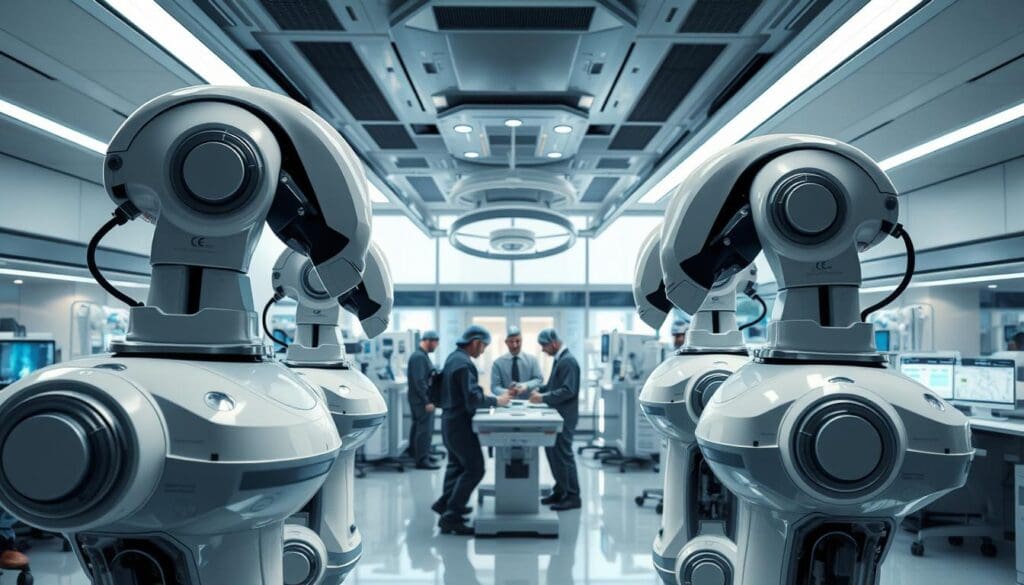
Medical robotics has hit a major milestone in 2025. New technologies are leading to rapid growth. Robots are changing how we care for patients, making healthcare more efficient.
The $14.46 Market and Projected Growth
The medical robotics market has grown a lot, reaching $14.46 in 2025. This growth comes from the need for precise and less invasive surgeries. Also, new robotic tech is playing a big role.
Experts say this growth will keep going. Healthcare is moving towards using more robots. This will help improve patient care and make things run smoother.
Key factors contributing to this growth include:
- Increased investment in healthcare technology
- Rising demand for robotic-assisted surgeries
- Expanding applications of robots in rehabilitation and diagnostics
Driving Forces Behind Healthcare Robotics Adoption
Several factors are pushing healthcare towards using more robots. The main reasons are the need for better precision, shorter recovery times, and better patient care. Robots are now used in many areas of healthcare, like surgery, rehab, and monitoring patients.
The benefits of using robots in medicine are many:
- Enhanced Precision: Robots can move and act with great accuracy, lowering the chance of mistakes.
- Improved Patient Outcomes: Using robots in treatments means patients can recover faster and get better health results.
- Increased Efficiency: By automating simple tasks, doctors and nurses can focus on more complex and important work.
As healthcare keeps changing, robots will play an even bigger role. This will lead to more innovation and better care for patients.
1. Surgical Robotics: Precision and Control in the Operating Room
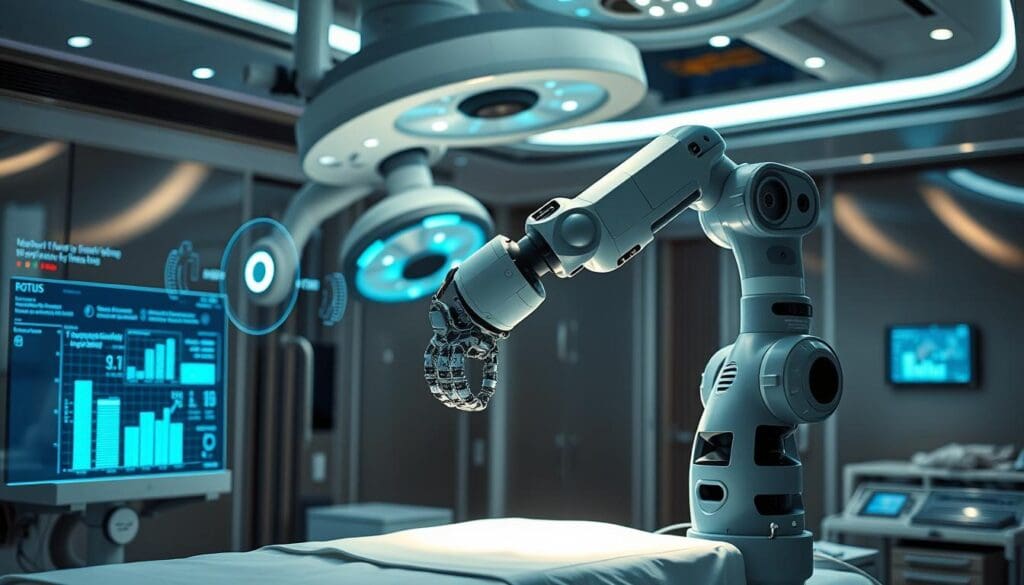
Advanced robotic systems are changing how we do surgery. They make operations more precise and controlled. These systems are key to modern healthcare, giving surgeons new tools and better patient results.
Advanced Robotic-Assisted Surgery Systems of 2025
The newest robotic surgery systems are packed with tech like AI and ML. These tools improve precision and dexterity in surgery. This means surgeons can handle more complex tasks with ease.
These systems also offer better visuals, with 3D imaging that shows the operating area clearly. This, along with precise movements of robotic tools, lowers the chance of problems and makes patients safer.
Surgeon Experience and Patient Outcomes
Surgical robotics has a big impact on both surgeons and patients. Research shows that robotic surgery can cut down on recovery times and improve results. Patients often feel less pain and have fewer issues.
Surgeons get better at their jobs with robotic systems. They can do complex surgeries with more confidence and accuracy. The design of these systems also helps surgeons stay focused and avoid fatigue during long surgeries.
As robotics in surgery keeps getting better, we’ll see even more progress in patient care. AI and ML will be crucial in this, helping systems learn and adapt to new situations.
2. Rehabilitation Robots: Accelerating Patient Recovery and Mobility
Advanced robotics are now helping patients recover faster and better. These robots aid in regaining strength and mobility after injuries or surgeries. They are especially helpful for those who have had strokes.
Exoskeletons and Mobility Assistance Devices
Exoskeletons and mobility devices are big steps forward in rehab tech. These wearable robots help patients with mobility issues. They make it easier for people to walk or move around.
For example, ReWalk and Ekso Bionics exoskeletons help those with spinal cord injuries. They improve mobility and independence.
The benefits of exoskeletons include:
- Enhanced mobility and independence
- Improved cardiovascular health through increased activity
- Potential for reduced muscle atrophy and bone density loss
AI-Driven Personalized Therapy Programs
Rehab robots are now paired with AI for personalized therapy. These AI systems analyze how patients do and adjust the therapy. They also give feedback in real-time.
A study in the Journal of NeuroEngineering and Rehabilitation found AI therapy boosts motor function. This shows how robots can speed up recovery and improve care quality.
“The integration of AI in rehabilitation robotics represents a significant shift towards more personalized and effective therapy programs.”
The future of rehab robots is bright. With AI, machine learning, and robotics getting better, patient care will too. We can expect even more advanced tools to help patients recover.
3. Diagnostic Robotics: AI-Powered Detection and Analysis
Diagnostic robotics, with AI, is changing how we find diseases early and accurately. It makes medical diagnoses faster and more precise.
Automated Imaging and Specimen Analysis
Diagnostic robotics has made big strides in analyzing images and samples. AI algorithms can look through lots of medical images quickly. They find problems with great accuracy.
This makes diagnosing faster and cuts down on mistakes.
- Enhanced image analysis capabilities
- Automated detection of abnormalities
- Integration with electronic health records for seamless data access
Early Disease Detection and Diagnostic Accuracy
AI in diagnostic robotics has greatly improved finding diseases early and accurately. AI tools look at medical data to predict diseases before symptoms show.
Key benefits include:
- Early intervention, potentially improving patient outcomes
- Reduced healthcare costs through preventive care
- Enhanced patient care through personalized treatment plans
As diagnostic robotics grows, we’ll see even better AI tools. They will change healthcare even more.
4. Infection Control: Robotic Disinfection Transforming Hospital Safety
Robotic disinfection is becoming key in fighting hospital infections. Hospitals are now using robots to improve infection control and keep patients safer.
UV-C and Chemical Disinfection Robots
Robotic disinfection uses UV-C light and chemicals to kill germs in hospitals. UV-C disinfection robots are great at killing many kinds of germs. They have special navigation to make sure every area is cleaned.
Chemical disinfection robots use special cleaners for high-risk areas. They can clean things like door handles and bed rails. This helps stop germs from spreading.
Measurable Reduction in Hospital-Acquired Infections
Research shows robots can cut down hospital infections a lot. By using these robots, hospitals can make a safer place for everyone.
| Hospital | Pre-Implementation Infection Rate | Post-Implementation Infection Rate | Reduction Percentage |
|---|---|---|---|
| Hospital A | 5.2% | 2.1% | 59.6% |
| Hospital B | 4.8% | 1.9% | 60.4% |
| Hospital C | 6.1% | 2.5% | 59.0% |
The numbers show robots really help lower hospital infections. This makes patients and staff safer and improves health outcomes.
5. Robotics and Medicine: The Integration of AI and Machine Learning
The mix of robotics, AI, and machine learning is making patient care better. It helps doctors give more precise and personalized care. This leads to better treatment results.
Predictive Analytics in Patient Care Management
Predictive analytics use AI and machine learning to look at big data. They help doctors predict how patients will do. This way, doctors can spot at-risk patients and plan special care for them.
- Early detection of potential complications
- Personalized treatment plans based on patient data
- Proactive management of chronic conditions
Continuous Learning Systems for Treatment Optimization
Systems that keep learning are being made to improve treatment plans. They look at data from health records and medical images.
Key benefits include:
- Improved treatment efficacy
- Reduced risk of adverse reactions
- Enhanced patient safety
The use of AI and machine learning in medicine is growing fast. It has a big chance to make healthcare better. As these technologies get better, we’ll see even more new uses in the future.
6. Hospital Logistics: Robots Streamlining Healthcare Operations
Robots are changing how hospitals manage supplies and care for patients. They make things more efficient, cut costs, and let doctors and nurses spend more time with patients.
Automated Medication Dispensing and Delivery
Robots are now used to give out medicines automatically. This makes sure patients get their meds on time and correctly, cutting down on mistakes.
These systems use robots to keep, give out, and track medicines. It makes patients safer and helps nurses and pharmacists work better.
Supply Chain Management and Inventory Control
Robots are also helping with managing supplies and keeping track of what’s in stock. They help track inventory, manage storage, and get supplies automatically.
Using robots for inventory control cuts down on waste and makes sure supplies are ready when needed. It also saves staff time, making hospitals run smoother and patients happier.
7. Patient Monitoring: Continuous Care Through Advanced Robotics
Robots are changing healthcare by making care continuous. They can watch over patients’ health in real-time. This helps doctors act fast and improves health results.
Remote Vital Signs Monitoring and Alert Systems
Remote vital signs monitoring is key in today’s healthcare. Robots with sensors can check heart rate, blood pressure, and oxygen levels. They do this without needing a person to watch over them.
Key benefits of remote vital signs monitoring include:
- Early detection of potential health issues
- Reduced need for manual checks by healthcare staff
- Enhanced patient safety through continuous monitoring
Telehealth Integration with Robotic Assistance
Telehealth is getting more important in healthcare. Robots help make it better by giving real-time data and helping with exams. This is great for people in far-off or hard-to-reach areas.
As noted by a recent study, “The mix of telehealth and robots is promising. It’s making healthcare better and more accessible.” This mix is expected to grow, changing healthcare even more.
Using robots for remote monitoring and telehealth is making care better and more efficient. Healthcare providers can give more tailored and effective care. This leads to better health results for patients.
8. Healthcare Labor Support: Robotic Solutions to Staffing Shortages
Robotic solutions are helping a lot in healthcare labor support. They aim to solve the problem of not enough staff. Robots help healthcare workers give better care to patients.
Nursing Assistant Robots for Routine Tasks
Nursing assistant robots do routine tasks. This lets human nurses focus on more important work. They help with things like:
- Vital sign monitoring
- Medication reminders
- Assisting patients with daily activities
These robots make nurses’ jobs easier. They help nurses give more personal care to patients.
Administrative Automation for Healthcare Workers
Robots also help with administrative tasks. They can do things like:
- Data entry
- Scheduling appointments
- Managing patient records
Robotic solutions in healthcare have many benefits. A study showed they improved staff and patient satisfaction. Here are some key findings:
| Metric | Pre-Robot Implementation | Post-Robot Implementation |
|---|---|---|
| Staff Satisfaction | 70% | 85% |
| Patient Satisfaction | 75% | 90% |
| Administrative Task Time | 30 hours/week | 15 hours/week |
The table shows robots improved satisfaction and reduced administrative time.
9. Elderly Care: Robotic Companions and Assistants for Aging Populations
Robots are becoming key helpers for the elderly as the world’s population ages. They bring companionship, help, and better lives to older people.
Social Interaction and Cognitive Stimulation Robots
Robots that help with socializing and keeping minds sharp are popular in caring for the elderly. They talk, play games, and offer friendship. This helps fight loneliness and isolation.
For example, Paro, a robot seal, comforts and supports the elderly’s mental health. It shows how robots can improve mental health and social lives of the elderly.
Activities of Daily Living (ADL) Support Systems
Robots also help with daily tasks like bathing and dressing. They ease the work of caregivers and help the elderly stay independent.
Robotic exoskeletons are another example. They help with walking and prevent falls. This is especially important for the elderly who struggle with mobility.
| Robot Type | Function | Benefit |
|---|---|---|
| Social Interaction Robots | Engage in conversation, play games | Reduces loneliness, improves mental health |
| Cognitive Stimulation Robots | Stimulate mental activity | Improves cognitive function |
| ADL Support Robots | Assist with daily activities like bathing, dressing | Enhances independence, reduces caregiver burden |
In summary, robots are changing elderly care by offering friendship, mental challenges, and daily help. As technology advances, these robots will be even more important for improving the lives of the elderly around the world.
10. Economic Impact: Cost-Effectiveness of Healthcare Robotics
Healthcare robotics is changing the medical world. It brings big cost savings and better care for patients. These technologies affect many parts of healthcare.
Initial Investment vs. Long-term Healthcare Savings
Starting to use healthcare robotics costs a lot at first. But, research shows it saves money in the long run. For example, robotic surgeries can make hospital stays shorter, cutting down on costs.
Robotic systems also help avoid the need for more surgeries. This saves even more money.
Key areas where healthcare robotics contribute to cost savings include:
- Reduced hospital stay durations
- Minimized need for repeat procedures
- Lower costs associated with complications
- Improved patient throughput in surgical departments
Improved Efficiency and Reduced Readmission Rates
Healthcare robotics makes hospitals work better. Robots do simple tasks like giving out medicine. This lets doctors and nurses do more important work.
Robots also watch patients all the time. This means doctors can catch problems early and avoid readmissions.
The efficiency gains from healthcare robotics can lead to:
- Increased productivity among healthcare staff
- Enhanced patient satisfaction due to more personalized care
- Better resource allocation within healthcare facilities
Understanding how healthcare robotics saves money helps hospitals make smart choices. As healthcare changes, robots will play a bigger role in saving money and helping patients.
Conclusion: The Future Trajectory of Medical Robotics Beyond 2025
Robots have changed healthcare a lot, making patient care and surgeries better. Looking ahead, robots in healthcare will keep getting better. This is thanks to new tech like AI and sensors.
Robots will be key in healthcare’s future. They could help with personalized medicine and watching patients from afar. This will make care better and save money.
We’re going to see big changes in how robots help in healthcare. This includes better surgery robots and therapy tools. The market for medical robots is growing fast. This means more robots will help make healthcare better for everyone.
FAQ
What is the current market size of the medical robotics industry?
The medical robotics industry is worth .46 billion now. It’s expected to grow as robotics tech gets better and more used in healthcare.
How are robots being used in surgical procedures?
Robots help in surgeries by making them more precise and controlled. This lets doctors do complex operations with better results and less harm to patients.
What are rehabilitation robots and how do they assist patients?
Rehab robots, like exoskeletons and AI therapy, help patients move better. They offer personalized therapy to aid in recovery.
How are AI-powered diagnostic tools improving healthcare?
AI tools make healthcare better by being more accurate and catching diseases early. They analyze images and samples automatically.
What role do robots play in hospital disinfection and infection control?
Robots with UV-C and chemical tech help fight hospital infections. They clean hospital areas thoroughly and efficiently.
How is AI and machine learning being integrated into medical robotics?
AI and machine learning are making medical robots smarter. They use predictive analytics and learn from data to improve care and outcomes.
What are the benefits of using robots in hospital logistics?
Robots make hospital logistics better by automating tasks. They help with meds, supplies, and inventory, making things more efficient and reducing mistakes.
How are robots being used for patient monitoring and telehealth?
Robots help with remote monitoring and telehealth. They keep an eye on patients and offer support, improving care and outcomes.
What is the economic impact of adopting healthcare robotics?
Using healthcare robots can save a lot of money in the long run. They make things more efficient, lower readmission rates, and improve care, even with the initial costs.
How are robots supporting elderly care and improving quality of life?
Robots help the elderly by being companions, stimulating their minds, and helping with daily tasks. They make life better for older people.
What is the future trajectory of medical robotics beyond 2025?
Medical robotics will keep getting better with AI, machine learning, and tech advancements. We’ll see more robots in healthcare and new uses and innovations.
FAQ
What is the current market size of the medical robotics industry?
The medical robotics industry is worth .46 billion now. It’s expected to grow as robotics tech gets better and more used in healthcare.
How are robots being used in surgical procedures?
Robots help in surgeries by making them more precise and controlled. This lets doctors do complex operations with better results and less harm to patients.
What are rehabilitation robots and how do they assist patients?
Rehab robots, like exoskeletons and AI therapy, help patients move better. They offer personalized therapy to aid in recovery.
How are AI-powered diagnostic tools improving healthcare?
AI tools make healthcare better by being more accurate and catching diseases early. They analyze images and samples automatically.
What role do robots play in hospital disinfection and infection control?
Robots with UV-C and chemical tech help fight hospital infections. They clean hospital areas thoroughly and efficiently.
How is AI and machine learning being integrated into medical robotics?
AI and machine learning are making medical robots smarter. They use predictive analytics and learn from data to improve care and outcomes.
What are the benefits of using robots in hospital logistics?
Robots make hospital logistics better by automating tasks. They help with meds, supplies, and inventory, making things more efficient and reducing mistakes.
How are robots being used for patient monitoring and telehealth?
Robots help with remote monitoring and telehealth. They keep an eye on patients and offer support, improving care and outcomes.
What is the economic impact of adopting healthcare robotics?
Using healthcare robots can save a lot of money in the long run. They make things more efficient, lower readmission rates, and improve care, even with the initial costs.
How are robots supporting elderly care and improving quality of life?
Robots help the elderly by being companions, stimulating their minds, and helping with daily tasks. They make life better for older people.
What is the future trajectory of medical robotics beyond 2025?
Medical robotics will keep getting better with AI, machine learning, and tech advancements. We’ll see more robots in healthcare and new uses and innovations.
References
Towards Healthcare: Medical Service Robots Market Sizing (Insights Article)
DelveInsight: Robotics in Healthcare (Blog Article)
Global Market Insights (GMI): Medical Robots Market (Industry Analysis)
Standard Bots: 10 Ways Robotics are Being Used in Healthcare Today (Blog Article)
World Economic Forum: How Robots are Transforming the Medical Industry