Last Updated on November 19, 2025 by Saadet Demir
Finding the safest form of sedation for kids’ dental visits is very important. We know children may feel nervous or scared at the dentist, which is why pediatric sedation dentistry plays such a key role in making the experience easier.
There are different options in pediatric sedation dentistry, including topical sedatives, nitrous oxide (laughing gas), and even general anesthesia for more complex cases. Each method has its own benefits, and the right choice depends on the child’s age, health, and the type of dental procedure needed.
At our hospital, we specialize in pediatric sedation dentistry with a focus on safety and comfort. Our experts carefully guide parents in choosing the best sedation option for their child, ensuring every dental visit is safe, stress-free, and as comfortable as possible.
Key Takeaways
- Various sedation options are available for children, including topical sedatives, nitrous oxide, and general anesthesia.
- The safest form of sedation depends on individual needs and medical history.
- Consulting with a professional is key to finding the best sedation method.
- Sedation dentistry can help reduce anxiety and fear in children during dental procedures.
- A safe and comfortable experience is our top priority when it comes to sedation for children.
Understanding the Need for Child Sedation in Dental Settings
Pediatric dental sedation is a complex field. It needs a deep understanding of balancing treatment with safety for young patients. Children often face unique challenges in dental settings. This calls for a thoughtful approach to their care.
Common Reasons Children Require Sedation
Children may need sedation for several reasons:
- Anxiety and Fear: Many kids feel anxious or scared at the dentist. This can make dental procedures hard.
- Extensive Treatment Needs: Kids needing a lot of dental work might find sedation helpful. It keeps them comfortable during the procedure.
- Special Needs: Children with special needs might find it hard to stay calm or cooperate. Sedation can be very helpful for them.
Balancing Effective Treatment with Safety Concerns
While sedation is useful, it’s important to consider safety. This means:
- Careful Patient Selection: We check the child’s health and medical history. This helps choose the best sedation method.
- Monitoring and Safety Protocols: We have strict monitoring and safety steps during and after the procedure. This ensures the child’s safety.
- Parental Involvement: We keep parents in the loop and involved in decisions about their child’s sedation.
Understanding the need for child sedation and balancing treatment with safety is key. This way, we can give our young patients the best care. Sedation dentistry for kids, when done right, makes their dental visits more comfortable and less scary.
Pediatric Sedation Dentistry: Safety Protocols and Best Practices
The safety of our young patients is our top priority in pediatric sedation dentistry. We know that making them comfortable and safe during dental visits is key to a good experience.
We follow strict safety protocols to reduce risks and ensure safe sedation. Our approach includes several important steps to create a safe space for our patients.
The Importance of Trained Staff and Proper Monitoring
Having a trained staff is essential for safe pediatric sedation dentistry. Our team gets thorough training on sedation in kids, including how to watch their vital signs and handle any problems.
Proper monitoring is also a key part of our safety rules. We use top-notch monitoring tools to keep an eye on our patients’ vital signs in real-time. This lets us quickly spot and fix any problems during the procedure.
Comprehensive Pre-sedation Evaluation
Before we give any sedation, we do a comprehensive pre-sedation evaluation. We get a full medical history to make sure we can safely treat your child. We look at their medical history, current health, and any past sedation or anesthesia experiences.
We also talk about the sedation plan with you, the parents. This ensures you’re informed and comfortable with our approach. This teamwork helps lower risks and makes sure everyone is on the same page.
By using trained staff, proper monitoring, and a comprehensive pre-sedation evaluation, we offer a safe and effective sedation experience for our young patients. Our dedication to safety protocols and best practices in pediatric sedation dentistry gives you confidence, knowing your child is in good hands.
Nitrous Oxide: The Most Common Form of Dental Gas for Kids
Many kids feel less anxious at the dentist with nitrous oxide sedation. Known as laughing gas, it helps kids relax without making them sleep. This makes dental visits easier for them.
What Does Laughing Gas Do For Kids?
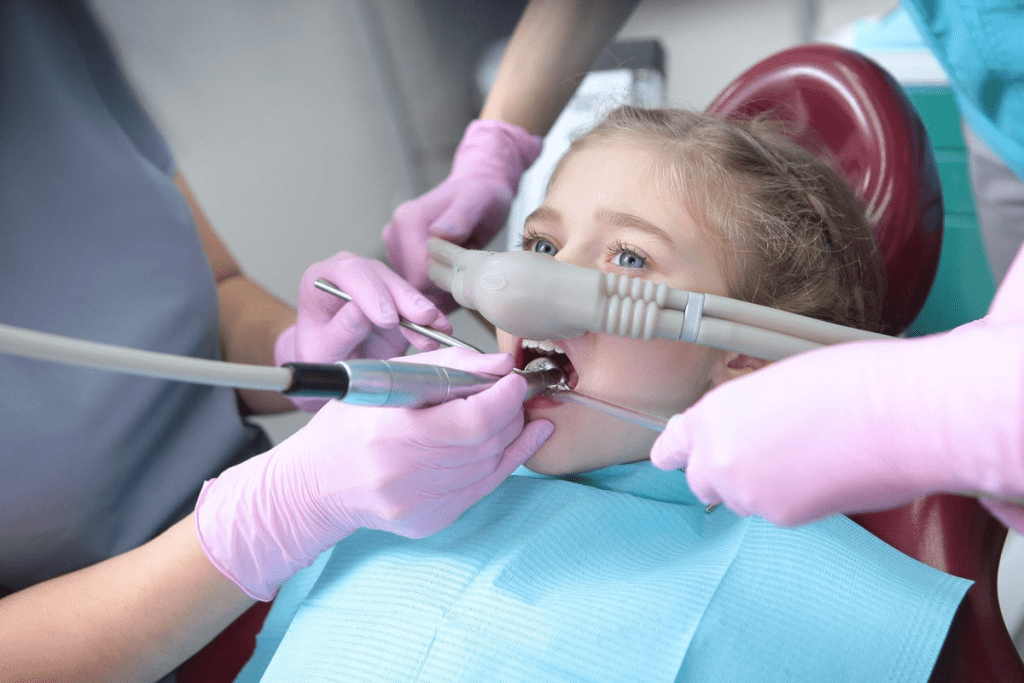
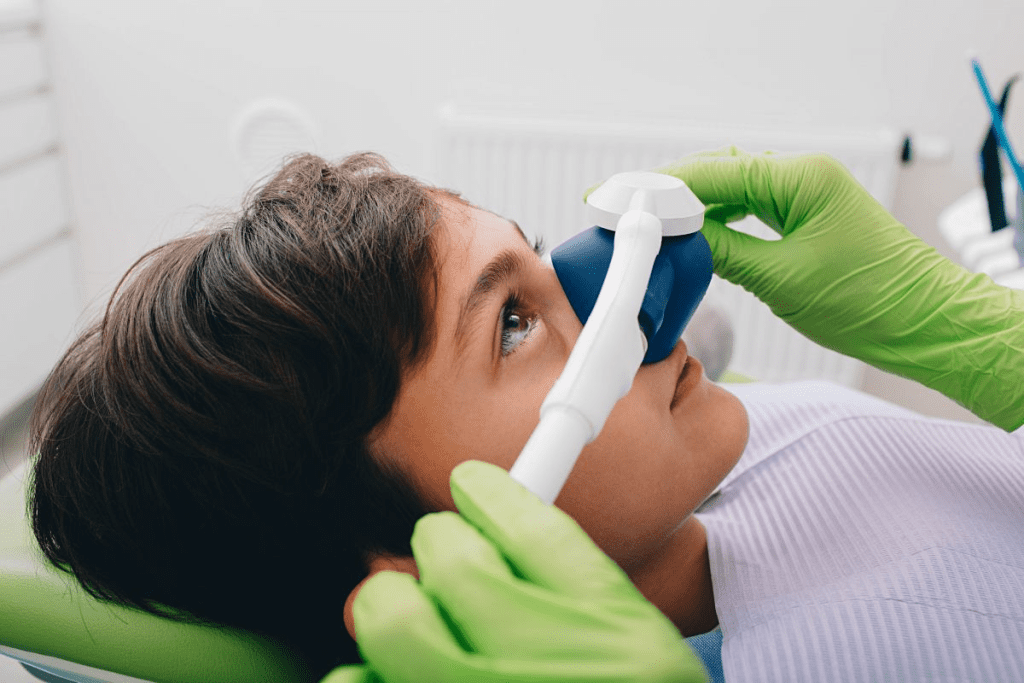
Nitrous oxide makes kids feel calm during dental visits. It’s given through a nose mask and works fast. Kids stay awake but feel less scared.
The benefits of nitrous oxide include:
- Rapid onset: It starts working quickly, making dental care efficient.
- Easy to administer: The gas is given through a simple mask, making it easy to use.
- Reversible: After the visit, kids quickly go back to normal with pure oxygen.
Is Laughing Gas Anesthesia? Understanding the Differences
Nitrous oxide sedation and general anesthesia are different. Nitrous oxide keeps kids awake and able to follow instructions, even if they’re relaxed. General anesthesia makes patients sleep.
General anesthesia is more complex and requires more monitoring. Nitrous oxide is safer because it doesn’t need as much watching.
Safety Profile and Minimal Side Effects
Nitrous oxide is very safe for kids at the dentist. It has a few side effects, and the body gets rid of it fast. Side effects like nausea or dizziness are rare and short-lived.
Some key points about nitrous oxide safety include:
- The gas leaves the body quickly after it’s stopped.
- It doesn’t harm breathing or heart functions much.
- It’s been used for decades and is very safe.
Nitrous oxide is very helpful in making dental visits less scary for kids. It’s safe and works well, making it a top choice for many dental procedures.
Oral Sedation Options for Pediatric Dental Procedures
Many kids find dental procedures scary. Oral sedation helps them relax during these treatments. We’ll look at the different sedation options, how well they work, and what parents need to know about recovery.
Oral Chloral Hydrate: 73.4% Effective Sedation Rate
Oral chloral hydrate is a key sedative in kids’ dentistry, with a 73.4% effective sedation rate. It’s great for young kids who can’t sit quietly. The dose is based on the child’s weight, given as a liquid. It’s important to watch the child to keep them safe and comfortable.
Liquid Sedation in Pediatric Dentistry
Liquid sedation is a favorite in kids’ dentistry. It’s easy to give and tastes better than other sedatives. It helps kids relax and stay calm, making their visit better.
Recovery Process and Parental Monitoring
After oral sedation, recovery is key. Parents should keep a close eye on their child until the sedation fades. We give clear instructions on what to do next, like diet and activity levels. This way, we all work together for a safe recovery.
Knowing about oral sedation helps parents make better choices for their kids’ dental care. We aim to provide top-notch care, using sedation wisely and with kindness. This ensures a good experience for kids and their families.
Intranasal Midazolam: A Non-Invasive Alternative
Intranasal midazolam is a safe and effective sedation option for kids. It helps reduce anxiety and discomfort during dental visits. This makes it a great choice for parents and healthcare providers.
Research has shown that intranasal midazolam works well for sedating kids during dental treatments and CT scans. Its easy use makes it popular among parents and doctors.
77.5% Effective Sedation Rate for Procedures
Studies found that intranasal midazolam sedates 77.5% of kids for different procedures. This shows it’s a reliable sedation method. It’s very effective for kids, who often feel scared or anxious during dental visits.
Administration Technique and Patient Comfort
Administering intranasal midazolam is simple. The medicine goes straight into the nasal passage, quickly getting into the blood. This method is comfortable for patients because it doesn’t involve needles or IVs. We adjust how we give it to each patient to make sure they’re comfortable and it works well.
Parental Satisfaction Rates Above 80%
Parents are very happy with intranasal midazolam, with over 80% satisfaction. They like that it’s easy and helps their kids feel less scared during medical procedures. High satisfaction from parents shows how well intranasal midazolam works in pediatric dentistry.
Intranasal midazolam is a big step forward in sedating kids for dental visits. It’s safe, effective, and easy to use. Its success and the happiness of parents make it a valuable tool in dental care.
Moderate Sedation with Propofol for Dental Procedures
Propofol is now used for moderate sedation in kids’ dental visits. It’s safe and works well. We’ll look at its safety, how to watch it, and how long it takes to wake up. This will help us see if it’s good for children.
Safety Data from Meta-Analyses
A big study with over 3,700 kids found propofol is as safe as other sedatives. A study in the Journal of Oral and Maxillofacial Surgery says propofol is safe for kids’ dental sedation.
The study found:
- It has a few bad effects
- It’s as safe as other sedatives
- It works well for dental procedures
Cardiovascular and Respiratory Monitoring Requirements
It’s important to watch the heart and breathing when using propofol. We need to keep an eye on heart rate, blood pressure, and oxygen levels. This makes sure the patient is safe during the dental visit.
Monitoring Requirements:
- Always use pulse oximetry
- Check blood pressure often
- Watch the heart
Recovery Timeline and Post-Procedure Care
Most kids wake up quickly after propofol sedation. It’s key to take care of them after the visit. This includes watching for any problems and helping with pain.
Important post-visit care includes:
- Watching them in a recovery area
- Helping with pain
- Telling parents how to care for their child
When Is a Child Under Anesthesia for Dental Work Necessary?
For some kids, general anesthesia is needed for safe dental care. It might worry parents to think about their child under anesthesia. But, in some cases, it’s the best way to keep the child comfortable and the treatment successful.
Indications for General Anesthesia in Pediatric Dentistry
General anesthesia is used for kids needing a lot of dental work. This is when they’re too young, have a serious medical condition, or are very anxious. It lets us do the needed work in one go, avoiding many visits.
Risk-Benefit Assessment for Complex Procedures
We look at the risks and benefits of general anesthesia carefully. The good parts are that we can do complex work safely and quickly, and the child won’t be as scared. A board-certified anesthesiologist watches the child’s health during the procedure, making the risks lower.
Hospital-Based vs. Office-Based Administration
General anesthesia can be given in a hospital or a dental office. The choice depends on the procedure’s complexity, the child’s health, and family needs. Hospital care is for more complex cases or when extra medical help is needed. Dental office care is more convenient and less scary for the child and family.
We talk with parents to find the best place for their child’s care. This way, we ensure the child gets the best dental care and stays healthy.
Conclusion: Choosing the Right Sedation Option for Your Child
Choosing the right sedation for your child’s dental visit is key for their comfort and safety. We’ve looked at different sedation options like nitrous oxide and oral sedation. Each has its own benefits and things to think about.
For kids, understanding their medical history and needs is important. The best dentists for kids are trained in sedation for children. They need to know your child’s medical history before treatment.
Knowing the sedation options and working with experts helps parents make good choices. It’s important to pick a sedation that fits your child’s needs for a safe and effective visit.
Choosing the right sedation depends on your child’s age, medical history, and the dental procedure. This way, your child gets the best care in a safe and comfortable place.
FAQ’s:
What is laughing gas, and how does it work in pediatric dentistry?
Laughing gas, also known as nitrous oxide, is used in pediatric dentistry. It helps children relax during dental visits. The gas is given through a mask and starts working in a few minutes.We use it to reduce anxiety and make dental visits more comfortable for kids.
Is laughing gas the same as anesthesia?
No, laughing gas and anesthesia are not the same. Both help patients relax, but in different ways. Laughing gas is a mild sedative that reduces anxiety. Anesthesia makes you unconscious.We use laughing gas for its sedative effects, not as anesthesia.
Does laughing gas knock you out?
No, laughing gas does not knock you out. It’s a mild sedative that helps kids relax and feel more comfortable during dental visits. Kids are awake and can follow our instructions while under its effects.
What are the side effects of laughing gas in pediatric dentistry?
The side effects of laughing gas are minimal and short-lived. Some kids might feel a bit nauseous or dizzy after the visit. But these feelings usually go away quickly.We keep a close eye on kids after giving them laughing gas to make sure they’re safe and comfortable.
What is oral sedation, and how is it used in pediatric dentistry?
Oral sedation is when a sedative medication is given orally to help kids relax during dental visits. We use it for kids who need more sedation than laughing gas can provide. The type and dosage of sedation depend on the child’s needs and medical history.
How long does it take to recover from oral sedation?
Recovery time from oral sedation varies. It usually takes several hours. We provide guidance on post-sedation care and monitoring to ensure the child’s safety and comfort during recovery.
When is general anesthesia necessary for pediatric dental work?
General anesthesia is needed for complex or extensive dental procedures. We assess each child’s needs and medical history to decide if general anesthesia is necessary. It’s usually given in a hospital or specialized facility with proper monitoring and care.
What is the difference between sedation dentistry for children and adults?
Sedation dentistry for children requires specialized training and equipment. Children’s sedation needs are different from adults. We tailor our approach to meet the unique needs of pediatric patients.We use sedation methods that are safe and effective for kids, considering their age, size, and medical history.
How do I choose the right sedation option for my child?
Choosing the right sedation option depends on your child’s specific needs, medical history, and the dental procedure. We work closely with parents to find the best sedation approach for their child. Our goal is to ensure the child’s safety and comfort during the dental visit.
REFERENCES:
- Chun, M. K., & Jung, E. S. (2023). Safety and efficacy of pediatric sedation protocol for diagnostic tests in the pediatric emergency room. Medicine, 102(25), e32721. This study analyzed sedation protocols using chloral hydrate, midazolam, and ketamine, finding that sequential administration achieved adequate sedation depth with minimal adverse events, indicating safety and efficacy in pediatric sedation. Retrieved from ttps://pmc.ncbi.nlm.nih.gov/articles/PMC10289638/[]
- rtling, L., et al. (2016). What works and what’s safe in pediatric emergency department procedural sedation: An overview of systematic reviews. *Aademic Emergency Medicine*,23(5), 557-570. This comprehensive review showed consistent safety and efficacy for nitrous oxide and ketamine, with very rare significant adverse events for propofol; highlighting the safety profiles of common pediatric sedatives. Retrieved from htps://pubmed.ncbi.nlm.nih.gov/26858095/[2] 3.
- S., et al. (2019). Evaluation of the safety of using propofol for pediatric procedural sedation: A systematic review and meta-analysis. *Scintific Reports*, 9 12296. A meta-analysis confirming propofol’s advantages in recovery time without excessive respiratory or cardiovascular adverse events, supporting its safe use in pediatric sedation. Retrieved from http://www.nature.com/articles/s41598-019-48724-x[4] . P