Last Updated on November 4, 2025 by mcelik
Knowing if scoliosis is a disability is key for those who struggle daily. Getting scoliosis recognized as a disability can help a lot. But, it needs a deep look at how it affects someone’s life. Is scoliosis disability a Fact? When does the condition Officially qualify for disability status? Crucial info.
Looking into scoliosis and its disability status is important. It shows how much it can affect people. Knowing scoliosis and work limitations helps those affected and their doctors.
Key Takeaways
- Understanding scoliosis and its disability status is key for those affected.
- Getting scoliosis recognized as a disability needs a detailed look.
- Scoliosis can greatly affect someone’s life and work.
- Knowing if scoliosis is a disability is important for getting help.
- The condition’s effect on daily life and work is a big part of disability assessments.
Understanding Scoliosis: Definition, Types, and Prevalence
Scoliosis is a health issue that needs attention. It involves an abnormal curve in the spine. This curve can happen in different parts of the spine, leading to various types of scoliosis.
What is Scoliosis?
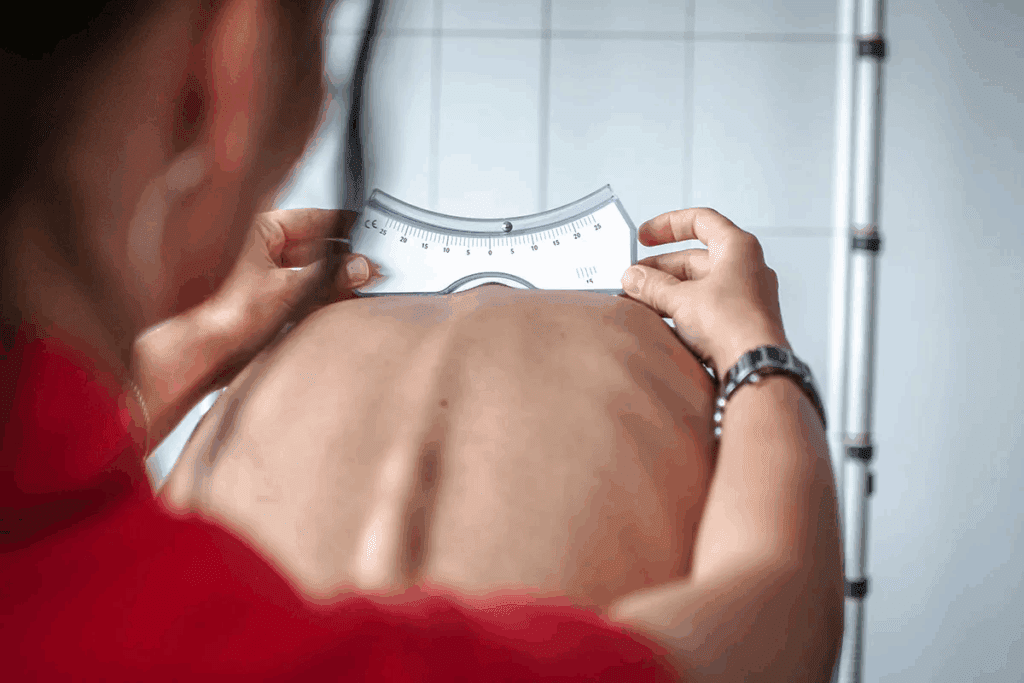
Scoliosis is a condition where the spine curves to one side. It can be ‘C’ shaped or ‘S’ shaped. Doctors use X-rays to diagnose it, measuring the curve with the Cobb angle.
Common Types of Scoliosis
There are several types of scoliosis, each with its own features:
- Idiopathic Scoliosis: The most common type, with no known cause, appearing in late childhood or adolescence.
- Congenital Scoliosis: Present at birth, caused by abnormal spinal development in the womb.
- Neuromuscular Scoliosis: Linked to neurological or muscular diseases, like cerebral palsy or muscular dystrophy.
- Degenerative Scoliosis: Found in adults, caused by changes in the spine, such as arthritis or osteoporosis.
Prevalence Rates in the United States
Scoliosis is common, affecting a significant number of people. The rates vary by age and type. Idiopathic scoliosis, the most common, affects about 2-3% of adolescents in the U.S. Girls are more likely to have significant curves and need treatment.
Knowing about scoliosis prevalence and types is key for early detection and treatment. Recognizing signs and symptoms helps healthcare providers offer timely help. This improves outcomes for those with scoliosis.
Scoliosis as a Medical Condition: Symptoms and Severity Levels
Scoliosis shows up differently in everyone. It’s important to know its symptoms and how severe it can be. Scoliosis is more than just a spine curve. It affects people in many ways, depending on its type, how severe it is, and how it changes over time.
Common Symptoms of Scoliosis
Scoliosis symptoms can be hard to spot, even in the early stages. Look out for:
- Uneven shoulders or shoulder blades
- A prominent rib cage or uneven waist
- Leaning to one side
- Back pain or discomfort
- Difficulty breathing in severe cases
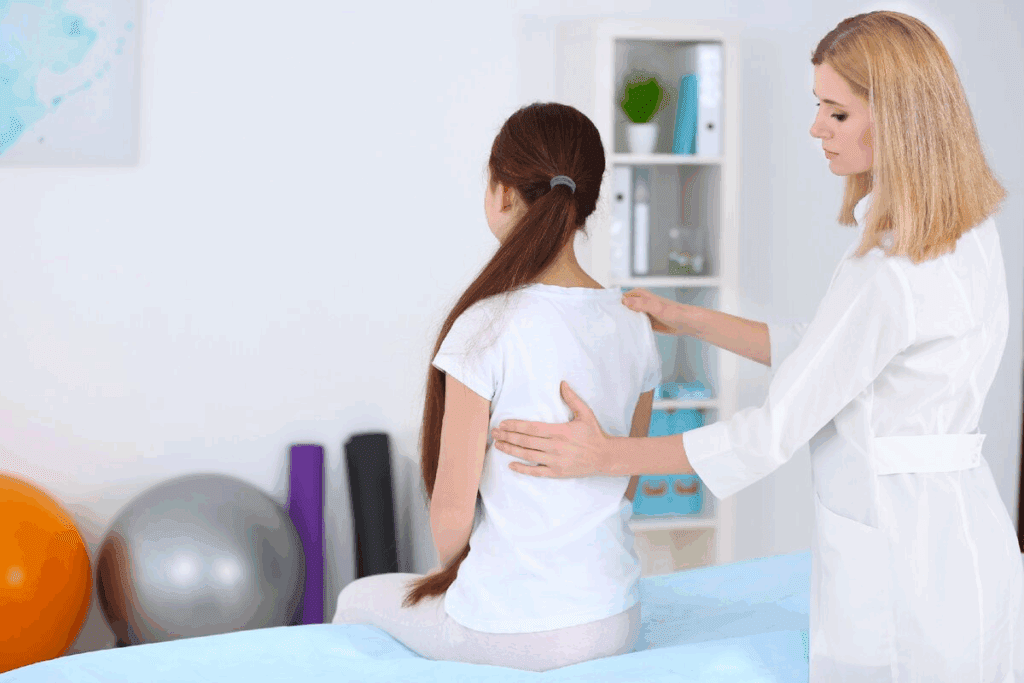
These signs can be different for everyone. They might not be obvious at first. It’s key to get regular check-ups, even more so during the teenage years, to catch it early.
Measuring Scoliosis Severity: The Cobb Angle
The Cobb angle is used to measure how severe scoliosis is. It’s found through X-rays. The angle is calculated by drawing lines on the X-ray. These lines are parallel to the top and bottom of the curved vertebrae.
The Cobb angle is a key measure because it shows how severe the scoliosis is:
- Mild: 10-20 degrees
- Moderate: 21-40 degrees
- Severe: 41-60 degrees
- Very Severe: 61 degrees or more
Progression and Risk Factors
Scoliosis can get worse over time, often during growth spurts like adolescence. Several things can make it more likely to worsen:
- Age: Younger people are at higher risk.
- Severity: Bigger curves are more likely to get worse.
- Skeletal maturity: Those who are less grown up are at higher risk.
- Curve pattern: Some patterns are more likely to worsen.
Knowing these risk factors helps manage scoliosis better. It can help prevent the curve from getting too severe.
The Definition of Disability in Medical and Legal Contexts
Understanding what it means to be disabled in medical and legal terms is key. The word “disability” has different meanings depending on where it’s used.
Medical Definition of Disability
In medicine, a disability is seen as a condition that greatly limits a person’s ability to do things. This could be physical or mental tasks. It’s about how the condition affects someone’s daily life and health.
For scoliosis, it’s considered a disability if it severely limits physical abilities or causes major health problems. The Cobb angle measures how severe scoliosis is, which helps determine its impact.
Legal Definition of Disability in the United States
In the U.S., laws like the Americans with Disabilities Act (ADA) define disability. The ADA says a disability is a condition that makes it hard to do major life activities.
The legal side is about giving people with disabilities the same rights as others. It’s about making sure they have equal chances in work, school, and more.
The Americans with Disabilities Act (ADA) Framework
The ADA helps protect the rights of people with disabilities, including those with scoliosis. It says people with disabilities should get reasonable help to do their job or use public places.
To get ADA protection, a person’s scoliosis must really limit their ability to do important things. This could be anything from walking to more complex tasks.
Knowing the ADA is important for people with scoliosis. It helps them understand their rights and what help they can get at work and in society.
Scoliosis Disability: Medical Classification and Recognition
Scoliosis is a condition where the spine curves abnormally. Its severity affects how it’s seen as a disability. Knowing these levels is key for doctors and those with scoliosis.
Mild Scoliosis and Disability Classification
Mild scoliosis has a Cobb angle under 20-25 degrees. People with it might not have big problems doing things. But, they need to be checked often to stop it from getting worse.
Moderate Scoliosis and Functional Limitations
Moderate scoliosis has a Cobb angle between 25-50 degrees. It can cause noticeable symptoms and some trouble doing things. It’s not always seen as a disability, but it can make some activities hard.
Severe Scoliosis as a Recognized Medical Disability
Severe scoliosis has a Cobb angle of 50 degrees or more. It leads to big problems with moving and pain, making it a recognized disability. It can really affect someone’s life and work.
| Scoliosis Severity | Cobb Angle (degrees) | Disability Classification | Functional Limitations |
| Mild | < 20-25 | Not typically considered a disability | Minimal |
| Moderate | 25-50 | May not be considered a disability | Some limitations |
| Severe | ≥ 50 | Recognized medical disability | Significant |
Seeing scoliosis as a disability is complex. It depends on how severe it is, any movement problems, and how it affects daily life and work.
Scoliosis Disability Status Under U.S. Law
Understanding scoliosis disability status in the U.S. means knowing the Americans with Disabilities Act (ADA) and state laws. The ADA sets a federal standard for disabilities, including scoliosis. State laws can add more protections or have different rules.
Scoliosis and the Americans with Disabilities Act
The ADA is a key civil rights law that bans disability discrimination. To get ADA protection, scoliosis sufferers must show their condition limits major life activities. This includes mobility, bending, and other physical tasks.
Key factors considered under the ADA include:
- The severity of the scoliosis, often measured by the Cobb angle
- The impact of scoliosis on daily life and major life activities
- The effectiveness of treatments or corrective measures in mitigating the condition
Employers and public places must offer reasonable accommodations for disabilities. This could mean ergonomic changes or flexible schedules for medical visits.
State-Level Variations in Disability Recognition
Though the ADA is national, states have their own disability laws. Some states offer more protection or have different rules for disability status. For example, some states have special disability benefits or appeal processes.
It’s important for scoliosis sufferers to know both federal and state laws. Talking to disability law experts can help understand rights and protections.
Legal Precedents in Scoliosis Disability Cases
Legal cases have shaped our understanding of scoliosis disability status. Court decisions have clarified ADA and state law applications. These precedents affect disability claims and what counts as a disability.
Notable legal precedents have addressed issues such as:
- The definition of “substantially limits” in the context of major life activities
- The consideration of mitigating measures in assessing disability
- The obligations of employers to provide reasonable accommodations
Knowing these legal precedents helps scoliosis sufferers understand their rights better.
Social Security Disability Benefits for Scoliosis Patients
People with scoliosis might get SSDI benefits. But, the application process is complex. We’ll help you understand how to qualify, apply, and appeal if needed.
Qualifying for SSDI with Scoliosis
To get SSDI, you must show scoliosis really limits your work ability. The Social Security Administration (SSA) has a special way to check disability claims for scoliosis.
The SSA looks at how severe your scoliosis is, the curve’s degree, and how it affects your daily life and work. Your medical records are very important in this review.
Key Factors in SSDI Eligibility for Scoliosis:
- Severity of scoliosis as measured by the Cobb angle
- Presence of symptoms such as chronic pain, limited mobility, and neurological deficits
- Impact on the ability to perform substantial gainful activity (SGA)
- Effectiveness of treatments and response to therapy
The Application Process and Documentation
Getting SSDI starts with collecting detailed medical records. You’ll need:
- Medical records detailing diagnosis, treatment plans, and progress
- Imaging studies (X-rays, MRIs) showing the degree of spinal curvature
- Statements from healthcare providers about the impact of scoliosis on daily activities and work capacity
The SSA will look at this information to see how severe your condition is and how it affects your work.
| Documentation Type | Description | Importance |
| Medical Records | Detailed history of diagnosis, treatment, and progress | High |
| Imaging Studies | X-rays, MRIs showing the degree of spinal curvature | High |
| Healthcare Provider Statements | Assessments of the impact on daily activities and work capacity | High |
Common Reasons for Denial and Appeal Strategies
Many SSDI claims are first denied. Reasons include:
- Insufficient medical evidence
- Lack of clear documentation of functional limitations
- Failure to follow prescribed treatments
To appeal a denial, you should:
- Request a reconsideration, providing additional medical evidence
- Prepare for a hearing before an Administrative Law Judge (ALJ)
- Seek assistance from a disability attorney or advocate
Understanding the SSDI process and preparing well can help. If denied, a good appeal plan can make a big difference.
Workplace Accommodations for Individuals with Scoliosis
People with scoliosis often face special challenges at work. They need specific help to stay productive and comfortable. This condition can make it hard to do some tasks, so their work area needs to be adjusted.
Reasonable Accommodations Under the ADA
The Americans with Disabilities Act (ADA) says employers must help people with disabilities at work. Reasonable accommodations are changes that help employees with disabilities do their jobs well. These can be things like changing workstations, adjusting schedules, or giving ergonomic tools.
Employers must make these changes if they can without hurting their business too much. It’s important for people with scoliosis to know their rights and talk about their needs with their bosses.
Ergonomic Solutions for Scoliosis in the Workplace
Ergonomic solutions are key for people with scoliosis at work. Ergonomic adjustments can make work less painful and more productive. Some good ergonomic solutions include:
- Adjustable chairs and desks for better posture
- Monitor arms for screens at the right height
- Keyboard trays to ease shoulder and wrist strain
- Standing desks or sit-stand workstations for changing positions
Using these ergonomic solutions can really help people with scoliosis work better and feel more comfortable.
Requesting and Negotiating Accommodations
Getting accommodations under the ADA means talking with your boss. First, document your condition and what you need to do your job. Then, think of solutions that are fair and easy for your employer.
Negotiating accommodations is a team effort. Be ready to talk about what you need and find solutions that work for both you and your employer. Your boss might ask for medical proof of your need for certain accommodations, so be ready to provide that.
Knowing your rights and talking clearly about your needs can help people with scoliosis get the work help they need to do well.
The Impact of Scoliosis on Daily Life and Functionality
Scoliosis affects more than just the spine. It impacts physical abilities, pain levels, and mental health. It’s a condition that can change many parts of a person’s life.
Physical Limitations and Challenges
Scoliosis can make simple tasks hard. It can cause:
- Difficulty in bending or lifting
- Less mobility and flexibility
- Chronic fatigue from muscle strain
- Breathing problems in severe cases
These challenges vary by person. They depend on how severe the scoliosis is and the treatment’s success.
Pain Management and Quality of Life
Pain often comes with scoliosis. Finding ways to manage pain is key to a good life. This includes:
- Physical therapy to strengthen muscles
- Pain medications from a doctor
- Changes in lifestyle, like better posture and rest breaks
Good pain management helps people do more and feel better in their daily lives.
Psychological Impact of Living with Scoliosis
Scoliosis also affects the mind. People might feel self-conscious, worried about their condition getting worse, or frustrated by its limits.
It’s important for those with scoliosis to get mental support. This can be through counseling, support groups, or online resources. It helps deal with emotional challenges.
Understanding scoliosis’s many effects helps people live better with it. It improves their daily lives.
Scoliosis Disability Criteria: When Does Scoliosis Qualify?
To figure out if scoliosis is a disability, we need to look at medical criteria and how much it limits a person. Healthcare experts and legal teams check several things to see if scoliosis is a disability.
Medical Documentation Requirements
Medical records are key for any disability claim. For scoliosis, this means a detailed medical history, records of diagnosis, and treatment plans. Comprehensive medical records should include:
- Diagnostic tests like X-rays and MRI scans
- Notes from doctors about symptoms and how they change
- Details of treatments, like physical therapy, bracing, or surgery
These records show how serious the condition is and how it affects daily life.
Functional Limitation Assessment
Checking how scoliosis limits daily activities and work is important. This looks at:
- Physical abilities and what can’t be done
- Ability to do everyday tasks and take care of oneself
- How well someone can keep up with work demands
Functional limitation assessments are done by doctors and may include help from occupational therapists.
The Role of Medical Professionals in Disability Determination
Doctors are very important in deciding if someone is disabled. They give the medical proof and explain how the condition affects someone. Physicians and specialists help by:
- Providing detailed medical records
- Filling out disability forms
- Testifying in support of disability claims
Their help makes sure disability decisions are based on solid medical facts.
Children with Scoliosis: Special Disability Considerations
It’s important to know what children with scoliosis need. Scoliosis can change a child’s life a lot. It affects their body and school life.
Educational Accommodations and IEPs
Children with scoliosis might need special help in school. An Individualized Education Program (IEP) is key. It lists the help they need to learn and grow.
Some common school help for these kids includes:
- Flexible seating to ease pain
- Modified gym classes for their body
- More time for homework because they might get tired
- Access to a nurse for health checks
Supplemental Security Income (SSI) for Children
For families with very sick kids, SSI is a big help. The child must really struggle to do things, and the family’s money must be low enough.
To apply for SSI, you need lots of medical records. It’s important to work with doctors to get all the right papers.
Transitioning to Adult Disability Services
As kids with scoliosis get older, they move to adult services. This change is big and needs planning. They might need to apply for new benefits.
Getting ready for this change is important. This means:
- Learning about adult disability benefits
- Getting new medical records for adult claims
- Talking to adult services and helpers
By understanding and supporting kids with scoliosis, we help them face their challenges. This way, they can do well as adults.
Treatment Options and Their Impact on Disability Status
Knowing how to treat scoliosis is key to understanding its effect on disability. Scoliosis is a spine condition that needs a treatment plan made just for the person.
Non-Surgical Treatments and Disability Outcomes
Non-surgical methods are often the first choice for scoliosis. These include watching the condition, physical therapy, bracing, and pain meds. The goal is to stop the spine from curving more and manage pain.
These treatments can greatly affect how disability is managed. For example, bracing can stop surgery in many cases. This reduces the chance of complications that could make disability worse.
- Bracing: Used to prevent curvature progression, mostly in teens.
- Physical Therapy: Helps make the spine more flexible and strong.
- Pain Management: Medications and other therapies to control chronic pain.
Surgical Interventions and Recovery
Surgery is considered when the curve is very bad or non-surgical methods don’t work. The most common surgery is spinal fusion, where vertebrae are joined to stabilize the spine.
Recovering from scoliosis surgery takes a long time and may need physical therapy. Surgery’s effect on disability can vary. It can greatly improve life by lessening pain and straightening the spine.
| Treatment Type | Impact on Disability | Recovery Time |
| Spinal Fusion Surgery | Can greatly improve disability by fixing the curve | 6-12 months |
| Bracing | Stops the curve from getting worse, possibly reducing disability | Ongoing, until bones stop growing |
| Physical Therapy | Makes the spine more flexible and strong, reducing disability | Ongoing, with regular sessions |
How Treatment History Affects Disability Claims
A patient’s treatment history is very important for disability claims. Keeping records of treatments, outcomes, and any problems can greatly affect disability status.
It’s vital to keep detailed medical records. These are key for supporting disability claims. Insurance and legal groups use this info to decide on disability claims.
Key factors in treatment history that affect disability claims include:
- The type and length of treatments.
- How well these treatments work in managing symptoms and improving the condition.
- Any bad effects or problems from treatments.
Understanding scoliosis treatment and its effect on disability is important. It helps people deal with disability claims better and get the support they need.
Insurance Coverage and Financial Aspects of Scoliosis Treatment
Insurance coverage is key in handling the cost of scoliosis treatment. Knowing the different insurance options can make it easier to deal with the healthcare system.
Private Insurance Coverage for Scoliosis
Private insurance plans differ in what they cover for scoliosis treatment. Some may pay a lot for bracing, physical therapy, and surgery. Others might not cover as much. It’s important to check your policy to see what’s included and what’s not.
Key aspects to consider when reviewing private insurance coverage include:
- Deductibles and copays
- Maximum out-of-pocket expenses
- Coverage for specific treatments (e.g., bracing, surgery)
- Network providers and out-of-network coverage
Medicare and Medicaid Coverage
Medicare and Medicaid can help a lot if you’re eligible. Medicare covers doctor visits, hospital stays, and some medical equipment. Medicaid’s coverage varies by state but usually includes many services for those who qualify.
| Program | Coverage Highlights |
| Medicare | Covers doctor visits, hospital stays, medical equipment |
| Medicaid | Varies by state; generally covers a range of services for eligible individuals |
Financial Assistance Programs
If you’re struggling financially, there are programs to help with scoliosis treatment costs. These can come from non-profits, healthcare providers, or government agencies.
Examples of financial assistance programs include:
- Patient assistance programs (PAPs)
- Grants for medical expenses
- Sliding scale fees based on income
Understanding insurance and financial help is vital for managing scoliosis treatment costs. By looking into these options, you can make your treatment more affordable and focus on getting better.
Advocating for Yourself: Navigating the Disability System with Scoliosis
Knowing a lot about the disability system is key to winning your scoliosis disability claim. We’ll cover the main steps to build a strong case. It’s also important to know how to advocate well in the disability process.
Building a Strong Medical Case
Creating a solid medical case is the first step to a successful claim. You need to collect detailed medical records. These should show how bad your scoliosis is and how it affects your daily life and work.
Key components of a strong medical case include:
- Detailed medical records that document your diagnosis, treatment history, and ongoing management of scoliosis.
- Imaging studies, such as X-rays and MRIs, that demonstrate the severity of your spinal curvature.
- Statements from your healthcare providers that describe your functional limitations and how scoliosis affects your ability to perform work-related activities.
The Social Security Administration says, “A well-documented medical history is key for a successful claim.” Make sure your medical records are complete and up-to-date.
Working with Disability Advocates and Attorneys
Dealing with the disability system can be tough. Working with experienced advocates or attorneys can really help. They know the system well and can guide you through the application and appeals process.
“Having an advocate or attorney can make a big difference in your claim’s outcome. They can help make sure your application is complete and your case is presented well.” –
Disability Advocate
When choosing an advocate or attorney, find someone with scoliosis disability case experience. They can help you:
- Understand the specific requirements for disability benefits related to scoliosis.
- Prepare and submit a complete application package.
- Represent you in hearings and appeals if needed.
Documentation and Record-Keeping Best Practices
Keeping good records is vital for a successful claim. Organized and detailed records help your application move smoothly. They also prepare you for any appeals.
| Record Type | Description | Importance |
| Medical Records | Documents diagnosis, treatment, and ongoing care | High |
| Imaging Studies | X-rays, MRIs showing spinal curvature severity | High |
| Functional Assessments | Evaluations of ability to perform daily and work-related tasks | Medium |
By following these tips and working with healthcare providers and disability experts, people with scoliosis can successfully navigate the disability system. They can get the benefits they need.
Conclusion
Living with scoliosis can be tough, but it’s not impossible. With the right awareness and support, people can live fulfilling lives. We’ve talked about the medical side of scoliosis, its daily impact, and the legal and financial help out there.
It’s key to spread scoliosis awareness to build a supportive community. Knowing about scoliosis helps us support those affected better. Scoliosis support groups are important for sharing experiences and finding resources.
If you’re dealing with scoliosis, look for these support groups and resources. They can connect you with others who get what you’re going through. You’ll also find the help and care you need. Let’s work together to make life better for those with scoliosis.
FAQ
What is scoliosis, and how common is it?
Scoliosis is a spinal disorder where the spine curves abnormally. It’s quite common in the U.S., affecting many people to varying degrees.
How is scoliosis severity measured?
Doctors use the Cobb angle to measure scoliosis. This angle shows how much the spine curves. A higher angle means a more severe curve.
Can scoliosis be considered a disability?
Yes, scoliosis can be a disability if it greatly affects daily life. The severity of the condition and its impact on the person decide if it’s a disability.
What are the symptoms of scoliosis?
Symptoms include uneven shoulders and a visible spine curve. Back pain and breathing issues can also occur in severe cases. Symptoms vary based on the condition’s severity.
How does scoliosis impact daily life?
Scoliosis can limit physical activities and cause chronic pain. It also has psychological effects. The impact depends on the condition’s severity and treatment success.
What accommodations are available for individuals with scoliosis under the ADA?
The ADA allows for accommodations like ergonomic workspaces and flexible schedules. These help individuals with scoliosis perform their jobs better.
How can individuals with scoliosis qualify for Social Security Disability Insurance (SSDI)?
To get SSDI, individuals must show their scoliosis severely limits their work ability. They need detailed medical records and a functional assessment.
What treatment options are available for scoliosis, and how do they affect disability status?
Treatments include bracing, physical therapy, and surgery. The chosen treatment affects disability status and work ability.
Are there financial assistance programs available for individuals with scoliosis?
Yes, programs like Medicare and Medicaid help. There are also private insurance options and specific scoliosis care programs.
How can individuals with scoliosis advocate for themselves within the disability system?
They can build a strong medical case and work with advocates or attorneys. Keeping detailed records of their condition and its effects is also important.
What are the special considerations for children with scoliosis?
Children may get educational help through IEPs and SSI. They should also plan for adult disability services as they grow older.
Reference
- Fan, H., et al. (2016). Comparison of functional outcome and quality of life in long fusions extending to lumbar spine vs pelvis in adult spinal deformity. PMC. https://www.ncbi.nlm.nih.gov/pmc/articles/PMC4902471/