Last Updated on November 4, 2025 by mcelik

Shoulder pain is a big problem worldwide. Shoulder impingement syndrome is a common cause of pain and stiffness, making it hard to move your shoulder. A proper diagnosis often includes a shoulder impingement test to identify the source of the discomfort and guide treatment.
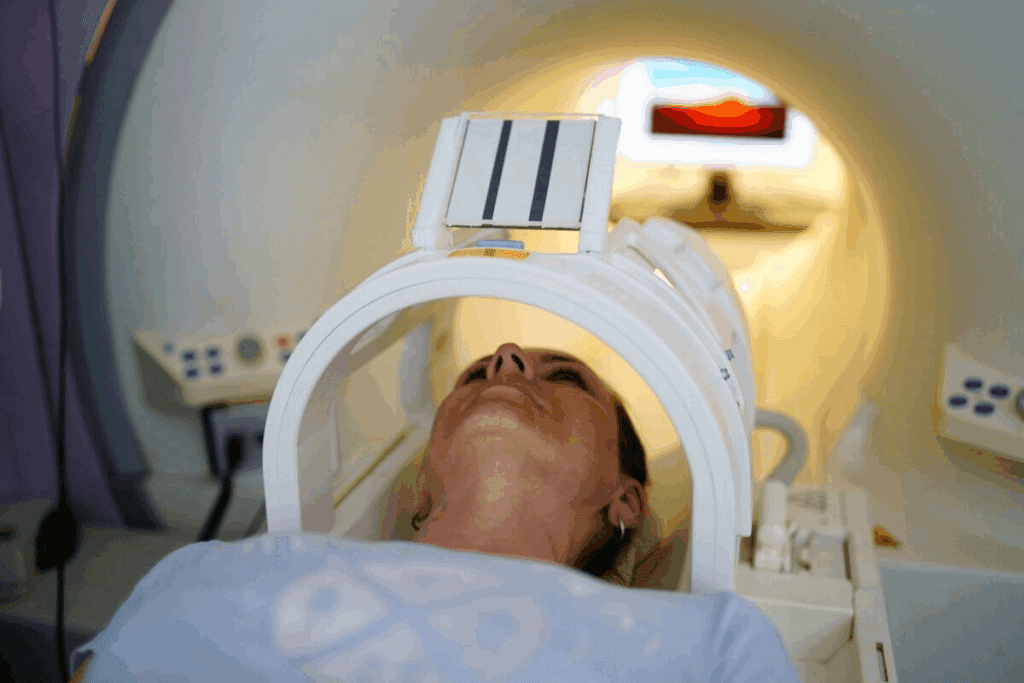
We use advanced tools like Magnetic Resonance Imaging (MRI) to find and treat this problem. MRI gives us clear pictures of the shoulder and the tissues around it. This helps us see what’s wrong and how to fix it.
MRI allows detailed visualization of the shoulder joint, helping detect conditions such as impingement. This lets us create good plans to help you feel better.
Key Takeaways
- MRI is a valuable diagnostic tool for evaluating shoulder conditions.
- Shoulder impingement syndrome is a common cause of shoulder pain.
- Accurate diagnosis is key for effective treatment.
- MRI provides detailed images of the shoulder joint and surrounding tissues.
- Early diagnosis and treatment can improve outcomes.
Understanding Shoulder Impingement Syndrome
It’s important to know about shoulder impingement syndrome to treat shoulder pain well. This condition happens when tendons or bursae in the shoulder get compressed or irritated. This leads to pain and discomfort.
What Happens in Shoulder Impingement
Shoulder impingement occurs when the rotator cuff tendons get pinched or irritated. This usually happens between the acromion and the humeral head. It can be caused by repetitive motion, direct trauma, or age-related wear and tear. The impingement causes inflammation and pain, mainly when lifting the arm.
Common Causes of Impingement
Several factors lead to shoulder impingement syndrome. These include:
- Repetitive Motion: Activities like throwing or lifting overhead can cause impingement.
- Direct Trauma: A direct hit to the shoulder can irritate the tendons.
- Age-related Wear and Tear: As we get older, tendons and bursae in the shoulder can degenerate. This makes them more prone to impingement.
Research shows that shoulder impingement syndrome often results from repetitive motion or direct trauma. Knowing these causes helps in creating effective treatment plans.
Anatomy of the Shoulder and Impingement Points
Knowing the shoulder’s anatomy is key to treating impingement. The shoulder joint, or glenohumeral joint, is complex. It allows for wide movement but is prone to injuries like impingement syndrome.
The shoulder has several important parts for movement. The subacromial space is a key area for impingement. It’s between the acromion and the humeral head. Tendons and bursae here can get irritated, causing pain.
Subacromial Space
The subacromial space is narrow and can be affected by bone spurs or inflammation. When it narrows, tendons rub against the acromion, causing pain.
A study in the Journal of Orthopaedic & Sports Physical Therapy found the subacromial space’s role in impingement. It said, “The subacromial space is a critical area where impingement occurs, and its narrowing is associated with rotator cuff pathology.”
“The subacromial space is a critical area where impingement occurs, and its narrowing is associated with rotator cuff pathology.”
Journal of Orthopaedic & Sports Physical Therapy
Rotator Cuff Involvement

The rotator cuff is a group of muscles and tendons around the shoulder. It provides stability and helps with movement. When the rotator cuff tendons get inflamed or damaged, it can lead to impingement syndrome.
| Rotator Cuff Muscle | Function |
| Supraspinatus | Assists in arm abduction |
| Infraspinatus | Rotates the arm laterally |
| Teres minor | Rotates the arm laterally and adducts |
| Subscapularis | Rotates the arm medially |
Other Anatomical Considerations
Other parts like the acromion and coracoid process also play a role in impingement. The shape of the acromion and bone spurs can affect the subacromial space, leading to impingement.
Understanding the shoulder’s anatomy helps healthcare professionals treat impingement effectively.
Common Symptoms of Shoulder Impingement
Knowing the signs of shoulder impingement is key to catching it early. People with this issue often feel pain and stiffness in their shoulder, worse when they move it. We’ll look at these symptoms closely, including pain patterns, how it affects daily activities, and what happens if it’s not treated.
Pain Patterns and Location
Pain is a big symptom of shoulder impingement, felt mainly in the front and side of the shoulder. It can spread down the arm, usually to the outside, and gets worse with arm lifts. The pain’s spot and how bad it is can change based on how bad the impingement is and what’s affected.
Functional Limitations
Shoulder impingement not only hurts but also limits what you can do. People might feel weaker, have less range of motion, and struggle with everyday tasks like reaching, lifting, or throwing. These issues can really affect your life, both at home and at work.
Progression of Symptoms
If not treated, shoulder impingement symptoms can get worse. This can lead to more pain, less mobility, and even serious problems like rotator cuff tears. Catching and treating symptoms early is very important to avoid lasting damage and get better results.
| Symptom | Description | Impact on Daily Life |
| Pain | Sharp pain in the shoulder, worse with overhead movements | Limits reaching, lifting, and throwing activities |
| Stiffness | Less mobility and stiffness in the shoulder | Makes daily tasks like dressing and grooming hard |
| Weakness | Muscle weakness around the shoulder | Affects ability to do tasks that need strength |
Clinical Examination for Shoulder Impingement
To diagnose shoulder impingement, a detailed clinical exam is needed. This exam checks how well the shoulder works. It helps doctors find the cause and decide on treatment.
Physical Examination Techniques
Physical exams are key in finding shoulder impingement. We check the shoulder’s movement, strength, and function. Important methods include:
- Inspection: Looking at the shoulder for any odd shapes or swelling.
- Palpation: Feeling the shoulder to find tenderness or odd spots.
- Range of motion assessment: Checking how far the shoulder can move.
- Strength testing: Testing the muscles around the shoulder.
Range of Motion Assessment
Checking the shoulder’s range of motion is vital. We see how well it moves in different ways. If it hurts or can’t move much, it might be impinged.
This test shows if there are mechanical problems or if something is blocking the way. Knowing this helps us figure out and fix the issue.
Strength Testing
Testing the shoulder’s strength is also important. We check the rotator cuff and other muscles. Weak muscles can lead to impingement by changing how the shoulder moves.
By using all these tests, we get a full picture of the shoulder’s problem. This helps us make a good plan to fix it.
Shoulder Impingement Test: Types and Procedures
Healthcare experts use different tests to find out if someone has shoulder impingement. These tests help figure out how bad the problem is. They guide the treatment needed.
Neer Impingement Test
The Neer test is a key tool for checking shoulder impingement. The doctor holds the patient’s scapula and lifts the arm slightly. If pain happens between 60° and 120°, the test shows impingement.
Hawkins-Kennedy Test
The Hawkins-Kennedy test is another way to check for shoulder impingement. The doctor holds the arm at 90° and turns the shoulder inward. If pain is felt, it means impingement.
Painful Arc Test
The painful arc test looks for pain when lifting the arm. People with impingement feel pain between 60° and 120°. This tells doctors about impingement.
Jobe Test
The Jobe test checks the supraspinatus muscle. The arm is lifted to 90° with the thumb down. If there’s weakness or pain, it’s a sign of a problem.
| Test | Procedure | Positive Indication |
| Neer Impingement Test | Passive elevation of the arm in the scapular plane | Pain between 60° and 120° of elevation |
| Hawkins-Kennedy Test | Internal rotation of the shoulder with the arm flexed at 90° | Pain upon internal rotation |
| Painful Arc Test | Active abduction of the arm | Pain between 60° and 120° of abduction |
| Jobe Test | Downward pressure on the arm abducted to 90° with the thumb pointing downwards | Weakness or pain |
These tests, along with a detailed check-up and imaging, help doctors diagnose and treat shoulder impingement.
The Neer Shoulder Impingement Test Explained
The Neer test is a key tool for diagnosing shoulder impingement. It’s known for being simple yet effective. This makes it a go-to for diagnosing shoulder impingement.
How to Perform the Test
To do the Neer test, the patient sits or stands comfortably. The examiner holds the scapula with one hand. Then, they move the patient’s arm forward with the other hand.
The test is positive if the patient feels pain. This pain usually comes from the rotator cuff tendons being compressed.
Interpreting Test Results
A positive Neer test means shoulder impingement syndrome is likely. The pain comes from the tendons being squished. The pain’s intensity can differ.
Test results should be looked at with other findings and tests. This helps get a clearer picture of the condition.
Reliability and Validity
The Neer test has been well-studied for its reliability and validity. It’s useful but its accuracy can change based on the group tested and criteria used. Studies show it improves diagnosis when used with other tests.
| Test Characteristics | Description | Clinical Implication |
| Sensitivity | Ability to detect true positives | High sensitivity helps rule out shoulder impingement |
| Specificity | Ability to detect true negatives | High specificity helps confirm the diagnosis |
| Reliability | Consistency of test results | High reliability indicates the test is reproducible |
In conclusion, the Neer test is a valuable tool for diagnosing shoulder impingement. Its simplicity and effectiveness make it a key part of orthopedic exams.
Hawkins Test for Shoulder Impingement
The Hawkins-Kennedy test is key for diagnosing shoulder impingement. It offers insights into shoulder impingement syndrome when done right.
Proper Test Technique
To do the Hawkins-Kennedy test, bend the patient’s arm to 90 degrees and then turn it inward. This can show if tendons in the shoulder are being pinched.
Key steps in performing the Hawkins-Kennedy test:
- Flex the patient’s elbow to 90 degrees.
- Stabilize the patient’s shoulder.
- Internally rotate the patient’s arm.
- Assess the patient’s response to the maneuver.
What a Positive Test Indicates
A positive test means pain when the arm is turned inward. This pain shows tendons are rubbing against the coracoid or acromion.
Understanding a positive test is key for diagnosis. It helps doctors find the cause of shoulder pain and plan treatment.
Sensitivity and Specificity
The Hawkins-Kennedy test is good at spotting shoulder impingement. But, it’s best used with other tests and findings to confirm a diagnosis.
The sensitivity and specificity of the Hawkins-Kennedy test are as follows:
- Sensitivity: The test’s ability to correctly identify those with shoulder impingement.
- Specificity: The test’s ability to correctly identify those without shoulder impingement.
Knowing the test’s strengths helps doctors make better care plans for patients.
Diagnostic Imaging Overview for Shoulder Problems
Diagnostic imaging is key in finding the cause of shoulder pain. It helps doctors create the best treatment plans. By using different imaging methods, they can understand the root of the pain and decide on the best care.
When Imaging Is Necessary
Not every shoulder problem needs imaging. But, if pain gets worse or doesn’t go away, imaging helps find the cause. We suggest imaging for severe pain, limited movement, or when simple treatments don’t work.
Types of Diagnostic Imaging
There are many imaging options for shoulder issues. Each has its own benefits and drawbacks. Here are a few:
- X-ray: Good for seeing bones and finding fractures or wear and tear.
- MRI (Magnetic Resonance Imaging): Shows soft tissues like tendons and ligaments in detail.
- CT (Computed Tomography) Scan: Gives a detailed look at bones and can check complex fractures.
- Ultrasound: Allows for live views of tendons and ligaments.
Each imaging method has its own use. They can be used alone or together to fully understand the shoulder issue.
Clinical Decision Making
Choosing the right imaging depends on the patient’s symptoms, medical history, and physical exams. Doctors use this information to pick the best imaging and plan the best treatment.
Diagnostic imaging is a powerful tool for diagnosing and treating shoulder problems. By using different imaging methods, we can give patients accurate diagnoses and effective treatments. This helps them get better and live a better life.
X-Ray Imaging for Shoulder Impingement
X-ray imaging is a common tool, but it’s not perfect for shoulder impingement. We often start with X-rays for shoulder injuries. But, we need to know their limits in finding impingement syndrome.
Standard Views and Projections
For shoulder impingement X-rays, we take several views. These include:
- Anteroposterior (AP) view: Gives a general look at the shoulder joint.
- Lateral view: Checks the shoulder’s alignment and structure.
- Axillary view: Looks at the shoulder joint and bones around it.
What X-Rays Can and Cannot Show
X-rays are great for seeing bones. They can show:
- Bone spurs that might cause impingement.
- Fractures or other bone problems.
- Wear and tear in the shoulder joint.
But, X-rays can’t see soft tissue injuries. This includes rotator cuff tendon problems, common in impingement.
Limitations in Diagnosing Impingement
X-rays can’t directly see soft tissue issues, like rotator cuff problems. They might suggest impingement with signs like bone spurs. But, they can’t confirm it. For that, we need MRI.
We must think about these limits when checking for shoulder impingement. X-rays are a good first step. But, we might need more tests to really understand what’s going on.
MRI Technology and Shoulder Imaging
Magnetic Resonance Imaging (MRI) has changed how we diagnose shoulder injuries. It shows detailed images of bones and soft tissues. This non-invasive method is key in planning treatments for shoulder impingement syndrome.
How MRI Works
MRI technology creates detailed images of the shoulder and its tissues. It uses a strong magnetic field and radio waves to align and disturb hydrogen nuclei in the body. As these nuclei return to their aligned state, they send signals that the MRI machine captures to create detailed images.
The process involves a strong magnet, radiofrequency coils, and advanced computer algorithms. Together, they help us see the shoulder’s tiny structures like tendons, ligaments, and cartilage.
MRI Protocols for Shoulder Evaluation
For shoulder MRI evaluations, we follow specific protocols. These include T1-weighted, T2-weighted, and proton density-weighted images. Each type gives different information about the tissues, helping us spot problems.
T2-weighted images are great for finding fluid and swelling in soft tissues. This can show signs of inflammation or injury. T1-weighted images, on the other hand, show more detail of the body’s structures.
| MRI Sequence | Primary Use |
| T1-weighted | Anatomical detail, fat detection |
| T2-weighted | Fluid detection, edema, inflammation |
| Proton Density-weighted | Tendon and ligament evaluation |
Contrast vs. Non-Contrast MRI
In some cases, we use a contrast agent during MRI to see certain structures better. The choice between contrast and non-contrast MRI depends on the patient’s condition and the question we’re trying to answer.
Contrast-enhanced MRI is good for finding inflammation, tumors, or infections. But for many shoulder evaluations, non-contrast MRI is enough to diagnose conditions like impingement syndrome.
Understanding MRI technology and its protocols helps healthcare professionals make better decisions. This is important for diagnosing and managing shoulder impingement syndrome.
Can an MRI Definitively Show Shoulder Impingement?
MRI plays a key role in diagnosing shoulder impingement. It is very effective in this area. We will look at how MRI helps diagnose this condition.
MRI Findings in Impingement Syndrome
MRI is great at spotting soft tissue problems linked to shoulder impingement. Key MRI findings include rotator cuff tendinopathy, subacromial bursitis, and tears in the rotator cuff tendons.
These signs are vital for diagnosing impingement syndrome. They help us understand how severe the condition is.
Sensitivity and Specificity for Impingement
Research shows MRI is very good at spotting shoulder impingement. It’s excellent at finding rotator cuff tears, a common sign of impingement syndrome.
| Diagnostic Modality | Sensitivity (%) | Specificity (%) |
| MRI | 95 | 90 |
| Ultrasound | 85 | 80 |
| X-Ray | 40 | 60 |
Limitations of MRI for Impingement
Even though MRI is a strong tool, it has its limits. False negatives can happen. This might be due to the MRI protocol or if the tear is small or partial.
Research Evidence and Clinical Correlation
Many studies back the use of MRI for diagnosing shoulder impingement syndrome. It’s important to match MRI results with clinical findings for accurate diagnosis and treatment.
We stress the need to combine MRI results with clinical assessment. This approach gives a full picture of shoulder impingement.
Specific MRI Signs of Shoulder Impingement Syndrome
Diagnosing shoulder impingement syndrome accurately is key. MRI can spot several signs of this condition. This helps doctors make better decisions for patient care.
Subacromial Space Narrowing
One key sign is a narrowed subacromial space. MRI can measure this space well. This gives doctors important info on how severe the impingement is.
Subacromial Space Measurements:
| Measurement | Normal | Narrowed |
| Subacromial Space | > 7 mm | < 7 mm |
Rotator Cuff Changes
Rotator cuff problems are common in shoulder impingement. MRI can find tendinosis, tears, and inflammation in the rotator cuff.
- Tendinosis: Thickening and signal intensity changes within the tendon.
- Tears: Partial or full-thickness tears of the rotator cuff tendons.
- Inflammation: Increased signal intensity on fluid-sensitive sequences.
Bone Edema and Other Secondary Signs
Bone edema in the humeral head or acromion is often seen. Other signs include cysts, sclerosis, or spurs.
Interpreting Radiologist Reports
When reading MRI reports, look for details on the subacromial space and rotator cuff. Also, check for secondary signs. These findings help guide treatment.
Reports should match up with clinical symptoms and physical exams. This ensures accurate diagnosis and treatment of shoulder impingement syndrome.
When to Get an MRI for Shoulder Pain
Deciding on an MRI for shoulder pain depends on symptoms and medical history. We look at several factors to see if an MRI is needed.
Appropriate Clinical Indications
An MRI is often suggested for those with ongoing shoulder pain or who haven’t improved with basic treatments. Clinical indications include severe pain, big problems with daily activities, or signs of specific shoulder issues like rotator cuff tears or labral lesions.
How long the pain lasts and how it affects daily life also matters. For example, if pain lasts more than a few weeks or makes it hard to sleep and do everyday tasks, we might need to do more tests.
When to Start with Other Diagnostics
Not every shoulder pain case needs an MRI right away. We often start with simpler tests like X-rays or ultrasound. This is if the symptoms point to something like osteoarthritis or a minor injury.
Conservative management is usually the first step. This includes physical therapy, medicine to reduce inflammation, and changes in lifestyle. If these don’t help, or if there are signs of a serious problem, we might use MRI.
Insurance and Cost Considerations
Choosing to get an MRI also means thinking about insurance and costs. We help patients understand their insurance and find ways to deal with the costs of tests.
In some cases, you need insurance approval before getting a test. We help patients with this paperwork to make sure they can get the tests they need.
The Diagnostic Journey: From Symptoms to MRI
Shoulder pain can start a long journey from the first symptoms to an MRI. We’ll walk you through the steps to diagnose shoulder impingement syndrome.
First Steps After Experiencing Symptoms
When shoulder pain hits, it’s key to understand how bad it is and how it affects your day. Keeping a pain journal helps track when and how long the pain lasts. It also notes what makes it better or worse.
First, try simple steps like resting, using ice, and taking over-the-counter pain meds. If the pain doesn’t get better or gets worse, it’s time to see a doctor.
Primary Care Evaluation
Your doctor will ask about your medical history and do a physical check. They’ll look at your shoulder’s movement, strength, and where it hurts. They might do tests like the Neer or Hawkins-Kennedy tests to check for impingement.
Based on what they find, your doctor might suggest more tests or send you to a specialist.
| Diagnostic Step | Purpose | Typical Findings |
| Medical History | Understand symptoms and medical background | Previous injuries, activities that exacerbate pain |
| Physical Examination | Assess range of motion, strength, and pain | Reduced range of motion, pain on specific movements |
| Initial Tests (e.g., Neer, Hawkins-Kennedy) | Assess for impingement syndrome | Positive test indicating impingement |
Specialist Referral Process
If your doctor thinks you might have a more serious shoulder issue, they’ll send you to a specialist. These doctors are experts in shoulder problems.
At your specialist visit, you’ll get a closer look at your shoulder. They might do tests like X-rays or an MRI.
Comprehensive Diagnostic Approach
Diagnosing shoulder impingement might involve several steps. This includes clinical checks, imaging, and sometimes injections. We use all these methods to find out what’s wrong with your shoulder.
Tests like MRI are very important. They give us clear pictures of your shoulder. This helps us spot problems like impingement syndrome.
Treatment Options for Shoulder Impingement
There are many ways to treat shoulder impingement, from non-surgical to surgical methods. The right treatment depends on how bad the symptoms are, what’s causing the impingement, and the patient’s health.
Conservative Management
For most cases, starting with non-surgical treatments is best. This approach aims to lessen pain, reduce swelling, and make the shoulder more mobile. It includes resting the shoulder, using ice, and taking anti-inflammatory drugs.
- Resting the affected shoulder to avoid making it worse
- Applying ice to lessen pain and swelling
- Using over-the-counter pain relievers to manage pain and swelling
Physical Therapy Approaches
Physical therapy is key in treating shoulder impingement. A physical therapist creates a custom exercise plan. This plan aims to improve shoulder flexibility, strengthen muscles, and enhance shoulder function. Exercises may include shoulder rotations, scapular squeezes, and wall slides.
- Stretching exercises to improve flexibility
- Strengthening exercises to build muscle around the shoulder
- Manual therapy techniques to improve joint mobility
Medications and Injections
In some cases, medications and injections help manage pain and swelling. Corticosteroid injections can greatly reduce inflammation in the affected area.
- Oral anti-inflammatory medications to reduce pain and swelling
- Corticosteroid injections to provide targeted relief
Surgical Interventions
For those who don’t get better with non-surgical treatments, surgery might be an option. Arthroscopic surgery is often used to remove inflamed tissue and bone spurs causing the impingement.
Surgery is usually considered when other treatments have failed and the condition severely affects the patient’s life.
Conclusion: The Role of MRI in Shoulder Impingement Diagnosis
We’ve looked into shoulder impingement syndrome, its causes, symptoms, and how to diagnose it. MRI is key in diagnosing this condition. It gives clear images of the shoulder and its tissues.
When using MRI to diagnose shoulder impingement, doctors check the subacromial space and rotator cuff. They also look for other signs. This helps them create treatment plans that fit each patient’s needs.
In short, MRI is a great tool for diagnosing shoulder impingement. It helps doctors see the shoulder’s anatomy clearly. This leads to better treatment plans and outcomes for patients with mri shoulder impingement.
FAQ
What is shoulder impingement?
Shoulder impingement happens when tendons or bursae in the shoulder get compressed or irritated. This causes pain and limits movement.
What are the common causes of shoulder impingement?
It can be caused by repetitive motion, direct trauma, or wear and tear from aging.
How is shoulder impingement diagnosed?
Doctors use a physical exam, medical history, and imaging like X-rays or MRI to diagnose it.
What is the Neer impingement test?
The Neer test is a simple way to check for shoulder impingement. It involves bending the arm forward and checking for pain.
What is the Hawkins-Kennedy test?
The Hawkins-Kennedy test is another tool for diagnosing shoulder impingement. It involves bending the arm to 90 degrees and rotating it inward.
Can an MRI definitively show shoulder impingement?
An MRI can show shoulder impingement by looking at the joint and tissues. But, its accuracy depends on how severe the impingement is.
What are the specific MRI signs of shoulder impingement syndrome?
MRI signs include a narrowed subacromial space, changes in the rotator cuff, and bone edema.
When should I get an MRI for shoulder pain?
Get an MRI if you have ongoing shoulder pain or haven’t gotten better with treatment.
What are the treatment options for shoulder impingement?
Treatments include rest, physical therapy, medications, injections, and sometimes surgery.
How can I manage shoulder impingement symptoms?
Manage symptoms with rest, physical therapy, and pain meds. Also, avoid activities that make it worse.
Can shoulder impingement be prevented?
Some cases can’t be prevented, but keeping your shoulders healthy helps. This includes exercises, good posture, and avoiding repetitive strain.
What is the role of physical therapy in treating shoulder impingement?
Physical therapy is key in treating shoulder impingement. It improves mobility, strengthens muscles, and aids in healing.
Reference
- Ames, R. J., & Miller, J. A. (2014). The efficacy of magnetic resonance imaging in diagnosing shoulder impingement syndrome: A systematic review. International Journal of Sports Physical Therapy, 9(4), 487-502. https://www.ncbi.nlm.nih.gov/pmc/articles/PMC4126248/