Last Updated on November 27, 2025 by Ugurkan Demir

If you think you might have sleep apnea but don’t want to go to a lab, you’re not alone. We get your worries and want to show you a better way. Home sleep apnea studies are a great option.
Today’s portable devices let you get tested from your own bedroom. Studies show they’re very good at finding sleep problems. This means you can get a clear diagnosis without leaving home.
At Liv Hospital, we back this new way of testing. We follow international rules for home sleep apnea tests. Our aim is to teach people worldwide about this easy and effective way to find out if you have sleep apnea.
A step-by-step guide on how to get a sleep apnea study at home (Home Sleep Test) from your doctor.
Key Takeaways
- Home sleep apnea testing is a convenient alternative to laboratory testing.
- Modern devices offer high sensitivity and specificity for diagnosing sleep-disordered breathing.
- Liv Hospital supports international standards for home sleep apnea testing.
- This method provides accurate diagnoses from the comfort of your own home.
- Home sleep apnea testing is an increasingly important diagnostic tool.
Understanding Sleep Apnea and Why Testing Matters
Sleep apnea is a common sleep disorder that can harm your health if not treated. It causes pauses in breathing or shallow breathing during sleep. This disrupts the normal sleep cycle.
What is Obstructive Sleep Apnea?
Obstructive sleep apnea (OSA) is the most common type. It happens when throat muscles relax, narrowing or closing the airway. This blocks airflow, reducing blood oxygen and causing poor sleep.
OSA’s severity can range from mild to severe. Knowing this helps doctors choose the right treatment.
Health Risks of Untreated Sleep Apnea
Untreated sleep apnea can cause serious health problems. These include heart disease, stroke risk, diabetes, and daytime tiredness. The constant breathing stops can harm the heart over time.
| Health Risk | Description |
| Cardiovascular Disease | Increased strain on the heart due to repeated breathing interruptions |
| Stroke | Higher risk due to oxygen deprivation and blood pressure fluctuations |
| Diabetes | Association between sleep apnea and insulin resistance |
| Daytime Fatigue | Poor quality sleep leading to tiredness and decreased productivity |
Signs You Might Need a Sleep Apnea Test
Knowing the signs of sleep apnea is key to getting help. Look out for loud snoring, stopped breathing during sleep, dry mouth or sore throat, and morning headaches. Feeling very tired, having trouble concentrating, or being irritable can also be signs.
If you notice these symptoms, talk to a doctor. They can suggest a sleep apnea home study or other tests to check for sleep apnea.
In-Lab vs. Sleep Apnea Study at Home: Key Differences
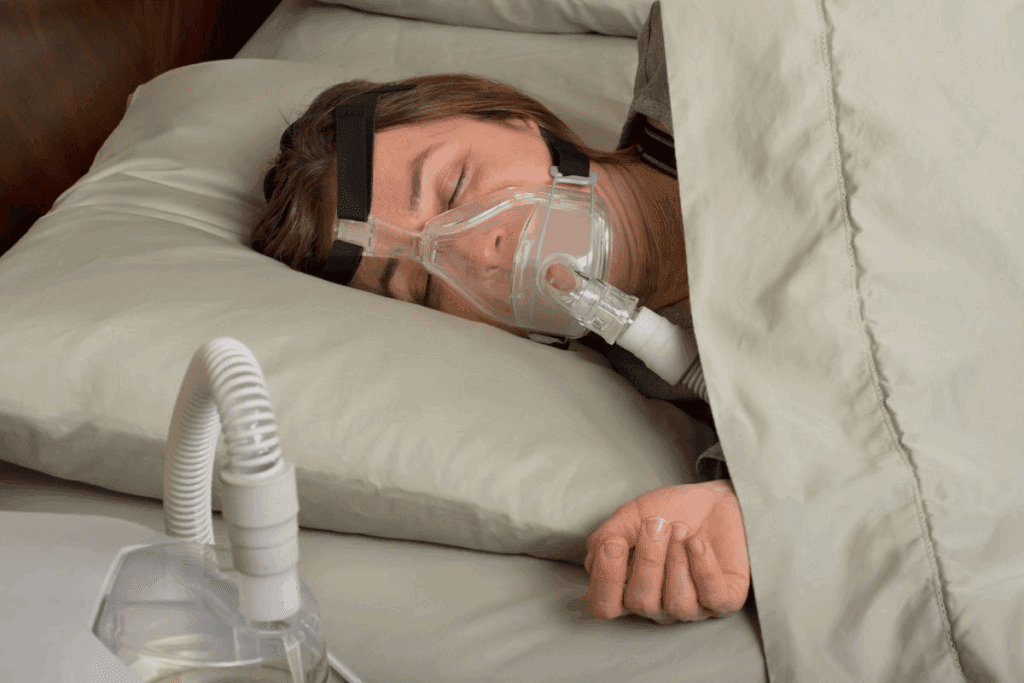
Diagnosing sleep apnea has become easier with two options: in-lab sleep studies or home tests. This flexibility is key. It lets patients pick what’s best for them.
Traditional Polysomnography Explained
Traditional polysomnography, or in-lab sleep studies, is the top choice for diagnosing sleep disorders. It tracks brain waves, muscle activity, and heart rate while you sleep. This gives a full picture of your sleep and helps spot issues like sleep apnea.
Home Sleep Apnea Testing Overview
Home sleep apnea testing (HSAT) is a simpler, less invasive option. It uses a portable device to monitor sleep, like oxygen levels and breathing. It’s great for those at risk of obstructive sleep apnea (OSA).
Comparing Accuracy and Convenience
In-lab polysomnography offers a detailed look at sleep but requires a night in a lab. Home sleep apnea testing is more convenient but might miss some details. It depends on what you need.
Let’s look at some key differences:
| Aspect | In-Lab Polysomnography | Home Sleep Apnea Testing |
| Comprehensive Data | Yes, monitors multiple physiological activities | Limited to oxygen saturation, airflow, and respiratory effort |
| Convenience | No, requires a night in the lab | Yes, conducted at home |
| Accuracy for OSA Diagnosis | Highly accurate | Accurate for moderate to high-risk patients |
Choosing between in-lab and home tests depends on your needs and your doctor’s advice. Both are important for diagnosing sleep apnea and finding the right treatment.
When is a Home Sleep Study Appropriate?
Whether a home sleep study is right for you depends on several factors. This includes how severe your sleep apnea might be. Home sleep tests are now seen as a good and easy way to diagnose many people.
Ideal Candidates for Home Testing
Home sleep tests are best for people who likely have moderate to severe sleep apnea. They should not have other serious health issues. Those who clearly show signs of sleep apnea, like loud snoring and daytime tiredness, fit this category well.
Also, if you can’t sleep in a lab or have trouble moving, a home test might be better. It’s cheaper than lab tests too.
When In-Lab Testing May Be Necessary
But, sometimes lab tests are needed more. People with complex health issues, like heart problems or COPD, need lab tests. They get more detailed monitoring there.
If your home test was unclear but you’re sure you have sleep apnea, a lab test might be suggested. Your doctor will decide based on your health and symptoms.
Discussing Options With Your Healthcare Provider
Talking to your doctor is key to choosing the right test. They’ll look at your health, past, and symptoms to decide. This helps them pick the best test for you.
When you talk to your doctor, share your symptoms, sleep habits, and any worries about sleep apnea. This helps them make the best choice for you.
Getting a Prescription for a Home Sleep Study
Getting a home sleep study starts with a visit to your doctor. They will decide if a home test is right for you.
Initial Consultation With Your Doctor
First, you’ll see your doctor or a specialist. They’ll check your symptoms and health history. Be ready to talk about your sleep and health.
Your doctor might use a questionnaire to check your sleep apnea. This helps decide if you need a home study.
Insurance Coverage and Requirements
Knowing your insurance is key before a home sleep study. Insurance rules for home tests vary. Check with your insurance to see if they cover it and what you need.
| Insurance Provider | Coverage for Home Sleep Study | Requirements |
| Provider A | Yes | Prescription from a doctor, pre-approval |
| Provider B | Yes, with limitations | Prior sleep study, doctor’s referral |
| Provider C | No | N/A |
Finding a Sleep Specialist if Needed
If your doctor thinks you need a specialist, they’ll refer you. A sleep specialist can give more detailed advice and help with your sleep apnea.
“Referring patients to sleep specialists is a common practice when the diagnosis is complex or when in-lab testing is considered more appropriate.”
– Medical Expert, Sleep Specialist
Cost Considerations for Home Sleep Diagnostics
The cost of a home sleep study varies. It depends on the device and insurance. Without insurance, it’s usually $200 to $500. Remember to also think about costs for doctor visits and follow-ups.
To wrap it up, getting a home sleep study prescription involves a doctor’s visit, understanding your insurance, possibly seeing a sleep specialist, and thinking about costs. Being informed helps you through this process.
How Home Sleep Apnea Testing Devices Work
It’s important to know how home sleep apnea testing devices work. They are designed to be easy to use. They also collect important data to help diagnose sleep apnea.
Types of Portable Monitoring Devices
There are many types of portable monitoring devices for home sleep apnea testing. They vary in how complex they are and the data they collect. The most common types are:
- Type III devices, which record at least four channels of data, including respiratory effort, airflow, and oxygen saturation.
- Type IV devices, which typically measure one or two channels, often oxygen saturation and airflow.
Each type has its own benefits. The choice depends on the patient’s needs and the doctor’s advice.
Key Measurements: Oxygen Saturation, Respiratory Flow, and Effort
Home sleep apnea testing devices measure several key activities. These include:
- Oxygen saturation: The level of oxygen in the blood.
- Respiratory flow: The rate and volume of airflow through the nose and mouth.
- Respiratory effort: The effort made by the body to breathe.
These measurements are key to identifying apneic events and their severity.
| Measurement | Description | Importance in Diagnosing Sleep Apnea |
| Oxygen Saturation | Level of oxygen in the blood | Helps identify desaturation events associated with apneas |
| Respiratory Flow | Rate and volume of airflow | Critical for detecting reductions or cessations in airflow |
| Respiratory Effort | Effort made by the body to breathe | Distinguishes between obstructive and central apneas |
Calculating the Respiratory Event Index
The Respiratory Event Index (REI) is a key metric from home sleep apnea testing devices. It shows the number of respiratory events per hour of sleep. To calculate the REI, we analyze the data to count these events.
“The REI is a vital metric for diagnosing sleep apnea and determining its severity.” – Medical Expert, Sleep Specialist
Technology Behind Home Sleep Diagnostics
The technology for home sleep diagnostics has improved a lot. It now uses advanced sensors and algorithms for better accuracy and ease of use. Modern devices are smaller and easier to use, making it simple for patients to test at home.
We use complex algorithms to analyze the data. This gives us a reliable diagnosis that helps guide treatment.
Step-by-Step Guide to Completing Your Sleep Apnea Home Study
Learning about a home sleep apnea study can ease your worries. We’ll show you how to get ready for the test, set up the gear, and fix common problems.
Preparing for Your Test Night
It’s key to get your sleep area ready and know how to use the home sleep apnea test equipment.
- Make your sleeping area as cozy as you like for a night’s sleep.
- Ensure the sleep study at home device is fully charged.
- Read the instructions from your healthcare provider or the device maker.
Setting Up the Equipment Properly
Setting up the sleep apnea overnight test device right is vital for good data.
- Follow the maker’s guide to put together and set up the device.
- Put the sensors on your body as told, making sure they’re comfy and secure.
- Check that everything works before you sleep.
What to Do and Avoid During the Test
During the take home sleep study, stick to some rules for the best results.
- Keep your sleep schedule as usual.
- Don’t take off the sensors or mess with the device during the test.
- If you feel any discomfort or problems, write them down to talk about with your doctor.
Common Issues and Troubleshooting
Even though home cpap test devices are easy to use, you might face some issues. Here are some common problems and how to fix them:
| Issue | Troubleshooting Tip |
| Device not turning on | Check the battery charge and make sure it’s put together right. |
| Sensor detachment | Put the sensor back on securely, but not too tight or loose. |
| Data not recording | Restart the device and see if there are any software updates. |
By following these steps and tips, you can have a successful sleep study at home and get accurate results for your diagnosis.
Understanding Your Home Sleep Study Results
Your home sleep study results give you insights into your sleep patterns. They help diagnose sleep apnea and show how severe it is.
Key Metrics and What They Mean
Home sleep apnea tests measure several things to find out if you have sleep apnea. These include oxygen levels, breathing flow, and effort. Knowing what these mean is key to understanding your results.
Oxygen Saturation: This shows how much oxygen is in your blood while you sleep. Low levels might mean you have sleep apnea.
Respiratory Flow: This tracks the air moving through your nose and mouth. Less airflow could mean you’re having an apnea event.
Respiratory Effort: This shows how hard you’re working to breathe. If it’s harder, it could mean you’re having trouble breathing while you sleep.
| Metric | Description | Implication |
| Oxygen Saturation | Level of oxygen in the blood | Low levels may indicate sleep apnea |
| Respiratory Flow | Airflow through nose and mouth | Reduced flow can signal apnea |
| Respiratory Effort | Effort to breathe | Increased effort can indicate labored breathing |
The Apnea-Hypopnea Index (AHI) Explained
The Apnea-Hypopnea Index (AHI) is a key part of diagnosing sleep apnea. It counts how many times you stop or pause breathing per hour of sleep. AHI levels show how severe your sleep apnea is:
- Normal: AHI
- Mild: 5 ≤ AHI
- Moderate: 15 ≤ AHI
- Severe: AHI ≥ 30
Knowing your AHI score helps your doctor figure out how bad your sleep apnea is. They can then suggest the right treatment.
Correlation With Laboratory Polysomnography
Home sleep tests are compared to lab tests to check if they’re accurate. Studies show they work well for diagnosing sleep apnea that’s not too mild.
“Home sleep apnea testing has been shown to be effective in diagnosing sleep apnea, with a high correlation with in-lab PSG for moderate to severe cases.”
– American Academy of Sleep Medicine
What to Expect at Your Follow-Up Appointment
After getting your home sleep study results, you’ll have a follow-up with your doctor. They’ll talk about your results, explain your diagnosis, and discuss treatment options.
It’s important to be ready for your appointment. Write down any questions or concerns you have about your results and treatment.
Treatment Options Following a Positive Diagnosis
Getting a positive diagnosis for obstructive sleep apnea opens up many treatment paths. These can greatly improve your life quality. The right treatment depends on how severe the condition is, your lifestyle, and what you prefer.
CPAP and Other Positive Airway Pressure Therapies
Continuous Positive Airway Pressure (CPAP) therapy is a common treatment for moderate to severe sleep apnea. You wear a mask over your nose and/or mouth while sleeping. This mask delivers air to keep your airway open.
Benefits of CPAP Therapy:
- Reduces apnea episodes
- Improves sleep quality
- Enhances daytime functioning
Other airway pressure therapies include BiPAP and APAP. They adjust pressure to fit your comfort and needs better.
Oral Appliances and Positional Therapy
Oral appliances are custom-made to move your lower jaw forward. This keeps your airway open while you sleep. They work well for mild to moderate sleep apnea.
Positional therapy uses devices or methods to stop you from sleeping on your back. Back sleeping can make sleep apnea worse for some people.
| Treatment | Description | Best For |
| Oral Appliances | Custom-made devices to advance lower jaw | Mild to Moderate Sleep Apnea |
| Positional Therapy | Devices to prevent back sleeping | Back sleepers with Sleep Apnea |
Lifestyle Changes and Surgical Options
Making lifestyle changes can really help with sleep apnea. Losing weight, exercising regularly, avoiding alcohol and sedatives before bed, and quitting smoking are all important.
If other treatments don’t work, surgery might be an option. Surgery can include uvulopalatopharyngoplasty (UPPP), genioglossus advancement, and maxillomandibular advancement.
Follow-Up Testing and Monitoring
After starting treatment, it’s important to have follow-up tests and monitoring. This checks if the treatment is working and makes any needed changes.
Regular visits with your healthcare provider are key. They make sure your treatment plan is working and help quickly if problems come up.
Conclusion
Home sleep apnea testing is a great way to find out if you have obstructive sleep apnea. It’s easy and accurate. This method helps people understand their sleep better and manage their health.
Home sleep tests are comfortable and quick. They let you avoid the hassle of lab tests. This way, you get a fast and accurate diagnosis.
If you think you might have sleep apnea, talk to your doctor. They can tell you about home sleep tests. Getting the right diagnosis and treatment can really improve your life.
FAQ
What is a home sleep apnea test, and how does it work?
A home sleep apnea test is a small device that tracks your sleep. It checks things like how well you breathe and how much oxygen you have. This helps find sleep apnea by counting how many times you stop breathing during sleep.
Are at-home sleep studies accurate for diagnosing sleep apnea?
Yes, at-home sleep studies are usually good for finding moderate to severe sleep apnea. But, they might not work as well for mild cases or other sleep problems. They don’t get all the data that a lab test would.
How do I prepare for a home sleep apnea study?
To get ready for a home sleep apnea test, just follow what your doctor or the test’s maker tells you. You’ll set up the device, wear sensors, and sleep like you normally do.
What are the benefits of a home sleep apnea test compared to in-lab testing?
Home sleep tests are more convenient and comfy. They might be cheaper too. You can sleep in your own bed, which might give better results. They’re great for people with busy lives or who can’t easily go to a lab.
Can I get a home sleep apnea test without a doctor’s prescription?
No, you usually need a doctor’s note for a home sleep apnea test. Doctors check your symptoms and health history to see if you need a home test.
How do I understand my home sleep study results?
Your test results will show things like how often you stop breathing and your oxygen levels. Your doctor will explain these numbers. They’ll tell you what they mean and what to do next.
What is the apnea-hypopnea index (AHI), and what does it indicate?
The AHI shows how bad sleep apnea is. It counts how many times you stop or partially stop breathing per hour. A higher AHI means worse sleep apnea.
What treatment options are available for obstructive sleep apnea diagnosed through a home sleep study?
There are many ways to treat sleep apnea, like CPAP machines, oral devices, or changing your sleep position. Your doctor will pick the best one based on how bad your sleep apnea is and your health.
Will my insurance cover the cost of a home sleep apnea test?
Insurance for home sleep tests varies. Many plans cover them, but it depends on your policy. Always check with your insurance to see what they cover.
Can I use a home sleep apnea test if I have other health conditions?
Whether you can use a home sleep test depends on your health conditions. Your doctor will look at your health and decide if a home test is right for you.
References
National Center for Biotechnology Information. (2025). How to Get a Home Sleep Apnea Study. Retrieved from https://www.ncbi.nlm.nih.gov/pmc/articles/PMC6287732/