Last Updated on November 4, 2025 by mcelik
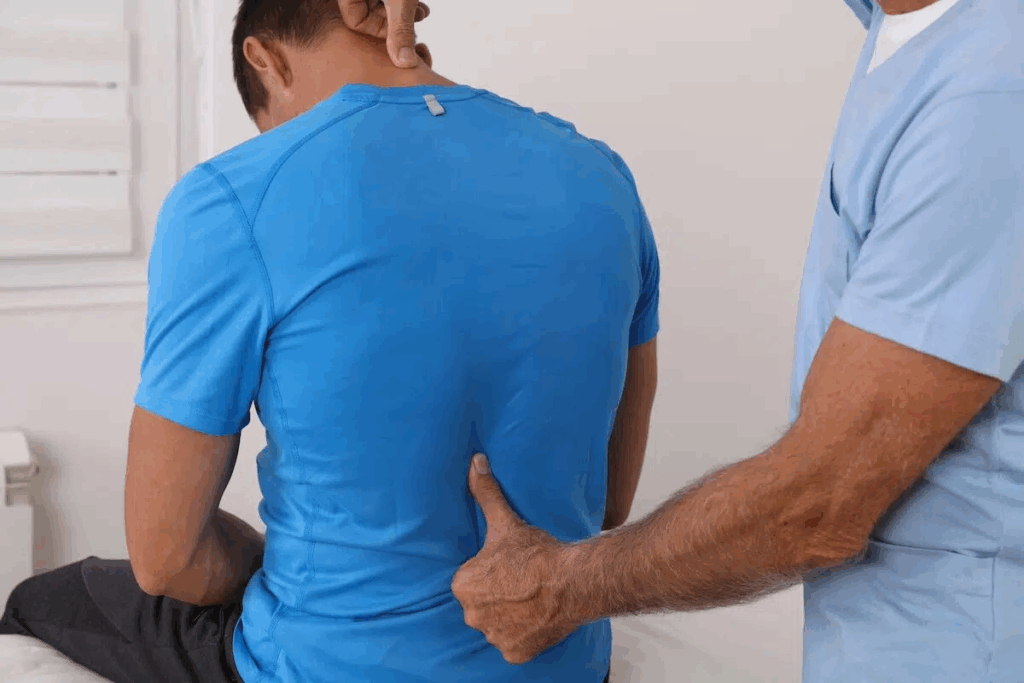
Spinal stenosis affects millions globally, causing a lot of pain. Did you know that nearly 250,000 adults in the United States are diagnosed with spinal stenosis each year? It happens when the spinal canal narrows, putting pressure on nerves and causing pain.
Slipped disc and sciatic nerve problems are often linked to spinal stenosis, as the narrowing can increase pressure on the nerves and cause similar symptoms. Sciatica is a common symptom of spinal stenosis. It shows as pain, numbness, and tingling in the lower back and legs. We’ll look into how spinal stenosis and sciatica are connected and how it affects daily life.
Understanding the causes, symptoms, and treatments of sciatica caused by spinal stenosis is essential. We’ll go into the details of this condition and share important information on treatment options.
Key Takeaways
- Spinal stenosis is a condition that narrows the spinal canal, causing pressure on the spinal cord and nerves.
- Sciatica is a common symptom of spinal stenosis, characterized by pain, numbness, and tingling in the lower back and legs.
- The relationship between spinal stenosis and sciatica is complex, and understanding this connection is critical for effective treatment.
- Various treatment options are available to manage sciatica caused by spinal stenosis.
- Early diagnosis and treatment can greatly improve the quality of life for those with spinal stenosis and sciatica.
Understanding Spinal Stenosis and Its Prevalence
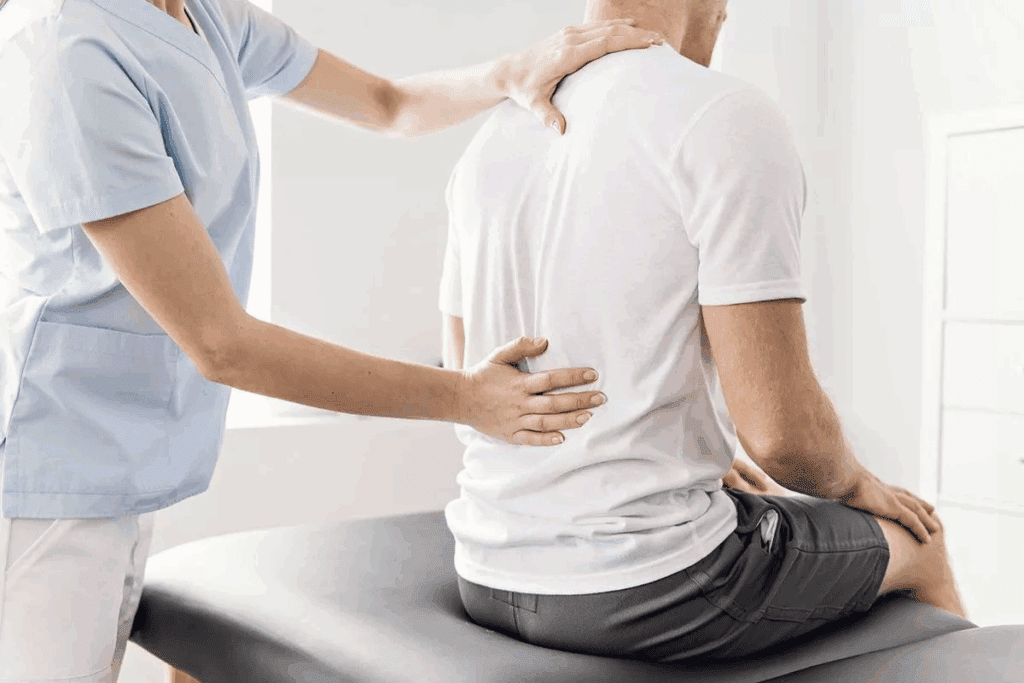
As we get older, the chance of getting spinal stenosis increases. It’s important to know about it and take steps to prevent it. Spinal stenosis happens when the spinal canal gets narrower. This can press on nerves, leading to pain, numbness, or weakness in the back, legs, or arms.
What Is Spinal Stenosis?
Spinal stenosis means the spaces in the spine get smaller. This can squeeze the spinal cord or nerves. It often happens in the lower back (lumbar spine) and neck (cervical spine).
Key aspects of spinal stenosis include:
- Narrowing of the spinal canal or foramina (the openings through which nerves leave the spinal canal)
- Compression of the spinal cord or nerve roots
- Potential symptoms include pain, numbness, tingling, or weakness in the back, legs, or arms
Types of Spinal Stenosis
Spinal stenosis can be divided into two main types based on where it happens. These are lumbar stenosis and cervical stenosis.
| Type | Description | Common Symptoms |
| Lumbar Stenosis | Affects the lower back, narrowing the spinal canal in the lumbar region. | Pain or numbness in the legs, calves, or buttocks, often when standing or walking. |
| Cervical Stenosis | Occurs in the neck, narrowing the spinal canal in the cervical region. | Neck pain, numbness, or tingling in the arms or hands, and possibly trouble with balance or walking. |
The Anatomy of the Spine and Sciatic Nerve
To understand how spinal stenosis causes sciatica, we need to look at the spine and sciatic nerve. The spine, or vertebral column, is made up of vertebrae, discs, and nerves. These parts work together to support the body and help it move.
Spinal Column Structure
The spinal column has 33 vertebrae stacked on top of each other. It’s divided into five regions: cervical, thoracic, lumbar, sacrum, and coccyx. Between the vertebrae are intervertebral discs, which act as shock absorbers and help with flexibility. The spinal cord, a key part of the nervous system, runs through the vertebral canal, protected by the vertebrae.
The Sciatic Nerve Pathway
The sciatic nerve is the biggest nerve in the human body. It’s made from nerve roots in the lumbar spine (L4-S3). It goes from the lower back down to the legs, passing through the greater sciatic foramen below the piriformis muscle. The sciatic nerve controls many muscles in the lower legs and provides sensation to the skin.
Knowing the sciatic nerve’s path is key because problems with this nerve can cause sciatica. Sciatica is marked by pain, numbness, tingling, and weakness in the lower back and legs.
The Connection Between Slipped Disc and Sciatic Nerve Pain
When a disc herniates, it can put pressure on the surrounding nerves. This leads to the pain associated with sciatica. This happens when the soft inner gel of the intervertebral disc leaks out through a tear in the outer disc. It can compress the nearby nerve roots.
How Herniated Discs Compress Nerve Roots
A herniated disc can compress nerve roots in several ways. The herniation can be contained, where the disc material bulges out but remains within the disc space. Or it can be non-contained, where the disc material ruptures through the outer layer. In both cases, the displaced disc material can press against the adjacent nerve roots, causing irritation and pain.
Nerve root compression is a significant factor in the development of sciatica. When the nerve root is compressed, it can disrupt normal nerve function. This leads to pain, numbness, and weakness in the lower back and legs.
Sciatic Nerve Impingement Mechanisms
The sciatic nerve is very susceptible to impingement due to its anatomical pathway. As the nerve roots from the lumbar spine merge to form the sciatic nerve, they can be compressed by a herniated disc. The mechanisms of sciatic nerve impingement involve both mechanical compression and chemical irritation.
| Mechanism | Description | Effect |
| Mechanical Compression | Direct pressure on the nerve root by the herniated disc | Pain, numbness, and weakness |
| Chemical Irritation | Release of inflammatory chemicals from the herniated disc | Inflammation and pain |
Understanding these mechanisms is key for developing effective treatment plans for sciatica caused by a herniated disc. By addressing both the mechanical and chemical components of nerve impingement, healthcare providers can offer complete care to patients suffering from this condition.
How Spinal Stenosis Develops
Spinal stenosis often starts with age, genetics, and outside factors. Knowing these causes helps doctors find the right treatments.
Age-Related Degenerative Changes
As we get older, our spines change naturally. These changes can lead to spinal stenosis. They include:
- Spinal discs drying out, causing them to shrink and bulge
- Bone spurs forming, which can narrow the spinal canal
- Ligaments thickening, encroaching on the spinal canal
These changes can press on the spinal cord or nerves. This leads to the symptoms of spinal stenosis.
Congenital and Acquired Causes
Spinal stenosis isn’t just about aging. Some people are born with conditions that make them more likely to get it. These include:
- Congenital narrowing of the spinal canal
- Abnormalities in the spine’s structure
Acquired causes include:
- Trauma or injury to the spine
- Tumors or cysts that compress the spinal cord or nerves
- Infections or inflammatory conditions that affect the spine
| Cause | Description | Effect on Spine |
| Degenerative Changes | Age-related wear and tear | Narrowing of spinal canal, compression of nerves |
| Congenital Conditions | Genetic predispositions | Narrowing of spinal canal, structural abnormalities |
| Acquired Factors | Trauma, tumors, infections | Compression of spinal cord or nerves |
Understanding spinal stenosis causes helps doctors create better treatments. This improves symptoms and quality of life.
Symptoms of Spinal Stenosis
Knowing the symptoms of spinal stenosis is key to getting help quickly. This condition narrows the spinal canal. It mainly affects the lumbar and cervical spine areas.
Lumbar Stenosis Symptoms
Lumbar spinal stenosis causes leg pain, numbness, and weakness. These symptoms get worse when standing or walking. Sitting or leaning forward can help.
- Pain or cramping in the legs, calves, or buttocks
- Numbness or tingling in the legs or feet
- Weakness in the legs or feet
Cervical Stenosis Symptoms
Cervical spinal stenosis leads to neck pain and numbness in arms or legs. It can also make walking or balancing hard.
Common symptoms include:
- Neck pain or stiffness
- Numbness, tingling, or weakness in the arms or hands
- Difficulty with coordination and balance
Differentiating Stenosis Pain from Other Back Problems
Telling stenosis pain from other back issues is tough. But stenosis pain often ties to certain activities or positions.
Key differentiators include:
- Pain that worsens with standing or walking
- Relief from pain when sitting or bending forward
- Numbness or weakness in the extremities
Understanding these symptoms helps people get the right medical care. This can prevent more problems.
Sciatica: When the Sciatic Nerve Gets Irritated
Sciatica starts with symptoms when the sciatic nerve gets irritated or compressed. It causes pain, numbness, tingling, and weakness in the lower back and legs. These symptoms get worse with activities like standing or walking.
Classic Symptoms of Sciatica
The main signs of sciatica are pain from the lower back to the legs, following the sciatic nerve. This pain can be mild or sharp and burning. People may also feel numbness or tingling in their legs or feet.
Sciatica vs. General Back Pain
It’s important to tell sciatica apart from general back pain. Sciatica pain goes down the leg, while general back pain stays in the back. Sciatica pain is often sharp and shooting, while general back pain is duller.
| Characteristics | Sciatica | General Back Pain |
| Pain Location | Lower back down to legs | |
| Nature of Pain | Sharp, shooting, or burning | Dull ache or stiffness |
| Associated Symptoms | Numbness, tingling, weakness in legs | May have stiffness or limited mobility |
Knowing these differences helps people figure out if they have sciatica or general back pain. This guides them to the right treatment.
Can Spinal Stenosis Cause Sciatica? The Direct Relationship
Spinal stenosis is a condition where the spinal canal narrows. This can cause sciatica by compressing the nerve roots that form the sciatic nerve. This compression leads to the symptoms of sciatica.
Mechanisms of Nerve Compression in Stenosis
The narrowing of the spinal canal in spinal stenosis can lead to nerve compression through several mechanisms. As the spinal canal narrows, the nerve roots that exit the spine can become compressed or irritated. This compression can occur due to various factors, including degenerative changes, herniated discs, or thickening of the ligaments within the spine.
We will explore how these changes contribute to the development of sciatica. The compression of nerve roots can disrupt normal nerve function. This leads to pain, numbness, and weakness in the lower extremities, which are hallmark symptoms of sciatica.
Research Evidence on the Connection
Numerous studies have investigated the relationship between spinal stenosis and sciatica. Research evidence supports the notion that spinal stenosis is a significant cause of sciatica, mainly in older adults. The medical literature provides substantial evidence linking the narrowing of the spinal canal to the compression of nerve roots, resulting in sciatic nerve pain.
We will examine the findings of key studies that have contributed to our understanding of this connection. By understanding the research evidence, we can better appreciate the complex interplay between spinal stenosis and sciatica.
In conclusion, the direct relationship between spinal stenosis and sciatica is supported by both the anatomical changes associated with spinal stenosis and the research evidence documenting the link between nerve compression and sciatic nerve pain.
Understanding the causes, symptoms, and treatments of sciatica caused by spinal stenosis is essential.
Healthcare professionals use many tools to diagnose spinal stenosis and sciatica. They need to understand how much nerves are compressed and damaged.
Physical Examination Techniques
A detailed physical exam is the first step. It checks muscle strength, reflexes, and pain sensitivity. They also look for movement limits and pain triggers.
Key components of the physical examination include:
- Assessing muscle strength and reflexes
- Evaluating sensitivity to pain and touch
- Checking for limitations in range of motion
Imaging Studies (MRI, CT, X-rays)
Imaging studies are key to confirming these diagnoses. They show detailed images of the spine. This helps find out why nerves are compressed.
| Imaging Modality | Use in Diagnosing Spinal Stenosis and Sciatica |
| MRI (Magnetic Resonance Imaging) | Provides detailed images of soft tissues, nerves, and the spinal cord, helping to identify nerve compression and damage. |
| CT (Computed Tomography) Scan | Offers detailed images of the bony structures of the spine, useful for identifying bone spurs and narrowing of the spinal canal. |
| X-rays | Helps in assessing the alignment of the spine and detecting degenerative changes or fractures. |
Nerve Conduction Studies
Nerve conduction studies (NCS) and electromyography (EMG) check muscle and nerve electrical activity. They see how well nerves send signals. These tests help find out how much nerve damage there is.
NCS and EMG are very helpful when it’s hard to diagnose or when nerve damage needs to be checked.
Treatment Options for Stenosis-Related Sciatica
There are many ways to treat stenosis-related sciatica. These range from simple steps to more serious surgeries. The right treatment depends on how bad the symptoms are, how much the nerves are compressed, and the patient’s health.
Conservative Management Approaches
Most people start with conservative management for stenosis-related sciatica. This method aims to ease symptoms and improve function without surgery. Key components include:
- Lifestyle changes like staying healthy and quitting smoking
- Changing activities to avoid making symptoms worse
- Physical therapy to boost flexibility and strength
Physical Therapy and Exercise
Physical therapy is key in managing stenosis-related sciatica. Tailored exercise programs help improve mobility, lessen pain, and enhance life quality. Common exercises are:
- Stretching to increase flexibility
- Aerobic exercises for better health
Medications and Injections
Many patients need medications and injections to manage pain and swelling. Common treatments include:
- Oral meds like NSAIDs and pain relievers
- Epidural steroid injections to cut down inflammation
- Facet joint injections for specific pain relief
Healthcare providers combine these treatments to create a detailed plan for managing stenosis-related sciatica.
Surgical Interventions for Severe Cases
For those with severe spinal stenosis, surgery might be the answer when other treatments don’t work. If conservative methods fail and the condition affects daily life, surgery is considered.
Decompression Procedures
Decompression surgery aims to ease pressure on the spinal cord or nerves. It involves removing the cause of compression. This can be through laminectomy, where part or all of the lamina is removed, or laminotomy, which makes a smaller opening.
These surgeries help reduce nerve pressure. This leads to less pain and better mobility.
Benefits of Decompression Surgery:
- Relief from chronic pain
- Improved mobility and function
- Reduced pressure on nerves
Fusion Surgery and Newer Techniques
Fusion surgery joins two or more vertebrae to stabilize the spine. It’s great for those with spinal instability or deformity. New methods, like minimally invasive surgery and advanced materials, have better results and quicker recovery times.
Advancements in surgical techniques help treat complex cases better. For example, minimally invasive surgical approaches cause less tissue damage and heal faster. New biomaterials and tools also make spinal fusions more stable and long-lasting.
It’s key for patients to talk to their healthcare provider about their condition and surgical options. Understanding the treatments and their benefits helps patients make informed decisions about their care.
Living with Spinal Stenosis: Self-Care Strategies
Living with spinal stenosis can be tough, but the right self-care can help a lot. It’s all about mixing medical care with lifestyle changes.
Ergonomic Considerations
One key part of self-care is making your daily life ergonomic. This means setting up your workspace for good posture and using ergonomic furniture. It’s also important to stretch and move regularly.
Small changes, like adjusting your computer monitor or using a supportive chair, can help a lot. We suggest getting help from an ergonomics specialist to check and improve your home and workspace.
Exercise and Activity Modifications
Exercise is key for managing spinal stenosis. But, it’s important to pick low-risk activities that are good for your spine. Swimming, cycling, and gentle stretching are good choices.
It’s also important to modify your daily activities to avoid making things worse. This might mean avoiding heavy lifting, bending, or twisting. Working with a physical therapist to create a personalized exercise plan is a good idea.
By using these self-care strategies every day, people with spinal stenosis can manage their symptoms better and feel better overall.
Preventing Spinal Stenosis and Sciatica Complications
Understanding the causes, symptoms, and treatments of sciatica caused by spinal stenosis is essential.
Maintaining Spine Health
- Engage in low-impact aerobic activities such as walking or swimming.
- Incorporate exercises that strengthen core muscles.
- Practice good posture to reduce strain on the spine.
Proper nutrition is also essential for spine health. Eating foods rich in calcium and vitamin D helps keep bones strong. This reduces the risk of osteoporosis and fractures.
Risk Factor Management
Managing risk factors is vital in preventing spinal stenosis and sciatica complications. This includes dealing with factors like obesity, smoking, and not being active enough.
- Maintain a healthy weight to reduce pressure on the spine.
- Avoid smoking, as it can impair blood flow and contribute to spinal degeneration.
- Stay physically active to keep the spine and surrounding muscles healthy.
By following these steps, people can lower their risk of getting spinal stenosis and sciatica. Or, they can lessen their symptoms if they already have these conditions.
Preventing spinal stenosis and sciatica requires a broad approach. Combining lifestyle changes with managing risk factors helps. This way, we can prevent the complications that come with these conditions.
Conclusion
Understanding the causes, symptoms, and treatments of sciatica caused by spinal stenosis is essential.
FAQ
What is spinal stenosis?
Spinal stenosis is when the spinal canal gets narrower. This can put pressure on the spinal cord and nerves. It can happen in different parts of the spine, like the lower back and neck.
What are the symptoms of spinal stenosis?
Symptoms of spinal stenosis vary based on where and how much the canal narrows. You might feel pain, numbness, tingling, or weakness in your back, legs, or arms. In bad cases, you could lose control of your bladder or bowels.
Can spinal stenosis cause sciatica?
Yes, it can. When the spinal canal narrows, it can press on the sciatic nerve. This leads to pain, numbness, and tingling in your lower back and legs.
What is the difference between lumbar and cervical spinal stenosis?
Lumbar stenosis affects the lower back and can cause leg symptoms. Cervical stenosis affects the neck and can cause arm and leg symptoms. Cervical stenosis can make walking or staying balanced hard.
How is spinal stenosis diagnosed?
Doctors use a physical exam, medical history, and imaging like MRI or X-rays to diagnose it. They might also do nerve conduction studies to check for nerve damage.
What are the treatment options for spinal stenosis?
Treatments range from non-surgical methods like physical therapy and exercise to surgery. Surgery might include removing pressure or fusing parts of the spine.
Can spinal stenosis be prevented?
Some risk factors, like age and genetics, can’t be changed. But, staying healthy, exercising, and good posture can lower your risk.
What are the self-care strategies for managing spinal stenosis?
To manage it, consider ergonomic changes, modify your exercise routine, and live a healthy lifestyle. These can help ease symptoms and improve your life.
When is surgery necessary for spinal stenosis?
Surgery is needed for severe cases that don’t get better with non-surgical treatments. This includes symptoms like loss of bladder or bowel control, or severe pain and numbness.
What is the prognosis for individuals with spinal stenosis?
The outlook depends on how severe it is and how well it’s treated. With the right care, many people see big improvements in their symptoms and life quality.
Can spinal stenosis cause permanent nerve damage?
Untreated severe spinal stenosis can lead to permanent nerve damage. This causes chronic pain, numbness, and weakness. Quick medical care and proper treatment can prevent this.
How does spinal stenosis affect daily life?
It can make daily life hard, causing pain, discomfort, and limited mobility. But, with the right treatment and care, people can manage their symptoms and stay independent.
References
- Hennemann, S. (2021). Degenerative lumbar spinal stenosis. European Journal of Radiology. https://pubmed.ncbi.nlm.nih.gov/33627893/