Last Updated on December 1, 2025 by Bilal Hasdemir
Almost 50 million people worldwide have dementia. It affects memory, thinking, and behavior. Finding out if someone has dementia is hard. But, new brain imaging tools are making it easier.
A SPECT scan checks cerebral blood flow and brain activity. It helps doctors spot signs of brain decline. Knowing how SPECT scans work helps patients and families understand the diagnosis better.
Key Takeaways
- SPECT scans assess cerebral blood flow and brain activity.
- Diagnostic imaging plays a key role in finding dementia.
- Understanding SPECT scan results helps in diagnosing dementia.
- Brain imaging is getting better at spotting dementia.
- Early diagnosis is important for managing brain decline.
What is a SPECT Scan?
SPECT scans are a big step forward in nuclear medicine. They show how blood flows and what parts of the brain are active. This helps doctors understand and treat conditions like dementia.
Definition and Basic Principles
A SPECT (Single Photon Emission Computed Tomography) scan is a way to see the brain’s activity in 3D. It uses a tiny bit of radioactive tracer that goes into the blood. This tracer builds up in the brain based on blood flow and activity.
The SPECT scanner picks up the gamma rays from the tracer. It uses this to make images of the brain’s function. This is different from MRI or CT scans, which show the brain’s structure.
| Imaging Technique | Primary Use | Information Provided |
| SPECT Scan | Functional Brain Imaging | Cerebral blood flow and brain activity |
| MRI | Structural Imaging | Detailed brain anatomy |
| CT Scan | Structural Imaging | Brain structure and possible problems |
How SPECT Differs from Other Brain Imaging Techniques
SPECT scans are unique because they show how the brain works. CT and MRI scans are great for seeing the brain’s shape and finding problems. But they don’t measure brain activity or blood flow.
SPECT scans give a peek into the brain’s function. They are very helpful in diagnosing and treating brain disorders. They can spot abnormal brain activity, which helps doctors understand different types of dementia.
The Science Behind Brain Perfusion Imaging
Brain perfusion imaging uses SPECT scans to measure blood flow in the brain. This helps us understand brain function. It’s a key diagnostic tool that shows how well the brain is working.
Cerebral blood flow is vital for brain health. It brings oxygen and nutrients needed for brain function. Problems with blood flow can signal neurological issues, like dementia.
How SPECT Measures Cerebral Blood Flow
SPECT scans use radiotracer technology to measure blood flow. A special dye is injected into the blood. It goes to the brain, showing where blood flows most.
The SPECT scanner then takes pictures of the brain. These pictures show where the dye is most active. This helps doctors see brain activity.
- The process starts with a dye injection that crosses the blood-brain barrier.
- The dye spreads in the brain based on blood flow.
- The SPECT camera captures images, showing where the dye is most concentrated.
Radiotracer Technology in Neuroimaging
Radiotracer technology is key in neuroimaging, like SPECT scans. The right dye used can greatly affect the scan’s quality. Common dyes include Technetium-99m HMPAO and Technetium-99m ECD.
“The development of radiotracers has been instrumental in advancing nuclear medicine imaging, allowing for more precise and informative diagnostic procedures.”
Expert in Nuclear Medicine
Radiotracers in SPECT scans help doctors see blood flow in the brain. This is key for diagnosing dementia and understanding its causes.
Knowing how SPECT scans work helps doctors better diagnose and treat brain disorders. This leads to better care for patients.
SPECT Scan Dementia Detection: How It Works
SPECT scans look at brain activity and blood flow to help diagnose dementia. This method is non-invasive and shows how different brain areas work.
Identifying Abnormal Blood Flow Patterns
SPECT scans find abnormal blood flow in the brain, which can mean dementia. Abnormal blood flow patterns are linked to dementia types like Alzheimer’s and vascular dementia.
- Less blood flow to brain areas might mean dementia.
- SPECT scans help tell dementia types by blood flow.
- They spot dementia early by showing brain perfusion changes.
Interpreting Brain Activity Changes
Understanding brain activity changes is key to seeing dementia’s effect on thinking. SPECT scans track a radioactive tracer to see brain activity. This shows which brain parts might be hit by dementia.
- Changes in brain activity help figure out dementia’s extent.
- SPECT scan results guide doctors on disease progress.
- Watching brain activity changes helps check if treatments work.
In summary, SPECT scans are key in finding dementia. They give detailed info on brain activity and blood flow. This info is vital for diagnosing dementia and tracking its progress.
Types of Dementia Identifiable Through SPECT Imaging
SPECT imaging is a key tool in diagnosing dementia. It looks at brain activity and blood flow. This helps spot different dementia types, leading to better treatment plans.
Alzheimer’s Disease Patterns
Alzheimer’s disease shows clear signs on SPECT scans. Blood flow and activity drop in the temporal and parietal lobes. This is known as bilateral temporoparietal hypoperfusion.
There’s also a drop in activity in the posterior cingulate gyrus. These changes help spot Alzheimer’s early, making SPECT scans very useful.
Vascular Dementia Signatures
Vascular dementia shows different signs on SPECT scans. It’s caused by poor blood flow to the brain. Scans show multiple small infarcts or areas of reduced perfusion.
This reflects the brain’s damaged areas. It’s a clear sign of vascular dementia.
Frontotemporal Dementia Indicators
Frontotemporal dementia has its own SPECT patterns. It shows focal frontal and/or temporal lobe atrophy and hypoperfusion. This means blood flow drops in these areas.
These changes match the disease’s symptoms. They can include changes in personality or language skills.
Lewy Body Dementia Characteristics
Lewy body dementia has a unique SPECT pattern. It shows occipital lobe hypoperfusion along with temporoparietal hypoperfusion. This is similar to Alzheimer’s but with occipital lobe involvement.
This helps doctors tell Lewy body dementia apart from Alzheimer’s. It’s a key step in accurate diagnosis.
In summary, SPECT imaging is a powerful tool for diagnosing dementia. It reveals specific brain activity and blood flow patterns. This knowledge helps doctors make accurate diagnoses and plan better treatments for different dementia types.
The SPECT Scan Procedure for Dementia Evaluation
Getting a SPECT scan for dementia involves several steps. These steps help get accurate results and make the experience comfortable for the patient.
Patient Preparation
Before the scan, patients need to prepare in certain ways. Preparation is key to getting clear images. This includes:
- Avoiding certain medications or substances that could interfere with the scan
- Removing any metal objects or jewelry that could affect the imaging
- Wearing comfortable clothing and avoiding heavy meals before the scan
Patients are also told what to expect during the scan. They learn about any necessary preparations, like arriving early to fill out paperwork.
During the Scan Experience
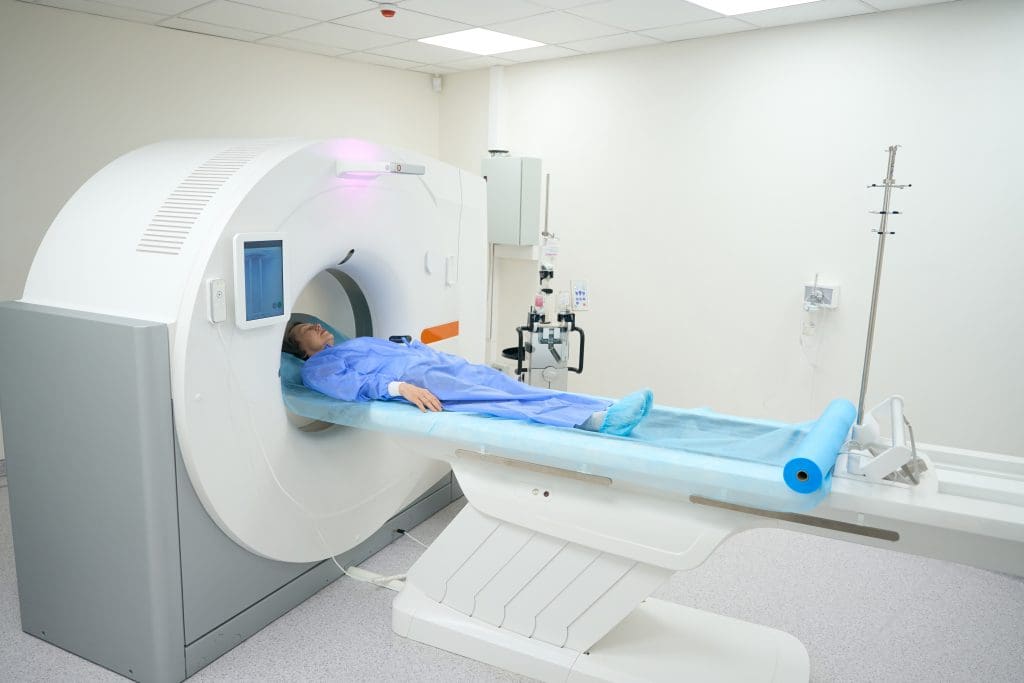
During the SPECT scan, a small amount of radiotracer is injected into a vein. The radiotracer highlights brain activity. The patient then lies on a table that slides into the SPECT scanner.
The scanner rotates around the head to capture images from different angles. The scan is painless and takes about 30 minutes to an hour. Patients must stay very quiet to get clear images.
Post-Scan Process and Results Delivery
After the scan, patients can usually go back to their normal activities. The images are then analyzed by a specialist, like a nuclear medicine physician or radiologist.
The results are shared with the patient’s doctor. This may lead to a follow-up appointment to discuss the diagnosis and treatment options.
The whole process aims to fully understand the patient’s condition. It helps guide the right care for them.
Accuracy and Reliability in Dementia Diagnosis
The accuracy of dementia diagnosis with SPECT scans is key. SPECT scans show how blood flows and brains work. This is vital for spotting different types of dementia.
SPECT Scan Dementia Detection looks at brain activity and blood flow patterns. It finds oddities linked to dementia. How well it works depends on the scan quality and the doctor’s skill.
Sensitivity and Specificity Rates
Sensitivity and specificity are important for SPECT scan accuracy. Sensitivity is about catching those with dementia right. Specificity is about missing those without dementia.
Research shows SPECT scans are good at spotting Alzheimer’s disease. But, how accurate it is can change based on the dementia type and diagnosis standards.
Factors Affecting Diagnostic Accuracy
Many things can change how accurate SPECT scans are for dementia. These include:
- The quality of the SPECT scan equipment and the radiotracer used
- The expertise of the physician interpreting the scan
- The presence of other medical conditions that may affect brain activity
- The stage of dementia at the time of the scan
Knowing these factors helps doctors better understand SPECT scan results. This leads to better care for patients with dementia.
By keeping these points in mind, healthcare teams can make SPECT scans more accurate. This helps improve care for people with dementia.
Clinical Applications of SPECT in Dementia Care
Doctors often suggest SPECT scans to check brain activity and blood flow in dementia patients. This tool helps doctors understand brain function better. It aids in diagnosing and managing dementia more effectively.
When Doctors Recommend SPECT Scans
SPECT scans are suggested when dementia symptoms appear and other tests don’t help. The choice to use a SPECT scan depends on the patient’s history and symptoms. It’s also based on the need for a detailed brain function assessment.
Clinical judgment is key in deciding on a SPECT scan. Doctors consider the patient’s age, other health issues, and how much their thinking has declined. These factors help decide if a SPECT scan is needed.
Integration with Other Diagnostic Methods
Detecting dementia often requires a mix of tests, including clinical exams, lab tests, and imaging. SPECT scans are used alongside other methods for a full picture of the patient’s health.
A patient might get a SPECT scan along with an MRI or CT scan. This combination gives both functional and structural brain information. It helps doctors understand dementia’s causes and plan the best treatment.
Using SPECT scans with other tests makes dementia diagnosis more accurate. It allows for more tailored care. By mixing SPECT’s functional data with other imaging’s structural details, doctors get a clearer picture of the patient’s health.
SPECT Scan Findings in Different Dementia Types
SPECT imaging is key in spotting unique brain patterns in different dementia types. It helps doctors make accurate diagnoses and plan treatments.
Common Abnormalities and Their Significance
SPECT scans show specific brain changes in various dementias. For example, Alzheimer’s disease shows less blood flow in the temporal and parietal lobes. On the other hand, frontotemporal dementia shows less blood flow in the frontal and anterior temporal areas.
Progression Monitoring Capabilities
SPECT scans are not just for initial diagnosis. They also help track how the disease is progressing. By comparing SPECT images over time, doctors can see changes in brain blood flow. This shows if the disease is getting worse or if treatments are working.
- Regular SPECT scans track dementia’s progress.
- Changes in brain blood flow help decide on treatments.
- Monitoring disease progress improves patient care.
SPECT imaging is a powerful tool in managing dementia. It lets us track disease progress and adjust treatments. This is very helpful in managing complex cases and improving patient results.
Comparing SPECT to Other Dementia Diagnostic Tools
SPECT scans are just one tool used to diagnose dementia. It’s important to know how they compare to others.
Healthcare providers use many tools to diagnose dementia. Each tool has its own strengths and weaknesses. This makes some tools better for certain patients or needs.
SPECT vs. PET Scans
PET and SPECT scans both show how the brain works. But, they give different kinds of information and have different sensitivities.
- PET Scans: More sensitive than SPECT, PET scans can spot small changes in brain activity. They’re great for catching Alzheimer’s early.
- SPECT Scans: Less sensitive than PET, SPECT scans are good for checking blood flow and brain activity. They’re also more available and cheaper.
SPECT vs. MRI and CT Scans
MRI and CT scans show the brain’s structure. SPECT scans, on the other hand, show how the brain functions.
- MRI: Great for detailed brain images, MRI can spot brain shrinkage, blood vessel problems, and more.
- CT Scans: Fast and common, CT scans are good for finding bleeding, big tumors, and other structural problems.
- SPECT: Not the best for looking at brain structure, SPECT is strong in showing how brain functions change. This is key in diagnosing and treating dementia.
SPECT vs. Clinical Cognitive Assessments
Cognitive assessments test memory, language, problem-solving, and more. They help understand a patient’s brain function.
- Clinical Assessments: Essential for knowing a patient’s cognitive state. They help figure out the type and severity of dementia.
- SPECT: Adds to cognitive assessments by showing brain function visually. It helps link symptoms to specific brain areas.
In summary, SPECT scans have their own set of challenges. Yet, they bring unique benefits in diagnosing and managing dementia. They work best when used with other tools.
Limitations and Challenges of SPECT Imaging
SPECT imaging is useful but faces some technical limits and diagnostic hurdles.
Technical Constraints
SPECT imaging has a few technical issues. One big problem is image resolution. SPECT scans often can’t show small details as well as MRI or CT scans can.
Another issue is the use of radiotracers. The quality of these tracers greatly affects SPECT scan accuracy. Differences in how the tracer is taken up can change how images are read.
| Technical Constraint | Impact on SPECT Imaging |
| Lower Spatial Resolution | Difficulty in detecting small changes in brain activity or structure |
| Reliance on Radiotracers | Variations in radiotracer distribution and uptake can affect image interpretation |
Diagnostic Challenges and False Results
SPECT imaging also has diagnostic challenges that can lead to false or unclear results. One big challenge is telling different types of dementia apart just by looking at SPECT scans.
Other issues like patient movement, wrong radiotracer dosage, or scanner problems can also cause problems with image reading.
Reading SPECT scans well needs skilled professionals. They must consider these possible issues. Doctors need to look at SPECT scans along with other tests and patient history to make a correct diagnosis.
Safety Considerations and Radiation Exposure
SPECT scans are important for diagnosing dementia. But, they come with safety concerns. One big worry is radiation exposure. This is because SPECT scans use radioactive tracers to see the brain.
Radiation Levels Compared to Other Imaging Methods
The radiation from a SPECT scan is mostly low to moderate. Here’s how it compares:
- A typical SPECT scan effective dose is around 7-10 mSv.
- This is similar to other nuclear medicine tests.
- It’s more than a standard chest X-ray (about 0.1 mSv) but less than some CT scans.
Risk-Benefit Analysis for Dementia Patients
For dementia patients, the safety of SPECT scans is key. The good news is the benefits often outweigh the risks. Here’s why:
- Getting an accurate diagnosis helps plan treatment.
- It can tell the difference between different types of dementia.
- The radiation dose is considered safe for the benefits it brings.
Healthcare providers should talk to patients about these points. This ensures they know the pros and cons of SPECT scans for dementia.
In summary, SPECT scans involve radiation, but their benefits in managing dementia are greater. Patients should talk to their doctors about any worries they have.
Early Detection Benefits: Identifying Cognitive Decline
SPECT scans are key in spotting cognitive decline early. This early catch helps in starting treatments sooner. It’s vital for managing dementia well, as it lets doctors plan the right care and help patients more.
Recognizing Pre-Clinical Dementia Signs
SPECT scans help spot signs of pre-clinical dementia. Pre-clinical dementia is when people start showing signs of brain decline but don’t yet have dementia. These scans find abnormal blood flow patterns in the brain, linked to early dementia.
Spotting these changes early lets doctors keep a closer eye on patients. They can try to slow down dementia’s progress with the right treatments.
Impact on Treatment Planning and Outcomes
Using SPECT scans early changes how we plan treatments and how well they work. When dementia is caught early, doctors can make plans that might include medicines, lifestyle changes, and brain training.
- Early action can slow down dementia’s growth.
- Doctors can tailor treatments to the specific type and stage of dementia.
- Patients and their families get early support and planning.
In summary, SPECT scans help patients get the care they need early. This improves their life quality greatly.
Controversies in SPECT Scan Use for Dementia Assessment
The use of SPECT scans in dementia assessment has sparked debate. Some doctors see them as helpful, while others worry about their limitations. They fear these scans might be misused.
Scientific Perspectives and Evidence Base
Scientists disagree on SPECT scans’ role in diagnosing dementia. Some say they can spot different types of dementia well. Others doubt their effectiveness due to limited evidence.
Critical analysis of existing research is key. We need to look at study methods, sample sizes, and how dementia is diagnosed.
Clinical Practice Guidelines and Recommendations
Guidelines on SPECT scans vary among medical groups. Some suggest they’re useful for tricky cases. Others say they’re not needed often because results can be hit-or-miss.
To clear up these issues, clear, evidence-based guidelines are needed. They should tell us who benefits most from SPECT scans and how to use them right.
Understanding the science and guidelines behind SPECT scans helps doctors. It helps them decide when to use these scans in their care.
Future Developments in SPECT Neuroimaging
The future of SPECT neuroimaging looks bright with new research and tech. As medical tech gets better, SPECT scans will be key in diagnosing and managing dementia.
Technological Advancements on the Horizon
Several tech upgrades are coming for SPECT neuroimaging. These include:
- Improved detector technology for higher resolution images
- Advanced image reconstruction algorithms for better image quality
- Integration of artificial intelligence for enhanced diagnostic accuracy
Emerging Research Directions
Research in SPECT neuroimaging is growing in new areas, including:
| Research Area | Description | Potential Impact |
| Early Detection Biomarkers | Identifying SPECT patterns that precede clinical symptoms | Enable earlier intervention and potentially improve outcomes |
| Therapeutic Monitoring | Using SPECT to assess treatment response in dementia | Help personalize treatment plans and improve patient care |
| Multi-modal Imaging | Combining SPECT with other imaging modalities like MRI | Provide more complete insights into brain function and structure |
These new research paths and tech upgrades will make SPECT neuroimaging even more valuable in dementia care. They offer new chances for diagnosis, treatment tracking, and better patient care.
Conclusion: The Role of SPECT Scans in Modern Dementia Care
SPECT scans are key in diagnosing and managing dementia. They show how blood flows and brains work. This helps doctors spot patterns linked to different types of dementia.
These scans have changed how we care for people with dementia. They help doctors make better diagnoses and choose the right treatments. This leads to better care for patients.
In today’s dementia care, SPECT scans are very important. They work with other tests to improve patient care. As research and treatments get better, SPECT scans will play an even bigger role.
FAQ
What is a SPECT scan, and how is it used in dementia detection?
A SPECT scan is a test that looks at blood flow in the brain. It helps find patterns that might show dementia or other brain issues.
How does a SPECT scan differ from other brain imaging techniques like MRI or CT scans?
A SPECT scan looks at how the brain works, unlike MRI or CT scans. These scans show brain structures but not brain function.
What types of dementia can be identified using SPECT imaging?
SPECT imaging can spot different dementias like Alzheimer’s, vascular dementia, and Lewy body dementia. Each has its own brain activity pattern.
How accurate are SPECT scans in diagnosing dementia?
The accuracy of SPECT scans depends on the scan quality and the doctor’s skill. It also depends on the dementia type being checked.
What are the benefits of using SPECT scans for dementia evaluation?
SPECT scans give insights into brain function. They help diagnose dementia early and accurately. This leads to better treatment plans.
Are there any limitations or challenges associated with SPECT imaging for dementia?
Yes, SPECT imaging has technical limits and can have false results. It’s important to interpret them carefully and with other tests.
How does radiation exposure from SPECT scans compare to other imaging methods?
SPECT scans have low radiation levels, similar to some other nuclear tests. They are generally safe for most patients.
Can SPECT scans detect pre-clinical signs of dementia?
SPECT scans might spot early brain activity changes before dementia symptoms appear. This could lead to early treatment.
How do SPECT scans compare to other diagnostic tools used in dementia evaluation?
SPECT scans offer a unique view of brain function. They work well with other tests like MRI and PET scans. Together, they give a full picture of dementia.
Are SPECT scans recommended for everyone with suspected dementia?
SPECT scans are usually for those with unclear dementia symptoms. A doctor will decide if they’re needed as part of a full check-up.
How do SPECT scans contribute to treatment planning and patient outcomes in dementia?
SPECT scans help diagnose dementia early and accurately. This guides treatment and improves patient care and life quality.