
Spotting 20 days after IVF embryo transfer can be worrying. But it’s actually common among women going through fertility treatments. At Liv Hospital, we understand how spotting after IVF transfer 20 days later can cause concern, and our team is here to guide and support you every step of the way.
Studies show that bleeding in early pregnancy after IVF happens in almost half of the patients. While it’s natural to worry, research says light spotting doesn’t lower the chances of a successful pregnancy.
There are several reasons why ivf transfer bleeding might happen. These include implantation bleeding, hormonal changes, and irritation of the cervix. Knowing these reasons can help ease worries and give clarity to those going through IVF.
Key Takeaways
- Spotting 20 days after IVF transfer is relatively common and doesn’t necessarily indicate a problem.
- Implantation bleeding, hormonal fluctuations, and cervical irritation are possible causes.
- Light spotting doesn’t compromise pregnancy success rates, research shows.
- Understanding the causes can help ease concerns for those undergoing IVF.
- Nearly half of all patients undergoing frozen embryo transfer experience some bleeding.
Understanding the IVF Transfer Timeline
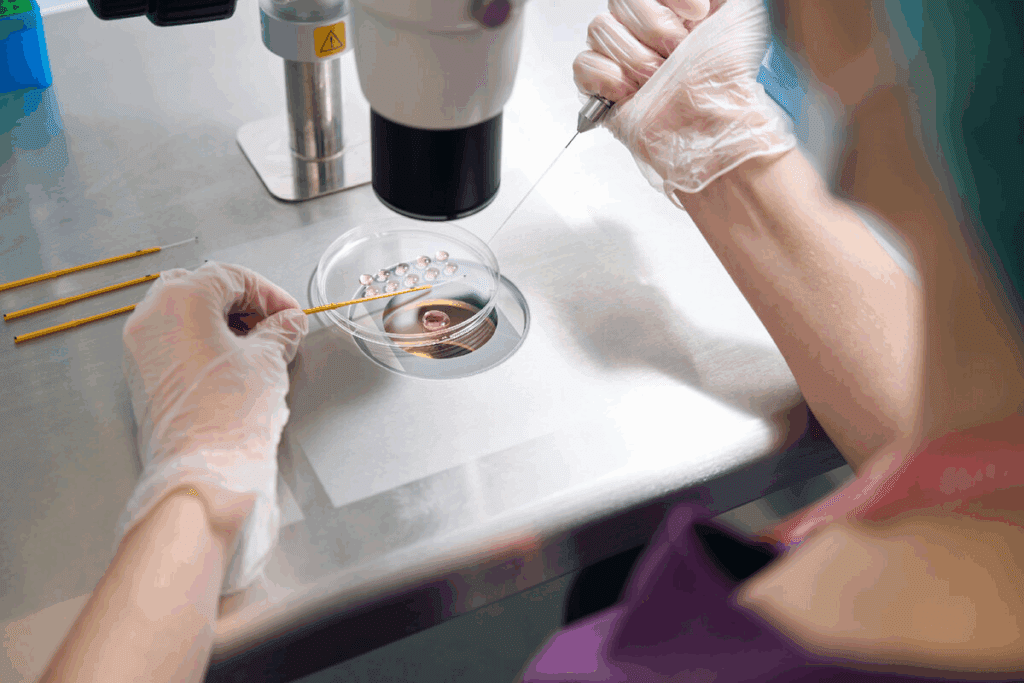
After an embryo transfer, several key milestones mark the path to a possible pregnancy. It’s important for patients going through IVF to know these milestones.
Key Milestones After Embryo Transfer
The time after embryo transfer is filled with important events. Implantation usually happens 6-10 days after the transfer. This is a key moment in the IVF journey. It’s when the embryo attaches to the uterine lining, starting the pregnancy.
As the embryo implants, hormonal changes start. Human chorionic gonadotropin (hCG) levels begin to rise. This is key for keeping the pregnancy going. Patients might feel mild cramping and spotting during this time.
The Significance of Day 20 Post-Transfer
Day 20 post-transfer is a big deal in the IVF timeline. By then, implantation should be done, and hCG levels are usually detectable. For many, this day is part of the two-week wait, a time of hope and worry.
Spotting on day 20 or around then can have many causes. These include hormonal changes and bleeding from implantation. Knowing this can help ease some of the worry about spotting.
Symptoms around 21 days after embryo transfer, or even later, like 26 days post-transfer, can differ a lot. Some might see bleeding or spotting, while others might not notice anything unusual.
Spotting After IVF Transfer 20 Days: What It Means
[Add image here]
Women going through IVF often worry about spotting 20 days after the embryo transfer. It’s key to know the difference between spotting and bleeding. This helps figure out what these signs might mean for the pregnancy.
Defining Spotting vs. Bleeding
Spotting is light bleeding, usually pink or brown, and doesn’t need a pad. Bleeding, on the other hand, is heavier and might need a pad. Knowing the difference is important for checking on the pregnancy’s health.
Characteristics of Spotting and Bleeding:
| Characteristics | Spotting | Bleeding |
|---|---|---|
| Color | Light pink or brown | Red or bright red |
| Amount | Light, not requiring a pad | Heavier, may require a pad |
| Duration | Variable, often short-term | Variable, can be longer-term |
Prevalence of Spotting in IVF Pregnancies
Studies show spotting is common in IVF pregnancies. About 47% of patients with Hormone Replacement Therapy-Frozen Embryo Transfer (HRT-FET) see bleeding before the eighth week. Spotting can be scary, but it doesn’t always mean there’s a problem with the pregnancy.
Women spotting after IVF should stay informed and talk to their doctor. This helps understand the cause and what it means for their pregnancy.
Common Causes of Post-IVF Transfer Spotting
Spotting 20 days after IVF transfer can worry expectant mothers. Spotting, or light bleeding, happens to many women during IVF. We’ll look at why it happens.
Implantation-Related Bleeding
Spotting after IVF transfer often comes from implantation bleeding. This happens when the embryo sticks to the uterine lining, causing small blood vessel breaks. Implantation bleeding shows as light spotting or brown discharge. Not all women see this, and not seeing it doesn’t mean there’s a problem with the pregnancy.
Hormonal Fluctuations
Hormonal changes are big in IVF treatment and can cause spotting. The use of progesterone and estrogen can change the uterine lining, leading to bleeding. These changes are usually short-lived and go away by themselves.
Medication Side Effects
IVF medications can also lead to spotting. Progesterone, in particular, can cause breakthrough bleeding in some women. How you take progesterone, like through suppositories or injections, can affect spotting. Always talk to your fertility specialist if you notice bleeding.
The main reasons for spotting after IVF transfer are:
- Implantation-related bleeding from embryo attachment
- Hormonal changes from IVF meds
- Side effects from progesterone
Spotting can be scary, but it’s often normal in IVF. Yet, it’s smart to check with your fertility specialist to make sure your pregnancy is okay.
Why Implantation Bleeding Differs from Day 20 Spotting
Exploring early pregnancy after IVF, it’s key to know the difference between implantation bleeding and spotting later on. Implantation bleeding happens when the embryo attaches to the uterine lining. Spotting 20 days post-transfer might be due to hormonal changes or medication effects.
Typical Timing of Implantation Bleeding (6-10 Days)
Implantation bleeding usually happens 6-10 days after embryo transfer. This is when the embryo implants into the uterine lining. It’s a critical time as the embryo starts connecting with the mother’s bloodstream.
Implantation bleeding can vary, but it’s often:
- Light spotting or bleeding
- Short duration, typically a few hours to a couple of days
- May be accompanied by mild cramping
Physiological Differences in Later Spotting
Spotting around 20 days after IVF transfer is often due to different reasons. At this stage, the embryo is more established. Spotting might be influenced by:
- Hormonal fluctuations due to the pregnancy
- Effects of progesterone supplementation
- Cervical sensitivity or changes
Knowing these differences helps manage expectations and reduce anxiety in early pregnancy after IVF.
Hormonal Medication Effects on Bleeding Patterns
Hormonal medications are key in IVF treatment, changing how bleeding happens. Patients get these meds to help early pregnancy stages. These meds can cause spotting or bleeding.
Progesterone Supplementation and Breakthrough Bleeding
Progesterone is often used in IVF to help the embryo implant and keep the pregnancy. But, it can also cause bleeding. Breakthrough bleeding is a common side effect of this hormone, showing up as spotting or light bleeding.
A study showed that progesterone can make the uterine lining more likely to bleed. It’s not clear how, but it might affect the blood vessels in the lining.
Estrogen Level Fluctuations
Estrogen levels also change with IVF hormonal therapy. This hormone thickens the uterine lining for implantation. But, its ups and downs can cause spotting or bleeding. Keeping an eye on estrogen levels is key to reduce bleeding risk.
Estrogen levels can change for many reasons, like dosage adjustments or how the body reacts to the therapy. Changing the estrogen dose or switching meds can help lessen bleeding.
Medication Delivery Methods and Bleeding Risk
The way meds are given can also affect bleeding risk. Different methods, like oral, vaginal, or intramuscular, affect how the body takes in the meds. Vaginal progesterone suppositories, for example, can irritate the area and cause spotting.
| Medication Delivery Method | Bleeding Risk |
|---|---|
| Oral | Moderate |
| Vaginal | Higher due to local irritation |
| Intramuscular | Lower |
The table shows that bleeding risk changes with the delivery method. Knowing this helps patients and doctors make better choices for IVF treatment.
“The use of hormonal medications in IVF treatment requires careful consideration of the possible effects on bleeding patterns. By understanding these effects, healthcare providers can better manage patient care and minimize the risk of complications.”
Cervical Sensitivity During Early IVF Pregnancy
IVF patients often feel cervical sensitivity early on. This is because of the treatments and procedures they go through. Spotting or bleeding can be a worry for many.
It’s important to know what causes this sensitivity. This knowledge helps in managing and reducing its effects.
Impact of Vaginal Suppositories
Vaginal suppositories are used for progesterone during IVF. They can irritate the cervix. This irritation might cause sensitivity and spotting.
Progesterone is key for early pregnancy support. But, how it’s delivered can sometimes be uncomfortable.
Healthcare providers suggest gentle insertion and may offer different options if needed. It’s vital to talk to your doctor about any discomfort or worries.
Physical Examination Considerations
Physical exams are part of prenatal care for IVF pregnancies. But, they must be done carefully to avoid irritation. Healthcare providers use gentle techniques to ensure comfort and thorough care.
Spotting after an exam is possible. It’s important to discuss any concerns with your healthcare provider. Sometimes, changes in exam schedule or technique are needed to avoid bleeding.
Understanding cervical sensitivity helps IVF patients in the early stages of pregnancy. Talking openly with healthcare providers about any discomfort or concerns is essential for managing sensitivity effectively.
Distinguishing Normal from Concerning Symptoms
Understanding the difference between normal and abnormal bleeding is key in IVF. Spotting after IVF transfer, often around 20 days, can worry many. It’s important to know what’s normal and what’s not.
Not all bleeding is the same. Knowing the difference between normal spotting and signs that need a doctor’s attention can ease worries.
Normal Spotting Characteristics
Normal spotting after IVF transfer is usually light. It’s brown or pink and doesn’t last long, from a few hours to a couple of days. It’s often just enough to need a panty liner, not a full pad.
Warning Signs That Require Medical Attention
But, some symptoms are a big worry. These include heavy bleeding that’s bright red or has clots, severe pain, or fever. If you’re bleeding so much it soaks a pad in an hour, or if it doesn’t stop, get help.
Also, if you’re dizzy or faint, it’s time to see a doctor. These signs mean you might need medical help.
Quantity and Quality Assessment
It’s important to watch how much you’re bleeding and what it looks like. Keep track of it. This helps you tell your doctor if something’s off.
By knowing what normal spotting looks like, IVF patients can feel more in control. They’ll know when to get help.
Research Statistics on Early Pregnancy Bleeding
Research on IVF pregnancies has given us important insights. It shows how common early bleeding is. Studies on Hormone Replacement Therapy-Frozen Embryo Transfer (HRT-FET) have been key. They tell us about the frequency and what bleeding means in early pregnancy.
47% HRT-FET Patients Experience Pre-Week 8 Bleeding
About 47% of HRT-FET patients see bleeding before the eighth week. This means almost half of these patients face bleeding early in their pregnancy.
Pregnancy Outcome Correlations (71% vs. 67%)
Studies have looked at how early bleeding affects pregnancy success. They found a slight difference in success rates. Bleeding before the eighth week is linked to a 71% success rate. Without bleeding, the rate is about 67%.
To understand these numbers better, let’s look at a table:
| Bleeding Status | Pregnancy Success Rate |
|---|---|
| With Bleeding | 71% |
| Without Bleeding | 67% |
These numbers show that bleeding early on doesn’t always mean trouble. In fact, the success rate might even be a bit higher for those who bleed.
It’s important to remember that these stats are just a guide. Every person’s experience is different. Things like why the bleeding happened, the patient’s health, and the IVF treatment can all play a role in how the pregnancy goes.
When to Contact Your Fertility Specialist
If you’re going through IVF and see spotting or bleeding, it’s important to know when to call your fertility specialist. Spotting 20 days after IVF transfer can worry you. It’s key to know how to react for your health and the chance of getting pregnant.
Symptoms That Warrant Immediate Attention
Some spotting after IVF is normal, but some signs need quick medical check-up. These include:
- Heavy bleeding: Bleeding as much as or more than a regular period.
- Severe abdominal pain: Pain that’s very strong or lasts a long time.
- Fever: A high body temperature, which might mean an infection.
- Passage of tissue: Passing clots or tissue, which needs checking.
These signs might mean you need urgent medical help. Our fertility experts are ready to help and give the care you need.
What Information to Provide Your Doctor
When you call your fertility specialist, give them all the details. This helps you get the right care. Be ready to talk about:
| Information | Description |
|---|---|
| Symptoms | Tell them about your symptoms, when they started, and how bad they are. |
| Bleeding characteristics | Talk about the color, amount, and any other details of the bleeding. |
| Medications | Share all the medicines you’re taking, including how much and how often. |
By giving this info, your fertility specialist can understand your situation better. They can then give you the best advice and treatment.
Seeing spotting or bleeding after IVF can be scary. But, our team is here to help. We offer medical help and emotional support too.
Diagnostic Procedures for Evaluating Spotting
Spotting after an IVF transfer is a concern. Diagnostic procedures are key to figuring out why it happens. They help doctors check if the pregnancy is healthy.
Ultrasound Assessment
Ultrasound is a main tool for checking the embryo. It lets us see the embryo and check its growth. A heartbeat is a sign of a healthy pregnancy.
A study in the Journal of Assisted Reproduction and Genetics shows ultrasound is effective. It can spot issues early, between 6-10 weeks of pregnancy.
Blood Tests and Hormone Level Monitoring
Blood tests are important for tracking hormone levels. Human chorionic gonadotropin (hCG) is a key hormone in early pregnancy. It shows how the pregnancy is doing.
Medical Expert, “Tracking hCG levels is key in early pregnancy, after IVF. It helps spot problems early.”
“Serial hCG measurements can provide valuable information about the viability and health of the pregnancy.”
Medical Expert, Fertility Specialist
Evaluating Pregnancy Viability
Checking if a pregnancy is viable means looking at ultrasound and hormone data. These tools help us understand the pregnancy’s health. This way, we can make the right decisions for the patient.
| Diagnostic Tool | Purpose | Indicators of Pregnancy Health |
|---|---|---|
| Ultrasound Assessment | Visualize embryo development | Embryo growth, heartbeat presence |
| Blood Tests (hCG levels) | Monitor hormone levels | Appropriate hCG level increases |
Using these diagnostic tools, we can handle spotting after IVF well. This ensures the best results for our patients.
Managing Stress and Anxiety During Spotting Episodes
Managing stress is key for those going through IVF, even with spotting or bleeding. The ups and downs of IVF can be tough. Spotting can make anxiety and uncertainty worse.
Coping Strategies for Emotional Well-being
To stay emotionally strong during IVF, try these coping strategies:
- Mindfulness and meditation to lower stress
- Doing gentle activities like yoga or walking
- Writing in a journal or using creative outlets
- Getting support from friends, groups, or counselors
Using these strategies can help manage stress and anxiety during IVF.
| Coping Strategy | Benefits |
|---|---|
| Mindfulness and Meditation | Reduces stress, improves emotional regulation |
| Gentle Physical Activity | Enhances mood, reduces anxiety |
| Journaling/Creative Expression | Provides emotional outlet, fosters reflection |
Support Resources for IVF Patients
IVF patients can find many support resources. These help with the emotional side of treatment. Some include:
- Professional counseling for fertility issues
- Support groups, online or in-person, for sharing
- Online forums and communities for IVF and fertility
- Workshops and materials on stress and anxiety management
Using these resources can offer emotional support and practical tips for IVF stress.
Conclusion
Spotting 20 days after IVF transfer can worry those going through fertility treatments. But knowing why it happens can ease worries. We’ve looked at why spotting might occur, like implantation bleeding, hormonal changes, and sensitive cervix.
It’s key to know the difference between normal spotting and signs that need a doctor. Spotting that’s normal has certain signs, like color and how long it lasts. Tests like ultrasounds and blood work help check on spotting and the pregnancy’s health.
Spotting after IVF transfer might be scary, but it’s common. Knowing about it and talking with your fertility doctor can help. Whether it’s spotting 20 days later or bleeding, understanding it can guide your care choices.
FAQ
What is spotting after IVF transfer, and is it a cause for concern?
Spotting after IVF transfer means light bleeding or discharge after the embryo transfer. It can be worrying, but it doesn’t always mean there’s a problem with the pregnancy.
What are the common causes of spotting 20 days after IVF transfer?
Spotting 20 days after IVF can be due to implantation bleeding, hormonal changes, or side effects from medications like progesterone.
How does implantation bleeding differ from spotting 20 days after IVF transfer?
Implantation bleeding happens 6-10 days after the transfer, when the embryo attaches. Spotting at 20 days might be due to hormonal shifts or medication effects.
Can hormonal medications cause spotting after IVF transfer?
Yes, hormonal meds, like progesterone, can cause bleeding because they affect the uterine lining.
What is the significance of day 20 post-transfer in the context of spotting?
Day 20 is important because it’s in the two-week wait period. By then, implantation should have happened, and pregnancy hormones should be rising.
How can I distinguish between normal spotting and concerning symptoms after IVF transfer?
Normal spotting is light, brown, or pink and doesn’t last long. But, heavy bleeding, severe pain, or passing clots are signs of trouble.
When should I contact my fertility specialist if I experience spotting after IVF transfer?
Call your fertility specialist if you have heavy bleeding, severe pain, fever, or other symptoms that worry you.
What diagnostic procedures are used to evaluate spotting after IVF transfer?
Doctors use ultrasounds and blood tests to check hormone levels, like hCG, to see if the pregnancy is progressing.
How can I manage stress and anxiety during spotting episodes after IVF transfer?
To deal with stress and anxiety, try counseling, support groups, or online forums. They can help a lot.
Is spotting after IVF transfer a common occurrence?
Yes, spotting after IVF is common. It doesn’t always mean there’s a problem with the pregnancy.
What is the correlation between bleeding and pregnancy outcomes after IVF transfer?
Studies show many patients, including those with HRT-FET, experience bleeding early in pregnancy. But, many of them have successful pregnancies.
How do different medication delivery methods influence the risk of bleeding after IVF transfer?
Different ways to take medications, like vaginal suppositories, can irritate the area and cause spotting.
What information should I provide to my doctor when reporting spotting after IVF transfer?
Tell your doctor how much, what color, and how long the bleeding lasts. Also, share any other symptoms you’re feeling.
References
National Center for Biotechnology Information. Spotting After IVF Transfer: Common Causes and Management. Retrieved from https://pubmed.ncbi.nlm.nih.gov/37897214/
National Center for Biotechnology Information. Evidence-Based Medical Guidance. Retrieved from https://www.ncbi.nlm.nih.gov/pmc/articles/PMC9823241/
National Center for Biotechnology Information. Evidence-Based Medical Guidance. Retrieved from https://pubmed.ncbi.nlm.nih.gov/37897214/