Last Updated on December 1, 2025 by Bilal Hasdemir

Wilms tumor, also known as nephroblastoma, is a rare kidney cancer that mainly hits kids. Remarkably, the cure rate for Wilms tumor has jumped up a lot, with survival rates now between 85% to 90% in most cases.
We’re seeing big changes in how we treat and manage Wilms tumor. New medical methods and better care are making a big difference. This rare tumor needs a deep understanding and support from families.
Looking into Wilms tumor, it’s clear that knowing its cure rate and survival stats is key for patients and families looking for info on this condition.
Key Takeaways
- Wilms tumor is a rare type of kidney cancer that mainly affects kids.
- The overall cure rate for Wilms tumor has improved a lot, with survival rates now between 85% to 90%.
- New medical methods and better care have helped improve treatment results.
- Understanding Wilms tumor cure rate and survival stats is key for patients and families.
- Getting full support for families dealing with this condition is very important.
Understanding Wilms Tumor: A Comprehensive Overview

Wilms tumor, also known as nephroblastoma, is a rare kidney cancer in kids under 7. It has unique features and genetic links, making it stand out among childhood cancers.
Definition and Prevalence of Wilms Tumor
Wilms tumor is a cancer of the kidney, often seen as a big mass in the belly. It’s the top kidney cancer in kids, making up 90% of cases. About 1 in 100,000 kids get it, mostly before they turn 5.
The number of Wilms tumor cases can vary. But it’s rare, which means we need to watch for it and act fast if we see symptoms.
How Wilms Tumor Differs from Other Childhood Cancers
Wilms tumor is different from other childhood cancers. It’s linked to genetic syndromes like WAGR. It also shows up as a single mass in the belly, which is unique.
Wilms tumor has a good chance of being treated well if caught early. Doctors use surgery, chemo, and sometimes radiation to treat it. The plan depends on the tumor’s size and type.
Knowing these differences helps doctors and families deal with diagnosis and treatment better.
Early Detection: Signs and Symptoms of Wilms Tumor
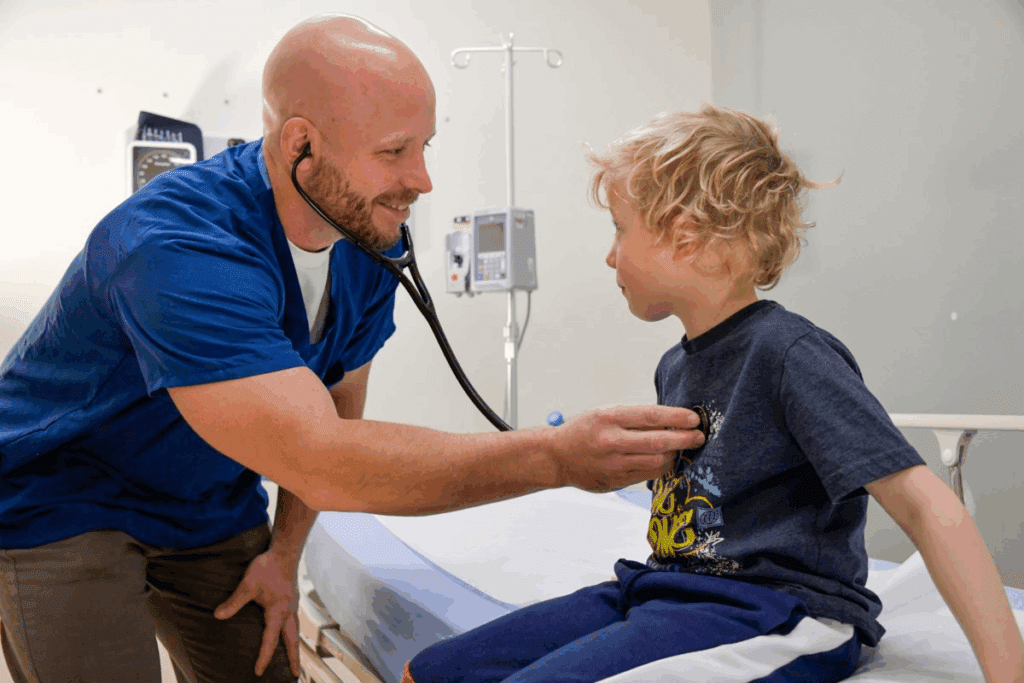
It’s important to know the signs of Wilms tumor for early treatment. This kidney cancer mainly hits kids. Spotting the symptoms early can help a lot.
Common Physical Symptoms
Wilms tumor symptoms can differ, but some signs are common. These include:
- Abdominal Swelling: A noticeable swelling or mass in the abdomen is one of the most common symptoms.
- Abdominal Pain: Children may complain of pain in the abdominal area.
- Hematuria: Blood in the urine, though rare, can signal Wilms tumor.
- High Blood Pressure: Some kids might have high blood pressure because of the tumor.
- Fever: Sometimes, kids with Wilms tumor may have a fever.
These signs can also mean other things. But if they keep happening, see a doctor.
When to Seek Medical Attention
If a child shows any of these symptoms, like a swelling in the belly, get help fast. Finding it early can really help. Keep an eye on your child’s health and talk to a doctor if you notice anything different.
A doctor will check your child and might do tests like ultrasounds or CT scans. If they think it’s Wilms tumor, they’ll do more tests to be sure.
Diagnosing Wilms Tumor: From Initial Assessment to Confirmation
To diagnose Wilms tumor, we use a few key steps. First, we do a physical check-up and look at imaging studies. Then, we confirm the diagnosis with tissue samples. This way, we make sure we find the tumor and plan the best treatment.
Physical Examination and Medical History
The first step in finding Wilms tumor is a detailed check-up and talking about the child’s health. We look for signs like belly swelling, pain, fever, and blood in the urine. Knowing the child’s health history helps us understand their overall condition and any genetic risks.
Imaging Studies: CT Scans, Ultrasounds, and MRIs
Imaging tests are key in spotting Wilms tumor. We use different tests to see the tumor and how big it is.
- Ultrasound: This is often the first test. It shows where and how big the tumor is.
- CT Scan: This gives us detailed pictures of the belly and chest. It helps us see the tumor and if it has spread.
- MRI: It gives us clear images. These help us tell Wilms tumor apart from other tumors in the belly.
These tests are important for planning surgery and deciding if more treatments are needed.
Biopsy and Pathological Confirmation
Even though tests like CT scans are helpful, a biopsy is needed to confirm Wilms tumor. A biopsy takes a small piece of tumor tissue. Then, it’s checked under a microscope for specific patterns.
This test not only confirms Wilms tumor but also tells us what type it is. Knowing this helps us predict how well the child will do and what treatment to use.
| Diagnostic Step | Purpose | Key Findings |
| Physical Examination | Initial assessment | Abdominal swelling, pain, fever, hematuria |
| Imaging Studies (CT, Ultrasound, MRI) | Tumor visualization and staging | Tumor size, location, possible spread |
| Biopsy and Pathology | Definitive diagnosis | Tumor type, cell details |
The Wilms Tumor Staging System Explained
Knowing the Wilms tumor staging system is key. It helps doctors see how far the cancer has spread. This is important for planning the best treatment.
Stage 1 and 2: Localized Disease
In Stage 1 Wilms tumor, the cancer is only in the kidney. It can be removed by surgery. The tumor is small and hasn’t spread. Stage 2 Wilms tumor means the cancer has grown but can also be removed. Both stages have a good outlook.
Stage 3: Regional Spread
Stage 3 Wilms tumor shows the cancer has spread to nearby areas. This makes surgery harder. Treatment often includes surgery, chemotherapy, and sometimes radiation.
Stage 5: Bilateral Kidney Involvement
Stage 5 Wilms tumor affects both kidneys. This makes treatment very challenging. Doctors focus on saving kidney function while fighting the cancer. Treatment for Stage 5 is very individualized.
The Wilms tumor staging system is vital. It helps doctors plan the best treatment. Knowing the stage helps predict how well a patient will do.
Stage Four Kidney Cancer Survival: Prognosis and Expectations
Stage four Wilms tumor is tough, but new treatments have boosted survival rates. It’s key for patients and their families to know about this stage and its effects.
Defining Stage 4 Wilms Tumor
Stage 4 Wilms tumor means cancer has spread to distant places like the lungs, liver, or brain. This makes treatment harder and changes the outlook.
Current Survival Statistics for Stage 4
Thanks to better treatments, survival rates for stage 4 Wilms tumor have gone up. Studies show that kids with this stage now have a better chance of living.
| Year | Survival Rate |
| 2000 | 40% |
| 2020 | 70% |
This table shows how survival rates have improved over 20 years.
Factors Affecting Stage 4 Outcomes
Many things can change how well a patient does with stage 4 Wilms tumor. These include the patient’s age, the type of tumor, and how well they respond to treatment.
- Age at Diagnosis: Younger patients often do better.
- Tumor Histology: Tumors that look more normal have a better chance than those that look very different.
- Response to Treatment: Patients who do well with first treatments have a better outlook.
Knowing these factors helps doctors create treatment plans that are just right for each patient. This can help improve their chances of survival.
Histological Classifications: Favorable vs. Unfavorable
Knowing the histological classification of Wilms tumor is key for predicting outcomes and treatment plans. The type of cells in Wilms tumor greatly affects how well a patient will do.
Favorable Histology and Its Implications
Favorable histology Wilms tumors lack anaplasia, showing typical cell structures. These tumors usually have a better outlook and respond well to common treatments.
Children with favorable histology Wilms tumors often live longer and face fewer side effects. This type of tumor allows for less aggressive treatments, lowering the chance of long-term harm.
| Histological Classification | Prognosis | Treatment Approach |
| Favorable Histology | Better prognosis | Standard chemotherapy and surgery |
| Unfavorable Histology | Poorer prognosis | Intensified chemotherapy and radiation |
Anaplastic Wilms Tumor and Treatment Challenges
Anaplastic Wilms tumor is more aggressive and harder to treat due to anaplasia. Anaplasia means a higher chance of treatment failure and worse results.
“The presence of anaplasia in Wilms tumor is associated with a higher risk of relapse and poorer survival rates, necessitating more aggressive treatment strategies.”
Dealing with anaplastic Wilms tumor means using stronger treatments like aggressive chemotherapy and radiation. Despite these tough challenges, scientists keep working to better treatment options for these patients.
The histological classification of Wilms tumor is vital for predicting outcomes and planning treatments. By understanding the differences between favorable and unfavorable histology, we can make treatments more effective for patients.
Overall Survival Rates for Wilms Tumor
Medical treatments have greatly improved for Wilms tumor patients. Survival rates have seen a big jump thanks to better chemotherapy, surgery, and radiation.
Historical Improvements in Survival
Wilms tumor was once almost always fatal. But, with new treatments, survival chances have soared. Chemotherapy and better surgery have been key in raising survival rates. Studies show a big increase in survival rates, making it a success in treating kids with cancer.
Current 5-Year Survival Statistics
Today, over 90% of Wilms tumor patients survive for 5 years in many places, like the U.S. This shows how well modern treatments work. The 5-year survival rate is a key measure. It shows how many patients live at least 5 years after being diagnosed. For Wilms tumor, this rate has gone up, showing better treatments.
“The 5-year survival rate for Wilms tumor has improved significantly, exceeding 90% in recent years due to advancements in treatment modalities.”
Long-term Survival and Quality of Life
While the 5-year survival rate is important, long-term survival and quality of life matter too. We aim for survivors to live healthy, normal lives. Long-term care is vital to manage treatment side effects and watch for cancer coming back. We keep working to make treatments better, with fewer side effects.
We also focus on survivors’ quality of life. This includes checking for late treatment effects and providing support. We want survivors to have a good life after treatment.
Treatment Approaches for Wilms Tumor
We use different treatments for Wilms tumor. These include surgery, chemotherapy, and radiation therapy. Our goal is to get the best results for our patients.
Surgical Interventions
Surgery is key in treating Wilms tumor. The main aim is to remove the tumor fully. Nephrectomy, either partial or total, is often used.
The choice between partial and total nephrectomy depends on the tumor’s size and location. It also depends on if the disease is in both kidneys.
Chemotherapy Protocols
Chemotherapy is a major part of Wilms tumor treatment. It kills any cancer cells left after surgery or shrinks the tumor before surgery. The chemotherapy plan is based on the tumor’s stage and type.
Actinomycin D and vincristine are common chemotherapy drugs used.
Radiation Therapy: When and Why
In some cases, radiation therapy is used. It’s mainly for patients with advanced disease or certain types of tumors. It helps control the disease and lower the chance of it coming back.
The choice to use radiation therapy depends on the tumor’s stage, type, and how it responds to initial treatment.
Treatment Strategies by Stage
The treatment for Wilms tumor depends on the stage at diagnosis. Early stages might get conservative management, while advanced stages need intensive therapy. The stage of the disease is key in choosing the best treatment.
Early Stage Treatment Approaches
Early-stage Wilms tumor treatment often combines surgery and chemotherapy. The aim is to remove the tumor and treat any hidden disease. Surgery is usually the first step, trying to save as much kidney function as possible.
Chemotherapy plans vary based on the tumor and patient’s health. For early stages, chemotherapy is less intense. It aims to lower the chance of the disease coming back without causing too many side effects.
Stage III Wilms Tumor Management
Stage III Wilms tumor has spread but is regional. Treatment for Stage III is more intense, often including surgery, chemotherapy, and radiation. Radiation therapy is a key part for managing disease in high-risk areas.
Chemotherapy for Stage III is more intense than for early stages. It aims to control the disease and stop it from spreading further. The drugs and doses are chosen based on the tumor and how the patient responds to treatment.
| Treatment Modality | Early Stage | Stage III |
| Surgery | Primary treatment | Essential for tumor removal |
| Chemotherapy | Less intensive | More intensive regimen |
| Radiation Therapy | Not typically used | Used for residual disease or high-risk areas |
Advanced Stage IV Treatment Intensification
Stage IV Wilms tumor is the most advanced, with disease in distant organs. Treatment for Stage IV is highly coordinated, using surgery, chemotherapy, and sometimes radiation. The goal is to control the disease systemically and manage symptoms.
“The treatment of Stage IV Wilms tumor requires a complete and aggressive strategy, using the latest in chemotherapy, surgery, and radiation to improve survival.” – Pediatric Oncologist
Chemotherapy is key in treating Stage IV Wilms tumor. Regimens are tailored to the patient’s tumor and response. High-dose chemotherapy with stem cell rescue is sometimes used for high-risk or relapsed cases.
Factors Affecting Prognosis and Cure Rates
Knowing what affects Wilms tumor prognosis is key for good treatment plans. Many things play a part in how well a patient does.
Age at Diagnosis
The age a child is diagnosed with Wilms tumor matters a lot. Kids diagnosed early usually do better than those diagnosed later.
Age-related Prognosis: Kids under 2 usually have a better chance of recovery.
Tumor Biology and Genetics
The tumor’s biology and genetics are very important. Tumors with good biology tend to do better.
Response to Initial Treatment
How a tumor reacts to first treatment is a big clue about the prognosis. A good response to treatment can greatly improve survival chances.
| Prognostic Factor | Favorable Outcome | Unfavorable Outcome |
| Age at Diagnosis | < 2 years | > 5 years |
| Tumor Histology | Favorable | Anaplastic |
| Response to Treatment | Complete Response | Poor Response |
Understanding these factors helps us predict outcomes better. We can then tailor treatments to fit each patient’s needs.
Special Considerations: Aniridia and Genetic Syndromes
Wilms tumor is linked to certain genetic factors. These factors affect how the tumor develops and grows. Knowing these genetic factors helps find high-risk patients and set up the right screening plans.
WAGR Syndrome and Wilms Tumor Risk
WAGR syndrome is a genetic disorder. It raises the risk of Wilms tumor. This syndrome is caused by a deletion on chromosome 11p13, affecting the PAX6 and WT1 genes. The WT1 gene is key because it helps prevent tumors.
Children with WAGR syndrome need regular checks for Wilms tumor. This usually means getting ultrasound scans of their abdomen often. Finding the tumor early is key to treating it well.
Other Genetic Predispositions
Other genetic conditions also increase Wilms tumor risk. These include:
- Beckwith-Wiedemann syndrome
- Denys-Drash syndrome
- Isolated hemihypertrophy
- Familial Wilms tumor
These conditions highlight the need for genetic screening and watchful waiting in families with Wilms tumor history.
Knowing about genetic syndromes linked to Wilms tumor is very important. It helps in setting up the right watch and care plans. Children with these syndromes need special attention, including regular scans and check-ups.
| Genetic Syndrome | Key Features | Wilms Tumor Risk |
| WAGR Syndrome | Wilms tumor, Aniridia, Genitourinary anomalies, mental Retardation | High |
| Beckwith-Wiedemann Syndrome | Macroglossia, Omphalocele, Macrosomia | Moderate |
| Denys-Drash Syndrome | Nephrotic syndrome, Genital anomalies, Wilms tumor | High |
It’s vital to understand the genetic links to Wilms tumor for early detection and better care. By spotting children at risk due to genetic syndromes, doctors can start the right screening early. This helps improve their health outcomes.
Recurrent Wilms Tumor: Survival and Treatment Options
Recurrent Wilms tumor is a big challenge in treating childhood cancer. It’s tough for patients and their families when a tumor comes back. We’ll look at what increases the risk of recurrence and the treatments for relapsed Wilms tumor.
Risk Factors for Recurrence
Several factors can raise the risk of Wilms tumor coming back. These include:
- Initial Tumor Stage: Patients with more advanced disease at diagnosis are at higher risk of recurrence.
- Histology: Tumors with unfavorable histology are more likely to recur.
- Response to Initial Treatment: Poor response to initial chemotherapy may indicate a higher risk of recurrence.
- Genetic Factors: Certain genetic abnormalities, such as those associated with WAGR syndrome, may increase the risk of recurrence.
Knowing these risk factors helps us develop better follow-up plans. This can improve outcomes for patients with recurrent Wilms tumor.
Treatment Approaches for Relapsed Disease
The treatment for relapsed Wilms tumor depends on several factors. These include the site of recurrence, previous treatments, and the patient’s overall health. Treatment options may include:
- Salvage Chemotherapy: Intensive chemotherapy regimens are often used to treat relapsed disease.
- Surgery: Surgical resection of the recurrent tumor may be feasible in some cases.
- Radiation Therapy: Radiation may be used to control localized disease or to alleviate symptoms.
- High-Dose Chemotherapy with Stem Cell Rescue: This approach may be considered for patients with high-risk or refractory disease.
We are always working to improve treatment strategies for recurrent Wilms tumor. Research into new treatments is ongoing. This gives us hope for better survival rates.
As we learn more about Wilms tumor biology and treatment, we can better manage recurrent disease. By using effective treatments and providing support, we can make a big difference. This helps patients and families dealing with this tough condition.
Comparing Wilms Tumor to Other Childhood Cancers
It’s key to know how Wilms tumor stacks up against other childhood cancers in terms of survival rates. We’ll look at the differences and similarities between Wilms tumor and other cancers. This will give us insights into their treatment challenges and outcomes.
Wilms Tumor vs. Neuroblastoma: Prognosis Differences
Wilms tumor and neuroblastoma are both big deals in childhood cancer. But they have different traits and outcomes. Wilms tumor is often easier to treat, thanks to early detection. Neuroblastoma, on the other hand, can be tougher to beat, mainly in its later stages.
- Wilms Tumor: Has a higher survival rate, mostly for those with localized disease.
- Neuroblastoma: Has a more varied prognosis, based on age and tumor type.
The prognosis gap between these cancers comes down to their unique biology and treatment responses. For example, Wilms tumor usually does well with chemotherapy and surgery. Neuroblastoma, though, might need more aggressive and complex treatments.
Survival Rates Compared to Other Pediatric Malignancies
Looking at survival rates, Wilms tumor has seen big improvements. The five-year survival rate for Wilms tumor is over 90% in many places. This is thanks to better chemotherapy, surgery, and radiation therapy.
- Wilms tumor: Over 90% five-year survival rate.
- Neuroblastoma: Has a variable rate, generally lower than Wilms tumor, from 50% to 90% based on stage and age.
- Leukemia: Makes up a big part of childhood cancers, with survival rates getting better but varying by type.
These comparisons show why we need to keep pushing for better treatments for all childhood cancers. By understanding the strengths and challenges of each cancer, we can aim to improve outcomes for all kids with cancer.
Pediatric Kidney Cancer: The Broader Context
Pediatric kidney cancer is not just one disease. It’s a group of cancers needing different treatments. Wilms tumor is the most common, but other cancers like renal cell carcinoma and rare tumors also exist.
Types of Childhood Kidney Cancers
Childhood kidney cancers vary, with Wilms tumor being the most common. It makes up about 90% of all kidney cancers in kids. Other types include:
- Renal cell carcinoma, which is more common in adults but can also occur in children.
- Rare tumors such as congenital mesoblastic nephroma and rhabdoid tumor of the kidney.
- Clear cell sarcoma of the kidney, a rare type that tends to spread to other parts of the body.
Each cancer has its own traits, treatment plans, and outcomes. Knowing the exact type is key to finding the best treatment.
Unique Challenges in Pediatric Kidney Cancer Treatment
Treating pediatric kidney cancer is complex. Children’s kidneys are developing, and treatments for adults can harm them. Some cancers are rare, making treatment guidelines limited.
We must think about how treatment affects kids’ growth, health, and life quality. This includes how it might affect their kidneys, fertility, and risk of getting cancer again. Treatment plans are being improved to reduce risks and increase chances of cure.
Also, treating pediatric kidney cancer needs a team of experts. This team includes pediatric oncologists, surgeons, radiologists, and pathologists. They work together to create a treatment plan that fits each child’s needs.
Support Resources for Families Facing Wilms Tumor
Support for families with Wilms tumor is key for their well-being. Getting a Wilms tumor diagnosis changes lives, not just for the child but for the whole family. They need a support system that covers medical, financial, and emotional needs during treatment and recovery.
Medical and Financial Support Programs
Families with Wilms tumor can find many medical and financial support programs. These programs help reduce the stress of cancer treatment costs. Here are some examples:
- Insurance Navigation Services: Organizations help families understand insurance to get the treatments they need without financial surprises.
- Financial Assistance Programs: Charities and foundations offer money to help with treatment, travel, and care costs.
- Clinical Trials Information: Knowing about clinical trials can lead to new treatments and research opportunities.
Emotional and Psychological Resources
The emotional and psychological effects of Wilms tumor on families are huge. It’s important to have support for these challenges. Resources help families deal with the stress and emotional ups and downs of a cancer diagnosis.
Here are some emotional and psychological resources:
- Counseling Services: Professional counseling helps families manage the emotional impact of diagnosis and treatment.
- Support Groups: Meeting other families going through the same thing offers a sense of community and understanding.
- Online Resources and Forums: Online platforms provide information, answers, and a safe space to share experiences.
Dealing with Wilms tumor treatment requires a full support system. With access to medical, financial, emotional, and psychological resources, families can face challenges with more strength and hope.
“The support we received from various organizations made a significant difference in our ability to cope with our child’s Wilms tumor diagnosis. It was a lifeline during a very challenging time.”
— A parent’s testimonial
Conclusion: The Future of Wilms Tumor Treatment and Survival
Wilms tumor is a complex disease needing a full care approach. Thanks to new treatments, survival rates have improved a lot. Now, more kids are living longer after being diagnosed.
New research is leading to better treatments for Wilms tumor. We’re seeing more targeted and personalized care. This could lead to even better survival rates for kids.
The outlook for treating Wilms tumor is good. We’re seeing better surgeries, chemotherapy, and radiation. It’s important to keep improving care and support for families dealing with this disease.
By focusing on the latest research and treatments, we can make a big difference. We aim for a future where every child with Wilms tumor has a good chance of survival and a happy life.
FAQ
What is Wilms tumor, and how common is it in children?
Wilms tumor, also known as nephroblastoma, is a type of kidney cancer in kids. It’s a common childhood cancer, making up about 5% of all cases.
What are the typical symptoms of Wilms tumor?
Symptoms include a swelling or lump in the abdomen, pain, fever, and blood in the urine. If you see these signs, get medical help right away.
How is Wilms tumor diagnosed?
Doctors use a physical exam, medical history, and imaging like CT scans and ultrasounds. A biopsy confirms the cancer.
What is the Wilms tumor staging system, and why is it important?
The staging system shows how far the cancer has spread. Knowing the stage helps plan treatment and predict outcomes.
What does stage4 Wilms tumor mean, and what are the survival statistics?
Stage4 means the cancer has spread far. Despite this, survival rates are improving thanks to better treatments.
What is the difference between favorable and unfavorable histology in Wilms tumor?
Favorable histology means the cancer cells look normal, which is good. Unfavorable histology, like anaplastic Wilms tumor, has abnormal cells, making treatment harder.
How have survival rates for Wilms tumor improved over time?
Better treatments, like surgery and chemotherapy, have greatly improved survival rates for Wilms tumor patients.
What treatment approaches are used for Wilms tumor?
Treatment plans vary based on the tumor’s stage and type. They may include surgery, chemotherapy, and radiation therapy.
How does the stage of Wilms tumor affect treatment strategies?
Treatment varies by stage. Early stages often get less intense therapy, while advanced stages need more aggressive treatment.
Are there genetic syndromes that increase the risk of Wilms tumor?
Yes, genetic syndromes like WAGR and aniridia raise the risk of Wilms tumor.
What are the risk factors for recurrence, and how is relapsed Wilms tumor treated?
Risk factors include certain cell types and incomplete treatment response. Relapsed disease gets more intense therapy, often with new chemotherapy agents.
How does Wilms tumor compare to other childhood cancers in terms of prognosis?
Wilms tumor usually has a good prognosis compared to some other childhood cancers. But, outcomes depend on stage and cell type.
What support resources are available for families dealing with Wilms tumor?
Families can find medical, financial, and emotional support. These resources help with the challenges of diagnosis and treatment.
What is the overall cure rate for Wilms tumor?
The cure rate for Wilms tumor is high, with favorable 5-year survival rates, mainly for early-stage cases.
What is the significance of aniridia in Wilms tumor?
Aniridia, a rare condition, increases Wilms tumor risk, mainly in kids with certain genetic mutations.
How does the age at diagnosis affect the prognosis of Wilms tumor?
Younger children usually have a better prognosis than older ones.
What are the long-term effects of Wilms tumor treatment?
Treatment effects can include impacts on kidney function, growth, and the risk of secondary cancers.
Reference
- MedlinePlus – Wilms Tumor Information:https://medlineplus.gov/ency/article/001042.htm