Last Updated on December 1, 2025 by Bilal Hasdemir
How do adult stem cells differ from embryonic stem cells?
Adult stem cells, like MSCs, can’t change into as many cell types as embryonic stem cells. But they are safer and more acceptable for use in treatments.
what is mesenchymal stem cells
Researchers have found that stem cells can turn into different cell types. This makes them very promising for fixing damaged tissues.
Mesenchymal stem cells are a special kind of stem cell. They can grow into bone, cartilage, and fat cells. This makes them very important to study.
The main difference between stem cells and mesenchymal stem cells is their unique traits and uses. We will look into these differences in this article.
Key Takeaways
- Stem cells are undifferentiated cells capable of becoming multiple cell types.
- Mesenchymal stem cells are a type of adult stem cell with specific differentiation capabilities.
- The primary difference between stem cells and mesenchymal stem cells lies in their application and characteristics.
- Mesenchymal stem cells can develop into bone, cartilage, and fat cells.
- Understanding the differences between these cell types is key for improving regenerative medicine.
Stem Cells Quick Overview: The Basics
At the heart of regenerative medicine and cellular biology are stem cells. They can self-renew and differentiate. Stem cells are found in many parts of the body. They can become multiple cell types, which is key for growth, repair, and maintaining tissues.
Stem cell basics mean knowing their special traits. They can self-renew and differentiate into specialized cells. This makes them essential for our bodies and opens doors for medical treatments.
There are mainly two kinds of stem cells: embryonic stem cells and adult stem cells. Embryonic stem cells come from embryos and can turn into any cell type. Adult stem cells are in adult tissues and can only turn into certain cell types related to their tissue.
| Type of Stem Cell | Origin | Differentiation Ability |
| Embryonic Stem Cells | Derived from embryos | Pluripotent (can become any cell type) |
| Adult Stem Cells | Found in adult tissues | Multipotent (limited to cell types related to their tissue of origin) |
Knowing what are stem cells and their types is key to understanding their role in health and disease. Stem cells could change medicine by helping repair and regenerate tissues.
Types of Stem Cells: An Overview

Stem cells are divided into three main types: embryonic, adult, and induced pluripotent stem cells. Each type is based on its developmental stage and how well it can change into different cell types.
Embryonic Stem Cells
Embryonic stem cells come from embryos and can turn into any cell in the body. They are pluripotent, which means they can become every cell type in humans. This makes them very important for medical research and possible treatments.
A famous stem cell researcher, said, “Embryonic stem cells are key to understanding human development. They could help repair damaged tissues.” Their ability to change into any cell makes them a key area in regenerative medicine.
Adult Stem Cells
Adult stem cells, also called somatic stem cells, are found in adult tissues. They can only change into cell types related to their original tissue. For example, blood cells come from stem cells in the bone marrow.
Adult stem cells are important for fixing and keeping tissues healthy. They are multipotent, meaning they can change into several cell types. But, they can only change into cell types from their original tissue or germ layer.
Induced Pluripotent Stem Cells (iPSCs)
Induced pluripotent stem cells are made from adult cells that are changed to have properties like embryonic stem cells. This change involves adding certain genes that let the adult cell become pluripotent again.
iPSCs are a big hope for personalized medicine. They can be made from a patient’s own cells, which might lower the chance of immune rejection. A study in a top scientific journal said, “iPSCs could change regenerative medicine by giving us stem cells that match a patient’s own cells for treatment.”
What are Mesenchymal Stem Cells
Mesenchymal stem cells (MSCs) are a special kind of adult stem cell. They can turn into different cell types. They play a big role in fixing and growing tissues.
Origin and Discovery of MSCs
MSCs were first found in bone marrow in the late 20th century. Now, we know they are in many parts of the body.
They can come from places like fat tissue, umbilical cord blood, and dental pulp. This makes them useful for many medical treatments.
Unique Properties of Mesenchymal Stem Cells
MSCs have special traits that make them great for healing. These include:
- They can become different cell types, like bone and cartilage cells.
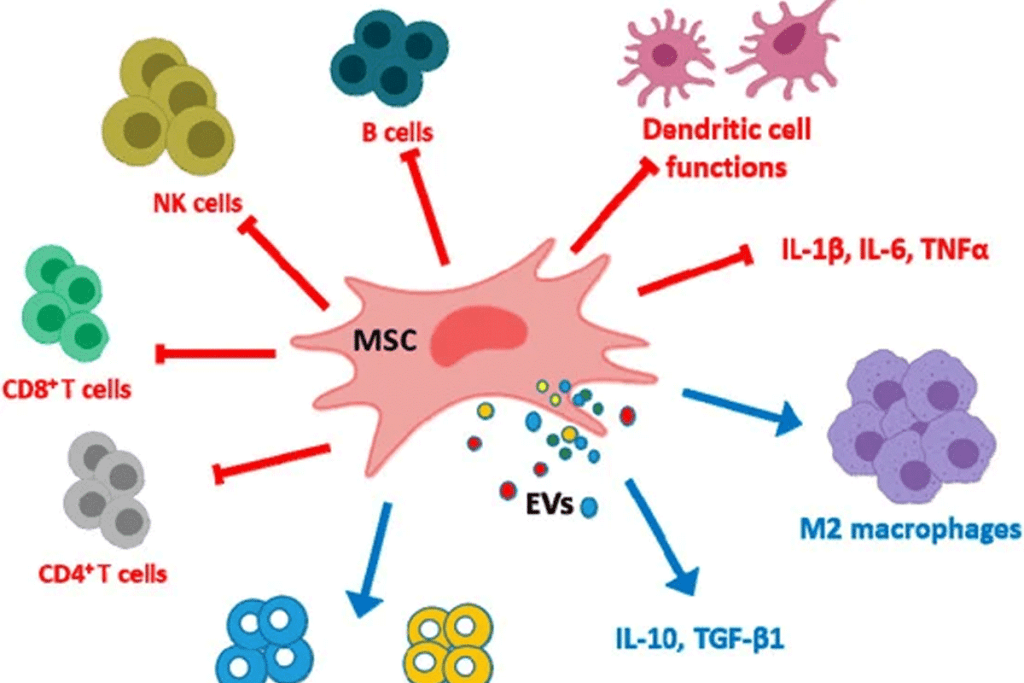
- They can calm down the immune system.
- They help fix tissues by making growth factors and cytokines.
These traits show how MSCs can help in fixing damaged tissues and growing new ones.
Mesenchymal Meaning and Terminology
The word “mesenchymal” comes from the mesoderm, a part of the embryo. MSCs get their name because they come from this tissue.
Knowing the terms helps us understand MSCs better. The word “mesenchyme” comes from Greek words meaning “middle” and “infusion.”
Mesenchymal stem cells are called so because they come from mesenchymal tissue. This shows their role in growing and fixing body tissues.
Sources of Mesenchymal Stem Cells
Many sources have been found for mesenchymal stem cells, making them useful for treatments. These cells can come from different parts of the body. This makes them valuable for healing and growth.
Bone Marrow-Derived MSCs
Bone marrow is a common place to find MSCs. Bone marrow-derived MSCs are taken out through a big procedure, often from the hip area. These cells are good at fixing and growing tissues.
- Advantages: Well-studied, established protocols for isolation and expansion.
- Challenges: Invasive harvesting procedure, possible harm to the donor site.
Adipose-Derived MSCs
Fat tissue is also a good source of MSCs. Adipose-derived MSCs are taken out through liposuction, which is less painful than bone marrow extraction.
- Advantages: Lots of cells, easier to get.
- Challenges: Cell quality and amount can vary.
Umbilical Cord-Derived MSCs
The umbilical cord is a great source of MSCs, collected without pain. Umbilical cord-derived MSCs help control the immune system and are being tested for many treatments.
- Advantages: Easy to get, might be less likely to cause an immune reaction.
- Challenges: Hard to find, needs standard ways to process.
Other Sources of MSCs
MSCs can also be found in dental pulp, menstrual blood, and synovial fluid. Each source has its own benefits and drawbacks.
- Advantages: Many sources mean more options for treatments.
- Challenges: Different cells can have varying qualities and amounts.
Having many sources of MSCs opens up lots of possibilities for research and treatments. Knowing what each source offers is key to picking the right cells for each case.
Differentiation Capabilities: How MSCs Differ from Other Stem Cells
Understanding MSCs’ differentiation abilities is key to their role in regenerative medicine. Mesenchymal stem cells (MSCs) can turn into various cell types like osteoblasts, chondrocytes, and adipocytes. This unique ability makes them valuable for healing.
Lineage-Specific Differentiation of MSCs
MSCs can become cells from the mesodermal lineage. Osteogenic differentiation lets them form bone. Chondrogenic differentiation helps create cartilage. Adipogenic differentiation turns them into fat cells. These abilities are vital for fixing and growing tissues.
A leading researcher says, “MSCs’ ability to turn into different cell types makes them great for regenerative medicine.” Their flexibility is a big plus in treatments.
Comparison with Pluripotent Stem Cell Differentiation
Pluripotent stem cells (PSCs), like ESCs and iPSCs, can turn into cells from all three germ layers. This means they can become a wider variety of cells than MSCs. Their broad range is a big advantage.
- PSCs can form cells of any germ layer.
- MSCs are limited to mesodermal lineage differentiation.
- The differentiation ability of PSCs is more extensive.
Transdifferentiation Capability
Research is looking into MSCs’ ability to change directly into other cell types. This process, called transdifferentiation, is promising but needs more study. It could open up new ways to use MSCs in treatments.
Transdifferentiation might help make specific cells needed for fixing tissues. It could be a shortcut around the need for pluripotency.
Key Differences Between Embryonic and Mesenchymal Stem Cells
Embryonic and mesenchymal stem cells have unique qualities that make them useful in different ways. They are both important in regenerative medicine but serve different purposes. Knowing their differences helps us understand which one is best for certain treatments.
Potency and Differentiation Capacity
Embryonic stem cells can turn into any cell type in the body. This is because they are pluripotent. On the other hand, mesenchymal stem cells are multipotent. They can only turn into certain types of cells, mainly those from the mesoderm layer.
Ethical Considerations
There are ethical issues with using embryonic stem cells. They need embryos, which is a big concern for many. Mesenchymal stem cells, taken from adults or umbilical cords, don’t have these ethical problems. This makes them a better choice for many scientists and doctors.
Risk of Tumor Formation
Embryonic stem cells are more likely to grow tumors because they can grow fast and are very versatile. Mesenchymal stem cells, with their slower growth and limited types of cells they can become, have a lower risk of tumors.
Immunogenicity Differences
Embryonic stem cells might trigger an immune response because they have many antigens. This could lead to rejection. Mesenchymal stem cells, though, can calm down the immune system. This makes them safer for transplanting from one person to another.
Isolation and Cultivation: Practical Differences
Isolating and growing stem cells is different for each type. Mesenchymal stem cells (MSCs) have their own set of challenges and benefits. Knowing these differences is key for moving stem cell research and treatments forward.
MSC Isolation Techniques
MSCs can come from bone marrow, fat tissue, and umbilical cord blood. The first step is breaking down the tissue with enzymes. Then, a process called density gradient centrifugation separates the MSCs. Adipose-derived MSCs, for example, use collagenase digestion.
Embryonic Stem Cell Cultivation
Embryonic stem cells come from the inner cell mass of blastocysts. They need special conditions to stay in a pluripotent state. They are often grown on layers of mouse embryonic fibroblasts or in special media without these layers.
Keeping these cells in check daily is important. This ensures they don’t start to differentiate.
Adult Stem Cell Harvesting
Adult stem cells, like MSCs and hematopoietic stem cells, come from adult tissues. The way to get them depends on the tissue. For example, bone marrow aspiration is used to get MSCs and hematopoietic stem cells. After harvesting, the cells are processed to get the right stem cell type.
Quality Control Considerations
Quality control is vital in stem cell work. It checks if the cells are pure, alive, and can do their job. Flow cytometry helps identify MSCs by their surface markers. This makes sure they meet the International Society for Cellular Therapy (ISCT) standards. It’s also important to test for any bacteria or viruses.
In summary, getting and growing MSCs and other stem cells needs careful thought and quality checks. By improving these steps, scientists can make stem cell treatments better and safer.
Clinical Applications of Mesenchymal Stem Cells
MSC-derived exosomes applications
MSCs have unique properties that make them useful in many areas. They can help repair tissues and even control the immune system. This makes them a promising tool in various therapeutic approaches.
Regenerative Medicine Applications
MSCs are being studied for their role in regenerative medicine. They can turn into different cell types. This ability helps them fix or replace damaged tissues.
Tissue Engineering: MSCs are used to make new tissue substitutes. They can help create bone, cartilage, and muscle tissues.
| Tissue Type | Application | Current Status |
| Bone | Repair of bone defects | Preclinical trials |
| Cartilage | Treatment of osteoarthritis | Clinical trials |
| Muscle | Muscle regeneration | Preclinical trials |
Immunomodulatory Properties and Applications
MSCs can control the immune system’s response. This is helpful in treating autoimmune diseases and preventing transplant rejection.
Autoimmune Diseases: MSCs are being looked at for treating diseases like multiple sclerosis and rheumatoid arthritis.
Current FDA-Approved Treatments
Some MSC-based therapies have been approved by the FDA. They are used for treating graft-versus-host disease (GVHD) and certain Crohn’s disease types.
FDA-Approved MSC Therapies:
- Treatment of GVHD with MSCs from bone marrow
- Use of MSCs for certain fistulizing Crohn’s disease
MSC-Derived Exosomes and Their Applications
MSC-derived exosomes are being studied for their healing and immune-modulating effects. These exosomes help cells talk to each other.
Potential Applications: MSC-derived exosomes could help with heart diseases and brain disorders.
Clinical Applications of Other Stem Cell Types
Other stem cells, like embryonic, adult, and induced pluripotent stem cells (iPSCs), are being studied for their healing powers. Each type has special qualities that fit different medical uses.
Embryonic Stem Cell Therapies
Embryonic stem cells can turn into any cell in the body. This makes them very useful for fixing damaged tissues. Scientists are looking into using them to treat diseases like Parkinson’s, diabetes, and heart issues.
Current Research: Studies are underway to see if these stem cells are safe and work well. For example, they’re testing cells made from embryonic stem cells to treat age-related macular degeneration.
Adult Stem Cell Treatments
Adult stem cells are found in grown-up bodies and are used in many treatments. They’re great for fixing or replacing damaged tissues. For instance, they’re used in bone marrow transplants to treat blood diseases and cancers.
| Therapeutic Application | Stem Cell Type | Condition Treated |
| Hematopoietic Stem Cell Transplantation | Adult Stem Cells | Leukemia, Lymphoma |
| Cardiac Repair | Adult Stem Cells | Heart Failure |
| Retinal Repair | Embryonic Stem Cells | Age-related Macular Degeneration |
iPSC-Based Approaches
iPSCs are made by changing adult cells into a state like embryonic stem cells. They’re a big hope for personalized medicine because they can come from a patient’s own cells. This lowers the chance of the body rejecting them.
Potential Applications: iPSCs might help treat genetic diseases like sickle cell anemia and muscular dystrophy. They’re also being looked at for drug testing and finding new medicines.
The variety of stem cells and their uses shows the exciting and complex world of stem cell treatments. As research keeps moving forward, we’ll see even more new treatments coming from these technologies.
Pros and Cons of Mesenchymal Stem Cell Therapies
MSC therapies
Mesenchymal stem cells (MSCs) are being explored for treating many diseases. They have both good points and challenges. It’s important to look at their benefits and drawbacks as research grows.
Advantages of MSC-Based Treatments
MSC therapies have many benefits. They can help the immune system and fix damaged tissues. Their immunomodulatory effects are key, as they can lower inflammation and boost healing.
- Ability to differentiate into various cell types
- Low risk of tumor formation compared to other stem cell types
- Potential for allogenic use due to their immunomodulatory properties
Limitations and Challenges
Despite their promise, MSC therapies have hurdles. One big issue is the variability in MSC quality. This depends on where they come from and how they’re prepared. It’s vital to have consistent quality for these treatments to work well.
| Limitation | Description | Potential Solution |
| Variability in MSC Quality | Difference in MSC characteristics based on source and preparation | Standardization of isolation and culture protocols |
| Safety Concerns | Potential for adverse reactions or long-term effects | Rigorous preclinical and clinical testing |
| Cost and Accessibility | High cost of MSC therapies and limited availability | Increasing production efficiency and expanding treatment centers |
Safety Considerations
Safety is a top concern for MSC therapies. MSCs are usually safe, but we need to keep watching patients for any long-term side effects.
Cost and Accessibility Factors
MSC therapies are often too expensive for many people. They’re also not widely available yet. Work is being done to make them cheaper and more accessible.
Current Research and Regulatory Landscape
Stem cell research, with a focus on MSCs, is moving fast. This is thanks to ongoing clinical trials and studies. MSCs are seen as key in regenerative medicine and for their ability to calm the immune system.
Ongoing Research: Researchers are looking into new ways to use MSCs. They want to treat degenerative diseases and injuries. They’re also studying MSC-derived exosomes as possible treatments.
The regulatory landscape for stem cell therapies is complex. It changes a lot from country to country. Rules are being made to keep these therapies safe and effective while encouraging new ideas.
In the United States, the FDA is key in overseeing stem cell treatments. They’ve approved some MSC-based treatments. More approvals are expected as research keeps going.
Key Challenges: There are big hurdles to overcome. These include making sure MSC products are consistent and of high quality. There are also ethical issues and navigating complex rules.
As research keeps moving forward, we’ll likely see MSCs and other stem cells used in new ways. This could lead to big advances in treating many medical conditions.
Conclusion
Understanding the difference between stem cells and mesenchymal stem cells (MSCs) is key. This knowledge helps us see their roles in healing and their uses in medicine. This article has covered the main points about these cells, where they come from, what they can become, and how they are used in treatments.
MSCs are a special kind of stem cell. They can turn into different cell types and help control the immune system. They are used in many ways, from fixing damaged tissues to treating diseases.
In the end, MSCs have big advantages over other stem cells. They are easier to get and are less likely to cause tumors. As scientists learn more, it’s clear that knowing the differences between these cells is vital. This knowledge will help us use them better in medical treatments.
FAQ
What are stem cells?
Stem cells can turn into different cell types. They can also make more of themselves. This makes them key for growth, fixing tissues, and for new medicine.
What are mesenchymal stem cells?
Mesenchymal stem cells (MSCs) are adult stem cells. They can become different cell types like bone and fat cells. They help fix tissues and control the immune system.
What is the difference between embryonic and adult stem cells?
Embryonic stem cells come from embryos and can become any cell type. Adult stem cells, like MSCs, are found in grown-up bodies and can’t change as much. MSCs are a type of adult stem cell.
What are the sources of mesenchymal stem cells?
MSCs can be found in places like bone marrow and fat tissue. They can also be found in umbilical cords and other tissues. Each place has its own benefits and challenges.
What are the clinical applications of mesenchymal stem cells?
MSCs are being studied for many uses in medicine. They might help fix damaged tissues and control the immune system. They are also used in treatments approved by the FDA for some conditions.
How do mesenchymal stem cells differ from embryonic stem cells in terms of potency and differentiation capacity?
Embryonic stem cells can turn into any cell type. MSCs can only turn into certain cell types, mostly related to bone and fat. MSCs are more limited than embryonic stem cells.
What are the advantages of using mesenchymal stem cells in therapies?
MSCs are easy to get and grow. They can help control the immune system. They can also be used from the patient themselves, which lowers the risk of rejection
What are the limitations and challenges associated with mesenchymal stem cell therapies?
There are challenges like the quality and strength of MSCs can vary. There’s a need for standard ways to get and grow them. There are also worries about their long-term safety and how well they work.
Are there any FDA-approved treatments using mesenchymal stem cells?
Yes, there are FDA-approved treatments that use MSCs for certain conditions. This shows their promise in helping people.
What is the current state of research in the field of mesenchymal stem cells?
Scientists are working hard to learn more about MSCs. They want to find better ways to get and grow them. They’re also looking into how MSCs can help with different diseases and conditions.
How do adult stem cells differ from embryonic stem cells?
Adult stem cells, like MSCs, can’t change into as many cell types as embryonic stem cells. But they are safer and more acceptable for use in treatments.
What are induced pluripotent stem cells (iPSCs)?
iPSCs are made from adult cells that have been changed to be like embryonic stem cells. They could be very useful for fixing damaged tissues and for research.
What is the role of MSC-derived exosomes in therapy?
MSC-derived exosomes are being studied for their healing powers. They can help fix tissues and control the immune system without needing to transplant cells.
References
- Gopalarethinam, J., & others. (2023). Advantages of mesenchymal stem cell over the other stem cells with respect to the source of origin, their properties and therapeutic applications. Stem Cell Reviews and Reports.