Last Updated on December 1, 2025 by Bilal Hasdemir
Retinoblastoma is a rare eye cancer that primarily affects young children. It worries parents and caregivers a lot because of the symptoms it brings. One big sign is when the eye color changes.
One of the clearest signs is an abnormal pupil. Discover the key symptoms of retinoblastoma, like the white eye reflex.
People say kids with retinoblastoma might have an eye that looks white or cloudy. This is called “cat’s eye reflex.” It happens because the tumor messes with how light reflects in the eye.
Knowing about retinoblastoma and its signs is key for catching it early. As we dive deeper, we’ll look at the signs that might mean a child has this condition.
Key Takeaways
- Retinoblastoma is a rare eye cancer that mainly affects children.
- A common sign is a change in eye color, often appearing white or cloudy.
- Early detection is key for good treatment.
- Understanding the signs and symptoms helps get medical help on time.
- Retinoblastoma can really hurt a child’s vision and eye health.
Understanding Retinoblastoma: A Rare Childhood Eye Cancer
Retinoblastoma is a rare eye cancer that happens in young kids. It’s important for parents and doctors to know about it. This helps find and treat it early.
Definition and Prevalence in the United States
Retinoblastoma is a cancer in the retina, the back part of the eye. It’s most found in kids under five. In the U.S., it happens in about 1 in 15,000 to 1 in 20,000 babies.
They’re studying and treating retinoblastoma better. This includes new research and trials for kids with this rare cancer.
| Age Group | Incidence Rate |
| 0-4 years | 1 in 15,000 |
| 0-14 years | 1 in 18,000 |
Who is Most Affected by Retinoblastoma
Retinoblastoma mostly hits young kids, mostly before three. It doesn’t favor boys or girls, and it’s seen in kids of all ethnicities. Some cases are linked to family history or genetic changes.
Key Risk Factors:
- Family history of retinoblastoma
- Genetic mutations, like in the RB1 gene
Knowing these risk factors helps catch retinoblastoma early. We’ll look at symptoms and how to diagnose it next.
The White Pupil Phenomenon: Leukocoria
Leukocoria is when a white reflex is seen in the pupil. It’s a sign of retinoblastoma, a rare eye cancer in kids. When light hits the eye, a healthy eye shows a red reflex. But leukocoria makes the pupil look white or cloudy.
Causes of White Pupillary Reflex in Retinoblastoma
Leukocoria happens because of a tumor in the retina. This tumor changes how light is reflected, making the pupil look white. The tumor’s size and where it is in the eye affect how visible leukocoria is.
Knowing why leukocoria happens is key to catching it early. The size and location of the tumor matter a lot. Bigger tumors or those in the center of the eye are more likely to cause leukocoria.
Detecting Leukocoria Under Different Lighting Conditions
Finding leukocoria can be tricky because it depends on the light. In dim light, the pupil is bigger, making leukocoria easier to see. But in bright light, the pupil gets smaller, making it harder to spot.
Parents and caregivers should look for leukocoria in different lights. Try looking in dim rooms or use flash photography. Knowing when leukocoria is most visible helps catch it early.
To understand leukocoria in retinoblastoma better, let’s look at some data:
| Age Group | Prevalence of Leukocoria | Number of Patients |
| 0-2 years | 60% | 100 |
| 2-4 years | 55% | 80 |
| 4-6 years | 50% | 60 |
Finding leukocoria early is very important. It helps start treatment right away. By knowing why and how to find leukocoria, parents and doctors can catch retinoblastoma early.
Normal Eye Color vs. Retinoblastoma-Affected Eyes
It’s important to know how normal eyes differ from those with retinoblastoma. This rare eye cancer mainly hits kids. It can change how an eye looks.
A tumor in retinoblastoma can alter the eye’s look. This includes changes in iris color and pupil appearance. As the tumor grows, the eye may look very different. This is a key sign of the disease.
How Tumor Growth Alters Eye Appearance
Tumors in retinoblastoma can change an eye’s look a lot. As the tumor grows, it can make the retina detach. This changes how light is reflected in the eye.
This can make the pupil look white or cloudy. The tumor can also make the iris change color. Sometimes, the iris may become discolored or show heterochromia, where there’s a color difference.
Changes in Iris Color and Pupil Appearance
Changes in iris color and pupil appearance are big signs of retinoblastoma. The pupil might look white or cloudy because of the tumor. This is called leukocoria.
In more serious cases, the eye might look crossed or bulge out. The eye can also get red or inflamed. Spotting these changes early is key for getting help fast.
The “Cat’s Eye Reflex”: A Critical Warning Sign
Understanding the “cat’s eye reflex” is key for spotting retinoblastoma early. This sign, also known as leukocoria, shows as a white glow in the pupil. It’s a big warning sign for the disease.
Distinguishing Normal Eye Shine from Pathological Reflection
The “cat’s eye reflex” might look like normal eye shine in photos. But they’re different. Normal eye shine is a red or orange glow seen in dark places. It’s caused by light reflecting off the retina.
The “cat’s eye reflex” linked to retinoblastoma looks white or yellowish. To tell them apart, check the eye in different lights. A white reflex that shows up in bright light might mean retinoblastoma.
Photographing Eyes to Detect Early Signs
Photographing a child’s eyes can help spot retinoblastoma early. Parents can take photos in various lights to look for odd reflections. If a white glow shows up in many photos, see an eye doctor right away.
It’s good to take photos often, mainly in the dark. This can help catch changes in the eye early. Simple steps like photography can make a big difference in treating retinoblastoma.
Symptoms of Retinoblastoma: Beyond the White Glow
It’s important to know all the symptoms of retinoblastoma for early treatment. Leukocoria is a known sign, but there are others too. Parents and caregivers need to watch for these signs to get medical help fast.
Early Warning Signs Parents Should Never Ignore
Retinoblastoma shows itself in many ways, not just the white glow. Early detection is key to save vision and lives. Look out for these early signs:
- Strabismus (crossed eyes or squint)
- Redness or swelling of the eye
- Vision problems or changes in visual behavior
- Dilated pupils that do not react to light
- Heterochromia (different colored eyes or sectors within the same iris)
These signs might be hard to spot at first. But, persistent or unusual changes in a child’s eyes mean it’s time to see an eye doctor.
Progressive Visual Symptoms as Tumors Grow
As tumors grow, they can cause more obvious eye problems. These include:
- Decreased vision or blindness in one or both eyes
- Protrusion of the eye (proptosis)
- Glaucoma, leading to eye pain and increased intraocular pressure
- Visible tumor mass behind the lens
Prompt medical evaluation is vital for these symptoms. Doctors use special tests and eye exams to find out how big the tumors are. This helps decide the best treatment.
We stress the need for quick action if you notice anything odd with your child’s eyes. Catching retinoblastoma early can greatly improve their life and vision.
How Retinoblastoma Affects Different Eye Colors
Retinoblastoma, a rare eye cancer, can show up differently in various eye colors. It’s important to know these differences for the right diagnosis and treatment.
Impact on Light-Colored Eyes vs. Dark-Colored Eyes
The signs of retinoblastoma can be more obvious in light-colored eyes. This is because the tumor stands out more against the light iris.
On the other hand, dark-colored eyes might hide some symptoms. This could make it harder to spot the disease early. We’ll look at these differences more closely.
Heterochromia as a Possible Sign
Heterochromia, where eyes or parts of an eye are different colors, might be linked to retinoblastoma. The tumor can affect the iris or other eye parts.
| Eye Color | Visibility of Retinoblastoma Symptoms | Potential Indicators |
| Light-Colored Eyes | More visible due to higher contrast | White pupillary reflex, heterochromia |
| Dark-Colored Eyes | Less visible, potentially delayed detection | Subtle changes in iris color, heterochromia |
It’s key to understand how retinoblastoma affects different eye colors for early detection and treatment. By spotting unique signs for each eye color, doctors and parents can catch issues sooner.
Diagnosing Retinoblastoma Through Comprehensive Eye Examination
The first step in finding retinoblastoma is a detailed eye check. This is key for starting the right treatment. It’s a rare but serious eye cancer mostly seen in kids.
Ophthalmologist’s Examination
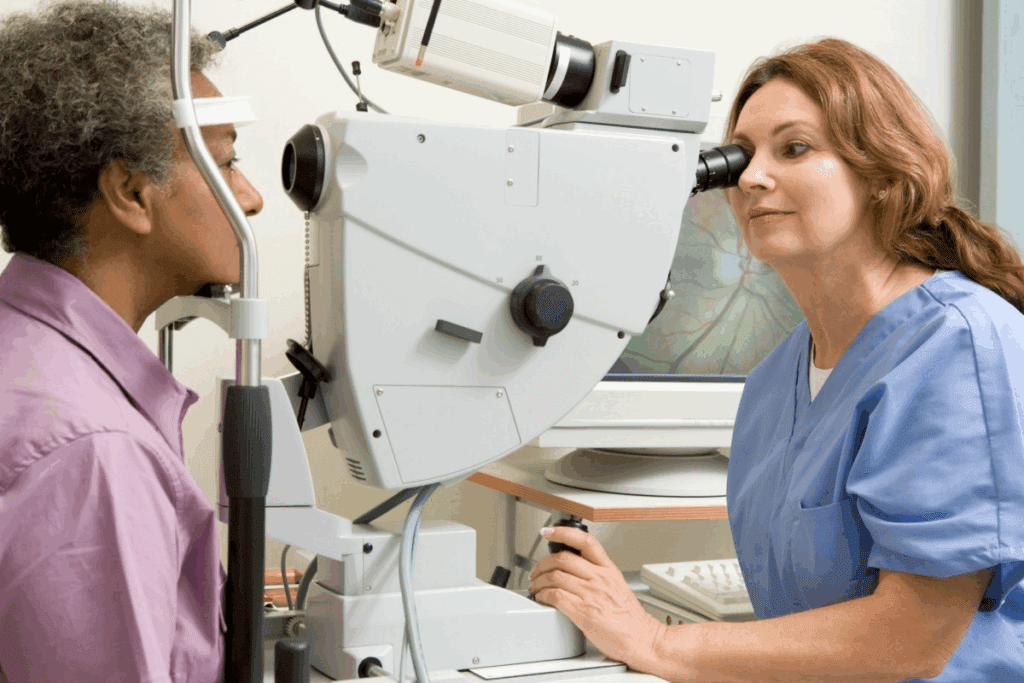
An eye doctor looks for signs of tumors during this check. The check is very detailed and looks closely at the retina. This is the part at the back of the eye where the cancer grows.
“Finding it early is very important,” doctors say. The doctor uses special tools to see inside the eye. They look for things like a white spot in the pupil, or tumors.
Advanced Imaging Techniques
To make sure, doctors use new imaging methods. These include ultrasound, OCT, and MRI. These methods give clear pictures of the inside of the eye. They help find out how big the tumor is and where it is.
New imaging has changed how we find retinoblastoma. It helps doctors spot it sooner and more accurately. Experts say, “New tech, like AI, is helping a lot in finding and treating eye problems like retinoblastoma.”
By using eye exams and new imaging, doctors can find retinoblastoma right away. This helps them plan the best treatment. This team effort is key to better care for patients with this disease.
The Genetics Behind Retinoblastoma Development
Retinoblastoma is a rare eye cancer that mainly hits young kids. It’s linked to genetic mutations, mainly in the RB1 gene. Knowing the genetic causes is vital for early detection, treatment, and family screening.
Hereditary vs. Sporadic Forms of the Disease
Retinoblastoma comes in two types: hereditary and sporadic. The hereditary form has a mutation in the RB1 gene in every cell from birth. This often leads to both eyes being affected and raises the risk of other cancers.
The sporadic form doesn’t run in families and usually affects one eye. About 40% of cases are hereditary, and 60% are sporadic. Yet, even in sporadic cases, a mutation in the RB1 gene is often found.
| Characteristics | Hereditary Retinoblastoma | Sporadic Retinoblastoma |
| Family History | Often present | Typically absent |
| Laterality | Bilateral (both eyes) | Unilateral (one eye) |
| Risk of Other Cancers | Increased risk | Lower risk |
Understanding the RB1 Gene Mutation
The RB1 gene helps control cell growth and prevent tumors. A mutation can cause uncontrolled cell growth, leading to retinoblastoma. This mutation can be inherited or happen by chance during cell formation or early in fetal development.
“The RB1 gene is key to keeping the genome safe and stopping tumors. Mutations in this gene raise the risk of retinoblastoma and other cancers.” –
A leading oncologist
Genetic tests for RB1 mutations can spot those at risk early. This is very important for families with a history of retinoblastoma.
Grasping the genetics of retinoblastoma is essential for better care. By finding genetic mutations, doctors can tailor treatments and support for families.
Stages of Retinoblastoma and Corresponding Eye Appearance
Retinoblastoma is a rare eye cancer that shows up in different stages. Each stage has its own effects on how the eye looks. Knowing these stages helps us see how the disease grows and affects the eye.
Visual Changes During Disease Progression
As retinoblastoma gets worse, the tumor grows. This can change how the eye looks. At first, you might see a white reflex in the pupil, called leukocoria. Later, the eye might look crossed, vision can get worse, and in serious cases, the eye can bulge or have glaucoma.
The disease goes through several stages based on the tumor’s size and spread. The International Intraocular Retinoblastoma Classification system helps doctors stage it. They look at the tumor’s size, where it is, and if it has spread into the vitreous.
| Stage | Description | Eye Appearance Changes |
| Stage 0 | Treatment before any external spread | Minimal changes, possibly leukocoria |
| Stage I | Eye is removed before any external spread | Variable changes depending on tumor size and location |
| Stage II | Residual tumor confined to the orbit | Proptosis, strabismus, or vision loss |
| Stage III | Regional spread | More pronounced proptosis, possible lymph node involvement |
| Stage IV | Distant metastasis | Variable, depending on metastasis location |
Unilateral vs. Bilateral Presentation
Retinoblastoma can happen in one eye (unilateral) or both (bilateral). Bilateral cases often have a family history and start earlier. The eyes look different in unilateral and bilateral cases.
In unilateral cases, one eye might show signs like leukocoria or strabismus. The other eye looks normal. Bilateral cases affect both eyes, making treatment more complex.
It’s important to know the difference between unilateral and bilateral retinoblastoma. Early treatment can help save vision and improve outcomes.
Treatment Options and Their Effect on Eye Appearance
When someone is diagnosed with retinoblastoma, knowing the treatment options is key. The main goal is to save lives, keep vision, and protect the eye’s look as much as possible.
We will look at the different treatments for retinoblastoma and how they affect the eye’s look.
Vision-Preserving Treatments
There are treatments that aim to save vision while fighting retinoblastoma. These include:
- Laser Therapy: This uses a laser to kill tumor cells. It works well for small tumors and can be paired with other treatments.
- Cryotherapy: This freezes tumor cells, causing them to die. It’s used for small tumors near the retina’s surface.
- Chemotherapy: Chemoreduction is a chemotherapy type used to shrink tumors. This makes them easier to treat with other methods.
These treatments can greatly affect the eye’s look, possibly reducing the tumor’s visible effects.
When Eye Removal (Enucleation) Becomes Necessary
In some cases, eye removal (enucleation) is needed, even with vision-saving treatments. This choice is made when the tumor is big, has damaged the eye, or when other treatments won’t work.
Enucleation means surgically removing the affected eye. It’s a lifesaving option. Prosthetic eyes can help keep a natural look.
Choosing enucleation is tough for patients and their families. But, with the right care and prosthetics, many can look natural after treatment.
Differentiating Retinoblastoma from Other Eye Conditions
Many eye conditions can look like retinoblastoma, making it important to get a correct diagnosis. Getting the right diagnosis is key to the right treatment and avoiding unnecessary steps.
Conditions That Can Mimic Retinoblastoma Symptoms
Retinoblastoma can be mistaken for other eye problems that show similar signs. Some of these include:
- Coats disease: A rare eye disorder with abnormal blood vessels behind the retina.
- Persistent fetal vasculature (PFV): When fetal blood vessels don’t go away after birth.
- Retinopathy of prematurity (ROP): A disease in premature babies’ retinas.
- Toxocariasis: An infection from the Toxocara parasite that can harm the eye.
- Cataract: A clouding of the lens in the eye.
These conditions can cause symptoms like a white pupillary reflex, squinting, or vision loss. These are also signs of retinoblastoma.
| Condition | Key Features | Differential Diagnostic Clues |
| Coats Disease | Retinal telangiectasia, retinal detachment | Typically unilateral, male predominance |
| Persistent Fetal Vasculature (PFV) | Retrolental fibrovascular tissue, microphthalmia | Often associated with other ocular or systemic anomalies |
| Retinopathy of Prematurity (ROP) | Abnormal retinal vasculature, retinal detachment | History of prematurity, low birth weight |
| Toxocariasis | Granulomatous inflammation, vitreous inflammation | History of exposure to dogs, eosinophilia |
When to Seek Immediate Medical Attention
If you or your child has any of these symptoms, get medical help right away:
- A white pupillary reflex (leukocoria)
- Squinting or strabismus
- Vision loss or blurred vision
- Eye redness or swelling
- Changes in eye color or shape
Early detection and diagnosis are key for managing retinoblastoma and other eye issues. If you notice unusual symptoms or have eye health concerns, see an ophthalmologist or healthcare professional quickly.
Long-term Effects on Eye Appearance After Treatment
After retinoblastoma treatment ends, patients and their families want to know about lasting eye changes. The eye’s look after treatment can change a lot, depending on the treatment used.
The look of the eye after treatment is a big worry for many. Many things can affect how the eye looks, like the treatment type and how far the disease spread.
Cosmetic Outcomes Following Different Treatment Approaches
Retinoblastoma treatments can lead to different looks for the eye. For example, treatments that save the eye, like laser or chemotherapy, might not change it much. But more serious treatments can.
Laser Therapy and Cryotherapy: These can make the eye look a bit different at first, like being red or swollen. But they usually don’t change the eye’s look for a long time.
Chemotherapy: Chemotherapy is a treatment that goes through the whole body. But, when it’s given in a special way, like through an artery, it might not hurt the eye’s look much.
In some cases, enucleation (eye removal) might be needed. This can really change how the eye looks. But, there are ways to make it look better again.
Prosthetic Eyes and Cosmetic Rehabilitation
For those who lose an eye, prosthetic eyes can make it look natural again. Today’s prosthetic eyes are made to match the other eye’s color and shape. This makes them look very natural.
“The advancements in prosthetic eye technology have been remarkable, allowing for a very natural appearance that greatly improves the quality of life for our patients.”
Cosmetic rehab might also include other surgeries to make the orbit and tissues around the eye look better. We team up with ocularists and other experts to make sure our patients look their best.
Knowing what the eye might look like after retinoblastoma treatment helps patients and families get ready for the future. We aim to give care that meets both medical and cosmetic needs.
Survival Rates and Quality of Life After Retinoblastoma
Healthcare has made big strides in treating retinoblastoma. Now, we focus on both survival and quality of life. This shift means we aim to save vision and ensure patients’ long-term health.
Factors Affecting Prognosis and Vision Preservation
Several things affect how well someone with retinoblastoma will do. These include the disease’s stage, if it’s in one or both eyes, and genetic factors. Catching it early is key to better survival and vision.
Key factors affecting prognosis include:
- The extent of tumor spread at diagnosis
- The presence of genetic mutations, like in the RB1 gene
- The chosen treatment’s success
- Whether the disease affects one or both eyes
Early diagnosis leads to better outcomes. New imaging and genetic tests help tailor treatments. This makes care more effective.
Long-term Follow-up and Secondary Cancer Risks
After treatment, ongoing care is vital for retinoblastoma patients. It helps watch for disease return and side effects. This care is also for vision and overall health.
Survivors, and those with genetic forms, face higher cancer risks. Studies show a link between RB1 gene mutations and other cancers later in life.
| Follow-up Care | Frequency | Purpose |
| Ophthalmologic examination | Regularly scheduled based on age and risk factors | Monitor for recurrence, assess vision |
| General physical examination | At least annually | Overall health assessment |
| Screening for secondary cancers | As recommended by guidelines for high-risk individuals | Early detection of secondary cancers |
A leading oncologist says, “Managing retinoblastoma means more than just treating it. It’s about giving survivors long-term care to prevent late effects and cancers.”
“Survivors of retinoblastoma need lifelong checks for secondary cancers and other long-term effects.”
– Guidelines for Survivorship Care
The journey with retinoblastoma is tough for families. But, with better survival rates and a focus on quality of life, there’s hope for a better future.
Conclusion
Retinoblastoma is a rare but serious eye cancer that mainly hits kids. Finding it early is key to treating it well and saving sight. A white pupil, or leukocoria, is a big warning sign that needs quick doctor visits.
We’ve talked about the signs of retinoblastoma, like changes in how the eye looks. It’s important to know the difference between normal eye shine and something not right. Knowing about the disease’s genetics and stages helps families and doctors make the best treatment plans.
Handling retinoblastoma right means using the latest imaging and treatments that save eyesight. By spreading the word about this childhood cancer, we can help more kids get better care. This helps families too.
If you see any signs, get medical help fast. Parents should watch their kids’ eyes closely. With more research and better treatments, we can make life better for those with retinoblastoma.
FAQ
What is retinoblastoma?
Retinoblastoma is a rare eye cancer that mostly affects kids under five. It grows in the retina, the part of the eye that catches light.
What are the common symptoms of retinoblastoma?
The main sign is leukocoria, a white pupil. Kids might also have crossed eyes, vision issues, or red, swollen eyes.
How does retinoblastoma affect the color of the eyes?
It can make the pupil look white or cloudy. Sometimes, it causes eyes to look different in color, like heterochromia.
Can retinoblastoma occur in one or both eyes?
Yes, it can happen in one eye or both. If it’s in both, it might run in the family.
How is retinoblastoma diagnosed?
Doctors use special eye exams and scans like ultrasound or MRI to find and check the tumor.
What are the treatment options for retinoblastoma?
Treatments aim to save the eye. They include laser therapy, cryotherapy, and chemotherapy. Sometimes, removing the eye is needed.
Can retinoblastoma be hereditary?
Yes, it can be caused by a gene mutation. But many cases happen without a family history.
What are the long-term effects of retinoblastoma treatment?
Treatments can change how the eye looks. They might also cause vision loss or increase cancer risk, more so in genetic cases.
How can parents detect early signs of retinoblastoma?
Look for leukocoria, a white pupil, in photos or low light. Regular eye checks are key for catching it early.
What is the prognosis for children diagnosed with retinoblastoma?
It depends on how early and how far along the cancer is. Early treatment can save lives and eyes.
Are there any conditions that can mimic retinoblastoma symptoms?
Yes, like Coats disease or retinopathy of prematurity. A doctor’s accurate diagnosis is very important.
What is the role of genetic testing in retinoblastoma?
It finds gene mutations to see if it’s inherited. This helps families plan and watch for it.
Can adults develop retinoblastoma?
Yes, but it’s rare. Adults with a family history are more likely to get it. But it’s much more common in kids.
References:
- Shields, C. L., Kaliki, S., & Shields, J. A. (2019). Retinoblastoma: Clinical features, classification, and survival outcomes. Indian Journal of Ophthalmology, 67(12), 2077-2087. Retrieved from https://www.ncbi.nlm.nih.gov/pmc/articles/PMC6938469/