Last Updated on December 1, 2025 by Bilal Hasdemir
Stem cells are seen as a game-changer in medicine, with hopes to treat many diseases and injuries. But, there’s a hidden side to them. Recent studies have shown risks in stem cell therapy, like cells growing out of control and tumors forming.
The unique characteristics and functions of stem cells are key to these worries. They can turn into different cell types. As we learn more about stem cells, it’s vital to know their downsides for treatments.
Key Takeaways
- The risks of stem cell therapy include uncontrolled cell growth and tumor formation.
- Stem cells have unique traits that let them become different cell types.
- It’s important to understand the dark side of stem cells for safe treatments.
- Research is ongoing to learn more about stem cells and reduce risks.
- The promise of stem cells is huge, but safety must come first.
The Properties of a Stem Cell
Stem cells are key in treating diseases because of their unique abilities. They can self-renew and differentiate into various cell types. This makes them very useful in medical research and treatments.
Self-renewal and Proliferation Capabilities
Stem cells can grow and multiply without becoming specific cells. This is vital for their role in healing and regenerating tissues. An Expert says, “Their self-renewal is why they’re so hopeful for fixing damaged tissues.” Self-renewal is controlled by many molecular processes, keeping stem cells ready to replace themselves.
Stem cells can also grow in large numbers in labs. This could provide endless cells for treatments. But, it can also cause tumor formation if not managed well.
Differentiation and Plasticity
Stem cells can turn into different cell types, a trait known as pluripotency in some. This is essential for fixing damaged tissues. Their ability to change into various cells is a major focus in research, with big hopes for healing and engineering tissues.
A study in a top scientific journal says, “Stem cells’ ability to change into different cells is a big hope for treating many diseases.” But, making them change into specific cells is a big challenge in stem cell research.
Types of Stem Cells and Their Sources
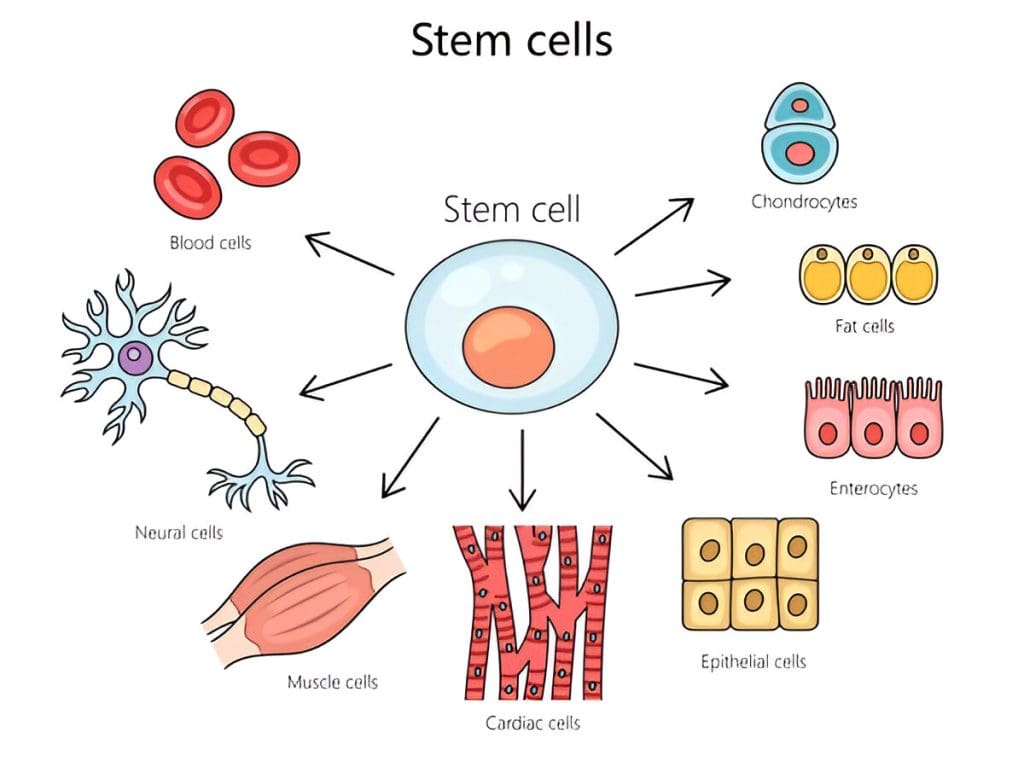
It’s key to know about the different stem cells for stem cell therapy and research. They are sorted by where they come from, what they can turn into, and what they can do. This info is vital for their use in science and medicine.
Embryonic Stem Cells
Embryonic stem cells (ESCs) come from the inner cell mass of blastocysts. These are usually from embryos made through in vitro fertilization. They can turn into any cell in the body, making them super useful for research and treatments.
Adult Stem Cells
Adult stem cells, or somatic stem cells, live in adult tissues. They can turn into several cell types but not as many as ESCs. These cells help fix and keep tissues healthy.
Induced Pluripotent Stem Cells (iPSCs)
Induced pluripotent stem cells (iPSCs) start from adult cells that are made to be like ESCs. This is done by adding certain genes. iPSCs can turn into almost any cell type, which is great for stem cell regeneration and making treatments just for you.
| Type of Stem Cell | Source | Differentiation Capability |
| Embryonic Stem Cells | Inner cell mass of blastocysts | Pluripotent |
| Adult Stem Cells | Adult tissues | Multipotent |
| Induced Pluripotent Stem Cells (iPSCs) | Reprogrammed adult cells | Pluripotent |
The variety in stem cell types and where they come from shows how complex and promising stem cell research is. Each type has its own benefits and challenges. This helps in the growth of stem cell treatments and regenerative medicine.
Stem Cell Markers and Identification Challenges
Finding stem cells is tricky because of their special traits. They can grow and change into different cell types. This makes it key for research and treatments.
Identifying stem cells depends on markers. These are molecules or proteins on stem cells’ surfaces. They help us find and separate them.
Surface Markers and Molecular Signatures
Surface markers are vital for spotting stem cells. CD34, CD44, and SSEA-1 are common ones. They help tell stem cells apart from other cells and show their role in growth and sickness.
Molecular signatures, like gene patterns, give more clues about stem cells. Quantitative PCR and RNA sequencing help study these patterns.
| Marker | Cell Type | Function |
| CD34 | Hematopoietic Stem Cells | Cell adhesion and signaling |
| CD44 | Mesenchymal Stem Cells | Cell adhesion and migration |
| SSEA-1 | Embryonic Stem Cells | Cell surface antigen |
Heterogeneity and Misidentification Issues
Even with markers, stem cells can be different from each other. This makes it hard to accurately find and study them.
Getting stem cells wrong can mess up research and treatments. It’s vital to correctly identify them to move research forward and create better therapies.
The Promise of Stem Cell Therapy

Stem cell therapy is a new hope for many patients. It uses stem cells to fix or replace damaged tissues. This is because stem cells can grow and change into different types of cells.
Regenerative Medicine Applications
Regenerative medicine is all about fixing or replacing damaged cells and tissues. Stem cell regeneration could help with heart disease, Parkinson’s, and diabetes. Researchers hope to create new treatments that fix damaged tissues and help patients get better.
Ethical Controversies in Stem Cell Research
The debate on stem cell research is complex. It involves many ethical, moral, and cultural issues. The main argument is about the benefits of stem cell treatments versus the ethical worries about how they are made and used.
Embryonic Stem Cell Moral Debates
The use of embryonic stem cells is a big controversy. People argue about the ethics of using human embryos for research. Some say it’s wrong to destroy embryos for stem cells, as it’s like taking a human life.
Others think the benefits of finding cures for diseases are worth it. They point out that embryos from in vitro fertilization are often thrown away.
This debate raises questions about the value of embryos and the balance between research benefits and respecting human life.
Religious and Cultural Perspectives
Religious and cultural views on stem cell research are very different. This affects public opinion and laws. Some religious groups see destroying embryos as morally wrong, like taking a human life.
Others believe stem cell research could help a lot of people and advance medicine.
Cultural views also matter. Some societies are more open to stem cell research because of their values and history. It’s important to understand these different views to make policies that respect everyone while moving science forward.
The debates around stem cell research show we need to keep talking. Scientists, ethicists, policymakers, and the public must work together. This way, we can better understand the challenges and chances that stem cell research brings.
The Tumorigenic Potential: A Major Dark Side
Stem cell therapies are promising but risky. They can grow and change, which is both good and bad. This ability to grow can also lead to uncontrolled growth.
The tumorigenic potential of stem cells worries experts in regenerative medicine. This risk comes from stem cells’ ability to renew themselves and change into different cells.
Cancer Risk in Stem Cell Therapies
Stem cells might turn into cancerous cells. This risk is high because genetic changes can happen when cells divide and change.
Some stem cells, like pluripotent ones, are more likely to form tumors. This is because they can become any cell type in the body. While this is useful for treatments, it also raises the risk of tumors.
Teratoma Formation Concerns
Stem cell therapies also worry about teratoma formation. Teratomas are tumors with many different tissues. They often happen with pluripotent stem cells.
Teratoma formation is a big challenge for stem cell therapy safety. Researchers are finding ways to lower this risk. They’re using more specific cell types and setting up safety checks for tumors.
Immune Rejection and Compatibility Issues
Immune rejection and compatibility issues are big hurdles for stem cell therapies. When stem cells are transplanted, the immune system might see them as foreign. This can lead to an immune response and the rejection of the cells.
It’s important for the donor stem cells to match the recipient’s immune system. Mismatched stem cells can cause immune reactions. Matching the human leukocyte antigen (HLA) types is key, like in bone marrow transplants.
Graft-versus-Host Disease Mechanisms
Graft-versus-host disease (GvHD) happens when the transplanted stem cells attack the recipient’s body. This is more common in transplants from another person. Symptoms can range from mild to severe.
The fight in GvHD involves complex interactions between donor immune cells and the recipient’s tissues. T cells are key, as they can recognize and attack the recipient’s HLA antigens. Knowing how this works is vital for preventing and treating GvHD.
Immunosuppression Risks and Complications
To avoid immune rejection and GvHD, patients often need immunosuppressive therapy. While it helps, it also raises the risk of infections and other problems. Immunosuppression makes it harder for the body to fight off infections.
Long-term immunosuppression can also lead to more serious issues, like an increased risk of cancer. Finding the right balance between immunosuppression and its risks is a big challenge in treating patients with stem cell therapy.
Stem Cell Tourism and Unproven Treatments
Unproven stem cell treatments have become a booming business, attracting desperate patients worldwide. They promise miracle cures and cutting-edge technology. But, these claims often lack scientific evidence.
The Global Market for Unregulated Therapies
The global market for unregulated stem cell therapies has grown a lot. Clinics are popping up in many countries. They use the internet and social media to advertise, making it easy for patients to find them.
Because of weak regulations in some places, these clinics can operate freely. They offer treatments that haven’t been tested for safety or effectiveness.
Key factors driving the global market include:
- Lack of international regulatory harmonization
- Aggressive marketing tactics
- Desperation of patients with chronic or debilitating conditions
Patient Exploitation and Safety Concerns
The unregulated nature of many stem cell clinics raises big concerns. Patients are charged high fees for treatments without solid evidence. In some cases, these treatments can cause serious health problems.
Reports of adverse events include infections, tumor formation, and even death. The lack of transparency and oversight makes it hard for agencies to track and address these issues.
To avoid these risks, patients need to know the dangers of unproven stem cell treatments. They should talk to trusted medical professionals before any therapy.
Regulatory Challenges in Stem Cell Research
The rules for stem cell research are complex and change a lot from country to country. This makes it hard for scientists, doctors, and patients looking for stem cell treatments. Without the same rules everywhere, it slows down the progress of stem cell research and its uses.
Diverse Global Regulations
How different countries regulate stem cell research is a big deal. Laws and rules on stem cell research vary a lot. Some places are very strict, while others are more open.
Key differences in international regulations include:
- Varying definitions of stem cells and their derivatives
- Differing requirements for informed consent in clinical trials
- Disparate standards for manufacturing and quality control
Misinformation and Public Perception Problems
Misinformation about stem cell research has caused big problems for public perception. Wrong or misleading info can change how people see the good and bad sides of stem cell treatments.
The media is very important in how people think about stem cell research. Some news is fair and balanced. But, other reports can be too exciting, making people think treatments are better or scarier than they really are.
Media Portrayal and Sensationalism
How the media shows stem cell research affects what people think. Sensationalized headlines can make it seem like treatments are more ready or proven than they are.
- Too much focus on big discoveries without talking about the downsides
- Not enough about where the research is right now
- Not talking about the possible dangers and problems
Experts say the media’s love for big stories can make people’s hopes and beliefs not match reality.
“The way stem cell research is shown in the media can deeply affect what people think and how laws are made.”
Scientific Communication Failures
Scientists sometimes have trouble explaining their work in a way everyone can understand. This leads to confusion.
- It’s hard to make complex science simple
- Not being clear about the challenges and limits of stem cell research
- Not talking enough to the media and the public
Getting better at talking about science is key to fixing these problems. Scientists need to do a better job of talking to the public and the media. This way, they can share accurate info.
Being clear and open is important for building trust. It helps people understand stem cell research better.
Technical Limitations and Scientific Challenges
Stem cell research is facing many technical and scientific hurdles. These challenges affect the safety and effectiveness of stem cell treatments. Despite progress, the field is working hard to overcome these obstacles.
Differentiation Control Problems
One big challenge is controlling how stem cells turn into specific cell types. Inadequate differentiation control can cause the wrong cell types to form. This might lead to treatment failures or harmful side effects. Scientists are looking into new ways to control this, like using special growth factors and genetic changes.
A leading researcher said,
“The ability to direct stem cell differentiation with precision is key for regenerative medicine success.”
To achieve this precision, we need to understand the complex signals that guide stem cells.
Long-term Safety Monitoring Issues
Ensuring the long-term safety of stem cell treatments is another big challenge. Long-term safety monitoring is vital to catch any late effects, like tumors or immune reactions. Right now, strict testing is needed to check the safety of these treatments.
A study showed that long-term follow-up is essential. It helps us understand the risks of stem cell therapies. This means keeping an eye on patients for a long time to spot any safety issues.
Overcoming these technical and scientific challenges is key to moving stem cell research forward. By solving these problems, scientists can create safer, more effective treatments for many diseases.
Balancing Hope and Hype in Stem Cell Research
Stem cell research is growing fast. It’s key to keep hope and hype in check. Stem cells could change medicine a lot, but we must not get too excited too soon.
Stem cells might fix damaged tissues and organs. This could help treat many diseases. But, getting from lab to clinic is hard and full of obstacles.
Realistic Expectations vs. Exaggerated Claims
It’s hard to tell real hopes from too-high promises in stem cell research. Some treatments look very promising, but others are overhyped. This leads to letdowns and doubts.
For example, stem cells might help with some degenerative diseases, but it’s not a magic fix. Scientists need to be careful with their words. They should only say things they can prove.
The Timeline of Translational Research
Translational research turns science into medicine. But, it takes longer than we think. It can take years to get new treatments for people.
Knowing the hurdles of translational research helps set better hopes. It shows us what stem cell therapy can really do.
Stage | Description | Timeline |
| Preclinical Research | Laboratory and animal studies to assess safety and efficacy | 2-5 years |
| Clinical Trials | Human trials to evaluate safety and efficacy | 5-10 years |
| FDA Approval | Regulatory review and approval process | 1-3 years |
| Market Availability | Therapy becomes available for public use | Variable |
Conclusion: Navigating the Complex Landscape of Stem Cell Research
Stem cell research is very promising for medical science and human health. We must understand both the benefits and challenges in this field.
The world of stem cells is complex. It involves science, ethics, and rules. Knowing about stem cells and their uses is key to their benefits.
Stem cell research has its risks, like tumors and immune issues. We must handle these carefully to make sure stem cell therapy is safe.
To move forward, we need a careful balance. We should encourage new ideas but also be cautious. Stem cell research is vital for new treatments and therapies.
FAQ
What are the properties of stem cells that make them valuable for research and therapy?
Stem cells can grow and renew themselves. They can also change into different cell types. This makes them useful for studying and treating diseases.
What are the different types of stem cells and their sources?
There are three main types of stem cells. Embryonic stem cells come from embryos. Adult stem cells are found in adult bodies. Induced pluripotent stem cells (iPSCs) are made from adult cells.
How are stem cells identified and what are the challenges associated with their identification?
Scientists use special markers to find stem cells. But, it’s hard to tell them apart because they can look similar. This can lead to mistakes.
What are the ethical controversies surrounding stem cell research?
Using stem cells from embryos is a big debate. Different cultures and religions have different views. This makes it a complex issue.
What is the tumorigenic potential of stem cells and its implications for therapy?
Stem cells can sometimes turn into tumors. This is a big risk for cancer. It shows we need to be careful with stem cell treatments.
What are the issues of immune rejection and compatibility in stem cell therapies?
Stem cell treatments can be rejected by the body. This can cause serious problems. It’s important to find ways to avoid this.
What is stem cell tourism and what are the risks associated with unproven treatments?
Stem cell tourism is when people travel for untested treatments. It’s risky because it can harm patients. There’s no guarantee of safety.
How are stem cell therapies regulated, and what are the challenges in regulation?
Rules for stem cell treatments vary worldwide. The FDA has strict rules in the US. But, following these rules can be hard.
What are the financial and commercial pressures in stem cell science, and how do they impact research?
Money can influence stem cell research. It can lead to unethical decisions. This can harm the integrity of science.
How does misinformation and public perception affect stem cell research?
Bad media coverage and misunderstandings can harm stem cell research. It’s important to share accurate information.
What are the technical limitations and scientific challenges in stem cell research?
Making stem cells work as needed is hard. Keeping them safe long-term is also a challenge. More research is needed.
How can we balance hope and hype in stem cell research?
We need to be realistic about stem cell research. It’s important to understand the process and not make false promises.
What is the importance of self-renewal in stem cells?
Self-renewal lets stem cells keep growing. This is key for keeping tissues healthy.
What is the role of pluripotency in stem cell research?
Pluripotency means stem cells can become many cell types. This makes them very useful for research and treatments.