Thyroid atrophy is when the thyroid gland shrinks and stops working well. It often happens in older people who have had autoimmune thyroiditis for a long time.Find out if a thyroid getting smaller (atrophy) can be reversed. Understand the causes, symptoms, and necessary treatment options available.
About 10 percent of people with Hashimoto’s and 25 percent with Graves’ disease have atrophic thyroiditis. Knowing about thyroid atrophy is important. It helps manage health because it can cause hypothyroidism if not treated.
We will look into what causes thyroid atrophy, its symptoms, and how to treat it. We’ll also see if it can be reversed and how it affects people’s lives.
Key Takeaways
- Thyroid atrophy is a condition where the thyroid gland shrinks and loses functionality.
- It is commonly associated with autoimmune thyroiditis.
- Understanding thyroid atrophy is important for managing health.
- Thyroid hormone replacement therapy can greatly help symptoms.
- Early detection is key to managing the condition well.
Understanding Thyroid Atrophy: When Your Thyroid Is Getting Smaller

The thyroid gland is a key organ in the neck that helps control metabolism. Its shrinkage can cause health problems. This gland, shaped like a butterfly, is vital for making hormones that affect growth and energy use.
What Is the Thyroid Gland and Its Function?
The thyroid gland makes two main hormones: thyroxine (T4) and triiodothyronine (T3). These hormones control how the body uses energy. The thyroid gland’s proper functioning is key for energy, weight, and metabolic health. It also plays a big role in growth and development, mainly in young people.
The pituitary gland controls the thyroid gland. It does this by making thyroid-stimulating hormone (TSH). TSH tells the thyroid gland to make T4 and T3. This system keeps thyroid hormone levels just right.
Defining Thyroid Atrophy and Diminutive Thyroid
Thyroid atrophy means the thyroid gland gets smaller. It can happen due to autoimmune thyroiditis, aging, or medical treatments. When the thyroid gland shrinks, it can’t make enough hormones, leading to hypothyroidism. Diminutive thyroid describes a gland that’s both smaller and less functional.
- Autoimmune thyroiditis: A condition where the immune system attacks the thyroid gland, leading to inflammation and atrophy.
- Aging: The thyroid gland can naturally decrease in size and function with age.
- Medical treatments: Certain treatments, such as radioactive iodine therapy, can cause thyroid atrophy.
The Butterfly-Shaped Organ’s Importance
The thyroid gland is very important. It helps control metabolism, energy, and hormonal balance. A healthy thyroid gland is vital for physical and mental health. When it shrinks, it can lead to fatigue, weight gain, and a slower metabolism.
It’s important to understand thyroid atrophy and its effects. Recognizing the thyroid gland’s role and what causes its shrinkage helps in keeping it healthy. This way, people can take steps to protect their thyroid gland.
Prevalence and Statistics of Thyroid Atrophy

Research on thyroid atrophy shows interesting facts, mainly about Hashimoto’s thyroiditis and Graves’ disease. This condition makes the thyroid gland shrink, which can lower its function. Knowing how common it is helps both patients and doctors.
Occurrence in Hashimoto’s Patients
About 10% of Hashimoto’s thyroiditis patients have thyroid atrophy. Hashimoto’s is an autoimmune disease that inflames the thyroid gland, often causing hypothyroidism. Thyroid atrophy in these patients can make managing their hormone levels more challenging.
A study in a medical journal found that thyroid atrophy in Hashimoto’s patients affects their thyroid function. It also shows the need for thyroid hormone replacement therapy. This is why it’s key to check the thyroid gland’s size and function in these patients.
Frequency in Graves’ Disease Patients
Graves’ disease patients are more likely to have thyroid atrophy, with about 25% experiencing gland shrinkage. Graves’ disease is an autoimmune condition that causes hyperthyroidism. The shrinkage can happen due to treatments like radioactive iodine therapy.
Doctors have noted that Graves’ disease patients treated with radioactive iodine are at higher risk of thyroid atrophy. This can lead to hypothyroidism. So, it’s important to keep an eye on these patients over time.
Age and Gender Distribution
Thyroid atrophy is more common in older people and is more prevalent in women. The condition’s occurrence is linked to the thyroid diseases it’s associated with. For example, Hashimoto’s thyroiditis and Graves’ disease are more common in women, peaking in middle to older age.
It’s clear that thyroid atrophy’s patterns mirror those of the underlying thyroid conditions. This highlights the role of gender and age in assessing the risk of thyroid atrophy.
Understanding these statistics helps doctors identify who’s at risk and manage thyroid atrophy better.
Causes of Thyroid Atrophy
Thyroid atrophy happens when the thyroid gland shrinks. This makes it hard for the gland to make hormones. Knowing why it happens helps doctors find the right treatment.
Autoimmune Thyroiditis as a Primary Cause
Hashimoto’s thyroiditis is a big reason for thyroid atrophy. It’s when the immune system attacks the thyroid gland. This causes inflammation and damage, making the gland smaller and less effective.
Aging and Thyroid Function Decline
As we get older, our thyroid gland makes fewer hormones. It also shrinks. This can cause hypothyroidism, where the gland doesn’t make enough hormones.
Other Contributing Factors
Other things can also cause thyroid atrophy. These include:
- Radiation therapy to the head and neck
- Surgical removal of part or all of the thyroid gland
- Certain medications that affect thyroid function
- Genetic predisposition to thyroid diseases
These factors can all lead to thyroid atrophy. Knowing about them helps manage the condition better.
Cause | Description | Impact on Thyroid |
Autoimmune Thyroiditis | Immune system attacks the thyroid gland | Inflammation and damage leading to atrophy |
Aging | Natural decline in thyroid function with age | Shrinkage and reduced hormone production |
Radiation Therapy | Exposure to radiation during treatment | Damage to thyroid cells leading to atrophy |
Risk Factors: Who Is Most Susceptible to Thyroid Shrinking?
It’s important to know who is at risk for thyroid shrinking. Some groups face a higher risk due to their age and health conditions.
Women Over 40: The Higher Risk Group
Women over 40 are more likely to face thyroid atrophy. Hormonal changes, like those during menopause, can harm the thyroid. Women in this age group should watch their thyroid health closely.
Family History and Genetic Predisposition
Those with a family history of thyroid disease are at higher risk. Genetics play a big part in thyroid conditions. If your family has thyroid issues, talk to your doctor about your risk.
Pre-existing Autoimmune Conditions
People with pre-existing autoimmune conditions, like Hashimoto’s or Graves’, are at higher risk. Autoimmune thyroiditis causes inflammation and damage. Managing these conditions well is key to preventing thyroid damage.
Knowing these risk factors helps us spot who’s most at risk for thyroid shrinking. We can then offer them the right care and advice.
Recognizing Symptoms of an Atrophic Thyroid Gland
People with thyroid atrophy face many symptoms that can really affect their life. These signs can vary and touch on different parts of health.
Physical Symptoms: Fatigue, Weight Gain, Cold Intolerance
Thyroid atrophy often means less thyroid hormone, causing several physical signs. Common signs include:
- Fatigue: Feeling very tired and lacking energy, making simple tasks hard.
- Weight Gain: Gaining weight without reason because of a slower metabolism.
- Cold Intolerance: Feeling cold even when it’s not that chilly.
Skin and Hair Changes
Thyroid atrophy can also lead to changes in skin and hair. These changes are:
- Dry Skin: Skin that’s dry and itchy because of less thyroid hormone.
- Hair Loss: Hair thinning or falling out, mainly on the scalp.
- Nail Changes: Nails that are brittle or have changed texture.
Mental and Emotional Manifestations
Less thyroid hormone can also affect how you feel mentally and emotionally. Symptoms include:
- Depression: Feeling sad or hopeless.
- Mood Swings: Being emotionally unstable or easily irritated.
- Cognitive Impairment: Trouble focusing or memory problems.
When to Consult a Healthcare Provider
If you notice several of these symptoms, see a healthcare provider. Early diagnosis and treatment can greatly help manage thyroid atrophy and its symptoms.
Diagnosing Thyroid Atrophy
Diagnosing thyroid atrophy takes a few steps. These include physical exams, blood tests, and imaging studies. We’ll look at how these methods help diagnose the condition.
Physical Examination Techniques
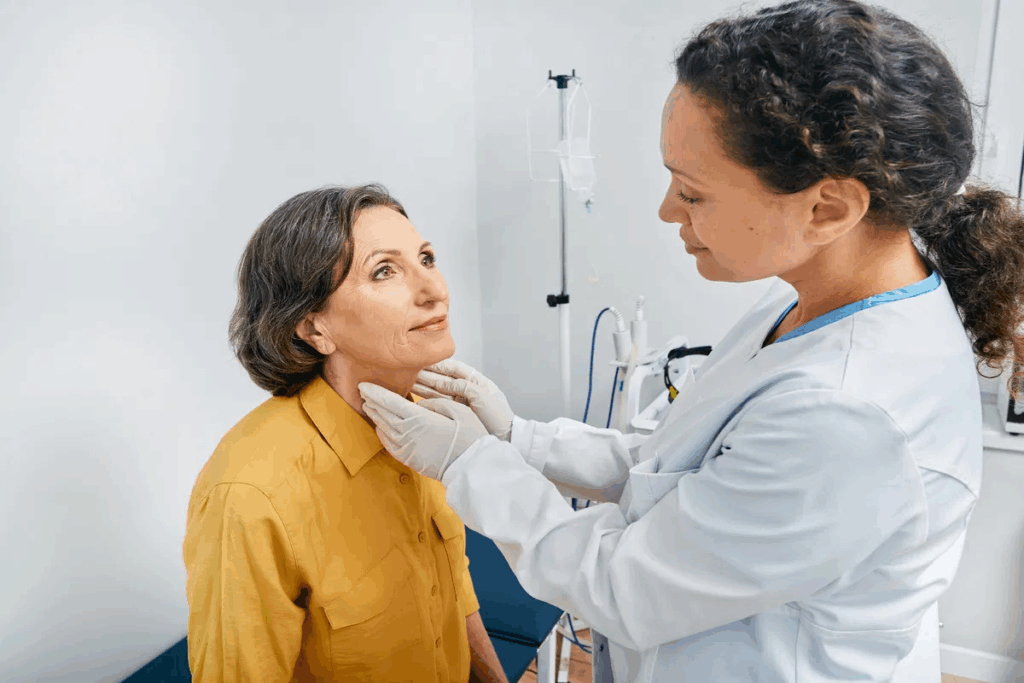
A thorough physical exam is the first step. Doctors check the thyroid gland’s size, texture, and tenderness. They also look for signs like dry skin, hair loss, or changes in reflexes that might show thyroid problems.
Key components of the physical examination include:
- Palpation of the thyroid gland to assess its size and texture
- Evaluation of skin and hair changes
- Assessment of reflexes and muscle strength
Blood Tests and Thyroid Hormone Levels
Blood tests are key in diagnosing thyroid atrophy. They measure thyroid hormone levels. Tests like TSH, free T4, and free T3 levels help see if the thyroid is working right.
Test | Normal Range | Indications for Thyroid Atrophy |
TSH | 0.4-4.0 mIU/L | Elevated levels may indicate hypothyroidism |
Free T4 | 0.8-1.8 ng/dL | Low levels may indicate thyroid dysfunction |
Free T3 | 2.3-4.2 pg/mL | Low levels may indicate thyroid dysfunction |
Imaging Studies: Ultrasound, CT, and MRI
Imaging studies help see the thyroid gland. Ultrasound is often used because it’s non-invasive and gives clear images. CT and MRI scans might be used if there are thyroid nodules or other issues.
Biopsy Considerations and Procedures
In some cases, a biopsy is needed to check for thyroid conditions like cancer. A fine-needle aspiration biopsy is usually done. It takes a small sample of thyroid tissue for examination.
It’s important to follow the diagnostic process carefully. This ensures an accurate diagnosis and the right treatment plan.
Can Thyroid Atrophy Be Reversed? The Scientific Evidence
Whether thyroid atrophy can be reversed is a complex question. It needs a close look at the latest research. Thyroid atrophy happens when the thyroid gland shrinks. This can be due to autoimmune thyroiditis or aging.
Understanding Tissue Degeneration in the Thyroid
Tissue degeneration in the thyroid gland is key to thyroid atrophy. Research shows this can permanently lower thyroid function. This permanent change worries both patients and doctors.
Autoimmune thyroiditis often causes thyroid tissue degeneration. In this condition, the immune system attacks the thyroid gland. This attack can cause inflammation and scarring, leading to gland shrinkage.
Permanent vs. Temporary Thyroid Changes
It’s important to know if thyroid changes are permanent or temporary. While some changes might be reversible, permanent atrophy is usually not.
A study in a medical journal found Hashimoto’s thyroiditis often causes permanent damage. But, early treatment can sometimes lessen the damage.
Current Research on Irreversibility of Permanent Atrophy
Research says permanent thyroid atrophy can’t be reversed. Scientists are working to understand why and find new treatments.
“The irreversibility of permanent thyroid atrophy highlights the importance of early diagnosis and treatment to avoid further damage.”
Misconceptions About Thyroid Regeneration
Some people think the thyroid gland can heal itself after atrophy. But, science says while some cells might grow back, big atrophy is usually not fixable.
Condition | Reversibility | Typical Outcome |
Temporary Thyroid Changes | Possible | Recovery with treatment |
Permanent Thyroid Atrophy | Generally Not Reversible | Lifelong hormone replacement therapy |
It’s vital to understand thyroid atrophy and if it can be reversed. This helps manage patient hopes and create better treatment plans. As research grows, we might find new ways to treat thyroid atrophy.
Treatment Options for Atrophic Thyroid
Thyroid atrophy treatment aims to ease symptoms and boost thyroid health. The main goal is to manage how the condition affects the body’s thyroid function.
Hormone Replacement Therapy: Types and Administration
Hormone replacement therapy (HRT) is key in treating thyroid atrophy. It involves giving synthetic thyroid hormones to make up for the gland’s reduced production. Levothyroxine is often used because it works well to mimic natural thyroid hormone.
Choosing the right HRT depends on the patient’s needs and health. It’s important to regularly check thyroid hormone levels to adjust the dosage as needed.
Medication Management and Monitoring
Managing thyroid atrophy with medication means more than just the first prescription. It involves ongoing monitoring. This includes blood tests to check hormone levels and adjusting medication as necessary. Patient compliance is key to avoid worsening symptoms.
Lifestyle Modifications to Support Thyroid Health
Medication isn’t the only way to support thyroid health. Eating a balanced diet with iodine, selenium, and zinc helps. It’s also wise to limit soy and cruciferous vegetables, as they can harm thyroid function.
Regular exercise and stress-reducing activities like yoga or meditation also help. They improve metabolic rate and reduce stress, which can help with thyroid issues.
Alternative and Complementary Approaches: Evidence and Caution
Some people look into alternative or complementary therapies for thyroid health. While supplements like aselenium might be helpful, caution is advised. The evidence for their effectiveness varies, and they can interact with other medications.
Always talk to a healthcare provider before trying any alternative or complementary therapy. This ensures safety and avoids interactions with prescribed treatments.
Conclusion: Living Well with Thyroid Atrophy
Thyroid atrophy is a long-term condition that needs careful handling. But, with the right treatment and lifestyle changes, patients can live happy lives. We’ve talked about what causes it, its symptoms, and how to diagnose it. We’ve also looked at the treatments available.
Living with thyroid atrophy means keeping an eye on your thyroid health. It’s about making smart choices for your care. By working with your doctor and adopting healthy habits, you can manage your condition well. This improves your overall health.
Managing thyroid atrophy means using hormone replacement therapy, making lifestyle changes, and checking your health often. By being proactive about your health, you can lessen the effects of thyroid atrophy. This way, you can enjoy a better life quality.
We know dealing with a chronic condition is tough. But, with the right support and advice, you can handle thyroid atrophy well. By staying informed and involved in your care, you can control your thyroid health. This way, you can live a fulfilling life.
FAQ
What is thyroid atrophy?
Thyroid atrophy is when the thyroid gland shrinks. This can make it work less well. It might even cause hypothyroidism.
Is thyroid atrophy serious?
Yes, it’s serious. It can lead to hypothyroidism. This is when the thyroid doesn’t make enough hormones, affecting the body.
Can thyroid atrophy be reversed?
It depends on why it happened. Some cases might get better. But, if the damage is permanent, it might not reverse.
What are the symptoms of atrophic thyroiditis?
Symptoms include feeling very tired and gaining weight. You might also feel cold easily. Skin, hair, and mental health can also be affected.
How is atrophic thyroid diagnosed?
Doctors use physical exams and blood tests. They might also do imaging studies or biopsies to check the gland.
What is the treatment for atrophic thyroid gland?
Treatment often includes hormone replacement therapy. This helps manage hypothyroidism. Lifestyle changes and other treatments may also be used.
Are there any risk factors for developing thyroid atrophy?
Yes, being a woman over 40 is a risk. Family history and autoimmune diseases also increase the risk.
Can lifestyle changes help manage thyroid atrophy?
Yes, making healthy lifestyle choices can help. This includes eating right, managing stress, and avoiding toxins.
Is there a link between Hashimoto’s thyroiditis and thyroid atrophy?
Yes, Hashimoto’s thyroiditis often causes thyroid atrophy. The autoimmune nature of Hashimoto’s can damage the gland.
How does aging affect the thyroid gland?
Aging can make the thyroid gland less effective. It might even cause atrophy as hormone production declines with age.
Reference
National Center for Biotechnology Information. Evidence-Based Medical Guidance. Retrieved from https://pmc.ncbi.nlm.nih.gov/articles/PMC5051668/