Last Updated on November 27, 2025 by Bilal Hasdemir
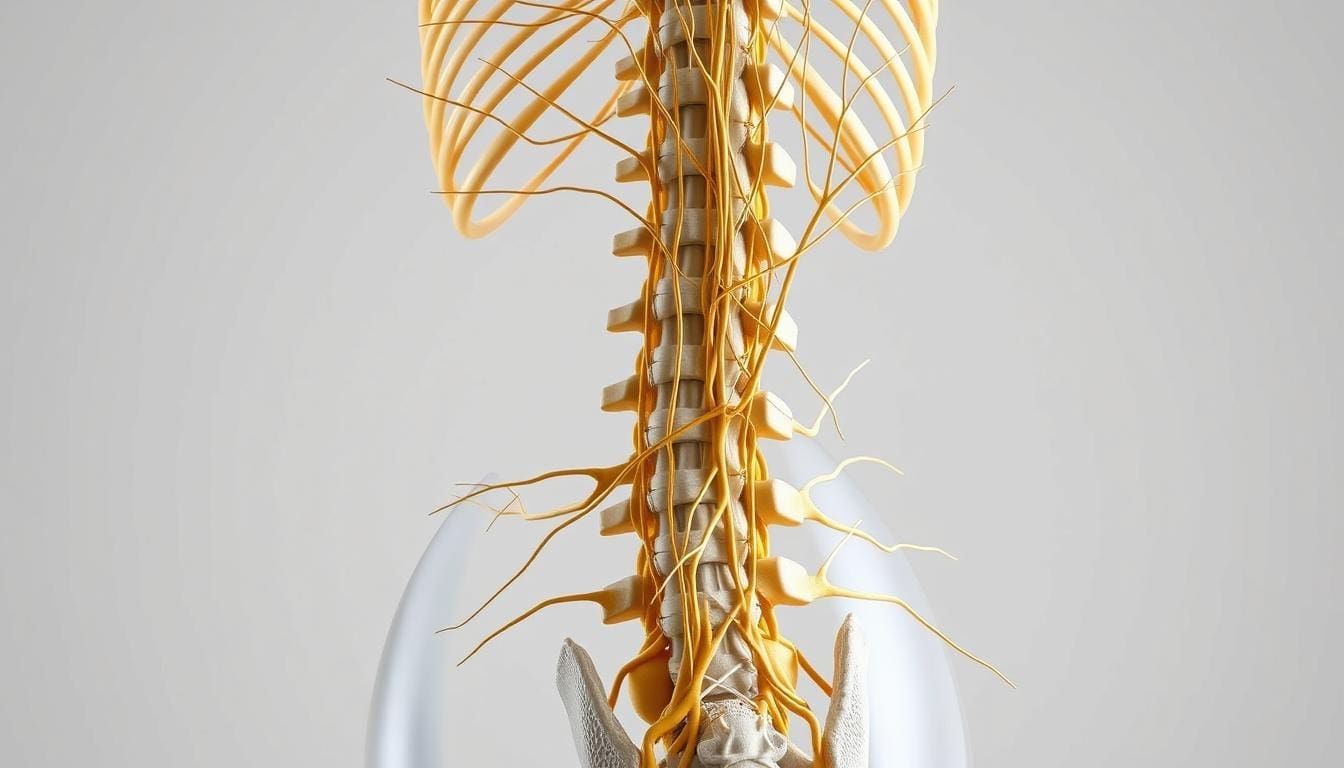
The nerves in your lower back are key to many body functions. They help with movement and feeling sensations. At Liv Hospital, we know how vital these nerves are for your health. The lumbar spine nerves handle motor, sensory, and autonomic functions. These affect the trunk, hips, legs, and feet.
Knowing about these nerves’ anatomy and paths is key. It helps us diagnose and treat lower back pain and other issues. We’ll share the top 10 facts about these nerves. You’ll learn about their roles and how injuries or compression can affect them.
Key Takeaways
- The lumbar spine nerves control motor, sensory, and autonomic functions.
- These nerves affect the trunk, hips, legs, and feet.
- Understanding lumbar spine nerves is key for diagnosing lower back pain.
- Injuries or compression can greatly impact nerve function.
- Liv Hospital offers expert care for issues related to lumbar spine nerves.
Fact 1: Nerves in Lower Back Control Critical Body Functions
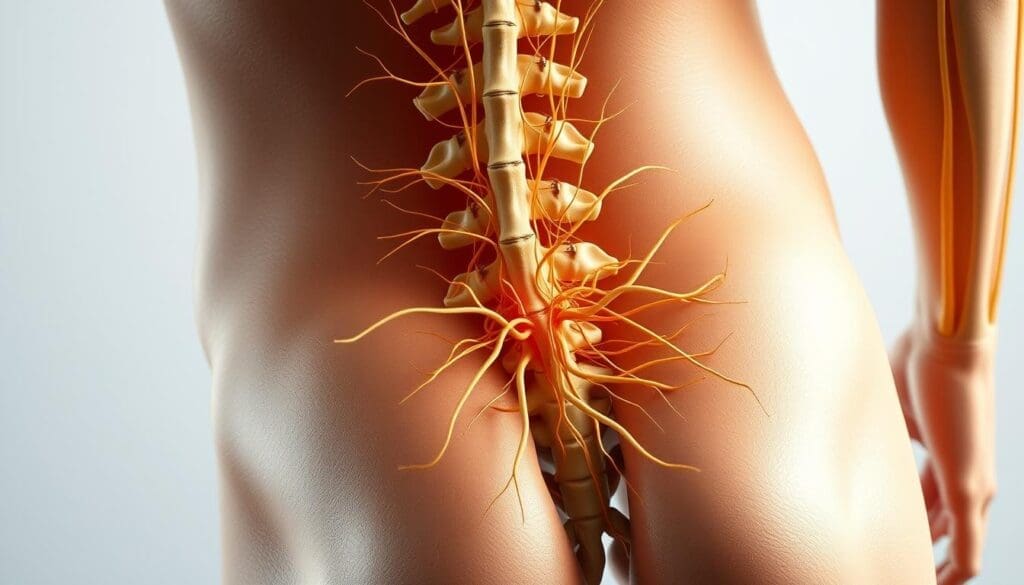
The nerves in the lumbar region are key for many body functions. They help us move and feel sensations. They also control things we do without thinking, like digestion.
Motor, Sensory, and Autonomic Functions
The lower back nerves handle many tasks. They control our muscles, help us feel sensations, and manage our body’s automatic actions. Motor functions let us move and do things. Sensory functions help us feel touch, pressure, and pain. Autonomic functions take care of things we don’t think about, like digestion.
| Function Type | Description | Examples |
|---|---|---|
| Motor | Control of muscles | Walking, running, maintaining posture |
| Sensory | Sensation perception | Feeling touch, pressure, pain |
| Autonomic | Involuntary actions | Regulation of digestion, blood flow |
Impact on Trunk, Hips, Legs, and Feet
The nerves in the lower back affect the trunk, hips, legs, and feet. Damage can cause nerve pain in the lower back, numbness, tingling, and weakness.
Knowing about lower back nerves is key for treating nerve pain in the lower back. Doctors can offer better care by understanding these nerves. This helps manage symptoms in the lower back and legs.
Fact 2: The Lumbar Spine Houses Five Pairs of Spinal Nerves
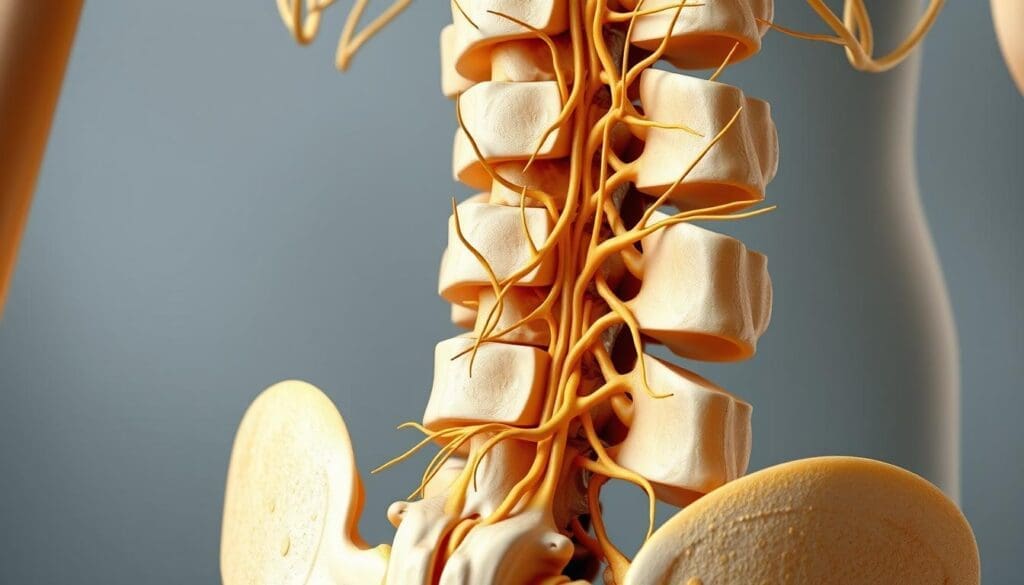
The lumbar spine is home to a complex network of nerves. It has five pairs of spinal nerves labeled L1-L5. These nerves are key for controlling muscles and sending sensory information.
L1-L5 Nerve Pairs and Their Locations
The lumbar region’s five pairs of spinal nerves are named after the vertebra above them. The L1 nerve pair exits above the first lumbar vertebra. L2 exits above the second, and so on, until L5, which exits above the fifth.
Knowing where these nerves are and their names is vital for diagnosing and treating nerve compression in the lower back. Nerve compression happens when a nerve is pinched or compressed. This can be due to a herniated disc, spinal stenosis, or other spine issues.
Vertebral Naming Convention for Nerve Identification
The naming of lumbar nerves follows a specific pattern based on the vertebrae. For example, the nerve root L4 exits between the L4-L5 intervertebral disc. This naming helps doctors pinpoint the source of nerve compression or damage.
| Nerve Pair | Location | Function |
|---|---|---|
| L1 | Exits above L1 vertebra | Controls lower abdominal muscles |
| L2 | Exits above L2 vertebra | Influences hip flexors |
| L3 | Exits above L3 vertebra | Affects knee extension |
| L4 | Exits between L4-L5 disc | Controls ankle dorsiflexion |
| L5 | Exits between L5-S1 disc | Influences toe extension |
Understanding the anatomy and naming of lumbar spine nerves helps healthcare professionals. They can better diagnose and treat nerve compression lower back. This improves patient outcomes.
Fact 3: Lumbar Nerve Roots Begin at the Conus Medullaris
The conus medullaris is where the lumbar nerve roots start. It’s a key spot in the body. Knowing about it helps doctors find and fix problems with the lower back nerves.
Anatomy of the Spinal Cord Terminus
The conus medullaris is shaped like a cone. It’s the end of the spinal cord, usually at L1 in adults. This area is important for diagnosing and treating lower back issues.
Key features of the conus medullaris include:
- Location: Typically at the level of L1 vertebra
- Structure: Cone-shaped termination of the spinal cord
- Function: Origin of lumbar nerve roots
How Nerve Roots Exit the Spinal Canal
Lumbar nerve roots leave the spinal canal through openings between vertebrae. These openings are called intervertebral foramina. When nerves pass through, they can get pinched or damaged, causing pain in the lower back.
The process of nerve root exit involves several key steps:
- Nerve roots descend from the conus medullaris
- They traverse the spinal canal, passing through the thecal sac
- Nerves exit through their respective intervertebral foramina
- Once outside the spinal canal, they form larger nerves that innervate various structures
Knowing how lumbar nerve roots work is key to treating lower back problems. Damage to these nerves can cause pain, numbness, and weakness.
Fact 4: Lumbar Nerves Divide into Sensory and Motor Pathways
It’s key to know how lumbar nerves split into sensory and motor paths. These nerves start in the lower back and split into two main parts: dorsal and ventral roots.
This split is vital for our nervous system to work right. The dorsal roots send sensory information to the brain. The ventral roots handle motor functions, like moving and controlling muscles.
Dorsal Roots: The Sensory Information Highway
The dorsal roots are the main route for sensory info. They carry signals about touch, pain, and temperature from the lower back and legs to the brain. This info helps us feel and react to our surroundings.
- Sensory information transmission
- Pain perception
- Temperature sensation
For more on sensory pathways, check out educational anatomy platforms. They offer detailed info on how we sense the world.
Ventral Roots: Controlling Movement and Muscle Function
The ventral roots control our movements. They send signals from the spinal cord to our muscles. This lets us move our lower back, hips, legs, and feet on purpose or by instinct.
- Motor signal transmission
- Muscle control and movement
- Coordination of voluntary and involuntary actions
The balance between sensory and motor functions in lumbar nerves shows how complex our nervous system is. Knowing about these paths helps us understand and treat lower back pain nerves and other nerve issues.
Fact 5: The Lumbar Plexus Forms a Complex Neural Network
The lumbar plexus is a complex structure in the lower back. It is made up of the ventral rami of the lumbar nerves L1-L4. Sometimes, nerves from T12 or L5 also join in. This network gives rise to several major nerves that innervate the lower limb.
The lumbar plexus is key for the innervation of the lower extremities. Knowing its structure is vital for diagnosing and treating lower back pain and related conditions.
Formation and Branching Patterns
The lumbar plexus is formed within the psoas major muscle. The ventral rami of the lumbar nerves merge to create this plexus. It then branches into various nerves. The branching pattern is complex, with nerves dividing and merging to form larger nerve trunks.
Major Nerves Emerging from the Plexus
Several significant nerves arise from the lumbar plexus. These include the iliohypogastric, ilioinguinal, genitofemoral, lateral femoral cutaneous, femoral, and obturator nerves. The sciatic nerve is also formed partially from the lumbar plexus (L4-L5) and the sacral plexus. It is the largest nerve in the human body and plays a critical role in lower back and leg function.
| Nerve | Origin | Function |
|---|---|---|
| Iliohypogastric | L1 | Sensory innervation to lower abdominal and hip regions |
| Ilioinguinal | L1 | Sensory innervation to inguinal region |
| Femoral | L2-L4 | Motor innervation to hip flexors and knee extensors; sensory innervation to anterior thigh and leg |
| Obturator | L2-L4 | Motor innervation to medial thigh muscles; sensory innervation to medial thigh |
| Sciatic | L4-S3 | Motor innervation to posterior thigh, leg, and foot; sensory innervation to posterior leg and foot |
Understanding the lumbar plexus and its branches is essential for diagnosing and treating lower back pain and sciatica. The complex neural network formed by the lumbar plexus is vital for controlling various functions in the lower extremities.
Fact 6: Specific Nerve Distributions Control Different Muscle Groups
The lumbar region has specific nerve distributions that control different muscle groups. This affects how we move and function. Knowing about these distributions helps doctors diagnose and treat lower back nerve pain. We’ll look at how nerves (L1-L5) affect muscles like the hip flexors, quadriceps, and lower leg muscles.
L1-L2 Influence on Hip Flexors
Nerve roots L1 and L2 control the hip flexors. These muscles help lift the knee towards the chest. If L1 and L2 nerves are damaged, it can weaken these muscles. This makes it hard to walk or climb stairs.
It’s important to diagnose and treat problems with these nerves to keep the hips working well.
L3-L5 Control of Quadriceps and Lower Leg Muscles
Nerve roots L3, L4, and L5 control the quadriceps and lower leg muscles. The quadriceps are on the front of the thigh and help extend the knee. L3 and L4 mainly control these muscles.
The L5 nerve root, with help from L4, controls muscles for ankle and toe movement. Damage to these nerves can make it hard to extend the knee or lift the foot.
Healthcare providers need to know about lumbar nerve distributions and their effects on muscles. This knowledge helps them diagnose and treat lower back and leg problems better. It improves patient outcomes and quality of life.
Fact 7: Nerve Compression Can Cause Distinct Symptom Patterns
When nerves in the lower back get compressed or irritated, it leads to specific symptoms. These symptoms affect different parts of the lower legs. Knowing these patterns helps doctors diagnose and treat nerve compression lower back issues well.
L4 Compression: Knee Extension Weakness and Medial Leg Numbness
The L4 nerve root compression causes weakness in knee extension and numbness on the inner leg. This makes it hard to do activities that need strong knees, like climbing stairs. A study found that L4 nerve root compression can really hurt a patient’s quality of life.
L5 Compression: Foot Drop and Lateral Leg Pain
L5 nerve compression leads to foot drop and pain or numbness on the outer leg and foot. This makes walking hard because patients have to lift their foot more. The pinched nerve lower back condition can cause a lot of pain and make moving hard.
S1 Compression: Heel Walking Difficulty and Posterior Leg Symptoms
S1 nerve root compression makes it hard to walk on heels and causes pain or numbness on the back of the leg. It can also make ankle reflexes weaker. These symptoms can really affect a patient’s daily life and may need special treatments.
In summary, knowing the symptoms of different nerve compressions is key for accurate diagnosis and treatment. By recognizing these patterns, doctors can give better care to patients with nerve compression lower back issues.
Fact 8: Lumbar Nerve Paths Often Overlap, Creating Diagnostic Challenges
Recent studies have shown that lumbar nerve paths often overlap. This creates big challenges for doctors when diagnosing and treating lower back pain.
Variations in Nerve Distribution
Research has shown that lumbar nerve distributions vary a lot. A study in the Journal of Neurosurgery: Spine found big differences in how nerves branch and spread out in different people. This means patients can show symptoms in different ways, making it hard for doctors to diagnose.
The anatomy of the lumbar spine is not the same for everyone. Things like genetics, past injuries, and developmental differences can affect nerve paths. This means that when nerves get compressed or damaged, symptoms can vary a lot.
Why Symptoms Don’t Always Follow Expected Patterns
The overlap and variability in lumbar nerve paths can make symptoms unpredictable. For example, someone with L4 nerve compression might not just have knee weakness and numbness. They could also have other symptoms because of nerve overlap.
To show this, let’s look at a table that lists common nerve compression symptoms and their possible variations:
| Nerve Root | Typical Symptoms | Variations Due to Overlap |
|---|---|---|
| L4 | Knee extension weakness, medial leg numbness | Additional pain in the anterior thigh |
| L5 | Foot drop, lateral leg pain | Numbness extending to the dorsum of the foot |
| S1 | Heel walking difficulty, posterior leg symptoms | Pain radiating to the lateral aspect of the foot |
It’s key for doctors to understand these variations to make accurate diagnoses and treatment plans. They need to be ready for a wide range of symptoms, not just what’s in the textbooks.
By recognizing the complexity of lumbar nerve anatomy and its variability, we can better diagnose and treat lower back pain and nerve issues.
Fact 9: The Sciatic Nerve Is Formed from Multiple Lumbar Nerve Roots
The sciatic nerve is made up of several nerve roots from the lower back. These roots come together from L4 to S3. This makes the sciatic nerve the largest nerve in the human body.
L4-S3 Contributions
The sciatic nerve gets its power from nerve roots in the lumbar and sacral areas. It’s formed by the common peroneal and tibial nerves. These nerves start from L4 to S3. They are key for the nerve’s function, helping with both feeling and movement in the lower legs.
The nerve roots that make up the sciatic nerve are:
- L4: Provides partial contribution to the sciatic nerve
- L5: Plays a significant role in forming the common peroneal nerve
- S1: Contributes to the tibial nerve, affecting ankle and toe movements
- S2 and S3: Further contribute to the tibial nerve, boosting its motor and sensory abilities
Impact of Lumbar Disc Herniation
Lumbar disc herniation can harm the sciatic nerve, causing sciatica. When a disc bulges, it can press on or irritate the nerve roots. This leads to pain, numbness, and weakness in the lower back and legs.
Symptoms of sciatica can include:
- Sharp pain in the lower back or legs
- Numbness or tingling sensations in the legs or feet
- Weakness in the muscles of the lower extremities
Knowing about the sciatic nerve’s anatomy and problems is key for diagnosing and treating lower back and leg issues.
Fact 10: Conclusion – Healthy Lumbar Nerves Are Essential for Mobility and Quality of Life
We’ve looked into the complex world of lower back nerves. They play a key role in controlling our body’s functions. These nerves help send signals from the brain to the rest of the body. This allows us to move, feel sensations, and control muscles.
When nerves in the lower back get pinched, it can cause a lot of pain and make it hard to move. Knowing about the anatomy and issues with these nerves is important. It helps us keep them healthy and deal with problems like nerve impingement.
Healthy lumbar nerves are key for staying mobile and enjoying life. We stress the need to take care of these nerves to avoid pain and mobility issues. By focusing on their health, people can live better lives with more energy and happiness.
FAQ
What is the role of the nerves in the lower back?
The nerves in the lower back control movement and sensation. They affect the trunk, hips, legs, and feet.
What is the lumbar plexus, and what is its significance?
The lumbar plexus is a complex neural network. It gives rise to several major nerves, including the sciatic nerve. This nerve is key for lower limb function.
How do lumbar nerve roots exit the spinal canal, and what are the risks?
Lumbar nerve roots exit through the intervertebral foramina. They are at risk of compression or damage. This can lead to conditions like a pinched nerve in the lower back.
What are the consequences of compressing different lumbar nerves?
Compression of different lumbar nerves (L4, L5, S1) causes specific symptoms. These include knee extension weakness, foot drop, and difficulty walking on the heels.
How do the lumbar nerves divide, and what are their functions?
The lumbar nerves divide into sensory and motor pathways. The dorsal roots carry sensory information. The ventral roots control movement and muscle function.
What is the significance of the conus medullaris in the context of lower back nerves?
The conus medullaris marks the end of the spinal cord. It is where the lumbar nerve roots originate. It is a critical anatomical landmark.
How do variations in nerve distributions affect diagnosis and treatment?
Variations in nerve distributions can make diagnosis challenging. Symptoms may not always follow expected patterns. It’s essential to consider individual differences in managing lower back pain and nerve-related conditions.
What is the relationship between the sciatic nerve and lumbar disc herniation?
The sciatic nerve, formed from multiple lumbar nerve roots, can be affected by lumbar disc herniation. This leads to sciatica and other related conditions.
How do specific nerve roots influence different muscle groups?
Different nerve roots (L1-L5) influence various muscle groups. These include the hip flexors, quadriceps, and lower leg muscles. Understanding this is key for managing lower back pain and nerve-related conditions.
Why is understanding the anatomy and functions of lower back nerves important?
Knowing the anatomy, functions, and issues of lower back nerves is vital. It helps maintain their health and address conditions like lower back nerve impingement.
References
Wheeless’ Textbook of Orthopaedics Online: Lumbar Nerves Anatomy (ISSLE)
Spine-Health: Lumbar Nerve Anatomy Animation