Last Updated on November 4, 2025 by mcelik

Trochanteric bursitis affects millions, causing hip pain and discomfort. We understand the impact it has on daily life, making everyday activities a challenge. As healthcare seekers, it’s natural to explore various treatment options to alleviate this condition.
Trochanteric bursitis chiropractic care is an effective alternative treatment option that focuses on manual therapy to relieve pain and restore mobility. Through gentle adjustments and targeted exercises, chiropractic treatment can help reduce inflammation and improve joint function.
Our trochanteric bursitis chiropractic approach involves a detailed musculoskeletal assessment and intervention to address the root cause of the condition. By restoring proper alignment and balance, this therapy can support long-term relief and better movement.
Key Takeaways
- Chiropractic care offers a non-invasive treatment option for trochanteric bursitis.
- Manual therapy can help alleviate hip pain and improve mobility.
- A detailed musculoskeletal intervention is key for effective treatment.
- Chiropractors use various techniques to address the root cause of the condition.
- Alternative treatments can be used with traditional methods.
Understanding Trochanteric Bursitis
It’s important to understand trochanteric bursitis to treat it well. This condition is when the bursa near the hip joint gets inflamed. It leads to pain and discomfort.
What is Trochanteric Bursitis?
Trochanteric bursitis is when the trochanteric bursa gets inflamed. This bursa is a fluid-filled sac that helps the greater trochanter of the femur move smoothly. It can cause a lot of pain, usually on one side of the hip.
Anatomy of the Hip and Bursa
The hip joint is made up of bones, muscles, tendons, and bursae. The greater trochanter is a bony part on the femur. It’s where muscles and the trochanteric bursa attach. The trochanteric bursa helps reduce friction, making hip movement smooth.
Common Causes and Risk Factors
Trochanteric bursitis can be caused by many things. These include repetitive motion, direct trauma, or inflammatory conditions. Some common risk factors are:
| Cause/Risk Factor | Description |
| Repetitive Motion | Activities like cycling or running can irritate the bursa. |
| Direct Trauma | A fall or direct blow to the hip can cause inflammation. |
| Inflammatory Conditions | Conditions like rheumatoid arthritis can increase the risk. |
Knowing these causes and risk factors helps in creating a good treatment plan. This plan might include chiropractic care for trochanteric bursitis as a holistic approach.
Signs and Symptoms of Trochanteric Bursitis
Trochanteric bursitis can really hurt, making it hard to move and enjoy life. It’s important to know the signs to get help and feel better.
Pain Patterns and Characteristics
Pain from trochanteric bursitis usually hits the outer hip and goes down the thigh. It feels sharp or burning. Activities like walking or climbing stairs can make it worse.
Everyone’s pain is different, but it often gets worse when standing or sitting for a long time. Knowing these details helps doctors diagnose and treat the pain better.
Physical Limitations and Mobility Issues
People with trochanteric bursitis may find it hard to move. Even simple things like walking or standing up can hurt. This is because of the pain or discomfort.
- Difficulty in climbing stairs or inclines
- Pain when lying on the affected hip
- Limited range of motion in the hip
These problems show why a detailed check-up is key. It helps find the cause of the bursitis and plan the right treatment.
When to Seek Medical Attention
If the pain or symptoms don’t go away or get worse, you should see a doctor. Severe pain, swelling, or redness, or trouble walking, are signs you need help.
Seeing a doctor early can stop things from getting worse. They can give a detailed check-up and suggest the best ways to treat trochanteric bursitis.
Conventional Medical Treatments for Trochanteric Bursitis

There are many ways to treat trochanteric bursitis. We know it takes a mix of methods to manage it well.
Rest and Activity Modification
First, we tell people to rest their hip and change their activities. This means stopping things that make the pain worse, like running. Instead, they do exercises that are easier on the hip.
Medications and Anti-inflammatories
We suggest using over-the-counter pain relief and anti-inflammatory drugs. They help with pain and swelling, and work well at first.
Corticosteroid Injections
If the first steps don’t help, corticosteroid injections can be a big help. These shots put anti-inflammatory medicine right where it’s needed.
Surgical Options for Severe Cases
For really bad cases, surgery might be needed. Surgery can include removing the bursa or fixing any tendon problems.
We use these treatments together with other therapies. This way, we give the best care for trochanteric bursitis.
Trochanteric Bursitis Chiropractic: An Overview
Chiropractic treatment offers a holistic healing approach for trochanteric bursitis. It looks at the whole picture, not just the symptoms. This includes biomechanical imbalances and lifestyle choices.
The chiropractic method focuses on correcting the hip’s biomechanics.
The chiropractic method focuses on correcting the hip’s biomechanics. It starts with a detailed check to find any misalignments or problems.
Biomechanical Assessment of the Hip
A deep biomechanical check is key to finding trochanteric bursitis causes. We use gait analysis and manual palpation to spot issues.
| Assessment Technique | Purpose | Benefits |
| Gait Analysis | Evaluate walking pattern | Identify biomechanical issues |
| Manual Palpation | Assess muscle tension and joint mobility | Detect areas of restriction |
Holistic Treatment Philosophy
We focus on a holistic approach in treatment. This means looking at the whole person, not just symptoms. We also give advice on lifestyle changes and exercises to help recovery.
Goals of Chiropractic Care for Bursitis
Our main goals are to reduce pain and inflammation, improve hip function, and boost quality of life. We use manual therapies and exercises tailored to each patient.
How Chiropractors Diagnose Trochanteric Bursitis
To find trochanteric bursitis, chiropractors use physical exams and patient history. This method helps us spot the problem and plan the right treatment.
Comprehensive Physical Examination Techniques
Checking the hip’s movement and feeling for tenderness is key. We also do special tests to see if they hurt. For example, the Fabere test can show if it’s bursitis.
We look at how a patient stands and moves too. This helps us fix the problem at its source.
Gait and Movement Analysis
Watching how a patient walks is important. It shows us if their walk is causing the pain. This helps us know how to help their walk and ease the pain.
We suggest exercises and stretches to improve their walk. Sometimes, we recommend special shoes or devices to help them recover.
Differential Diagnosis Considerations
When we think it might be trochanteric bursitis, we also look for other hip pain causes. We need to make sure it’s not something else like arthritis or tendonitis. A good history and physical exam help us figure this out.
When Imaging May Be Recommended
Sometimes, we need pictures to confirm the diagnosis. X-rays check for arthritis or bone problems. MRI or ultrasound look at soft tissues like the bursa for inflammation.
| Imaging Modality | Use in Diagnosing Trochanteric Bursitis |
| X-ray | Assesses bony structures, rules out fractures or arthritis |
| MRI | Visualizes soft tissues, including the trochanteric bursa, to assess inflammation |
| Ultrasound | Evaluates soft tissue pathology, including bursitis and tendonitis |
We use physical exams, gait analysis, and imaging to accurately diagnose trochanteric bursitis. Then, we create a treatment plan that fits the patient’s needs.
Chiropractic Treatment Techniques for Hip Bursitis
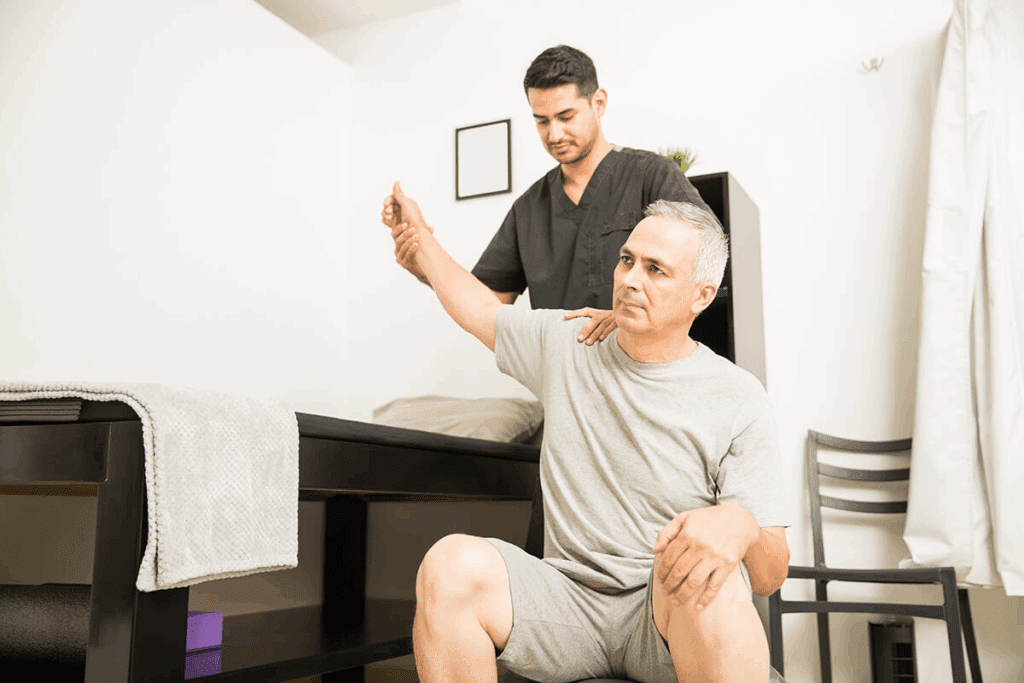
Chiropractic care offers many ways to treat trochanteric bursitis. It aims to ease pain and boost hip function. We use different methods to tackle the biomechanical and soft tissue parts of the condition.
Joint Manipulation and Mobilization Methods
Joint manipulation and mobilization are key in chiropractic care for trochanteric bursitis. These methods apply controlled forces to joints to restore normal motion and lessen pain. Joint manipulation improves joint mobility, reduces inflammation, and aids in healing.
We also use mobilization techniques to gently stretch and move the affected joints. This enhances range of motion and cuts down stiffness. These methods are customized to fit the individual’s needs and comfort.
Soft Tissue Therapy Approaches
Soft tissue therapy is vital in chiropractic treatment for hip bursitis. It includes techniques to relax tense muscles, boost circulation, and aid in tissue repair. Myofascial release treats musculoskeletal pain and stiffness by releasing fascia tension.
We also use trigger point therapy to target specific muscle tension areas. This helps to ease pain and enhance function.
Instrument-Assisted Soft Tissue Mobilization
Instrument-assisted soft tissue mobilization (IASTM) uses special tools to detect and treat fascial restrictions and scar tissue. This method breaks down adhesions and aids in healing the affected soft tissues.
IASTM helps us effectively tackle the soft tissue parts of trochanteric bursitis. It boosts recovery and lowers the chance of future flare-ups.
Dry Needling and Acupuncture Options
Dry needling and acupuncture are also used in chiropractic care for trochanteric bursitis. Dry needling involves inserting thin needles into specific trigger points to stimulate healing and ease pain.
Acupuncture is a traditional Chinese medicine technique. It involves inserting needles into specific body points to restore balance and promote healing. Both methods can effectively manage pain and inflammation from hip bursitis.
The Role of Posture and Alignment in Trochanteric Bursitis
Proper posture and alignment are key in preventing trochanteric bursitis. They help distribute forces evenly across the hip joint. This reduces the risk of bursitis.
Spinal Alignment and Hip Mechanics
Spinal alignment affects hip mechanics. When the spine is aligned right, the hip joint moves smoothly. This reduces stress on the trochanteric bursa. Misalignment can cause abnormal gait and wear on the bursa, making the condition worse.
Key factors that influence spinal alignment and hip mechanics include:
- Pelvic tilt and rotation
- Leg length discrepancies
- Muscle imbalances around the hip
Comprehensive Postural Assessment
A detailed postural assessment is vital for finding trochanteric bursitis causes. It looks at the patient’s posture, gait, and movement. This helps spot any issues that might be causing the condition.
| Assessment Component | Description |
| Posture Evaluation | Examining the patient’s standing and sitting posture for signs of misalignment |
| Gait Analysis | Observing the patient’s walking pattern to identify abnormalities |
| Movement Pattern Assessment | Evaluating how the patient performs specific movements to detect biomechanical issues |
Corrective Strategies for Misalignment
Fixing misalignment is key in treating trochanteric bursitis. Chiropractic adjustments, physical therapy, and lifestyle changes can help.
Some effective corrective strategies include:
- Chiropractic spinal manipulation to improve spinal alignment
- Targeted exercises to strengthen the muscles around the hip
- Orthotics or shoe inserts to address leg length discrepancies
Long-term Postural Rehabilitation
Long-term postural rehabilitation is essential to prevent trochanteric bursitis from coming back. It involves regular exercise, proper body mechanics, and chiropractic check-ups.
By focusing on posture and alignment, we can manage trochanteric bursitis and improve hip health.
Rehabilitative Exercises Prescribed by Chiropractors
Chiropractors often give patients exercises to help with trochanteric bursitis recovery. These exercises strengthen the hip muscles, improve flexibility, and boost balance and stability. Adding these exercises to a treatment plan can lead to big improvements.
Targeted Strengthening Exercises
Strengthening the hip muscles is key to easing trochanteric bursitis symptoms. Targeted strengthening exercises focus on the gluteal muscles and hip abductors. These muscles are important for hip stability. Exercises like clamshell, side-lying leg lifts, and glute bridges help reduce bursa strain and aid in healing.
Effective Stretching Protocols
Stretching is a must for trochanteric bursitis rehabilitation. Effective stretching protocols aim to boost flexibility and lower muscle tension around the hip. Stretches like piriformis, IT band, and hip flexor stretches are common. Regular stretching can ease pain and enhance mobility.
Balance and Stability Training
Balance and stability training are key to avoiding further bursa irritation and promoting hip health. Exercises like single-leg stands, balance boards, and stability ball exercises improve proprioception and reduce fall risk. These exercises help patients regain confidence in their movements.
Progressive Exercise Programs for Recovery
A progressive exercise program is customized to fit the patient’s progress and needs. It gradually gets more intense and complex as recovery advances. This ensures exercises stay challenging yet safe, promoting ongoing improvement without overexertion. Chiropractors keep track of patient progress and adjust the program as needed for the best recovery.
Complementary Therapies in Chiropractic Care
Complementary therapies are key in chiropractic care for trochanteric bursitis. They offer a holistic way to heal. These therapies work alongside chiropractic adjustments to improve treatment results. They help create a complete care plan for patients.
Heat and Cold Therapy Applications
Heat and cold therapy are common in treating trochanteric bursitis. Heat therapy increases blood flow, relaxing muscles and reducing spasms. On the other hand, cold therapy lowers inflammation and numbs pain. We switch between heat and cold to get the best results.
We use packs or special equipment for heat or cold therapy. The choice depends on the condition’s stage and the patient’s response.
Electrical Stimulation Techniques
Electrical stimulation is a valuable therapy in chiropractic care for trochanteric bursitis. It uses electrical currents to stimulate muscles and aid healing. Electrical muscle stimulation (EMS) boosts muscle strength and fights muscle wasting from chronic bursitis.
We use different electrical stimulation methods, like TENS, to manage pain and aid recovery. We adjust the type and intensity based on the patient’s needs.
Therapeutic Ultrasound Benefits
Therapeutic ultrasound is a non-invasive therapy that uses sound waves to heal and reduce inflammation. It boosts blood flow, speeds up tissue repair, and lessens pain.
We often combine therapeutic ultrasound with other chiropractic treatments. We adjust the frequency and duration based on the patient’s condition and response.
Kinesio Taping Methods for Hip Support
Kinesio taping is a therapy that uses special tape for hip support. It helps reduce pain and inflammation by improving joint mechanics and easing strain on the bursa.
We apply Kinesio tape to support the hip and aid healing. Patients learn to apply the tape themselves for home therapy.
Scientific Evidence Supporting Chiropractic for Trochanteric Bursitis
Chiropractic care is gaining recognition as a good treatment for trochanteric bursitis. This is thanks to growing scientific evidence. It’s important to look at the latest research in this area.
Current Research Studies and Clinical Trials
Many studies have looked into chiropractic care for trochanteric bursitis. A key study in the Journal of Manipulative and Physiological Therapeutics showed it helps. It found chiropractic care, like spinal manipulation and hip mobilization, cuts pain and boosts function.
Another study in the Journal of Chiropractic Medicine showed a multi-modal chiropractic approach works. This includes soft tissue therapy and exercises. It helped reduce symptoms and improve life quality for patients.
| Study | Sample Size | Intervention | Outcome |
| Journal of Manipulative and Physiological Therapeutics | 50 | Chiropractic care including spinal manipulation and hip mobilization | Significant reduction in pain and improvement in function |
| Journal of Chiropractic Medicine | 30 | Multi-modal chiropractic approach including soft tissue therapy and corrective exercises | Reduction in symptoms and improvement in quality of life |
Documented Case Reports and Outcomes
Case reports offer insights into chiropractic care’s success for trochanteric bursitis. A case report in the Journal of Chiropractic Case Reports tells of a patient’s success. The patient had chronic trochanteric bursitis and was treated with chiropractic adjustments, soft tissue therapy, and exercises.
“The patient reported significant improvement in symptoms and was able to return to normal activities without pain.”
Limitations of Current Research
Even though the research looks promising, there are some limits. Many studies have small sample sizes. We need more large-scale trials to confirm chiropractic care’s benefits for trochanteric bursitis.
Future Research Directions
Future studies should look into chiropractic care’s long-term effects. They should also compare different chiropractic methods and treatments. It would also be helpful to study how cost-effective chiropractic care is for trochanteric bursitis.
Comparing Chiropractic to Other Treatment Approaches
If you have trochanteric bursitis, knowing about different treatments is key. This includes chiropractic care. Each treatment has its own way and benefits. We’ll look at how chiropractic care stacks up against other common treatments for trochanteric bursitis.
Chiropractic vs. Physical Therapy Methods
Chiropractic care and physical therapy are both used for trochanteric bursitis. They share some similarities but also have big differences. Chiropractic care focuses on spinal adjustments to help the hip and reduce bursa pressure. Physical therapy uses exercises, stretches, and sometimes manual therapy to boost mobility and strength.
Key differences include:
- Focus on spinal manipulation vs. targeted exercises and stretches
- Approach to improving hip alignment and reducing pressure on the bursa
- Use of manual therapy techniques
Chiropractic vs. Conventional Medical Management
Medical management for trochanteric bursitis often includes drugs, injections, and sometimes surgery. Chiropractic care is a non-invasive option that tackles the biomechanical issues causing the problem.
Comparison points:
- Use of medication vs. non-pharmacological interventions
- Invasiveness of treatments (e.g., injections, surgery)
- Focus on symptom management vs. addressing underlying causes
Benefits of Integrated Treatment Approaches
Using chiropractic care with other treatments can offer a more complete way to manage trochanteric bursitis. An integrated plan combines the best of different therapies for better relief and outcomes.
Potential benefits include:
- Enhanced symptom relief
- Improved functional outcomes
- Reduced risk of recurrence
Choosing the Right Treatment Path
Choosing the right treatment for trochanteric bursitis depends on many factors. These include symptom severity, health status, and personal preferences. It’s important to talk to healthcare professionals to find the best approach.
Considerations include:
- Severity of symptoms and impact on daily life
- Response to previous treatments
- Individual health status and comorbidities
Prevention Strategies for Trochanteric Bursitis
To prevent trochanteric bursitis, you need to do several things. This includes exercising, using good body mechanics, and making lifestyle changes. These steps can help lower your chance of getting this painful condition.
Proactive Exercise Programs
Starting an exercise program is key to preventing trochanteric bursitis. These programs should strengthen the muscles around your hip. They should also improve your flexibility and lower limb function. Key exercises include:
- Gluteal strengthening exercises, such as squats and lunges
- Stretching routines targeting the IT band and hip flexors
- Balance and stability training to improve overall hip function
Adding these exercises to your routine can keep your hips healthy. This reduces the risk of bursitis.
Proper Body Mechanics and Techniques
Using proper body mechanics is vital for preventing trochanteric bursitis. This means paying attention to your posture, gait, and movement. Proper techniques involve:
- Maintaining good posture to reduce unnecessary stress on the hip
- Using correct lifting techniques to avoid putting excessive strain on the hip joint
- Avoiding repetitive movements that can irritate the bursa
By using proper body mechanics, you can lower your risk of getting trochanteric bursitis.
Lifestyle Modifications for Hip Health
Making lifestyle changes is important for preventing trochanteric bursitis. Key modifications include:
- Maintaining a healthy weight to reduce pressure on the hip joint
- Wearing proper footwear to support hip and lower limb health
- Avoiding activities that aggravate the hip, such as repetitive running or cycling
By making these lifestyle changes, you can improve your hip health. This reduces the risk of bursitis.
Regular Maintenance Care Considerations
Regular maintenance care is essential for preventing trochanteric bursitis. This includes regular chiropractic check-ups and physical therapy sessions. Benefits of regular maintenance care include:
- Early detection of problems before they become serious
- Preventive adjustments to keep your hip aligned and functioning well
- Ongoing education on proper body mechanics and exercises for hip health
By adding regular maintenance care to your routine, you can manage your hip health. This reduces the risk of trochanteric bursitis.
What to Expect During Your Chiropractic Visit
Going to a chiropractor for the first time can feel scary. But knowing what to expect can really help. We want your visit to be both comfortable and informative.
The Initial Consultation Process
The first part of your visit is the initial consultation. Here, we’ll talk about your health history, symptoms, and goals. This helps us create a treatment plan just for you.
Our chiropractors will also do a physical exam. They might use tests to find out what’s causing your symptoms.
Typical Treatment Sessions
During your sessions, you’ll get chiropractic care that fits your needs. This could include spinal adjustments, joint work, and soft tissue therapy.
We’ll also teach you exercises and stretches. These can help you manage your condition and improve your health.
Treatment Duration and Frequency Guidelines
The length and frequency of your treatment depend on your condition and how you respond. First visits are usually longer and more detailed.
We’ll work with you to create a schedule that works for you. It should fit your lifestyle and needs.
Measuring Progress and Treatment Outcomes
We’ll keep track of your progress and adjust your treatment as needed. This might mean changing your schedule or adding new things to your care plan.
Our main goal is to help you get the best results. We want you to feel better and stay that way for a long time.
| Visit Type | Duration | Frequency |
| Initial Visit | 30-60 minutes | Once |
| Follow-up Visits | 15-30 minutes | 1-3 times per week |
Conclusion: Is Chiropractic Right for Your Trochanteric Bursitis?
Chiropractic care is a holistic and effective way to treat trochanteric bursitis. It addresses the underlying biomechanical issues and promotes natural healing. This approach can relieve pain and improve mobility.
We’ve looked at different chiropractic techniques. These include joint manipulation, soft tissue therapy, and rehabilitative exercises. Each can be customized to meet individual needs. A detailed treatment plan helps patients make informed decisions about their care.
When thinking about chiropractic care for trochanteric bursitis, consider its benefits. Chiropractic offers a non-invasive and drug-free solution. It addresses the root cause of the condition, leading to long-term relief and better overall health.
FAQ
What is trochanteric bursitis and how does it occur?
Trochanteric bursitis is when the bursa near the hip joint gets inflamed. It can happen from repetitive motion, direct trauma, or biomechanical issues. We look at the hip and surrounding areas to find the cause.
How can chiropractic care help with trochanteric bursitis?
Chiropractic care helps by checking the biomechanics, manipulating joints, and treating soft tissues. We also use exercises to help. Our goal is to fix the hip, reduce pain, and stop it from coming back.
What are the common signs and symptoms of trochanteric bursitis?
Symptoms include pain on the outer hip, tenderness, and less mobility. We use physical exams and gait analysis to diagnose it accurately.
Can chiropractors diagnose trochanteric bursitis?
Yes, chiropractors can diagnose it through physical exams, medical history, and sometimes imaging. We also consider other possible causes to make sure we’re right.
What chiropractic treatment techniques are used for trochanteric bursitis?
We use joint manipulation, soft tissue therapy, and other methods. These help reduce inflammation, improve joint movement, and ease pain.
How does posture and alignment affect trochanteric bursitis?
Bad posture and spinal misalignment can lead to trochanteric bursitis by changing how the hip moves. We do detailed postural assessments to fix these issues.
What rehabilitative exercises are prescribed for trochanteric bursitis?
We give exercises to strengthen, stretch, and improve balance. These help patients recover and prevent future problems.
Are there any complementary therapies used in chiropractic care for trochanteric bursitis?
Yes, we use heat and cold therapy, electrical stimulation, and ultrasound. We also use kinesio taping to support treatment and aid recovery.
Is there scientific evidence supporting chiropractic care for trochanteric bursitis?
While more research is needed, studies and case reports show chiropractic care’s benefits. We keep up with the latest research to guide our treatment.
How does chiropractic care compare to other treatment approaches for trochanteric bursitis?
Chiropractic care is a holistic, non-invasive option. It can be used alone or with other treatments. We help patients choose the best path.
What can I expect during my chiropractic visit for trochanteric bursitis?
You’ll have an initial consultation, physical exam, and a treatment plan made just for you. Sessions may include various chiropractic techniques and other therapies.
How can I prevent trochanteric bursitis?
Prevention includes exercise, proper body mechanics, lifestyle changes, and regular care. We teach patients how to keep their hips healthy and avoid future issues.
What is the role of spinal alignment in trochanteric bursitis treatment?
Spinal alignment is key for hip function. We check and correct spinal misalignments to help the hip work right and reduce symptoms.
Can chiropractic care help with pain management for trochanteric bursitis?
Yes, chiropractic care can manage pain through various methods. This includes joint manipulation, soft tissue therapy, and other treatments.
Reference
- The Management of Greater Trochanteric Pain Syndrome. (2016). PMC (PMC4761624). https://www.ncbi.nlm.nih.gov/pmc/articles/PMC4761624/