Diabetic retinopathy is a big problem, affecting about 35% of people with diabetes globally. It’s a serious threat to their sight. Traditional treatments often mean getting eye injections a lot, which many people don’t want. But, new topical eye drop formulations might change how we treat it.Review the top 5 eye drops for diabetics used in the treatment and management of diabetic retinopathy. Find effective eye drops for diabetics today.
We’re on the edge of a new way to treat diabetic retinopathy. New treatments like OCS-01, OTT-166, and dexamethasone nanoparticles could really help. They might make vision better and reduce swelling in the macula.
Key Takeaways
- Diabetic retinopathy is a big problem for people with diabetes, affecting their vision worldwide.
- Traditional treatments involve invasive procedures, highlighting the need for alternative solutions.
- Novel eye drop formulations are emerging as a promising therapeutic avenue.
- Innovative therapies like OCS-01 and OTT-166 are showing promise in clinical trials.
- These new treatments aim to improve vision and reduce macular edema effectively.
Understanding Diabetic Retinopathy and Its Impact
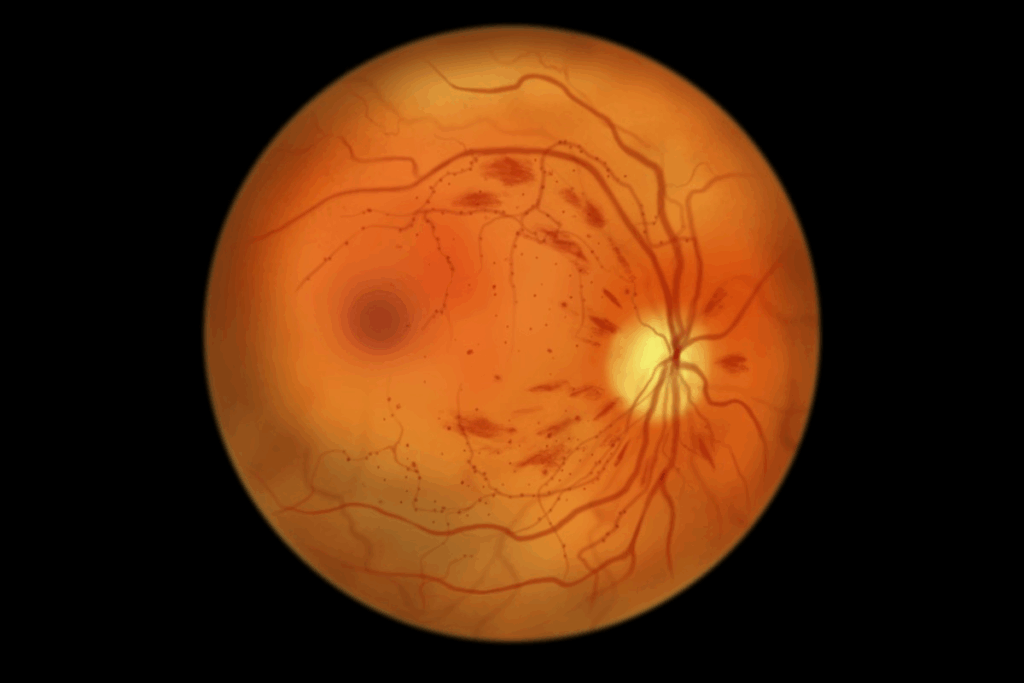
Diabetic retinopathy is a serious problem for people with diabetes. It causes vision issues if not treated. Knowing about diabetic retinopathy is key to managing diabetes well.
What is Diabetic Retinopathy?
Diabetic retinopathy damages blood vessels in the retina. The retina is the light-sensitive part at the back of the eye. This damage can cause vision problems and, in severe cases, blindness.
High blood sugar levels over time cause this damage. It makes blood vessels bleed or leak fluid, affecting vision.
There are different stages of diabetic retinopathy. These include mild, moderate, severe non-proliferative, and proliferative diabetic retinopathy. Each stage gets worse, with the last one being the most severe.
Prevalence and Statistics
About 35% of people with diabetes worldwide have diabetic retinopathy. This makes it a big concern for those with the disease. As diabetes becomes more common, so will diabetic retinopathy.
Studies show diabetic retinopathy causes a lot of blindness in young adults. This highlights the need for regular eye checks for people with diabetes.
Symptoms and Progression
The symptoms of diabetic retinopathy vary by stage. In the early stages, there might be no symptoms. But as it gets worse, people may see blurred vision, floaters, and trouble seeing colors.
If not treated, diabetic retinopathy can lead to severe vision loss. But, with the right treatment, its progression can be slowed or stopped. This shows why early treatment is so important.
Traditional Treatments for Diabetic Retinopathy
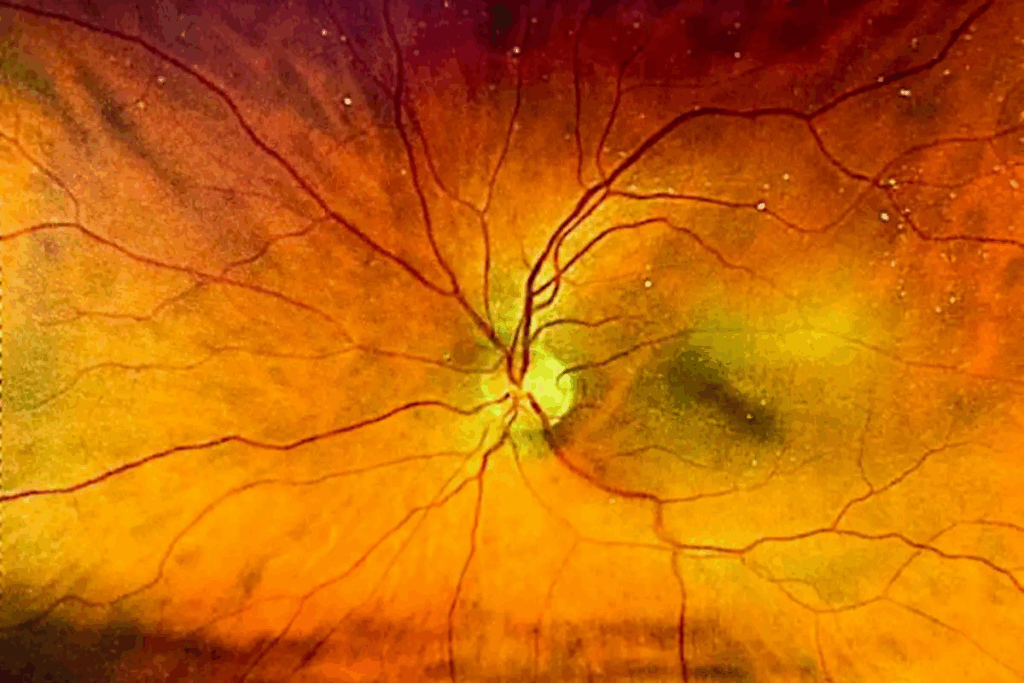
For years, doctors have used a few main ways to treat diabetic retinopathy. These methods help slow the disease and keep eyesight good.
Intravitreal Injections
Intravitreal injections put medicine right into the eye’s gel. This targets diabetic retinopathy well. It uses drugs to help the retina.
But, these injections need to be done often. This can be hard for patients and might cause serious side effects.
Laser Therapy
Laser therapy is another old treatment. It uses laser burns on the retina. This helps reduce swelling and stops vision loss.
It can slow the disease but might not fix lost vision. It can also cause scarring or other problems.
Limitations of Current Treatments
Intravitreal injections and laser therapy have big downsides. The injections need to be done a lot, which can make patients stop going. It also raises the risk of serious side effects.
Laser therapy can hurt the retina and isn’t right for everyone. These issues show we need new treatments that are easier and safer for patients.
New eye drops are being studied for diabetic retinopathy. They might solve some of the problems with current treatments.
The Revolution of Eye Drops for Diabetics
New eye drop technology is changing how we treat diabetic retinopathy. These drops are a new way to help patients, less invasive than old treatments.
How Topical Treatments Work
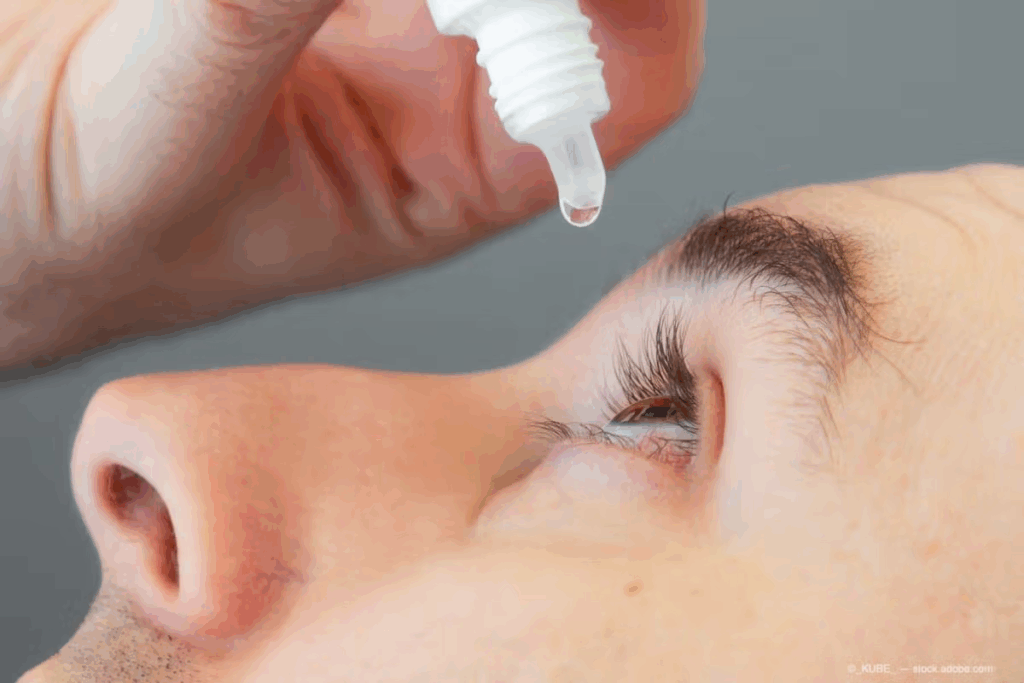
Eye drops deliver medicine right to your eye. This method targets the problem, reducing side effects from pills. Eye drops for diabetics tackle issues like inflammation and leakage.
Different eye drops work in different ways. Some have anti-VEGF agents to stop leakage. Others use corticosteroids or NSAIDs to fight inflammation.
Advantages Over Invasive Procedures
Eye drops are a big step up from injections or lasers. They’re easy to use and don’t hurt as much. This makes patients more likely to stick with treatment.
- Less risk of problems from injections or lasers
- Easy to use
- Less pain for patients
- Can be used at home
Recent Developments in Eye Drop Technology
New eye drop tech has made them more effective. Now, there are better ways to get the medicine into your eye. This includes using tiny particles to help the medicine work better.
Feature | Traditional Eye Drops | Advanced Eye Drop Formulations |
Delivery Mechanism | Simple solution | Nanoparticle-based, sustained release |
Bioavailability | Limited | Enhanced |
Patient Compliance | Frequent dosing required | Less frequent dosing due to sustained release |
These new eye drops could change how we treat diabetic retinopathy. They offer better and easier ways to help patients.
OCS-01: Promising Steroid-Based Eye Drops
OCS-01 is a new way to treat diabetic retinopathy. It’s a steroid-based eye drop that shows great promise. Let’s dive into what makes OCS-01 special, its benefits, and what it can’t do.
Overview
OCS-01 is a steroid-based eye drop for diabetic retinopathy. Clinical trials show it improves vision and reduces swelling in the macula. It’s a non-invasive option that could make treatment easier for patients.
Pros
OCS-01 has many good points. It’s easy to use and doesn’t require surgery. It has been shown to reduce swelling and improve vision. This makes it a comfortable choice for patients.
- Non-invasive treatment option
- Significant reduction in macular thickness
- Improvement in visual acuity
Cons
Despite its benefits, OCS-01 has some downsides. Steroid treatments can cause side effects like high eye pressure or cataracts. It’s important to have regular check-ups with a doctor to avoid these issues.
Features
OCS-01 has features that make it stand out. Its steroid formula fights inflammation, a key part of the disease. The eye drop form is easy to use, making it practical for long-term treatment. Plus, it could be used with other treatments, making it a flexible option.
As research keeps going, OCS-01’s role in treating diabetic retinopathy will likely grow. It offers hope for patients and doctors alike.
OTT-166: Innovative Anti-Angiogenic Formulation
OTT-166 is a big step forward in treating diabetic retinopathy. It’s a new way to fight the disease. Early tests show it could really help people with this condition.
Overview
OTT-166 is a special eye drop for diabetic retinopathy. It stops new blood vessels from growing. This helps avoid serious problems like macular edema and losing vision.
Pros
OTT-166 has many good points. Studies show it makes eyesight better and reduces swelling in the macula. Plus, it’s easy to use because it’s an eye drop, not an injection.
Key Benefits:
- Improved visual acuity
- Reduced macular thickness
- Non-invasive administration
Cons
Even though OTT-166 looks promising, there are things to think about. There might be side effects we don’t know about yet. Also, how easy it is to get and how much it costs could be a problem.
Features
What makes OTT-166 special is its anti-angiogenic formula. It’s an eye drop, which is easier and less scary than injections. This makes it a better choice for many people.
Feature | Description | Benefit |
Anti-angiogenic formulation | Inhibits the formation of new blood vessels | Reduces complications associated with diabetic retinopathy |
Eye drop formulation | Non-invasive administration | More comfortable for patients |
Clinical trial results | Significant improvements in visual acuity and macular thickness | Promising efficacy |
Topical Bromfenac: NSAID Solution for Macular Edema
Topical bromfenac is a big step forward in treating macular edema. It’s a nonsteroidal anti-inflammatory drug (NSAID) that helps diabetic patients. It’s used to treat macular edema.
Overview
Topical bromfenac is applied directly to the eye. This targeted approach helps reduce inflammation and macular edema. Studies show it can lower central macular thickness in diabetic macular edema patients.
Pros
- Non-invasive treatment: Topical bromfenac is a non-surgical way to manage macular edema.
- Effective reduction of inflammation: As an NSAID, it reduces inflammation well, which is key in macular edema.
- Improvement in visual outcomes: It can improve vision by reducing macular edema.
Cons
- Potential side effects: Topical bromfenac can cause eye irritation and light sensitivity, like any drug.
- Need for consistent use: Patients must follow a regular dosing schedule for it to work.
Features
Topical bromfenac has strong anti-inflammatory properties. It’s easy to use because it’s applied topically. Its main features are:
- Targeted action: It directly fights inflammation in the eye.
- Reduced risk of systemic side effects: Applied topically, it has fewer side effects than oral NSAIDs.
- Potential for combination therapy: It can be used with other treatments for better results.
Dexamethasone Nanoparticle Eye Drops
Dexamethasone nanoparticles in eye drops show promise similar to injections. This new method could be a game-changer for treating diabetic retinopathy.
Overview
Dexamethasone nanoparticle eye drops are a new way to deliver dexamethasone directly to the eye. They aim to fight inflammation and swelling in diabetic retinopathy.
Pros
Using dexamethasone nanoparticle eye drops has many benefits. They are non-invasive, making them more comfortable for patients than injections. Plus, nanoparticles might make dexamethasone work better, leading to better results.
- Less risk of problems from injections
- Patients might stick to treatment better because it’s not invasive
- Could release dexamethasone slowly over time
Cons
Despite the promise, there are downsides to dexamethasone nanoparticle eye drops. Their efficacy and safety need more study. Also, making these drops might be expensive, making them hard to get.
Aspect | Dexamethasone Nanoparticle Eye Drops | Intravitreal Injections |
Administration Method | Non-invasive eye drops | Invasive injections |
Patient Comfort | Higher | Lower |
Risk of Complications | Lower | Higher |
Features
The dexamethasone nanoparticle eye drops have some key features. They are made to help dexamethasone work better, which could lead to better treatment results.
We think dexamethasone nanoparticle eye drops are a big step forward for diabetic retinopathy treatment. As more research is done, they might become a common part of eye care for diabetics.
Best Over-the-Counter Eye Drops for Diabetics
Choosing the right over-the-counter eye drops can greatly improve eye health for diabetics with dry eye. Diabetic retinopathy and other conditions often cause dry, irritated eyes. The right drops can offer relief.
Overview
Over-the-counter (OTC) eye drops are a simple and effective solution for diabetics with dry eye. They help lubricate the eyes, reduce irritation, and improve comfort.
Recent studies suggest that new eye drops could be a promising treatment for diabetic retinopathy. While they’re not a cure-all, they can help manage symptoms.
Pros
OTC eye drops offer several benefits for diabetics:
- Ease of Use: They are easy to find and use.
- Immediate Relief: Many provide quick relief from dryness and irritation.
- Variety: There are many types available, meeting different needs.
Cons
Despite their benefits, there are some downsides to OTC eye drops:
- Temporary Solution: They might not fix the root cause of dry eye.
- Potential Irritants: Some ingredients can irritate certain people.
- Lack of Regulation: Not all drops are the same; some work better than others.
Features
When picking OTC eye drops, look for these features:
- Preservative-Free: To lower irritation risk.
- High Viscosity: For longer-lasting moisture.
- Compatibility: Make sure they’re safe for use with contact lenses if needed.
Understanding the pros and cons and what to look for can help diabetics make better eye care choices.
Integrating Eye Drops into Diabetic Eye Care
Managing diabetic retinopathy well needs a mix of treatments. This includes using eye drops and keeping blood sugar levels in check. Regular eye exams are also key.
Combining with Blood Glucose Management
Keeping blood sugar levels stable is very important. Studies show that controlling blood sugar can lower the risk of diabetic retinopathy. Using eye drops along with this can make treatment even better.
Aspect | Importance | Benefit |
Blood Glucose Management | High | Reduces risk of diabetic retinopathy progression |
Regular Eye Examinations | High | Early detection of diabetic retinopathy |
Eye Drops | High | Effective treatment for diabetic retinopathy |
Regular Eye Examinations
Getting regular eye exams is critical. These exams help doctors catch diabetic retinopathy early and adjust treatment plans. Using eye drops and getting regular exams can help patients stay ahead of their condition.
When to Seek Additional Treatment
Patients need to know when to get more help. If symptoms get worse or the disease seems to be getting worse, see a doctor right away. This might mean changing treatment, like using different eye drops.
Patient Experiences and Compliance
How patients feel and stick to treatment is very important. Talking to patients about their condition and getting them involved in treatment can help them stick to it. When patients understand their role, they can help manage their diabetic retinopathy better.
Conclusion: The Future of Diabetic Retinopathy Treatment
New eye drop technology is showing great promise. It can improve vision and reduce swelling in the macula caused by diabetic retinopathy. These drops offer a less invasive option compared to traditional treatments.
We’ve looked at different types of eye drops, like steroid-based and anti-angiogenic ones. Each has its own benefits and challenges. These advancements are moving towards treatments that are easier for patients to follow, leading to better results.
The outlook for treating diabetic retinopathy is bright. These new treatments are set to make a big difference. As research keeps moving forward, we’ll see even more ways to manage this condition. This will greatly improve the lives of those dealing with it.
By using these eye drops as part of a complete eye care plan, we can get better results. This plan includes regular eye checks and managing blood sugar levels. Together, we can look forward to a brighter future for treating diabetic retinopathy.
FAQ
What are the latest eye drop treatments for diabetic retinopathy?
New eye drop treatments for diabetic retinopathy include OCS-01, OTT-166, and dexamethasone nanoparticles. They have shown great promise in improving vision and reducing swelling in the macula.
How do eye drops for diabetics work?
Eye drops for diabetics deliver medicine right to the eye. They help reduce swelling and improve vision. This is a less invasive option compared to traditional treatments.
What are the advantages of eye drops over invasive procedures for diabetic retinopathy?
Eye drops are less invasive than traditional treatments. They reduce the need for frequent injections and side effects. This makes them more comfortable and convenient for patients.
What is OCS-01 and how does it work?
OCS-01 is a steroid-based eye drop. It has shown great promise in clinical trials. It reduces inflammation and improves vision in patients with diabetic retinopathy.
What is OTT-166 and how does it work?
OTT-166 is an anti-angiogenic eye drop. It has shown promise in clinical trials. It reduces vascular leakage and improves vision in patients with diabetic retinopathy.
Can over-the-counter eye drops help with diabetic dry eye?
Yes, over-the-counter eye drops can help diabetic patients with dry eye. They lubricate the eyes and reduce discomfort.
How can I integrate eye drops into my diabetic eye care routine?
To integrate eye drops into your care routine, manage your blood sugar, get regular eye exams, and use your eye drops as prescribed.
How does blood glucose management impact diabetic retinopathy treatment?
Managing blood glucose is key in treating diabetic retinopathy. Uncontrolled blood sugar can worsen the condition. It’s important to manage it to slow disease progression.
What is the role of patient experiences and compliance in diabetic retinopathy management?
Patient experiences and compliance are vital in managing diabetic retinopathy. Consistent use of treatments, including eye drops, and regular eye exams are essential for effective management.
Are there any new treatments on the horizon for diabetic retinopathy?
Yes, new eye drops like OCS-01, OTT-166, and dexamethasone nanoparticles are promising. They offer new hope for patients with diabetic retinopathy.
Can diabetic retinopathy be treated with Mounjaro?
Mounjaro is used to manage blood sugar levels. Its impact on diabetic retinopathy is being researched. It’s not a replacement for established treatments, including eye drops.
How do I choose the best eye drops for diabetic retinopathy?
To choose the best eye drops, consult an eye care professional. They can recommend the most suitable treatment based on your needs and medical history.
References
National Center for Biotechnology Information. Infant Tear Duct Obstruction: Surgery Versus Conservative Management. Retrieved from https://pmc.ncbi.nlm.nih.gov/articles/PMC6313586/