Last Updated on November 25, 2025 by
Urinary tract ultrasonography is a key tool for checking kidney and bladder health. It helps doctors spot problems like blockages, stones, and scarring. This is thanks to bladder ultrasound, which plays an important role in accurate diagnosis.
You might need an ultrasound for many reasons. This includes checking on a pregnancy, looking into abdominal pain, or finding blood clots. It’s also used to see how organs are working or to help with certain procedures.
Ultrasound is a non-invasive and painless test. It gives doctors real-time information to make important decisions. This helps keep millions of patients safe and precise every year.
Key Takeaways
- Ultrasound is a safe and versatile imaging test.
- Over 324 million ultrasound procedures are performed worldwide each year.
- Reasons for referral include pregnancy monitoring and evaluating abdominal pain.
- Ultrasonography helps detect blood clots and assess organ function.
- It is also used to guide minimally invasive procedures.
The Science Behind Ultrasound Imaging
Ultrasound imaging has changed how we diagnose diseases. It lets doctors see inside the body without surgery. It’s key in many areas like checking babies during pregnancy, heart health, and looking at the abdomen.
How Ultrasound Technology Works
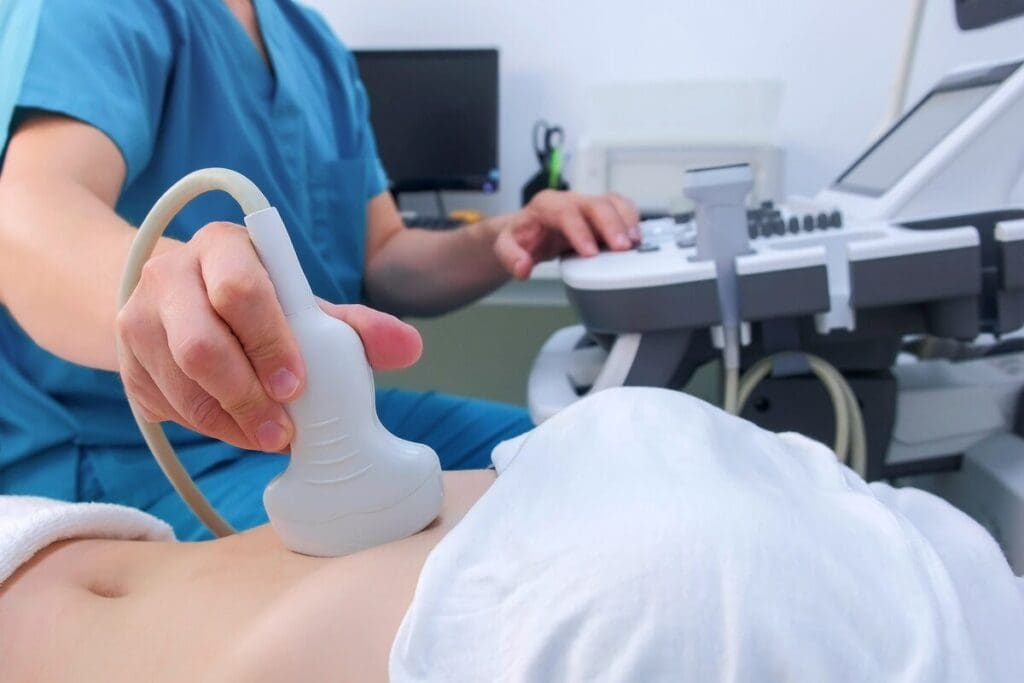
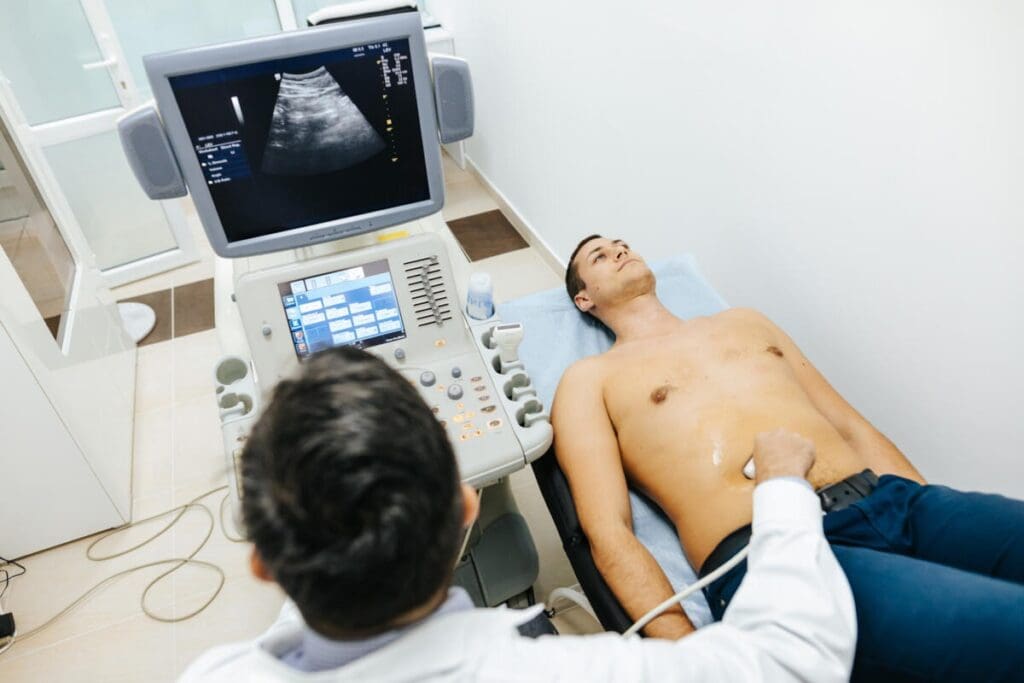
An ultrasound machine sends out high-frequency sound waves through a probe. The probe is on the skin. It sends sound waves into the body, which bounce back and return to the probe.
These echoes are turned into images by the machine. To define probe here, it’s a key part that changes electrical energy into sound and back.
Safety Profile and Advantages
Ultrasound is safe because it doesn’t use harmful radiation. This makes it great for pregnant women. The American Institute of Ultrasound in Medicine says it’s also used in emergency rooms for quick diagnoses.
Common Ultrasound Equipment and Procedures
There’s different ultrasound equipment like the machine and probes for various uses. Scans can be for checking the heart or looking at the abdomen. They’re used for many things, from pregnancy checks to detailed heart exams.
- Abdominal ultrasound for evaluating liver, gallbladder, and kidney conditions
- Pregnancy scans for monitoring fetal development
- Echocardiograms for assessing heart function
These show how important and versatile ultrasound is in today’s medicine.
Pregnancy and Reproductive Health Monitoring
Ultrasound has changed prenatal care a lot. It’s safe and helps check how a baby is growing. It also finds problems early.
First Trimester Screening and Dating
In the first three months, ultrasound checks on the baby. It looks for any issues and tracks growth. Liv Hospital uses new tech like AI to improve care.
Anatomy Scans and Fetal Development
Anatomy scans are key in prenatal care. They give detailed views of the baby’s growth. These scans help spot problems early.
High-Risk Pregnancy Monitoring
Ultrasound is very important for high-risk pregnancies. It helps manage risks and aims for the best outcomes. “Advanced ultrasound technologies are key in managing high-risk pregnancies,” it’s said.
Transvaginal Ultrasound for Reproductive Issues
Transvaginal ultrasound looks at reproductive organs closely. It’s great for finding and managing infertility and early pregnancy problems.
Thanks to these advanced ultrasound tools, doctors can give top-notch care. They use new tech like AI and contrast-enhanced ultrasound to improve diagnosis.
Diagnosing Abdominal and Pelvic Conditions
Ultrasound has greatly improved finding problems in the belly and pelvis. Abdominal ultrasound is key because it’s safe and shows images in real-time.
Ultrasound technology is mainly used for belly pain that doesn’t have a clear cause. This pain can come from gallstones, liver issues, or problems with the pancreas.
Evaluating Unexplained Abdominal Pain
When people have belly pain without a known reason, ultrasound imaging is often the first step. It helps find out what’s causing the pain, like gallbladder or liver problems. The live images let doctors check how organs work and spot issues like gallstones or liver diseases.
Gallbladder, Liver, and Pancreatic Assessment
USG pelvis sonography and abdominal ultrasound are key for checking the gallbladder, liver, and pancreas. They can find gallstones, liver diseases, and pancreatic issues. This info is vital for figuring out what’s wrong and how to treat it.
Kidney, Bladder, and Pelvic Organ Examinations
Abdominal sonar also looks at the kidneys, bladder, and pelvic organs. It’s great for spotting kidney stones, bladder problems, and reproductive issues in both men and women.
New tech in ultrasound technology, like AI and contrast-enhanced ultrasound, has made it even better. These updates help doctors find problems sooner and more accurately. Ultrasound is now a must-have in medicine for diagnosing belly and pelvic issues.
Cardiovascular Ultrasound Applications
Ultrasound is key in heart medicine, giving real-time images. It’s used in many ways to help diagnose and treat heart problems.
Deep Vein Thrombosis (DVT) Detection
Ultrasound is vital for finding Deep Vein Thrombosis (DVT). DVT is when a blood clot forms in deep veins, usually in the legs. It uses ultrasound to see veins and find clots or blockages.
Studies show ultrasound is very accurate for DVT detection. It’s often the first tool doctors use to diagnose it.
“The use of ultrasound in DVT detection has revolutionized the diagnosis and management of this potentially life-threatening condition.”
Echocardiograms for Heart Function
Echocardiograms are important for heart health. They use ultrasound to check the heart’s structure and function. This test shows how well the heart valves work and how efficiently it pumps blood.
This info is key for diagnosing and treating heart issues.
Carotid and Peripheral Artery Assessment
Ultrasound helps check the carotid and peripheral arteries. Carotid artery disease can lead to stroke. Peripheral artery disease narrows arteries in the legs.
Ultrasound imaging shows how severe these diseases are. It helps doctors decide on the best treatment.
Recent studies show AI can improve ultrasound diagnostics. For example, a study with over 13,000 scans found AI was 100% accurate. This shows AI can make ultrasound even better for diagnosing.
Advanced Ultrasound Technologies in Modern Medicine
Modern medicine has seen a big change with new ultrasound technologies. These advancements have made diagnosing diseases better and care for patients more effective. Liv Hospital is leading the way by using these advanced tools in their treatments.
Point-of-Care Ultrasound (POCUS) in Emergency Settings
Point-of-Care Ultrasound (POCUS) has changed emergency care by giving quick, bedside scans. Doctors can now make fast decisions, which helps patients a lot. It’s very useful in trauma cases to check for internal injuries quickly.
AI-Enhanced Diagnostic Capabilities
Artificial Intelligence (AI) has made ultrasound better at finding problems. AI can spot small issues that doctors might miss. This mix of AI and ultrasound is making diagnosis faster and more accurate.
Contrast-Enhanced Ultrasound for Early Detection
Contrast-Enhanced Ultrasound (CEUS) uses special agents to see blood flow better. It’s great for finding tumors and planning treatments early. This helps doctors catch problems sooner.
Ultrasound-Guided Procedures and Biopsies
Ultrasound is key for many procedures, like biopsies and drainages. It gives doctors a clear view in real-time. This makes procedures safer and more accurate.
These new ultrasound technologies are changing how we diagnose and treat diseases. As they get better, they will play an even bigger role in patient care.
Conclusion: The Evolving Role of Ultrasound in Healthcare
Ultrasound in healthcare is changing fast. It’s safe, versatile, and uses new tech. It’s now key for many medical checks, like checking on babies and heart health.
Pelvic and abdominal ultrasounds are vital for checking on reproductive health and finding issues in the belly. New ultrasound tech makes these checks more accurate. This helps doctors act quickly to help patients.
The future of ultrasound in healthcare is bright. New tech, like AI and contrast-enhanced ultrasound, will make it even better. This means better care for patients.
As tech keeps getting better, ultrasound will play an even bigger role in healthcare. It will stay a key part of diagnosing diseases today and tomorrow.
FAQ
What is an ultrasound?
An ultrasound is a non-invasive way to see inside the body. It uses sound waves to create images of organs and tissues.
What is the difference between a transvaginal ultrasound and a pelvic ultrasound?
A transvaginal ultrasound uses a probe in the vagina to see the reproductive organs. A pelvic ultrasound uses a probe on the abdomen to view the pelvic area.
What is the purpose of a probe in an ultrasound machine?
The probe, or transducer, sends and receives sound waves. It’s key to creating images of the body’s inside.
Can ultrasound be used during pregnancy?
Yes, ultrasound is key during pregnancy. It checks on the baby’s growth and health, and the mother’s too.
What is the difference between an abdominal ultrasound and a pelvic ultrasound?
An abdominal ultrasound looks at organs like the liver and gallbladder. A pelvic ultrasound checks the uterus, ovaries, and bladder.
Are there any risks associated with ultrasound imaging?
Ultrasound is safe and has no known risks. It’s a non-invasive way to see inside the body.
What is a sonogram?
A sonogram is another name for an ultrasound image. It shows the body’s inside using sound waves.
Can ultrasound be used to diagnose conditions other than pregnancy-related issues?
Yes, an ultrasound can check for many health issues. It’s used for abdominal pain, gallbladder disease, and heart problems.
What is contrast-enhanced ultrasound?
Contrast-enhanced ultrasound uses a special agent to see blood flow better. It helps in diagnosing many conditions.
How does AI enhance ultrasound diagnostics?
AI improves ultrasound by analyzing images and spotting problems. It helps doctors make better diagnoses and care for patients.
Refference:
- Medscape. (n.d.). Basic Obstetric Ultrasound: Protocols and Indications. (Article). Retrieved from https://e medicine.medscape.com/article/2047305-overview
- Wikipedia (Medical ultrasound article). (n.d.). Ultrasound in the urinary tract is used in urology. Retrieved from https://en.wikipedia.org/wiki/Medical_ultrasound