Last Updated on November 25, 2025 by
When you’re getting ready for an ultrasound, you might get told to come with a full bladder. But why is this?
For pelvic and abdominal ultrasound exams, a full bladder is usually needed. It makes it easier to see the organs and tissues around. This helps doctors make more accurate diagnoses.

We know it might be a bit of a hassle, but it’s really important. A full bladder gives doctors a clearer view. This helps them do a better job during the sonogram.
Key Takeaways
- A full bladder is often required for pelvic and abdominal ultrasounds.
- It enhances the visualization of surrounding organs and tissues.
- Following instructions for a full bladder leads to more accurate diagnoses.
- A full bladder provides a clearer acoustic window for the sonogram.
- It’s a key step for getting high-quality images during the procedure.
The Science Behind Ultrasound Imaging
Ultrasound imaging uses sound waves to see inside the body. It’s a key tool in medicine, letting doctors look without surgery. We’ll dive into how it works, what makes images clear, and the role of fluid.
How Ultrasound Technology Works
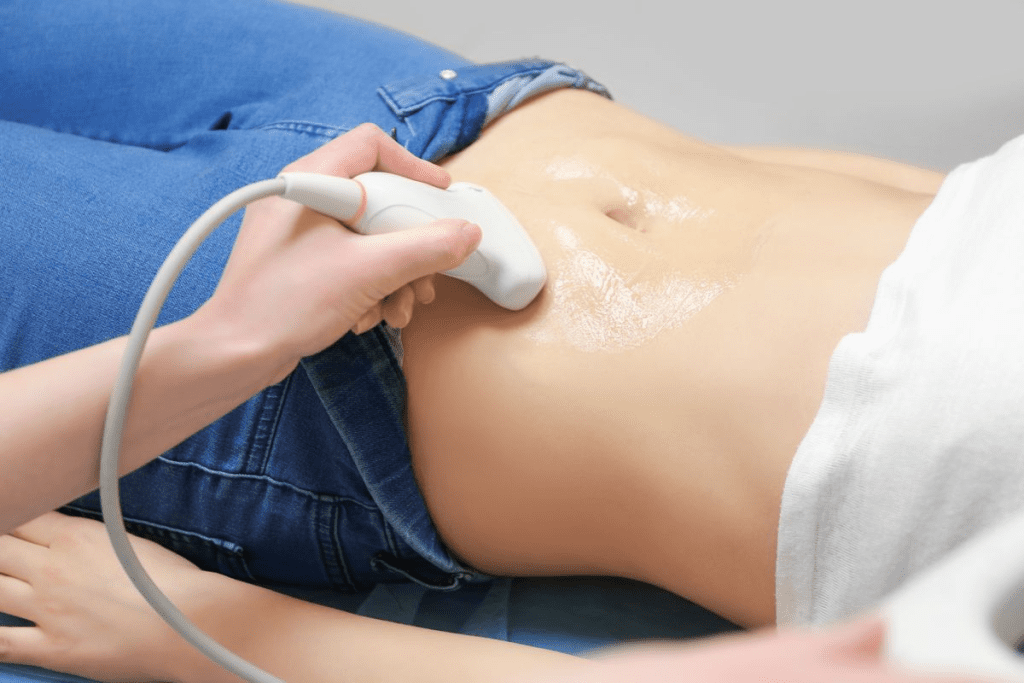
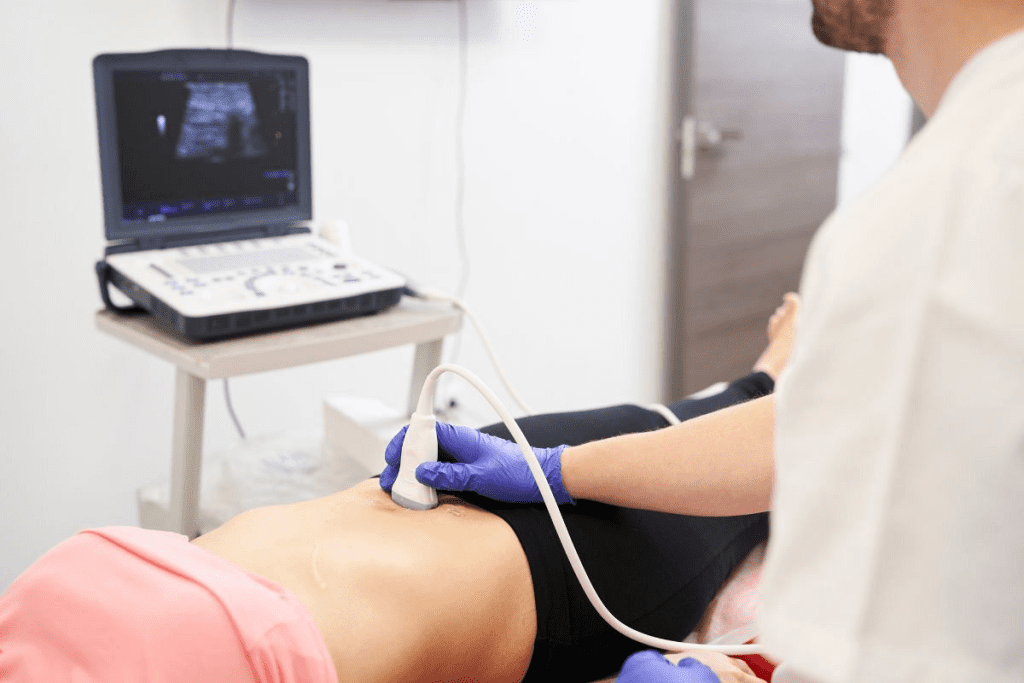
Ultrasound machines send high-frequency sound waves into the body. These waves bounce back, creating detailed pictures. This helps doctors see inside without surgery.
For example, an ultrasound exam uses sound waves to make images. It’s used to find many health issues, like gallstones or problems in unborn babies.
Why Tissue Density Matters for Image Quality
Tissue density affects how clear ultrasound images are. Different tissues reflect sound waves differently. For example, the bladder’s fluid lets sound waves through, making images clearer.
Knowing about tissue density and fluid is key for doctors to make accurate diagnoses. It helps them understand what they see in ultrasound images.
The Role of Fluid in Sound Wave Transmission
Fluid is very important for sound wave transmission in ultrasound. A full bladder, for example, helps see pelvic organs better. The fluid lets sound waves through, making images clearer.
This is why a full bladder is often needed for pelvic ultrasounds. Fluid helps sound waves, making the ultrasound more effective.
Why a Full Bladder Improves Ultrasound Results
A full bladder is key for better ultrasound images, like those for the pelvis. We’ll see how this simple step boosts the test’s accuracy.
Enhanced Visualization of Pelvic Organs
A full bladder helps see pelvic organs better. It pushes the intestines out of the way, giving clearer images. This makes it easier to see the uterus, ovaries, and bladder.
Also, a full bladder provides a natural contrast. This contrast helps the sonographer understand the images better.
Research Evidence Supporting Full Bladder Protocols
Many studies back the use of full bladder protocols in ultrasound. They show a full bladder reduces bladder volume variation. This makes measurements more consistent and reliable.
This is key for tracking conditions over time. A study in a top medical journal found full bladders improve pelvic organ imaging. This leads to more accurate diagnoses.
- Improved acoustic window
- Reduced intestinal gas interference
- Better delineation of pelvic structures
Measurement Accuracy: 7%-21% Variation in Volume Estimation
The bladder’s state greatly affects ultrasound volume estimates. Studies show a 7%-21% variation if the bladder isn’t full. This can cause wrong diagnoses or more tests.
By ensuring a full bladder, patients help reduce this variation. This makes measurements more reliable and might cut down on repeat scans.
- Proper bladder filling reduces measurement errors
- Accurate volume estimation is critical for diagnosis
- A full bladder protocol enhances the reliability of ultrasound results
Types of Ultrasounds That Require a Full Bladder
Having a full bladder is important for many ultrasound procedures. It helps doctors get accurate results. We’ll look at which ultrasounds need a full bladder.
Pelvic Ultrasound Requirements
Pelvic ultrasounds are key in early pregnancy. A full bladder is needed. It moves the intestines out of the way, giving a clear view of the pelvic area.
A full bladder acts like a window. It lets sound waves reach deeper, making images clearer.
Abdominal Ultrasound Considerations
Abdominal ultrasounds, or stomach sonography, might need a full bladder in some cases. It’s helpful when looking at the upper organs. The bowel gas moves, making it easier to see what’s behind it.
Transvaginal Ultrasound: Different Bladder Protocols
Transvaginal ultrasounds have their own rules for bladder fullness. Usually, an empty bladder is best. It lets the probe get close to the organs. But sometimes, a bit of urine is okay for a better view.
Pregnancy Ultrasounds and Bladder Fullness
In pregnancy ultrasounds, a full bladder is often needed early on. It helps see the embryo and its surroundings clearly. Later in pregnancy, the uterus grows, making a full bladder less necessary. For more on ultrasounds, check out this resource.
When an Empty Bladder Is Preferred for Ultrasound Procedures
For some ultrasound tests, an empty bladder is better than a full one. We’ll look at when this is true. Knowing how to prepare for an ultrasound can really help with getting good results.
Specific Diagnostic Scenarios
At times, an empty bladder is needed for clear images. For example, a full bladder might block the view of some organs in the pelvic area. An empty bladder helps get a better look.
For transvaginal ultrasounds, an empty bladder is key. This method gives a closer look at the pelvic organs. It doesn’t need a full bladder to work well.
Later-Stage Pregnancy Scans
In later pregnancy, a full bladder isn’t always needed for ultrasound scans. In fact, an empty bladder can make the scan more comfortable. These scans focus on the baby’s growth and the placenta, and an empty bladder doesn’t get in the way.
Certain Internal Ultrasound Procedures
Some ultrasound tests need an empty bladder. For instance, some tests on the pelvis area require it to get good images. Knowing what each test needs is key for the best results.
In summary, while a full bladder is good for many tests, there are times when an empty bladder is better. Understanding these differences is important for preparing well and getting accurate images.
How to Properly Prepare Your Bladder for an Ultrasound
Getting ready for an ultrasound means paying attention to how much water you drink. A full bladder is key for clear images. We know how important it is to prepare well.
Optimal Hydration Timeline
Drink water at a rate of 7-15 mL/min to fill your bladder right. This means drinking 1 to 1.5 liters about an hour before your ultrasound. Proper hydration is key for clear images of your pelvic organs.
Timing your water intake is critical to avoid discomfort. Start drinking about 60 minutes before your ultrasound. This lets your body absorb the water and fill your bladder perfectly.
Recommended Fluid Intake Amounts
The right amount of water varies based on your body and the ultrasound type. For most adults, drinking 1 to 1.5 liters of water is enough.
- Drink water: Water is the best choice for hydration before an ultrasound.
- Avoid caffeinated beverages: Caffeine can act as a diuretic, potentially complicating the hydration process.
- Consider your body size: Larger individuals may need to drink more water to achieve the same level of bladder fullness as smaller individuals.
Foods and Beverages to Avoid Before Your Appointment
Some foods and drinks can mess with your hydration and the ultrasound. It’s best to avoid carbonated drinks because they can cause gas. This might affect image quality.
Also, foods that cause gas or discomfort, like beans or cabbage, should be limited before your ultrasound.
Managing Discomfort While Waiting
Waiting for your ultrasound can be uncomfortable with a full bladder. Try to remain as comfortable as possible. You can change positions or breathe deeply to ease the discomfort.
If the discomfort is too much, tell the sonographer or medical staff. They can adjust the procedure to make you more comfortable and safe.
Common Challenges and Solutions During Full-Bladder Ultrasounds
Full-bladder ultrasounds can be tricky for patients. A full bladder is needed for clear images but can cause discomfort. It’s important to know what to expect.
Dealing with Urgent Bathroom Needs
One big challenge is the need to use the bathroom. It can be uncomfortable and stressful. To help, follow your healthcare provider’s advice on drinking water.
Tip: Tell your sonographer if you’re feeling uncomfortable. They can adjust the procedure or give tips on managing your bladder.
What Happens If Your Bladder Is Too Full
If your bladder is too full, it can be very uncomfortable. It might also make it hard to get clear images. Sometimes, you might need to empty your bladder a bit.
“A full bladder can be a double-edged sword; while it’s necessary for good visualization, excessive fullness can compromise the quality of the ultrasound images.”
Expert Sonographer
Solutions When Your Bladder Isn’t Full Enough
If your bladder isn’t full enough, getting clear images can be tough. The sonographer might ask you to drink more water and wait a bit.
- Drink water as instructed by your healthcare provider.
- Avoid caffeine and carbonated drinks that can cause discomfort.
- Inform your sonographer if you’re experiencing any discomfort or urgency.
Communicating Effectively with Your Sonographer
Talking openly with your sonographer is important. Let them know if you’re feeling any pain or need to go to the bathroom. They’re trained to help.
Remember: Your comfort and safety are our main concerns. Working together with your sonographer makes the ultrasound better for everyone.
Conclusion: Balancing Comfort and Diagnostic Quality
We’ve seen how a full bladder is key for top-notch ultrasound images, like those for the pelvis and belly. It makes organs in the pelvis clearer, helps with precise measurements, and aids in making accurate diagnoses.
It’s important to find a balance between making patients comfortable and needing a full bladder. Drinking the right amount of water and avoiding certain foods helps a lot. Also, talking clearly with your sonographer is key to a smooth and painless ultrasound.
Knowing the role of a full bladder and preparing well helps patients get the best results with less discomfort. This balance is critical for successful ultrasound tests and better health care.
FAQ
What is the ideal bladder fullness for a pelvic ultrasound?
For a pelvic ultrasound, a moderately full bladder is best. It helps push the intestines out of the way. This gives a clearer view of the pelvic organs.
How does a full bladder improve ultrasound image quality?
A full bladder acts as a window for sound waves. This makes the pelvic organs clearer to see. It also moves the intestines out of the way, improving image quality.
Is it necessary to have a full bladder for a transvaginal ultrasound?
No, a transvaginal ultrasound doesn’t need a full bladder. The probe is inserted into the vagina. This gives a closer view of the pelvic organs.
Can I drink water before an ultrasound to fill my bladder?
Yes, drinking water can fill your bladder. But, follow the instructions from your healthcare provider or the ultrasound facility about how much to drink.
What happens if my bladder is too full during an ultrasound?
If your bladder is too full, it might be uncomfortable. You might need to empty it a bit to make the procedure easier.
How long before an ultrasound should I arrive with a full bladder?
Arrive 30-60 minutes before your ultrasound with a full bladder. This ensures you’re ready when it’s time.
Are there any foods or beverages I should avoid before an ultrasound?
Avoid carbonated drinks and foods that cause gas. They can make the ultrasound images less clear.
Can I empty my bladder after a full-bladder ultrasound?
Yes, you can empty your bladder after the ultrasound. It helps relieve any discomfort from having a full bladder.
What if I have a medical condition that affects my bladder control?
If your bladder control is affected, tell your healthcare provider or the ultrasound facility. They can guide you on managing your condition during the ultrasound.
How do I communicate effectively with my sonographer during an ultrasound?
Tell your sonographer about any discomfort or pain during the ultrasound. This helps them adjust the procedure to make you more comfortable.
References
- Benacerraf, B. R., Shipp, T. D., & Bromley, B. (2000). Is a full bladder still necessary for pelvic sonography? Journal of Ultrasound in Medicine, 19(4), 237-241. https://pubmed.ncbi.nlm.nih.gov/10759346/