Last Updated on November 25, 2025 by
Peyronie’s disease affects many men worldwide. It causes penile curvature and erectile dysfunction. It also leads to urinary problems.
We know that Peyronie’s disease can cause urinary issues in many patients. These issues can affect their well-being and quality of life. Our institution offers top-notch healthcare and support for international patients.
In this article, we’ll look at how Peyronie’s disease causes urinary problems. We’ll also explore the role of tadalafil in solving these issues.
Key Takeaways
- Peyronie’s disease affects about 9-10% of adult males worldwide.
- Urinary problems are a big concern for men with Peyronie’s disease.
- Tadalafil may help with urinary symptoms linked to Peyronie’s disease.
- Lower urinary tract symptoms (LUTS) can greatly affect a patient’s quality of life.
- Comprehensive care is key for managing Peyronie’s disease and its urinary issues.
What Peyronie’s Disease Is and How Common It Occurs
Peyronie’s disease is a health issue for men, leading to a curved penis and pain during erections. It’s important for both patients and doctors to understand this condition.
Definition and Primary Symptoms
Peyronie’s disease is marked by the growth of scar tissue plaques in the penis. These plaques can make the penis curve or bend, leading to painful erections. Symptoms include penile curvature, pain during erections, and sometimes erectile dysfunction.
The curve can be severe, causing discomfort or making sex difficult. These symptoms can be upsetting for men, impacting their life quality and self-esteem.
Global Prevalence Rate
Studies show that Peyronie’s disease affects a large number of adult males worldwide. It’s estimated that about 9-10% of adult males have it. However, the exact number can change based on the study and how it’s diagnosed.
Even though the exact number varies, Peyronie’s disease is a common issue affecting many men globally.
5 Ways Peyronie’s Disease Affects the Urinary System
It’s important to know how Peyronie’s disease affects urinary health. This disease can cause many urinary symptoms. These symptoms can really affect a person’s quality of life.
Statistical Evidence: Up to 20% Experience Urinary Symptoms
Studies show that up to 20% of people with Peyronie’s disease have urinary symptoms. These can include a weak stream, trouble starting to urinate, and needing to urinate often. This highlights the need for a complete treatment plan for Peyronie’s disease.
Mechanical Impact on the Urethra
Penile plaques from Peyronie’s disease can bend or compress the urethra. This is a main reason for urinary symptoms. The kink test helps check how much the urethra is bent.
Inflammatory Processes and Their Effects
Inflammation from Peyronie’s disease can make urinary problems worse. This inflammation can cause scarring and fibrosis. It can affect the urethra and nearby tissues. It’s key to manage this inflammation to help with urinary function.
Peyronie’s disease impacts the urinary system in several ways. This includes mechanical issues, inflammation, and can lead to urethral stricture. Knowing these effects is crucial for finding effective treatments that address both the disease and urinary symptoms.
7 Common Urinary Symptoms Experienced by Peyronie’s Patients
Peyronie’s disease can cause many urinary symptoms. These symptoms can be mild or severe and affect how well you can urinate. It’s important to know about these symptoms to get the right care.
Weak Stream and Hesitancy
A weak stream is a common problem for Peyronie’s patients. The plaque in Peyronie’s disease can block the urethra, making it hard to urinate. Hesitancy, or trouble starting to urinate, can also happen. This is because of the blockage or because of the anxiety it causes.
Spraying and Directional Changes
Some people with Peyronie’s may notice their urine spraying or changing direction. This happens because the plaque or curvature of the penis affects the urethra. It changes how urine flows.
Urinary Urgency and Increased Frequency
Urinary urgency and increased frequency can really disrupt daily life. These symptoms might come from the inflammation in Peyronie’s disease or from the stress of having a chronic condition.
Sensation of Incomplete Emptying
Feeling like you’re not fully emptying your bladder is another symptom. It can cause a lot of anxiety and discomfort.
These symptoms show why treating Peyronie’s disease needs a full approach. We’ll look at how to diagnose and treat it in the next parts.

- Weak stream and hesitancy are common urinary symptoms.
- Spraying and directional changes can occur due to mechanical effects.
- Urinary urgency and frequency are significant issues.
- Sensation of incomplete emptying can be distressing.
3 Anatomical Factors That Determine Urinary Symptom Severity
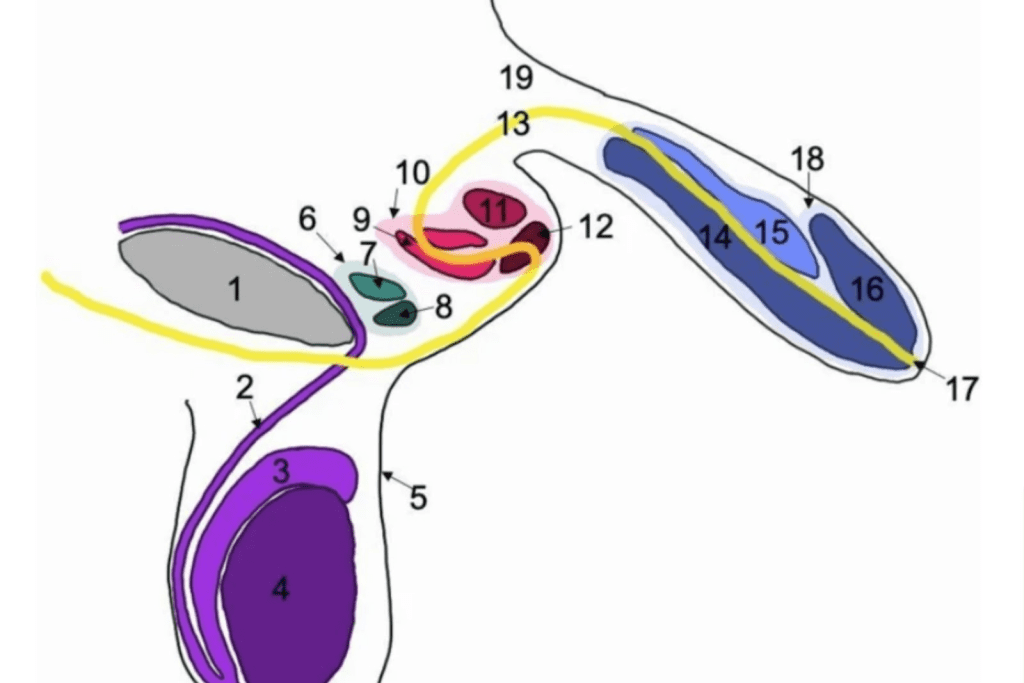
Several anatomical factors affect how bad urinary symptoms are in Peyronie’s disease. Knowing these factors helps manage the condition better. We’ll look at how penile plaques, ventral curvature, and peri-urethral inflammation impact symptoms.
Location and Size of Penile Plaques
The spot and size of penile plaques matter a lot. Plaques near the urethra can make urinary symptoms worse. This is because they’re close to the urinary tract. The bigger the plaque, the more it can distort and press on tissues.
Degree of Ventral Curvature
The degree of ventral curvature is also key. A bigger curve puts more pressure on the urethra, making symptoms worse. This curve can block urine flow, causing problems.
- Increased pressure on the urethra
- Mechanical obstruction
- Potential for urinary retention
Extent of Peri-Urethral Inflammation
Peri-urethral inflammation is very important too. How much inflammation there is can really affect how well you pee. Symptoms like a weak stream, trouble starting to pee, and needing to pee a lot can happen. Swelling and narrowing of the urethra make things even harder.
Why Younger Men With Peyronie’s May Face Greater Urinary Challenges
Younger men with Peyronie’s disease often face more urinary problems. This is due to several factors specific to their age group.
Increased Risk of Severe Plaque Formation
Younger men are more likely to get severe plaque in Peyronie’s disease. Severe plaques can cause more curvature and worsen urinary symptoms. This is because plaque forms more aggressively in younger men, possibly due to more physical activity and different healing.
Differences in Tissue Elasticity and Healing
Younger men’s tissues heal and stretch differently than older men’s. Tissue elasticity is key in how severe Peyronie’s symptoms are. Younger men’s more elastic tissues can lead to more curvature. Also, their healing processes can affect how the disease progresses and urinary symptoms develop.
Long-term Progression Concerns
Younger men with Peyronie’s disease worry about how it will get worse over time. As they get older, the disease can worsen, causing more urinary problems. Long-term progression means bigger plaques, more curvature, and urinary issues like a weak stream or urgency.
It’s important to understand these factors to manage Peyronie’s disease in younger men. Healthcare providers can then create better treatment plans. This helps reduce the disease’s impact on their urinary health.
4 Diagnostic Approaches for Urinary Problems in Peyronie’s Disease
For urinary issues in Peyronie’s disease, a detailed diagnostic plan is key. We know diagnosing these problems needs a mix of methods. This ensures we manage them well.
Physical Examination and Medical History
The first step is a physical examination and looking at the patient’s medical history. This helps spot any penile plaques and check the penis’s curve. We also talk about symptoms, how long they’ve lasted, and what makes them better or worse.
Specialized Tests for Urinary Function
We use specialized tests like uroflowmetry and post-void residual (PVR) to check urine function. Uroflowmetry shows urine flow rate, and PVR checks if the bladder is fully emptied. These tests help us understand urinary issues in Peyronie’s disease patients.
Imaging Studies to Assess Plaque Impact on Urethra
Imaging studies are key to see how plaques affect the urethra. Ultrasound and MRI show plaque size and location. This helps us understand how it impacts the urethra and other areas.
Ruling Out Erroneous Diagnoses
It’s also important to rule out wrong diagnoses that might look like Peyronie’s disease symptoms. We look at other causes like BPH or UTIs. This makes sure we get the right diagnosis and treatment.
How Tadalafil and Other Treatments Address Both Erectile and Urinary Symptoms
Tadalafil is a key treatment for Peyronie’s disease. It helps with both erectile dysfunction and urinary symptoms. This makes it a valuable option for treatment.
Dual Mechanism of Action
Tadalafil relaxes the smooth muscle in the penis. This improves blood flow and helps with erectile dysfunction. It also relaxes muscles in the prostate and bladder neck, easing urinary symptoms.
The benefits of tadalafil include:
- Improved erectile function: Enhancing the ability to achieve and maintain an erection.
- Reduced urinary symptoms: Alleviating symptoms such as weak stream and urinary urgency.
Common Tadalafil Side Effects to Consider
Tadalafil is generally well-tolerated but can cause side effects. These include headache, dyspepsia, and back pain. It’s important to talk to a healthcare provider about these to make informed decisions.
Alternative Medications When Tadalafil Isn’t Appropriate
If tadalafil isn’t right, other treatments can be considered. This includes other PDE5 inhibitors like sildenafil. Or medications that target urinary symptoms directly.
Surgical Options Including Penile Implants
For some, surgery is needed. This includes penile implants for severe erectile dysfunction or corrective surgery for penile curvature. These options are considered when other treatments fail.
We know each patient is different. Treatment plans are tailored to meet individual needs. Whether through medication or surgery, our goal is to improve quality of life for those with Peyronie’s disease.
Conclusion: Multidisciplinary Approach to Improving Quality of Life
Managing Peyronie’s disease well needs a team effort. This includes doctors and caring support to better the lives of those affected.
We focus on both the physical and emotional sides of the disease. This helps patients deal with issues like trouble urinating and erectile problems.
Our team at our institution is dedicated to giving full support and advice. We make sure patients get the care they need. We work together to create plans that fit each patient, using medicines like Tadalafil to help with both urinary and erectile issues.
By working together, we can handle the tough parts of Peyronie’s disease. This makes life better for our patients.
FAQ
What is Peyronie’s disease and how does it affect urinary function?
Peyronie’s disease is a condition where the penis develops plaques. This can cause curvature and discomfort. It affects up to 20% of patients, leading to urinary problems.
What are the common urinary symptoms experienced by patients with Peyronie’s disease?
Patients may have a weak stream, spraying, or trouble starting to urinate. They might also feel urgent or have to urinate often. Some may not empty their bladder fully.
How does the location and size of penile plaques impact urinary symptom severity?
The size and location of plaques affect urinary symptoms. Larger plaques or those near the urethra cause more problems.
What is the role of tadalafil in treating urinary symptoms associated with Peyronie’s disease?
Tadalafil helps with both erectile dysfunction and urinary symptoms in Peyronie’s disease. But, it’s important to consider side effects and other options.
What are the potential tadalafil side effects that patients should be aware of?
Common side effects include headaches, back pain, and muscle aches. Always talk to your doctor about any concerns or interactions with other drugs.
Are there any alternative treatments for Peyronie’s disease when tadalafil is not suitable?
Yes, other medications and surgery, like penile implants, are options when tadalafil doesn’t work. Your doctor will choose the best treatment for you.
How is Peyronie’s disease diagnosed, and what diagnostic approaches are used to assess urinary problems?
Diagnosing Peyronie’s disease involves a thorough check-up. This includes a physical exam, medical history, and tests to check urinary function. Imaging studies also help assess the impact of plaques on the urethra. It’s important to rule out wrong diagnoses.
What is the significance of girth and penile curvature in Peyronie’s disease?
Girth changes can happen due to plaque formation. Penile curvature is a key symptom. Its severity can affect urinary function and quality of life.
Can Peyronie’s disease cause hourglass syndrome or hourglass body deformity?
Yes, Peyronie’s disease can lead to hourglass syndrome. This causes a narrowing of the penis, affecting both urination and erections.
What is the kink test, and how is it used in diagnosing Peyronie’s disease?
The kink test is not a standard test. However, a physical exam and imaging studies can help diagnose penile curvature and plaque.
Is Peyronie’s disease associated with erectile dysfunction, and how is it treated?
Yes, Peyronie’s disease often causes erectile dysfunction. Treatments include tadalafil and surgery, like penile implants, to address both issues.
What is the definition of erroneous diagnosis, and how is it avoided in Peyronie’s disease?
An erroneous diagnosis is an incorrect one. To avoid this, a detailed diagnostic process is used. This includes physical exams, medical history, and imaging studies for accurate diagnosis and treatment.
Can no neck ED (erectile dysfunction without a clear cause) be related to Peyronie’s disease?
The link between no neck ED and Peyronie’s disease is complex. Peyronie’s can cause erectile dysfunction. A thorough evaluation by a healthcare provider is needed to find the cause.
References
- Huang, S. A. (2013). Phosphodiesterase-5 (PDE5) Inhibitors In the Management of Erectile Dysfunction. Frontiers in Pharmacology. https://www.ncbi.nlm.nih.gov/pmc/articles/PMC3776492/
- Dhaliwal, A. (2023). PDE5 Inhibitors. StatPearls Publishing. https://www.ncbi.nlm.nih.gov/books/NBK549843/
- Pyrgidis, N., et al. (2021). The Effect of Phosphodiesterase-type 5 Inhibitors on Erectile Dysfunction: An Overview of Systematic Reviews and Meta-Analyses. Frontiers in Pharmacology. https://www.frontiersin.org/articles/10.3389/fphar.2021.735708/full
- Ferguson, J. E. III, et al. (2013). Phosphodiesterase type 5 inhibitors as a treatment for erectile dysfunction. Arab Journal of Urology, 11(4), 360-365. https://www.tandfonline.com/doi/full/10.1016/j.aju.2013.07.009
- Jiann, B. P. (2016). Evolution of phosphodiesterase type 5 inhibitors in treating erectile dysfunction. Asian Journal of Andrology, 18(2), 170-176. https://www.sciencedirect.com/science/article/pii/S187952261630029X