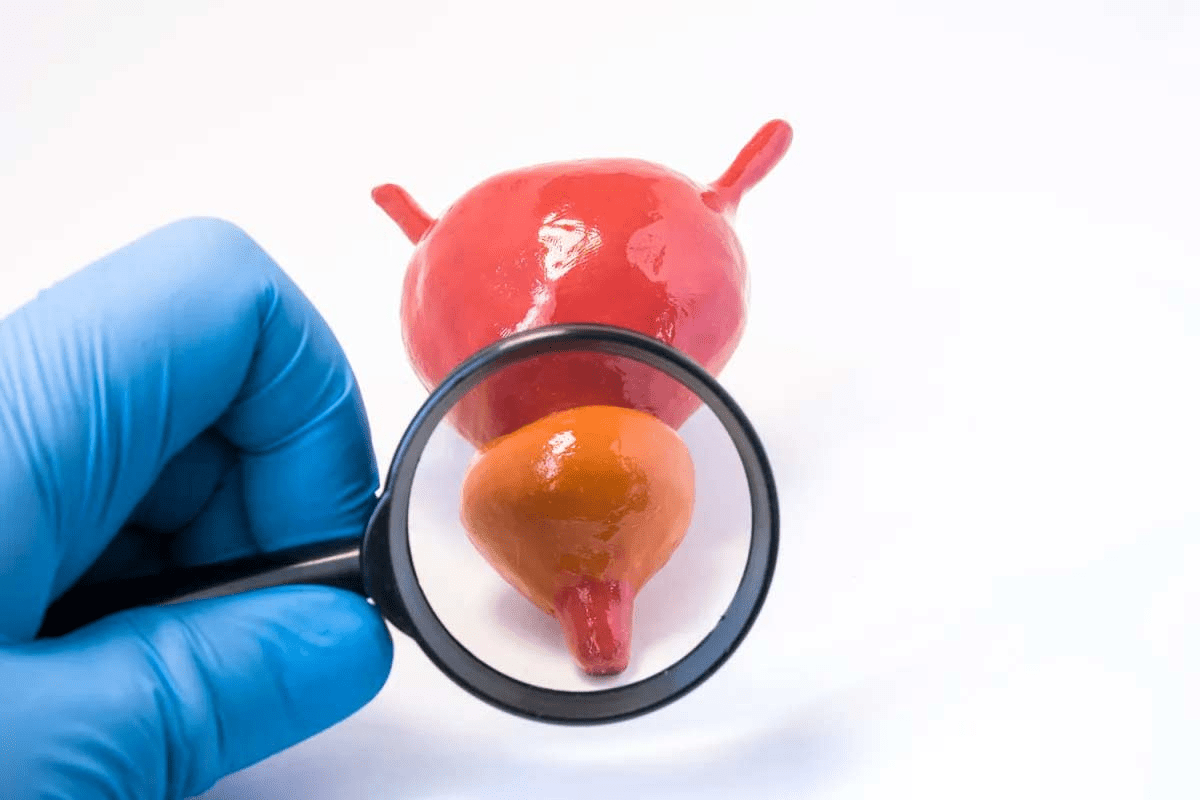
Last Updated on November 25, 2025 by
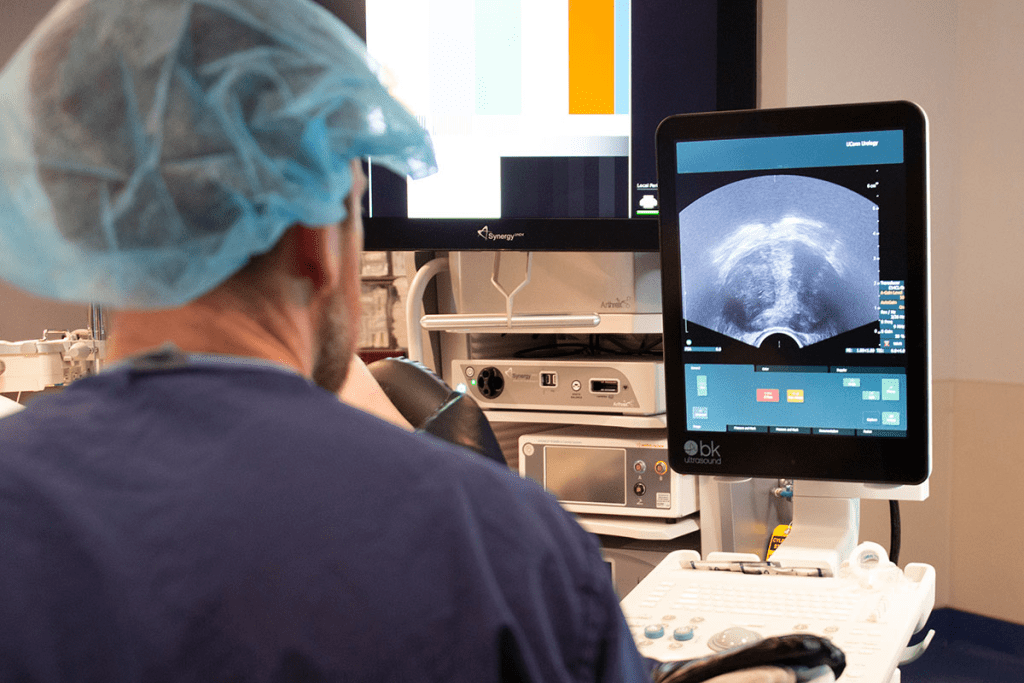
We use advanced imaging to diagnose and manage complex urological conditions. Magnetic Resonance Imaging (MRI) has changed the game in urology, mainly for prostate cancer diagnosis and staging.
Understanding the key urology MRI indications helps doctors decide when this imaging is most useful. MRI gives us detailed images of soft tissue, allowing us to pinpoint and understand prostate lesions better. It also helps in planning targeted biopsies, cutting down on unnecessary tests.
MRI is also key in seeing how far prostate cancer has spread, making it one of the most important urology MRI indications for accurate diagnosis and treatment planning. This makes MRI a vital tool in modern urology.
Key Takeaways
- Urologists use MRI to diagnose and stage prostate cancer accurately.
- MRI helps identify and characterize prostate lesions for targeted biopsies.
- It evaluates the extent of prostate cancer and detects its spread.
- MRI is also used to diagnose other urological conditions, such as infections and enlarged prostate.
- Advanced MRI scans reduce unnecessary procedures in urological care.
The Role of Advanced Imaging in Urological Diagnosis
Advanced imaging has changed urology a lot. It has made diagnosing and treating urological issues much better. Thanks to new imaging tools, we can now see and treat problems in new ways.
How MRI Enhances Diagnostic Accuracy
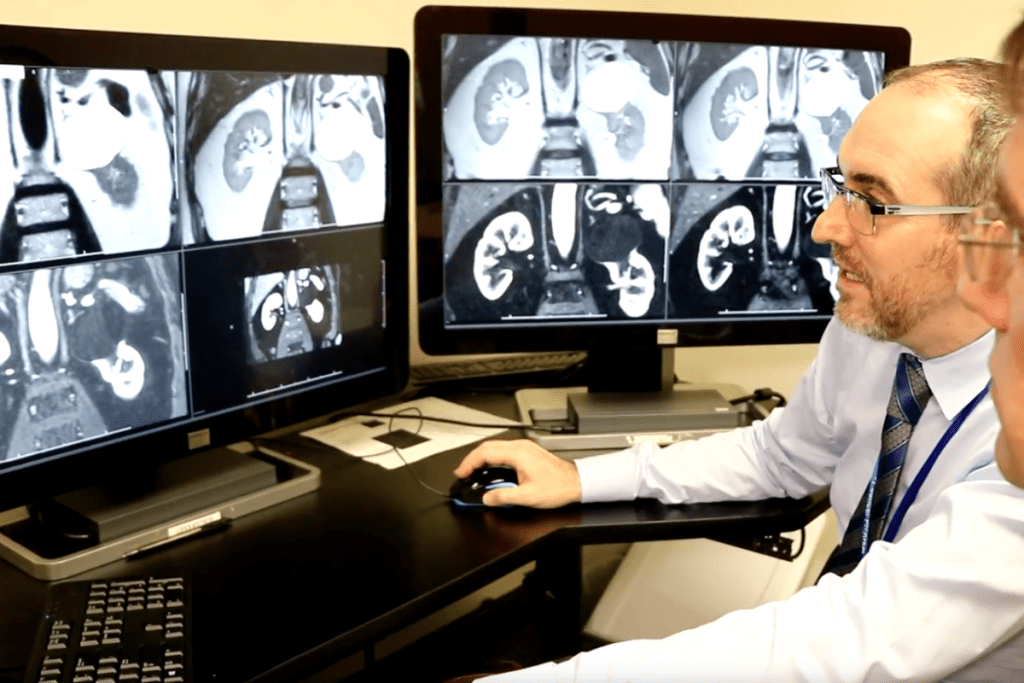
Magnetic Resonance Imaging (MRI) is key in urology. It gives high-resolution images that help spot and understand tumors. MRI’s superior soft tissue contrast lets doctors see different tissues clearly. This is very helpful in finding prostate cancer.
Using advanced MRI, like multi-parametric MRI (mpMRI), makes diagnosis better. mpMRI looks at the prostate in many ways. This helps find and stage prostate cancer more accurately.
The Evolution of Imaging Technology in Urology
Imaging in urology has grown a lot. MRI has gone from being just a tool to being a key part of urology. New MRI techniques help diagnose many urological issues, like kidney tumors and urinary tract problems.
As imaging gets better, so will diagnosing and treating patients. MRI and other advanced imaging will keep changing urology. They will help doctors give better, more tailored care.
Common Urology MRI Indications
MRI has changed how we diagnose and treat urology patients. It shows soft tissues in detail, making it key for many urology issues.
Prostate Cancer Detection and Staging
MRI is key in finding and staging prostate cancer. It spots tumors and shows how aggressive they are. This helps us choose the right treatment.
With MRI, we can better understand prostate cancer. We can tell if a tumor is likely to grow fast or slow.
Kidney Tumor Evaluation
MRI is also important for kidney tumors. It gives us details on the tumor’s size, where it is, and what it looks like. This info is key for planning treatment.
Urinary Tract Abnormalities Assessment
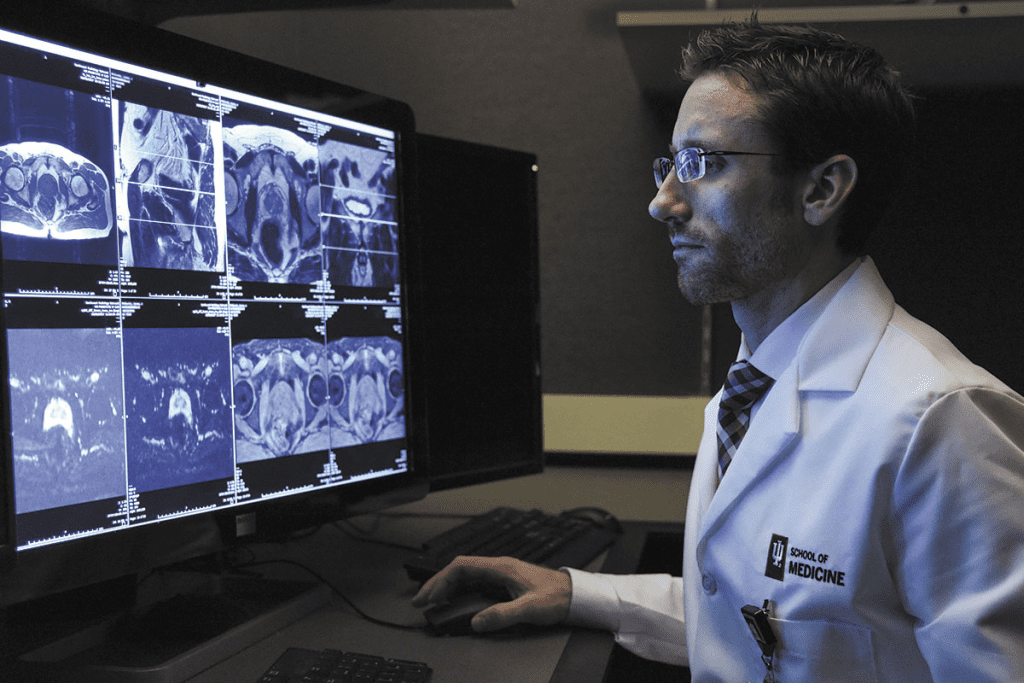
MRI is great for checking urinary tract problems. It shows the tract’s shape and finds issues like strictures or fistulas. MRI helps us understand the problem and plan treatment.
In short, MRI is a powerful tool in urology. It gives us clear images of soft tissues. This makes it essential for diagnosing and treating many urology issues.
Multi-parametric MRI: Revolutionizing Prostate Cancer Diagnosis
Multi-parametric MRI (mpMRI) has changed how we diagnose prostate cancer. It uses different MRI sequences to look at the prostate gland. This helps doctors find and understand lesions better.
Understanding mpMRI Technology
mpMRI combines several MRI types, like T1 and T2, and diffusion-weighted imaging (DWI). It gives a detailed look at the prostate’s structure and any problems. A study on the National Center for Biotechnology Information shows mpMRI is very good at finding prostate cancer.
Using mpMRI to check for prostate cancer has many benefits. It’s a non-invasive way to look at the prostate. This means fewer biopsies are needed. It also helps find serious prostate cancer, leading to better treatment plans.
How mpMRI Identifies and Characterizes Prostate Lesions
mpMRI finds and describes prostate lesions by showing their size, location, and how aggressive they are. It uses several MRI types to spot lesions that might not show up on one alone. This detailed look helps doctors make better diagnoses and plans.
mpMRI’s ability to describe lesions is key for targeted biopsies and treatments. It gives doctors a clear picture of what they’re dealing with. This helps decide the best treatment for prostate cancer patients.
The Remarkable Rise of MRI in Urological Practice
Urology has seen a big change with MRI. It has made diagnosing urological conditions better. MRI technology has improved a lot.
Statistical Trends: From 3.8% to 32.6% in Seven Years
Use of MRI for prostate cancer has jumped from 3.8% in 2012 to 32.6% in 2019. This big change shows MRI’s growing role in finding prostate cancer. MRI gives clear images for better biopsies and fewer surgeries.
“MRI has changed how we diagnose, making care more precise and personal,” says a top urologist. Many agree MRI’s clear images are key in urology.
Factors Driving Increased MRI Adoption
Several things have made MRI more popular in urology. It shows the prostate and nearby tissues well, helping diagnose and stage prostate cancer better. MRI-guided biopsies also mean fewer surgeries.
MRI’s benefits in urology are many. It shows soft tissues better, helping doctors tell cancer from normal tissue. Plus, MRI doesn’t use radiation, making it safer for patients needing many scans.
- Enhanced diagnostic accuracy
- Guided targeted biopsies
- Reduced unnecessary procedures
As MRI tech gets better, its role in urology will grow. MRI’s rise in urology shows it can help patients and make diagnosis easier.
Key Advantages of MRI in Urology
MRI is a top choice in urology for many reasons. It offers high-quality images, is safe, and very accurate. These benefits make MRI a go-to for many urological issues.
Superior Soft Tissue Contrast
MRI shines in urology because it shows soft tissues clearly. This helps spot lesions and tumors, even in hard-to-see areas. With MRI’s clear images, we can make more precise diagnoses. This is key for creating effective treatment plans.
Radiation-Free Imaging
MRI is great because it doesn’t use radiation. This is a big plus for patients needing many scans. Patients can feel safe knowing they’re not getting harmful radiation.
96% Negative Predictive Value in Prostate Cancer
MRI is very good at saying if prostate cancer is not there. This means it can help avoid unnecessary biopsies and lower patient stress. A negative MRI result means cancer is likely not there.
Detecting Cancer in Patients with Normal PSA Levels
Also, MRI can find prostate cancer even when PSA levels are normal. This is a big plus because it catches cancers that might be missed by usual tests. Early detection is key for good treatment, and MRI helps a lot.
Types of MRI Scans Used in Urological Diagnosis
Urologists use different MRI scans to get detailed info about the prostate and other urological areas. These advanced imaging methods have changed urology, helping us diagnose and treat better.
T1 and T2-Weighted Imaging
T1 and T2-weighted imaging are key MRI sequences in urology. T1-weighted images show great detail of anatomy. T2-weighted images are best for seeing the prostate gland and finding lesions. They give a full view of urological structures.
Diffusion-Weighted Imaging (DWI)
Diffusion-weighted imaging measures water molecule movement in tissues. In urology, it’s great for finding prostate cancer. It shows how water moves in tissues, helping spot aggressive tumors and plan biopsies.
Dynamic Contrast-Enhanced MRI
Dynamic contrast-enhanced MRI uses a contrast agent to see blood flow in urological areas. It’s good for checking tumor blood flow and finding cancerous lesions. By looking at how the contrast agent moves, we can understand lesion types better.
MR Spectroscopy
MR spectroscopy gives metabolic info about tissues. In urology, it helps check the chemical makeup of prostate lesions. It spots specific markers, helping us tell benign from malignant conditions for better diagnosis and treatment.
In summary, using MRI sequences like T1 and T2-weighted imaging, DWI, dynamic contrast-enhanced MRI, and MR spectroscopy lets us fully check urological conditions. Each method has its own benefits, and together they improve our ability to diagnose, leading to better patient care.
- T1 and T2-weighted imaging provide detailed anatomical information.
- DWI helps assess cellular density and detect aggressive tumors.
- Dynamic contrast-enhanced MRI evaluates blood flow and perfusion.
- MR spectroscopy offers insights into tissue metabolism.
MRI vs. CT Scans in Urologic Diagnosis
MRI and CT scans are used in urology for different reasons. They are chosen based on what the patient needs. Let’s look at what makes each one good and what they can’t do as well.
Comparative Strengths and Limitations
MRI gives superior soft tissue contrast compared to CT scans. This makes MRI great for finding prostate cancer and checking the urinary tract. CT scans, on the other hand, are faster and more widely available. They’re good in emergencies or when MRI can’t be used.
MRI is better for soft tissue images without radiation. This is good for patients needing many scans or who are sensitive to radiation. But, MRI is pricier and not as common as CT scans everywhere.
When CT May Be Preferred Over MRI
CT scans are better in emergencies because they’re quick. They’re also used when MRI can’t be done, like with metal implants or pacemakers.
CT scans are great for finding calcifications and certain kidney stones. They’re also better for guiding biopsies and interventions.
Cost and Accessibility Considerations
The cost and where you can get them also matter. MRI is pricier than CT scans, affecting healthcare choices. MRI machines are rarer in some places, making MRI harder to get.
When picking between MRI and CT scans, we must think about cost and where they are. By understanding what each offers, doctors can choose the best for their patients.
Conclusion: The Future of MRI in Urological Care
As urological care evolves, MRI will play a bigger role in diagnosis and treatment planning. Its growing use in urology shows its value, mainly in like prostate cancer detection and staging.
Advances in MRI technology, like multi-parametric MRI (mpMRI), will make it even more important in urology. MRI will likely become a key part of diagnosing and managing urological issues, including prostate cancer. has already shown great promise.
MRI offers detailed images, helps guide biopsies, and checks how well treatments work. It’s a vital tool in urological care. As MRI technology improves, it will help even more, leading to better patient outcomes.
FAQ
What is the role of MRI in urological diagnosis?
MRI is key in urology for its detailed images of soft tissues. It helps spot and understand lesions and tumors. It also guides biopsies and treatment plans.
When is a urology MRI needed?
You might need a urology MRI for prostate cancer, kidney tumors, or urinary tract issues. It gives vital info for diagnosis and treatment.
How does MRI help in prostate cancer diagnosis?
MRI, like mpMRI, finds prostate lesions and checks their danger. It helps plan biopsies, which is key for accurate diagnosis and treatment.
What are the advantages of using MRI in urology?
MRI shines with its clear soft tissue images and no radiation. It’s also very good at ruling out prostate cancer. This makes it a top tool in urology.
What types of MRI scans are used in urological diagnosis?
Urology uses many MRI scans. These include T1 and T2, diffusion-weighted, dynamic contrast-enhanced, and MR spectroscopy. Each gives unique insights for a full check-up.
How does MRI compare to CT scans in urologic diagnosis?
MRI beats CT for soft tissue detail, perfect for prostate cancer and urinary issues. CT is quicker and cheaper but might not be as detailed.
What is the future of MRI in urological care?
MRI’s role in urology will grow with new tech. It will help more with prostate cancer diagnosis and treatment.
What is multi-parametric MRI (mpMRI) and how does it work?
mpMRI uses many MRI types for a full prostate check. It spots and sorts lesions, guiding biopsies and treatment plans.
Why has MRI adoption increased in urological practice?
MRI’s detailed images and ability to guide biopsies have made it more popular. It helps avoid unnecessary tests, improving diagnosis and care.
References
- Johnson, L. M., et al. (2014). Multiparametric MRI in prostate cancer management. Radiology / PMC. https://pmc.ncbi.nlm.nih.gov/articles/PMC6330110/
- Czarniecki, M., et al. (2016). Prostate MRI “ an update for the referring urologist. PMC. https://pmc.ncbi.nlm.nih.gov/articles/PMC4986294/
- Kasivisvanathan, V., et al. (2018). MRI-targeted or standard biopsy for prostate-cancer diagnosis. New England Journal of Medicine. https://www.nejm.org/doi/full/10.1056/NEJMoa1801993
- Hamm, C. A., et al. (2025). Oncological safety of MRI-informed biopsy decision: outcomes over 3 years. JAMA Oncology. https://jamanetwork.com/journals/jamaoncology/fullarticle/2827887