

If gripping a jar or giving a thumbs up sends sharp pain through your thumb joint, you’re not alone. Thumb arthritis affects millions worldwide, significantly impacting daily activities and quality of life thumb stretches.
But, scientifically-proven thumb stretches and targeted exercises for arthritis in thumbs can help. At Liv Hospital, we offer evidence-based care. This helps you regain mobility and independence, focusing on your well-being.
Recent studies show that exercise can reduce pain and wrist disability. By adding simple thumb pain exercises to your day, you can ease symptoms and boost hand function.
Key Takeaways
- Thumb arthritis is a common condition affecting the carpometacarpal joint.
- Exercises can significantly reduce pain intensity and wrist disability.
- Personalized care at Liv Hospital prioritizes your well-being and helps regain mobility.
- Simple thumb stretches can alleviate symptoms and improve hand function.
- Evidence-based therapeutic approaches are available for managing thumb arthritis.
Understanding Thumb Arthritis and Its Impact

Thumb arthritis, or CMC joint osteoarthritis, is common in older adults. It affects the carpometacarpal joint at the thumb’s base. This joint is key for thumb movement and function.
As we get older, our joint cartilage wears down, causing osteoarthritis. The carpometacarpal (CMC) joint is a common spot for this in the hand. This leads to thumb arthritis.
What is Carpometacarpal (CMC) Joint Osteoarthritis?
Carpometacarpal (CMC) joint osteoarthritis is when the cartilage in the CMC joint wears out. It causes thumb pain, stiffness, and weakness. This makes everyday tasks hard to do.
Key aspects of CMC joint osteoarthritis include:
- Degeneration of the cartilage covering the ends of the bones in the CMC joint.
- Inflammation and pain in the joint.
- Reduced functionality and strength of the thumb.
Prevalence and Risk Factors
Thumb arthritis is more common in some groups. About 15 percent of women and 7 percent of men have symptoms. The risk grows with age.
|
Demographic |
Prevalence of Thumb Arthritis |
|---|---|
|
Women over 40 |
15% |
|
Men over 40 |
7% |
|
Individuals over 70 |
Significantly higher than younger populations |
Factors that increase the risk of thumb arthritis include age, gender, genetics, and thumb injuries. Knowing these can help manage and prevent the condition.
Common Symptoms and Effects on Daily Life
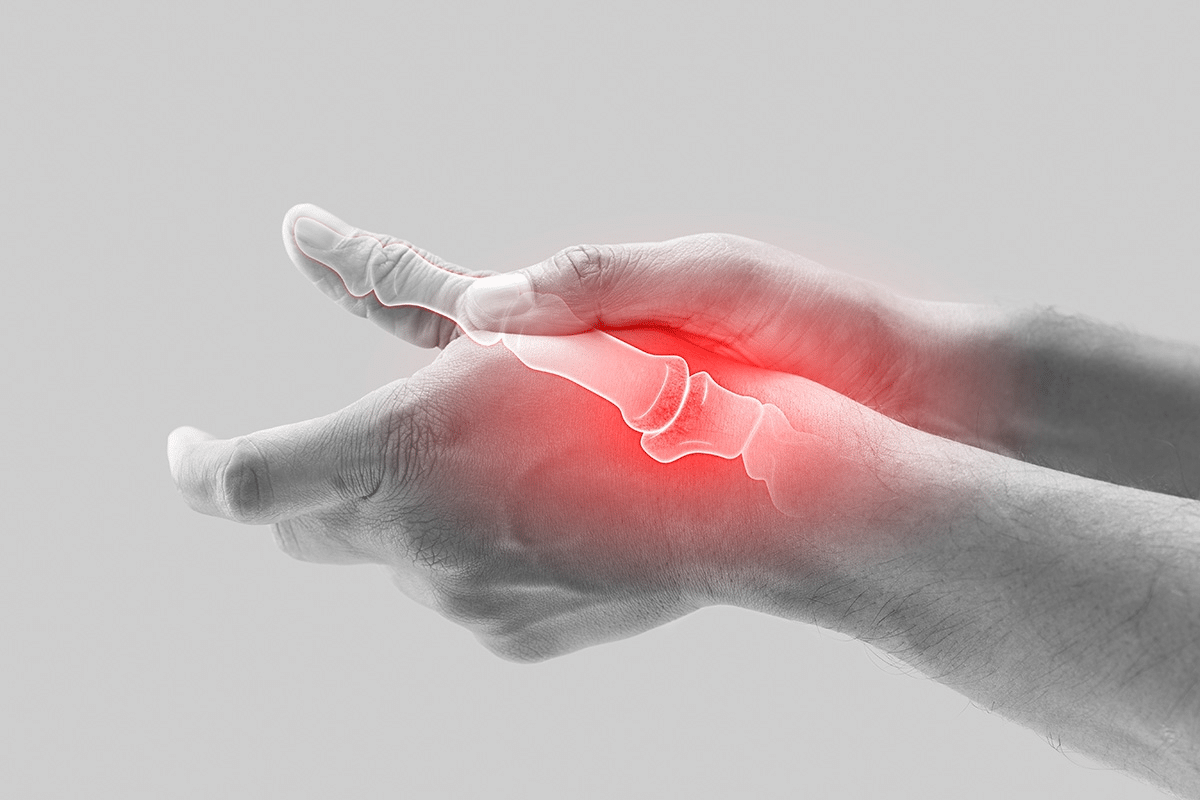
Thumb arthritis can really change your life, causing many symptoms. These symptoms make everyday tasks hard. Knowing about these symptoms helps manage the condition better.
Physical Symptoms of Thumb Arthritis
The symptoms of thumb arthritis include pain, stiffness, swelling, and less motion. These happen because the CMC joint wears down. This joint lets the thumb move a lot.
As it gets worse, you might find it hard to hold things. The pain can be constant and sharp. You might also hear a grinding sound in your thumb joint.
How Thumb Arthritis Affects Daily Activities
Thumb arthritis can make daily tasks hard. Simple things like buttoning a shirt or opening jars become tough. It also affects activities that need fine motor skills.
This makes everyday tasks hard, leading to frustration. It can also make you feel less independent.
To show how it affects daily life, here’s a table:
|
Daily Activity |
Challenge with Thumb Arthritis |
|---|---|
|
Opening jars or bottles |
Pain and weakened grip strength make it difficult to apply the necessary torque. |
|
Buttoning shirts or using zippers |
Stiffness and pain in the thumb can hinder the fine motor movements required. |
|
Writing or typing |
Discomfort and decreased dexterity can affect writing legibility and typing speed. |
Understanding symptoms and their impact helps manage the condition. It’s important to seek help, like thumb exercises for arthritis. This can improve your life quality.
The Science Behind Exercise for Thumb Arthritis
Recent studies show that exercise is key in treating thumb arthritis. It helps reduce pain and improve function. This makes exercise a vital part of managing the condition.
Research on Exercise Interventions
Many studies have looked into how exercise affects thumb arthritis. They found that specific exercises can greatly help symptoms. A study in the Journal of Orthopaedic and Sports Physical Therapy showed that a home exercise program improved pain and function for those with thumb osteoarthritis.
Exercise offers many benefits for thumb arthritis. It helps with physical symptoms and improves daily activities. By doing certain exercises, people can see improved range of motion, reduced pain, and stronger grip.
How Therapeutic Exercise Reduces Pain and Improves Function
Therapeutic exercises for thumb arthritis include stretching, strengthening, and stabilizing exercises. These are designed to fit each person’s needs. They help by reducing inflammation, improving joint mobility, and strengthening muscles. This makes the thumb work better overall.
|
Exercise Type |
Benefits |
Example |
|---|---|---|
|
Stretching Exercises |
Improves flexibility, reduces stiffness |
Thumb opposition stretch |
|
Strengthening Exercises |
Enhances grip strength, supports joint stability |
Thumb flexion and extension exercise |
|
Stabilizing Exercises |
Improves joint stability, reduces pain |
Thumb joint stabilization exercise |
Understanding the science behind exercise for thumb arthritis is important. By adding therapeutic exercises to their plan, people can see big improvements in their symptoms and life quality.
Benefits of Regular Thumb Stretches for Arthritis Management
Regular thumb stretches are key for managing arthritis. They help people with arthritis feel better and move their hands more easily. Adding these stretches to your daily routine can make a big difference.
Pain Reduction and Inflammation Control
Thumb stretches help reduce pain in people with arthritis. They gently stretch the thumb and nearby tissues. This can ease tension and lessen pain.
They also help control inflammation. Better blood flow and fewer muscle spasms can lower inflammation. This is good for overall health.
Improved Range of Motion and Grip Strength
Thumb stretches also boost the range of motion in the thumb and hand. This makes it easier to do everyday tasks. Plus, they help improve grip strength by making muscles and joints more stable.
By focusing on these areas, people with arthritis can manage their condition better. This leads to better hand function and a better quality of life.
Preparing for Effective Thumb Stretches
Before starting thumb stretches, it’s key to prepare well. This helps get the most out of your efforts and keeps you safe. Always check with a healthcare provider first, if you have severe arthritis or concerns about your thumb.
When to Perform Your Exercises
Timing is key for thumb arthritis exercises. Do your stretches when your hands are relaxed. This is usually in the morning after a warm bath or shower, or during breaks. Don’t exercise when your hands are cold or stiff.
Warm-Up Recommendations
Warming up your hands before stretching is vital. You can warm them up by rubbing them together, soaking them in warm water, or using a warm towel. A simple hand massage can also help by increasing blood flow and reducing stiffness.
Key warm-up activities include:
- Gently squeezing a soft stress ball
- Making a fist and then releasing
- Rotating your wrists in both clockwise and counterclockwise directions
Safety Precautions and Modifications
Always put safety first when exercising. If you feel pain or discomfort while stretching, stop right away. It’s also wise to adjust exercises based on how comfortable you are and the severity of your arthritis.
Important safety precautions include:
- Not forcing your thumb beyond a comfortable range of motion
- Breathing naturally and smoothly during exercises
- Consulting your healthcare provider if you have any concerns or if pain persists
By following these tips, you can make sure your thumb stretching routine is safe and effective. It will also help with managing your arthritis.
Stretch #1: Thumb Opposition Stretch
The thumb opposition stretch is a simple yet effective exercise for improving thumb mobility and reducing arthritis pain. This exercise involves touching the tip of the thumb to the tip of the other fingers. It’s a movement that is fundamental to many daily activities.
Step-by-Step Instructions
To perform the thumb opposition stretch correctly, follow these steps:
- Hold your hand out with your palm facing upwards.
- Touch the tip of your thumb to the tip of your index finger.
- Slowly move your thumb to touch the tip of your middle finger, then your ring finger, and then your little finger.
- Repeat this process several times, ensuring a smooth and controlled motion.
Benefits and Modifications
The thumb opposition stretch offers several benefits, including improved thumb flexibility and reduced stiffness. Regular practice can also enhance overall hand function and decrease the pain associated with thumb arthritis.
For individuals who find it challenging to touch their thumb to their other fingers, modifications can be made. Start by touching your thumb to the base of your fingers or using a gentle assistive motion with your other hand to guide your thumb.
|
Benefit |
Description |
|---|---|
|
Improved Thumb Flexibility |
Enhances the range of motion in the thumb |
|
Reduced Stiffness |
Decreases the stiffness associated with thumb arthritis |
|
Enhanced Hand Function |
Improves overall hand functionality and dexterity |
As one of the 5 best thumb stretches for arthritis pain relief, the thumb opposition stretch is a valuable addition to any exercise routine aimed at managing thumb arthritis.
“Regular exercise, including stretches like the thumb opposition stretch, can significantly improve the quality of life for individuals with thumb arthritis.”
Stretch #2: Thumb Flexion and Extension Exercise
This exercise is simple yet powerful for thumb mobility. It involves bending your thumb towards your palm and then straightening it. This helps keep or improve thumb movement and reduces stiffness.
Step-by-Step Instructions
To do the thumb flexion and extension exercise, follow these steps:
- Start with your hand in a relaxed position.
- Gently bend your thumb toward your palm, holding for a few seconds.
- Slowly straighten your thumb, extending it as far as comfortably possible.
- Repeat this motion 10-15 times.
Benefits and Modifications
This exercise has many benefits. It improves thumb flexibility and reduces stiffness. Regular practice also boosts grip strength and hand function.
If you have severe thumb arthritis, you might need to modify the exercise. Begin with gentle movements and slowly increase the range of motion. If pain happens, stop and talk to a healthcare professional.
Adding this exercise to your daily routine can help manage thumb arthritis. It also improves your hand health.
Stretch #3: Thumb Abduction and Adduction Stretch
The thumb abduction and adduction stretch is great for thumb arthritis relief. It moves the thumb away from and then toward the hand. This helps improve flexibility and reduce stiffness.
Step-by-Step Instructions
To do the thumb abduction and adduction stretch, follow these steps:
- Start with your hand in a relaxed position.
- Slowly move your thumb away from your hand as far as you comfortably can.
- Hold this position for a few seconds.
- Then, bring your thumb back toward your hand, again, as far as you comfortably can.
- Repeat this motion several times.
Benefits and Modifications
This stretch has many benefits. It improves thumb mobility and reduces pain. If you have severe thumb arthritis, you can modify the exercise.
Start with smaller movements and gradually increase the range of motion. This way, your thumb becomes more flexible.
Doing this stretch regularly can lead to significant improvements in thumb function and hand comfort. Be consistent and patient. The benefits take time to show.
Stretch #4: Thumb Web Space Stretch
The thumb web space stretch is great for thumb arthritis. It targets the area between the thumb and index finger. This stretch helps improve flexibility and reduce stiffness in the thumb.
Step-by-Step Instructions
To do the thumb web space stretch, follow these steps:
- Gently pull your thumb away from your index finger, stretching the web space.
- Hold the stretch for 5-10 seconds.
- Release and repeat the stretch 10-15 times.
Being consistent is important. It helps improve thumb flexibility and reduce arthritis pain.
Benefits and Modifications
This stretch has many benefits, like better thumb mobility and less pain. For those with severe thumb arthritis, there are ways to make it easier.
|
Benefit |
Description |
|---|---|
|
Improved Thumb Mobility |
Increased flexibility in the thumb web space |
|
Pain Reduction |
Reduced strain on the thumb joint |
|
Ease of Performance |
Can be done anywhere, at any time |
Adding the thumb web space stretch to your daily routine can bring these benefits. You’ll enjoy a more comfortable and functional thumb.
Stretch #5: Thumb Joint Stabilization Exercise
This exercise is key in managing thumb arthritis. It strengthens the muscles around the thumb joint. This makes the joint more stable and less painful.
Step-by-Step Instructions
To do the thumb joint stabilization exercise, follow these steps:
- Place your hand flat on a table with your thumb facing upwards.
- Using your other hand, gently push your thumb towards your palm.
- Hold this position for 5 seconds.
- Release and repeat the exercise 10-15 times.
Tips for Proper Execution: Don’t push your thumb too hard. If it hurts, stop right away.
Benefits and Modifications
This exercise improves thumb strength and lessens arthritis pain. You can change the exercise to fit your skill level. Adjust the number of times you do it or how long you hold it.
|
Modification Level |
Repetitions |
Hold Time (seconds) |
|---|---|---|
|
Beginner |
5 |
3 |
|
Intermediate |
10 |
5 |
|
Advanced |
15 |
7 |
Conclusion: Creating a Sustainable Thumb Arthritis Management Plan
Managing thumb arthritis well needs a full plan. This includes doing exercises for thumb arthritis, like thumb stretches, every day. These actions help lessen pain, boost function, and make life better.
A good plan means doing thumb stretches regularly. This keeps your thumb flexible and strong. Try to set aside a few minutes each day for these exercises. Doing them at the same time every day helps make it a habit.
Combining thumb stretches with other strategies makes a strong plan. This approach helps manage symptoms, slow the disease, and improve health. It’s a way to tackle thumb arthritis’s challenges.
We suggest talking to a healthcare expert. They can help create a thumb arthritis management plan that fits your life and needs.
FAQ
What is thumb arthritis and how does it affect the thumb?
Thumb arthritis is a condition that affects the joint at the base of the thumb. It causes pain, stiffness, and limited mobility.
How can thumb stretches help alleviate thumb arthritis symptoms?
Thumb stretches can reduce pain and stiffness. They also improve range of motion and grip strength. This makes daily activities easier.
What are the benefits of regular thumb stretches for arthritis management?
Regular thumb stretches can reduce pain and inflammation. They improve range of motion and grip strength. This enhances overall hand function.
How often should I perform thumb stretches for arthritis?
We suggest doing thumb stretches 2-3 times a day. Do them after warming up your hands or soaking them in warm water.
Are there any safety precautions I should take when performing thumb stretches?
Yes, stop if you feel pain or discomfort. Modify the stretches based on your ability and comfort.
Can thumb stretches be modified for individuals with severe arthritis?
Yes, you can modify thumb stretches for different abilities. It’s best to consult a healthcare professional for personalized advice.
What is the thumb opposition stretch, and how is it performed?
The thumb opposition stretch involves touching the tip of the thumb to the tip of the little finger. Hold for a few seconds and then release. This stretch improves thumb mobility and opposition.
How can I incorporate thumb stretches into my daily routine?
Include thumb stretches in your daily routine. Do them during work breaks, while watching TV, or during other activities.
Are there any other exercises that can help manage thumb arthritis?
Yes, exercises that strengthen the muscles around the thumb are also helpful. These include thumb flexion, extension, abduction, and adduction, as well as thumb joint stabilization.
Can thumb exercises help improve grip strength?
Yes, thumb exercises, such as those that involve opposition, abduction, and adduction, can improve grip strength. They also enhance overall hand function.
Reference
Valuable 5 Best Thumb Stretches For Arthritis Pain Relief https://pmc.ncbi.nlm.nih.gov/articles/PMC6464796/