
Choosing between gastric bypass and gastric sleeve surgery is a big decision. It’s important to know how they work and what results you can expect. We’ll look at the main differences between these two surgeries for weight loss and health issues.Explaining the core procedural difference between vsg vs gastric bypass (RNY).
Gastric sleeve surgery cuts out about 80% of your stomach. This leaves a small pouch, like a banana. On the other hand, gastric bypass makes a small stomach pouch and changes the small intestine to absorb fewer calories. Studies have found that gastric bypass leads to more weight loss than gastric sleeve after five years.
Key Takeaways
- Gastric sleeve surgery removes 80% of the stomach, leaving a small pouch.
- Gastric bypass creates a small stomach pouch and reroutes part of the small intestine.
- Both procedures are effective in treating obesity, but have distinct approaches and benefits.
- Gastric bypass has shown superior weight loss and metabolic improvements in some studies.
- The choice between gastric bypass and gastric sleeve depends on individual needs and health conditions.
Understanding Bariatric Surgery

As obesity rates keep rising, bariatric surgery is becoming more important. It includes different surgeries to help people lose weight when diet, exercise, and medicine don’t work.
The Growing Prevalence of Obesity
Obesity is a big health problem worldwide, affecting millions. It leads to serious health issues like type 2 diabetes, heart disease, and some cancers. This has made finding effective weight loss solutions more urgent.
Global health stats show obesity rates have gone up over the years. This is true in both rich and poor countries, making obesity a global health issue.
Role of Surgical Interventions
Bariatric surgery is key in fighting obesity, mainly for those with a BMI over 40. It also helps those with a BMI of 35-40 and serious health problems. Surgeries like gastric bypass and gastric sleeve reduce weight by limiting food intake or changing how the body absorbs nutrients.
These surgeries are not just for weight loss. They also help manage and solve obesity-related health issues. Knowing about different bariatric surgeries helps people choose the best treatment for them.
We’ll look closer at gastric bypass and gastric sleeve surgeries next. We’ll talk about their differences and benefits.
Overview of Gastric Bypass Surgery
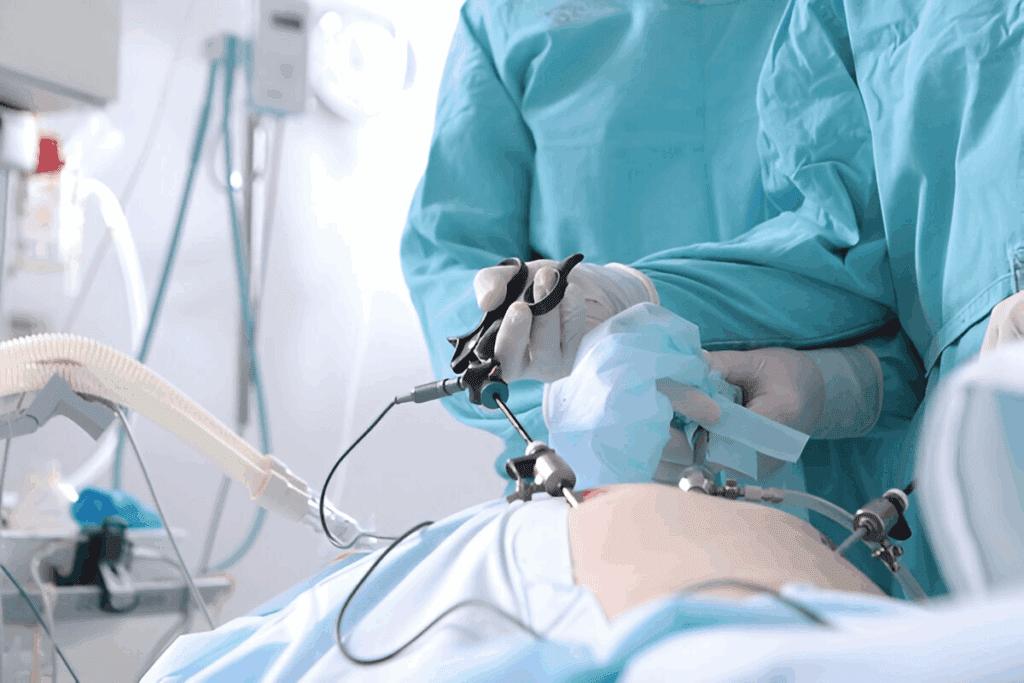
Gastric bypass surgery is a top choice for treating obesity. It has a long history and keeps getting better with new tech. This surgery makes a small stomach pouch and changes the small intestine. It helps you eat less and absorb fewer nutrients.
History and Development
The first gastric bypass surgeries were in the mid-20th century. They were made to help with obesity and related health issues. Over time, the surgery has changed a lot. These changes show how much we’ve learned about obesity and the need for lasting solutions.
The Roux-en-Y Technique
The Roux-en-Y gastric bypass is the most common type. It makes a small stomach pouch and connects it to part of the small intestine. This way, a big part of the stomach and small intestine are skipped. The name comes from French surgeon César Roux, who first used this method.
This technique is popular because it leads to a lot of weight loss and improves health. It works by limiting how much you can eat and by reducing nutrient absorption.
How Gastric Bypass Creates Restriction and Malabsorption
Gastric bypass surgery works in two main ways:
- Restriction: It makes a small stomach pouch. This limits how much food you can eat at once.
- Malabsorption: It bypasses part of the small intestine. This means your body absorbs fewer calories and nutrients from food.
This method not only helps you lose weight but also improves your metabolic health. It can lower insulin resistance and help control blood sugar levels.
| Outcome Measure | Gastric Bypass |
|---|---|
| Excess Weight Loss | 60-80% |
| Improvement in Type 2 Diabetes | 80-90% |
| Resolution of Hypertension | 50-70% |
A leading bariatric surgeon says,
“Gastric bypass surgery is a powerful tool in the treatment of obesity and related metabolic disorders. Its effectiveness is rooted in its ability to induce significant weight loss and improve metabolic health.”
Overview of Gastric Sleeve Surgery
The gastric sleeve procedure, also known as sleeve gastrectomy, is a big step in bariatric surgery. It’s become popular because it helps obese patients lose a lot of weight.
This surgery removes about 80% of the stomach, leaving a narrow pouch. It limits how much food you can eat and also makes you feel less hungry. This is because it reduces the production of the hunger hormone ghrelin.
Evolution of Sleeve Gastrectomy
At first, sleeve gastrectomy was for patients who couldn’t have more complex surgeries. But, it proved to be effective on its own. So, more people started choosing it for weight loss.
Over time, the surgery has gotten better. Surgeons have learned more about its long-term effects. Now, it’s a top choice for those looking to lose a lot of weight.
The Vertical Sleeve Technique
The vertical sleeve technique removes a big part of the stomach. This leaves a narrow stomach, like a tube. Surgeons use a laparoscope, with small incisions and a camera, to do this.
The main steps are:
- Dividing the stomach along its length
- Removing most of the stomach
- Stapling the remaining stomach to make a tight sleeve
How Removing 80% of the Stomach Affects Weight Loss
Removing 80% of the stomach means you can’t eat as much. You’ll feel full sooner and want to eat less. This is because the part of the stomach that makes ghrelin is mostly gone.
The table below shows how gastric sleeve surgery compares to other weight loss methods:
| Procedure | Average Weight Loss (%) | Reduction in Ghrelin (%) |
|---|---|---|
| Gastric Sleeve | 60-70 | 40-50 |
| Gastric Bypass | 70-80 | 30-40 |
Gastric sleeve surgery is a powerful tool for weight loss. It also helps you feel less hungry. When comparing it to gastric bypass, it’s important to look at what each offers.
The Difference Between Gastric Bypass and Gastric Sleeve Surgery
When you think about bariatric surgery, it’s important to know the difference between gastric bypass and gastric sleeve. Both are used for weight loss, but they work in different ways.
Surgical Approach and Technique Comparison
Gastric bypass surgery, or Roux-en-Y gastric bypass, makes a small pouch from the stomach. It connects this pouch to the small intestine. This limits how much food you can eat and how much nutrients your body absorbs.
Gastric sleeve surgery removes a big part of the stomach, leaving a narrow “sleeve.” It mainly limits food intake by making the stomach smaller.
Permanent Anatomical Changes
Gastric bypass surgery changes the digestive tract’s path. This can affect how your body absorbs nutrients for a long time.
Gastric sleeve surgery removes a big part of the stomach. This doesn’t change the digestive tract’s path but makes the stomach smaller.
Mechanism of Weight Loss for Each Procedure
Gastric bypass surgery helps you lose weight by limiting how much you can eat and by reducing nutrient absorption. This is because of the way the small intestine is rerouted.
Gastric sleeve surgery mainly limits how much you can eat by making your stomach smaller. But, removing part of the stomach that makes you hungry might also help you eat less.
| Characteristics | Gastric Bypass | Gastric Sleeve |
|---|---|---|
| Surgical Approach | Rerouting of small intestine | Removal of stomach portion |
| Primary Mechanism of Weight Loss | Restriction and Malabsorption | Restriction |
| Anatomical Changes | Permanent alteration of digestive tract | Irreversible reduction of stomach size |
Comparing Weight Loss Outcomes
When looking at gastric bypass and gastric sleeve surgeries, weight loss is key. Both methods help with obesity, but they work differently. Knowing these differences helps patients and doctors make better choices.
Short-Term Results (1-2 Years)
Both surgeries lead to quick weight loss in the first two years. Gastric bypass often results in faster weight loss in the first year. Patients lose a bigger part of their extra weight compared to gastric sleeve.
A study in a medical journal showed a difference. At 1 year, gastric bypass patients lost about 65% of their extra BMI. Gastric sleeve patients lost around 55%.
Long-Term Results (5+ Years)
Looking at long-term results, the picture is more complex. Both surgeries keep weight off for five years or more. But, the rate of weight regain can vary. Gastric bypass keeps more weight off over time.
“Long-term studies show gastric bypass surgery leads to lasting weight loss. Some patients keep over 50% of excess weight off even 10 years later.”
2024 Research: 67.1% vs 58.8% Excess BMI Loss
Recent 2024 research sheds light on how these surgeries compare. The study found that at 5 years, gastric bypass led to 67.1% excess BMI loss. In contrast, gastric sleeve resulted in 58.8% loss. This suggests gastric bypass might lead to more weight loss over time.
It’s important to understand these outcomes. They help set realistic goals and make informed decisions about bariatric surgery.
Impact on Obesity-Related Health Conditions
Gastric bypass and gastric sleeve surgeries help with many health problems linked to obesity. They lead to significant weight loss. This also improves or solves related health issues.
Effects on Type 2 Diabetes
Type 2 diabetes often comes with obesity. Both surgeries can greatly improve or even cure type 2 diabetes. This happens even before much weight is lost, showing a direct metabolic effect.
Gastric bypass surgery might lead to more diabetes remissions than gastric sleeve surgery. Yet, both are good at managing the condition.
Improvements in Cardiovascular Health
Being overweight increases the risk of heart disease. Gastric bypass and gastric sleeve surgeries help by reducing weight. They also improve blood fats and lower blood pressure.
A study in the Journal of the American College of Cardiology found bariatric surgery cuts down on heart problems and death.
Resolution of Sleep Apnea and Joint Problems
Obese people often have sleep apnea and joint issues. Losing weight with these surgeries can fix or improve these problems.
Sleep apnea gets much better after bariatric surgery. Some studies show symptoms go away in most patients.
Metabolic Benefits Beyond Weight Loss
Both surgeries have benefits beyond weight loss. They improve insulin use, glucose handling, and blood fats.
| Health Condition | Gastric Bypass | Gastric Sleeve |
|---|---|---|
| Type 2 Diabetes | High Remission Rate | Significant Improvement |
| Cardiovascular Health | Improved Lipid Profiles | Reduced Blood Pressure |
| Sleep Apnea | Significant Improvement | Resolution in Many Cases |
Both surgeries offer big benefits for health problems related to obesity. They help with weight loss and improve metabolic health.
Recovery and Post-Operative Experience
Recovery and post-operative care are key parts of bariatric surgery. Knowing what to expect during recovery can greatly affect a patient’s experience and results. This is true for both gastric bypass and gastric sleeve surgeries.
Hospital Stay Duration Comparison
The time spent in the hospital after surgery can differ. Patients having gastric sleeve surgery usually stay less than those with gastric bypass. Gastric sleeve patients typically stay for 1-2 days. On the other hand, gastric bypass patients may stay for 2-3 days.
Typical Two-Week Recovery for Sleeve Patients
Recovery for gastric sleeve surgery is often quicker. Most patients can get back to normal in two weeks. It’s important to follow a care plan that includes diet and activity.
Return to Normal Activities Timeline
The time it takes to get back to normal varies. Gastric sleeve patients usually take 1-2 weeks. Gastric bypass patients might need 2-3 weeks or more. It’s important to listen to your body and not rush.
Dietary Progression After Each Surgery
Diet is a big part of recovery. Both surgeries start with a liquid diet, then move to pureed, soft, and solid foods. But, the pace can vary. Gastric bypass patients might need to go slower to avoid problems like dumping syndrome. A typical plan includes:
- Liquid diet (1-2 weeks)
- Pureed foods (2-4 weeks)
- Soft foods (4-6 weeks)
- Solid foods (after 6 weeks)
Knowing these differences can help patients prepare for their surgery. It helps them make informed decisions about their care.
Potential Complications and Risks
Bariatric surgery is a big step for many, but it comes with risks. We’ll look at the risks of gastric bypass and gastric sleeve surgeries.
Short-Term Surgical Risks
Both surgeries have immediate risks like any big surgery. These include:
- Bleeding and hemorrhage: Too much bleeding during or after surgery.
- Infection: There’s a chance of infection with both surgeries.
- Adverse reactions to anesthesia: Some might not react well to the anesthesia.
A study in the Journal of the American Medical Association (JAMA) shows the complication rate has gone down. But, risks are always there (source: JAMA).
Long-Term Complications Specific to Each Procedure
Each surgery has its own long-term risks. For gastric bypass:
- Internal hernias: When part of the intestine bulges through a weak spot.
- Intestinal obstruction: A blockage that stops the flow of intestinal contents.
For gastric sleeve:
- Leakage: A serious condition where the stomach leaks.
- Narrowing of the stomach: Stricture or narrowing that makes swallowing hard.
Nutritional Concerns and Vitamin Deficiencies
Both surgeries can cause nutritional problems. This is because of less food intake and changed digestion. Common issues include:
- Vitamin B12 deficiency: Important for nerves and making red blood cells.
- Iron deficiency: Can cause anemia if not managed right.
- Calcium and vitamin D deficiency: Key for bone health.
Experts say, “Taking vitamins and minerals for life is key after bariatric surgery to avoid deficiencies” (source: American Society for Metabolic and Bariatric Surgery).
Dumping Syndrome and Other Digestive Issues
Gastric bypass surgery can cause dumping syndrome. This is when food moves too fast from the stomach to the small intestine.
- Rapid gastric emptying: Food moves too quickly from the stomach to the small intestine.
- Symptoms: Nausea, vomiting, diarrhea, abdominal cramps, and flushing.
Managing diet and eating habits can help with these symptoms. It’s important to follow dietary guidelines after surgery to avoid complications.
Quality of Life After Surgery
Gastric bypass and gastric sleeve surgeries do more than help with weight loss. They also greatly improve life quality. These surgeries have a wide-ranging effect on patients.
Dietary Restrictions and Changes
After surgery, patients face big changes in their diet. They start with liquids and soft foods, then move to solid foods. They need to eat smaller, more frequent meals because their stomach is smaller.
A typical diet progression includes:
- Liquid diet (1-2 weeks post-op)
- Pureed foods (2-4 weeks post-op)
- Soft foods (4-6 weeks post-op)
- Regular foods (after 6 weeks post-op)
One patient said, “The first few weeks were tough, but adjusting to the diet improved my health a lot.” This adjustment period is key for lasting success.
Physical Activity Capabilities
Patients also see big improvements in physical activity after surgery. As they lose weight, they can move more easily and have more energy. This lets them do more strenuous activities.
| Time Post-Surgery | Typical Activity Level |
|---|---|
| 1-3 months | Light walking, stretching |
| 3-6 months | Moderate exercise (e.g., brisk walking, cycling) |
| 6+ months | More strenuous activities (e.g., running, weightlifting) |
As they get more active, patients often feel more confident and capable in their daily lives.
Psychological and Social Impacts
The effects of bariatric surgery on the mind and social life are huge. Many patients feel less anxious and depressed, have better self-esteem, and enjoy social interactions more.
“Bariatric surgery has given me a new lease on life. I feel more confident, and I’m able to participate in activities I previously avoided due to my weight.”
A bariatric surgery patient
In conclusion, gastric bypass and gastric sleeve surgeries greatly improve life quality. They help with diet, increase physical activity, and boost mental and social well-being.
Current Trends in Bariatric Surgery
The world of bariatric surgery is changing fast, with new trends popping up everywhere. It’s key to keep up with the latest in metabolic surgery and what it means for patients.
Sleeve Gastrectomy Dominance
Sleeve gastrectomy is now the top bariatric surgery globally, making up about 64% of surgeries. Its simplicity and effectiveness in weight loss are big reasons for its popularity.
The appeal of sleeve gastrectomy lies in its less invasive approach and fewer complications. It also doesn’t reroute the intestines, which many patients find appealing.
Regional Variations in Practice
While sleeve gastrectomy is a worldwide favorite, practices vary by region. In some Asian areas, single-incision laparoscopic surgery is on the rise for its cosmetic and quick recovery benefits.
In places with high obesity rates, surgeries like gastric bypass are more common. They offer more weight loss. Knowing these regional differences helps healthcare providers better serve international patients.
Emerging Techniques and Modifications
The field of bariatric surgery is always evolving. New methods and tweaks are being explored. Robotic-assisted surgery is one trend, promising better precision and fewer issues.
Endoscopic bariatric procedures are another innovation, aiming to be less invasive than traditional surgery. They’re being studied but show promise for those who can’t or don’t want traditional surgery.
Keeping an eye on these trends and their results is vital. It ensures patients get the best care possible.
Conclusion: Choosing Between Gastric Bypass and Gastric Sleeve
When looking into weight loss surgery, it’s key to know the differences between gastric bypass and gastric sleeve. Your choice depends on your health, weight loss goals, and lifestyle.
We’ve looked at how each surgery works, its benefits, and possible risks. Gastric bypass creates a small stomach pouch and changes the small intestine. This helps with weight loss by limiting food and reducing nutrient absorption. Gastric sleeve surgery, on the other hand, removes a big part of the stomach. This leaves a narrow sleeve that limits how much you can eat.
Choosing between gastric bypass and gastric sleeve depends on your needs. Your health, past surgeries, and personal preferences are important.
Make your decision with a healthcare professional’s help. They’ll consider your unique situation and health. Knowing the differences and benefits of each surgery helps you choose the right one for you. This choice can help you reach your weight loss goals and improve your health.
FAQ
What is the main difference between gastric bypass and gastric sleeve surgery?
Gastric bypass and gastric sleeve surgery differ in how they help with weight loss. Gastric bypass limits food intake and reduces nutrient absorption. Gastric sleeve surgery mainly limits food intake by shrinking the stomach.
Which surgery is more effective for weight loss: gastric bypass or gastric sleeve?
Studies from 2024 show gastric bypass is more effective. It led to 67.1% excess BMI loss compared to 58.8% with gastric sleeve at 5 years. This suggests gastric bypass might be better for long-term weight loss.
How do gastric bypass and gastric sleeve surgery impact obesity-related health conditions?
Both surgeries can improve health conditions like type 2 diabetes and heart health. They also help with sleep apnea. These benefits go beyond just losing weight.
What are the recovery differences between gastric bypass and gastric sleeve surgery?
Gastric sleeve surgery has a quicker recovery. Patients can usually return to normal activities in two weeks. Gastric bypass recovery takes longer.
What are the possible complications and risks associated with gastric bypass and gastric sleeve surgery?
Both surgeries have risks. Gastric bypass can lead to dumping syndrome and vitamin deficiencies. Gastric sleeve surgery may cause leakage and affect nutrition.
How do gastric bypass and gastric sleeve surgery affect quality of life?
Both surgeries can greatly improve life quality. They allow for better diet and more physical activity. They also have positive effects on mental and social health.
What are the current trends in bariatric surgery, and how do gastric bypass and gastric sleeve fit into these trends?
Sleeve gastrectomy is now the most common bariatric surgery worldwide, making up 64% of procedures. Different regions have different preferences. New techniques are being explored to improve results.
How do I choose between gastric bypass and gastric sleeve surgery?
Choosing between the two depends on your needs and health. It’s important to understand the benefits and risks of each. This will help you make the right choice for you.
What is the difference between gastric bypass and sleeve gastrectomy in terms of anatomical changes?
Gastric bypass creates a small stomach pouch and reroutes the intestines. This is a permanent change. Gastric sleeve surgery removes a big part of the stomach, also making a permanent change.
Are there any differences in dietary progression after gastric bypass and gastric sleeve surgery?
Yes, the diet after surgery is different. Gastric bypass patients need to be careful to avoid problems like dumping syndrome and nutrient deficiencies.
What are the long-term nutritional concerns for patients undergoing gastric bypass versus gastric sleeve surgery?
Gastric bypass patients face a higher risk of vitamin deficiencies due to less nutrient absorption. They need lifelong supplements. Gastric sleeve patients also need to watch their diet, but the risk of deficiencies is lower.
References:
- ‘Brien, P. E., Sawyer, S., Laurie, C., Brown, W., Skinner, S., Burton, P., & Anderson, M. M. (2014). Laparoscopic adjustable gastric banding in the treatment of obesity: A systematic literature review. Surgery for Obesity and Related Diseases, 10(5), 975-985. https://pubmed.ncbi.nlm.nih.gov/24915474/