Last Updated on November 27, 2025 by Bilal Hasdemir

What Can an Abdominal CT Scan Detect?
An abdominal CT scan is a noninvasive imaging test that provides detailed pictures of the abdominal organs, blood vessels, and soft tissues. It plays a vital role in detecting a wide range of abdominal health issues.
So, what can abdominal ct scan detect? This scan helps identify problems such as abscesses, infections, tumors, cysts, and internal bleeding. By capturing images from multiple angles, it gives doctors a complete view of the abdominal area, making it easier to locate and diagnose conditions accurately.
At Liv Hospital, our experts use advanced CT technology to ensure clear imaging and precise diagnosis, helping patients receive timely and effective care.
Key Takeaways
- A CT scan of the abdomen provides detailed images of organs, blood vessels, and bones.
- It helps diagnose a broad range of abdominal conditions, from infections to cancers.
- The procedure is noninvasive, making it a safe diagnostic tool.
- Multiple images from the scan offer a complete view of the abdominal cavity.
- Doctors use these images to identify conditions such as abscesses and internal bleeding.
Understanding Abdominal CT Scans: Basic Principles and Technology
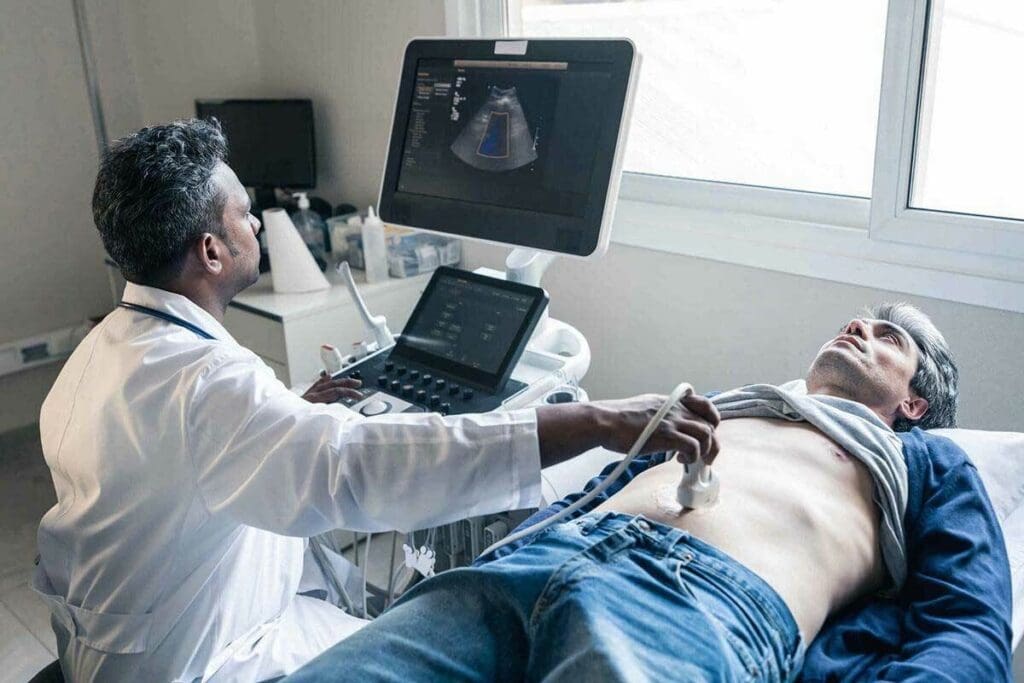
To understand what a CT of the abdomen shows, you need to know about CT scan technology. CT scans are key in modern medicine. They give detailed images that help doctors diagnose and treat many abdominal issues.
How CT Imaging Creates Cross-Sectional Views
CT imaging works by combining X-rays and computer tech. It rotates an X-ray source and detectors around the patient. This captures images from different angles.
These images are then made into detailed cross-sections of the abdomen. This lets doctors see inside the body in ways traditional X-rays can’t.
A radiologist, says, “CT scans give us a clear view of the abdomen. They help us find problems that other methods can’t see.” This is very helpful for the upper abdomen, where important organs like the liver and spleen are.
“CT scans have revolutionized diagnostic medicine by giving us deep insights into the body.” –
-Medical Expert
Difference Between CT Scans and Other Abdominal Imaging Methods
CT scans are different from MRI or ultrasound. MRI is great for soft tissue, but CT scans are better for certain things like finding calcifications. The table below shows how CT scans compare to other imaging methods.
| Imaging Modality | Key Strengths | Primary Uses |
| CT Scan | Detailed cross-sectional imaging, fast acquisition time | Trauma, infections, tumors, vascular conditions |
| MRI | Excellent soft tissue contrast, no radiation | Soft tissue abnormalities, certain cancers |
| Ultrasound | Non-invasive, real-time imaging, no radiation | Gallbladder disease, liver conditions, obstetric imaging |
For diagnosing abnormal ct abdomen issues, CT scans are often the best choice. They give detailed images of the abdominal cavity. Knowing how CT scans work and what they show is important for doctors and patients.
The Abdomen CT Scan Procedure: What Patients Experience

When you’re set for an abdominal CT scan, knowing what to expect can ease your worries. The steps include getting ready, the scan itself, and after-care.
Pre-Scan Preparation Requirements
Before your abdominal CT scan, you’ll need to follow some steps. These include:
- Fast for 2 to 4 hours before the scan to get clear images of your organs.
- Drink a contrast liquid to highlight areas of interest during the scan.
- Take off any metal objects or jewelry to avoid scan interference.
- Tell your healthcare provider about any allergies or medical conditions.
Following these steps is key to getting accurate and helpful images.
During the Abdominal CT Scan: Step-by-Step Process
The abdominal CT scan is quick and simple. Here’s what happens during the scan:
- You lie on a table that slides into the CT scanner.
- The scanner moves around your abdomen, taking X-ray images from different angles.
- The scan lasts between 10 to 30 minutes, depending on the scan’s complexity and technology.
- You might be asked to hold your breath for brief moments for clearer images.
Contrast material helps show different structures and abnormalities in your abdomen.
Post-Scan Care and Results Timeline
After the scan, you can usually go back to your normal activities unless told not to by your doctor. The images are then reviewed by a radiologist, and the results are shared with your doctor.
- Results usually come within a few hours to a few days.
- You might need more tests or follow-up scans based on the findings.
Knowing about the abdomen CT scan procedure can make you feel less anxious and have a better experience.
What Can Abdominal CT Scan Detect: A Detailed Look
An abdominal CT scan is a powerful tool for diagnosing many conditions in the abdomen. It gives detailed images of the abdomen. This helps doctors to accurately diagnose and monitor various conditions.
Infections and Inflammatory Conditions
Abdominal CT scans are great at finding infections and inflammation in the abdomen. They can spot appendicitis, diverticulitis, and pancreatitis. The scan shows signs of inflammation like swelling and fluid buildup.
Key findings may include:
- Thickening of the appendix wall in appendicitis
- Inflammation of diverticula in diverticulitis
- Pancreatic enlargement and necrosis in pancreatitis
Traumatic Injuries and Internal Bleeding
CT scans are key in finding injuries and bleeding in the abdomen after trauma. They quickly show damage to organs like the liver and spleen.
Common findings in traumatic injuries include:
- Lacerations or hematomas in solid organs
- Free fluid in the abdomen indicating internal bleeding
- Fractures of adjacent bony structures
Abdominal Masses and Tumors
CT scans are useful in finding and understanding abdominal masses and tumors. They help tell if a tumor is benign or malignant. They also show the size and extent of tumors, helping guide biopsies.
| Mass Characteristics | Possible Diagnoses |
| Cystic, well-defined | Benign cysts |
| Solid, heterogeneous | Malignant tumors |
| Fat-containing | Lipomas or teratomas |
Structural Abnormalities and Hernias
CT scans can spot many structural issues and hernias in the abdomen. This includes diaphragmatic, ventral, and internal hernias.
The scan gives detailed info on:
- The size and location of hernias
- The content of hernial sacs
- Complications such as incarceration or strangulation
CT Scan of Upper Abdomen: Organ-Specific Findings
A CT scan of the upper abdomen gives detailed images of important organs. This helps doctors make accurate diagnoses. It’s great for looking at the liver, pancreas, spleen, stomach, and kidneys.
Liver and Gallbladder Assessment
The liver and gallbladder are key organs in the upper abdomen. CT scans can check their structure and function. They can spot liver diseases like cirrhosis and fatty liver, and find tumors.
The gallbladder is checked for gallstones and inflammation. This helps diagnose any problems.
Pancreatic Evaluation and Common Pathologies
The pancreas is another vital organ that CT scans can evaluate. They can find pancreatitis, pancreatic cancer, and cysts. The detailed images help doctors understand how serious the disease is.
Spleen and Stomach Imaging Results
CT scans also give insights into the spleen and stomach. They can spot splenic injuries, tumors, and infections. For the stomach, they can find tumors, ulcers, and other issues.
Kidney Stone Detection and Renal Abnormalities
The kidneys are checked for various problems, like kidney stones and tumors. CT scans are great at finding kidney stones and checking how well the kidneys work.
| Organ | Common Conditions Detected by CT Scan |
| Liver | Cirrhosis, fatty liver, liver tumors |
| Gallbladder | Gallstones, inflammation |
| Pancreas | Pancreatitis, pancreatic cancer, cystic lesions |
| Spleen | Splenic injuries, tumors, infections |
| Kidneys | Kidney stones, cysts, tumors |
What Does a CT Scan Show in the Lower Abdomen
The lower abdomen is a complex area. CT scans are key in finding problems here. They give detailed images that help doctors spot issues with organs in the lower abdomen.
Appendicitis and Intestinal Conditions
CT scans are great for spotting appendicitis. This is when the appendix gets inflamed. They show how big the appendix is, if it’s inflamed, and if there are any serious problems like abscesses or holes.
For more on abdominal CT scans, check out RadiologyInfo.org.
They’re also good for checking intestinal conditions. This includes diseases like inflammatory bowel disease, blockages, and diverticulitis. These scans show how bad the inflammation is and help doctors decide on treatment.
Colon and Rectal Evaluation
CT scans check the colon and rectum for problems. This includes tumors, polyps, and diverticula. They help find cancer and other issues like diverticulosis in the colon.
Pelvic Organ Assessment
CT scans also look at the pelvic organs. This includes the bladder, reproductive organs, and lymph nodes. They can spot issues like ovarian cysts, uterine fibroids, and bladder stones.
| Condition | CT Scan Findings | Clinical Significance |
| Appendicitis | Inflamed appendix, possible abscess or hole | Needs quick surgery |
| Diverticulitis | Inflamed diverticula, possible complications | May need antibiotics or surgery |
| Colorectal Cancer | Tumors or masses in colon or rectum | Needs more evaluation and treatment planning |
CT scans of the lower abdomen are very useful. They give doctors the info they need to make treatment plans and help patients get better.
Contrast-Enhanced Abdominal Imaging: Benefits and Applications
Contrast-enhanced CT scans of the abdomen give a clearer view of internal structures. They help spot abnormalities better. Contrast agents make it easier to see organs, tissues, and blood vessels.
How Contrast Agents Improve Visualization
Contrast agents are key in making abdominal CT scans better. They highlight areas of interest, helping doctors find problems that might not show up on regular scans. For example, they help see tumors, abscesses, and blood vessels better.
Healthline says these scans are great for checking the liver, pancreas, and kidneys.
Key benefits of contrast agents include:
- Enhanced detection of tumors and masses
- Better visualization of blood vessels and vascular abnormalities
- Improved assessment of organ perfusion and function
Abnormal Abdominal CT Scan With Contrast: Key Findings
An abnormal abdominal CT scan with contrast can show several important things. These include:
| Condition | Contrast-Enhanced CT Findings |
| Tumors | Enhanced visualization of tumor size, location, and vascularity |
| Vascular Lesions | Detailed imaging of aneurysms, stenoses, or malformations |
| Inflammatory Conditions | Clear delineation of inflamed areas and possible complications |
Vascular Lesions and Blood Vessel Abnormalities
Vascular lesions and blood vessel problems can be diagnosed with contrast-enhanced CT scans. The contrast agent makes blood vessels stand out. This makes it easier to spot issues like aneurysms or stenosis.
The detailed images from these scans are very helpful for complex vascular conditions. They help doctors measure and evaluate the affected areas. This information is key for creating effective treatment plans.
Interpreting Abnormal CT Abdomen Results
When an abdominal CT scan shows abnormal findings, it’s key to understand what they mean. These results can point to many health issues. This includes infections, inflammatory conditions, tumors, and structural problems.
Common Abnormal Findings and Their Clinical Significance
CT scans of the abdomen can reveal various conditions. Some common issues include:
- Infections and abscesses: These show up as fluid collections or inflammation in organs.
- Tumors and masses: CT scans can spot tumors, their size, and location.
- Structural abnormalities: This includes hernias, where an organ bulges through a weak spot.
- Vascular abnormalities: Such as aneurysms or blood clots in the abdominal blood vessels.
It’s important to understand the meaning of these findings. This helps decide the best course of action.
Differentiating Between Benign and Concerning Abnormalities
Not all CT scan findings are serious. Some might be harmless, needing little to no treatment. Others might require urgent medical care.
| Abnormality Type | Potential Causes | Typical Management |
| Cysts | Benign fluid-filled structures | Monitoring or drainage |
| Tumors | Benign or malignant growths | Surgery, chemotherapy, or radiation therapy |
| Inflammatory Conditions | Infections or autoimmune disorders | Antibiotics or anti-inflammatory medications |
It’s important to look at the patient’s history, symptoms, and other tests to tell the difference.
Follow-up Procedures After Abnormal CT Results
After an abnormal CT scan, more tests or treatments might be needed. These can include:
- Additional imaging: Like MRI or PET scans for more details.
- Biopsy: To find out what a mass or tumor is.
- Endoscopic procedures: For diagnosing and treating the GI tract.
- Surgical intervention: To fix or remove the affected area.
The right follow-up steps depend on the abnormal findings and the patient’s health.
Advanced Technologies Enhancing Abdominal CT Capabilities
New technologies are changing abdominal CT imaging. These changes make diagnoses more accurate and safer for patients. They also open up new uses for abdominal CT scans.
AI-Assisted Detection and Diagnostic Accuracy
Artificial intelligence (AI) is becoming key in abdominal CT imaging. AI helps doctors spot problems faster and more accurately. It can find tumors, infections, and other issues that are hard to see.
Benefits of AI-Assisted Detection:
- Improved diagnostic accuracy
- Reduced interpretation time
- Enhanced detection of small or complex lesions
Low-Dose CT Protocols for Reduced Radiation Exposure
Low-dose CT scans are a big step forward. They cut down on radiation for patients. This is great for those needing many scans or children.
| Feature | Standard CT | Low-Dose CT |
| Radiation Dose | Standard dose | Reduced dose |
| Image Quality | High quality | Comparable quality |
| Patient Safety | Standard safety protocols | Enhanced safety |
3D Reconstruction and Specialized Imaging Techniques
Techniques like 3D reconstruction give us detailed views of the abdomen. They help a lot with surgery planning and checking complex conditions.
Examples of 3D Reconstruction Applications:
- Pre-surgical planning for complex abdominal surgeries
- Detailed assessment of vascular structures
- Evaluation of tumor extent and involvement of surrounding tissues
The future of abdominal CT imaging is bright. With new tech, we’ll see better diagnoses, safer care, and higher quality treatment.
Conclusion: The Critical Role of Abdominal CT Scans in Diagnosis and Treatment
Abdominal CT scans are key in finding many health issues. They help spot infections, inflammation, injuries, and growths in the abdomen. The abdominal ct scan procedure gives detailed images of the abdomen. This helps doctors diagnose and treat many conditions well.
Knowing what can abdominal ct scan detect shows its importance in health checks. These scans can find problems like structural issues, hernias, and blood vessel problems. If an abnormal ct scan abdomen is found, doctors can start the right treatment quickly.
The info from an abdominal CT scan is very helpful for treatment plans. As technology gets better, so will the scans’ abilities. This makes them even more important in today’s medicine.
FAQ
What is an abdominal CT scan, and what can it detect?
An abdominal CT scan is a test that uses X-rays and computer tech to show detailed images of the abdomen. It can find many conditions, like infections, injuries, and structural problems.
What will a CT scan of the abdomen show?
It shows detailed images of organs like the liver, pancreas, and kidneys. It can also find tumors, cysts, and inflammation.
How does a CT scan of the upper abdomen differ from a full abdominal CT scan?
The upper abdomen CT scan looks at the liver, gallbladder, and pancreas. A full scan looks at the whole abdomen, including the lower parts.
What can a CT scan show in the lower abdomen?
It shows images of the intestines, appendix, and pelvic organs. This helps diagnose issues like appendicitis and intestinal obstruction.
What is the role of contrast agents in abdominal CT scans?
Contrast agents make certain structures or abnormalities more visible. This helps doctors make more accurate diagnoses.
How are abnormal CT scan results interpreted?
Radiologists look for signs of disease or injury. They provide a diagnosis or suggest further tests.
What are some common abnormal findings on an abdominal CT scan?
Common findings include tumors, cysts, abscesses, and inflammation. Also, structural issues like hernias or intestinal obstruction.
What are the benefits of advanced technologies in abdominal CT scans?
Technologies like AI-assisted detection and low-dose CT improve accuracy and safety. They help doctors make better decisions.
How long does it take to get the results of an abdominal CT scan?
Results time varies by facility and case complexity. But, they’re usually ready in a few hours or the next day.
What preparation is required for an abdominal CT scan?
You might need to fast, avoid certain meds, and wear loose clothes. Also, remove metal objects or jewelry.
Reference
- Rakheja, R. S., Sonni, N. J., & Stone, M. (2019). Role of multimodal imaging in abdominal and pelvic pathology. Radiologic Clinics of North America, 57(4), 597–615. https://pubmed.ncbi.nlm.nih.gov/31155331/