Last Updated on November 27, 2025 by Bilal Hasdemir

Radiation is a key idea in science. It’s about energy moving through space or materials as waves or particles.Learn what causes radiation, see scientific reasons and natural sources for radiation in our world and daily life.
At Liv Hospital, we understand how important radiation is in healthcare. The scientific definition of radiation covers different types. These include electromagnetic and particle radiation. They are vital in medical treatments and studying the environment.
Learning about the radiation meaning in science helps us see its role in our lives. It’s also important for medicine.
Key Takeaways
- Radiation is the transfer of energy through space or materials.
- It includes electromagnetic and particle radiation.
- Understanding radiation is key for healthcare and studying the environment.
- Liv Hospital focuses on top-notch care and keeping patients safe from radiation.
- Radiation is used in many medical treatments.
The Scientific Definition of Radiation
In science, radiation is how energy moves through space or materials. It covers many ways energy is sent, like electromagnetic waves and particles.
Energy Transfer Through Space and Materials
Radiation sends energy through waves or fast-moving particles. This energy can go through empty space or get caught by materials. Knowing how it moves energy helps us understand its role in science.
We see radiation in many ways, like the sun’s warmth and X-rays in medical tests. Each kind of radiation acts differently on materials and living things.
Fundamental Concepts in Radiation Science
To really get radiation, we need to know its basic ideas. There are two main kinds: electromagnetic and particulate radiation. For more info, check out Britannica’s article on radiation.
Electromagnetic radiation includes gamma rays, X-rays, and light. These are all about wavelength and frequency. Particulate radiation, like alpha and beta particles, has mass and energy.
Understanding Radiation Energy
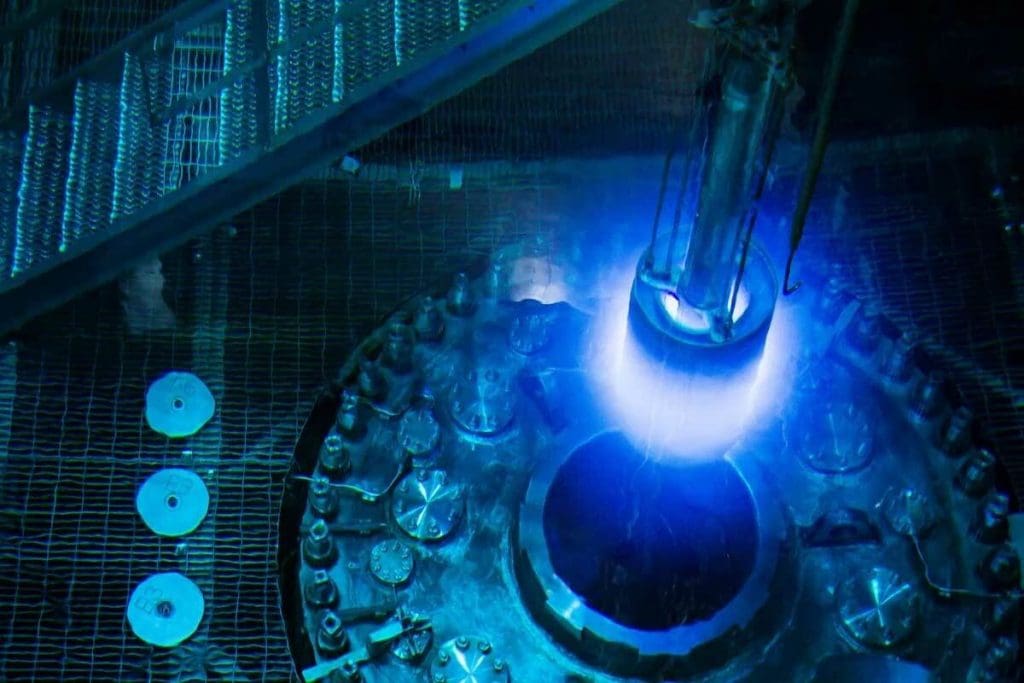
Radiation energy is a key part of radiation science. It tells us how we see and deal with different kinds of radiation. This energy shows how well radiation can change the things it touches.
Measuring Radiation Energy
We measure radiation energy in several ways, based on the type of radiation. We use the Gray (Gy) for absorbed dose, Sievert (Sv) for dose equivalent, and Becquerel (Bq) for activity. Knowing these units helps us understand how much radiation we’re exposed to and its effects.
The Gray measures how much energy is absorbed by a substance. The Sievert looks at how radiation affects living things. This gives us a better idea of radiation’s impact.
| Unit | Description | Application |
| Gray (Gy) | Measures absorbed dose | Quantifying energy deposited in material |
| Sievert (Sv) | Measures dose equivalent | Assessing biological effect of radiation |
| Becquerel (Bq) | Measures activity | Quantifying radioactive decay rate |
Energy Spectrum of Different Radiation Types
Each type of radiation has its own energy spectrum. This is important for knowing what they can do and how they work. For example, ionizing radiation like alpha, beta, and gamma has more energy than non-ionizing radiation like radio waves and microwaves.
“The energy spectrum of radiation is a key factor in determining its interaction with matter and its applications in various fields.”
The energy spectrum affects how well radiation can go through things, how it interacts with materials, and its effects on living things. Knowing this is key for using radiation in medicine and industry.
Looking at the energy spectrum of different radiation types helps us understand their properties and uses. This knowledge is important for improving technology and keeping us safe where radiation is used.
What Causes Radiation in Nature
Radiation isn’t just from humans; it also comes from nature. It comes from cosmic, terrestrial, and solar sources. We’re always exposed to these natural sources, making up the background radiation around us.
Cosmic Radiation Sources
Cosmic radiation comes from outside our atmosphere, mainly from the sun and deep space. It includes high-energy particles like protons and atomic nuclei. The amount of cosmic radiation changes with solar activity and the Earth’s magnetic field.
For example, during solar flares, more cosmic radiation hits the Earth.
To learn more about cosmic radiation, let’s look at its parts and effects. Here’s a table that summarizes cosmic radiation.
| Component | Origin | Effect on Earth |
| Protons | Sun and deep space | Contributes to background radiation |
| Atomic Nuclei | Deep space | Influences radiation levels at high altitudes |
Terrestrial Radiation Sources
Terrestrial radiation comes from the Earth’s crust. It’s from naturally occurring radioactive materials like uranium and thorium. These materials decay, releasing radiation into the environment.
The amount of terrestrial radiation changes based on the area’s geology. For example, places with granite soil have more radiation because of uranium.
For more on radiation, check out the International Atomic Energy Agency. They offer detailed info on radiation.
Solar Radiation
Solar radiation comes from the sun. It includes everything from visible light to ultraviolet (UV) and X-rays. The Earth’s atmosphere blocks a lot of harmful solar radiation, but some does reach us.
Solar radiation is key for life on Earth. It drives our climate and weather. But too much UV radiation can harm our health.
In summary, natural radiation is all around us. It comes from cosmic, terrestrial, and solar sources. Knowing where radiation comes from helps us understand our environment better.
Electromagnetic Radiation Explained
Understanding electromagnetic radiation is key to knowing how energy moves through space and materials. We see many types of electromagnetic radiation every day. This includes the light we see and the X-rays doctors use for imaging.
The Electromagnetic Spectrum
The electromagnetic spectrum is huge, covering radio waves, microwaves, infrared, visible light, ultraviolet, X-rays, and gamma rays. Each type has its own uses. For example, radio waves help us talk to each other, while X-rays help doctors see inside our bodies.
Looking at the electromagnetic spectrum, we see each part has its own special traits. Visible light is what we can see, while ultraviolet and infrared are not visible but affect our skin and are used in tech.
Properties of Electromagnetic Waves
Electromagnetic waves have important properties. They can move through a vacuum, unlike mechanical waves that need a medium. Their speed in a vacuum is about 299,792 kilometers per second, which is the speed of light.
These waves also have frequency and wavelength. Frequency is how many times a wave goes up and down per second, measured in Hertz (Hz). Wavelength is the distance between two peaks or troughs, usually measured in meters.
“The electromagnetic spectrum is a fundamental concept in physics, representing the entire range of electromagnetic radiation.”
How Electromagnetic Radiation Travels
Electromagnetic radiation moves as waves. Its ability to pass through different materials varies. In a vacuum, these waves travel without losing strength, but in other materials, they can be absorbed, reflected, or passed through.
The distance electromagnetic radiation can travel depends on its energy and the material it goes through. High-energy radiation like gamma rays can go through dense materials. Lower energy types, like radio waves, can travel far through the air and even some solid objects.
Particulate Radiation and Its Origins
Particulate radiation includes alpha, beta, and neutron radiation. These types of radiation are made up of particles, not waves. Knowing about them is key in science, medicine, and industry.
Alpha Particles and Their Properties
Alpha particles are high-energy helium nuclei from radioactive materials. They are big and have a double positive charge. This means they can be stopped by a sheet of paper or human skin.
But, if you eat or breathe in alpha-emitting substances, they can harm your insides a lot.
Key properties of alpha particles include:
- Large mass compared to other forms of radiation
- Double positive charge
- Short range in matter
- High ionization power
Beta Particles and Their Characteristics
Beta particles are high-energy electrons or positrons from radioactive nuclei. They are smaller and lighter than alpha particles. Beta particles can travel several meters in air and millimeters in tissue.
They can be stopped by thin metal or dense materials.
Characteristics of beta particles include:
- Smaller mass compared to alpha particles
- Single negative or positive charge
- Longer range in matter compared to alpha particles
- Less ionization power than alpha particles
Neutron Radiation
Neutron radiation is made of free neutrons from nuclear reactions. Neutrons can go deep into materials, including human tissue. They are very dangerous when they get inside the body.
Neutron radiation is linked to nuclear reactors and certain nuclear reactions.
Properties of neutron radiation include:
- No electric charge
- High penetration power
- Ability to induce radioactivity in other materials
In conclusion, particulate radiation, like alpha, beta, and neutron radiation, is important in science and industry. Knowing their properties helps us use them safely and effectively.
Ionizing vs. Non-Ionizing Radiation
It’s important to know the difference between ionizing and non-ionizing radiation. This knowledge helps us understand their effects on health and the environment. We’ll look at what makes each type unique and how they impact living things.
Characteristics of Ionizing Radiation
Ionizing radiation has enough energy to knock electrons out of atoms. This creates ions. Types include alpha particles, beta particles, gamma rays, and X-rays. It can damage DNA and raise cancer risk by changing cell structures.
Here are some sources of ionizing radiation:
- Radon gas in homes
- Cosmic rays from space
- Medical imaging like CT scans
Properties of Non-Ionizing Radiation
Non-ionizing radiation has less energy and can’t ionize atoms. It includes radio waves, microwaves, infrared, visible light, and ultraviolet. While safer, high exposure can harm tissues, like microwaves heating them.
Here are some common non-ionizing radiation sources:
- Cell phones and towers
- Wi-Fi routers
- Microwave ovens
Biological Effects of Each Type
The effects of ionizing and non-ionizing radiation vary greatly. This is because of their different energies and how they interact with living tissues.
| Radiation Type | Biological Effects | Examples |
| Ionizing | DNA damage, cancer risk | Alpha particles, gamma rays, X-rays |
| Non-Ionizing | Tissue heating, cataract risk | Microwaves, radio waves, visible light |
The table shows why knowing the difference between ionizing and non-ionizing radiation is key. We must understand both the type and source to stay safe.
Where Does Radiation Come From: Artificial Sources
We find artificial sources of radiation in many areas. These include medical, industrial, and consumer products. They are made for specific uses, like treatments and processes. Knowing about these sources helps us see their benefits and risks.
Medical Radiation Equipment
Medical equipment is a big source of artificial radiation. This includes X-ray machines, CT scanners, and radiation therapy for cancer. These tools send out ionizing radiation, which is controlled for medical goals.
Diagnostic Imaging Technologies like X-rays and CT scans use radiation to see inside the body. They are key for diagnosing many health issues.
| Medical Equipment | Purpose | Type of Radiation |
| X-ray Machines | Diagnostic Imaging | Ionizing Radiation |
| CT Scanners | Diagnostic Imaging | Ionizing Radiation |
| Radiation Therapy Equipment | Cancer Treatment | Ionizing Radiation |
Industrial Radiation Sources
Industrial sources use radiation for testing, quality checks, and sterilizing medical tools. These include gamma radiation and industrial X-ray machines.
Gamma radiation is used to sterilize medical tools and food. It kills bacteria and other harmful organisms well.
Consumer Products That Emit Radiation
Some products we use every day give off radiation. Smoke detectors and certain lights, like exit signs, are examples. They have a small amount of radioactive material.
Even though the radiation from these products is low, it’s good to know about them. This helps us understand their role in our lives.
Learning about artificial radiation sources helps us see their uses and risks. They are important in medicine, industry, and our daily lives.
Common Examples of Radiation in Daily Life
Radiation is all around us, coming from many sources we often ignore. It’s found in the devices we use and the air we breathe.
Radiation from Electronic Devices
Many gadgets give off radiation, but it’s usually safe. Smartphones and laptops, for example, send out non-ionizing radiation. This is different from the kind found in nuclear reactions.
Let’s look at some common devices and their radiation levels:
| Device | Type of Radiation | Emission Level |
| Smartphone | Non-ionizing | Low |
| Laptop | Non-ionizing | Low |
| Microwave Oven | Non-ionizing | Moderate (when in use) |
Most devices send out low levels of non-ionizing radiation. But, it’s good to follow safety tips to reduce exposure.
Background Radiation in Our Environment
Background radiation is everywhere, coming from natural sources like cosmic rays and radon in the soil. The amount of background radiation changes based on where you are and how high you are.
“Background radiation is a natural part of our environment, and understanding its sources can help us mitigate its effects.”
” National Council on Radiation Protection and Measurements
Some places have more background radiation because of their geology. For example, areas with granite soil often have more radon.
Radiation in Food and Water
Some foods and water have radioactive materials naturally. Bananas, for example, have a bit of potassium-40, a radioactive isotope.
Here’s a list of foods and their radiation levels:
- Banana: 0.1 μSv
- Brazil nuts: 0.1-1 μSv per nut
- Tap water: varies depending on source
Even though the radiation from these foods is small, knowing where it comes from helps us make better food choices.
Medical Applications of Radiation
Radiation has changed healthcare, bringing new ways to diagnose and treat diseases. It’s used in many medical fields, helping patients all over the world.
Diagnostic Imaging Technologies
Modern medicine relies on diagnostic imaging to see inside the body. X-rays, CT scans, and PET scans use radiation to create detailed images.
These tools help doctors find many health issues, like broken bones and tumors. They make sure the benefits of using radiation are worth the risks.
Common Diagnostic Imaging Techniques:
- X-rays
- Computed Tomography (CT) scans
- Positron Emission Tomography (PET) scans
- Mammography
Radiation Therapy for Cancer Treatment
Radiation therapy is key in fighting cancer. It kills cancer cells or slows their growth. It can be given from outside the body or placed inside.
New methods in radiation therapy have made treatments better and less harmful. Techniques like IMRT and SBRT target tumors precisely, protecting healthy tissues.
| Type of Radiation Therapy | Description |
| External Beam Radiation Therapy (EBRT) | Delivers radiation from outside the body |
| Brachytherapy | Involves placing radioactive material inside the body |
| Intensity-Modulated Radiation Therapy (IMRT) | Precise modulation of radiation beams |
Nuclear Medicine Procedures
Nuclear medicine uses tiny amounts of radioactive materials to diagnose and treat diseases. It helps understand the body’s functions and manage conditions like thyroid issues and some cancers.
“Nuclear medicine has become an essential tool in the diagnosis and treatment of various diseases, providing unique insights into the body’s physiological processes.” – Nuclear Medicine Specialist
Radiation has many uses in medicine and is always getting better. As technology grows, we’ll see even more ways radiation helps patients.
Industrial and Scientific Uses of Radiation
Radiation is used in many ways, not just in nature. It helps solve problems and gives us new ideas. We look at how it’s used in different areas, its benefits, and the hurdles it faces.
Energy Generation Through Nuclear Processes
Nuclear energy uses radiation to make electricity. It works by splitting atoms to create heat, which is then turned into power. Nuclear power plants are where this magic happens.
| Country | Number of Nuclear Reactors | Electricity Generated (TWh) |
| United States | 93 | 789 |
| France | 56 | 382 |
| China | 50 | 328 |
Nuclear energy has its pluses and minuses. It’s good because it cuts down on pollution. But, it also raises safety and waste issues.
Material Testing and Quality Control
Radiation helps check materials and parts without harming them. It’s key in the aerospace and car industries.
For example, it spots flaws in welds and castings. This keeps important parts safe. CT scans also help see inside complex items, helping make and test new products.
Research Applications in Various Fields
In science, radiation is used in physics, chemistry, and biology. It helps study materials, understand life, and find new treatments.
“Radiation has become an indispensable tool in modern science, enabling us to probe the fundamental nature of matter and understand complex phenomena.”
In materials science, it helps learn how materials change under radiation. This is key for making new materials for nuclear use. In medicine, it’s used to fight cancer by killing tumor cells.
We keep finding new ways to use radiation in science and industry. It drives progress and helps us understand our world better.
Radiation Safety and Protection Measures
Radiation safety and protection are key to reducing exposure in various settings. We focus on safety by using strict measures in many industries.
Core Principles of Radiation Protection
The main idea of radiation protection is the ALARA concept. It means keeping exposure as low as possible, considering costs and society.
We follow three main rules:
- Justification: Make sure the benefits of radiation are greater than the risks.
- Optimization: Take steps to reduce exposure.
- Limitation: Set limits to avoid too much exposure.
Safety Standards and Regulations
Safety standards and rules are essential for a safe workplace. These are based on research and advice from groups like the International Commission on Radiological Protection (ICRP).
Important parts of these standards include:
- Setting limits for worker and public exposure.
- Guidelines for working with radioactive materials.
- Rules for monitoring and watching radiation levels.
Monitoring and Controlling Radiation Exposure
It’s important to watch and control radiation exposure. This means using dosimeters to track individual exposure and using engineering controls to lower it.
Methods for tracking radiation include:
- Personal dosimetry with badges or electronic dosimeters.
- Area monitoring with detectors.
- Checking the environment to see radiation levels.
By following these rules and standards, we can keep everyone safe and healthy.
Conclusion
Radiation is a complex topic that covers many areas. It includes different sources, types, and uses. Knowing about radiation helps us see its role in healthcare, industry, and the environment.
We looked at the various forms of radiation and their properties. We also talked about where radiation comes from. This includes natural sources like cosmic and terrestrial radiation, and artificial sources like medical equipment.
Radiation is key in medical fields for imaging and treating cancer. It’s also important for safety and protection. This ensures we use radiation safely in many areas.
In summary, radiation is a big part of our world. It has many uses and effects. Learning about radiation helps us understand its benefits and risks better.
FAQ
What is radiation?
Radiation is a way energy moves through space and materials. It comes in different types, like electromagnetic and particulate radiation.
What are the different types of radiation?
There are two main types. Electromagnetic radiation includes X-rays, gamma rays, and radio waves. Particulate radiation includes alpha, beta particles, and neutron radiation.
What is the difference between ionizing and non-ionizing radiation?
Ionizing radiation can remove electrons from atoms, making ions. Non-ionizing radiation has less energy and doesn’t cause ionization.
Where does radiation come from?
Radiation comes from natural and artificial sources. Natural sources include cosmic, terrestrial, and solar radiation. Artificial sources include medical equipment, industrial uses, and some consumer products.
What are some examples of radiation in daily life?
Daily life examples include radiation from electronic devices and background radiation. Food and water can also contain radiation.
How is radiation used in medicine?
Medicine uses radiation for imaging like X-rays and CT scans. It’s also used in cancer treatment and nuclear medicine.
What are the risks associated with radiation exposure?
Ionizing radiation can damage DNA and increase cancer risk. Non-ionizing radiation has lower energy and different effects. Always follow safety protocols to reduce exposure.
How can radiation exposure be minimized?
Minimize exposure by using shielding and keeping a safe distance from sources. Limiting exposure time also helps.
What are the principles of radiation protection?
Protection principles include justification, optimization, and limitation. These aim to reduce exposure and ensure safe handling of radiation.
How is radiation energy measured?
Energy is measured in gray (Gy) and sievert (Sv). Gy measures absorbed dose, while Sv measures biological effect.
What is the electromagnetic spectrum?
The electromagnetic spectrum includes all frequencies of radiation. It ranges from radio waves to gamma rays, covering everything in between.
Reference
- Energy Northwest – Sources of Radiationhttp://www.energy-northwest.com/energyprojects/Columbia/Pages/Sources-of-Radiation.aspx