Last Updated on November 27, 2025 by Bilal Hasdemir
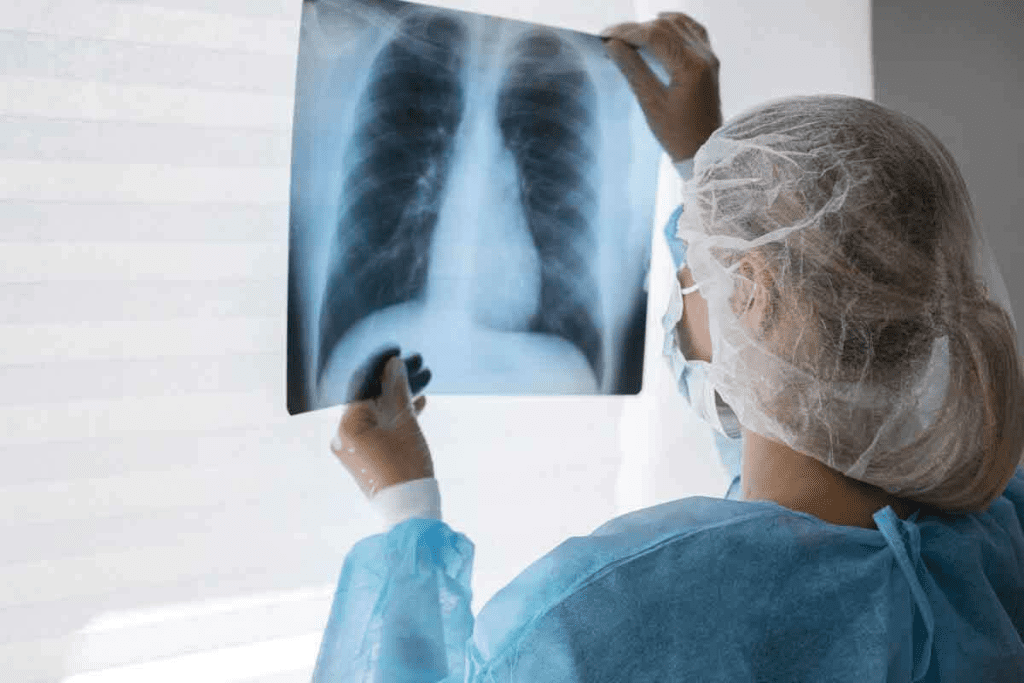
At Liv Hospital, we know how important clear medical images are. For those looking for peace of mind, it’s key to understand chest CT scans with contrast and chest MRI. They help make informed health choices.
A chest CT scan with contrast shows detailed pictures of the lungs, heart, and nearby areas. The contrast agent makes blood vessels stand out. This helps spot tumors and vascular issues more clearly.
Chest MRI uses strong magnets and radio waves to create detailed images, mainly of soft tissues. Both imaging methods are useful, but for different reasons in diagnosing chest problems.What does a chest CT scan with contrast show? Get crucial answers on its findings and how it compares to a chest MRI scan.
Key Takeaways
- Chest CT scans with contrast provide detailed images of the lungs, heart, and surrounding structures.
- The contrast agent enhances the visualization of soft tissue and blood vessels.
- Chest MRI is especially good for soft tissue imaging.
- Both CT scans and MRIs have different roles in diagnosing chest issues.
- Liv Hospital’s team is committed to patient-centered care and guidance.
The Basics of Chest CT Scanning Technology
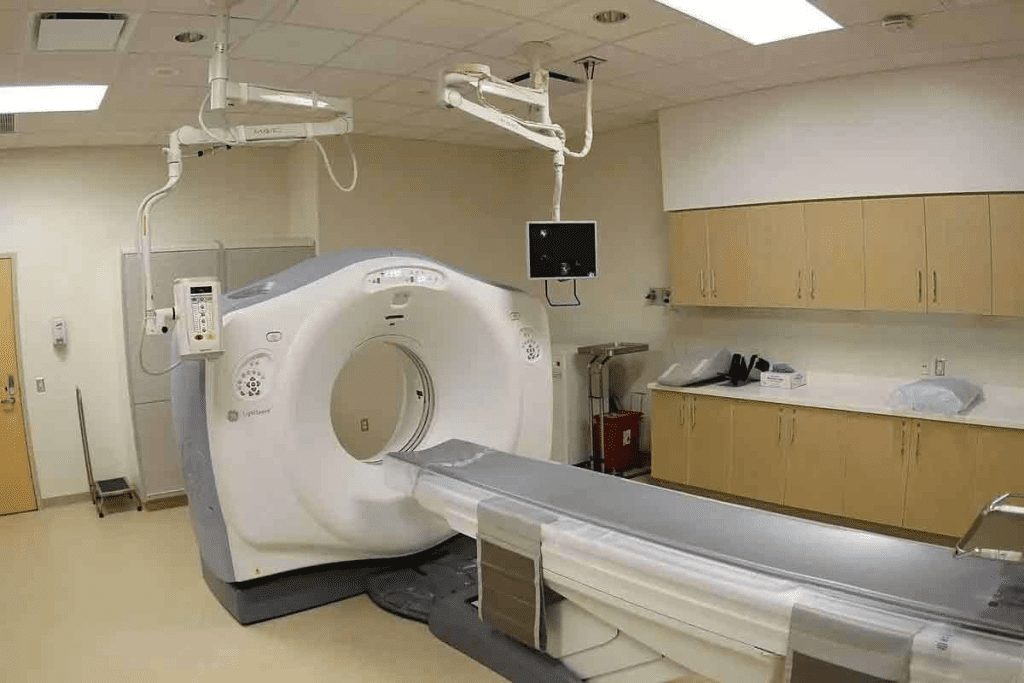
At the heart of chest CT scans lies advanced technology. It captures the details of internal structures. We use this tech to make high-resolution images. These images are key to diagnosing many medical conditions.
How CT Scanning Works
CT scanning uses X-rays that move around the patient. This creates detailed cross-sectional images. The CT scanner, a large, doughnut-shaped machine, makes this happen.
As X-rays pass through the body, they are absorbed differently by tissues. This creates contrast, allowing for detailed images. The scanner’s computer then reconstructs these images. This gives us a clear view of the chest’s internal structures.
The Purpose of Contrast Agents
Contrast agents are key in making CT scan images better. They are substances that highlight specific areas or structures in the body. In chest CT scans, they help see blood vessels and soft tissues better.
They are very useful for spotting problems like tumors or vascular diseases. We carefully give these agents to make sure the images are top-notch. This helps doctors make accurate diagnoses and plan effective treatments.
What Does a Chest CT Scan with Contrast Show
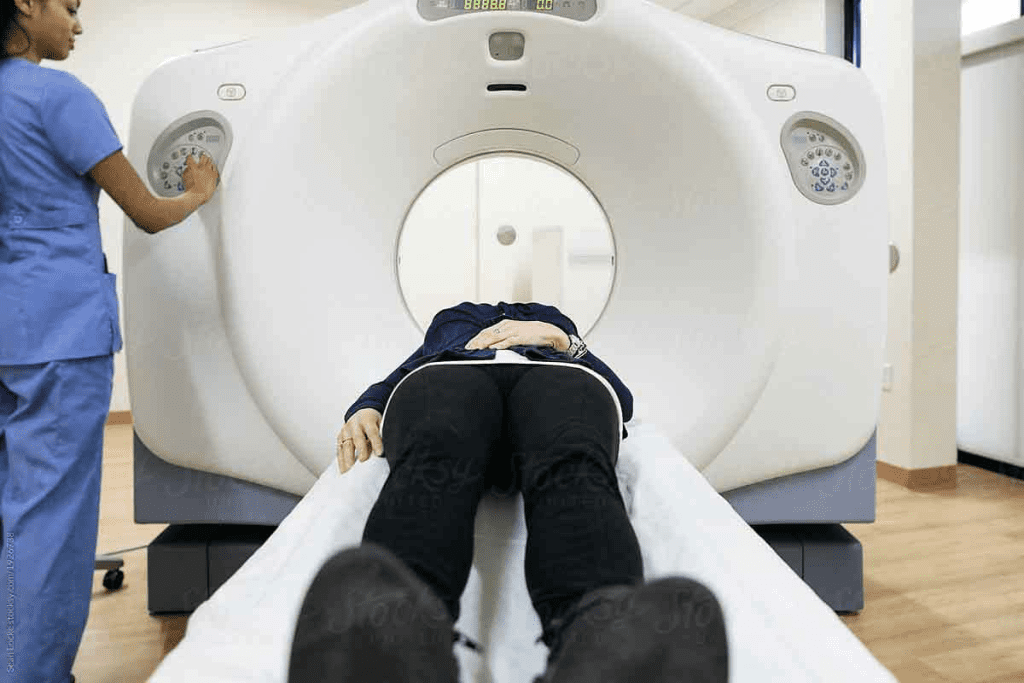
A chest CT scan with contrast gives doctors detailed images. These images help them find and diagnose chest problems. It’s great for looking at the lungs, heart, blood vessels, and more.
Using contrast agents makes some areas stand out more. It makes blood vessels and other structures easier to see. This helps doctors spot any problems.
Enhanced Visualization of Blood Vessels
One big plus of contrast in a chest CT scan is seeing blood vessels better. This is key to finding issues like aneurysms or blockages. These can be serious if not caught early.
The contrast agent makes it easier to tell blood vessels apart from other things. This helps doctors plan treatments or surgeries.
Soft Tissue Differentiation
Another great thing about a chest CT scan with contrast is how it shows soft tissues. The contrast makes different soft tissues stand out. This helps doctors find tumors, cysts, or other problems.
This is really important for diagnosing lung, mediastinum, and other chest issues. It lets doctors make more accurate diagnoses.
Detailed Cross-Sectional Imaging
A chest CT scan with contrast also gives detailed cross-sectional images of the chest. These images are taken from many angles. They give a full view of what’s inside the chest.
These detailed images are great for looking at the lungs, airways, and more. They help doctors find tumors, infections, or other issues.
| Feature | Description | Diagnostic Benefit |
| Enhanced Visualization | Contrast agent highlights blood vessels and structures | Better detection of vascular disorders |
| Soft Tissue Differentiation | Contrast enhances the distinction between soft tissues | More accurate identification of tumors and abnormalities |
| Cross-Sectional Imaging | Detailed images from multiple angles | Comprehensive view of chest structures, aiding in diagnosis |
What Organs Does a Chest CT Scan Show
A chest CT scan is a powerful tool for doctors. It shows detailed images of organs and structures in the chest. This helps doctors see and check the health of important organs for breathing and heart functions.
Lungs and Airways
The lungs are a key focus of a chest CT scan. It shows lung details, helping spot problems like tumors or infections. The scan also looks at airways, like the trachea and bronchi, to check for issues like bronchiectasis.
Heart and Major Blood Vessels
A chest CT scan also looks at the heart and the big blood vessels. It can spot problems like aneurysms or heart defects. The scan gives clear images of the heart, helping doctors find issues.
Mediastinum and Lymph Nodes
The mediastinum, with its heart, thymus gland, and more, is seen clearly on a chest CT scan. This is great for checking lymph nodes in the mediastinum. Enlarged nodes might suggest lymphoma or cancer. The scan helps doctors see these nodes’ size and shape.
A chest CT scan is vital for diagnosing and managing chest issues. It gives doctors the details they need to care for patients. This includes diagnosing, planning treatments, or tracking disease changes.
Does a Chest CT Scan Show the Esophagus?
A chest CT scan can show the esophagus and find problems with it. This helps us understand and treat esophageal issues better.
Esophageal Visualization Capabilities
A chest CT scan can clearly see the esophagus, even with lesions or masses. Contrast agents make the esophagus stand out, helping us get a precise look.
Detecting Esophageal Abnormalities
Spotting problems in the esophagus is key to keeping it healthy. A chest CT scan can find tumors, diverticula, and other issues. It gives doctors detailed images to assess these problems.
| Condition | Description | CT Scan Findings |
| Esophageal Tumors | Abnormal growths in the esophagus | Masses or thickening of the esophageal wall |
| Esophageal Diverticula | Outpouchings of the esophageal wall | Sac-like protrusions from the esophagus |
| Esophageal Strictures | Narrowing of the esophagus | Focal narrowing with or without proximal dilation |
Using chest CT scans helps us better diagnose and manage esophageal problems. This way, we can give patients the best care possible.
Pathologies Detected by Chest CT with Contrast
A chest CT scan with contrast is a powerful tool for finding many health issues. It shows detailed images of the chest. This helps doctors see different parts and problems clearly. The contrast makes blood vessels, organs, and possible tumors stand out, helping doctors make accurate diagnoses.
Tumors and Masses
One key use of chest CT scans with contrast is finding and understanding tumors and masses. These scans show where, how big, and how far tumors are. This info is key for figuring out how serious the cancer is and what treatment to use.
Key features of tumors and masses that can be assessed on CT scans include:
- Location and distribution
- Size and dimensions
- Density and enhancement patterns
- Relationship to adjacent structures
Vascular Disorders and Pulmonary Embolism
Chest CT scans with contrast are great for spotting vascular problems, like pulmonary embolism (PE). The contrast makes blood vessels clearer, helping spot clots or blockages. This is very important for treating conditions like pulmonary embolism quickly.
| Condition | CT Scan Findings |
| Pulmonary Embolism | Filling defects in pulmonary arteries |
| Aortic Dissection | Intimal flap in the aorta |
Trauma and Structural Abnormalities
Chest CT scans are also useful for checking on trauma patients and spotting structural issues. They can show injuries like broken ribs, air in the chest, or blood in the chest. They can also find congenital or acquired structural problems.
Does a Chest CT Scan Show Inflammation?
Many wonder if a chest CT scan can spot inflammation. Inflammation in the chest can stem from infections, autoimmune diseases, or cancer. A chest CT scan is a key tool for spotting signs of inflammation.
Identifying Inflammatory Processes
A chest CT scan can spot inflammation by showing changes in chest tissues and organs. Inflammation can make tissues swell or look different, which is more noticeable with contrast agents.
Key signs of inflammation on a CT scan include:
- Increased density in the affected area
- Swollen lymph nodes
- Fluid buildup or effusion
- Abnormal contrast enhancement
For example, a CT scan can show lung changes in pneumonia, like consolidation and ground-glass opacities. It can also spot changes in sarcoidosis, like swollen lymph nodes and lung changes.
Limitations in Inflammation Detection
Though a chest CT scan is very useful, it has its limits. Some of these include:
| Limitation | Description |
| Specificity | CT scans might not always tell the exact cause of inflammation |
| Sensitivity | Early or mild inflammation might not show up on a CT scan |
| Radiation Exposure | CT scans use radiation, which can be a worry for some |
| Contrast-Related Issues | Some patients with kidney problems can’t have contrast agents |
In summary, a chest CT scan can show inflammation and is helpful in diagnosing chest issues. But it’s important to know its limits. Doctors must look at CT scans along with other tests to make the right diagnosis.
CT Scan for Breathing Problems
CT scans are key in finding the cause of breathing issues. They give detailed lung and airway images. This helps us spot many respiratory problems.
Diagnosing Interstitial Lung Disease
Interstitial lung disease (ILD) is a group of lung issues with inflammation and scarring. CT scans are great at spotting ILD. They show how much of the lung is affected.
Key features of ILD on CT scans include:
- Ground-glass opacities
- Reticular patterns
- Honeycombing
- Traction bronchiectasis
A study in the American Journal of Respiratory and Critical Care Medicine shows CT scans are very good at finding ILD. They are a key tool for diagnosis and tracking.
| CT Scan Feature | Description | Clinical Significance |
| Ground-glass opacities | Hazy areas of increased opacity | Indicates active inflammation or infection |
| Reticular patterns | Network of fine lines | Suggests fibrosis or scarring |
| Honeycombing | Clustered cystic airspaces | Represents advanced fibrosis |
Airway Assessment
CT scans are also great for checking airway diseases like COPD and bronchiectasis. They show airway details. This helps us see how severe airway problems are.
Can a CT Scan Detect Pneumonia?
Yes, CT scans can spot pneumonia. They’re helpful when chest X-rays aren’t clear or when there’s a worry about complications. CT scans show how much of the lung is affected. They also help find complications like abscesses and guide treatment.
Benefits of CT scans in pneumonia detection include:
- High sensitivity for detecting lung consolidation
- Ability to identify complications early
- Guidance for possible interventions
The Fleischner Society says CT scans are key in managing pneumonia. This is true for severe cases or when there’s a high risk of complications.
What Can a Chest CT Show That Other Tests Cannot
A chest CT scan gives detailed images that other tests, like X-rays or ultrasound,s can’t. This advanced imaging is key to diagnosing and managing chest issues.
Advantages Over X-rays
Chest CT scans have advantages over traditional X-rays. Some key benefits include:
- More detailed cross-sectional images of the chest cavity
- Better visualization of soft tissues and blood vessels
- Ability to detect smaller abnormalities that may be missed on X-rays
These benefits make CT scans great for diagnosing complex conditions like pulmonary embolism or detailed lung diseases.
Comparison to Ultrasound
Comparing chest CT scans to ultrasound shows some key differences:
| Feature | Chest CT Scan | Ultrasound |
| Image Detail | High-resolution images of internal structures | Limited detail, mainly for solid structures |
| Depth Penetration | Excellent penetration, even through dense tissues | Limited by bone and air, which can block the view |
Ultrasound is useful in some cases, but chest CT scans offer a more detailed view of the chest’s internal structures. They are essential in many diagnostic situations.
MRI of Chest: What Does It Show?
Chest MRI is a non-invasive test that uses strong magnetic fields and radio waves. It creates detailed images of the chest.
It helps us see inside the chest, like the heart, lungs, and blood vessels. This tool is great for soft tissues, which are hard to see on other tests.
Basic Principles of Chest MRI
MRI technology uses a strong magnetic field and radio waves to show body structures. When we do a chest MRI, the patient lies in the MRI machine. This machine aligns the body’s hydrogen atoms.
Then, radio waves disturb these atoms, sending signals. These signals help make detailed images.
The main benefits of MRI for chest imaging are:
- It gives high-resolution images of soft tissues.
- It can show blood vessels and heart structures without harmful radiation.
- It’s good for patients who can’t have CT scans with contrast.
Chest MRI with Contrast
Sometimes, we use contrast agents in chest MRI to make certain areas clearer. The contrast agent is given through an IV. It changes the magnetic properties of tissues, making them more visible.
Using contrast in chest MRI helps a lot:
- It shows vascular structures and finds problems like aneurysms or stenosis.
- It makes tumors or masses more visible.
- It helps see how far the disease has spread in conditions like lymphoma.
Understanding what a chest MRI can show helps us diagnose and treat chest conditions better. MRI, with or without contrast, gives us important insights into the chest’s inner workings. This helps us create effective treatment plans.
CT vs MRI Chest: A Comparative Look
It’s important to know the differences between CT and MRI scans for chest health. Each has its own benefits and drawbacks. We’ll dive into these details.
Image Quality and Resolution Differences
CT scans and MRI scans have different strengths for chest imaging. CT scans are great for seeing lung details, airways, and bones. They’re good at finding lung nodules and other issues.
MRI scans are better at showing soft tissues like the heart and blood vessels. They’re also good for looking at the chest area without using harmful radiation. This is a big plus for people needing many scans.
Key differences in image quality include:
- CT scans are better at showing details like lung nodules and calcifications.
- MRI scans are better at showing soft tissues, which is good for complex chest issues.
Radiation Considerations
One big difference is radiation. CT scans use X-rays, which means they expose you to radiation. Modern CT scanners use less radiation, but it’s not zero. This is a concern for young people or those needing many scans.
MRI scans don’t use radiation, making them safer for long-term or repeated use. This is key for people with ongoing health issues or those needing constant monitoring.
Patient Experience and Accessibility
The experience of getting a CT or MRI scan is different. CT scans are quick, usually taking just a few minutes. MRI scans, while detailed, can take longer and feel more enclosed.
CT scanners are more common than MRI machines, which is good for emergencies. But MRI is getting more common, and its benefits often outweigh its drawbacks for some tests.
Considerations for patient experience include:
- CT scans are faster and less confining.
- MRI scans offer detailed soft tissue views without radiation, but take longer.
Clinical Applications: When to Choose CT vs MRI
Choosing between CT and MRI for chest imaging depends on the patient’s condition and needs. We look at several factors to decide which imaging method is best for each patient.
Condition-Specific Imaging Recommendations
Each medical condition needs a specific imaging approach. For example, CT scans are often used for acute trauma or suspected pulmonary embolism. They are quick and good at finding bleeding or clots.
MRI is better for soft tissue masses or looking at the heart without radiation.
Here’s a table to help us choose the right imaging for different chest conditions:
| Condition | Preferred Imaging Modality |
| Acute Trauma | CT |
| Pulmonary Embolism | CT |
| Soft Tissue Masses | MRI |
| Cardiac Structure Evaluation | MRI |
Patient-Specific Considerations
Each patient’s situation is unique when choosing between CT and MRI. For instance, those with kidney disease might face risks with CT scans. MRI could be safer if contrast is needed.
But MRI might not be right for everyone. Patients with metal implants or claustrophobia might not do well with MRI.
By looking at both the condition and the patient’s needs, we can pick the best imaging method. This ensures our patients get the care that’s right for them.
Conclusion
Chest CT scans and MRI are key in medical care. Chest CT scans with contrast show detailed images of the chest’s blood vessels, soft tissues, and organs. This helps doctors see more clearly.
Choosing between CT and MRI depends on the patient’s needs and the situation. CT scans are great for finding tumors, vascular issues, and pulmonary embolism. MRI is better for soft tissue and functional imaging.
In summary, knowing the strengths and weaknesses of each helps doctors make better choices. This leads to better care and outcomes for patients. By picking the right imaging, we can make sure diagnoses are accurate and treatments are effective.
FAQ
What does a chest CT scan with contrast show?
A chest CT scan with contrast shows detailed images of the chest’s internal structures. It highlights blood vessels and soft tissues. It also helps find tumors, vascular issues, and inflammation.
Does a chest CT scan show the esophagus?
Yes, a chest CT scan can see the esophagus. It can spot problems like tumors or structural issues.
Can a chest CT scan detect inflammation?
A chest CT scan can spot inflammation. But it might not catch it in all cases. More tests might be needed for a full check.
What organs does a chest CT scan show?
A chest CT scan shows many organs in the chest. This includes the lungs, airways, heart, and blood vessels. It also looks at the mediastinum and lymph nodes.
How does a chest CT scan compare to a chest MRI?
CT scans and MRIs are different. CT scans are better for blood vessels and lungs. MRI is great for soft tissues and specific conditions.
Can a CT scan detect pneumonia?
Yes, a CT scan can find pneumonia. It shows lung inflammation and consolidation. This makes it useful for diagnosing and treating respiratory infections.
What are the advantages of a chest CT scan over X-rays and ultrasound?
Chest CT scans give detailed images. They are better than X-rays and can see structures that ultrasound can’t. This makes them a better choice for a detailed check.
When should I choose CT over MRI for chest imaging?
Choosing between CT and MRI depends on the condition and the patient’s needs. CT is good for lung nodules. MRI is better for soft tissue.
What can a chest MRI show that a CT scan cannot?
Chest MRI is great for soft tissue details. It’s best for cardiac and mediastinal issues. It’s a good addition to CT scans for some conditions.
Is a chest CT scan with contrast safe?
Generally, a chest CT scan with contrast is safe. But it involves radiation and contrast agents. These can have risks and side effects.
References
- Bhalla, A. S., et al. (2019). Imaging protocols for CT chest: A recommendation. Indian Journal of Radiology and Imaging, 29(4), 446-456. Retrieved October 2025, from https://pmc.ncbi.nlm.nih.gov/articles/PMC6857267/