Last Updated on November 18, 2025 by Ugurkan Demir

At Liv Hospital, we know how vital it is to make informed choices about knee replacement surgery. A partial knee replacement, or unicompartmental, is a surgery that only replaces the damaged part of the knee. This keeps the healthy parts of the knee intact.
This method is quite different from a total knee replacement, which replaces the entire knee joint. Partial knee replacement often means less pain, shorter hospital stays, and quicker recovery times. This is because it keeps more of the natural knee.
Our team at Liv Hospital is dedicated to top-notch healthcare, supporting international patients fully. We customize our treatments to ensure the best results. This helps patients heal quickly and effectively.
Key Takeaways
- Partial knee replacement involves replacing only the damaged compartment of the knee.
- This procedure preserves healthy bone and tissue, leading to less pain and faster recovery.
- Partial knee replacement is suitable for patients with damage limited to one compartment.
- Total knee replacement is needed when arthritis or damage extends across the whole joint.
- Liv Hospital provides tailored and advanced treatment options for optimal outcomes.
Understanding Knee Replacement Surgery
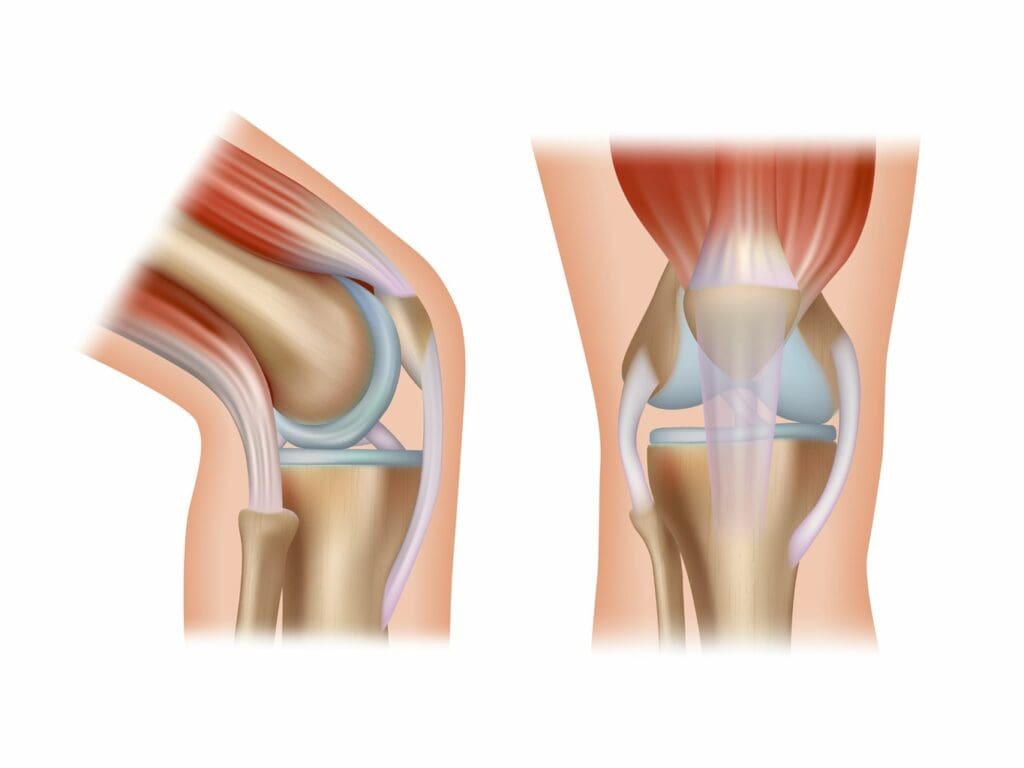
To understand knee replacement surgery, we must first look at the knee’s anatomy and its role. The knee is a large and complex joint. It’s key for our mobility and daily tasks.
The Anatomy of the Knee Joint
The knee has three main bones: the femur, tibia, and patella. These bones are connected by ligaments and tendons. This setup allows for movement and stability.
The knee is split into three parts: medial, lateral, and patellofemoral. Each part has cartilage that helps the bones move smoothly. Damage to any part can cause pain and trouble moving.
The medial compartment is between the inner bones. The lateral compartment is between the outer bones. The patellofemoral compartment is where the kneecap meets the femur. Problems in any area can lead to pain and mobility issues.
When Knee Replacement Becomes Necessary
Knee replacement surgery is needed when the joint is badly damaged. This damage is often due to arthritis, injury, or other conditions. Osteoarthritis is the most common cause, leading to bone-on-bone contact and pain.
When other treatments don’t work, surgery is considered. The choice between partial or total knee replacement depends on the damage’s extent and location. Knowing the knee’s anatomy and condition is key to choosing the right surgery.
What Does a Partial Knee Replacement Look Like?

Understanding what a partial knee replacement looks like is key when thinking about knee surgery. This surgery, also known as a unicompartmental knee replacement, only replaces the damaged part of the knee. It uses artificial parts to fix the problem.
Visual Explanation of the Procedure
The surgeon starts by making an incision to get to the knee joint. Then, they remove the damaged cartilage and bone from the bad area. Next, they put in artificial parts, usually made of metal and plastic, to replace what was removed.
This surgery is less invasive than a total knee replacement. It keeps the healthy parts of the knee intact.
The surgeon carefully checks the knee to see how much damage there is. They choose the right size and type of implant for the job. The goal is to make the knee work like it used to, but with less downtime.
Components and Materials Used
The parts used in this surgery are made to move like a real knee. They include a metal piece for the femur (thigh bone) and a metal piece for the tibia (shin bone). There’s also a plastic spacer to help the metal parts move smoothly.
| Component | Material | Description |
|---|---|---|
| Femoral Component | Metal (Cobalt-Chromium or Titanium) | Replaces the damaged surface of the femur |
| Tibial Component | Metal (Cobalt-Chromium or Titanium) with Plastic Spacer | Replaces the damaged surface of the tibia and provides a smooth gliding surface |
Knowing about the parts and materials used in partial knee replacement helps patients understand the surgery better. It also prepares them for what to expect during recovery.
The Three Compartments of the Knee
The human knee is a complex joint with three distinct parts. Each part plays a key role in our movement. Knowing about these parts is key to understanding knee replacement surgery.
Medial Compartment
The medial compartment is the innermost part of the knee. It’s where the inner parts of the thigh and shin bones meet. This area takes a lot of our body’s weight and stress, mainly when we bend or stand on it.
Lateral Compartment
The lateral compartment is on the outside of the knee. It’s where the outer parts of the thigh and shin bones meet. This area works with the medial compartment to help the knee move smoothly and stay stable.
Patellofemoral Compartment
The patellofemoral compartment is between the kneecap and the femoral groove. It’s important for straightening the knee. This area gets stressed during activities like climbing stairs or squatting.
Damage to any of these areas can cause knee pain and make it hard to move. This might mean you need knee replacement surgery. The type of surgery needed depends on where and how much damage there is.
| Compartment | Description | Common Issues |
|---|---|---|
| Medial | Innermost part of the knee joint, weight-bearing | Osteoarthritis, wear and tear |
| Lateral | Outer aspect of the knee, facilitates movement | Ligament injuries, osteoarthritis |
| Patellofemoral | Between kneecap and femoral groove, critical for extension | Patellofemoral pain syndrome, osteoarthritis |
Knowing about the three parts of the knee helps us understand knee replacement surgery. Surgeons use this knowledge to choose the best surgery for each case.
Partial Knee Replacement: Procedure Overview
Partial knee replacement surgery is becoming more popular. It’s known for being less invasive and allowing for quicker recovery. This method is best for those with damage in just one part of the knee.
Surgical Approach and Techniques
The surgery for partial knee replacement uses a smaller cut than total knee replacement. This smaller incision helps surgeons get to the damaged area without harming too much of the surrounding tissue.
Doctors use advanced tools and methods to place the prosthetic parts accurately. They aim to make the knee work like it used to while keeping as much healthy tissue as they can.
Minimally Invasive Options
Some patients can choose a minimally invasive partial knee replacement. This method uses smaller cuts and special tools to cause less damage to the tissues.
Choosing this option might mean less pain, less blood loss, and faster healing. But, not everyone can have this surgery. The choice depends on the individual’s health and the extent of their knee damage.
| Surgical Aspect | Partial Knee Replacement | Total Knee Replacement |
|---|---|---|
| Surgical Incision Size | Smaller | Larger |
| Tissue Preservation | More tissue preserved | Less tissue preserved |
| Recovery Time | Generally faster | Generally longer |
Total Knee Replacement: Procedure Overview
Understanding the total knee replacement procedure is key when considering surgery. This surgery replaces all parts of the knee with artificial ones. It aims to improve function and reduce pain.
Surgical Approach and Techniques
Total knee replacement surgery is done under general or regional anesthesia. We use different techniques, each with its own benefits. The choice depends on the patient’s needs and the surgeon’s expertise.
Key Steps in Total Knee Replacement Surgery:
- Preparation of the knee joint by removing damaged cartilage and bone.
- Resurfacing of the femur, tibia, and patella with artificial components.
- Balancing the soft tissues to ensure proper knee alignment and function.
Components and Materials Used
The parts used in total knee replacement are made to move like a natural knee. They are usually made from metal alloys, high-grade plastics, and sometimes ceramics.
| Component | Material | Description |
|---|---|---|
| Femoral Component | Metal Alloy | Replaces the damaged femoral surface. |
| Tibial Component | Metal and Plastic | Replaces the tibial surface, with a metal base and plastic insert. |
| Patellar Component | Plastic or Ceramic | Resurfaces the patella to improve tracking and reduce pain. |
Knowing about the materials and parts used in total knee replacement helps patients understand the complexity and customization of the procedure.
Key Differences Between Partial and Total Knee Replacement
When thinking about knee replacement surgery, it’s important to know the differences between partial and total knee replacement. We’ll look at the main differences to help you choose the best surgery for your needs.
Amount of Bone and Tissue Preserved
Partial knee replacement only replaces the damaged part of the knee. This keeps the healthy bone and tissue. It’s less invasive and keeps the knee’s natural shape.
Total knee replacement, on the other hand, replaces the whole knee joint. This means more bone and tissue need to be removed. It’s effective for severe damage but changes the knee’s structure more.
Surgical Invasiveness Comparison
Partial knee replacement is less invasive. It needs a smaller cut and disturbs less tissue. This can mean less pain after surgery and a quicker recovery.
Total knee replacement is more invasive. It requires a bigger cut and more tissue disruption. While it’s improved, it usually means a longer recovery time than partial knee replacement.
Post-Operative Function and Feel
After surgery, the knee can feel and work differently. Partial knee replacement often feels more natural. This is because the healthy parts of the knee are left untouched.
Total knee replacement can feel less natural. But, new prosthetics and surgical methods are making it better. It’s very good at reducing pain and improving function.
| Characteristics | Partial Knee Replacement | Total Knee Replacement |
|---|---|---|
| Amount of Bone and Tissue Preserved | More bone and tissue preserved | Less bone and tissue preserved |
| Surgical Invasiveness | Less invasive | More invasive |
| Post-Operative Function and Feel | More natural feel and function | Less natural feel, but highly successful in pain alleviation |
Benefits of Partial Knee Replacement
Partial knee replacement offers many benefits, like less pain and more natural movement. It’s a popular choice for patients and doctors because it’s better than total knee replacement.
Less Pain and Blood Loss
Partial knee replacement means less pain and blood loss. Studies have shown it’s less painful than total knee replacement. This is because it’s less invasive, with smaller cuts and less tissue damage.
This approach also means less blood loss. This lowers the risk of complications and speeds up recovery.
Faster Recovery Time
Recovery from partial knee replacement is faster. It’s less invasive, so the knee heals quicker. Patients can get back to their daily activities sooner than with total knee replacement.
A study shows the recovery times differ between the two options.
| Recovery Aspect | Partial Knee Replacement | Total Knee Replacement |
|---|---|---|
| Average Hospital Stay | 2-3 days | 3-4 days |
| Return to Daily Activities | 4-6 weeks | 6-12 weeks |
| Full Recovery | 3-6 months | 6-12 months |
More Natural Knee Motion
Partial knee replacement also means more natural movement. It keeps the healthy parts of the knee, allowing for better motion. This is great for active people or athletes.
We think partial knee replacement is a good choice for many. It offers less pain, faster recovery, and better movement. But, it’s important to talk to an orthopedic specialist to see if it’s right for you.
Recovery Time for Partial Knee Replacement vs. Total Replacement
The time it takes to recover from knee replacement surgery changes a lot. It depends on whether you had a partial or total replacement. Knowing these differences helps set the right expectations and plan for after the surgery.
Hospital Stay Duration
People with partial knee replacements usually stay in the hospital less than those with total replacements. The exact time can vary, but partial knee patients often go home in a day or two. On the other hand, total knee patients might stay two to four days because their surgery is more complex.
Physical Therapy Requirements
Physical therapy is key for both partial and total knee replacement patients. But, the type and length of therapy can differ. Partial knee patients usually need less intense therapy because more of their tissue and bone are left intact. Total knee patients, needing to rebuild strength and mobility, often require more extensive rehab.
Return to Daily Activities Timeline
The time it takes to get back to daily activities also varies. Partial knee patients can get back to normal in 4 to 6 weeks. Total knee patients, needing more time to heal, might take 8 to 12 weeks or longer. This is because partial knee replacements are less invasive and preserve more natural structures.
Understanding these recovery times helps patients prepare for the healing process. It also helps them make informed choices about their treatment.
Potential Risks and Complications
Knee replacement surgeries, whether partial or total, come with risks and complications. It’s important for patients to know these risks. This knowledge helps in making informed treatment decisions.
Risks Associated with Partial Knee Replacement
Partial knee replacement is less invasive than total knee replacement. Yet, it has its own risks. These include:
- Infection: As with any surgical procedure, there’s a risk of infection with partial knee replacement.
- Implant Failure: The prosthetic components may wear out or fail over time, necessitating further surgery.
- Blood Clots: Deep vein thrombosis (DVT) is a risk following knee replacement surgery.
To reduce these risks, patients may take antibiotics and blood thinners. The surgery’s success also depends on the surgeon’s skill and post-operative care.
Risks Associated with Total Knee Replacement
Total knee replacement involves replacing the entire knee joint. It’s effective but comes with risks. These include:
- Instability: The knee may feel unstable or give way, if the soft tissues are not balanced.
- Wear and Tear: The prosthetic components can wear out over time, potentially requiring revision surgery.
- Nerve Damage: There’s a risk of nerve damage during total knee replacement surgery, which can result in numbness or pain.
Careful planning, precise surgical technique, and proper rehabilitation can help reduce these risks.
Understanding the risks of partial and total knee replacement helps patients and surgeons make informed decisions.
| Risk Factor | Partial Knee Replacement | Total Knee Replacement |
|---|---|---|
| Infection Risk | Lower due to smaller incision and less tissue disruption | Higher due to larger incision and more extensive tissue disruption |
| Recovery Time | Generally shorter due to less invasive nature | Longer due to more extensive surgery |
| Implant Failure | Risk exists but may be lower due to less extensive prosthetics | Risk is present and may be higher due to more components involved |
By understanding these risks, patients can better prepare for their surgery. They can work closely with their healthcare providers to minimize these risks.
Candidacy: Who Is Suitable for Partial vs. Full Knee Replacement?
When thinking about knee replacement surgery, it’s important to know what makes someone a good candidate for partial or total replacement. We look at several key factors to find the best option for each patient.
Age and Activity Level Considerations
Age and how active you are are big factors in choosing between partial or total knee replacement. Younger, more active people often do better with partial knee replacement. This is because it can lead to a quicker recovery and more natural movement.
Key considerations include:
- Younger patients tend to have better outcomes with partial knee replacement.
- Patients with higher activity levels may prefer partial replacement to maintain knee function.
- Older patients or those with less demanding lifestyles might be suitable for total knee replacement.
Extent and Location of Knee Damage
The extent and location of knee damage are key in deciding between partial and total knee replacement. Those with damage in just one part of the knee usually do better with partial replacement.
Factors to consider:
- The number of compartments affected by arthritis or damage.
- The severity of the damage within the affected compartment(s).
- The presence of any deformity or instability in the knee.
Pre-existing Conditions and Contraindications
Health conditions before surgery can affect whether you’re a good candidate for partial or total knee replacement. Some conditions might make one option better than the other.
Important pre-existing conditions include:
- Rheumatoid arthritis or other inflammatory arthritis.
- Significant knee deformity or instability.
- Previous knee surgeries or infections.
By carefully looking at these factors, we can choose the best knee replacement option for each patient. This ensures the best possible results.
Conclusion: Making an Informed Decision About Knee Replacement Options
Understanding the differences between partial and total knee replacement is key. This knowledge helps patients choose the right surgery for their needs. Each procedure has unique aspects that fit different health goals and preferences.
We’ve looked at the knee’s anatomy and when surgery is needed. We’ve also compared partial and total knee replacements. Partial knee replacement offers less pain, less blood loss, faster recovery, and more natural movement.
When picking a knee replacement, talk to your doctor about your situation. This way, you can make a choice that fits your health goals and lifestyle. We urge patients to be involved in their care. Ask questions and consider a second opinion to get the best results from your surgery.
FAQ
What is a partial knee replacement?
A partial knee replacement is a surgery. It replaces only the damaged part of the knee. This way, the healthy parts stay intact.
How does a partial knee replacement differ from a total knee replacement?
A total knee replacement changes the whole knee. But, a partial knee replacement only fixes the damaged part.
What are the benefits of partial knee replacement?
It offers less pain and blood loss. Recovery is faster, and knee motion feels more natural.
What is the recovery time for partial knee replacement?
Recovery is quicker than for total knee replacement. Most people can get back to daily life in a few weeks.
Who is a suitable candidate for partial knee replacement?
Active people with damage in just one part of the knee are good candidates. They should have some knee function left.
What are the risks and complications associated with partial knee replacement?
Risks include infection and blood clots. But, these are less common than with total knee replacement.
How does the surgical approach differ between partial and total knee replacement?
Partial knee replacement is less invasive. It uses a smaller incision and disturbs less tissue than total knee replacement.
What are the components and materials used in partial knee replacement?
It uses metal and plastic implants. These are designed to move like the natural knee.
Can I undergo partial knee replacement if I have pre-existing health conditions?
It depends on your health condition and its severity. Talk to a healthcare professional about your options.
How do I decide between partial and total knee replacement?
Choose based on your knee damage, age, activity level, and health. A healthcare professional can help you decide.
What is the difference in hospital stay duration between partial and total knee replacement?
Patients with partial knee replacement usually stay in the hospital less than those with total knee replacement.
REFERENCES
- [Author(s) unknown]. (n.d.). [Title unavailable]. Retrieved from https://pmc.ncbi.nlm.nih.gov/articles/PMC7232134/