Last Updated on December 2, 2025 by Bilal Hasdemir
What does a positive strep test look like? A visual guide to reading the results of both rapid and culture tests. Getting a positive strep test result can be scary. You might wonder what it means and what happens next. It’s important to know what a positive strep test looks like and what it means. This is because it shows you have Streptococcus pyogenes, the bacteria that causes strep throat.
Strep throat symptoms include a sore throat, trouble swallowing, swollen tonsils, and white patches on your throat. We’ll explain how streptococcus testing works. We’ll also talk about what a positive strep throat test means for your treatment.
Key Takeaways
- A positive strep test result confirms the presence of Group A Streptococcus bacteria.
- Understanding the test result is essential for guiding treatment decisions.
- Prompt antibiotic treatment is critical for managing strep throat effectively.
- A strep antigen test is a common method used for diagnosing strep throat.
- Recognizing the symptoms of strep throat can help in seeking timely medical attention.
Understanding Strep Throat and Group A Streptococcus

Strep throat is caused by Group A Streptococcus bacteria. It’s an upper respiratory infection that makes the back of the throat and tonsils inflamed. This common illness affects millions, mostly children.
What is Group A Streptococcus?
Group A Streptococcus (GAS) causes strep throat and other infections like skin issues and pneumonia. GAS is highly contagious. It spreads through contact with an infected person’s mucus and saliva.
GAS is named for the specific antigen on its surface. The “A” in Group A Streptococcus shows this antigen. Knowing this helps doctors choose the right treatment.
Common Symptoms of Strep Throat
Strep throat symptoms differ from person to person. Common signs include:
- Severe sore throat that comes on quickly
- Pain when swallowing
- Fever, typically above 101°F (38.3°C)
- Swollen, tender, and enlarged lymph nodes in the neck
- White or yellow patches on the tonsils
These symptoms can be like a viral throat infection. It’s key to get tested to find out the cause.
Complications of Untreated Strep Infections
Untreated strep throat can cause serious problems. These include:
- Kidney inflammation (post-streptococcal glomerulonephritis)
- Rheumatic fever, which can damage heart valves
- Ear and sinus infections
- Abscesses around the tonsils
Quick treatment with antibiotics can prevent these issues. So, it’s important to see a doctor if symptoms don’t get better or get worse.
Types of Strep Tests Available
Diagnosing strep throat involves several tests, like rapid antigen detection tests and throat cultures. Knowing about these tests is key for accurate diagnosis and treatment.
Rapid Antigen Detection Tests (RADT)
Rapid Antigen Detection Tests (RADT) are popular for strep throat diagnosis. They’re fast, detecting Group A Streptococcus antigens in the throat.
- Advantages: Results come quickly, allowing for fast treatment.
- How they work: A throat swab is tested for specific antigens.
Throat Cultures
Throat cultures are the top choice for strep throat diagnosis. They’re slower but more accurate than RADT.
- Advantages: Very reliable due to high sensitivity and specificity.
- How they work: A throat swab is cultured to grow streptococcal bacteria.
Molecular Tests for Strep A
Molecular tests, like PCR, are very accurate for Group A Streptococcus. They’re great when diagnosis is unsure.
- Advantages: Very accurate and can find bacteria even in small amounts.
- How they work: They look for the bacteria’s genetic material.
Choosing the right strep test depends on the patient’s symptoms and the need for quick results. Understanding each test helps healthcare providers make better decisions for patient care.
The Science Behind Strep Testing
To understand strep tests, we need to look at the science behind them. These tests check for Group A Streptococcus (GAS) antigens in throat swabs. They work by using antigens and antibodies.
How Antigens and Antibodies Interact
Strep tests rely on how our immune system fights GAS infections. When GAS infects the throat, our body makes antibodies to fight it. These tests use monoclonal antibodies because they are very specific to GAS.
Antigens and antibodies fit together like a key and lock. This is why strep tests can accurately find GAS. The antibodies in the tests have markers, like colored particles, that show a positive result when they find an antigen.
Chemical Extraction Process
The chemical extraction process is key in strep testing. When a throat swab is taken, it goes into a solution that breaks open the bacteria. This step, called lysis, is important for getting the antigens out.
The solution contains detergents and enzymes to break down the bacterial walls. How well this process works affects the test’s sensitivity. It determines how many antigens can be found.
Detection Mechanisms in Different Test Types
Strep tests use different ways to detect antigens. Rapid Antigen Detection Tests (RADT) use a lateral flow immunoassay. This means the sample moves along a membrane, and the antigen-antibody complexes show up as a line or color change. Molecular tests, though, amplify the GAS bacteria’s genetic material for even more sensitive detection.
Knowing how these tests work is key to understanding their results. For example, a RADT positive result means GAS antigens are present. But a negative result might need a more sensitive molecular test if the doctor is not sure.
Understanding the science of strep testing helps healthcare providers. They can use this knowledge to improve patient care by choosing the right tests.
What Does a Positive Strep Test Look Like?
The outcome of a strep test is shown by specific signs on the test strip. These signs are key for doctors to correctly diagnose strep throat.
Visual Indicators on Rapid Tests
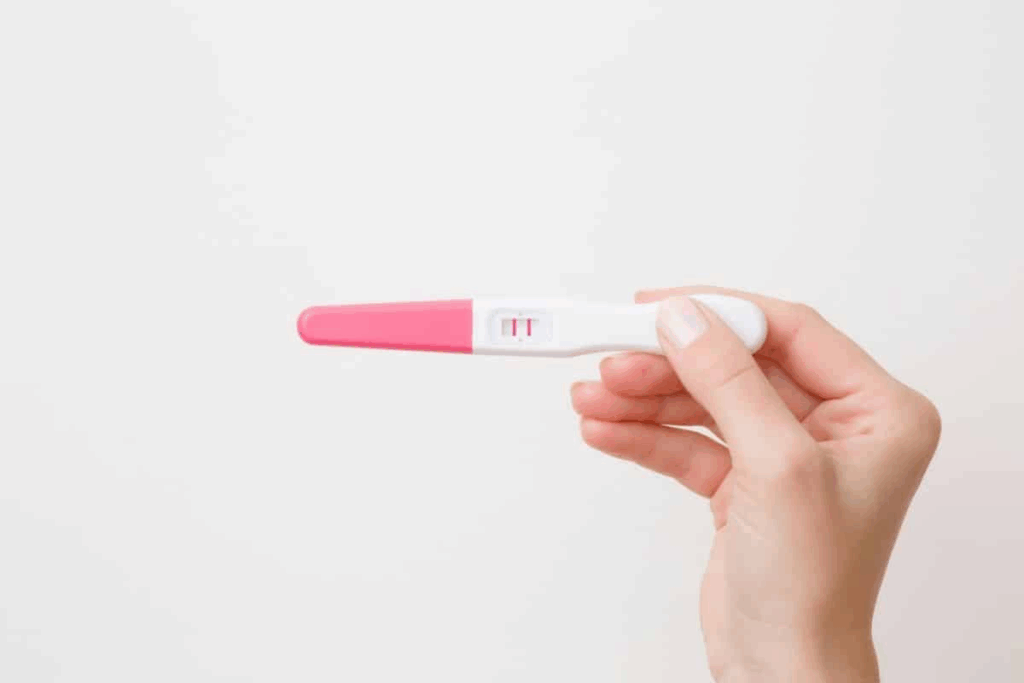
Rapid strep tests look for Group A Streptococcus antigens in a throat swab. A positive result shows two lines: a blue Test Line and a red Control Line.
“Seeing a blue line with a red line means the test is positive,” doctors say. This is important for diagnosing strep throat.
Reading Test and Control Lines
The Test Line and Control Line have different roles. The Control Line is red and shows the test is working right. The blue Test Line shows Group A Streptococcus antigens are present.
- A red Control Line means the test is correct.
- A blue Test Line means Group A Streptococcus is found.
Color Changes and Their Meaning
The colors on a rapid strep test are easy to understand. Seeing both a red Control Line and a blue Test Line means it’s positive. If only the red Control Line shows, it’s negative. If no red Control Line, the test is invalid.
Always follow the test’s instructions, as the steps and meanings can differ.
“Accurate diagnosis of strep throat relies heavily on correctly interpreting the results of rapid strep tests,” says a leading expert in infectious diseases.
How Does a Strep Test Work?
A strep test checks for Group A Streptococcus, the bacteria that causes strep throat. It involves collecting a sample, processing it, and then waiting for the results. We’ll explain each step and how long it takes.
Sample Collection Process
The first step is taking a throat swab. A healthcare professional uses a clean swab to gently rub the back of your throat and tonsils. This might feel a bit uncomfortable but is usually quick and doesn’t hurt much.
Key aspects of sample collection include:
- Using a sterile swab to avoid contamination
- Rubbing the swab against the tonsils and the back of the throat
- Ensuring the swab is handled carefully to preserve the sample
Test Processing Steps
After collecting the sample, it’s processed using different methods. Rapid Antigen Detection Tests (RADT) treat the swab with chemicals to find antigens. These are then detected using a test strip.
The test processing steps involve:
- Chemical extraction of antigens from the swab
- Applying the extracted sample to a test strip or device
- Waiting for the test to develop results, usually within 5 to 20 minutes
Result Development Timeline
The time to get strep test results varies. Rapid tests can show results in 5 to 10 minutes. Throat cultures, on the other hand, take 24 to 48 hours.
Here’s what you can expect regarding the timeline:
- Rapid Antigen Detection Tests: 5 to 10 minutes
- Throat Cultures: 24 to 48 hours
- Molecular Tests: Varies, but often quicker than traditional cultures
Knowing how a strep test works and how long it takes helps everyone involved. It aids in making the right decisions about diagnosis and treatment.
Interpreting Rapid Strep Test Results
Getting the right results from a rapid strep test is key to your treatment. The test can show you’re positive, negative, or if the results are invalid. Knowing what each means helps you know what to do next.
Positive Result Identification
A positive rapid strep test means you have Group A Streptococcus, the strep throat bacteria. If your test is positive, you probably have strep throat. You’ll see two lines: one in the control area and one in the test area. Seeing these lines, even if faint, usually means you’re positive.
Negative Result Identification
A negative strep test means Group A Streptococcus wasn’t found. If your test is negative, your symptoms might be from a virus. A negative result shows just one line in the control area. But, it’s important to see a doctor, as a negative result doesn’t always mean you don’t have strep throat, even if your symptoms don’t go away.
Invalid Test Results
An invalid strep test result happens when the test isn’t clear. This can be if the control line is missing or if the test was done wrong. If this happens, you might need to take the test again. Always talk to a healthcare professional if you get an invalid result.
Test Result | Interpretation | Next Steps |
Positive | Group A Streptococcus detected | Antibiotic treatment likely recommended |
Negative | Group A Streptococcus not detected | Further evaluation for other causes of symptoms |
Invalid | Test result unclear or not valid | Retest or consult healthcare provider |
Understanding your rapid strep test results is very important for your health. Whether you’re positive, negative, or if the results are invalid, always talk to a healthcare provider. They can make sure you get the right care.
Timeframe for Strep Test Results
The time it takes to get strep test results varies. This depends on the type of test used. We will look at the different strep tests and how long they take to get results.
How Long Does a Rapid Strep Test Take?
Rapid strep tests give quick results, usually in 5 to 20 minutes. They are often used in clinics because they help doctors make quick decisions. This is great for patients who need treatment fast.
Some benefits of rapid strep tests are:
- They give fast results, helping with quick diagnosis and treatment
- They are convenient for both patients and doctors
- They help doctors make immediate treatment choices
Waiting Time for Throat Culture Results
Throat cultures take longer, usually 24 to 48 hours. This is because they need to be sent to a lab for analysis. There, they check for Group A Streptococcus bacteria.
Even though throat cultures take longer, they can be more accurate. Doctors might use them if rapid tests are negative but they think strep throat is possible.
Factors Affecting Result Timing
Several things can affect how long it takes to get strep test results. These include:
- The type of test used (rapid vs. culture)
- The lab’s processing time
- The lab’s workload
- The specific testing methods used
Knowing these factors can help patients and doctors know when to expect results. Also, new medical technology is always trying to make results come faster.
Accuracy and Reliability of Group A Strep Tests
Knowing how accurate Group A strep tests are is key for good diagnosis and treatment. These tests help find strep throat, a bacterial infection. But, their accuracy can change based on the test type and the sample quality.
Sensitivity and Specificity Rates
The sensitivity and specificity of Group A strep tests are important. Sensitivity shows how well a test finds people with the disease (true positive rate). Specificity shows how well it finds people without the disease (true negative rate). Rapid antigen detection tests (RADT) for strep throat have sensitivity rates from 70% to 90%. Specificity rates are usually above 95%.
Test Type | Sensitivity Range | Specificity Range |
RADT | 70-90% | 95%+ |
Throat Culture | 90%+ | 95%+ |
Molecular Tests | 95%+ | 95%+ |
False Positive and False Negative Results
False positive and false negative results can happen with Group A strep tests, but they’re rare. A false positive result means a test says someone has strep throat when they don’t. A false negative result means it misses strep throat in someone who has it. Poor sample quality, test timing, and method can cause these errors.
“The accuracy of rapid strep tests can be influenced by several factors, including the operator’s technique and the patient’s clinical presentation.”
— Journal of Clinical Microbiology
When Follow-Up Testing is Needed
More testing might be needed if the first test is negative but you think someone has strep throat, like in kids. A throat culture is often used as a follow-up to confirm strep throat. If a test is wrong, repeating it or trying a different method might be needed.
Understanding Group A strep tests’ strengths and weaknesses helps healthcare providers make better choices. It’s important for both doctors and patients to know about the chance of false results and the need for follow-up tests.
After a Positive Strep Test: Treatment and Recovery
After getting a positive strep test, you need to start treatment and recovery steps. Strep throat is caused by Group A Streptococcus. It’s treated with antibiotics to kill the bacteria and prevent complications.
Common Antibiotic Protocols
The main treatment for strep throat is antibiotics. Penicillin and amoxicillin are often used because they work well against Group A Streptococcus. These antibiotics kill the bacteria, making symptoms less severe and shorter.
It’s important to finish all antibiotics, even if you start feeling better. This makes sure the infection is gone and helps prevent antibiotic resistance.
Antibiotic | Typical Dosage | Duration |
Penicillin | 250 mg, 2-3 times a day | 10 days |
Amoxicillin | 500 mg, once or twice a day | 10 days |
Recovery Timeline and Expectations
Most people start feeling better in 24 to 48 hours after starting antibiotics. But, it’s key to finish all antibiotics to fully recover and avoid complications.
While recovering, it’s good to:
- Drink lots of fluids
- Rest a lot to help your body heal
- Use throat lozenges or gargle with salt water to ease a sore throat
When to Seek Additional Medical Care
Even though most people get better from strep throat, sometimes you need more medical help. If you have any of these, see a doctor:
- Worsening or lasting symptoms
- Severe throat pain or trouble swallowing
- Fever that doesn’t go away after 48 hours of antibiotics
- Signs of dehydration, like too much thirst or dark urine
If you have questions or concerns about your treatment or recovery, talk to your healthcare provider.
Home Strep Tests vs. Clinical Testing
When it comes to diagnosing strep throat, we have two main options: home strep tests and clinical testing. The choice between them depends on several factors. These include the severity of symptoms, personal preference, and the need for accuracy.
Availability and Types of Home Tests
Home strep tests are easy to find at pharmacies and online. They come in two types: rapid antigen detection tests (RADT) and molecular tests. RADT tests give results quickly, while molecular tests are more accurate but less common for home use.
“The convenience of home strep tests is undeniable,” says Dr. Jane Smith, a primary care physician. “But it’s important to follow the instructions carefully to get accurate results.”
Reliability Comparison
Clinical strep testing is usually more reliable than home tests. This is because healthcare professionals use stricter protocols. They can also do more tests if needed. Home tests, while easy to use, may not always be accurate.
- Clinical testing: High accuracy, often with the option for throat culture confirmation
- Home RADT: Moderate accuracy, quick results
- Home molecular tests: High accuracy, but less common and may require lab processing
It’s important to consider the convenience of home tests against their possible lower accuracy. If you have severe symptoms or are at risk for complications, clinical testing is best.
When Professional Testing is Necessary
Home strep tests are good for initial checks, but sometimes you need professional testing. This is true for severe symptoms like trouble swallowing or high fever. If you’re at risk for complications, you should see a doctor.
Always see a healthcare professional if you’re not sure about your diagnosis or if symptoms get worse. They can give a more accurate diagnosis and suggest the right treatment.
Conclusion
Getting a correct diagnosis and starting treatment early is key to avoiding serious problems and helping you get better. We’ve looked at the different strep tests, how they work, and what a positive test means.
It’s important to understand strep test results to make the right treatment choices. This helps doctors give the right medicine and keep an eye on how you’re doing.
Getting strep diagnosed right is very important. It helps avoid using antibiotics when not needed and lowers the chance of serious problems from untreated strep. We’ve seen how quick treatment can make a big difference in health.
Knowing about strep test results helps us all work towards better health for those with this common infection.
FAQ
What is a strep test, and how does it work?
A strep test checks for Group A Streptococcus bacteria, which cause strep throat. It uses a rapid antigen detection test (RADT) or a throat culture. These tests look for antigens or bacteria in a throat swab.
What does a positive strep test result mean?
A positive result means Group A Streptococcus bacteria are in your throat. This confirms strep throat. Doctors usually prescribe antibiotics to treat it.
How long does it take to get strep test results?
The time to get results varies. Rapid tests give results in minutes to hours. Throat cultures take several days.
What are the common symptoms of strep throat?
Strep throat symptoms include a sore throat and fever. You might also have swollen lymph nodes and white patches on your tonsils. Some people get nausea, vomiting, or stomach pain too.
Can I use a home strep test, and are they reliable?
Home strep tests are available. But, they might not be as accurate as tests done in a doctor’s office. It’s best to get tested professionally for a reliable diagnosis.
What is the treatment for strep throat, and how long does recovery take?
Treatment for strep throat is antibiotics. Recovery usually takes a few days after starting treatment. It’s important to finish the whole antibiotic course.
How accurate are Group A strep tests?
Group A strep tests, like RADT and throat cultures, are mostly reliable. But, there’s a chance of false positives or negatives. Sometimes, you might need to get tested again.
What are the possible complications of untreated strep throat?
Untreated strep throat can cause serious problems. These include kidney inflammation, rheumatic fever, or throat abscesses. Getting treatment quickly is key to avoiding these issues.
How is a strep test sample collected?
A healthcare professional collects a sample with a throat swab. They gently rub the swab against your tonsils and throat to get cells and secretions.
Can I get a false negative result on a strep test?
Yes, getting a false negative result is possible. This can happen if the test is done too early or if the swab isn’t collected right.
How do I interpret the results of a rapid strep test?
To understand rapid strep test results, look for test and control lines. A positive result shows both lines. A negative result shows only the control line. If the result is unclear, you might need to be tested again.
What is the difference between a rapid strep test and a throat culture?
Rapid strep tests give quick results, in minutes to hours. Throat cultures take days to get results. Doctors might use a throat culture if the rapid test is negative but they suspect strep throat.
References
- National Institute on Deafness and Other Communication Disorders. (n.d.). Tonsillectomy and Adenoidectomy. Retrieved from https://www.ncbi.nlm.nih.gov/books/NBK536942/