Last Updated on December 2, 2025 by Bilal Hasdemir

What does a throat look like? A visual guide comparing a healthy throat to signs of inflammation or potential throat cancer. Throat cancer, also known as laryngeal or pharyngeal cancer, is a serious disease. It affects the squamous cells lining the throat. Knowing its visual signs is key for early detection and treatment.
At Liv Hospital, we stress the need to know throat cancer’s visual signs. Look out for persistent white or red patches, non-healing sores, and unexplained neck lumps. These can mean the disease is present.
Early symptoms often seem like common infections. This makes it hard to diagnose. But knowing the unique visual signs can help improve treatment results.
Key Takeaways
- Throat cancer affects squamous cells lining the throat.
- Visual signs include white or red patches and non-healing sores.
- Unexplained neck lumps can be a sign of throat cancer.
- Early detection is key for effective treatment.
- Liv Hospital offers detailed evaluations and personalized care.
Understanding Throat Cancer
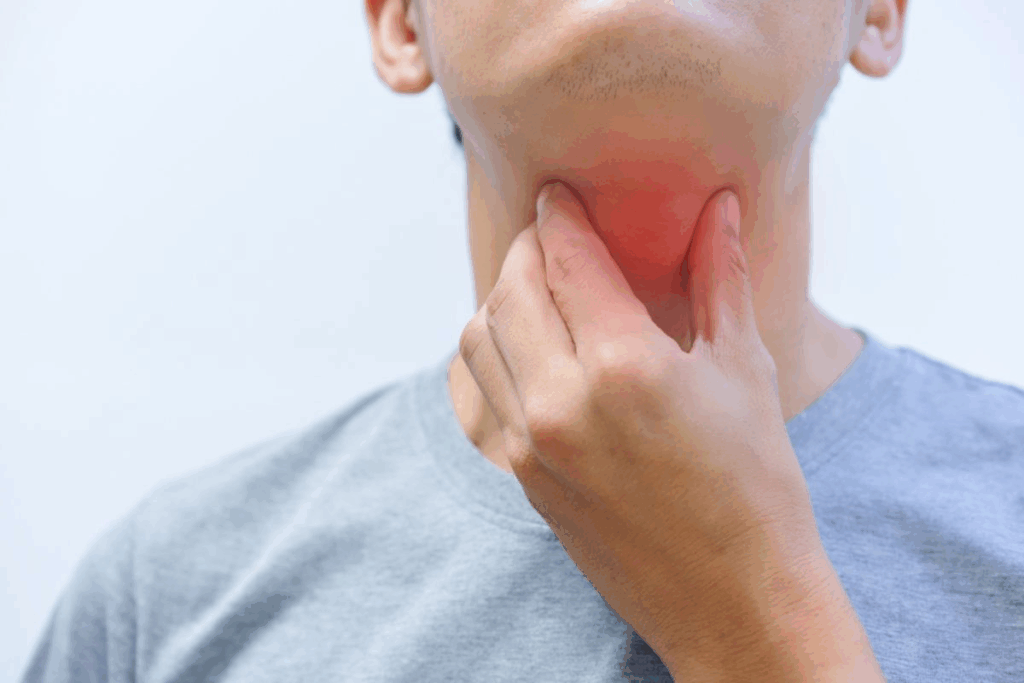
To understand throat cancer, we need to know its types, how common it is, and what increases the risk. Throat cancer, also known as laryngeal or pharyngeal cancer, is a big health issue worldwide.
Types of Throat Cancer
There are several types of throat cancer, based on where it happens. The main types are:
- Laryngeal cancer, which affects the larynx or voice box.
- Pharyngeal cancer, which affects the pharynx, the tube that connects the nose and mouth to the esophagus.
- Oropharyngeal cancer, which affects the oropharynx, the part of the throat at the back of the mouth.
About 31,000 people in the United States get throat cancer every year. Laryngeal cancer makes up about 12,000 of these cases. The rest are mostly pharyngeal cancers.
Prevalence and Statistics
Throat cancer is more common in some places and among certain groups. For example, it’s more common in men than in women. The risk also goes up with age, after 55.
Type of Throat Cancer | Estimated Annual Cases in the US |
Laryngeal Cancer | 12,000 |
Pharyngeal Cancer | 19,000 |
“The incidence of throat cancer, mainly oropharyngeal cancer, has been rising. This is largely due to more human papillomavirus (HPV) infections.”
Risk Factors and Causes
Several factors increase the risk of throat cancer. The biggest risk factors are:
- Tobacco use: Smoking or using tobacco products significantly increases the risk of throat cancer.
- Alcohol consumption: Heavy drinking is another major risk factor.
- HPV infection: Certain strains of HPV are associated with an increased risk of oropharyngeal cancer.
- Diet and nutrition: A diet lacking essential nutrients may also play a role.
Knowing these risk factors is key to preventing and catching throat cancer early. As we learn more about throat cancer, awareness and education are vital in fighting this disease.
What Does a Throat Look Like When Healthy

Knowing what a healthy throat looks like is key to spotting problems early. A healthy throat is vital for swallowing, speaking, and breathing. We’ll look at the throat’s normal structure, how it can vary, and common non-cancerous issues.
Normal Throat Anatomy
A healthy throat, or pharynx, is a muscular tube from the back of the nose to the esophagus. It’s covered in mucous membranes and has lymphoid tissues like tonsils. The throat is important for digestion and breathing.
The throat’s look can differ from person to person. A healthy throat is usually:
- A smooth, pinkish-red color
- No visible lesions or ulcers
- Tonsils that are not enlarged or inflamed
- A clear airway without obstructions
Variations in Healthy Throat Appearance
While there’s a standard for a healthy throat, there are variations. For example, some people might have:
- Slightly different tonsil sizes
- Minor variations in mucous membrane color
- Small, benign growths or cysts that are not harmful
These differences are usually normal. But, it’s important to notice any changes that might mean a problem.
Common Non-Cancerous Throat Conditions
There are many non-cancerous throat issues. Knowing about them helps tell them apart from serious problems like throat cancer. Some common ones include:
Condition | Description | Characteristics |
Tonsillitis | Inflammation of the tonsils | Enlarged, red tonsils; possible white or yellow coating |
Pharyngitis | Inflammation of the pharynx | Sore throat; redness; possible white patches |
Benign Cysts | Fluid-filled sacs in the throat | Small, usually painless lumps |
These conditions can be uncomfortable but are not cancerous. Yet, any lasting or unusual throat changes should be checked by a doctor. This helps avoid missing serious conditions, like throat cancer.
Understanding a healthy throat and its variations helps people notice when something’s off. This knowledge lets people get medical help early. It can lead to quicker diagnosis and treatment of throat problems, including throat cancer.
Early Visual Signs of Throat Cancer
Spotting the early signs of throat cancer is key to getting help quickly. Catching it early can greatly improve treatment success and survival chances. We’ll look at the visual clues that might point to throat cancer.
White Patches and Leukoplakia
White patches, or leukoplakia, are an early sign of throat cancer. These patches show up on the throat’s mucous membranes. They might be due to long-term irritation or other risk factors. Even though not all white patches are cancer, it’s important to have a doctor check them.
Red Patches and Erythroplakia
Red patches, or erythroplakia, are another sign to watch for. They are less common but more likely to be cancerous. These red lesions or patches in the throat need medical attention.
Persistent Sores and Ulcerations
Throat sores or ulcerations that won’t heal could be cancer. These sores might hurt and bleed. It’s important to see a doctor if you have these sores.
Visual Sign | Description | Potential Risk |
Leukoplakia (White Patches) | White patches on mucous membranes | Potential for cancer development |
Erythroplakia (Red Patches) | Red lesions or patches | Higher risk of being cancerous |
Ulcerations | Non-healing sores | Cancer or infection |
Throat cancer in its early stages can look like other, less serious issues. So, it’s very important to see a doctor for a proper diagnosis. Knowing these signs can help you get medical help early, which can make a big difference.
Advanced Visual Indicators of Throat Cancer
Throat cancer can show signs that need quick medical help. Spotting these signs is key for both patients and doctors. It helps them understand how serious the disease is and what treatment is needed.
Visible Tumors and Growths
Visible tumors or growths are a sign of throat cancer. They can appear in the tonsils, the base of the tongue, and the uvula. Cancer on the uvula might cause swelling or look irregular. It’s important to notice any unusual growths or changes in the throat.
Neck Swelling and Lymph Node Involvement
Throat cancer can also cause neck swelling. This happens when cancer cells spread to lymph nodes, making them swell. This is a big sign that the cancer might have grown beyond its early stage.
Symptom | Description |
Neck Swelling | Enlargement of lymph nodes due to cancer spread |
Visible Tumors | Growths or tumors in the throat area |
Throat Changes | Alterations in throat structures, including white or red patches |
Physical Changes to Throat Structures
Throat cancer can change the throat’s look, like white spots or patches, or red patches. These can mean squamous cell carcinoma, a common throat cancer type. It’s important to watch for any lasting changes in the throat.
Knowing these signs is key for catching throat cancer early. If you see anything unusual, see a doctor right away.
Throat Cancer by Location: Visual Differences
Throat cancer looks different based on where it is in the throat. The throat, or pharynx, is key for swallowing and breathing. Knowing how cancers in different spots look is vital for correct diagnosis and treatment.
Laryngeal Cancer Appearance
Laryngeal cancer happens in the voice box. Visual signs include voice changes like hoarseness. You might also see tumors or lesions on the vocal cords. In severe cases, it can make swallowing or breathing hard.
Pharyngeal Cancer Appearance
Pharyngeal cancer affects the pharynx, split into three parts: nasopharynx, oropharynx, and hypopharynx. Visual differences include ulcers, white patches (leukoplakia), or red patches (erythroplakia) on the pharynx lining. The look changes based on the part of the pharynx it’s in.
Tonsil and Base of Tongue Cancer
Cancers of the tonsils and base of tongue are oropharyngeal cancers. They show up as tumors or ulcers on the tonsils or at the tongue’s base. Symptoms include trouble swallowing, ear pain, or feeling like something’s stuck in your throat.
Squamous Cell Carcinoma Visual Characteristics
Squamous cell carcinoma is the most common throat cancer, coming from squamous cells. Visual characteristics include white, red patches, or ulcers. In severe cases, it can grow into visible tumors that might bleed or get infected.
Knowing how throat cancer looks by location is key for early detection and treatment. If you see unusual changes or symptoms in your throat, see a healthcare professional for a detailed check-up.
Symptoms That Accompany Visual Changes
Throat cancer can cause many symptoms beyond what you can see. It’s important to know these symptoms for early detection and treatment.
Voice Changes and Hoarseness
One common symptom is a change in voice, often as hoarseness. This happens when cancer affects the vocal cords or nearby areas. If your voice changes for more than two weeks, see a doctor.
Swallowing Difficulties
Another symptom is dysphagia, or trouble swallowing. As cancer grows, it can block food and liquids, making swallowing hard or painful. This is a sign to see a doctor right away.
Persistent Pain and Discomfort
Throat cancer can also cause ongoing pain or discomfort. This pain can get worse over time. Some people may feel pain when swallowing or a feeling of something stuck in their throat.
Ear Pain and Referred Symptoms
Ear pain is a symptom that can be linked to throat cancer. This is because the cancer can affect nerves that also affect the ear. This is called referred pain. It’s important to know that ear pain from throat cancer is not from an ear infection but from the cancer’s effect on nerves.
Common symptoms of throat cancer include a persistent sore throat, hoarseness, trouble swallowing, and ear pain. Knowing these symptoms can help in early detection. For example, white spots on the uvula or in the throat can be a sign of cancer, but not all white spots are cancerous. If you notice any unusual changes or persistent symptoms, see a healthcare professional.
Understanding throat cancer symptoms can help patients get medical help quickly. If you’re experiencing any symptoms, don’t wait to contact a healthcare provider for an evaluation.
- Voice changes and hoarseness
- Difficulty swallowing
- Ear pain and referred symptoms
- White spots or patches in the throat
Early detection is key to effective treatment. By knowing the symptoms and visual changes of throat cancer, patients can take steps to protect their health.
Conditions That May Resemble Throat Cancer
Throat cancer can be hard to spot on your own because it looks like other throat issues. It’s important to know the differences between them.
Strep Throat vs. Throat Cancer
Strep throat is a bacterial infection that causes throat pain, swollen lymph nodes, and fever. It can make your throat red and swollen. But, it doesn’t usually cause the long-lasting sores or white patches seen in throat cancer.
Even so, a bad case of strep throat might look like throat cancer because of the inflammation.
Oral Thrush vs. Leukoplakia
Oral thrush is a fungal infection that shows up as white patches in your mouth and throat. It can look like leukoplakia, a sign of throat cancer. But, there’s a big difference.
Oral thrush patches can be wiped away, leaving red, sore areas. Leukoplakia patches stay put and can’t be easily removed.
Tonsillitis vs. Tonsil Cancer
Tonsillitis is when your tonsils get inflamed, often from an infection. It can make your tonsils swell, hurt, and make it hard to swallow. Tonsil cancer can also make your tonsils swell, but it’s more persistent and uneven.
To tell the difference, you might need a biopsy.
Benign Polyps vs. Cancerous Growths
Benign polyps are non-cancerous growths in your throat. They can change your voice or cause discomfort. While they’re not cancer, big or lasting polyps should be checked for cancer.
Cancerous growths are usually irregular and can cause serious symptoms like trouble swallowing or constant pain.
Knowing these differences is key for early detection and treatment. If you have ongoing throat issues, see a doctor for a proper check-up.
Diagnostic Process: Beyond Visual Inspection
Diagnosing throat cancer is more than just looking at it. It needs tests and procedures. Accurate diagnosis is key for good treatment planning. We’ll explain the steps, like physical exams, imaging, biopsies, and staging.
Physical Examination Techniques
A detailed physical exam is the first step. Doctors use different methods to check the throat and nearby areas. This includes:
- Looking with a mirror or flexible endoscope
- Feeling for abnormalities or tenderness
- Checking the neck for swollen lymph nodes
A thorough physical exam can spot signs of throat cancer that aren’t obvious.
Imaging Tests for Throat Cancer
Imaging tests are vital for diagnosing and understanding throat cancer. They help see how far the disease has spread. Common tests are:
- Computed Tomography (CT) scans
- Magnetic Resonance Imaging (MRI)
- Positron Emission Tomography (PET) scans
As a medical expert said, “Imaging tests are key for accurately staging throat cancer and planning treatment.”
“The use of imaging tests has changed how we diagnose and treat throat cancer,” said Dr. John Smith, a leading oncologist.
Biopsy Procedures and Results
A biopsy is the main way to diagnose throat cancer. It takes a tissue sample for examination. There are different biopsy types, like:
- Fine-needle aspiration biopsy
- Core needle biopsy
- Excisional biopsy
The biopsy results show if the tissue is cancerous and what type it is.
Staging and What It Means Visually
After diagnosing throat cancer, staging shows how far it has spread. Staging looks at the tumor size, lymph node involvement, and if it has spread. Knowing the stage is important for treatment planning.
Stage | Description |
I | Cancer is limited to the throat, with no lymph node involvement or distant metastasis. |
II-IV | Cancer has spread to nearby tissues, lymph nodes, or distant sites. |
Understanding the stage helps everyone see how serious the cancer is and plan the best treatment.
When to Seek Medical Attention
Don’t ignore throat symptoms. Early detection and treatment are key for throat cancer. We’ll show you warning signs, risk factors, and how to prepare for your doctor’s visit.
Warning Signs That Shouldn’t Be Ignored
Certain symptoms can mean throat cancer or other serious issues. If you notice any of these, see a doctor right away:
- Unexplained pain or discomfort in the throat or ear
- Difficulty swallowing or speaking
- Visible changes in the throat, like white or red patches, sores, or lumps
- Hoarseness or other voice changes that last
- Neck swelling or lumps
These signs can point to throat cancer or other serious conditions. Early detection is key to effective treatment.
Risk Factors That Increase Urgency
Some risk factors raise your chance of getting throat cancer. If you have any of these, watch for symptoms closely:
- A history of tobacco use or heavy alcohol consumption
- Infection with human papillomavirus (HPV)
- A family history of throat cancer
- Previous radiation exposure to the head and neck
If you’re feeling symptoms and have one or more of these risk factors, seek medical attention promptly.
Preparing for Your Doctor’s Appointment
Before your appointment, prepare well. Here’s how:
- List your symptoms, including when they started and how long they’ve lasted
- Note any risk factors you have, such as smoking or HPV infection
- Bring any relevant medical records, including previous diagnoses or treatments
- Prepare questions to ask your doctor, such as what tests you may need or what treatment options are available
Being prepared can help ensure you get the most out of your appointment and receive the care you need.
Conclusion: Early Detection and Outlook
Spotting throat cancer early is key to better treatment chances. Knowing what throat cancer looks like is vital. This includes signs like white spots on the throat. Looking at uvula cancer photos can also help spot the signs.
The future for throat cancer patients depends on when they get diagnosed and how well they’re treated. It’s important to watch for any changes in your throat. If you notice anything odd, see a doctor right away.
Being aware of throat cancer risks and signs is the first step to health. We suggest talking to a doctor if you’re worried about your throat. Thanks to new medical tech and treatments, throat cancer patients have a better outlook. Stay informed and take action to fight throat cancer.
FAQ
What are the early signs of throat cancer?
Early signs of throat cancer include white patches (leukoplakia) and red patches (erythroplakia). You might also notice persistent sores or ulcerations in the throat.
How does throat cancer appear visually?
Throat cancer can show as visible tumors or growths. It might also cause neck swelling due to lymph node involvement. Physical changes to throat structures are another sign.
What does a healthy throat look like?
A healthy throat looks smooth and pink. It should not have unusual growths, white or red patches, or swelling.
Can throat cancer be mistaken for other conditions?
Yes, throat cancer can be mistaken for other conditions. This includes strep throat, oral thrush, tonsillitis, or benign polyps. They might show similar symptoms or visual signs.
What are the risk factors for developing throat cancer?
Risk factors for throat cancer include tobacco use and alcohol consumption. HPV infection and other factors can also increase the risk.
How is throat cancer diagnosed?
Throat cancer is diagnosed through physical exams, imaging tests, and biopsies. Staging is done to see how far the disease has spread.
What are the symptoms that accompany visual changes in throat cancer?
Symptoms include voice changes and swallowing difficulties. You might also feel persistent pain or discomfort, and ear pain.
Can throat cancer be seen during a visual inspection?
Some throat cancers can be seen during an inspection. But, a definitive diagnosis needs further testing, like biopsy and imaging studies.
What does squamous cell carcinoma of the throat look like?
Squamous cell carcinoma of the throat looks like a visible tumor or growth. It often has irregular borders and might bleed or ulcerate.
How does the location of throat cancer affect its appearance?
The appearance of throat cancer varies by location. Laryngeal, pharyngeal, tonsil, or base of tongue cancers have different visual characteristics.
What should I look for when checking my throat for signs of cancer?
Look for unusual growths, white or red patches, and persistent sores. Also, check for swelling or changes in the throat’s normal anatomy.
References
- Plager, D. A. (2017). Anesthesia for tonsillectomy: Current perspectives. Local and Regional Anesthesia, 10, 9-18. Link