Last Updated on October 31, 2025 by
Ever seen tiny particles or a grainy look in your urine and wondered what it is? Crystalluria, or crystals in urine, happens when minerals and salts in the urine system get too concentrated and turn solid.
Seeing a few small crystals is usually okay, but lots of certain types might show a health problem. At Liv Hospitals, we do detailed tests like urinalysis tests. These help us check the urine’s physical and chemical makeup and find any oddities.
It’s key to know what causes crystals in urine and what they mean for our health. We’ll dive into the reasons behind crystals in urine and how they affect our well-being.
What does crystals in urine mean? A complete guide to the different crystal types and when they are a sign of kidney stones or other issues.
Key Takeaways
- Crystalluria occurs when minerals and salts become concentrated in the urinary system.
- A few small crystals in urine are normal, but large amounts may indicate health issues.
- Urinalysis tests are used to detect crystals and other abnormalities in urine.
- Understanding crystalluria is vital for keeping our urinary system healthy.
- Liv Hospitals offers thorough diagnostic testing for urinary health problems.
Understanding Crystalluria: The Basics

Crystalluria is when you have crystals in your urine. It can mean different things, from simple to serious health issues.
What Are Crystals in Urine?
Crystals in urine are solid particles from minerals and salts. They show up in urinalysis tests.
They can form from dehydration, diet, or health problems. The type and amount of crystals can tell a lot about your health.
How Crystals Form in the Urinary System
Crystals form when urine gets too concentrated. This lets minerals and salts turn into solid particles. This can happen for many reasons, like:
- Not drinking enough water
- What you eat
- Health issues
When these substances get too concentrated, they turn into crystals. These crystals then get passed in your urine.
The Appearance of “Sandy Urine”
“Sandy urine” is when your pee looks like it has particles. It feels gritty or sandy.
“The presence of sandy urine can be an indication of crystalluria, which may require further investigation to determine the underlying cause.”
Seeing sandy urine can be scary. But, it’s important to know it can mean different things, not all bad.
When Crystalluria Becomes a Concern
Some crystalluria is normal, but others need attention. If you have crystals all the time, or with pain or trouble peeing, see a doctor.
Scenario | Concern Level | Recommended Action |
Persistent crystalluria | High | Medical evaluation |
Crystalluria with pain or difficulty urinating | High | Immediate medical attention |
Transient crystalluria | Low | Monitoring |
Knowing about crystalluria helps you know when to worry and what to do.
Common Types of Urine Crystals
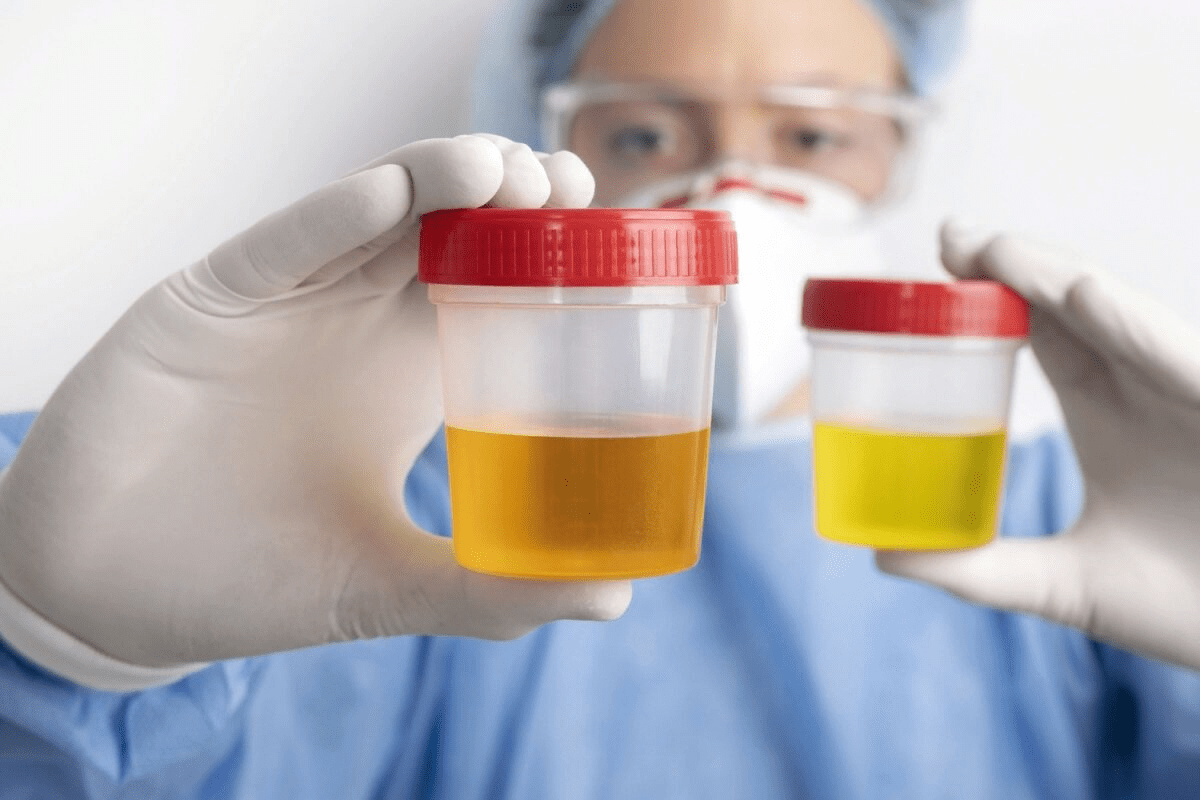
It’s important to know about the different types of crystals in urine. This helps doctors diagnose and treat health issues. Each crystal type has its own meaning and treatment.
Calcium Oxalate Crystals
Calcium oxalate crystals are very common in urine. They often lead to kidney stones. These crystals form when there’s too much oxalate or not enough calcium.
Diet plays a big role. Eating foods high in oxalate can increase their formation.
Uric Acid Crystals
Uric acid crystals are also common. They’re linked to gout and can raise the risk of kidney stones. These crystals form in acidic urine.
Controlling uric acid levels through diet and medicine can help prevent them.
Struvite (Magnesium Ammonium Phosphate) Crystals
Struvite crystals form in alkaline urine. They’re often seen in urinary tract infections (UTIs) caused by specific bacteria. These crystals can grow fast and form large stones.
Calcium Phosphate Crystals
Calcium phosphate crystals form in very alkaline urine. They’re linked to some kidney diseases or issues with phosphate balance. Finding these crystals suggests an imbalance in calcium and phosphate.
In summary, knowing the type of crystal in urine is key. It helps doctors understand the cause and choose the right treatment. Each crystal type has its own health implications and treatment options.
What Does Crystals in Urine Mean? Interpreting Your Results
Knowing about crystals in your urine is important. It helps figure out if they mean anything serious. When you see crystals in a urine test, look at a few things to understand what they mean.
Normal vs. Abnormal Crystal Levels
Crystals in urine can be normal or not. It depends on the type and how many there are. Some, like calcium oxalate, are okay in healthy people. But others might show a health problem.
To know if crystals are normal or not, doctors look at:
- The type of crystals present
- The quantity of crystals
- The patient’s medical history
- Symptoms such as pain or difficulty urinating
pH Levels and Crystal Formation
The pH of your urine affects crystal formation. Some crystals form better in acidic or alkaline urine.
Crystal Type | pH Influence |
Uric Acid Crystals | More likely to form in acidic urine (pH |
Calcium Phosphate Crystals | More likely to form in alkaline urine (pH > 7) |
Clinical Significance of Different Crystal Types
Each crystal type has its own meaning. For example:
- Calcium Oxalate Crystals: Often linked to kidney stones or too much oxalate.
- Uric Acid Crystals: May show gout or high uric acid levels.
- Struvite Crystals: Usually means a urinary tract infection.
When to Be Concerned About Crystalluria
While some crystals are normal, others are a worry:
- Persistent or recurrent crystalluria
- Presence of symptoms like pain or blood in urine
- Underlying medical conditions that may contribute to crystalluria
Doctors use this knowledge to better understand urine test results. This helps them decide the best next steps for your health.
The Crystal Urine Test: What to Expect
When you get a crystal urine test, knowing what to expect can make you feel better. We’ll walk you through the steps, from getting ready to understanding your results.
How Urinalysis Detects Crystals
Urinalysis is a test that looks at your urine’s physical and chemical makeup. A small urine sample is checked under a microscope to find crystals. This helps lab techs see the types, sizes, and amounts of crystals. Knowing this can tell a lot about your urinary health.
Preparing for a Urine Crystal Test
Getting ready right is key for good test results. Here’s how to prepare:
- Drink plenty of water to make sure you can give a urine sample.
- Avoid foods or meds that might mess up the test, as your doctor will tell you.
- Follow any special instructions from your doctor about when to take the test.
Sample Collection Best Practices
Collecting your urine sample correctly is very important. Here’s how to do it right:
- Clean your genital area before you collect the sample to avoid contamination.
- Use a clean, sterile container given by your doctor or lab.
- Collect urine in the middle of your stream.
- Close the container tightly and label it as told.
- Take the sample to the lab quickly, following the rules.
Medical experts say, “Collecting your sample right is key for good urinalysis results.”
“The quality of your urine sample affects how reliable the test results are.” – Medical Expert, Nephrologist
Understanding Your Test Results
After your sample is tested, your doctor will get the results. These will show if there are crystals, what kind, and other important info. Here’s a simple guide to what the results might show:
Crystal Type | Possible Indications |
Calcium Oxalate | Kidney stones, diet |
Uric Acid | Gout, metabolic issues |
Struvite | Urinary tract infections |
Your doctor will look at these results with your health and past in mind. If crystals are found, more tests or treatment might be needed, based on the type and amount.
Knowing about the crystal urine test helps you prepare and understand what comes next. If you have questions or worries, always talk to your doctor.
Normal Crystals in Urine: Establishing the Baseline
Knowing what’s normal in urine crystals is key to spotting health problems early. Crystals in urine can be normal, but their meaning changes based on many factors.
Crystals in Urine Normal Range
The amount of crystals in urine varies from person to person. A small amount is usually okay. The type and amount of crystals can tell us a lot about our health.
Crystals can be made of calcium oxalate, uric acid, and struvite. What’s normal for these crystals depends on diet, how much we drink, and our overall health.
Factors Affecting Normal Crystal Levels
Many things can change how many crystals are in urine. These include:
- Diet: Foods high in oxalate, like spinach and beets, can raise calcium oxalate levels.
- Hydration: Drinking enough water can help keep crystals from forming.
- Health conditions: Issues like kidney stones or urinary tract infections can also play a role.
Transient vs. Persistent Crystalluria
Crystalluria can be short-term or ongoing. Short-term is usually due to dehydration or eating certain foods. But, if it keeps happening, it might mean there’s a health problem.
Characteristics | Transient Crystalluria | Persistent Crystalluria |
Duration | Temporary | Ongoing |
Causes | Dehydration, recent meal | Underlying health conditions |
Clinical Significance | Generally not significant | May indicate health issue |
Age and Gender Differences
Age and gender can also affect urine crystals. Older people might see more crystals due to body changes. Hormonal differences between men and women can also influence crystal formation.
Knowing these factors helps us understand urinalysis results better. It’s important for spotting health problems early.
Crystals in Urine and Kidney Stones: The Connection
It’s important to understand how crystals in urine can lead to kidney stones. These crystals can clump together and form stones, a condition called nephrolithiasis. While not all crystals turn into stones, some factors can raise the risk.
How Crystals Lead to Stone Formation
Crystals in urine can cause kidney stones through a process called nucleation. When there’s too much of substances like calcium oxalate or uric acid, they can turn into crystals. These crystals can then grow into bigger stones over time.
Nucleation and Aggregation: It starts with nucleation, where tiny crystals form. These tiny crystals can then grow bigger and cause blockages in the urinary tract.
Risk Factors for Crystal-Related Kidney Stones
Several factors can make it more likely to get kidney stones from crystals in urine. These include:
- Dehydration: Not drinking enough water can make urine more concentrated, helping crystals form.
- Diet: Eating too much of foods high in oxalate, sodium, and animal protein can increase risk.
- Genetic Predisposition: If your family has a history of kidney stones, you might be at higher risk.
- Medical Conditions: Certain conditions like hyperparathyroidism, gout, and urinary tract infections can also raise risk.
Risk Factor | Description | Prevention Strategy |
Dehydration | Concentrated urine makes it easier for crystals to form | Drink more water |
Diet | Eating too much of foods high in oxalate and sodium | Eat a balanced diet, limit oxalate and sodium |
Genetic Predisposition | Family history of kidney stones | Stay vigilant, take preventive steps |
Early Detection of Stone Formation
It’s key to catch kidney stone formation early. Regular urine tests can spot crystals and signs of stones. Symptoms like flank pain, blood in urine, and needing to urinate often can also indicate stones.
Symptoms of Kidney Stone Development
The signs of kidney stone development can vary. But common symptoms include:
- Severe flank pain
- Hematuria (blood in urine)
- Urinary urgency and frequency
- Nausea and vomiting
Spotting these symptoms early can help prevent serious problems with kidney stones.
Medical Conditions Associated with Crystalluria
Many health issues can cause crystals to form in urine. This is why it’s key to check for underlying conditions. Crystals in urine can signal a range of health problems.
Urinary Tract Infections
Urinary tract infections (UTIs) often lead to crystalluria. Bacteria in the urinary tract can cause certain crystals, like struvite stones.
Key factors linking UTIs to crystalluria:
- Infection-causing bacteria
- Urine pH levels
- Presence of urea-splitting organisms
Gout and Hyperuricemia
Gout is a form of arthritis caused by high uric acid levels. This can result in uric acid crystals in urine.
Condition | Effect on Urine |
Gout | Increased uric acid crystals |
Hyperuricemia | Elevated uric acid levels |
Metabolic Disorders
Metabolic disorders can change urine composition, causing crystalluria. For example, hyperoxaluria leads to calcium oxalate crystals.
Genetic Conditions
Genetic conditions can also lead to crystalluria. Cystinuria, a genetic disorder, causes cystine stones.
Genetic conditions associated with crystalluria:
- Cystinuria
- Primary hyperoxaluria
Dietary Factors Influencing Crystal Formation
Diet plays a big role in how crystals form in urine. Knowing what we eat is key to preventing and managing this issue. The foods we choose can change our urine’s makeup, affecting crystal formation.
High-Oxalate Foods
High-oxalate foods are a major factor in crystal formation. Oxalate is in many foods, like fruits, veggies, and nuts. It can mix with calcium in urine, forming calcium oxalate crystals, a common kidney stone type.
Examples of high-oxalate foods include:
- Spinach
- Rhubarb
- Beets
- Nuts like almonds and peanuts
- Chocolate and cocoa products
While we don’t need to avoid these foods completely, being aware of them can help manage risk.
Protein Consumption and Uric Acid
Eating a lot of protein, mainly from animals, can raise uric acid levels in urine. Too much uric acid can lead to kidney stones or gout.
To lower the risk from high protein intake, try:
- Mixing animal and plant proteins
- Watching portion sizes
- Drinking plenty of water to dilute uric acid
Sodium Intake and Calcium Excretion
Too much sodium can cause more calcium to leave the body in urine. This can increase the chance of calcium stones forming.
Dietary Component | Effect on Urine | Potential Outcome |
High Sodium Intake | Increased Calcium Excretion | Calcium Stone Formation |
High Oxalate Foods | Increased Oxalate Excretion | Calcium Oxalate Stones |
High Protein Diet | Increased Uric Acid | Uric Acid Stones |
Hydration and Its Impact on Crystal Formation
Drinking enough water is key to preventing crystals. Water dilutes urine, lowering the chance of stone-forming substances.
Stay hydrated with:
- Drinking 8-10 glasses of water daily
- Checking urine color to ensure it’s pale yellow
- Drinking more in hot weather or when exercising
By managing these dietary factors, we can lower our risk of urine crystals and related problems.
Treatment Options for Crystalluria
Managing crystalluria needs a mix of treatments and lifestyle changes. Knowing the different options helps people work with their doctors to find the best plan for them.
Addressing Underlying Causes
The first step is to find and treat any health issues that cause crystals. This might include infections, gout, or metabolic problems.
For example, if crystals are due to an infection, antibiotics might be needed. If it’s related to gout, medicines like allopurinol can help lower uric acid levels.
Medication Approaches
Medicines are sometimes needed to treat crystalluria. The right medicine depends on the cause and type of crystals.
- Alkalinizing agents can dissolve certain crystals, like uric acid stones.
- Thiazide diuretics help lower calcium in urine, which can prevent calcium stones.
- Allopurinol reduces uric acid in the body.
Dietary Modifications
Changing what you eat is key in managing crystalluria. Making smart food choices can help prevent crystals and keep your urine healthy.
Food Type | Recommended Changes | Benefit |
High-oxalate foods | Limit spinach, beets, and rhubarb | Reduces oxalate in urine |
Animal protein | Eat moderate amounts of meat, poultry, and fish | Helps lower uric acid |
Sodium intake | Drink less salt | Less calcium in urine |
Increasing Fluid Intake
Drinking enough water is vital to prevent crystals and stones. Water dilutes urine and helps flush out crystals.
People with crystalluria should drink 8-10 glasses of water daily. More is needed if you’re active or live in a hot place.
Combining these strategies can manage crystalluria well. It’s important to work with a healthcare provider to create a treatment plan that fits you.
Preventing Crystals in Urine: Practical Strategies
Keeping your urinary system healthy is key to avoiding crystals in urine. We’ll look at simple steps to lower your risk of getting crystalluria.
Hydration Guidelines
Drinking enough water is vital to stop crystals from forming in urine. Drinking 8-10 glasses of water a day can help. Your needs might change based on how active you are, where you live, and your health.
Watch your urine color to see if you’re drinking enough water. Pale yellow or clear urine means you’re hydrated. Dark yellow or amber urine means you need more water.
Dietary Adjustments
Your diet is also important in preventing crystals. Stay away from high-oxalate foods like spinach and beets. Eating less animal protein can also help manage uric acid levels.
Eating more citrate-rich foods like lemons and oranges is good too. Citrate helps prevent calcium stones by binding to calcium in your urine.
Lifestyle Changes
Healthy lifestyle choices are key to avoiding crystals in urine. Regular exercise helps keep your weight in check and lowers the risk of conditions like obesity and diabetes.
Also, avoid too much alcohol and stop smoking. These habits can harm your health and increase urinary tract problems.
Regular Monitoring for High-Risk Individuals
If you’ve had kidney stones or urinary tract issues before, regular check-ups are a must. These include urinalysis tests and visits to your healthcare provider to check your urinary health.
By following these steps, you can greatly lower your risk of getting crystals in urine and keep your urinary system healthy.
Conclusion
Knowing about crystals in urine is key to keeping your urinary system healthy. This guide has covered the basics of crystalluria, like what causes it, its symptoms, how it’s diagnosed, and how to treat it.
Learning about the different types of urine crystals can help you take care of your urinary health. You can make changes to your diet, drink more water, and handle any health issues that might lead to crystals.
It’s vital to keep an eye on your health, even more so if you’re at risk for kidney stones or other urinary problems. Regular check-ups can help us all stay healthy and feel our best.
FAQ
What are crystals in urine?
Crystals in urine are solid particles found in the urinary system. They are often seen during a urinalysis test. These particles can be made of minerals and salts.
What does it mean when there are crystals in my urine?
Crystals in urine can mean different things. They can show a range of health issues, from mild to serious. The type of crystal, how many there are, and your overall health matter.
Are crystals in urine normal?
Some crystals are okay in urine, but others might mean health problems. What’s normal can vary. Diet, how much you drink, and your health can affect crystal levels.
How are crystals in urine detected?
A urinalysis test finds crystals in urine. It checks the urine’s physical and chemical makeup. It’s important to collect the urine sample correctly for accurate results.
What is the normal range for crystals in urine?
The normal range for crystals in urine changes based on several factors. Age, gender, and health can all play a part. A few crystals are usually okay, but too many or certain types can signal a problem.
Can diet affect crystals in urine?
Yes, your diet can change crystal formation. Foods high in oxalates, too much protein, and high sodium can affect crystals. Drinking enough water also matters.
How do pH levels affect crystal formation?
pH levels in urine can change how crystals form. Some crystals form more in acidic or alkaline urine. For example, uric acid crystals form more in acidic urine.
Are there medical conditions associated with crystalluria?
Yes, many health issues are linked to crystals in urine. These include urinary tract infections, gout, metabolic disorders, and genetic conditions. These conditions can cause or be shown by crystals in urine.
Can crystals in urine lead to kidney stones?
Yes, crystals in urine can lead to kidney stones. The risk depends on the crystal type, how many there are, and other factors. Knowing how crystals and kidney stones are connected is key to preventing and managing them.
How can I prevent crystals in urine?
To prevent crystals in urine, stay hydrated, adjust your diet, and make lifestyle changes. If you’re at risk, regular check-ups are also important.
What are the treatment options for crystalluria?
Treatment for crystalluria aims to fix the underlying cause. This might include medication, diet changes, and drinking more water. The goal is to manage crystalluria and avoid complications.
How can I prepare for a urine crystal test?
To prepare for a urine crystal test, learn about the sample collection process. You might need to change your hydration and diet temporarily. Follow your healthcare provider’s instructions for the best results.
What does “sandy urine” mean?
“Sandy urine” means your urine has particles or crystals that make it feel gritty or sandy. This can be a sign of crystalluria and might mean you have a health issue.
How do age and gender influence crystal levels in urine?
Age and gender can affect the types and amounts of crystals in urine. Certain conditions that cause crystals are more common in certain ages or genders.
References
National Center for Biotechnology Information. (2025). What Do Crystals in Urine Mean A Complete. Retrieved from https://www.ncbi.nlm.nih.gov/books/NBK606103