Last Updated on November 27, 2025 by Ugurkan Demir

Skin cancer on the nose is a significant health concern. Basal cell carcinoma makes up about 80 percent of all skin cancers. At Liv Hospital, we know how important it is to catch it early and treat it right.
Basal cell carcinoma is the most common skin cancer. It starts in the basal cells of the skin’s outer layer. Spotting the warning signs early is key to treating it well.
We use top-notch dermatology and advanced diagnostic tools to check skin lesions fast and right. Knowing the signs of skin cancer on the nose is essential for a good treatment.
Key Takeaways
- Early detection is key for treating skin cancer on the nose well.
- Basal cell carcinoma is the most common skin cancer.
- Spotting warning signs early can lead to better treatment.
- Liv Hospital offers full support for international patients.
- Our advanced diagnostic tools ensure accurate checks.
Understanding Skin Cancer on the Nose

It’s key to know about skin cancer on the nose for early detection and treatment. The nose is a key facial feature always exposed to the environment. This makes it more likely to get skin damage and cancer.
Why the Nose is Vulnerable to Skin Cancer
The nose gets a lot of ultraviolet (UV) radiation from the sun. UV radiation can harm the DNA in skin cells, causing cancer. The nose’s skin is thinner and more delicate, making it more at risk.
“The nose’s prominence on the face makes it more susceptible to UV exposure, increasing the risk of skin cancer.”
The nose’s shape, with many crevices and folds, can trap UV rays. This, along with not protecting the nose enough from the sun, makes it even more vulnerable.
Prevalence and Statistics in the United States
Skin cancer is a big health problem in the U.S., with millions diagnosed each year. The Skin Cancer Foundation says over 9,500 people get skin cancer every day. The nose is often affected, mainly by basal cell carcinoma and squamous cell carcinoma.
| Type of Skin Cancer | Prevalence | Common Locations |
| Basal Cell Carcinoma | Most common form of skin cancer | Nose, face, ears |
| Squamous Cell Carcinoma | Second most common form | Nose, lips, ears, hands |
Every 36 minutes, someone in the U.S. dies from melanoma, the deadliest skin cancer. While melanoma is less common, its danger shows why finding and treating all skin cancers early is so important, including those on the nose.
Types of Skin Cancer That Affect the Nose
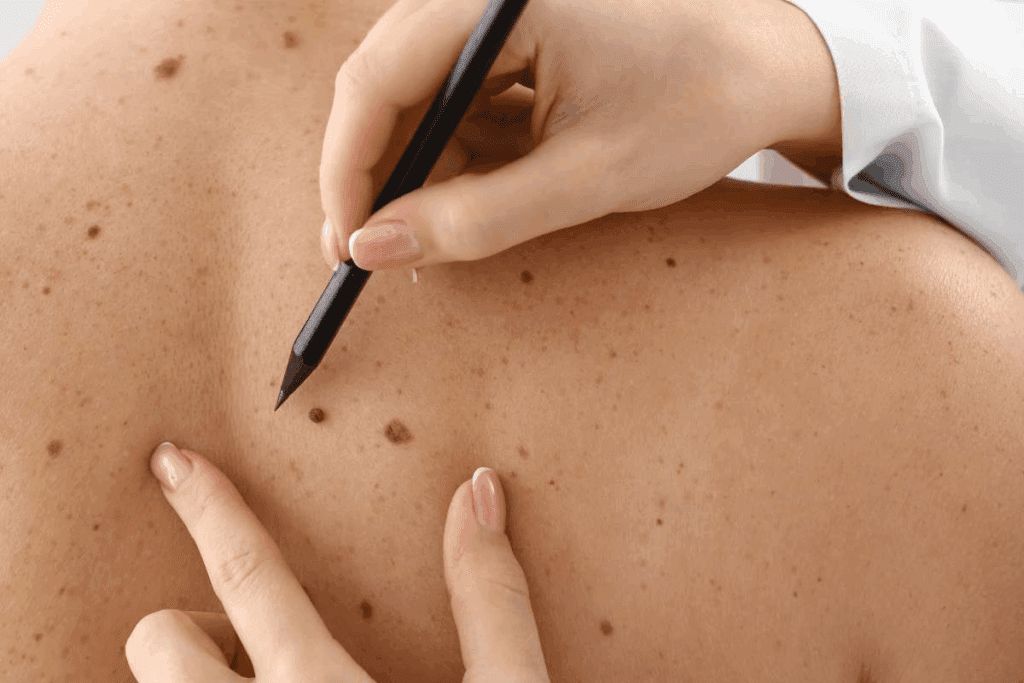
It’s important to know about the different skin cancers that can hit the nose. The nose is a key part of our face and faces many dangers. This makes it a prime spot for skin cancer to develop.
Basal Cell Carcinoma
Basal cell carcinoma is the most common skin cancer, making up about 80% of cases. It hits around 3.6 million Americans each year. On the nose, it shows up as a painless bump that can be many colors.
Key characteristics: Painless growth, skin-colored or pink/red, slow-growing.
Squamous Cell Carcinoma
Squamous cell carcinoma is another common nose cancer. It looks like a scaly, crusted bump and might bleed or hurt if ignored.
Key characteristics: Scaly or crusted appearance, might bleed, can hurt.
Melanoma
Melanoma is the rarest but most aggressive nose cancer. It starts with changes in a mole’s look, size, shape, or color.
Key characteristics: Changes in mole appearance, irregular borders, color variation.
| Type of Skin Cancer | Common Appearance | Key Characteristics |
| Basal Cell Carcinoma | Painless growth, skin-colored or pink/red | Slow-growing, painless |
| Squamous Cell Carcinoma | Scaly, crusted growth | Potential to bleed, can become painful |
| Melanoma | Changes in mole appearance | Irregular borders, color variation |
Risk Factors for Nose Skin Cancer
The risk of skin cancer on the nose comes from both genetics and the environment. Knowing these factors is key to preventing and catching it early.
Sun Exposure and UV Damage
Being in the sun or using tanning beds is a big risk for nose skin cancer. UV light harms the DNA in skin cells, causing mutations that can lead to cancer. Those who spend a lot of time outside, mainly between 10 am and 4 pm, face a higher risk. UV damage adds up over time, increasing the risk with more sun exposure.
To lower this risk, we suggest:
- Using broad-spectrum sunscreen with a Sun Protection Factor (SPF) of 30 or higher
- Wearing protective clothing, including hats with a wide brim to cover the nose and face
- Seeking shade, mainly during peak sun hours
Other Contributing Factors
While sun exposure is a big risk, other things can also lead to skin cancer on the nose. These include:
- A weakened immune system, which makes it harder to fight off cancer cells
- A family history of skin cancer, showing a possible genetic link
- Previous skin cancers or precancerous lesions
- Exposure to certain chemicals or radiation
Knowing these risk factors helps in taking steps to prevent it. Regular visits to a dermatologist are a good idea, even more so if you have a history of skin cancer or other risk factors.
By understanding and tackling these risk factors, we can aim for early detection and prevention of skin cancer on the nose.
What Does Skin Cancer on the Nose Look Like?
It’s important to know what skin cancer on the nose looks like to catch it early. Skin cancer can look different based on the type. Knowing these signs can help a lot.
General Appearance Characteristics
Skin cancer on the nose can look different. Basal cell carcinoma often looks like a shiny bump or a pink patch. Squamous cell carcinoma might be a firm, red nodule or a crusted growth. Melanoma, the most dangerous, can be an irregular mole or a dark spot that changes.
Knowing these looks is key to spotting skin cancer on the nose. Regular checks and visits to a dermatologist are important for early detection.
How to Distinguish from Normal Skin Changes
Telling skin cancer from normal skin changes can be hard. But, look for certain signs. Skin cancer often has irregular shapes, is not symmetrical, and can grow or change color. It might also bleed or itch.
Here’s a table to help spot skin cancer:
| Characteristics | Normal Skin Changes | Skin Cancer Signs |
| Border | Regular, smooth edges | Irregular, notched, or scalloped edges |
| Symmetry | Symmetrical | Asymmetrical |
| Color | Uniform color | Multiple colors or uneven color distribution |
| Size | Stable or decreasing in size | Increasing in size |
Catching skin cancer early is key. Basal cell carcinoma has a nearly 100 percent survival rate if caught early. Watch your nose for changes and see a dermatologist if you notice anything odd.
Sign #1: Persistent Sores That Don’t Heal
Persistent sores on the nose that don’t heal are a big warning sign for skin cancer. These sores can show different types of skin cancer, like basal cell carcinoma and squamous cell carcinoma.
It’s very important to watch any sore on the nose that doesn’t go away. Early detection is key for effective treatment.
Visual Characteristics with Photo Examples
Sores linked to skin cancer on the nose can look like open sores that bleed, ooze, or crust. They might also show as persistent red patches or irritated areas.
Watching these sores closely and seeing a dermatologist if they don’t go away is very important. It helps figure out the cause and the right treatment.
When to Be Concerned
You should worry if a sore on your nose lasts more than two weeks, even with good care. Also, if the sore bleeds, itches, or hurts, you need to see a doctor.
Early detection is key for treating skin cancer well. If you’re not sure about a sore on your nose, it’s best to talk to a healthcare professional.
Sign #2: Pink or Discolored Growths with Raised Edges
One warning sign of skin cancer on the nose is pink or discolored growths with distinct raised edges. These growths might show basal cell carcinoma or squamous cell carcinoma. Both are common skin cancers.
Basal cell carcinoma looks like a pink or red patch with raised edges. Squamous cell carcinoma is a firm, red nodule. Watching for new or changing growths on the nose is important. Early detection helps a lot.
Identifying Features with Visual References
When checking the nose for skin cancer signs, look for pink or discolored growths. These growths often have raised edges that are rolled or thickened. Visual references can help spot these features.
- Observe the color: Pink or discolored growths can be a sign of skin cancer.
- Check the edges: Raised edges are a common feature of basal cell carcinoma.
- Note the texture: Growths can be smooth, shiny, or scaly.
Common Locations on the Nose
Skin cancer can happen anywhere on the nose, but some spots are more at risk. The bridge of the nose and the tip of the nose get more sun. This makes them more likely to get skin cancer.
Regularly check these areas for changes. If you see anything unusual, see a dermatologist right away.
Sign #3: Scaly Patches That May Resemble Bowen Disease
One of the key signs of skin cancer on the nose is scaly patches. These patches might look like Bowen disease. They are a big warning sign that needs quick medical attention. We will look at what these patches look like and how they can change over time.
Appearance and Texture with Photographic Examples
Squamous cell carcinoma in situ, or Bowen disease, shows up as a scaly, crusted patch. It can be red or pink. These patches can be different sizes and feel rough.
Doctors say, “Scaly patches on the nose, looking like Bowen disease, are a serious sign of skin cancer. They should not be ignored.” Early detection is key for good treatment.
| Characteristics | Description |
| Color | Red or pink |
| Texture | Rough, scaly, or crusted |
| Size | Varies |
Progression Over Time
If not treated, these scaly patches can turn into invasive skin cancer. It’s important to watch for any changes in their look, size, or feel. Seeing a dermatologist regularly can spot these changes early.
Key factors to watch for include:
- Increase in size
- Changes in color or texture
- Development of new symptoms, such as bleeding or itching
A leading dermatologist says, “Regular checks and early action are vital for fighting skin cancer.” We urge people to watch their skin closely, but specially the nose.
Sign #4: Pearly or Waxy Bumps
Basal cell carcinoma often shows up as small, shiny bumps or nodules on the skin. These are usually found on the nose. They are a key sign of this skin cancer and can appear early.
Distinctive Features with Photo Illustrations
Pearly or waxy bumps from basal cell carcinoma have unique traits. They are:
- Small, usually under 1 cm in size
- Shiny or pearly looking
- Firm to the touch
- May have visible blood vessels on the surface
- Can look like benign growths or scars
These bumps can pop up anywhere on the nose but are more common in sun-exposed areas. It’s vital to watch for any new or changing bumps. Early detection is key for effective treatment.
How They Differ from Benign Growths
Telling apart pearly bumps from basal cell carcinoma and benign growths can be tricky. Yet, there are important differences:
| Characteristics | Basal Cell Carcinoma | Benign Growths |
| Appearance | Pearly or waxy, shiny surface | Variable, often flesh-colored |
| Growth Pattern | Slowly growing, persistent | May grow or remain stable |
| Bleeding or Ulceration | May bleed or ulcerate | Rarely bleeds or ulcerates |
If you’re not sure about new or changing growths on your nose, see a dermatologist. They can give a professional opinion.
Sign #5: Flat Lesions with Crusted Centers
Skin cancer on the nose can show up as flat lesions with crusted centers. These signs need to be checked out. They can look like harmless conditions, so it’s important to know what to look for.
Visual Identification with Reference Images
Flat lesions with crusted centers, like those from squamous cell carcinoma, can look harmless. Spotting them is critical, and pictures can help. They have a flat look with a crusty center that might bleed or ooze.
This helps tell apart cancerous lesions from harmless ones.
Common Misdiagnoses
Flat lesions with crusted centers are often mistaken for things like eczema, psoriasis, or minor cuts. It’s key to watch them closely. Skin cancer can look like harmless conditions. If a spot doesn’t go away or gets bigger, see a doctor right away.
Spotting skin cancer early is key to treating it well. So, any unusual or lasting skin spots on the nose should be checked by a dermatologist.
Sign #6: Pigmented Lesions That Change Over Time
One key sign of skin cancer on the nose is when pigmented lesions change. Moles, for example, can be a sign of melanoma, a serious skin cancer. It’s important to watch for any changes in these lesions.
Color Variations to Watch For
Color changes are a big warning sign of melanoma. Look out for different shades of brown, black, or even red, white, or blue patches. It’s vital to keep an eye on these changes for early detection.
For example, a mole that was once all brown might start to have black spots or become multicolored. These changes can be small, so it’s key to check yourself often.
The ABCDE Rule for Melanoma
The ABCDE rule helps spot moles that might be cancerous. Each letter stands for a key trait to look for:
- Asymmetry: The two halves of the mole don’t match.
- Border: The edges are uneven, ragged, or fuzzy.
- Color: The color is not the same all over and might have different shades.
- Diameter: The mole is bigger than 6mm (like a pencil eraser).
- Evolving: The mole is getting bigger, changing shape, or color.
| ABCDE Rule | Description | Example |
| Asymmetry | One half of the mole doesn’t match the other. | A mole with uneven halves. |
| Border | The edges are irregular, ragged, or blurred. | A mole with notched or scalloped edges. |
| Color | The color is not uniform and may include various shades. | A mole with multiple colors like brown, black, and red. |
| Diameter | The mole is larger than 6mm. | A mole that is larger than a pencil eraser. |
| Evolving | The mole is changing in size, shape, or color. | A mole that grows or changes color over time. |
Using the ABCDE rule helps spot dangerous moles on the nose. If you see any of these signs, see a dermatologist right away.
Sign #7: Visible Blood Vessels and Telangiectasia
Visible blood vessels or telangiectasia are key signs of skin cancer on the nose. Basal cell carcinoma, a common skin cancer, often shows these blood vessels. This can help spot cancerous lesions.
Recognizing Abnormal Vascular Patterns with Visual Guide
Visible blood vessels, or telangiectasia, look like small, wide blood vessels under the skin. They can signal basal cell carcinoma or other skin cancers. Look for:
- Blood vessels that are visible to the naked eye
- Vessels that are dilated or irregularly shaped
- Patterns that are not typical of the surrounding skin
Seeing unusual blood vessels on your nose? See a dermatologist right away.
Differentiating from Rosacea and Other Conditions
Visible blood vessels can mean skin cancer, but also rosacea. To tell them apart, look at these traits:
| Characteristic | Skin Cancer | Rosacea |
| Visible Blood Vessels | Often linked to a distinct growth | Usually seen all over the nose and cheeks |
| Other Symptoms | May include scaling, crusting, or bleeding | Often has redness, flushing, and acne-like symptoms |
Knowing these differences is key for the right diagnosis and treatment. If unsure about blood vessels on your nose, get a professional’s opinion.
Early Detection and Treatment Options
Finding skin cancer on the nose early is key to better treatment results. It’s vital to watch for any skin changes, like on the nose.
Importance of Early Diagnosis and Survival Rates
Early detection is key for effective treatment and better survival chances. Basal cell and squamous cell carcinomas have high cure rates if caught early. Melanoma, though more serious, also has a good prognosis if found early.
Studies show a 99% 5-year survival rate for melanoma if it’s caught early. This is when it’s only in the skin.
Survival rates for different types of skin cancer:
| Type of Skin Cancer | 5-Year Survival Rate (Early Detection) |
| Basal Cell Carcinoma | 99% |
| Squamous Cell Carcinoma | 90% |
| Melanoma | 99% |
When to See a Dermatologist
See a dermatologist if you notice any unusual changes on your nose. This could be new growths, sores that don’t heal, or changes in moles. Early evaluation and treatment can greatly improve outcomes.
“The best way to catch skin cancer early is to be aware of your skin and to see a dermatologist regularly.”
Treatment Approaches and Success Rates
Treatment for skin cancer on the nose varies based on the cancer type, size, and location. It also depends on the patient’s health. Common treatments include surgical excision, Mohs surgery, radiation therapy, and topical treatments. These treatments work well when the cancer is found early.
Talk to a dermatologist about your treatment options. Early detection and the right treatment make the prognosis for skin cancer on the nose good.
Conclusion
It’s key to know the signs of skin cancer on the nose for early detection and treatment. By understanding the seven signs we’ve talked about, you can protect your skin. If you see any unusual changes, get medical help right away.
Doing regular skin checks on yourself and getting yearly professional exams is vital. This helps find skin cancer early. Early detection means better treatment options and higher survival chances. If you’re worried about a spot on your nose, see a dermatologist fast.
We stress the need to watch for skin changes and take charge of your skin health. This way, you can lower your risk of skin cancer. And if you do need treatment, it can happen quickly.
FAQ
What are the most common types of skin cancer that affect the nose?
Basal cell carcinoma, squamous cell carcinoma, and melanoma are common in the nose. Basal cell carcinoma looks like a pink or flesh-colored bump. Squamous cell carcinoma is a firm, red nodule or scaly patch. Melanoma is aggressive, showing ABCDE signs (asymmetry, border irregularity, color variation, diameter, and evolving).
How can I identify skin cancer on my nose?
Look for unusual growths, sores, or skin changes. Check for sores that don’t heal, pink or discolored growths, and scaly patches. Also, watch for pearly or waxy bumps, flat lesions, and pigmented lesions that change. Visible blood vessels and telangiectasia are signs too. If unsure, see a dermatologist.
What are the risk factors for developing skin cancer on the nose?
UV radiation from the sun or tanning beds is a big risk. Other factors include a weakened immune system, fair skin, and a family history of skin cancer. Protecting your skin and knowing these risks can help prevent skin cancer.
Can skin cancer on the nose be treated successfully?
Yes, early skin cancer on the nose can be treated well. Treatments include surgery, Mohs surgery, radiation, or topical treatments. Early detection is key, so watch your skin and seek medical help for any changes.
What is the ABCDE rule for identifying melanoma?
The ABCDE rule helps spot melanoma. It stands for Asymmetry, Border irregularity, Color variation, Diameter (over 6mm), and Evolving. If a mole shows these signs, see a dermatologist.
How can I distinguish between skin cancer and normal skin changes on my nose?
Look for unusual or lasting changes like sores, growths with irregular edges, or color or texture changes. If unsure, a dermatologist can help with a professional evaluation.
Are there any visual guides or photos that can help identify skin cancer on the nose?
Yes, there are many guides and photos to help spot skin cancer on the nose. They show different types and their looks. But, always get a dermatologist’s opinion for a proper diagnosis.
What are the common misdiagnoses of skin cancer on the nose?
Rosacea, eczema, and benign growths are often mistaken for skin cancer. Always check with a dermatologist if you’re unsure about a skin issue.
Can skin cancer on the nose be prevented?
You can’t prevent skin cancer completely, but you can lower your risk. Protect your skin from the sun, avoid tanning beds, and stay aware of your skin. Regular checks and dermatologist visits can catch issues early.
References
National Center for Biotechnology Information. (2025). 7 Signs of Skin Cancer on Nose Photos. Retrieved from https://www.ncbi.nlm.nih.gov/pmc/articles/PMC12059660/