Last Updated on December 3, 2025 by Bilal Hasdemir

What does the back of the throat look like when healthy, and what visual changes indicate inflammation or a serious condition like cancer? Throat cancer is a serious health issue with many new cases each year. Early detection is key to better treatment results. Yet, many people miss early signs, leading to delayed diagnosis.
Signs include white patches, ulcers, and lumps in the throat or neck. Risk factors like smoking, chewing tobacco, and HPV infection raise the risk. Knowing these signs helps people get medical help quickly.
Key Takeaways
- Throat cancer includes cancers of the pharynx and larynx.
- Early detection significantly improves treatment outcomes.
- Common signs include white patches, ulcers, and lumps in the throat or neck.
- Risk factors include smoking, chewing tobacco, excessive alcohol use, and HPV infection.
- Understanding visual cues can empower individuals to seek early medical evaluation.
Understanding the Anatomy of a Normal Throat

The throat is a complex structure. Knowing what a normal throat looks like is key for health. It helps us swallow, breathe, and speak. Spotting issues starts with knowing the normal anatomy.
What Should a Normal Throat Look Like
A normal throat has symmetrical pink tonsils and smooth walls. It should not have lesions or unusual growths. The mucous membranes are pink and moist, showing good health. Any difference could mean a problem.
Key Structures in a Healthy Throat
A healthy throat has several important parts. These include:
- The tonsils, which are lymphoid organs on either side of the throat.
- The pharynx, or throat, a muscular tube from the skull to the esophagus.
- The larynx, or voice box, with the vocal cords.
- The epiglottis, a flap that separates the trachea from the esophagus during swallowing.
- The esophagus, a muscular tube for food to go from the throat to the stomach.
Structure | Function | Normal Appearance |
Tonsils | Lymphoid organs that help fight infection | Symmetrical, pink |
Pharynx | Muscular tube for swallowing and breathing | Smooth walls, pink |
Larynx | Contains vocal cords for speech | Normal vocal cord mobility |
Normal Variations in Throat Appearance
There’s a general standard for a normal throat, but variations exist. Some people have larger tonsils or a redder throat due to factors like environment. But, big changes or persistent issues need a doctor’s check.
Knowing these variations helps us tell normal differences from health problems. We’ll look at how throat cancer can show up next, giving a full view of throat health.
Types of Throat Cancer and Their Prevalence

It’s important to know about the different types of throat cancer. This knowledge helps doctors diagnose and treat the disease better. Throat cancer, also known as oropharyngeal cancer, affects the throat and voice box.
Pharyngeal Cancer
Pharyngeal cancer happens in the pharynx, a tube that connects the nose and mouth to the esophagus. It’s divided into three types: nasopharyngeal, oropharyngeal, and hypopharyngeal cancers. Nasopharyngeal cancer is in the upper throat, behind the nose. Oropharyngeal cancer is in the middle throat, including the tonsils and the base of the tongue.
Laryngeal Cancer
Laryngeal cancer, or laryngeal carcinoma, affects the larynx or voice box. It can cause voice changes, like hoarseness. This cancer is more common in men and linked to smoking and drinking.
Hypopharyngeal Cancer
Hypopharyngeal cancer is in the lower throat, also known as the pyriform sinus. It’s less common but often found late because its symptoms are not clear.
Squamous Cell Carcinoma of the Throat
The most common throat cancer is squamous cell carcinoma. It starts in the squamous cells lining the throat. This cancer can happen anywhere in the throat, linked to smoking, drinking, and HPV.
In summary, throat cancer includes pharyngeal, laryngeal, and hypopharyngeal cancers, with squamous cell carcinoma being the most common. Knowing these types helps doctors choose the best treatment and improve patient care.
Visual Indicators of Throat Cancer
It’s important to know the signs of throat cancer early. This can lead to better treatment and outcomes. Throat cancer can show visible signs that need quick attention.
White Patches and Leukoplakia
White patches or leukoplakia are common signs of throat cancer. These patches can appear on the mouth or throat. Regular dental check-ups can help in early detection.
Persistent Sores and Ulcerations
Persistent sores or ulcerations in the throat are another sign. These sores can be painful and hard to heal. If sores last more than two weeks, see a doctor.
Asymmetrical Tonsil Enlargement
Asymmetrical tonsil enlargement is a sign of throat cancer. If one tonsil is much bigger than the other, it’s a red flag.
Red Patches and Erythroplakia
Red patches or erythroplakia are also signs of throat cancer. These red patches can’t be rubbed off and are risky for cancer.
Visual Indicator | Description | Potential Risk |
White Patches/Leukoplakia | White or grayish patches on mucous membranes | Precancerous or cancerous |
Persistent Sores/Ulcerations | Painful sores that don’t heal | Cancerous |
Asymmetrical Tonsil Enlargement | One tonsil significantly larger than the other | Potential sign of throat cancer |
Red Patches/Erythroplakia | Red patches that cannot be rubbed off | Higher risk of cancer |
Knowing these signs can help you get medical help early. If you see any of these signs, see a doctor right away.
Specific Locations and Appearances of Throat Cancer
It’s important to know how throat cancer looks in different spots. It can show up in the tonsils, uvula, base of the tongue, and vocal cords. Each spot has its own signs and symptoms to watch for.
Tonsil Cancer Appearance and Images
Tonsil cancer might look like an uneven growth or a mass on the tonsil. It could be a white or red spot, or an open sore that won’t heal.
It might also make swallowing hard or feel like something’s stuck in your throat. If you see anything odd, see a doctor right away.
Uvula Cancer: Signs and Photos
Uvula cancer is rare but can change how the uvula looks. It might grow bigger, get an odd shape, or have sores. These changes can mess with how you speak and swallow.
Spotting it early is key. If the uvula looks different, get it checked by a doctor.
Base of Tongue Cancer
Cancer at the base of the tongue is hard to spot early. It can cause pain or make swallowing tough. Sometimes, you might feel a lump.
Visible signs include a mass or sore, but these can be hidden. This makes finding it harder.
Vocal Cord Cancer Visualization
Vocal cord cancer often makes your voice sound different, like it’s hoarser. You might see a lesion or mass on the vocal cord when you look.
In the early stages, it might look like a small white or red spot. But as it gets worse, it can look like a big sore or growth that messes with your voice.
Location | Common Signs | Symptoms |
Tonsils | Asymmetrical enlargement, white or red patches | Difficulty swallowing |
Uvula | Enlargement, irregular shape, lesions | Changes in speech, swallowing difficulties |
Base of Tongue | Mass, ulceration | Pain, difficulty swallowing |
Vocal Cords | Lesions, masses, white or red patches | Hoarseness, voice changes |
Knowing these signs and symptoms is key to catching throat cancer early. If you notice anything strange, get medical help fast.
Common Symptoms of Throat Cancer
It’s important to know the signs of throat cancer early. Early detection and treatment can make a big difference. Knowing the common symptoms can help a lot.
Persistent Sore Throat Beyond Two Weeks
A sore throat that lasts more than two weeks could be a sign of throat cancer. A sore throat is often seen with infections. But, if it doesn’t get better, it might be something serious. Seeing a doctor is key if your sore throat doesn’t go away.
Difficulty Swallowing (Dysphagia)
Having trouble swallowing, or dysphagia, could mean throat cancer. You might feel like food is stuck or hard to swallow. This symptom needs to be checked out, even if it’s not the only one.
Voice Changes and Hoarseness
Changes in your voice, like hoarseness, could be a sign of throat cancer. This is more likely if the cancer is near the voice box. If your voice changes for more than a few weeks, see a doctor.
Ear Pain and Referred Pain
Ear pain can be a sign of throat cancer. The nerves in your throat and ear are connected. So, throat pain can feel like ear pain. This pain is a warning sign that shouldn’t be ignored.
Knowing these symptoms can help find throat cancer early. Here’s a table that shows the symptoms and what they might mean:
Symptom | Description | Potential Implication |
Persistent Sore Throat | Sore throat lasting more than two weeks | Possible throat cancer |
Difficulty Swallowing | Sensation of food getting stuck or difficulty swallowing | Dysphagia, potentially related to throat cancer |
Voice Changes | Hoarseness or changes in voice | Possible laryngeal involvement |
Ear Pain | Pain in the ear without an ear infection | Referred pain, potentially related to throat cancer |
Early vs. Advanced Stage Throat Cancer Appearance
Knowing the difference between early-stage throat cancer and advanced-stage throat cancer is key for good treatment. Throat cancer goes through stages, each with its own signs and symptoms.
Early Stage Visual Characteristics
In the early stages, throat cancer might not show big symptoms. But, there are small signs that can hint at its presence. These include:
- White patches or leukoplakia on the throat’s mucosal surfaces.
- Red patches or erythroplakia that don’t go away.
- Asymmetrical enlargement of the tonsils or throat structures.
- Persistent sores or ulcerations that won’t heal.
These early signs can be hard to spot and might not seem like cancer at first. But, if they keep coming back and don’t get better with usual treatments, it’s time to see a doctor.
Advanced Stage Visual Characteristics
As throat cancer gets worse, its signs get clearer. Advanced-stage throat cancer might show:
- Significant asymmetry or changes in the throat’s shape.
- Large, ulcerating lesions that hurt and bleed.
- Difficulty swallowing (dysphagia) because of the tumor.
- Voice changes or hoarseness from the tumor affecting the larynx or vocal cords.
At this point, the cancer might have spread to lymph nodes or other areas, making treatment harder.
Why Early Detection Is Crucial
Finding throat cancer early is very important. Early detection means better treatment chances. It also means a better chance of keeping the throat working normally and possibly curing it.
We stress the need to notice early signs and get medical help if they don’t go away. Regular check-ups and screenings for those at high risk can help catch it early.
In summary, knowing the signs of early-stage throat cancer and advanced-stage throat cancer shows how vital early detection is. Being aware of these signs can lead to getting medical help on time. This can greatly improve treatment success.
Differentiating Throat Cancer from Other Conditions
It’s important to tell throat cancer apart from other throat issues for the right diagnosis and treatment. Throat cancer can look like other common throat problems, making it hard to spot without a detailed check-up.
Strep Throat vs. Throat Cancer
Strep throat, caused by bacteria, can have similar signs to throat cancer, like a sore throat and trouble swallowing. But strep throat starts suddenly and comes with fever and swollen lymph nodes. Throat cancer symptoms grow over time.
“A sore throat lasting more than two weeks, with symptoms like hoarseness or trouble swallowing, needs a closer look for throat cancer,” a study says.
Tonsillitis vs. Tonsil Cancer
Tonsillitis, an inflammation of the tonsils, can look like tonsil cancer. Both can make the tonsils look bigger, but tonsillitis hurts, has fever, and shows signs of infection. Tonsil cancer might make one tonsil bigger without much pain.
Key differences include:
- Presence of pain and fever in tonsillitis
- Asymmetric tonsillar enlargement in tonsil cancer
- Persistent nature of tonsil cancer symptoms
Oral Thrush vs. Leukoplakia
Oral thrush, a fungal infection, shows up as white patches in the mouth and throat. It can look like leukoplakia, but thrush is usually painful and gets better with antifungal treatment. Leukoplakia is often painless and doesn’t go away with antifungal treatment.
“Leukoplakia is considered a potentially malignant disorder, stressing the need to carefully check white patches in the mouth.”
GERD-Related Changes vs. Cancerous Lesions
GERD can cause throat irritation that looks like cancer. But GERD’s effects are widespread and linked to acid, while cancer spots are focused and might have unique signs like ulcers or odd shapes.
Knowing these differences helps doctors make better diagnoses and treatment plans. It’s key to correctly identify throat cancer to ensure patients get the right care.
Diagnostic Procedures for Throat Cancer
To find throat cancer, doctors use several tests. These tests help figure out if cancer is there and how far it has spread. This info helps decide the best treatment.
Physical Examination Techniques
A detailed physical check is the first step. A doctor looks for any oddities in the throat, neck, and nearby areas. They might:
- Look at the throat and mouth with a mirror or flexible scope
- Feel the neck for swollen lymph nodes
- Use a mirror or scope to check the throat
These steps help spot signs of cancer or other issues that need more looking into.
Imaging Tests
Imaging tests are key in finding throat cancer and figuring out its stage. Common tests include:
- CT scans: Show detailed pictures of the throat and nearby areas.
- MRI scans: Give clear images of soft tissues, helping spot tumors.
- PET scans: Show how active tissues are, helping find cancer.
These tests help doctors see how big, where, and if the cancer has spread.
Biopsy Procedures
A biopsy takes a tissue sample for a microscope check. There are different biopsies, like:
- Fine-needle aspiration biopsy: Uses a thin needle to get cells.
- Core needle biopsy: Uses a bigger needle to get a tissue sample.
- Excisional biopsy: Takes out a bigger piece of tissue or the whole area.
Biopsy results are key to confirm cancer and its type.
Endoscopic Evaluation
Endoscopy lets doctors see inside the throat and larynx. They use:
- Flexible laryngoscopy: Passes a flexible tube with a camera through the nose.
- Direct laryngoscopy: Uses a rigid scope to look at the larynx and vocal cords under anesthesia.
Endoscopy helps see how big the tumor is and plan treatment.
By using these tests together, doctors can accurately diagnose throat cancer. They then create a treatment plan that fits the patient’s needs.
Risk Factors and Prevention
Knowing the risk factors for throat cancer is key to preventing and catching it early. Throat cancer is influenced by lifestyle, environment, and genetics.
Tobacco and Alcohol Use
Tobacco is a big risk for throat cancer. Tobacco smoke harms throat cells, leading to cancer. Drinking alcohol, with tobacco, raises this risk even more.
Tobacco and alcohol are behind many throat cancer cases. Cutting down or quitting these habits can greatly lower throat cancer risk.
HPV Infection
HPV is another major risk for throat cancer, mainly oropharyngeal cancers. You can prevent HPV with a vaccine. Safe sex also helps lower the risk.
Age, Gender, and Genetic Factors
Age is a big risk factor, with most cases in people over 55. Men are more at risk than women. Family history of cancer also increases risk due to genetics.
Preventive Measures and Screening
Preventive steps can lower throat cancer risk. Avoid tobacco and alcohol, get HPV vaccinated, and live healthily.
Screening is also key, for those at high risk. Early detection through screening can lead to better treatment outcomes.
Risk Factor | Description | Preventive Measure |
Tobacco Use | Chemicals in tobacco smoke damage throat cells. | Avoid or quit tobacco use. |
Alcohol Consumption | Increases risk, specially with tobacco use. | Reduce or avoid alcohol consumption. |
HPV Infection | HPV can cause oropharyngeal cancers. | Get vaccinated against HPV. |
Conclusion
Knowing what throat cancer looks like and its signs is key to early detection and treatment. We’ve looked at the normal throat, types of throat cancer, and symptoms. This knowledge helps people take care of their health.
Early detection and prevention are critical in fighting throat cancer. We stress the need for awareness and education. This helps doctors make accurate diagnoses and treatments, leading to better outcomes.
In short, throat cancer is a serious issue that needs our attention. By understanding its signs, symptoms, and risks, we can fight it early and manage it well.
FAQ
What are the common signs of throat cancer?
Signs include persistent sores and white patches (leukoplakia). You might also see asymmetrical tonsil enlargement and red patches (erythroplakia). These signs are important for catching cancer early.
How does a healthy throat look like?
A healthy throat has symmetrical tonsils and smooth walls. It should have no unusual growths or lesions. Knowing what’s normal helps spot problems.
What are the different types of throat cancer?
There are several types, including pharyngeal, laryngeal, hypopharyngeal, and squamous cell carcinoma. Each type affects treatment differently.
Can throat cancer be seen on the tonsils?
Yes, tonsil cancer can cause uneven tonsil size and white or red patches. Persistent sores are also a sign. These changes need a doctor’s check-up.
What does uvula cancer look like?
Uvula cancer shows as growths, swelling, or ulcers on the uvula. Any unusual uvula changes should be checked by a doctor.
What are the symptoms of throat cancer?
Symptoms include a sore throat that won’t go away and trouble swallowing. You might also notice voice changes, ear pain, and unexplained weight loss. Spotting these symptoms early is key.
How is throat cancer diagnosed?
Doctors use physical exams, imaging, biopsies, and endoscopy to diagnose. These methods help find and measure the cancer.
What are the risk factors for throat cancer?
Risks include tobacco and alcohol use, HPV, age, gender, and genetics. Knowing these risks helps in prevention and early detection.
Can throat cancer be differentiated from other throat conditions?
Yes, conditions like strep throat and tonsillitis have different signs. Accurate diagnosis is key for the right treatment.
How does early-stage throat cancer look like?
Early cancer might show as small white or red patches, minor ulcers, or slight throat asymmetry. Catching it early is vital for treatment success.
What preventive measures can reduce the risk of throat cancer?
Avoiding tobacco and alcohol, getting HPV vaccines, and regular screenings for high-risk groups can help. These steps lower throat cancer risk.
What Does Throat Cancer Look Like: Signs and Symptoms

Spotting throat cancer early can greatly improve treatment success and survival chances. It’s key to know the signs and symptoms for quick medical help.
A normal throat looks pink and has even structures. But, throat cancer can lead to changes like white patches, ulcers, or a lump. Knowing these signs can save lives.
At Liv Hospital, we blend medical know-how with care focused on the patient. We stress the need to spot odd changes that might mean throat cancer.
Key Takeaways
- Early detection of throat cancer improves treatment outcomes.
- Throat cancer can cause white patches, ulcers, or a lump in the throat or neck.
- A healthy throat has pink mucosa with symmetrical structures.
- Recognizing signs and symptoms is key for quick medical help.
- Liv Hospital offers full care for international patients.
Understanding Throat Anatomy and Function
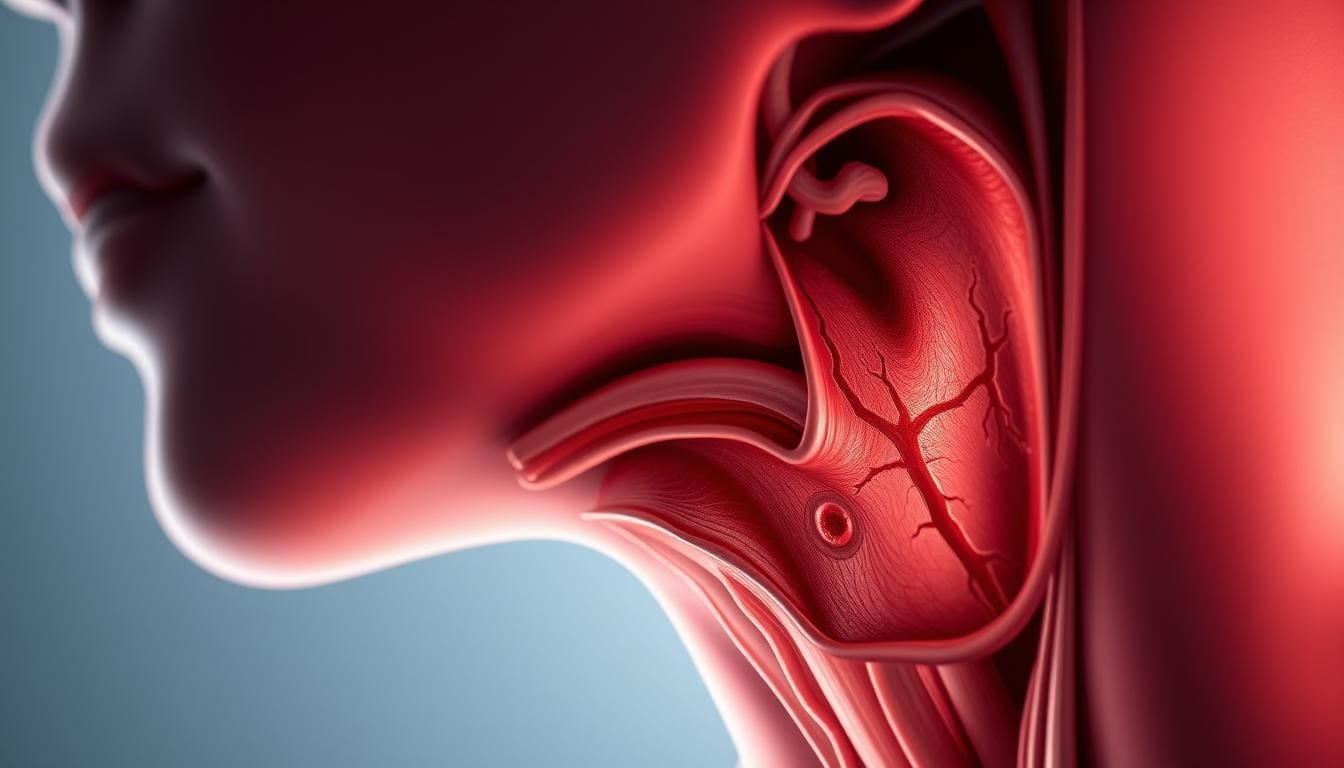
To understand throat cancer signs, knowing the throat’s anatomy and function is key. The throat, or pharynx, is a muscular tube. It’s vital for both digestion and breathing.
We’ll look at the throat’s main parts and what they should look like. This helps spot any odd changes.
Key Structures of a Healthy Throat
A healthy throat has several important parts:
- The pharynx, split into three parts: the nasopharynx, oropharynx, and laryngopharynx.
- The larynx, or voice box, with the vocal cords inside.
- The tonsils, which are lymphoid tissue masses.
- The epiglottis, a flap that keeps the trachea and esophagus separate.
Normal Coloration and Tissue Appearance
In a healthy throat, the mucous membranes are pink and moist. The tissue looks smooth and even.
Any big change from this could mean a problem.
Structure | Normal Appearance |
Mucous Membranes | Pink and moist |
Tonsils | Symmetrical, pink, and without visible lesions |
Vocal Cords | Smooth, white, and symmetrical |
Knowing what’s normal is key to spotting throat cancer and other issues.
What the Back of Throat Should Look Like

Knowing what a healthy throat looks like is key to spotting problems early. A healthy throat is vital for our health. It’s important to know what it should look like to catch any issues.
Healthy Throat Visual Characteristics
A healthy throat is pink because of all the blood flowing through it. The lining of the throat should be smooth and wet. The uvula at the back should be straight and not off-center.
The tonsils on either side of the uvula should be even and not too big or sore. The back of the throat, or oropharynx, should look the same all over. It should not have any big spots or growths. If you see anything odd, like ulcers or patches, see a doctor.
Normal Variations in Throat Appearance
Everyone’s throat is a bit different, even when it’s healthy. Some people might have bigger tonsils or a different color. This can be because of genes or the environment.
Some differences are okay, but big changes need attention. For example, a slightly off-center uvula might not be a problem. But if you’re in pain or having trouble swallowing, you should see a doctor.
Characteristic | Normal Appearance | Potential Concern |
Color | Pinkish, uniform | Unusually red, white, or inflamed |
Uvula Position | Centered | Deviated to one side |
Tonsil Size | Symmetrical, not excessively large | Asymmetrical, significantly enlarged |
Knowing what’s normal can help you take care of your throat. If you notice anything off, don’t hesitate to get checked out by a doctor.
Types of Throat Cancer
It’s important to know about the different types of throat cancer. This knowledge helps doctors diagnose and plan treatment better. Throat cancer, also known as head and neck cancer, affects the throat area.
Squamous Cell Carcinoma of the Throat
Squamous cell carcinoma is the most common throat cancer. It starts in the squamous cells that cover the throat. This cancer can happen in different parts of the throat, like the oropharynx, larynx, and hypopharynx.
Key characteristics of squamous cell carcinoma include:
- Originates in the squamous cells lining the throat
- Can occur in different parts of the throat
- Accounts for the majority of throat cancer cases
Other Types of Throat Malignancies
While squamous cell carcinoma is common, other throat cancers exist too. These include:
- Adenocarcinoma
- Lymphoma
- Sarcoma
- Neuroendocrine tumors
These cancers need accurate diagnosis and the right treatment plans.
Areas Most Commonly Affected
Throat cancer can hit many areas. These include:
- The oropharynx, which includes the tonsils and the base of the tongue
- The larynx, or voice box
- The hypopharynx, the lower part of the throat
- The nasopharynx, the upper part of the throat behind the nose
Knowing where throat cancer is located helps doctors choose the best treatment.
As we learn more about throat cancer, early detection and accurate diagnosis are key. They are vital for better patient outcomes.
Visual Signs of Throat Cancer
Spotting the visual signs of throat cancer early is key. It helps in getting the right treatment. Doctors know how to spot these signs.
Red and White Patches in the Throat
Red and white patches in the throat are common signs. They show abnormal cell growth, which could be cancer. Red patches look inflamed, while white patches, or leukoplakia, might be precancerous.
White Spots and Leukoplakia
White spots in the throat, or leukoplakia, mean cells are at risk of becoming cancer. They often come from long-term irritation, like from smoking. It’s important to get these checked by a doctor, as they might signal throat cancer early.
- White or grayish patches on the mucous membranes
- Patches that are persistent and do not heal
- A sensation of roughness or thickness in the affected area
Asymmetrical Growths and Lesions
Asymmetrical growths in the throat are another sign. They look like lumps, bumps, or ulcers that won’t heal. If these growths are not even or change shape, it could be cancer. Doctors use tools to check these growths and figure out what they are.
Some signs of worry include:
- Irregular shape or uneven edges
- Rapid growth or change in size
- Ulceration or bleeding
Early Visual Indicators of Throat Cancer
Spotting throat cancer early is all about noticing visual signs. We’ll look at the small changes that might mean you have this disease.
Subtle Changes to Watch For
Throat cancer often starts with small changes that are easy to miss. You might see red or white patches, or notice the throat looks different. Spotting these signs early can help you get treated sooner.
Some early signs include:
- Red or white patches in the throat
- Unexplained swelling or lumps
- Changes in the voice or trouble speaking
- Unexplained pain or discomfort in the throat
Differences Between Benign and Malignant Appearances
It’s important to tell the difference between harmless and cancerous growths. Benign growths are not cancer and look like normal lumps. Malignant growths are cancer and can spread. Knowing the difference helps you get the right medical help.
Characteristics | Benign | Malignant |
Appearance | Typically smooth and uniform | Often irregular and uneven |
Growth Pattern | Slow-growing, may stop growing | Rapidly growing, invasive |
Symptoms | Usually asymptomatic | May cause pain, difficulty swallowing |
Persistent Ulcers That Don’t Heal
Persistent ulcers that don’t heal are a big sign of throat cancer. These ulcers can hurt and bleed. If you see an ulcer that won’t go away, get medical help right away.
Spotting these signs early can really help throat cancer patients. If you notice anything unusual, see a doctor fast.
Common Locations of Visible Throat Cancer
Knowing where throat cancer often shows up is key to catching it early. Throat cancer can appear in different parts of the throat, each with its own look. Spotting these areas and their signs can help find the disease sooner.
Tonsil Cancer Appearance
Tonsil cancer is a common type of throat cancer, hitting the palatine tonsils hard. Visible signs include swelling or a lump on the tonsil, which might look uneven. The tonsil’s surface could look irregular, have ulcers, or show a white patch. Tonsil cancer can also make swallowing hard or hurt when you swallow.
Uvula Cancer Presentation
Uvula cancer is rare but shows clear signs. Visible signs are swelling or a longer uvula, color changes, or lesions. Uvula cancer can make you feel like something’s stuck in your throat or mess with your speech.
Laryngeal Cancer Visual Signs
Laryngeal cancer, or cancer of the voice box, shows in different ways. It can change your voice, making it hoarse, or show up as oddities on the larynx during exams. Visible signs include lesions, swelling, or odd shapes on the vocal cords or nearby.
Oropharyngeal Cancer Characteristics
Oropharyngeal cancer hits the middle throat, like the tonsils, base of the tongue, and oropharynx walls. You might see ulcers, white or red patches, or swelling. This cancer is linked to HPV and might start with small symptoms.
By knowing where throat cancer often shows up and what it looks like, people can watch their health closer. If you see anything odd, get medical help right away.
Non-Visual Symptoms of Throat Cancer
Non-visual symptoms are key in spotting throat cancer early. They often show up before you can see anything wrong. These signs are just as important for catching the disease early.
Voice Changes and Hoarseness
One common sign is a change in voice, like hoarseness. This happens when cancer affects the vocal cords. If your voice stays hoarse for more than two weeks, see a doctor.
Watch out for these voice changes:
- Hoarseness or raspy voice
- Changes in pitch or tone
- Voice fatigue or strain
Swallowing Difficulties
Having trouble swallowing, or dysphagia, is another sign. Throat cancer can narrow or block the throat. This makes it hard to eat or drink, leading to weight loss if not treated.
Symptom | Description |
Dysphagia | Difficulty swallowing |
Odynophagia | Painful swallowing |
Pain and Discomfort
Throat pain is common in throat cancer patients. This pain can last a long time and get worse. It might feel like something is stuck in your throat or hurt your ear.
“Pain is the body’s way of signaling that something is wrong. Persistent throat pain should not be ignored.”
— Medical Expert
Ear Pain and Other Referred Symptoms
Ear pain, or otalgia, can be a sign of throat cancer. This happens because nerves in the throat and ear are connected. Sometimes, ear pain without any ear problems means you need to check your throat.
Other symptoms that might be related include:
- Neck pain or stiffness
- Unexplained weight loss
- Coughing or persistent clearing of the throat
It’s important to notice these non-visual symptoms early. If you or someone you know has them, see a doctor right away.
When to Seek Medical Attention
It’s important to know when to see a doctor for throat cancer. Early diagnosis and treatment are key. Knowing when to go to a healthcare professional can be tough, but it’s vital for better health outcomes.
Warning Signs That Require Immediate Care
Some symptoms mean you need to see a doctor right away. These include:
- Severe difficulty swallowing or breathing
- Unexplained bleeding from the mouth or throat
- Significant changes in the throat, like new growths or lesions
- Persistent pain in the throat or ear that doesn’t get better
If you or someone you know has these symptoms, get medical help fast.
Persistent Symptoms to Report
Some symptoms might not seem serious at first, but if they last, you should see a doctor. Symptoms to report include:
- Hoarseness or voice changes lasting more than two weeks
- Difficulty swallowing or pain while swallowing
- A lump or swelling in the neck
- Persistent sore throat or ear pain
Telling your healthcare provider about these symptoms can help catch and treat throat cancer early.
Screening Recommendations
Not everyone needs throat cancer screening, but some people should get checked regularly. These include:
Risk Factor | Screening Recommendation |
History of tobacco or alcohol use | Discuss screening with your healthcare provider |
HPV infection | Consider screening as part of overall health check-ups |
Family history of throat cancer | Consult with a healthcare provider about screening options |
Talk to your healthcare provider about your risk factors. They can help decide if screening is right for you.
Diagnostic Process for Throat Cancer
Understanding throat cancer diagnosis helps patients better navigate their treatment. The journey includes several steps, from initial exams to advanced tests. We’ll explain what to expect at each stage and how they help diagnose accurately.
Initial Examination Procedures
The first step is a thorough initial examination. A healthcare provider will visually inspect the throat. They might use a mirror or a flexible endoscope to see hidden areas.
They look for any unusual signs, like color changes, swelling, or growths. This helps identify any possible issues.
Imaging and Biopsy Methods
After the initial check, imaging tests are used to get more details. CT, MRI, and PET scans are common. They show the tumor’s size and location and if it has spread.
A biopsy is also key. It involves taking tissue for a microscope check. This confirms if cancer cells are present.
Staging and Assessment
After diagnosis, the next step is staging. It determines how far the cancer has spread. Staging is vital for treatment planning and understanding the prognosis.
The staging process looks at the tumor size (T), lymph node involvement (N), and distant metastasis (M). This TNM system gives a full picture of the cancer’s spread.
Risk Factors for Developing Throat Cancer
Knowing the risk factors for throat cancer is key to preventing it and catching it early. By understanding these factors, people can lower their risk and get help if they notice symptoms.
Tobacco and Alcohol Use
Tobacco use is a big risk for throat cancer. Smoking and using tobacco can cause cancer in the throat. Drinking too much alcohol also raises the risk. Using both tobacco and alcohol together increases the risk even more.
- Tobacco Use: Smoking and chewing tobacco are major risk factors.
- Alcohol Consumption: Heavy drinking is associated with a higher risk.
HPV Infection
The Human Papillomavirus (HPV) is a big risk for throat cancer, mainly oropharyngeal cancer. Some HPV strains can cause cancer.
- HPV Types: Some strains are more commonly associated with throat cancer.
- Transmission: HPV is often transmitted through sexual contact.
Environmental Exposures
Being exposed to certain things can raise the risk of throat cancer. These include asbestos, some chemicals, and radiation.
- Asbestos Exposure: Common in certain workplaces, asbestos is a known carcinogen.
- Chemical Exposures: Certain industrial chemicals can increase cancer risk.
Genetic Predispositions
Some people might be more likely to get throat cancer because of their genes. Family history can affect the risk.
- Family History: A history of cancer in the family may increase risk.
- Genetic Mutations: Certain genetic mutations can predispose individuals to cancer.
Knowing about these risk factors helps people prevent and catch throat cancer early. Regular check-ups and screenings are important for early detection.
Differentiating Throat Cancer from Other Conditions
It’s important to tell throat cancer apart from other throat issues. This is because many conditions can look and feel like throat cancer. It’s hard to tell just by looking or feeling symptoms at first.
Common Throat Conditions That Mimic Cancer
Many non-cancerous issues can show symptoms like throat cancer. These include:
- Tonsillitis
- Pharyngitis
- Laryngitis
- Oral thrush
These problems can cause throat pain, swelling, and changes. They might look like throat cancer symptoms.
White Patches: Cancerous vs. Non-Cancerous
White patches in the throat can be harmless or cancerous. Leukoplakia or oral thrush can cause white patches that are not cancer. But, if white patches don’t go away with treatment, they might be cancer.
It’s important to check white patches to see if they’re cancer. Sometimes, a biopsy is needed to be sure.
When Tonsil Abnormalities Are Concerning
Abnormal tonsils, like being uneven or big, can worry about cancer. But, not all are cancer. Infections or growths can also make tonsils look odd.
Key Distinguishing Features
To tell throat cancer from other issues, we look for certain signs. Here’s a table that shows some key differences:
Condition | Common Features | Distinguishing Features |
Throat Cancer | Persistent ulcers, pain, difficulty swallowing | Asymmetrical growths, persistent lesions |
Tonsillitis | Inflamed tonsils, pain, fever | Symmetrical enlargement, presence of infection |
Oral Thrush | White patches, soreness | Removable white patches, absence of severe pain |
Knowing these differences is key for the right diagnosis and treatment. We must look at all symptoms and test results to tell throat cancer from other issues.
Conclusion
Knowing what throat cancer looks like and its signs is key for early treatment. We’ve looked at a healthy throat’s anatomy, different cancer types, and symptoms. This includes visual and non-visual signs.
Throat cancer signs include red and white patches, growths, and ulcers that won’t heal. Voice changes, swallowing issues, and ear pain are also symptoms. These should not be ignored.
Being aware and educated is vital in fighting throat cancer. Knowing risks like tobacco, alcohol, HPV, and genetics helps reduce risk. If you notice any symptoms, see a doctor right away.
In summary, understanding throat cancer is critical. It highlights the need for quick medical checks and awareness. This can improve outcomes for those with the disease.
FAQ
What are the common visual signs of throat cancer?
Signs include red and white patches, and growths that don’t look right. These can show up on the tonsils or other throat parts.
How does a healthy throat look like?
A healthy throat is pink and symmetrical. The uvula and tonsils look normal. There are no big changes or problems.
What are the different types of throat cancer?
The most common is squamous cell carcinoma. But other cancers can also happen in the throat. They can affect different areas like the tonsils or larynx.
Can white patches in the throat be a sign of cancer?
Yes, white patches, or leukoplakia, might mean throat cancer. But not all white patches are cancer. Always check with a doctor if they don’t go away.
What are the non-visual symptoms of throat cancer?
Symptoms include changes in voice, trouble swallowing, and pain. You might also feel ear pain.
When should I seek medical attention for throat symptoms?
See a doctor right away if you have trouble swallowing, severe pain, or voice changes. Don’t ignore any symptoms that last a long time.
How is throat cancer diagnosed?
Doctors start with an exam and tests like imaging. They might take a biopsy to confirm cancer. They also check how far the cancer has spread.
What are the risk factors for developing throat cancer?
Risks include smoking, drinking too much alcohol, HPV, and some environmental exposures. Knowing these can help prevent and catch cancer early.
How can throat cancer be differentiated from other conditions?
To tell throat cancer apart from other issues, look for signs like white patches and abnormal tonsils. These are key differences.
What does a throat tumor look like?
A tumor might look like an uneven growth or lesion in the throat. The look can change based on the tumor’s type and where it is.
Can throat cancer be seen on the uvula?
Yes, throat cancer can show up on the uvula as an odd growth or lesion. This is a type of oropharyngeal cancer.
What are the visual signs of tonsil cancer?
Tonsil cancer might look like an uneven growth or lesion on the tonsil. You might also see red or white patches or swelling.
How does laryngeal cancer present visually?
Laryngeal cancer can cause changes in the larynx, like lesions. You might also notice voice changes or hoarseness.
What is oropharyngeal cancer, and how does it present?
Oropharyngeal cancer affects the oropharynx, which includes the tonsils and uvula. It can show as uneven growths, red or white patches, or swelling.
References
- Biro, P., & Hofmann, M. (2016). Physiological effects of preoxygenation in adults and children. Current Opinion in Anesthesiology, 29(4), 485-491. https://journals.lww.com/co-anesthesiology/Abstract/2016/08000/Physiological_effects_of_preoxygenation_in_adults.15.aspx