Last Updated on December 2, 2025 by Bilal Hasdemir
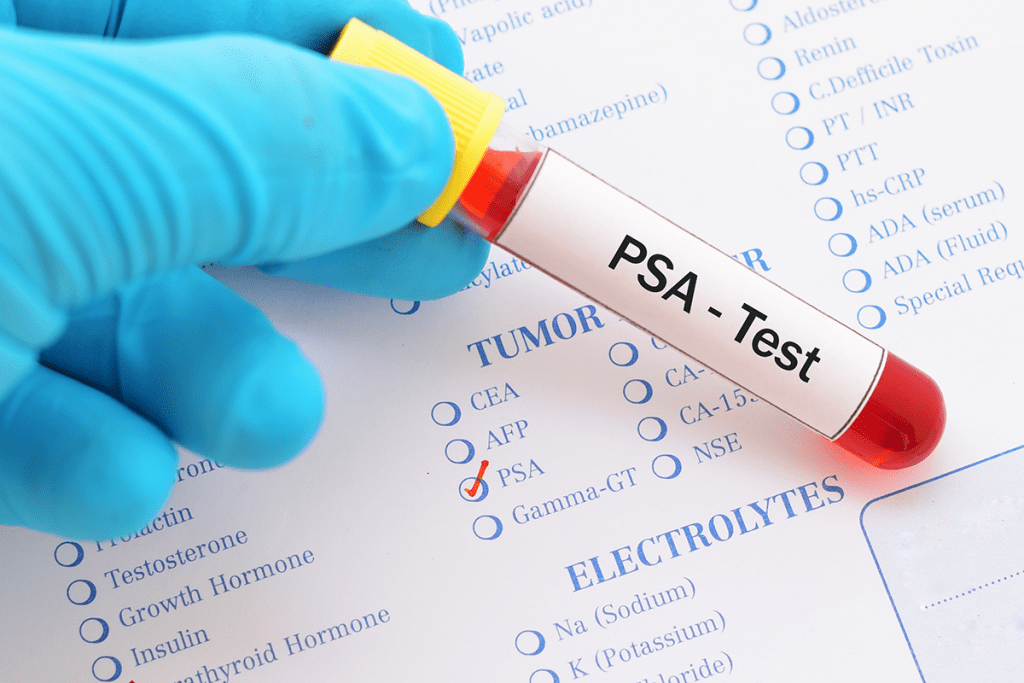
Prostate-specific antigen, or PSA, is a protein made by the prostate gland. A high PSA level might mean prostate cancer, but it’s not always the case. Understand the numerical values that trigger concern and how doctors use psa grading to assess risk.
Recent studies show that age and health are key to understanding this important biomarker.
Knowing your PSA results is vital. It helps spot problems early. We’ll look into how antigen levels help in prostate cancer screening and what affects these results.
Key Takeaways
- An elevated PSA level can indicate prostate cancer, but it’s not a definitive diagnosis.
- Age and individual health factors play a critical role in interpreting PSA results.
- A healthcare provider will work with you to determine the next steps if you have high PSA levels.
- Understanding your PSA results is essential for early identification of possible issues.
- PSA levels are just one factor in prostate cancer screening.
Understanding PSA: The Prostate Cancer Biomarker
To grasp the importance of PSA levels, it’s key to know what PSA is and its role in the body. Prostate-Specific Antigen (PSA) is a protein made by the prostate gland. Its blood levels can show different prostate issues.
PSA is a key marker for checking and watching prostate health. High PSA levels in blood might mean prostate cancer, prostatitis, or BPH. Knowing about PSA and its role in prostate health helps in making smart choices about care.
What PSA Means and Its Function in the Body
PSA comes from both healthy and cancerous prostate cells. A bit of PSA is okay, but too much can mean prostate problems. The normal PSA range is usually up to 4 ng/mL, but it can change with age and other health factors.
Recent studies show age and health are key in understanding PSA. Johns Hopkins Medicine says doctors look at age and prostate size when they check PSA scores.
How PSA Tests Work and When They’re Recommended
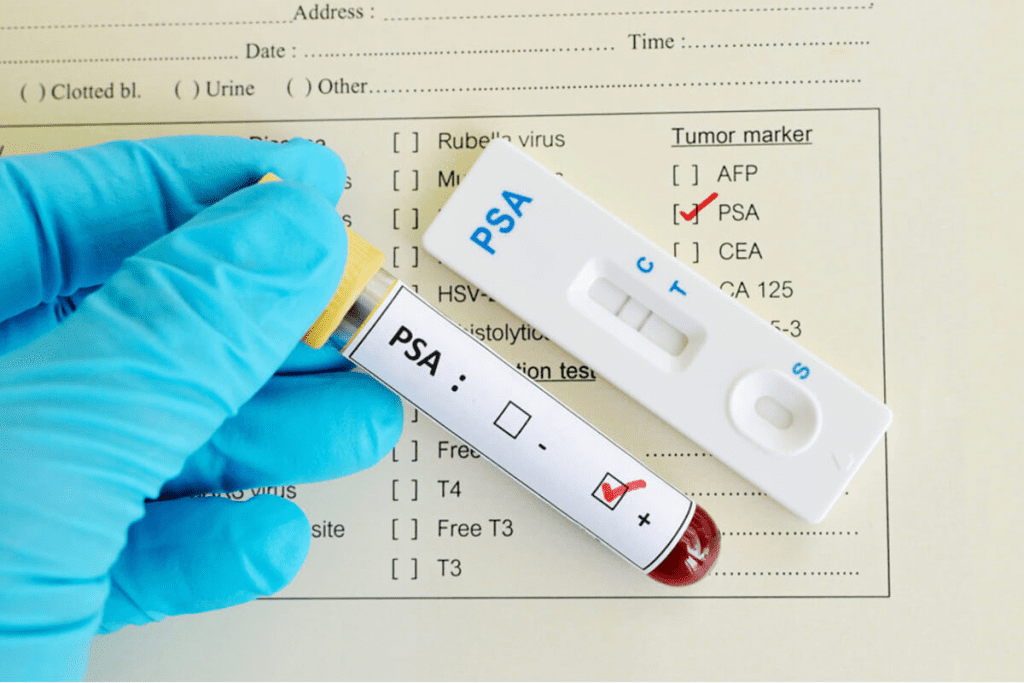
A PSA test checks PSA levels in your blood. It’s a simple blood test that shows if PSA levels are high. Doctors usually recommend it for men over 50, but those with a family history of prostate cancer or other risks might start earlier.
The American Cancer Society advises talking to a doctor about PSA testing. Age, family history, and health are important when deciding on a PSA test.
Here are some key points to consider about PSA tests:
- Age: PSA levels go up with age, so what’s normal for a younger man might not be for an older one.
- Family History: Men with a family history of prostate cancer might need to start PSA testing sooner.
- Overall Health: A man’s health and life expectancy are considered when deciding on PSA testing.
By understanding PSA and its role in prostate health, men can make smart choices about their care. It’s important to talk about PSA testing and its meaning with a healthcare provider.
PSA Grading: Normal vs. Concerning Levels
Understanding PSA levels is key for catching prostate problems early. We’ll look at the different PSA grades to help you grasp your results. This will show you what they mean for your health.
Standard PSA Reference Ranges
PSA levels are measured in nanograms per milliliter (ng/mL). A PSA level of 4.0 ng/mL or lower is usually normal. But, this can change with age.
For men in their 40s and 50s, a PSA score over 2.5 ng/mL is abnormal. For those in their 60s, it’s over 4.0 ng/mL. These are general guidelines, and what’s normal can differ from person to person.
What Is a Dangerous PSA Level?
A dangerous PSA level is above 4 ng/mL. It might mean a higher risk of prostate cancer. But, a high PSA doesn’t always mean cancer. It could also be due to other issues like prostatitis or BPH.
Johns Hopkins Medicine says an abnormal PSA rise is a concern, even if it’s below the usual threshold. This shows why watching PSA changes over time is important.
The Significance of PSA Levels Above 4 ng/mL
PSA levels above 4 ng/mL need more checking. The risk of prostate cancer goes up with higher PSA levels. For example:
- PSA levels between 4-10 ng/mL suggest a moderate risk of prostate cancer.
- PSA levels over 10 ng/mL point to a higher risk of prostate cancer.
Talking to your healthcare provider about your PSA results is vital. They can help you understand what it means and what to do next. This might include more tests or a biopsy.
Age-Specific PSA Considerations
Knowing how age affects PSA levels is key to understanding prostate health. Studies show that age and health play big roles in what PSA levels mean.
PSA Levels by Age Group: What’s Normal at 40, 50, 60, and 70+
PSA levels go up as men get older. Johns Hopkins Medicine says a PSA over 2.5 ng/ml is abnormal for men in their 40s and 50s. For men in their 60s, it’s over 4.0 ng/ml.
For example, a 50-year-old man with a PSA of 4 might be okay. But the same level in a 70-year-old could mean something different because of age.
Here are some general PSA guidelines by age:
- Men in their 40s: Normal PSA is below 2.5 ng/ml.
- Men in their 50s: The same threshold applies.
- Men in their 60s: A PSA over 4.0 ng/ml is high.
- Men over 70: The normal range can vary, but levels over 4.0 ng/ml often need checking.
Why PSA Naturally Increases with Age
As men get older, their prostate gland often gets bigger. This is called benign prostatic hyperplasia (BPH). This enlargement can make PSA levels go up.
Older men are also more likely to have prostate inflammation or other non-cancerous conditions. These can raise PSA levels too. It’s important to remember that a high PSA doesn’t always mean cancer. Age can play a big role in this.
Understanding PSA results needs a deep look at how age affects them. By looking at a man’s age and PSA score, doctors can make better decisions about testing or monitoring.
Health Factors That Influence PSA Readings
Many health factors can change PSA levels, making it hard to understand. PSA tests help check prostate health. But different conditions and factors can affect the results.
Enlarged Prostate (BPH) and PSA Elevation
An enlarged prostate, or BPH, is common in older men. It can raise PSA levels. It’s key to think about BPH when PSA levels are high.
Prostatitis and Other Non-Cancer Causes
Prostatitis, or inflammation of the prostate, can also change PSA levels. Other non-cancer causes include prostate infections and some medical procedures. We need to think about these when looking at PSA test results. This helps avoid worry or wrong diagnoses.
- Prostatitis
- Prostate infections
- Recent prostate biopsy or surgery
- Urinary tract infections
Medications That Can Affect PSA Results
Some medicines can change PSA levels. For example, finasteride and dutasteride can lower PSA. It’s important to tell your doctor about any medicines before a PSA test.
Activities That Temporarily Raise PSA Levels
Some activities can briefly raise PSA levels. These include:
- Recent ejaculation
- Prostate biopsy or surgery
- Certain medical procedures, like cystoscopy
It’s best to avoid these activities before a PSA test. This helps get more accurate results.
Knowing about these health factors is key for understanding PSA readings. Healthcare providers can make better choices about testing and treatment by considering these points.
Signs of Prostate Cancer Beyond PSA
PSA levels are key to checking prostate health. But other signs and symptoms can also point to prostate cancer. Research shows that age and health factors are important in understanding this biomarker.
Physical Symptoms That May Accompany High PSA
Men with prostate cancer might have trouble urinating. They might also have weak or interrupted urine flow. Pain or burning while urinating is another symptom. Johns Hopkins Medicine says these symptoms need to be checked out if PSA levels are high.
PSA Velocity and Doubling Time as Cancer Indicators
A quick rise in PSA score is a worry sign. “A PSA velocity of more than 0.35 ng/mL per year is linked to a higher cancer risk,” studies show. PSA doubling time is also a risk indicator, showing how fast PSA levels increase.
When to Be Concerned About a Combination of Symptoms and PSA
It’s not just the PSA level that matters. Symptoms like frequent urination, blood in urine or semen, are also important. If you have these symptoms and a high PSA, see a doctor. They can figure out what’s going on.
“The presence of symptoms alongside an elevated PSA level necessitates a thorough evaluation to rule out prostate cancer or other prostate issues.”
Conclusion: Making Sense of Your PSA Results
Understanding your PSA results can be complex. It’s key to look at many factors when you see these numbers.
PSA levels can change due to age, an enlarged prostate, or prostatitis. It’s important to think about these when you look at your PSA results. A PSA above 4 ng/mL might worry you, but it doesn’t always mean you have prostate cancer.
We suggest talking to your healthcare provider about what to do next. Together, you can figure out the best steps for your prostate health. This way, you can stay healthy and take care of yourself.
FAQ
What does PSA mean?
PSA stands for Prostate-Specific Antigen. It’s a protein made by the prostate gland. High levels in the blood might mean prostate cancer, but could also show other issues.
What is a normal PSA level?
A normal PSA level is usually 4 ng/mL or less. But this can change with age. Older men often have higher levels.
What is considered a dangerous PSA level?
A PSA level over 4 ng/mL is a sign to get tested more. Levels above 10 ng/mL or 20 ng/mL are very concerning and need a detailed check-up.
How does age affect PSA levels?
PSA levels go up with age. What’s normal changes with age. For example, men in their 60s and 70s might have slightly higher levels without cancer.
Can an enlarged prostate affect PSA levels?
Yes, an enlarged prostate can raise PSA levels. This condition is not cancer, but can make PSA readings higher.
How do certain medications affect PSA results?
Some medicines, like finasteride and dutasteride, can lower PSA levels. Always tell your doctor about any medicines you’re taking before a PSA test.
What are the signs of prostate cancer beyond PSA levels?
Signs of prostate cancer include trouble urinating, weak urine flow, and frequent need to urinate. Pain or burning while urinating is also a sign. But many men with cancer don’t show symptoms early on.
What is PSA velocity, and how is it related to cancer?
PSA velocity is how fast PSA levels change over time. A quick rise in PSA levels is a strong sign of cancer, more than a single high reading.
When should I be concerned about my PSA results?
Be worried and talk to your doctor if your PSA is very high or rising fast. Your doctor will look at your health, medical history, and other factors to decide what to do next
References
- O’Shaughnessy, M. J., et al. (2018). PSA Velocity and PSA Doubling Time as Predictors of Prostate Cancer Risk. Journal of Clinical Oncology, 36(15_suppl), 5025-5025. https://ascopubs.org/doi/abs/10.1200/JCO.2018.36.15_suppl.5025
- American Urological Association. (2020). Early Detection of Prostate Cancer: AUA Guideline. https://www.auanet.org/guidelines-and-quality/guidelines/early-detection-of-prostate-cancer-guidelines
- Cuzick, J., Thorat, M. A., Andriole, G., Brawley, O. W., Brown, P. H., Culig, Z., ¦ & Wolk, A. (2014). Prostate cancer prevention and screening: A systematic review of the prostate-specific antigen testing. BMJ, 349, g4448. https://www.bmj.com/content/349/bmj.g4448