Last Updated on November 27, 2025 by Bilal Hasdemir
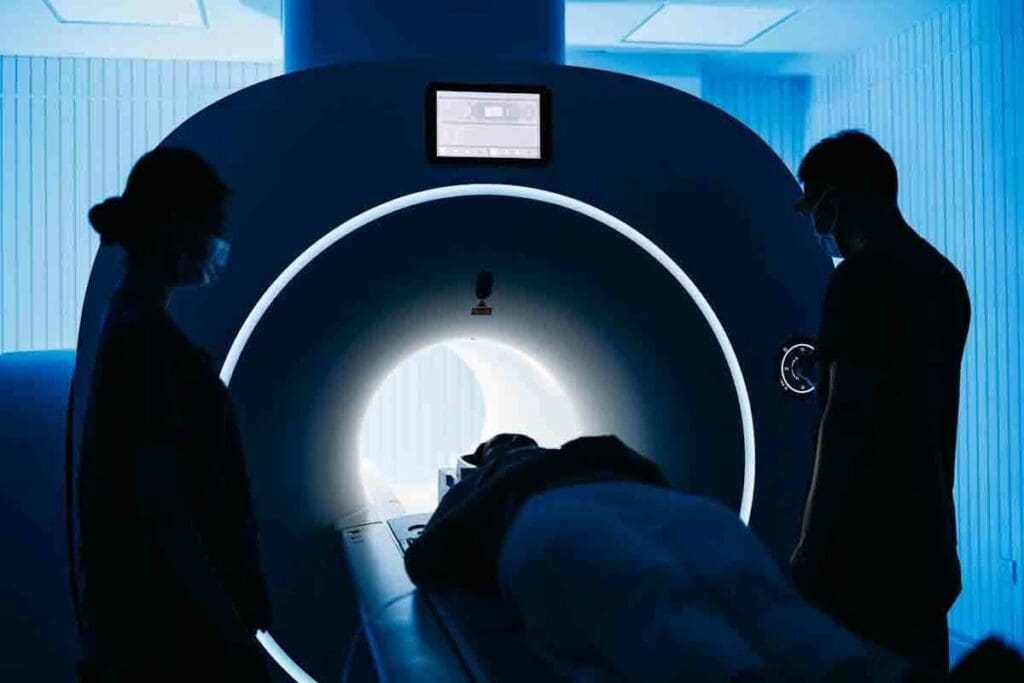
At Liv Hospital, we use Fluorodeoxyglucose (FDG), a glucose analog, in PET scans. This tool helps us see how tissues work. It’s key to finding cancer, brain issues, and heart problems. FDG is a type of sugar with a radioactive tag. It shows where the body is most active.Our ultimate guide answers what is fluorodeoxyglucose? Learn about this powerful agent and its essential role in amazing modern PET scan imaging.
Knowing how FDG works helps doctors and patients make important decisions. FDG PET scans are super useful in fighting cancer, brain diseases, and heart issues. They give us deep insights into how tissues work.
Key Takeaways
- Fluorodeoxyglucose (FDG) is a glucose analog used in PET scans to detect metabolic activity.
- FDG is used to diagnose and monitor various conditions, including cancer and neurological disorders.
- The use of FDG in PET scans guides treatment decisions and patient care.
- FDG PET scans are valuable in oncology, neurology, and cardiology.
- Liv Hospital employs internationally recognized standards for FDG PET scans.
The Fundamentals of Medical Imaging and Nuclear Medicine
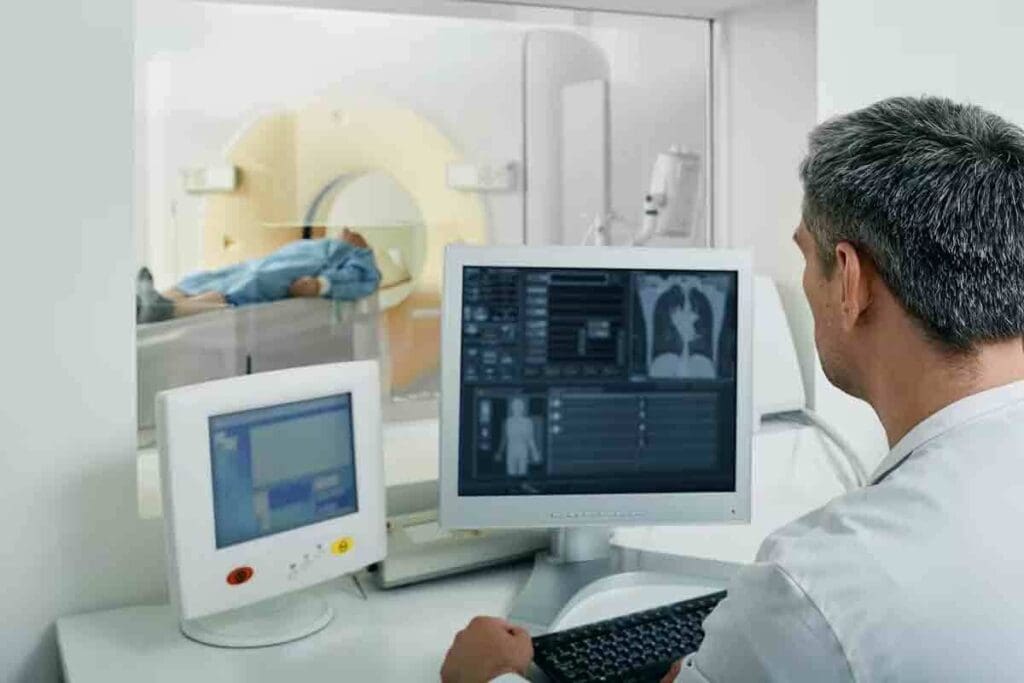
Medical imaging and nuclear medicine are key in today’s healthcare. They help us see inside the body. This is vital for diagnosing and treating many health issues.
Evolution of Diagnostic Imaging Technologies
Diagnostic imaging has changed a lot over time. It started with X-rays and now includes PET (Positron Emission Tomography) and CT (Computed Tomography) scans. These advancements help us understand the body better.
Here are the main changes in diagnostic imaging:
- Introduction of X-ray technology
- Advancements in CT scans
- Development of MRI (Magnetic Resonance Imaging)
- Integration of PET scans with other imaging modalities
The Role of Radioactive Tracers in Modern Medicine
Radioactive tracers are key in nuclear medicine, like in PET scans. Fluorodeoxyglucose (FDG), a glucose analog with a radioactive tag, has changed oncology and neuroscience.
FDG in PET scans shows how glucose is used in the body. This is useful for:
- Cancer diagnosis and staging
- Monitoring treatment response
- Detecting disease recurrence
What Is Fluorodeoxyglucose: Definition and Chemical Structure

Fluorodeoxyglucose (FDG) is key in medical imaging. We’ll look at what it is and how it works. It’s a glucose-like substance that helps in PET scans.
The Molecular Composition of FDG
FDG is made of 2-deoxy-2-[18F]fluoro-D-glucose. It has fluorine-18 instead of a hydroxyl group in glucose. This lets doctors track it with PET scans.
Its structure is close to glucose’s, but with fluorine-18 at the C-2 spot. This change lets FDG act like glucose in the body. It’s perfect for studying how tissues use glucose.
How FDG Mimics Glucose in the Body
FDG enters cells like glucose does. Inside, it gets turned into FDG-6-phosphate by hexokinase. Unlike glucose, it can’t be broken down further.
This is why FDG is useful in PET scans. Areas with high glucose use, like some cancers, take up more FDG. This makes them stand out from areas with lower use.
| Property | Glucose | FDG |
| Chemical Structure | C6H12O6 | 2-deoxy-2-[18F]fluoro-D-glucose |
| Metabolic Pathway | Fully metabolized | Trapped as FDG-6-phosphate |
| Detection Method | Not applicable | PET scanning |
The Science Behind PET Scanning Technology
PET scans use complex nuclear medicine and advanced detection tech. They are key in diagnosing diseases like cancer, heart issues, and brain disorders.
Principles of Positron Emission Tomography
PET scans detect gamma rays from radioactive tracers. The most used tracer is Fluorodeoxyglucose (FDG), a sugar molecule with Fluorine-18 (F-18). It goes to cells that use a lot of sugar, like cancer cells.
When F-18 decays, it sends out a positron. This positron meets an electron, causing a burst of gamma photons in opposite directions.
Detection of Annihilation Photons
Detecting these photons is key for making PET images. The scanner has detectors that catch the photons. If two detectors see a photon at the same time, it’s recorded as an event.
The data from these events is turned into images. These images show how active the body’s cells are. The brighter the image, the more active the cells.
| Key Component | Function |
| Fluorodeoxyglucose (FDG) | Radioactive tracer that accumulates in cells with high glucose uptake |
| Fluorine-18 (F-18) | Radioactive isotope used in FDG, emitting positrons upon decay |
| PET Scanner Detectors | Capture gamma photons emitted from annihilation events |
Knowing how PET scans work is important. They help doctors see how active cells are in the body. This is very useful for finding and treating diseases, like cancer.
FDG PET CT Scans: Combining Metabolic and Anatomical Imaging
FDG PET CT scans are a big step forward in medical imaging. They mix metabolic and anatomical info. This combo uses PET scans to show metabolic activity and CT scans for detailed body structures.
We use FDG PET CT scans to understand diseases better. By combining PET and CT, these scans are a strong tool. They help us find, stage, and track diseases, like cancer.
Integration of PET and CT Technologies
FDG PET CT scans bring together PET and CT tech. They use one device to get metabolic and anatomical data at the same time. This makes sure the info from both is matched up right.
The good things about this mix include:
- More accurate diagnoses by linking metabolic activity with body structures
- Better finding and understanding of lesions
- More accurate disease staging and extent
- More precise tracking of how treatments work
Benefits of Hybrid Imaging Approaches
Hybrid imaging, like FDG PET CT scans, has many pluses. These include:
- More confident diagnoses with info from both types of scans
- Less need for extra scans, making things faster
- Better care for patients with more detailed disease checks
FDG PET CT scans combine PET and CT strengths. They are a key tool in today’s medicine, helping us care for patients better.
How FDG Accumulates in Cells: The Metabolic Trap Mechanism
The metabolic trap mechanism is key to how FDG accumulates in cells. It provides valuable diagnostic information. This process is fundamental to understanding the role of 18F FDG in PET scans.
Cellular Uptake and Phosphorylation
FDG, or Fludeoxyglucose F 18, is taken up by cells through glucose transporter proteins. Once inside, it is phosphorylated by the enzyme hexokinase to form FDG-6-phosphate. Unlike glucose, which is further metabolized, FDG-6-phosphate cannot proceed through the glycolytic pathway and is trapped within the cell.
This trapping mechanism is key for the diagnostic utility of FDG in PET imaging. The accumulation of FDG within cells is directly related to their metabolic activity, mainly their glucose consumption.
Why Cancer Cells Show Increased FDG Uptake
Cancer cells typically have increased glucose metabolism compared to normal cells, known as the Warburg effect. As a result, they take up more FDG, making them stand out on PET scans. This increased uptake is due to the upregulation of glucose transporters and hexokinase in cancer cells, facilitating the trapping of FDG.
The heightened FDG accumulation in cancer cells allows for the detection and monitoring of tumors. By understanding how FDG accumulates in cells through the metabolic trap mechanism, we can better interpret PET scan results. This information is useful for both diagnosis and therapy.
FDG Activity on PET Scans: Interpretation and Significance
Understanding FDG PET scans means knowing how FDG is taken up by different tissues.
The Standardized Uptake Value (SUV) measures FDG activity on PET scans. It’s key for checking tissue metabolism.
Understanding SUV (Standardized Uptake Value)
The SUV is a number that shows how active a tissue is compared to the body’s average. It helps tell if something is normal or not.
A high SUV usually means a tissue is very active. This is often seen in cancer cells.
Normal Physiological Distribution of FDG
FDG doesn’t just go to sick tissues. It also goes to healthy ones. Knowing where it goes normally is important for correct readings.
FDG usually goes to the brain, heart, and urinary system. This is because of normal glucose use and waste.
Patterns of Abnormal FDG Uptake
Abnormal FDG uptake can show many health issues, like cancer, infections, and inflammation.
In cancer, more FDG uptake often means cancer cells are present. This helps doctors diagnose, stage, and check how treatments are working.
For example, someone with lymphoma might show high FDG in lymph nodes. This means the disease is active.
Knowing these patterns is key for making the right diagnosis and treatment plan.
Clinical Applications of FDG PET Scans in Oncology
In oncology, FDG PET scans are key for checking how tumors work. They help us see how active tumors are, which guides treatment. We use FDG PET scans to check on different cancers. This is important for making good treatment plans.
Cancer Diagnosis and Initial Staging
FDG PET scans are key for finding and staging cancer. They show where tumors are active. For example, in lymphoma, FDG PET scans are great because they find active lymph nodes well.
When we combine PET and CT in FDG PET/CT scans, we get more info. This helps doctors find tumors better. It makes the first cancer check more accurate.
Treatment Response Assessment
It’s important to see how well treatment works. FDG PET scans help doctors check if tumors are getting smaller. If they are, it means treatment is working.
We use FDG PET scans to see how treatment is going. This is true for cancers like lymphoma and some breast cancers. By comparing scans before and after treatment, doctors can see if tumors are shrinking.
Surveillance and Recurrence Detection
After treatment, watching for cancer to come back is key. FDG PET scans are great for this. They find active tumor cells before they show up on other scans.
In short, FDG PET scans are very important in fighting cancer. They help from the start to watching for cancer to come back. Their detailed info is a big help to doctors.
FDG PET Imaging in Non-Oncological Conditions
FDG PET imaging is used in many medical fields, like neurology, cardiology, and infectious diseases. It’s not just for cancer anymore. It helps in many other health issues too.
Neurological Applications: Alzheimer’s and Epilepsy
In neurology, FDG PET scans check brain activity. They help find and treat diseases like Alzheimer’s. This way, doctors can tell Alzheimer’s apart from other brain problems.
It’s also great for epilepsy. It finds where seizures start, helping doctors plan surgery. This helps treat seizures better.
Cardiac Viability Assessment
In cardiology, FDG PET scans check if the heart muscle can recover. They see if the heart is just sleeping or if it’s too damaged. This helps decide the best treatment.
Knowing this helps doctors choose between surgery or medicine. FDG PET scans show if the heart can get better after treatment.
| Condition | FDG PET Imaging Role | Clinical Benefit |
| Alzheimer’s Disease | Assesses brain glucose metabolism | Aids in early diagnosis and distinguishing from other dementias |
| Epilepsy | Localizes seizure foci | Helps plan surgical interventions |
| Cardiac Viability | Evaluates myocardial glucose metabolism | Guides revascularization decisions |
Infection and Inflammation Imaging
FDG PET scans are also good for finding infections and inflammation. They’re great for diseases like sarcoidosis and joint infections. This helps doctors find and treat these problems better.
They’re very good at spotting inflammation. This helps doctors know how bad the disease is and how to treat it. It also helps see if treatment is working.
FDG PET imaging gives a clear picture of disease activity. This helps doctors make better decisions for their patients with many health issues.
Limitations and Considerations of FDG PET Scanning
FDG PET scans are very useful for diagnosing diseases. But, they have some limits. Knowing these limits helps us use them better.
False Positives and False Negatives
FDG PET scans can sometimes show false results. False positives mean the scan shows disease when there isn’t any. This can cause worry and extra tests. On the other hand, false negatives mean the scan misses the actual disease. This can delay treatment.
Many things can cause these errors. For example, high blood sugar can affect the scan. So does how well the equipment is set up. Knowing these can help us understand the scan better.
Patient Preparation Requirements
Getting ready for an FDG PET scan is key. Patients usually need to fast before the scan to get the best results. This helps the scan work better.
We also tell patients to stay away from caffeine and some medicines before the scan. This helps the scan work better and gives us clearer results.
Radiation Exposure and Safety Protocols
FDG PET scans use a small amount of radiation. But the dose is usually safe. We follow strict rules to protect everyone from too much radiation.
We follow rules from regulatory agencies to keep radiation low. This means using the least amount of FDG needed. We also use shields and follow safe handling of radioactive materials.
Conclusion: The Evolving Role of FDG in Medical Diagnostics
We’ve looked into how Fluorodeoxyglucose (FDG) changes medical imaging, like in PET scans. It has changed oncology a lot. It keeps helping us find and manage different diseases. As tech gets better, FDG’s role grows, giving us more precise info on disease and treatment.
FDG in PET/CT scans is key for cancer diagnosis. It lets us see both how the body works and its structure. For more on PET scanning, check out the RadiologyInfo.org page on PET scans. As research goes on, FDG will get even better, helping patients more and leading to personalized medicine.
In short, FDG is a key part of medical diagnostics and will keep getting better. Its growth with new tech will help us fight diseases better. This will make diagnosing and treating complex conditions more effective.
FAQ
What is Fluorodeoxyglucose (FDG) and how is it used in PET scans?
FDG is a special glucose molecule with a radioactive tag. It’s used in PET scans to see how active cells are in the body. This is helpful for finding cancer cells because they use a lot of glucose.
How does FDG accumulate in cells?
FDG gets trapped in cells because it’s like glucose but can’t be broken down. This happens a lot in cells that are very active, like cancer cells.
What is the significance of SUV (Standardized Uptake Value) in FDG PET scans?
SUV shows how much FDG a tissue takes in. A high SUV means the tissue is very active, like cancer. It helps doctors understand what’s going on in the body.
What are the clinical applications of FDG PET scans beyond oncology?
FDG PET scans are used for more than just cancer. They help in neurology for diseases like Alzheimer’s and epilepsy. They’re also used in cardiology and for finding infections.
What are the limitations of FDG PET scanning?
FDG PET scans can sometimes give wrong results. They need the right preparation to work well. There’s also a risk of too much radiation, so safety is key.
How do FDG PET CT scans combine metabolic and anatomical imaging?
FDG PET CT scans use PET for metabolic info and CT for body structure. This mix gives doctors a better view of what’s happening inside the body.
Why do cancer cells show increased FDG uptake?
Cancer cells grow fast and need a lot of energy. They take in more glucose, which FDG mimics. This makes them stand out in PET scans.
What is the role of radioactive tracers like FDG in modern medicine?
Tracers like FDG help doctors see how the body works and find diseases. They’re key in nuclear medicine and help with early detection and treatment.
How has diagnostic imaging technology evolved over time?
Imaging has come a long way, from simple X-rays to PET, CT, and MRI. These new tools help doctors find and treat diseases better and earlier.
What are the benefits of using 18F-FDG in PET scans?
18F-FDG in PET scans is very good at finding active tissues. It helps doctors diagnose, stage, and watch diseases, like cancer, by showing where glucose is used a lot.
References
- Almuhaideb, A., Papathanasiou, N., & Bomanji, J. (2011). 18F-FDG PET/CT Imaging In Oncology. Saudi Medical Journal, 32(7), 694-703. https://www.ncbi.nlm.nih.gov/pmc/articles/PMC3101722/
- Anand, S. S., & Gnaizda, J. (2011). Clinical applications of PET and PET-CT. Seminars in Nuclear Medicine, 41(6), 442-450. https://www.ncbi.nlm.nih.gov/pmc/articles/PMC4921358/
- Kinahan, P. E., & Fletcher, J. W. (2010). PET/CT standardized uptake values (SUVs) in clinical practice and assessing response to therapy. Seminars in Ultrasound, CT and MRI, 31(6), 496-505. https://www.ncbi.nlm.nih.gov/pmc/articles/PMC3026294/