Last Updated on November 27, 2025 by Ugurkan Demir
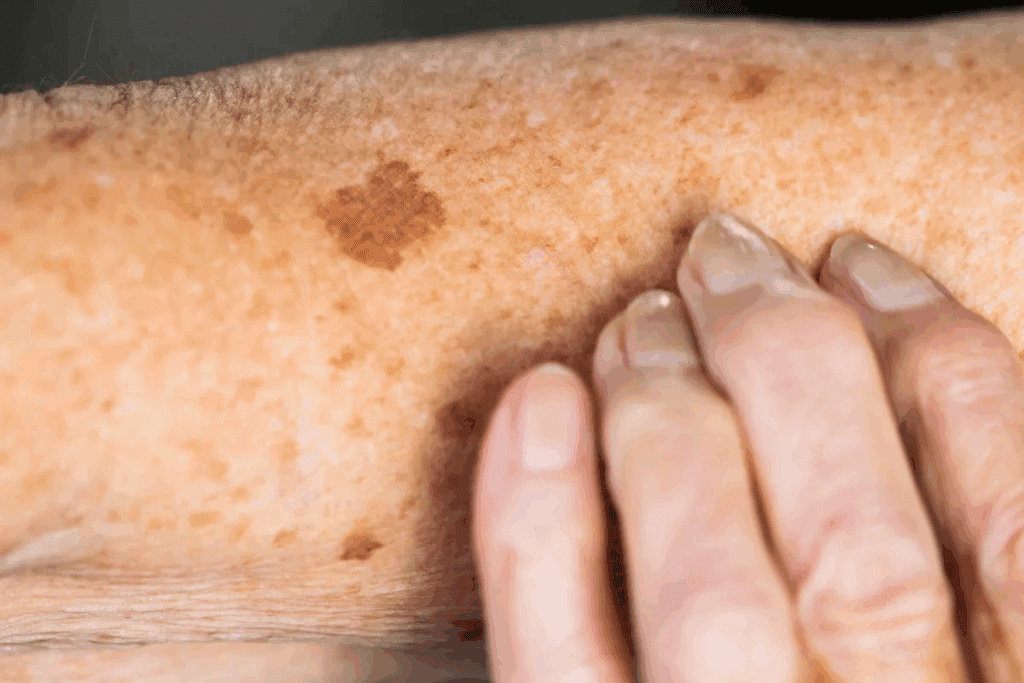
It’s important to know about the three main types of skin cancer. This knowledge helps in catching them early and treating them well. Basal cell carcinoma (BCC), squamous cell carcinoma (SCC), and melanoma are different and affect people in various ways.
Basal cell carcinoma makes up about 80% of nonmelanoma skin cancers. It’s the most common one. Squamous cell carcinoma is also common. But, melanoma is less common but more dangerous because it can spread.
At Liv Hospital, we offer top-notch dermatologic care. We use the latest technology to find and treat these cancers well.
Key Takeaways
- The three main types of skin cancer are basal cell carcinoma, squamous cell carcinoma, and melanoma.
- Basal cell carcinoma is the most common form of skin cancer.
- Squamous cell carcinoma is another prevalent type of skin cancer.
- Melanoma is less common but poses a greater risk due to its ability to spread.
- Early detection and treatment are key to managing skin cancer effectively.
Understanding Skin Cancer: What It Is and How It Develops
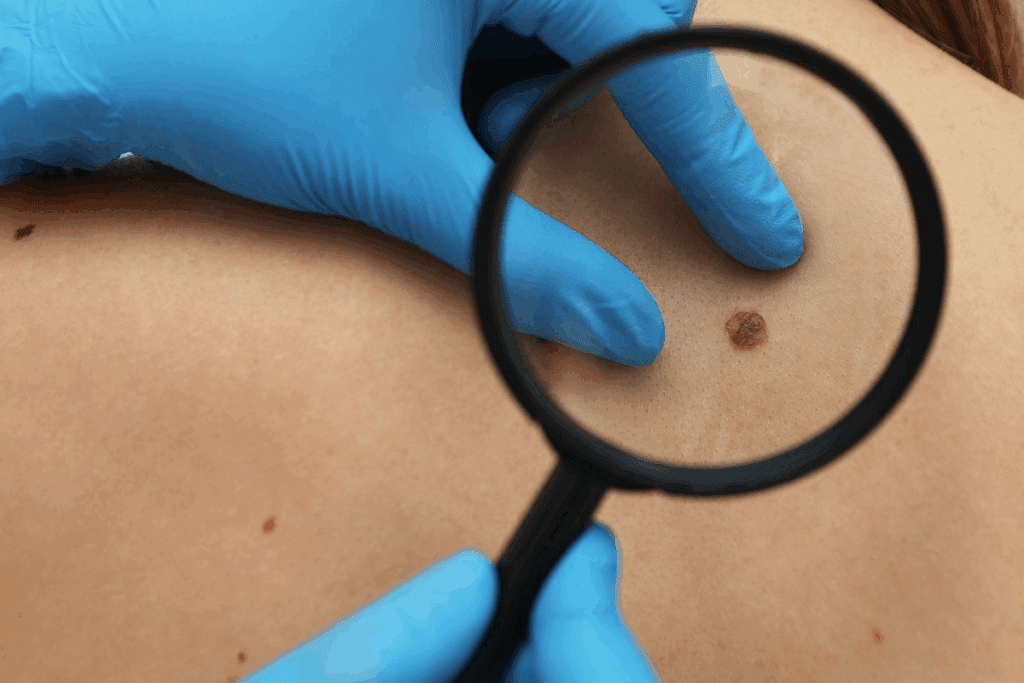
Learning about skin cancer starts with understanding how it grows in the skin. It’s a condition where abnormal cells grow without control. To grasp how it forms, we must know the skin’s structure and what causes it to develop.
The Anatomy of Skin and Cancer Formation
The skin has several layers, with the epidermis being the outermost. The epidermis has three main cell types: squamous cells, basal cells, and melanocytes. Squamous cells are flat and scale-like, forming the top layer. Basal cells are round and help with skin regeneration. Melanocytes produce melanin, which gives skin its color.
Skin cancer starts with abnormal cell growth in one of these layers. Basal cell carcinoma begins in the basal cell layer, while squamous cell carcinoma starts in squamous cells. Melanoma, the most dangerous type, comes from melanocytes.
Common Causes and Risk Factors
Many factors can lead to skin cancer. Exposure to ultraviolet (UV) radiation from the sun or tanning beds is a big risk. It damages the skin’s DNA, causing cancerous changes. People with fair skin, a history of sunburns, or exposure to certain chemicals are at higher risk.
Other risk factors include a family history of skin cancer and a weakened immune system. Knowing these risk factors helps in prevention and early detection. By understanding what causes skin cancer and how it develops, we can lower our risk and spot issues early.
What Is Skin Cancer Called: The Three Main Types

Skin cancer is a big health issue. It’s mainly split into three types: BCC, SCC, and melanoma. Knowing about these types helps both patients and doctors choose the right treatment.
Overview of Classification System
Skin cancer types are based on the skin cell they start from. The main types are basal cell carcinoma (BCC), squamous cell carcinoma (SCC), and melanoma. BCC and SCC are called nonmelanoma skin cancers because they start from different cells than melanoma.
Nonmelanoma vs. Melanoma Skin Cancers
Nonmelanoma skin cancers, like BCC and SCC, are more common and less serious than melanoma. Melanoma, which starts from melanocytes, is more dangerous because it can spread more easily. We’ll look at each type in more detail later.
Prevalence and Statistics in the United States
In the U.S., skin cancer is very common, with over 9 million cases each year. BCC makes up about 80% of nonmelanoma cases, and SCC makes up most of the rest. Melanoma, though rarer, causes most skin cancer deaths.
| Type of Skin Cancer | Approximate Percentage of Cases | Relative Aggressiveness |
| Basal Cell Carcinoma (BCC) | 80% of nonmelanoma cases | Low |
| Squamous Cell Carcinoma (SCC) | 20% of nonmelanoma cases | Moderate |
| Melanoma | Less than 5% of all skin cancer cases | High |
We’ve talked about the three main skin cancer types, their classification, and how common they are. Knowing this is key to managing and treating skin cancer well.
Basal Cell Carcinoma (BCC): The Most Common Type
Basal Cell Carcinoma (BCC) is the most common skin cancer. Knowing about it helps in diagnosing and treating it well. We’ll look at what BCC is, its symptoms, where it often shows up, and how it behaves.
Origin and Development in the Basal Cell Layer
BCC starts in the basal cell layer of the skin. This layer makes new skin cells. Problems here can cause cancer. BCC is caused by genetics and UV radiation.
Typical Appearance and Symptoms
BCC looks like a slow-growing, painless bump on the skin. It can be shiny, pink, red, or an open sore. These spots often appear on sun-exposed areas and might bleed or crust.
Common Locations on the Body
BCC often shows up on sun-exposed parts like the face, ears, neck, and scalp. These areas get more UV damage, increasing BCC risk.
Growth Pattern and Metastatic Potentia
BCC grows slowly. It can spread but rarely goes to other body parts. When comparing BCC and squamous cell carcinoma, their growth patterns and risks are different.
Knowing about BCC helps manage it better. It’s not usually deadly because it doesn’t spread much. But, untreated BCC can harm the area around it. Early treatment is key to avoid disfigurement and get the best results.
Squamous Cell Carcinoma (SCC): The Second Most Common Type
Squamous Cell Carcinoma (SCC) is the second most common skin cancer. It’s dangerous because it can spread and grow. SCC starts in the squamous cells, which are thin and flat. They are found in the outer layer of the skin, called the epidermis.
Origin in the Upper Portion of the Epidermis
SCC begins in the top layer of the epidermis, where squamous cells are. These cells protect us from harm. When they turn cancerous, SCC can form. The place where SCC starts in the epidermis is key to its growth and spread.
Identifying Features and Warning Signs
Spotting SCC early is vital for treatment. Look for firm, red nodules or scaly, crusted lesions that might bleed or turn into sores. These can be found on sun-exposed areas and might hurt when touched. Regular skin checks can catch it early.
High-Risk Areas for Development
SCC often shows up on sun-exposed parts like the face, ears, neck, and hands. People who spend a lot of time in the sun or have weak immune systems are at higher risk of getting SCC.
Invasiveness and Spread Potentia
SCC can grow deeper into the skin and spread more than Basal Cell Carcinoma (BCC). Quick diagnosis and treatment are key to stop it from spreading. Knowing the risks and watching for skin changes can help a lot.
Melanoma: The Most Dangerous Form
Melanoma is a serious type of skin cancer that can spread quickly. It starts from melanocytes, the cells that make skin color. Knowing about melanoma helps find it early and treat it well.
Development from Melanocytes
Melanocytes make melanin, which colors our skin. When these cells turn cancerous, they become melanoma. The exact reason for melanoma isn’t known, but UV radiation from the sun or tanning beds increases the risk. UV radiation can harm melanocytes’ DNA, causing cancer.
The ABCDE Rule for Identification
Finding melanoma early is key to treating it. The ABCDE rule helps spot moles that might be cancerous:
- Asymmetry: The mole doesn’t look even on both sides.
- Border: The edges are uneven or blurry.
- Color: The color is not even and might include black, brown, or red, white, or blue patches.
- Diameter: The mole is bigger than 6mm, like a pencil eraser.
- Evolving: The mole is changing in size, shape, or color.
“The ABCDE rule is a simple yet effective tool for identifying suspicious moles that may require further examination.”
Types of Melanoma
There are several types of melanoma, including:
- Superficial spreading melanoma: The most common type, which grows along the surface of the skin before penetrating deeper.
- Nodular melanoma: A more aggressive form that grows vertically into the skin.
- Lentigo maligna melanoma: Typically occurs on sun-damaged skin, often on the face.
- Acral lentiginous melanoma: Less common, but occurs on the palms, soles, or under the nails.
Why Melanoma Is More Aggressive
Melanoma is more aggressive than BCC and SCC because it can spread to other parts of the body. Once melanoma spreads, it becomes much more challenging to treat. Its aggressiveness comes from its ability to invade deeper into the skin and enter the bloodstream or lymphatic system.
Understanding melanoma, its development, identification, types, and aggressive nature is key for early detection and treatment. By knowing the risks and signs, people can protect their health.
BCC vs. SCC: Comparing the Two Most Common Types
It’s important to know the difference between BCC and SCC to get the right treatment. Both are types of nonmelanoma skin cancers. They look different and grow at different rates.
Appearance and Crater-Like Skin Lesions
BCC and SCC look different on the skin. BCC is often a small, shiny bump or a pink patch. It usually shows up in sun-exposed areas.
SCC looks like a firm, red nodule or a scaly, crusted lesion. It can also turn into a crater-like skin lesion. This is a big worry because it can spread.
Which Is Worse: Basal Cell or Squamous Cell Cancer?
SCC is usually more aggressive than BCC. SCC can spread to other parts of the body. BCC rarely does.
| Characteristics | Basal Cell Carcinoma (BCC) | Squamous Cell Carcinoma (SCC) |
| Appearance | Small, shiny bump or pink patch | Firm, red nodule or scaly, crusted lesion |
| Aggressiveness | Low; rarely spreads | Moderate to high; can invade and metastasize |
| Common Locations | Sun-exposed areas like face, ears, and neck | Sun-exposed areas, lips, and ears |
In conclusion, BCC and SCC are both serious skin cancers. But they look and grow differently. Knowing these differences helps doctors and patients choose the right treatment.
Comparing All Three: BCC vs. SCC vs. Melanoma
It’s important to know the differences between BCC, SCC, and Melanoma for skin cancer management. Each type has its own traits that affect how it behaves and how it’s treated.
Aggressiveness Spectrum and Spread Rates
BCC is the least aggressive, rarely spreading to other parts of the body. SCC is more aggressive, with a higher chance of spreading, but it’s not common. Melanoma is the most aggressive, with a high chance of spreading, even at an early stage.
Spread Rates Comparison
| Type of Skin Cancer | Metastasis Rate | Aggressiveness Level |
| Basal Cell Carcinoma (BCC) | <1% | Low |
| Squamous Cell Carcinoma (SCC) | 2-5% | Moderate |
| Melanoma | Highly variable, potentially high | High |
Survival Rates and Prognosis Differences
Survival rates vary based on the cancer type, stage, and other factors. BCC has a very high cure rate when caught early. SCC has a good prognosis but is considered more serious than BCC. Melanoma has seen better survival rates with early detection and treatment.
Five-Year Survival Rates
| Type of Skin Cancer | Localized | Regional | Distant |
| BCC | >99% | N/A | N/A |
| SCC | 90% | 50-70% | <20% |
| Melanoma | 92% | 63% | 22% |
Understanding the differences between BCC, SCC, and Melanoma is key to better treatment and outcomes. Early detection and tailored treatments are vital for each type of skin cancer.
Diagnosis Methods for Skin Cancer
To find out if you have skin cancer, doctors use several ways. They look at your skin, use special tools, and check tissue samples. Knowing what you have helps them choose the best treatment.
Visual Examination and Dermoscopy
First, doctors check your skin for odd spots or moles. They look at size, shape, color, and feel. Then, they use a tool called dermoscopy to see more details.
Dermoscopy helps spot signs of melanoma, like weird shapes and colors. It makes these signs clearer, helping doctors find cancer early.
Biopsy Procedures and Pathology
If a spot looks like cancer, a biopsy is done. This means taking a piece of tissue for a closer look. There are different ways to do this, depending on the spot.
The tissue is checked for cancer cells. If there are, the doctor finds out what kind and how far it has spread. This helps plan the best treatment. Pathological examination gives important details for treatment choices.
Advanced Diagnostic Techniques
Sometimes, more tests are needed to understand the cancer better. These might include ultrasound or MRI scans. These tests help doctors know how far the cancer has gone.
| Diagnostic Method | Description | Use in Skin Cancer Diagnosis |
| Visual Examination | Initial assessment of skin lesions | Identifying suspicious lesions |
| Dermoscopy | Detailed examination using a dermatoscope | Differentiating benign from malignant lesions |
| Biopsy | Removal and examination of tissue | Confirming cancer presence and type |
| Imaging Studies | Techniques like ultrasound or MRI | Assessing cancer spread and staging |
Doctors use these methods together to find and treat skin cancer well. Finding cancer early makes treatment more effective.
Treatment Options for Different Skin Cancer Types
Treating skin cancer depends on the type and stage. We’ll look at surgical methods, radiation therapy, and new treatments.
Surgical Approaches: Mohs vs. Standard Excision
Surgical removal is a common treatment for skin cancer. Mohs surgery removes cancerous tissue layer by layer. It checks each layer until no cancer is found. This method is great for cancers in sensitive areas or those with unclear boundaries.
Standard excision removes the tumor and some healthy tissue around it. It’s effective but might leave bigger scars than Mohs surgery.
Radiation and Topical Treatments
For those not suited for surgery or have early skin cancers, radiation therapy is an option. It kills cancer cells with high-energy beams.
Topical treatments apply creams or gels to the skin. They’re used for early-stage cancers. For example, imiquimod cream boosts the immune system to fight cancer.
Immunotherapy and Targeted Therapies
Immunotherapy boosts the immune system to fight cancer. It’s good for advanced skin cancers.
Targeted therapies target specific molecules in cancer cells. For example, BRAF inhibitors treat melanoma with a certain genetic mutation.
Can Skin Cancer Heal on Its Own?
Generally, skin cancer doesn’t heal by itself. Some precancerous lesions might go away, but true skin cancers need treatment. Early detection and treatment greatly improve outcomes.
Prevention Strategies and Risk Reduction
Skin cancer prevention is about sun safety, knowing risk factors, and checking your skin often. By doing these things, you can lower your chance of getting skin cancer a lot.
Sun Protection Methods and Their Effectiveness
Protecting yourself from the sun is key to preventing skin cancer. Use sunscreen with SPF 30 or higher, wear clothes that cover you, and stay in the shade when the sun is strong (10 am to 4 pm).
Good sun protection also means watching out for water and sand. They can make UV rays stronger. By following these tips, you can lower your risk of skin damage and cancer.
Regular Skin Self-Examinations
Checking your skin regularly is important for catching skin cancer early. Look for new or changing spots every month. Use a mirror to see all parts of your body, like your back and scalp.
When checking, remember the ABCDE rule for melanoma: Asymmetry, Border irregularity, Color variation, Diameter larger than 6mm, and Evolving size, shape, or color. If you see anything odd, see a dermatologist right away.
When to Seek Medical Attention
It’s important to know when to see a doctor for skin issues. If you notice new growths, sores that won’t heal, or changes in moles, get help fast.
If you’ve had skin cancer before or been in the sun a lot, see a dermatologist often. Catching skin cancer early makes treatment work better.
Rare and Uncommon Skin Cancers
Most people know about common skin cancers. But there are rare and uncommon ones that are just as important. These less common cancers can greatly affect our health and well-being.
Merkel Cell Carcinoma
Merkel cell carcinoma is a rare and aggressive skin cancer. It starts in Merkel cells in the skin’s top layer. It often shows up on sun-exposed areas like the face, neck, and arms.
This cancer grows fast and can spread to other parts of the body.
Key characteristics of Merkel cell carcinoma include:
- Rapid growth rate
- High chance of spreading
- Usually found on sun-exposed skin
Dermatofibrosarcoma Protuberans
Dermatofibrosarcoma protuberans (DFSP) is a rare skin cancer in the skin’s dermal layer. It grows slowly and can come back if not fully removed. DFSP can appear anywhere but is often found on the trunk.
| Characteristics | Merkel Cell Carcinoma | Dermatofibrosarcoma Protuberans |
| Growth Rate | Rapid | Slow |
| Metastatic Risk | High | Low |
| Common Locations | Sun-exposed areas | Trunk |
Other Rare Skin Malignancies
There are more rare skin cancers like sebaceous carcinoma, angiosarcoma, and Kaposi’s sarcoma. Each has its own traits and how aggressive it can be varies.
It’s key to know about these rare cancers for early detection and treatment. If you see unusual skin changes or growths, see a dermatologist.
Conclusion
We’ve looked at the three main types of skin cancer: Basal Cell Carcinoma (BCC), Squamous Cell Carcinoma (SCC), and melanoma. Knowing the differences is key for early detection and treatment. BCC is the most common and least aggressive. SCC is more invasive and has a higher risk of spreading.
Melanoma, though rare, is the most dangerous because it grows fast and can spread. A summary of skin cancer types shows how important awareness and early detection are. By recognizing warning signs and taking preventive steps, we can lower our risk.
Regular skin self-exams and doctor visits are essential for catching skin cancer early. This makes treatment more effective. In conclusion, understanding skin cancer is vital for education and awareness. We must stay alert about sun protection and watch for skin changes.
By doing this, we can help those with skin cancer and work to lower its occurrence.
FAQ
What are the three main types of skin cancer?
The main types are Basal Cell Carcinoma (BCC), Squamous Cell Carcinoma (SCC), and Melanoma.
What is the difference between Basal Cell Carcinoma (BCC) and Squamous Cell Carcinoma (SCC)?
BCC starts in the basal cell layer and grows slowly. It rarely spreads. SCC starts in the upper skin layer and can grow faster and spread more.
What is the most dangerous type of skin cancer?
Melanoma is the most dangerous. It grows fast and can spread quickly.
Can skin cancer heal on its own?
No, most skin cancers need treatment. They don’t heal by themselves.
What is the ABCDE rule for identifying Melanoma?
The ABCDE rule helps spot Melanoma early. A stands for Asymmetry, B for Border, C for Color, D for Diameter, and E for Evolving.
How is skin cancer diagnosed?
Doctors use visual checks, dermoscopy, biopsies, and pathology. They also use advanced tests.
What are the treatment options for skin cancer?
Treatments include surgery, radiation, topical treatments, and more. Mohs surgery is one type of surgery.
How can skin cancer be prevented?
Prevent it by protecting your skin from the sun. Check your skin often and see a doctor if you find anything unusual.
What are some rare and uncommon types of skin cancer?
Rare types include Merkel Cell Carcinoma and Dermatofibrosarcoma Protuberans.
Is Basal Cell Carcinoma (BCC) or Squamous Cell Carcinoma (SCC) worse?
SCC is worse. It can grow deeper and spread more than BCC.
Can a crater-like skin lesion be a sign of skin cancer?
Yes, a crater-like lesion can be a sign of SCC.
What are the survival rates for different types of skin cancer?
Survival rates vary. BCC has the best rate because it grows slowly. Melanoma’s rate is lower if not caught early.
References
National Center for Biotechnology Information. (2025). 3 Types of Skin Cancer BCC vs SCC. Retrieved from https://pmc.ncbi.nlm.nih.gov/articles/PMC4744388/