Find out what part of the brain controls temperature regulation. Learn the crucial role of the hypothalamus as the body’s thermostat clearly. Our body keeps a steady temperature of 98.6 degrees Fahrenheit. This is thanks to a complex system in our brain. The hypothalamus, a small but mighty part of our brain, acts like a thermostat. It checks our body’s temperature and makes quick changes to keep us comfortable.
The hypothalamus, mainly the preoptic area, is our body’s temperature controller. It gets information from thermoreceptors. Then, it sends signals to keep our core temperature stable, helping our body work well.
Key Takeaways
- The hypothalamus is the primary regulator of body temperature.
- The preoptic area of the hypothalamus is key for temperature control.
- Thermoreceptors give the hypothalamus the info it needs to keep our core temperature right.
- The hypothalamus manages complex body responses to temperature changes.
- Keeping our core temperature steady is vital for our body’s best performance.
The Importance of Temperature Regulation in Human Physiology
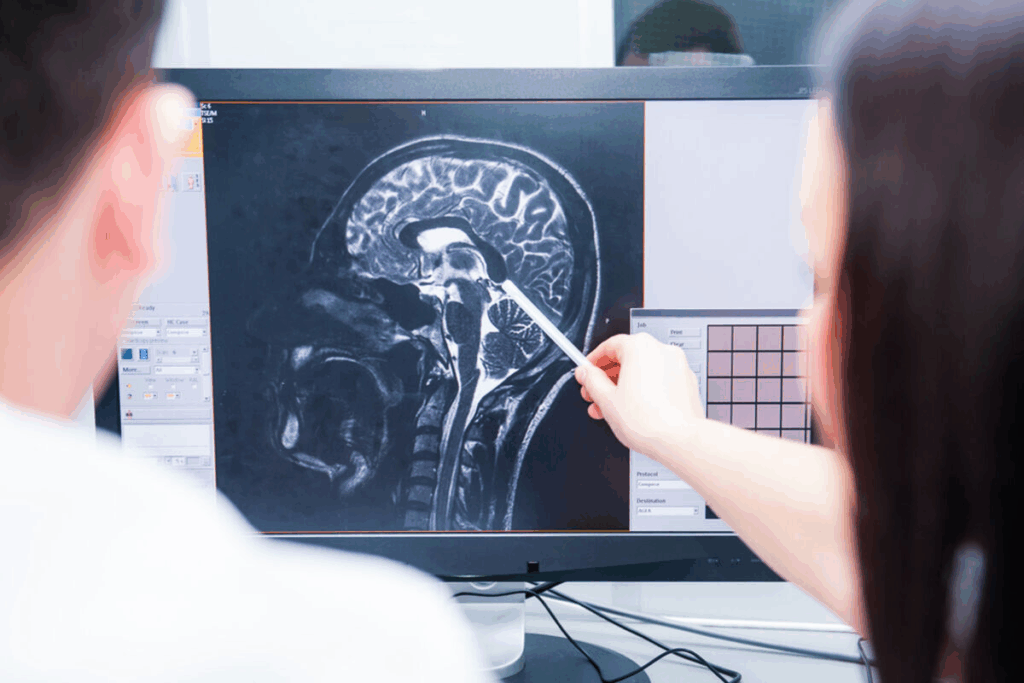
Temperature regulation is key to our body’s health. It keeps our body temperature stable. This is vital for our cells to work right and for us to stay healthy.
Why Maintaining Core Temperature is Critical for Survival
Our bodies have many systems that work together to keep us alive. Keeping our core body temperature at 37°C (98.6°F) is essential. This temperature is perfect for our body’s functions.
If our body temperature gets too high or too low, things can go wrong. Too cold can slow us down, and too hot can damage our cells.
The Narrow Range of Optimal Body Temperature
The best temperature for our body is about 37°C (98.6°F). This range is key for our body to work well. It helps our enzymes, nerves, and muscles.
Being just a little off this range can make us uncomfortable. If it lasts too long, it can cause serious health problems. Our body’s ability to stay in this range shows how well it can regulate temperature.
Consequences of Temperature Dysregulation
Temperature dysregulation can be very bad for us. Being too cold can make us confused and sleepy. If it gets worse, we might lose consciousness.
Being too hot can cause heat exhaustion or even heatstroke. These are serious and can be deadly.
The hypothalamus is key in keeping our body temperature right. Any problems with it can lead to temperature issues.
In short, keeping our body temperature right is very important. It helps our body stay balanced and ensures our body functions well.
Understanding Thermoregulation: A Biological Overview

Thermoregulation is a complex process that keeps our body temperature stable. It’s vital for our survival, as it lets our body functions work best in a specific temperature range.
We’ll dive into how thermoregulation works. We’ll look at homeostasis, how temperature control evolved, and the balance between making and losing heat.
Homeostasis and Temperature Control
Homeostasis is our body’s ability to keep a stable internal environment. Temperature control is key to this, and it’s managed by the hypothalamus. The hypothalamus acts like a thermostat, getting temperature info from special sensors called thermoreceptors.
These sensors tell the hypothalamus when the temperature changes. Then, the hypothalamus starts processes to keep the core temperature steady.
Evolution of Temperature Regulation Mechanisms
Over time, humans have learned to keep their body temperature stable in different environments. We’ve developed ways to stay cool or warm, from simple behaviors to complex body responses like sweating and shivering.
This ability has let us live in many climates, from very cold to very hot.
The Balance Between Heat Production and Heat Loss
The hypothalamus keeps our body temperature right by managing heat production and loss. Heat comes from our metabolism, muscle work, and other functions. Heat loss happens through radiation, conduction, convection, and evaporation.
In a comfortable environment, our body keeps heat production and loss in balance. But in extreme temperatures, we need to adjust. We might make more heat (by shivering) or lose more (by sweating).
What Part of the Brain Controls Temperature Regulation: The Hypothalamus
The hypothalamus is at the center of our body’s ability to regulate temperature. It’s a small part of the brain but plays a big role. It helps control hunger, thirst, and how we feel temperature.
Anatomical Location and Structure of the Hypothalamus
The hypothalamus is found at the brain’s base. It’s part of the limbic system, which handles emotions, motivation, and memory. Despite its small size, it’s very complex, with many parts working together.
Understanding where the hypothalamus is and what it looks like is key. It connects to the pituitary gland, known as the “master gland.” This shows how important it is for controlling hormones, including those that help with temperature.
The Preoptic Area: The Body’s Thermostat
The preoptic area of the hypothalamus acts like a thermostat. It controls our body’s temperature. It has special sensors that feel the temperature of our blood and helps keep it stable.
This area is very sensitive to temperature. It knows when we’re too hot or too cold. If we’re hot, it makes us sweat and blood vessels expand to cool down. If we’re cold, it makes us shiver and blood vessels narrow to keep warm.
“The preoptic area is critical for keeping our body temperature stable. It’s the main temperature controller.” Medical Expert, Neuroscientist
Cellular Composition of Temperature-Sensitive Regions
The cells in the preoptic area and other sensitive parts of the hypothalamus are special. They can feel and respond to temperature changes. These cells are called thermoreceptors.
Cell Type | Function | Response to Temperature Change |
Warm-sensitive neurons | Detect increases in temperature | Activate cooling mechanisms (e.g., sweating) |
Cold-sensitive neurons | Detect decreases in temperature | Activate heat conservation mechanisms (e.g., shivering) |
The way different cells work together in the hypothalamus helps us stay at the right temperature. This keeps our body’s core temperature healthy and stable.
How the Hypothalamus Detects Temperature Changes
The process of temperature regulation starts with the hypothalamus’s ability to sense thermal changes. It gets constant thermal info from special neurons called thermoreceptors. These thermoreceptors are key to keeping our body temperature in a healthy range.
Peripheral Thermoreceptors in the Skin
Peripheral thermoreceptors are in the skin and notice changes in surface temperature. They feel both cold and warm, sending signals to the hypothalamus. This helps our body react quickly to temperature changes outside.
Central Thermoreceptors in the Core
Central thermoreceptors are inside the body, like in the hypothalamus, spinal cord, and organs. They check the blood and tissue temperatures. This info is vital for keeping the body’s internal temperature stable.
Integration of Temperature Signals
The hypothalamus mixes signals from peripheral and central thermoreceptors to understand the body’s thermal state. This is key for a correct response to temperature changes. It helps keep our body temperature in a healthy range.
Neural Pathways of Temperature Regulation
Our body keeps a stable temperature thanks to a complex network of neural pathways. The hypothalamus is key in this, acting as the main temperature controller.
Afferent Pathways: Sending Temperature Information to the Brain
Afferent pathways send temperature info from the body to the brain. They use peripheral thermoreceptors in the skin and central thermoreceptors in the core. These detect temperature changes and send signals to the hypothalamus.
The hypothalamus gets this info and decides what to do. It helps keep our body’s functions at the right temperature. This is vital for our health.
Efferent Pathways: The Brain’s Response Commands
After getting the info, the hypothalamus sends commands to the body’s effectors. These include sweat glands, blood vessels, and muscles. They help either cool down or keep warm as needed.
Efferent pathways let the hypothalamus carry out its plans. This could be making us sweat to cool off or shivering to warm up. This teamwork keeps our body temperature stable.
Neurotransmitters Involved in Thermoregulation
Neurotransmitters are key in temperature control. They help neurons talk to each other. This lets the hypothalamus get and send out temperature info.
Important neurotransmitters include dopamine, serotonin, and acetylcholine. They help control how the body reacts to temperature. This affects things like blood flow and sweating.
Mechanisms of Heat Conservation and Generation
The hypothalamus is key in keeping our body temperature stable. It uses different ways to keep us warm when it gets cold. This includes conserving and generating heat.
Vasoconstriction and Blood Flow Regulation
Vasoconstriction helps keep us warm by narrowing blood vessels near the skin. This reduces blood flow to the skin’s surface. It keeps the body’s core warm by conserving heat.
Shivering Thermogenesis
Shivering is another way to make heat. When it’s cold, the hypothalamus makes us shiver. This muscle activity creates heat, helping to keep our body warm.
Non-shivering Thermogenesis and Brown Fat Activation
Non-shivering thermogenesis makes heat without muscle movement. It’s linked to brown fat, which is very active and helps produce heat. Brown fat is full of mitochondria, where fatty acids are burned to make heat.
Hormonal Influences on Heat Production
Hormones also play a big role in heat production. Thyroid hormones, for example, affect our metabolic rate and heat production. The hypothalamus controls the release of thyroid-stimulating hormone (TSH), which helps produce thyroid hormones. An increase in thyroid hormones can boost our metabolic rate and heat production. Other hormones, like adrenaline, can also increase thermogenesis by speeding up our metabolism.
Mechanism | Description | Effect on Body Temperature |
Vasoconstriction | Reduces blood flow to the skin’s surface | Conserves heat |
Shivering Thermogenesis | Generates heat through muscle activity | Increases body temperature |
Non-shivering Thermogenesis | Produces heat through brown fat activation | Increases body temperature |
Hormonal Regulation | Influences metabolic rate and heat production | Regulates body temperature |
Mechanisms of Heat Loss and Cooling
Keeping our body temperature stable is key. The body uses several ways to cool down when it gets too hot. This helps keep our body’s temperature just right.
Vasodilation and Increased Blood Flow to the Skin
Vasodilation is a main way to lose heat. Blood vessels near the skin get bigger. This lets more blood flow to the skin’s surface, releasing heat.
This helps cool the body down.
Sweating and Evaporative Cooling
Sweating is another important way to cool down. When sweat evaporates, it takes heat away from the body. This process, called evaporative cooling, works well in hot weather.
Behavioral Responses to Heat
Changing how we act also helps with temperature control. We might seek shade, take off clothes, or use fans or air conditioners. These actions help lower our body temperature.
Respiratory Heat Exchange
Respiratory heat exchange is when we lose heat through breathing. Warm air is released when we exhale, taking some of our body’s heat with it. It’s not as big a factor as other ways, but it helps.
Mechanism | Description | Effectiveness |
Vasodilation | Increased blood flow to the skin’s surface | High |
Sweating/Evaporative Cooling | Heat loss through sweat evaporation | Very High |
Behavioral Responses | Actions taken to avoid heat | Variable |
Respiratory Heat Exchange | Heat loss through exhaled air | Moderate |
The hypothalamus is key in controlling these cooling methods. It makes sure our body temperature stays stable, even when it’s hot outside. Understanding these processes helps us see how amazing our bodies are.
The Connection Between Water Balance and Temperature Regulation
Water balance and temperature regulation are key to understanding our bodies. Keeping a stable internal temperature is linked to managing water balance. We’ll see how these two important processes work together.
How the Hypothalamus Coordinates Hydration and Cooling
The hypothalamus is vital for managing hydration and cooling. It controls body temperature and water balance, making sure they work together. When we get too hot, the hypothalamus makes us sweat to cool down.
Sweating means we lose water and salts, which we need to replace to stay hydrated. The hypothalamus notices when we lose too much water and makes us thirsty. This tells us to drink water and get back in balance.
The Role of Antidiuretic Hormone (ADH)
Antidiuretic Hormone (ADH) is important for water balance. It’s made by the posterior pituitary gland and helps the kidneys keep more water. When ADH is high, we make less urine and keep more water in our bodies.
The hypothalamus controls when ADH is released. It does this based on how salty our blood is and how much water we have. When we’re dehydrated or too hot, ADH helps us keep water, helping with both water balance and cooling down.
Thirst Mechanisms and Temperature Control
Thirst is key for water balance and is connected to temperature control. When we get hot, sweating makes us lose water, making us thirsty. Drinking water helps cool us down and keeps us hydrated.
The hypothalamus uses signals from our body to control when we feel thirsty. It makes sure we drink enough water to keep our body balanced, including keeping our temperature right.
Comparative Biology of Temperature Regulation
Different animal classes have unique ways to keep their body temperature right. This shows how complex and flexible temperature control can be across species.
Thermoregulation in Different Animal Classes
Thermoregulation changes a lot between animal classes. Mammals and birds keep their body temperature steady by making heat inside. On the other hand, reptiles and amphibians use outside heat to control their body temperature.
- Mammals: Have a well-developed system for keeping their body temperature stable, with the hypothalamus being key.
- Birds: Like mammals, they are endothermic and some have high metabolic rates to stay warm.
- Reptiles: They warm up in sunlight and cool down in shade.
- Amphibians: Use the environment’s temperature to regulate their body temperature.
Evolutionary Adaptations for Temperature Control
Species have evolved amazing ways to control their body temperature. These adaptations help them survive in different environments.
- Insulation: Many mammals have fur or blubber to keep warm and save energy.
- Behavioral Adaptations: Animals may change their behavior to stay away from extreme temperatures, like moving to warmer places in winter.
- Physiological Adaptations: Some animals can change their metabolic rate to make more or less heat as needed.
Lessons from Nature: Hibernation and Torpor
Hibernation and torpor are interesting ways some animals save energy when food is scarce or the weather is bad.
- Hibernation: A long period of sleep and low metabolism, seen in bears and marmots.
- Torpor: A shorter period of lower metabolism, found in animals like hummingbirds and some marsupials.
Learning from these natural strategies can help us find new ways to manage human health and diseases, like those related to temperature.
Disorders of Temperature Regulation
The hypothalamus is key in keeping our body temperature stable. Problems with it can cause many health issues. It’s involved in a complex process to keep our body at the right temperature.
Hypothalamic Damage and Its Effects
Damage to the hypothalamus can mess up our body’s temperature control. This can happen from injuries, tumors, or some brain diseases. When it’s damaged, our body’s temperature control is off, leading to temperature dysregulation.
People with this damage might have poikilothermia. This means their body temperature changes with the environment. They can’t keep their body temperature steady anymore.
Fever: When the Thermostat is Reset
Fever is our body’s way to fight off infections or inflammation. It’s when our body temperature goes up a bit. The hypothalamus sets our body’s temperature higher to fight off germs.
Hypothermia and Hyperthermia
Hypothermia happens when our body temperature gets too low, below 35°C (95°F). It can be caused by cold or some health issues. On the other hand, hyperthermia is when our body temperature gets too high, above 37.5°C (99.5°F). It can be from heatstroke, infections, or some medicines.
Both hypothermia and hyperthermia are serious and can be deadly if not treated right away. Knowing the causes and signs is key to treating them.
Age-Related Changes in Temperature Regulation
As we get older, our body’s ability to control temperature can get worse. Older people are more at risk of hypothermia and hyperthermia. This is because their metabolism slows down, they sweat less, and their hypothalamus changes.
It’s important to watch and take care of temperature issues in older people. We need to tailor our care to meet their specific needs.
Conclusion: The Remarkable Brain System That Keeps Us in Balance
The hypothalamus is key to keeping our body’s temperature stable. It controls many functions in our body, including how we feel temperature. This small part of the brain is essential for our health.
Our body’s temperature control is a complex process. The hypothalamus detects temperature changes and adjusts our body’s response. This keeps our body at the right temperature, even when it’s cold or hot outside.
Learning about the hypothalamus shows us how important it is for our health. It helps us understand the amazing balance in our bodies. This balance is what keeps us healthy and feeling good.
FAQ
What part of the brain controls body temperature?
The hypothalamus controls body temperature. It acts like a thermostat, keeping the core temperature stable.
What is the role of the hypothalamus in temperature regulation?
The hypothalamus is key in temperature control. It gets signals from thermoreceptors and sends signals to effectors to keep the core temperature stable.
What is the preoptic area of the hypothalamus?
The preoptic area is the main temperature controller. It detects body temperature changes and starts responses to keep homeostasis.
How does the hypothalamus detect temperature changes?
The hypothalamus uses thermoreceptors in the skin and core to detect temperature changes. It then sends signals to start responses.
What are the mechanisms of heat conservation and generation?
Heat conservation and generation involve vasoconstriction, shivering, and non-shivering thermogenesis. The hypothalamus regulates these mechanisms.
How does the hypothalamus regulate heat loss and cooling?
The hypothalamus controls heat loss and cooling through vasodilation, sweating, and evaporative cooling. These help keep the core temperature stable.
What is the connection between water balance and temperature regulation?
The hypothalamus links hydration and cooling by managing antidiuretic hormone (ADH) and thirst. This helps maintain proper functions and temperature.
What are the consequences of temperature dysregulation?
Temperature dysregulation can cause serious issues like hypothermia and hyperthermia. It can also affect the body’s ability to maintain homeostasis.
How does the hypothalamus respond to changes in body temperature?
The hypothalamus responds to temperature changes by starting responses to keep homeostasis. This includes vasoconstriction, vasodilation, sweating, and shivering.
What are the effects of hypothalamic damage on temperature regulation?
Damage to the hypothalamus can disrupt temperature control. This can lead to disorders like hypothermia or hyperthermia, affecting the body’s ability to maintain homeostasis.
How does aging affect temperature regulation?
Aging can impair the hypothalamus’s response to temperature changes. This makes older adults more prone to temperature-related disorders.
What is thermoregulation?
Thermoregulation is the body’s ability to keep a stable core temperature despite external temperature changes. The hypothalamus regulates this.
What part of the brain controls thermoregulation?
The hypothalamus controls thermoregulation. It keeps the core temperature stable through various mechanisms.
What gland regulates body temperature?
There isn’t a gland that directly controls body temperature. But the hypothalamus produces ADH, which helps regulate water balance and affects temperature.