Last Updated on November 14, 2025 by
Fever in kids is a big worry for parents, leading to millions of doctor visits each year. It’s important to know how to handle your child’s fever to keep them comfortable and safe. A fever is the body’s way of fighting off infection, and knowing whats the temperature that defines a fever”usually above 100.4 °F (38 °C)”helps parents understand when to get help, which is critical for their child’s well-being.
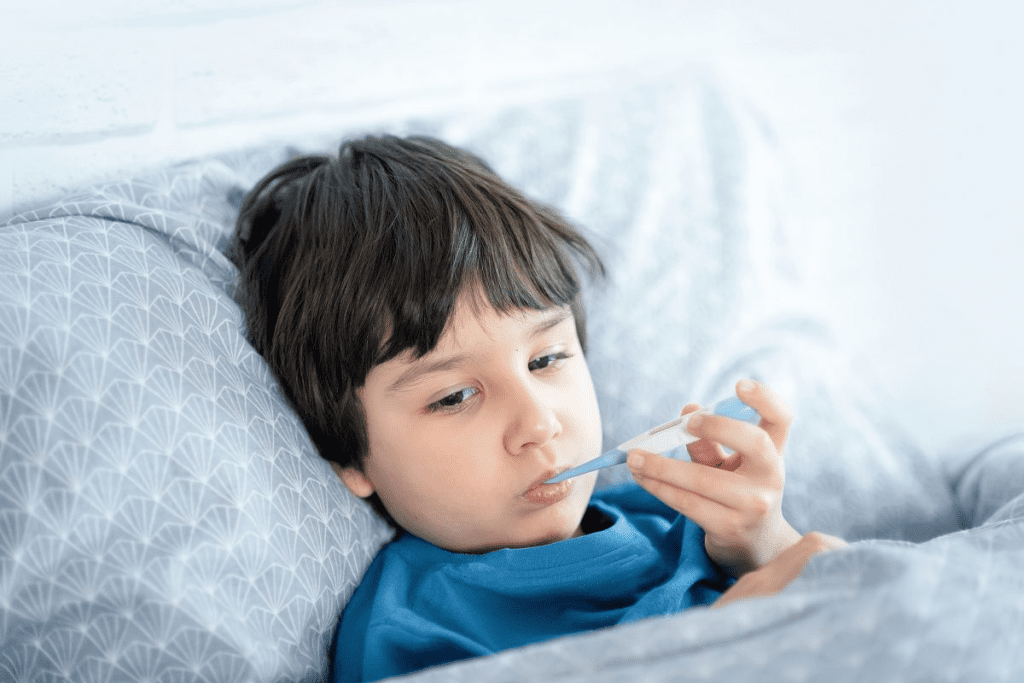
For babies 0-3 months, a rectal temperature over 100.4 °F (38 °C) means you should call a doctor. Knowing these rules can help you not worry too much about fevers and treat them wisely.
Key Takeaways
- Understand the right temperature levels to worry about based on your child’s age.
- Know when to get medical help for your child’s fever.
- Learn how to manage your child’s fever at home.
- See how rest and fluids help your child get better.
- Learn about the role of medicines like acetaminophen or ibuprofen in treating fever.
Understanding Childhood Fevers
Fevers in children are common and show the body’s defence at work. When a child gets a fever, it’s a natural reaction to an infection. Knowing what causes fever helps parents take care of their child better.
What Causes Fevers in Children
Fevers in kids can come from infections, vaccines, or too much heat. Infections, like colds or ear infections, are the main reason. Vaccines also cause a mild fever as the body reacts. Too much heat, mainly in babies, can also raise their temperature.
Infections are the main reason for fevers in kids. The body’s immune system fights infections by raising the temperature. This makes it harder for the germs to grow.
Normal Temperature Ranges by Age
Normal body temperature is about 98.6 °F (37 °C). But it can vary from child to child. Knowing the normal range by age is important:
- Infants (0-3 months): Normal temperature is around 98-100 °F (36.7-37.8 °C).
- Babies (3-36 months): Normal is generally considered below 100.4 °F (38 °C).
- Older children: Similar to adults, with a normal being around 98.6 °F (37 °C).
A temperature of 100.4 °F (38 °C) or higher is usually a fever. The worry level depends on the child’s age and health.

How Fever Works as a Defence Mechanism
Fever is not an illness but a sign that the body is fighting an infection. The higher temperature helps in several ways:
- It makes it harder for germs to grow and multiply.
- It boosts the body’s immune response, helping fight the infection better.
“Fever is a manifestation of the body’s natural defense mechanisms. It is a sign that the immune system is actively responding to an invader.”
Knowing that fever is a natural response can ease parents’ worries. But it’s important to watch the fever and the child’s overall health. Seek medical advice when needed.
What’s the Temperature That Requires Action
Knowing when a child’s fever needs medical help is key. Fever is common in kids, and knowing when to act is vital for parents.
Temperature Guidelines for Infants (0-3 months)
Infants under 3 months need quick action if their rectal temperature hits 100.4 °F (38 °C) or higher. They are at high risk for serious infections, so fast action is critical.
- Infants in this age group with a fever should be taken to a healthcare provider without delay.
- Even if the infant seems well, a fever at this age is a red flag.
Temperature Guidelines for Babies (3-36 months)
Babies from 3 to 36 months need different care based on their age and symptoms. A temperature above 102 °F (39 °C) is a sign to check closely.
Babies between 3 and 6 months with a temperature above 102 °F should see a healthcare provider. For those between 66 and36 months, the decision to seek medical help depends on their overall condition and other symptoms.
Temperature Guidelines for Older Children
For kids over 3 years, a fever is high if it’s over 103 °F (39.4 °C). But, whether to see a doctor also depends on how the child feels and any other symptoms.
- If the child is alert and playing, a wait-and-see approach might be appropriate, with close monitoring.
- If the child shows signs of distress, such as difficulty breathing, severe headache, or stiff neck, seek medical help.
Knowing these guidelines helps parents make better choices for their child’s health. Always talk to a healthcare provider if unsure about the fever’s severity or the child’s condition.
Effective Medication Options for Reducing Fever
Acetaminophen and ibuprofen are two common medicines for fever in kids. They are easy to find and work well when used correctly.
Acetaminophen (Tylenol): Dosage and Guidelines
Acetaminophen is a top choice for a fever reducer in children. The dose depends on the child’s weight, usually 10-15 mg/kg every 4-6 hours. Always follow the package instructions or talk to a doctor.
Important tips for acetaminophen include:
- Don’t take more than 5 doses in 24 hours
- Be careful with kids under 3 months, as they need exact doses
- Watch for signs of too much, like nausea or stomach pain
Ibuprofen (Motrin, Advil): Dosage and Guidelines
Ibuprofen is a good fever reducer for kids over 6 months. The usual dose is 5-10 mg/kg every 6-8 hours. Stick to the recommended amount and ask a doctor if you’re unsure.
Important guidelines for ibuprofen are:
- Give it with food to avoid stomach problems
- Don’t use it if your child is dehydrated
- Don’t give it to kids under 6 months without a doctor’s okay
Medication Safety Precautions
When using acetaminophen or ibuprofen, medication safety is key. Parents should know the dangers of too much and not mix both without a doctor’s say-so.
To stay safe:
- Always use the dosing device that comes with the medicine
- Keep track of doses to avoid too much
- Know about other medicines that have acetaminophen or ibuprofen
By following these tips and being careful with medication safety, parents can help their child feel better and recover well.
7 Home Remedies to Break a Fever Naturally
There are many home remedies to help lower a fever in kids naturally. When your child is sick, it’s key to give them the right care to help them get better.
Keep Your Child Hydrated with Appropriate Fluids
It’s important to keep your child hydrated when they have a fever. Drinking fluids helps the body stay cool and prevents dehydration. Give them lots of water, clear broths, or drinks like Pedialyte. For babies, keep up with breast milk or formula as usual.
- Encourage your child to drink small amounts often.
- Watch for signs of dehydration, like fewer wet diapers or dry mouth.
- Don’t give your child too much fruit juice or sugary drinks.
Dress Your Child in Light, Breathable Clothing
Dressing your child in light, breathable clothes helps keep their body cool. Avoid overdressing or using too many blankets, as this can trap heat and make the fever worse.
“A simple way to help your child feel more comfortable is to dress them in lightweight clothing and use a light blanket if they’re cold.”
Maintain Comfortable Room Temperature
Keeping the room at a comfortable temperature also helps manage your child’s fever. Avoid extreme temperatures; a good room temperature is usually around 72 °F to 75 °F (22 °C to 24 °C).
Try Lukewarm Sponging Techniques
Lukewarm sponging is a good way to help lower your child’s fever. Use lukewarm water, not cold, as cold water can cause shivering, which can raise the body temperature.
By using these home remedies, you can help make your child more comfortable while their body fights off the infection. Always talk to your pediatrician if you’re not sure about the best care for your child.
5 Common Mistakes Parents Make When Treating Fevers
Managing fever in kids is tricky. Parents need to know the common mistakes to keep their child safe. Treating a fever right means avoiding a few big errors.
Overdressing or Overbundling Feverish Children
One big mistake is dressing a feverish child too warmly. This can make it hard for their body to cool down. Dress them in light, breathable clothes to help keep their temperature right.
Overusing or Misusing Fever-Reducing Medications
Another big error is using too much or the wrong kind of Fever medicine. Always follow the dosage instructions and don’t give it too often.
Using Alcohol or Ice-Cold Water for Sponging
Using alcohol or ice-cold water to sponge a fever is old and risky. Instead, lukewarm sponging is a better way to lower a fever. Make sure the water isn’t too cold, as it can make the body temperature go up.
Ignoring Other Symptoms Beyond Temperature
Parents often just look at whats the temperature, missing other signs of illness. Watch for severe headache, stiff neck, or trouble breathing. If you see these, get medical help right away.
Knowing these common mistakes helps parents manage their child’s fever better. This ensures their child stays safe and comfortable when they’re sick.
When to Seek Medical Help Immediately
It’s important for parents to know when their child needs to see a doctor right away. Fever in kids can be a worry, and knowing when to act is key.
Age-Based Guidelines for Emergency Care
Infants under 3 months with a fever over 100.4 °F (38 °C) need to see a doctor fast. Babies between 3 and 36 months should see a doctor if their fever is over 102 °F (39 °C) and they have other symptoms. Knowing these guidelines helps parents make the right choices.
For infants under 3 months: Their young immune system makes fever a big worry. They need to see a doctor right away to check for serious infections.
Warning Signs Beyond Temperature
There are signs beyond just the fever that mean a child needs to see a doctor. These include:
- Severe headache or stiff neck
- Difficulty breathing or rapid breathing
- Persistent vomiting or diarrhea
- Signs of dehydration
- Unusual irritability or lethargy
These symptoms can mean a serious problem that needs quick medical help.
Understanding Febrile Seizures
Febrile seizures are when a child has a convulsion because of a fever. While scary, most of the time they’re not a big deal. But it’s good to know the risks and how to handle them.
First-time febrile seizures: If your child has a seizure for the first time, get them to a doctor fast. The seizure itself is usually okay, but it might mean there’s something else going on that needs checking.
Recent Trends in Pediatric Fever-Related Hospitalizations
More kids are ending up in the hospital because of fever, often because of infections. Keeping up with these trends helps parents be more careful and quick to get medical help when needed.
By knowing when to get medical help, parents can make sure their child gets the right care fast. This can help avoid bigger problems later on.
Conclusion: Taking a Balanced Approach to Your Child’s Fever
Managing fevers in kids needs a balanced approach. This means knowing when to get medical help, using medicines wisely, and trying home remedies. By being informed and careful, parents can help their child feel better without getting too worried.
A good way to handle fevers is to know whats the temperature rules for different ages. Also, it’s important to use acetaminophen or ibuprofen when needed. Keeping the child hydrated, dressing them in light clothes, and keeping the room comfy are also key.
Understanding why fevers happen, knowing the warning signs, and acting right can ease parents’ worries. This balanced method helps lower anxiety and makes managing fevers more effective.
Managing fevers is more than just lowering the temperature. It’s about giving comfort, care, and making smart choices for the child’s health.
FAQ’s:
What is considered a high fever in children?
A high fever in kids is usually over 102 °F (39 °C). But what’s high can change with age and situation.
How can I reduce my child’s fever naturally?
To lower your child’s fever, keep them hydrated with lots of fluids. Dress them in light clothes and keep the room cool. Lukewarm sponging can also help.
When should I seek medical help for my child’s fever?
Get medical help fast if your child is under 3 months and has a fever over 100.4 °F (38 °C). For kids 3-36 months, seek help at 102 °F (39 °C). Watch for signs like trouble breathing, severe headache, or stiff neck.
Can I use acetaminophen and ibuprofen together to reduce fever?
It’s not usually good to mix acetaminophen and ibuprofen without a doctor’s say-so. You might alternate them, but always follow the dosage to avoid too much.
What are the risks associated with febrile seizures?
Febrile seizures happen with fever. They’re scary but usually safe. If your child has one, see a doctor.
How can I avoid overdressing my feverish child?
To avoid too much clothing, dress your child in light, breathable clothes. Skip heavy blankets to keep them cool and comfy.
Is 100 a fever in infants?
For babies under 3 months, 100.4 °F (38 °C) or higher is a fever. You should get medical help.
How can I keep my child comfortable while they have a fever?
To comfort your child, keep them hydrated and dressed right. A cool room and lukewarm sponging can also help.
Can I give my child medication to reduce a fever without consulting a doctor?
Medicines like acetaminophen and ibuprofen can help with fever. But always check with a doctor first. They can guide you on dosage and safety.
Reference.
- National Center for Biotechnology Information. (2009). “Fever.” In The Merck Manual, 18th Edition. Retrieved from https://www.ncbi.nlm.nih.gov/pmc/articles/PMC2852629/
- Medical News Today. (2017). “What is the normal body temperature?” Retrieved from https://www.medicalnewstoday.com/articles/316706