Last Updated on November 27, 2025 by Bilal Hasdemir
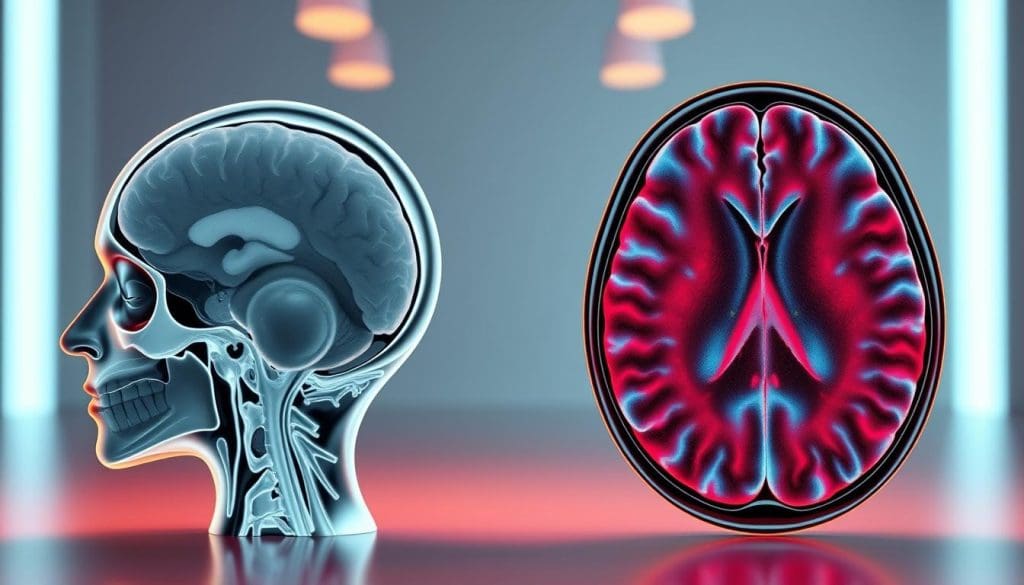
Choosing between a CT scan and an MRI for head imaging is key. At Liv Hospital, we pick the best imaging for you based on evidence. This ensures you get the right care.
In emergencies, CT scans are often the first choice because they’re fast and can quickly spot bone breaks and bleeding. However, MRIs are better for viewing soft tissues and are great for detailed brain checks. Many people wonder, which is best CT or MRI scan”the answer depends on the condition being examined and the level of detail required.
Knowing the differences between these scans is important. It helps you get the care you need. We’ll explain what each scan is used for. This will help us compare them better.
Key Takeaways
- CT scans are preferred in emergency situations due to their speed.
- MRIs offer superior soft tissue contrast for detailed brain assessments.
- The choice between CT scans and MRI depends on the specific medical situation.
- Liv Hospital uses an evidence-based approach to determine the most suitable imaging technique.
- Understanding the differences between CT scans and MRI is key to accurate diagnosis and care.
Understanding CT Scans and MRI: Basic Principles and Technology
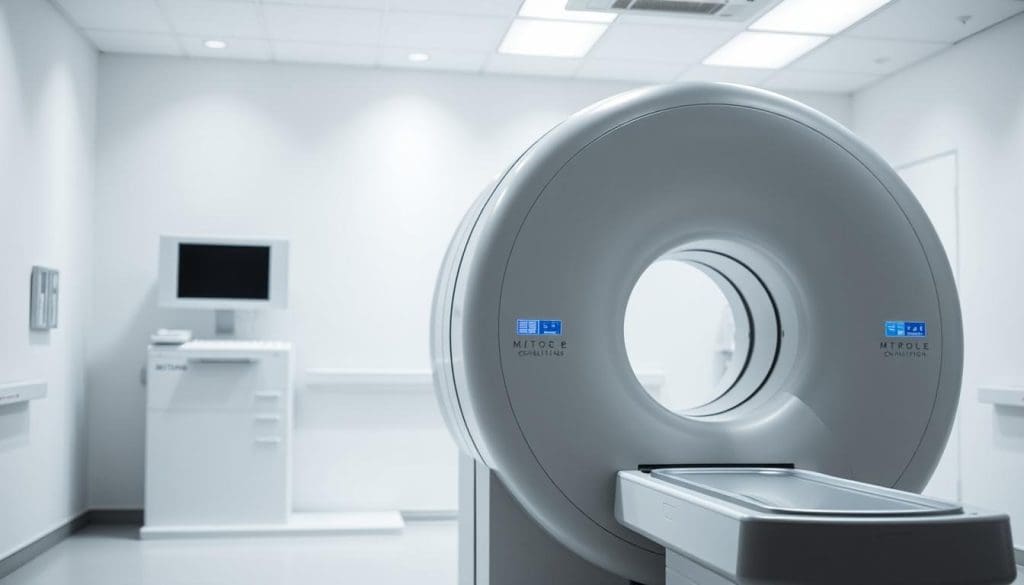
It’s important to know the difference between CT scans and MRI technology for head imaging. Both have changed how we diagnose medical issues. But they work in very different ways.
How CT Scan Technology Works
CT scans use X-rays to show what’s inside the body. Computed Tomography (CT) scans use a rotating X-ray machine. It takes pictures from different angles, which a computer then puts together.
These scans are fast, taking just a few minutes. This makes them great for emergencies when time is critical.
How MRI Technology Works
MRI technology uses strong magnetic fields and radio waves to create images. Unlike CT scans, MRI doesn’t use harmful radiation. This makes it safer for some patients.
In an MRI, the patient is in a big magnet. Radio waves disturb the magnet, and signals are sent out. These signals help create detailed images of the body’s inside.
Key Technological Differences
The main difference between CT scans and MRI is their technology and the images they produce. CT scans are quicker and better for seeing bones and finding bleeding. But MRI is better for soft tissues and detailed brain views.
| Characteristics | CT Scan | MRI |
| Technology Used | X-rays | Strong magnetic fields and radio waves |
| Imaging Speed | Fast (few minutes) | Slower (15-90 minutes) |
| Radiation Exposure | Yes | No |
| Best for | Bone structures, acute hemorrhages | Soft tissue, detailed brain assessments |
Comparing Image Quality and Diagnostic Capabilities
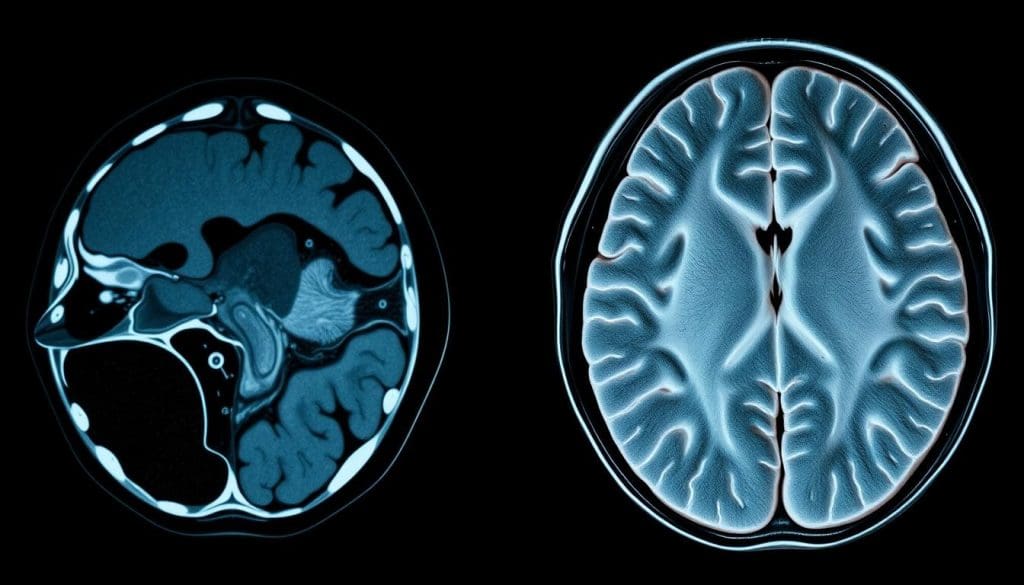
It’s important to know how CT scans and MRI differ in image quality and what they can diagnose. Each has its own strengths for different needs.
CT Scan Image Characteristics
CT scans are great for showing bones clearly. They’re often used in emergencies to spot bone breaks or bleeding quickly. CT scans use X-rays to make detailed images of the body, which can be turned into 3D if needed.
They’re very good at finding calcium and bone issues. But, they’re not as good as MRI for soft tissues.
MRI Image Characteristics
MRI is better for soft tissues like tumors, infections, and inflammation. It gives detailed brain images without harmful radiation. This makes MRI very useful for brain studies.
Doctors say MRI is key for brain imaging because it shows soft tissue changes well.
“MRI provides the most detailed images of the brain and its pathology, making it invaluable for diagnosing a wide range of neurological conditions.”
Tissue Contrast and Resolution Differences
CT scans and MRI show different things. CT scans are better for bones and bleeding. MRI is better for soft tissues. The right choice between CT and MRI depends on the diagnostic question and the tissue type.
In summary, CT scans and MRI each have their own strengths. Knowing these differences helps pick the best imaging method for each case.
When CT Scans Are the Better Choice for Head Imaging
When it comes to head trauma, CT scans are usually the first choice. They are fast and accurate. This makes them perfect for emergency situations where quick and reliable images are needed.
Acute Head Trauma and Emergency Situations
In emergency rooms, every second counts. CT scans are key for fast assessments of patients with head trauma. They spot serious issues that need quick action. Their speed and accuracy are unmatched in emergencies.
Detecting Bone Fractures and Skull Injuries
CT scans excel at showing bone fractures and skull injuries. They can clearly see bone structures. This is vital for quickly finding fractures or bone injuries in head trauma cases.
| Imaging Modality | Bone Fracture Detection | Soft Tissue Evaluation |
| CT Scan | Excellent | Good |
| MRI | Fair | Excellent |
Identifying Acute Hemorrhage
CT scans are great at spotting acute brain hemorrhage quickly. This is key in stroke and trauma cases where fast action is needed. They provide clear images for accurate diagnoses.
In summary, CT scans are the top choice for head imaging in emergencies. They are fast, accurate, and great at showing bone structures. This makes them essential in urgent situations.
When MRI Is Superior for Brain Assessment
MRI is often the top choice for brain checks because it spots tiny issues and shows complex brain problems well. It’s key for diagnosing and keeping an eye on many brain diseases.
Detailed Soft Tissue Evaluation
MRI shines because it gives a detailed look at soft tissues. Unlike CT scans, MRI can tell soft tissues apart, showing brain anatomy and problems clearly. This helps a lot in finding diseases that affect the brain’s soft parts.
- High-resolution imaging of brain structures
- Ability to detect lesions and abnormalities in soft tissues
- Enhanced visualization of cranial nerves and their pathology
Detecting Subtle Brain Abnormalities
MRI is great at catching small changes in brain tissue that CT scans might miss. It’s perfect for finding early signs of diseases, infections, and other issues that need quick action.
- Early detection of multiple sclerosis lesions
- Identification of small tumors or cysts
- Visualization of periventricular white matter changes
Visualizing White and Gray Matter Pathology
MRI can tell white and gray matter apart, which is key for diagnosing and tracking diseases. This is important for conditions like Alzheimer’s and multiple sclerosis.
MRI gives a full view of brain anatomy and problems, helping doctors make better diagnoses and treatment plans. Its skill in soft tissue, spotting small issues, and showing white and gray matter makes MRI essential for brain checks.
Which Is Best: CT or MRI Scan for Specific Neurological Conditions
Choosing between CT and MRI scans is key to diagnosing neurological conditions. Each condition needs a specific imaging method for the best diagnosis and treatment. We’ll look at the best options for stroke, dementia, and multiple sclerosis.
Stroke Assessment: CT vs. MRI
In acute stroke cases, CT scans are often the first choice because they’re quick and show acute hemorrhage well. But MRI is better for finding ischemic stroke and showing how much brain tissue is affected. MRI is also better for follow-ups and showing soft tissue details.
For stroke patients, a CT scan helps doctors decide quickly on treatments. Knowing the differences between CT and MRI helps doctors choose the best imaging for stroke patients.
Dementia and Neurodegenerative Diseases
For diagnosing dementia and neurodegenerative diseases, MRI is usually the better choice. MRI gives clear images of the brain’s structures. It helps see changes in the hippocampus, cortex, and white matter linked to dementia. It also helps rule out other causes like tumors or vascular issues.
MRI’s detailed soft tissue contrast is key for spotting neurodegenerative changes. This is important for diagnosing Alzheimer’s and frontotemporal dementia.
Multiple Sclerosis and Inflammatory Conditions
For multiple sclerosis (MS) and other inflammatory conditions, MRI is the top choice. It’s great at finding demyelinating lesions in the brain and spinal cord. MRI helps diagnose MS, track disease activity, and see how treatments work.
MRI in MS includes spotting lesions on T2-weighted images and looking at gadolinium-enhancing lesions. These show active inflammation. This info is key for managing MS and adjusting treatments.
CT Scan or MRI for Cancer: Detecting and Monitoring Brain Tumors
In neuro-oncology, CT scans and MRI are key for finding and monitoring brain tumors. They help us get accurate diagnoses and see if treatments are working.
Initial Diagnosis of Brain Tumors
MRI is better for first finding brain tumors because it shows soft tissues well. MRI’s high sensitivity lets us spot tumors that CT scans miss. This is key for tumors in hard-to-reach areas like the posterior fossa.
Tumor Characterization and Staging
After finding a tumor, knowing its type and stage is vital for treatment. MRI’s detailed images are essential for this. Advanced MRI techniques give insights into the tumor’s aggressiveness and its effect on the brain.
Post-Treatment Monitoring
After treatment, watching for tumor return or growth is key. MRI is best for this because it catches changes in tumor size and type. Regular MRI scans help doctors spot issues early, leading to quick action.
Though CT scans have their uses, MRI is preferred for brain tumor detection and monitoring. MRI’s benefits help us fight brain cancer more effectively.
CT vs. MRI of Head: Practical Considerations
Choosing between CT scans and MRI for head imaging goes beyond just image quality. Several factors are important, like how urgent the situation is, the patient’s health, and any specific reasons they can’t have a certain test.
Speed and Availability
CT scans are generally faster than MRI, which is key in emergency situations. They can be done in just minutes, which is vital in cases of head trauma. MRI scans, on the other hand, take longer, from 15 to 90 minutes.
CT scanners are also more common in hospitals and emergency rooms than MRI machines. This makes CT scans easier to get for urgent needs.
Patient Comfort and Claustrophobia
MRI machines are big and enclosed, which can make some people anxious. This anxiety can make it hard for patients to stay calm during the scan. CT scanners are more open and less likely to cause anxiety.
To help with claustrophobia, some places offer open MRI machines or sedation. But, not all places have these options, and they depend on the patient’s situation.
Medical Implants and Contraindications
The type of medical implants a patient has is a big factor in choosing between CT and MRI. MRI is not safe for patients with certain implants, like some pacemakers or metal fragments. CT scans are safer for these patients because they don’t have the same metal issues.
But it’s also important to think about contrast agents used in both CT and MRI scans. While metal implants aren’t a problem for CT scans, contrast agents have their own risks and considerations.
What to Expect: Patient Experience During Head CT and MRI
Knowing what to expect during a CT scan or MRI can make you feel less anxious. These tests help doctors find and treat many health issues. Being ready can make you more comfortable and help you follow instructions better.
CT Scan Procedure and Duration
A CT scan is fast and easy. The actual scan takes just a few minutes. But getting ready and finding the right spot can take up to 30 minutes. You’ll lie on a table that moves into a big, ring-shaped machine.
The machine spins around you, taking pictures of your head from different sides. This quick test is great for emergencies. You’ll need to stay very quiet to get clear pictures. Sometimes, you might get a special dye to make certain areas show up better.
MRI Procedure and Noise Considerations
An MRI takes longer, usually 15 to 90 minutes. It uses a strong magnetic field and radio waves to see inside your head. You’ll lie on a table that goes into a long, tunnel-like machine.
The MRI makes loud noises, like knocking or beeping. To help, you might get earplugs or headphones. Some MRI machines are designed to feel less cramped, which can help if you’re scared of tight spaces.
Preparation Guidelines for Both Tests
Getting ready for a CT scan or MRI involves a few steps. For a CT scan, you might need to take off metal items and wear a hospital gown. If you’re getting dye, tell your doctor about any allergies.
For an MRI, you must remove all metal objects, like jewelry and glasses. Also, tell your doctor about any metal implants. Some MRI tests use dye, so it’s important to mention any allergies.
Always follow the instructions from your doctor or the imaging center. Knowing what to expect can reduce your stress. It helps you get ready for your CT scan or MRI.
Contrast Use in Head Imaging: CT vs. MRI Contrast
Contrast agents are key in both CT and MRI scans for the brain. They help spot different conditions by making certain areas stand out. This makes diagnosing more accurate.
Types of Contrast Agents
CT scans use iodine-based agents to show blood vessels and some lesions. MRI scans, though, use gadolinium-based agents. These are better for seeing tumors, inflammation, and brain issues.
Comparison of Contrast Agents:
| Characteristics | Iodine-Based (CT) | Gadolinium-Based (MRI) |
| Chemical Composition | Iodine | Gadolinium |
| Primary Use | Vascular structures, certain lesions | Tumors, inflammation, and brain abnormalities |
| Allergic Reactions | Possible in iodine allergy patients | Rare, but it can happen |
Risks and Benefits of Contrast
Contrast agents have both good and bad sides. They make scans more accurate, but there are risks. These include allergic reactions and, for gadolinium, a rare condition in severe kidney disease.
Choosing to use contrast depends on the patient’s health and the condition being checked. We consider the patient’s history and the condition’s severity.
When Contrast Enhancement Is Necessary
Contrast is very helpful in some cases. It’s key for spotting tumors, inflammation, and blood vessel problems. The choice to use contrast depends on the case and the patient’s health.
In summary, using contrast wisely in brain scans can greatly help doctors. It gives them the info they need to make treatment plans.
Radiation Exposure and Safety: Is MRI Better Than a CT Scan?
When we talk about head imaging, safety is key. We must think about how much radiation each tool uses. This is important because too much radiation can be harmful.
Understanding CT Radiation Risks
CT scans use X-rays to see inside the brain. They are good for finding many health problems. But they do expose you to radiation.
Radiation can damage DNA and might raise cancer risk. This is a big worry for kids because their bodies are growing and more vulnerable.
Key factors influencing CT radiation risks include:
- The dose of radiation used
- The number of CT scans performed
- The age and health status of the patient
MRI Safety Profile
MRI doesn’t use radiation. Instead, it uses a strong magnetic field and radio waves. This makes MRI safer for people who need many scans or are very sensitive to radiation.
MRI safety advantages include:
- No exposure to ionizing radiation
- High-quality images of soft tissues
- Suitability for sensitive patient groups
Risk-Benefit Analysis for Different Patient Groups
Choosing between CT scans and MRI depends on the patient’s needs. In emergencies, CT scans might be faster but riskier. For long-term monitoring or detailed soft tissue images, MRI is safer.
| Patient Group | CT Scan Considerations | MRI Considerations |
| Children | Higher risk due to radiation exposure; use with caution | Preferred due to lack of radiation; ideal for long-term monitoring |
| Pregnant Women | Risk of radiation exposure to fetus; used only when necessary | Generally safer; no radiation risk |
| Emergency Cases | Quick and effective for acute injuries; often preferred | May be used if the condition allows; provides detailed soft tissue images |
Conclusion: Making the Right Choice for Head Imaging
Choosing between CT scans and MRI for head imaging depends on several factors. These include the clinical scenario, the need for speed, and the level of soft tissue detail required. We have looked at the strengths and limitations of each modality. This highlights their roles in diagnosing different neurological conditions.
Deciding between CT and MRI is not simple. CT scans are best for emergency situations, finding acute hemorrhage, and bone fractures. On the other hand, MRI is great for detailed soft tissue evaluation. It detects subtle brain abnormalities and shows white and gray matter pathology.
Healthcare providers can make better head imaging decisions by knowing the advantages and limitations of each modality. This ensures patients get the right diagnostic test for their condition. Ultimately, choosing between CT and MRI requires careful thought about the patient’s needs and the clinical context.
FAQ
Is a CT scan or an MRI better for head imaging?
Choosing between a CT scan and an MRI depends on the situation. We look at the injury or condition, the need for soft tissue details, and if there are implants.
What is the difference between a CT scan and an MRI in terms of technology?
CT scans use X-rays, while MRI uses a magnetic field and radio waves. This difference affects their use. CT scans are good for bones and acute injuries. MRI is better for soft tissues.
Which is better for detecting bone fractures, a CT scan or an MRI?
CT scans are better for finding bone fractures and skull injuries. They clearly show bone structures.
Is an MRI or a CT scan better for evaluating soft tissues in the brain?
MRI is better for soft tissues, finding small issues, and seeing brain details. It’s the top choice for chronic conditions and complex brain checks.
What is the best imaging modality for stroke assessment?
Both CT scans and MRIs are used for stroke checks. CT scans are quicker in emergencies. MRI gives more detailed stroke info.
Can I get a CT scan or an MRI if I have a medical implant?
Some implants might not be safe for MRI. Always tell your doctor about implants before an MRI. CT scans are safer for these cases.
How long do CT scans and MRI procedures take?
CT scans are quick, taking just a few minutes. MRI scans can take 15 to 90 minutes, based on the scan’s complexity.
Are there any risks associated with CT scan radiation?
CT scans use radiation, which slightly increases cancer risk. We consider the benefits and risks for each patient.
What are the risks and benefits of using contrast agents in head imaging?
Contrast agents help, but can cause allergic reactions or kidney damage. We decide if they’re needed based on each case.
How do I prepare for a CT scan or MRI?
Preparing varies by scan type and condition. We give you specific instructions to get ready.
Which is better for detecting brain tumors, a CT scan or an MRI?
MRI is better for finding and tracking brain tumors. It shows soft tissues well and helps understand tumor types.
Can claustrophobia be a problem during an MRI?
Yes, claustrophobia is a concern with MRI’s closed space. We offer open MRI machines and sedation to help patients relax.
References
- National Center for Biotechnology Information. (2024, October 21). Comparative Efficacy of MRI and CT in Traumatic Brain Injury. Journal of Neurotrauma, 41(15), 2134-2142. https://www.ncbi.nlm.nih.gov/pmc/articles/PMC11579544/