Last Updated on November 20, 2025 by Ugurkan Demir

At Liv Hospital, we dive into autoimmune hemolytic anemia (AIHA). It’s a rare condition where the immune system mistakenly attacks and destroys red blood cells. This leads to anemia. Why are white cells eating red cells? Understand the crucial autoimmune attack mechanism in hemolytic anemia. This is a serious issue.
AIHA is a serious condition that can greatly affect a patient’s life. We’ll look into why the immune system attacks red blood cells. We’ll also explore the symptoms and how they impact patients.
Understanding AIHA and its effects is key. It helps us see why we need to offer full care and support to those affected.
Key Takeaways
- AIHA is a rare autoimmune disorder where the immune system attacks and destroys red blood cells.
- The condition leads to anemia, causing significant health implications.
- Understanding AIHA is vital for effective care and support.
- Liv Hospital offers full care for AIHA patients.
- Early diagnosis and treatment are critical in managing AIHA.
Understanding Autoimmune Hemolytic Anemia (AIHA)

Autoimmune Hemolytic Anemia (AIHA) is a complex condition. It happens when the immune system attacks and destroys the body’s own red blood cells. This is because the body makes autoantibodies against its own red blood cells.
Definition and Classification of AIHA
AIHA is divided into two main types. These are based on when the autoantibodies react with red blood cells. Warm AIHA happens when autoantibodies bind at body temperature, causing red blood cells to be destroyed early. Cold AIHA occurs when autoantibodies react at temperatures below normal body temperature, usually below 30°C.
Knowing whether it’s warm or cold AIHA is key. It helps doctors choose the right treatment because the immune mechanisms are different.
Prevalence and Demographics
AIHA is a rare disorder, affecting about 1-3 people per 100,000 each year. It’s more common in certain groups and ages. Warm AIHA often affects adults, mostly women, and can be linked to other autoimmune diseases or cancers.
Cold AIHA is more common in older adults. It can be caused by infections or cancers. Knowing who is at risk helps doctors diagnose and treat better.
By understanding AIHA, doctors can give better care to those with it.
The Immune System’s Role in Blood Cell Regulation
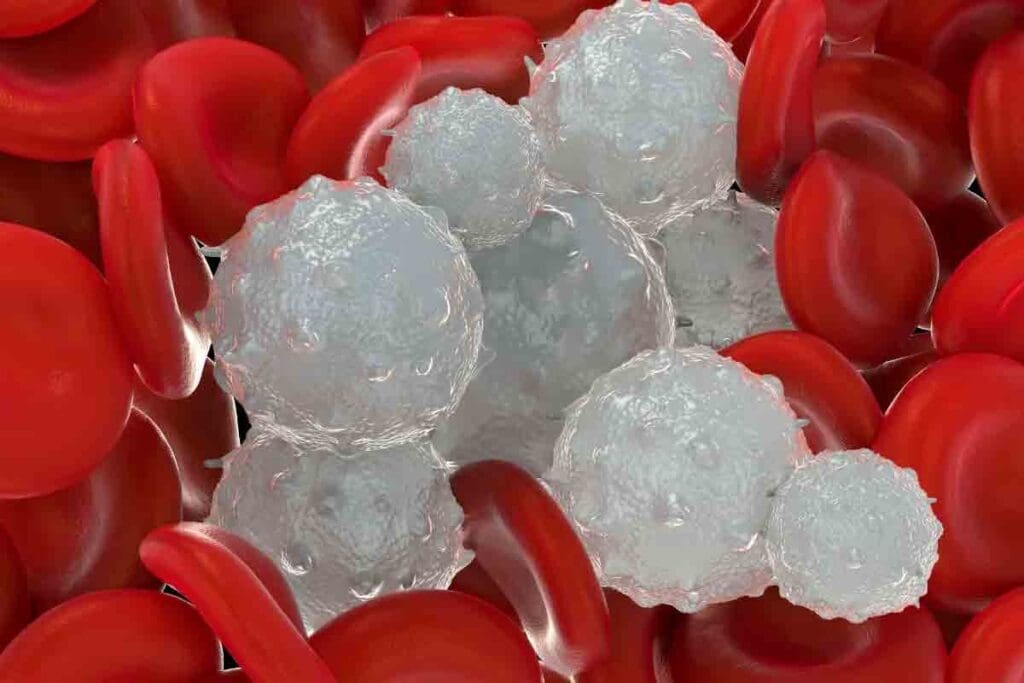
It’s important to know how white and red blood cells work normally. This helps us understand what happens in autoimmune hemolytic anemia (AIHA). The immune system protects us from harm and keeps the right balance of blood cells.
Normal Function of White Blood Cells
White blood cells, or leukocytes, are key to our immune system. They fight off infections by attacking and destroying harmful substances. There are many types, each with its own job, like neutrophils and lymphocytes.
Lymphocytes are very important in fighting infections. They make antibodies to help us stay healthy. The National Center for Biotechnology Information says lymphocytes are essential for our immune system.
White blood cells are made in the bone marrow and move through our blood and lymph. They help keep us safe from infections and diseases. An immunologist noted, “The immune system is a double-edged sword; it protects us but can cause problems when it goes wrong.”
“The immune system’s ability to distinguish between self and non-self is key to avoiding autoimmune diseases.”
Normal Function of Red Blood Cells
Red blood cells carry oxygen from our lungs to our body’s tissues. They also take carbon dioxide back to the lungs. They have hemoglobin, which helps carry oxygen. This is vital for keeping our tissues healthy.
Red blood cells are made in the bone marrow and live about 120 days. After that, they are recycled. Keeping the right balance of red blood cells is important to avoid anemia.
| Cell Type | Primary Function | Lifespan |
| White Blood Cells (Leukocytes) | Fight infections, produce antibodies | Varies by type (hours to years) |
| Red Blood Cells (Erythrocytes) | Carry oxygen, remove carbon dioxide | Approximately 120 days |
In summary, white and red blood cells play important roles in keeping us healthy. Knowing how they work helps us understand autoimmune hemolytic anemia and the immune system’s role in it.
The Mechanism of “White Cells Eating Red Cells” in AIHA
In Autoimmune Hemolytic Anemia (AIHA), the immune system attacks its own red blood cells. This happens because white blood cells make autoantibodies. These autoantibodies mark red blood cells for destruction.
Autoantibody Production by White Blood Cells
White blood cells, like B lymphocytes, are key in making autoantibodies against red blood cells. These autoantibodies are proteins that stick to red blood cells. This makes the immune system think these cells are foreign or damaged.
The Process of Premature Hemolysis
The spleen is where red blood cells are destroyed early, or hemolyzed. It filters out old or damaged cells. In AIHA, the spleen mistakenly destroys red blood cells marked by autoantibodies. This leads to fewer red blood cells, causing anemia.
This destruction can also happen in the liver. How much hemolysis occurs varies among people with AIHA. It affects how severe the condition is and if symptoms show up.
Types of Autoantibodies in AIHA
AIHA is when the immune system attacks red blood cells. This attack is due to autoantibodies. These can be warm or cold, depending on their temperature sensitivity.
Warm Autoantibodies and Their Effects
Warm autoantibodies are the most common in AIHA. They work best at body temperature (37°C) and are mostly IgG immunoglobulins. These antibodies mark red blood cells for destruction by the spleen.
This destruction happens outside the blood vessels, leading to anemia. The spleen removes the antibody-coated red blood cells. This means the body can’t make new red blood cells fast enough.
Having warm autoantibodies can cause symptoms like fatigue and jaundice. It’s important to understand their role in AIHA to find the right treatments.
Cold Autoantibodies and Their Effects
Cold autoantibodies work best at temperatures below 30°C. They are mostly IgM immunoglobulins. These antibodies cause red blood cells to clump together in cold areas.
This clumping leads to hemolysis when the blood warms up. It can cause hemoglobinuria and other cold-related symptoms.
Cold agglutinin disease is a type of AIHA caused by these antibodies. It can be primary or secondary to infections or lymphoproliferative disorders. Managing it often means avoiding cold and using immunosuppressive treatments.
Why Red Blood Cells Cannot Attack White Blood Cells
Red blood cells can’t attack white blood cells because of their design. We’ll look at why this is, focusing on what makes red blood cells special.
Structural Limitations of Red Blood Cells
Red blood cells, or erythrocytes, are made for carrying oxygen. They have a flexible membrane and lots of hemoglobin. This lets them move through tiny spaces and carry oxygen well.
“The simplicity of the red blood cell structure, lacking a nucleus and most organelles, is a trade-off for their increased capacity to carry hemoglobin and oxygen,” experts say. This means they can’t fight off infections like white blood cells do.
Absence of Immune Function in Red Blood Cells
Red blood cells don’t have immune functions like white blood cells do. They don’t have the right receptors or signals to fight off infections.
In autoimmune hemolytic anemia (AIHA), white blood cells make antibodies against red blood cells. Red blood cells can’t fight back because they don’t have immune functions.
Knowing how red blood cells work is key to understanding AIHA and other blood issues. It shows why treatments need to focus on fixing the immune system’s problems.
Clinical Manifestations and Symptoms of AIHA
Understanding AIHA symptoms is key to early treatment. Autoimmune Hemolytic Anemia shows many symptoms that affect a person’s life a lot.
Common Symptoms: Fatigue, Jaundice, and Rapid Heart Rate
AIHA patients face many symptoms because of red blood cell loss. Fatigue is common, caused by fewer red blood cells to carry oxygen. Jaundice, or yellow skin and eyes, happens because of more bilirubin from broken red blood cells. Also, a rapid heart rate tries to make up for fewer red blood cells to keep organs oxygenated.
Physical Examination Findings: Enlarged Spleen and Other Signs
AIHA patients show signs like an enlarged spleen (splenomegaly) on physical exams. This is because the spleen filters out red blood cells coated with antibodies. They might also have pale skin from anemia and heart failure if the anemia is severe.
It’s vital for doctors to spot these signs to diagnose AIHA right and start treatment. Early action can greatly help patients’ lives and health.
Underlying Causes of Autoimmune Hemolysis
AIHA is a complex condition with various underlying causes. Understanding these causes is key to managing the condition effectively. The etiology of AIHA can be multifaceted, involving different triggers and risk factors.
Primary (Idiopathic) AIHA
In some cases, AIHA occurs without any identifiable underlying cause. This is called primary or idiopathic AIHA. It accounts for a significant proportion of AIHA cases. In these cases, the immune system mistakenly targets red blood cells without an apparent reason.
Secondary AIHA Related to Autoimmune Diseases Like Lupus
Secondary AIHA is associated with other autoimmune diseases, such as Systemic Lupus Erythematosus (SLE). In these cases, AIHA is often a complication of the underlying autoimmune condition. For instance, patients with lupus may develop AIHA due to the production of autoantibodies against red blood cells.
The list of autoimmune diseases that can lead to secondary AIHA includes:
- Rheumatoid Arthritis
- Scleroderma
- Sjögren’s Syndrome
Infection-Induced AIHA: Mycoplasma Pneumoniae and Viral Illnesses
Certain infections can trigger AIHA. This can happen either by directly stimulating the production of autoantibodies or by altering the immune system’s function. Mycoplasma pneumoniae, a bacterium that causes respiratory infections, is a known trigger for AIHA, mainly in children.
Viral illnesses can also induce AIHA, though the mechanisms are not fully understood. The immune response to viral infections can sometimes lead to the production of autoantibodies against red blood cells.
Medication-Induced AIHA
Some medications have been associated with the development of AIHA. These include certain antibiotics, anti-inflammatory drugs, and other pharmaceuticals that can alter the immune system’s function or directly affect red blood cells.
The following table summarizes the main causes of AIHA:
| Cause | Description |
| Primary (Idiopathic) | No identifiable underlying cause |
| Secondary (Autoimmune Diseases) | Associated with conditions like lupus |
| Infection-Induced | Triggered by infections such as Mycoplasma pneumoniae |
| Medication-Induced | Caused by certain medications |
Diagnosis and Clinical Course of AIHA
Understanding AIHA diagnosis and its clinical course is key to managing this autoimmune disorder. Diagnosing AIHA requires a multi-faceted approach. This includes clinical evaluation, laboratory tests, and ruling out other causes of hemolytic anemia.
Laboratory Tests and Diagnostic Criteria
The diagnosis of AIHA relies heavily on laboratory findings. The direct antiglobulin test (DAT) is a critical tool. It detects antibodies or complement proteins on red blood cells. A positive DAT is a key sign of AIHA, though it’s not exclusive to this condition.
Other important tests include:
- Complete Blood Count (CBC) to assess anemia
- Reticulocyte count to check bone marrow response
- Lactate Dehydrogenase (LDH) levels to measure hemolysis
- Bilirubin levels to evaluate hemolysis extent
| Laboratory Test | Purpose in AIHA Diagnosis | Typical Findings |
| Direct Antiglobulin Test (DAT) | Detects antibodies or complement on red blood cells | Positive for IgG and/or C3 |
| Complete Blood Count (CBC) | Assesses the degree of anemia | Low Hemoglobin/Hematocrit |
| Reticulocyte Count | Evaluates bone marrow response | Elevated |
Acute versus Chronic Presentations
AIHA can present in two ways: acutely or chronically. Acute presentations have a sudden onset and are often severe. Chronic AIHA has a gradual onset and can have periods of remission and exacerbation.
Impact on Life Expectancy and Prognosis
The prognosis and life expectancy of AIHA patients vary. It depends on several factors, including the cause, treatment response, and comorbid conditions. With proper treatment, many patients can achieve remission and live well.
Factors affecting prognosis include:
- Response to initial therapy
- Presence of underlying conditions
- Severity of hemolysis
Effective management and ongoing care are vital for AIHA patients.
Treatment Approaches and Management Strategies
Managing AIHA needs a detailed plan. The goal is to stop red blood cells from being destroyed. It also aims to manage symptoms and improve the patient’s life.
First-Line Therapies: Corticosteroids and Immunoglobulins
The first step in treating AIHA often includes corticosteroids like prednisone. These drugs help control the immune system’s attack on red blood cells. A study on NCBI shows how effective corticosteroids can be. Sometimes, intravenous immunoglobulin (IVIG) is used to slow down red blood cell destruction.
- Corticosteroids: Effective in reducing antibody production and hemolysis.
- IVIG: Useful in acute hemolytic crises or when corticosteroids are ineffective.
Second-Line Treatments: Immunosuppressants and Splenectomy
For those who don’t respond to first-line treatments, immunosuppressants like rituximab are considered. In some cases, removing the spleen (spleenectomy) is needed to reduce red blood cell destruction.
- Rituximab: Targets B cells responsible for producing autoantibodies.
- Splenectomy: Removes the primary site of red blood cell destruction.
Recent Advances in Targeting Underlying Immune Responses
New research is exploring treatments that target specific parts of the immune system in AIHA. This includes new drugs and therapies that aim to reduce autoantibody production.
As we learn more about AIHA’s immune mechanisms, we’ll see better treatments. This progress brings hope for better outcomes for those with AIHA.
Conclusion: Living with AIHA and Future Research Directions
Living with Autoimmune Hemolytic Anemia (AIHA) means managing it carefully and possibly for life. AIHA is a complex disease where the immune system attacks and destroys red blood cells by mistake.
The path with AIHA is tough, but the right treatment and management can make life fulfilling. Treatments include corticosteroids, immunoglobulins, immunosuppressants, and sometimes splenectomy for severe cases.
Research into AIHA is moving forward, with studies on new therapies targeting the immune system. Medical science advancements could greatly improve life for AIHA patients.
As we learn more about AIHA and find better treatments, we’re dedicated to top-notch healthcare for all. Understanding AIHA helps us support those dealing with this autoimmune disease better.
FAQ
What is Autoimmune Hemolytic Anemia (AIHA)?
AIHA is a condition where the immune system attacks the body’s red blood cells. This leads to anemia.
What are the types of AIHA?
AIHA is divided into warm and cold types. This depends on the autoantibody and the temperature it reacts with red blood cells.
What are the symptoms of AIHA?
Symptoms include fatigue, jaundice, and shortness of breath. These happen because of fewer red blood cells and less oxygen.
Why do white blood cells attack red blood cells in AIHA?
White blood cells in AIHA make autoantibodies against red blood cells. This marks them for destruction.
Can red blood cells attack white blood cells?
No, red blood cells can’t attack white blood cells. They cannot do so.
What are the underlying causes of AIHA?
AIHA can be primary or secondary. It can be caused by autoimmune diseases, infections, or medications.
How is AIHA diagnosed?
Diagnosis involves lab tests like the direct antiglobulin test (DAT). These tests look for autoantibodies or complement on red blood cells.
What are the treatment options for AIHA?
Treatments include corticosteroids and immunosuppressants. Splenectomy and new treatments targeting the immune system are also options.
What is the impact of AIHA on life expectancy?
AIHA’s impact on life expectancy depends on its severity and treatment response. Some patients have a chronic condition needing ongoing management.
Are there any new developments in AIHA treatment?
Yes, new treatments aim to target the immune system. This could lead to better outcomes for AIHA patients.
Can AIHA be cured?
While some patients go into remission, AIHA is often chronic. Management focuses on controlling symptoms and preventing complications.
References:
- Hill, Q. A., Hill, A., & Stasi, R. (2017). Autoimmune Hemolytic Anemia: Etiology, Clinical Presentation, and Diagnosis. Hematology/Oncology Clinics of North America, 31(4), 624-632. https://www.ncbi.nlm.nih.gov/pmc/articles/PMC5533063/