Last Updated on November 27, 2025 by Bilal Hasdemir
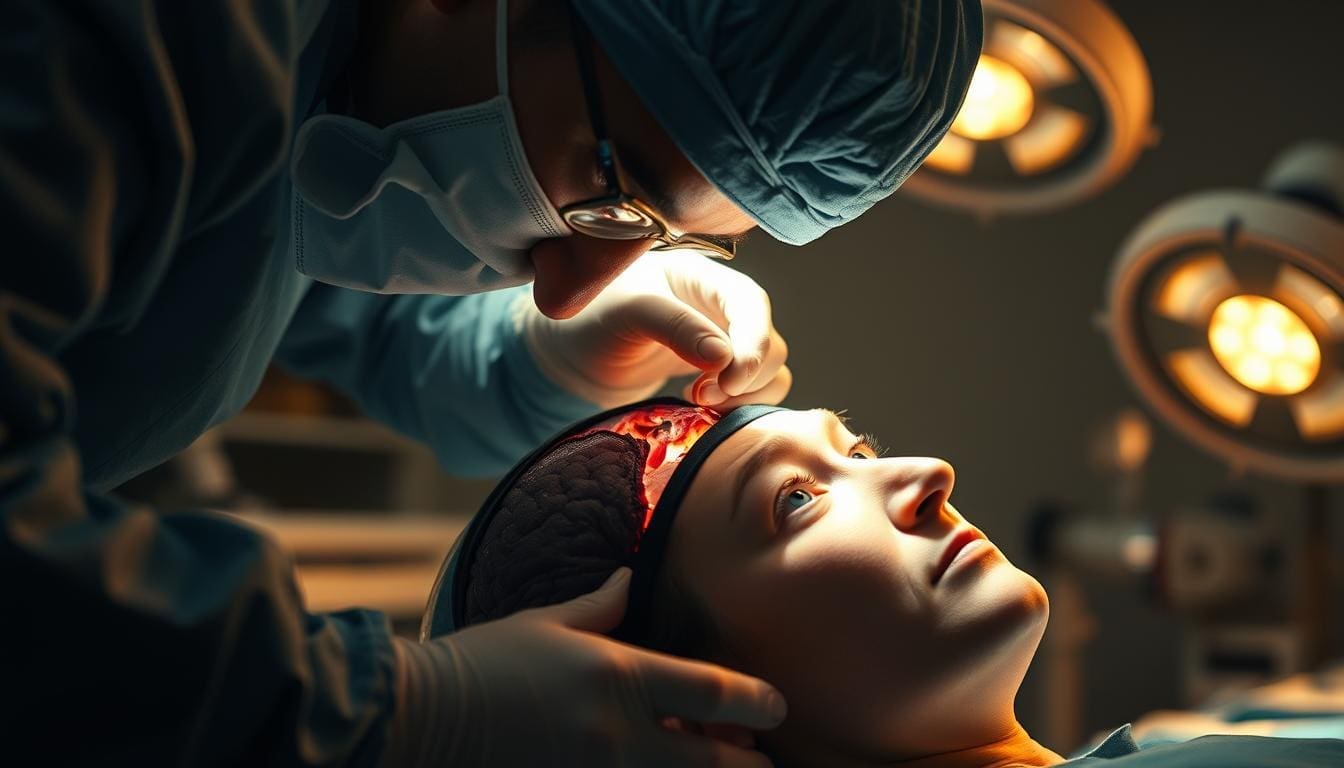
At Liv Hospital, we’ve introduced awake brain surgery to make procedures safer and more focused on the patient. This method, also known as awake craniotomy, keeps patients awake during part of the surgery.
Keeping patients awake helps our surgeons avoid important parts of the brain. These areas control essential functions like speech and movement. This way, we can protect the patient’s unique abilities and functions.
Key Takeaways
- Awake brain surgery is a technique used to keep patients conscious during part of the procedure.
- This approach helps surgeons avoid critical brain areas responsible for vital functions.
- It’s useful when operating near sensitive regions.
- The goal is to preserve the patient’s unique functions and abilities.
- Liv Hospital has pioneered innovative techniques like awake brain surgery.
Understanding Awake Brain Surgery: A Modern Neurosurgical Approach
Awake brain surgery, also known as awake craniotomy, is a new way to operate on the brain. It lets surgeons work on the brain while the patient is awake. This method has changed neurosurgery, opening up new ways to treat brain problems.
Let’s dive into what this technique is, why it’s used, and how it came to be. Understanding awake brain surgery helps us see its complexity and benefits.
Definition and Purpose of Awake Craniotomy
Awake craniotomy means opening the skull while the patient is awake. Surgeons can talk to the patient and check brain functions during surgery. The main goal is to keep important brain areas safe, like those for speech and movement.
First, patients are lightly sedated, then they wake up. This lets surgeons check brain functions in real-time. This is key for mapping brain areas and avoiding damage.
“The awake craniotomy procedure represents a significant advancement in neurosurgery, allowing for more precise and safer operations.” – Neurosurgeon
Historical Development of the Technique
The idea of awake brain surgery started in the early 20th century. But, it has grown a lot over the years. Now, it’s a detailed and safe method.
- Early experiments with local anesthesia in neurosurgery
- Advancements in brain mapping techniques
- Improved understanding of brain functions and plasticity
These changes have made awake craniotomy a key option for brain surgery patients.
Do They Keep You Awake for Brain Surgery? Exploring the Facts
Not all brain surgeries need patients to be awake. But when they are, it’s to make sure the surgery goes well and safely. The choice to keep a patient awake or under general anesthesia depends on several things. These include the surgery type, where the tumor or affected area is, and the patient’s health.
Types of Brain Surgeries Requiring Consciousness
Awake brain surgery, or awake craniotomy, is used when patients need to be awake and able to respond during parts of the surgery. This method is often used for surgeries near brain areas that control important functions like speech, language, or motor skills.
Common reasons for awake brain surgery include:
- Tumors located near critical brain areas
- Epilepsy surgery where mapping brain function is necessary
- Procedures requiring real-time patient feedback to ensure preservation of neurological function
When General Anesthesia Is Preferred
General anesthesia is usually preferred for brain surgeries that don’t need patient interaction. It’s also chosen for complex or long procedures. It’s also for patients who can’t have awake surgery due to health or psychological reasons.
General anesthesia may be chosen for:
- Surgeries involving deep-seated brain tumors or areas not easily accessible
- Patients with certain medical conditions that make awake surgery risky
- Complex procedures where patient comfort and stability are key
The choice between awake brain surgery and general anesthesia is made for each patient. It’s based on what’s best for them and the surgeon’s professional opinion.
The Science Behind Awake Brain Surgery
Awake brain surgery is a big step forward in neurosurgery. It lets surgeons work on the brain when the patient is awake and can talk back. This method has made surgeries more precise and safer.
Brain Mapping and Functional Preservation
Brain mapping is key in awake brain surgery. It helps find and keep safe the brain parts that control important things like speech and movement. Surgeons talk to patients during surgery to better understand the brain’s layout.
This way of working is essential for functional preservation. It helps surgeons avoid harming important brain areas. They use tools like electrocorticography (ECoG) and direct cortical stimulation (DCS) to map brain functions accurately.
Neurological Monitoring During Surgery
Neurological monitoring is also vital in awake brain surgery. It makes sure the surgery is safe and works well. A team of experts, including neurosurgeons and anesthesiologists, watch the patient’s brain activity closely.
- They keep an eye on vital signs and brain functions.
- They get feedback from the patient right away.
- They change the surgery plan if needed.
Awake brain surgery combines advanced brain mapping with constant monitoring. This makes surgeries more precise and safe. It also leads to better results and fewer risks after surgery.
Staying awake during brain surgery has many benefits. These include:
- More accurate surgery by identifying and saving key brain areas.
- Improved safety with constant monitoring and feedback.
- Better results because the surgery is tailored to the patient’s needs.
Patient Selection: Who Qualifies for Awake Brain Surgery?
Choosing awake brain surgery is a big decision. We carefully pick who can have it. We look at many things to see if it’s right for them.
Medical Criteria for Candidate Selection
We check several things to see if a patient can have awake brain surgery. Where the tumor is and the patient’s health are key. We also look at any past health issues that might affect the surgery.
Key medical criteria include:
- The tumor’s location near important brain areas
- The patient’s current brain health and how well they might recover
- Any past treatments or surgeries that could change the brain’s shape
A top neurosurgeon says, “Choosing the right patient for awake brain surgery is key. It’s all about knowing the patient’s brain well.”
“The awake craniotomy lets us watch the brain closely during surgery. This makes the surgery safer and more effective.”
Psychological Preparation and Assessment
Getting mentally ready is also important for awake brain surgery. We check how the patient feels and if they can follow instructions during surgery. A deep psychological check helps make sure they’re ready.
Effective psychological preparation involves:
- Telling the patient about the surgery and what to expect
- Helping with any worries or fears
- Creating a strong bond between the patient and the medical team
We look at both the patient’s health and mind to decide if they’re right for awake brain surgery. This careful approach helps our patients get the best results from the awake craniotomy.
The Awake Craniotomy Procedure: Step by Step
The awake craniotomy procedure is complex and requires a skilled team. It involves several key steps, from preparation before surgery to monitoring during it. This ensures the patient’s safety and the surgery’s success.
Pre-Surgical Preparation and Planning
Preparation before surgery is critical. Patients get full medical checks to see if they can have the procedure. This includes looking at their health history, doing lab tests, and imaging like MRI or CT scans.
Psychological preparation is also key. Patients need to know what’s happening and their role. Our team explains everything to help patients feel ready and comfortable.
Anesthesia Management: Asleep-Awake-Asleep Technique
The asleep-awake-asleep technique is used for anesthesia. First, patients are sedated and asleep while the team gets ready. Then, they wake up to let the neurological assessment and interaction happen in real-time.
“The asleep-awake-asleep technique allows for optimal patient comfort and safety during awake craniotomy, enabling surgeons to perform complex procedures with greater precision.” – A Neurosurgeon
After the main surgery is done, patients are sedated again. This makes them comfortable for the rest of the surgery.
Intraoperative Patient Interaction and Monitoring
During the awake part of the surgery, the patient’s neurological functions are monitored all the time. We check their motor skills, speech, and thinking. Our team talks to the patient to see how they’re doing and make any needed changes.
The awake craniotomy shows how far neurosurgery has come. It’s a safe and effective way to treat serious brain problems. Knowing about this procedure helps patients feel more ready for their surgery.
Brain Surgery with Local Anesthesia: How It Works
Brain surgery with local anesthesia is a modern technique. It lets surgeons work while the patient is awake. This method is becoming more popular in neurosurgery because it can lead to better results and fewer risks than general anesthesia.
We numb specific parts of the body, like the scalp and brain, with local anesthesia. This way, the patient stays awake during surgery. It’s important for some operations.
Types of Local Anesthetics Used in Neurosurgery
There are many local anesthetics used in neurosurgery, each with its own benefits. Here are a few:
- Lidocaine: It works fast and lasts a moderate amount of time.
- Bupivacaine: It lasts longer, which is good for procedures needing more pain relief.
- Ropivacaine: It’s like bupivacaine but safer for the heart.
These anesthetics can be given in different ways. For example, they can be injected directly into the tissue or used to block nerves.
Pain Management During Conscious Surgery
Managing pain is key during awake brain surgery. We use several methods to keep patients comfortable:
- Preoperative counseling: Teaching patients what to expect can lower their anxiety and help them handle the surgery better.
- Sedation: Patients are first sedated for the start of the surgery. Then, they’re woken up for the most important parts.
- Local anesthesia: As mentioned, we use local anesthetics to numb the scalp and other areas needing surgery.
By managing pain well, we can make sure patients have safe and effective brain surgery with local anesthesia.
Patient Tasks During Awake Brain Surgery
Patients play a big role in awake brain surgery. Being awake lets them answer questions and do tasks. This helps the team avoid harming important brain areas.
Patients do many tasks during surgery. These tasks help surgeons understand brain functions and keep important areas safe.
Speech and Language Testing
One key task is speech and language testing. Patients must respond to commands, name objects, and chat. This ensures language areas are not damaged during surgery.
Motor Function Assessment
Assessing motor function is also vital. Patients move their limbs, squeeze hands, or do other activities. This helps surgeons find and keep safe the brain’s movement areas.
Motor function tests are key for surgeries near movement areas. By watching patient responses, surgeons can adjust their methods. This reduces the chance of motor problems after surgery.
Cognitive Evaluations and Responses
Cognitive tests are also important in awake brain surgery. Patients do tasks that test memory, attention, and problem-solving. These tests help understand the brain’s layout.
The data from these tasks helps create a detailed brain map. This map guides the surgical team during the surgery.
| Task Type | Description | Purpose |
|---|---|---|
| Speech and Language Testing | Responding to verbal commands, naming objects | Preserve language centers |
| Motor Function Assessment | Moving limbs, squeezing hands | Preserve motor control areas |
| Cognitive Evaluations | Memory tests, problem-solving tasks | Understand brain’s functional anatomy |
By doing these tasks, patients greatly help their surgery’s success.
Benefits and Outcomes of Staying Awake During Brain Surgery
Awake brain surgery has changed neurosurgery a lot. It lets doctors watch and talk to patients during surgery. This makes the surgery more precise and safe.
Improved Surgical Precision and Safety
One big plus of awake brain surgery is the improved surgical precision it brings. Doctors can see and protect important brain parts better. This is key for surgeries near areas that control speech, language, and movement.
Studies show awake brain surgery lowers the chance of brain problems after surgery. Patients usually handle it well. Doctors can make changes quickly to avoid harming the brain.
Reduced Postoperative Neurological Deficits
Awake brain surgery also means fewer brain problems after surgery. Doctors watch the patient’s brain functions closely. They can act fast if they see any issues.
Patients who stay awake during surgery often have fewer problems and better results. The detailed feedback from awake surgery helps a lot. It makes awake surgery a good choice for complex brain surgeries.
In short, awake brain surgery has many benefits. It improves surgery precision and reduces brain problems after surgery. As surgery techniques get better, awake brain surgery will help more patients with complex brain issues.
Awake Brain Surgery Risks and Complications
Awake brain surgery has many benefits but also risks and complications. Not every patient needs or can have awake surgery. Doctors carefully decide who needs to be awake during the surgery.
Each patient’s situation is different. What might be a risk for one person might not be the same for another.
Potential Physical Complications
Awake brain surgery, like any surgery, has physical risks. These include seizures during the procedure, which are a big concern. Other risks are bleeding or hematoma, infection, and reactions to anesthesia or other medicines.
To reduce these risks, our medical team watches patients closely during and after surgery. We use advanced techniques to monitor the brain and catch any problems early. This way, we can act fast if needed.
Psychological and Emotional Challenges
The psychological and emotional challenges of awake brain surgery are real. Being awake during surgery can be stressful and anxiety-provoking for patients. The sounds of the operating room and the awareness of the surgery can add to these feelings.
We help with these challenges through counseling and support before surgery. Our team prepares patients for what to expect. We offer reassurance and ways to manage anxiety and stress during the surgery.
Strategies to Minimize Risks
To reduce risks in awake brain surgery, we take a multi-faceted approach. Careful patient selection is key, making sure only those who will benefit and can handle it are chosen. We use advanced preoperative planning and imaging to spot challenges and plan how to overcome them.
- Comprehensive patient education on what to expect during and after surgery.
- Using advanced surgical techniques and neurological monitoring.
- Providing psychological support before, during, and after surgery.
- Continuous monitoring and readiness to adapt the surgical plan as needed.
By understanding the risks and complications of awake brain surgery and using strategies to reduce them, we aim for the best outcomes for our patients. Our dedication to top-notch healthcare and support for international patients guides our approach to this complex procedure.
Conclusion: Advancements and Future Directions in Awake Neurosurgery
We’ve looked into awake brain surgery, a new way to treat brain issues. It keeps patients awake during surgery. This lets doctors watch and work more accurately.
New discoveries in awake neurosurgery are making it better. Research and new ideas are improving care and results. We’re excited for the future, with better surgery methods and patient care.
The future of awake neurosurgery is bright. We might see big steps in brain mapping and managing pain. Our goal is to give top-notch care to all patients, using the latest in awake neurosurgery.
FAQ
What is awake brain surgery?
Awake brain surgery, also known as awake craniotomy, is a procedure where the patient stays awake. This allows surgeons to map brain functions and avoid critical areas. It ensures the best possible outcomes.
Why are patients kept awake during brain surgery?
Patients are kept awake to let surgeons monitor their brain functions in real-time. This helps in identifying and preserving critical areas of the brain. These areas control speech, movement, and sensation.
What types of brain surgeries require patients to be awake?
Patients are often awake during surgeries that affect brain areas for speech, language, and motor control. This includes surgeries for brain tumors, epilepsy, and certain vascular malformations.
How is pain managed during awake brain surgery?
Local anesthesia numbs the scalp and surgical site, so patients don’t feel pain. Sedation helps the patient relax. The asleep-awake-asleep technique is used to reduce discomfort.
What tasks are patients asked to perform during awake brain surgery?
Patients may do speech and language tests, motor function assessments, and cognitive evaluations. These tasks help surgeons map brain functions and avoid damaging critical areas.
What are the benefits of staying awake during brain surgery?
Staying awake improves surgical precision and safety. It also reduces postoperative neurological deficits. Surgeons can directly monitor brain functions and adjust their technique.
Are there risks associated with awake brain surgery?
Awake brain surgery carries risks like physical complications, psychological distress, and emotional challenges. But careful patient selection and preparation can minimize these risks.
How are patients selected for awake brain surgery?
Patients are chosen based on their medical condition and the type and location of their brain condition. Psychological preparation and assessment are also key to ensure emotional readiness.
What is the asleep-awake-asleep technique used in awake craniotomy?
The asleep-awake-asleep technique sedates the patient at the start and end of surgery. The patient is kept awake during the critical parts. This minimizes discomfort and anxiety.
Can awake brain surgery be performed with local anesthesia?
Yes, awake brain surgery can use local anesthesia to numb the scalp and surgical site. This keeps the patient awake and alert while reducing pain and discomfort.
What are the outcomes of awake brain surgery compared to traditional brain surgery under general anesthesia?
Awake brain surgery often leads to better surgical precision and fewer postoperative neurological deficits. Outcomes vary based on the case and condition being treated.