Last Updated on December 1, 2025 by Bilal Hasdemir
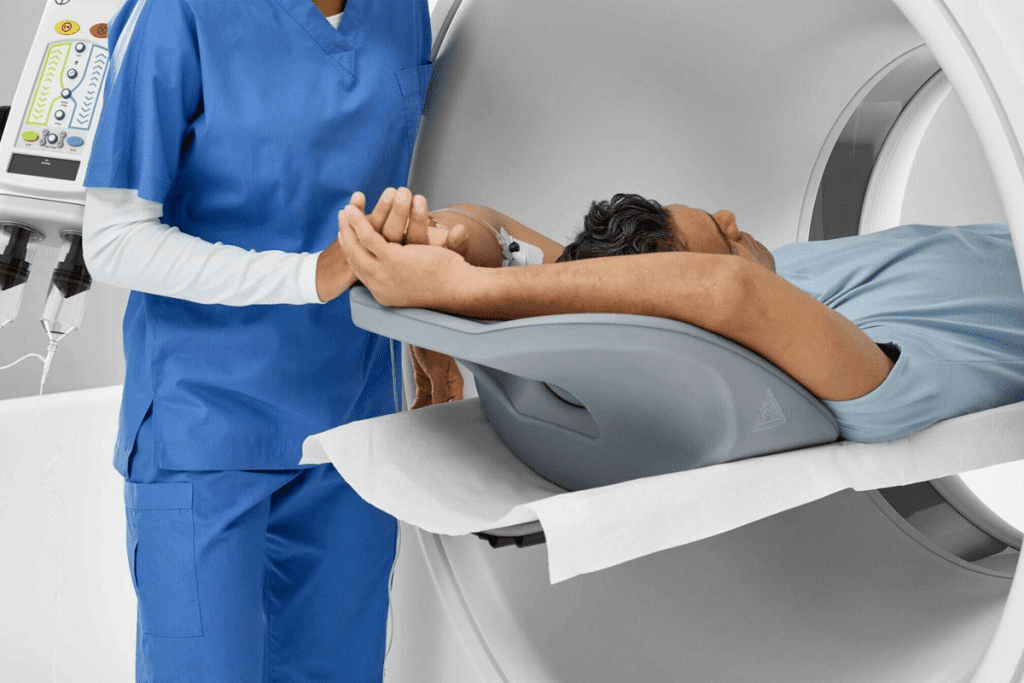
Lung health is very important, with lung cancer being a major cause of death worldwide. Why doctors recommend PET scan often comes down to its unmatched accuracy in detecting disease. Why doctors recommend PET scan Early detection is key to better survival chances. Many lung conditions are found through imaging tests, but PET scans stand out because of their high sensitivity.
PET scans detect metabolic activity, making them excellent for spotting cancer and monitoring how treatments are working. When people ask why doctors recommend PET scan, it is because this technology provides detailed insights into body metabolism. This helps doctors identify abnormal activity early, guiding better diagnosis and treatment planning.Key Takeaways
PET scans give clear, functional insights into organ health.
Why doctors recommend PET scan is due to its sensitivity in detecting metabolic activity.
PET scans are highly accurate in identifying cancerous tissues.
They play a major role in monitoring treatment response.
Early diagnosis improves patient outcomes and survival rates.
Overview of Lung Imaging Methods
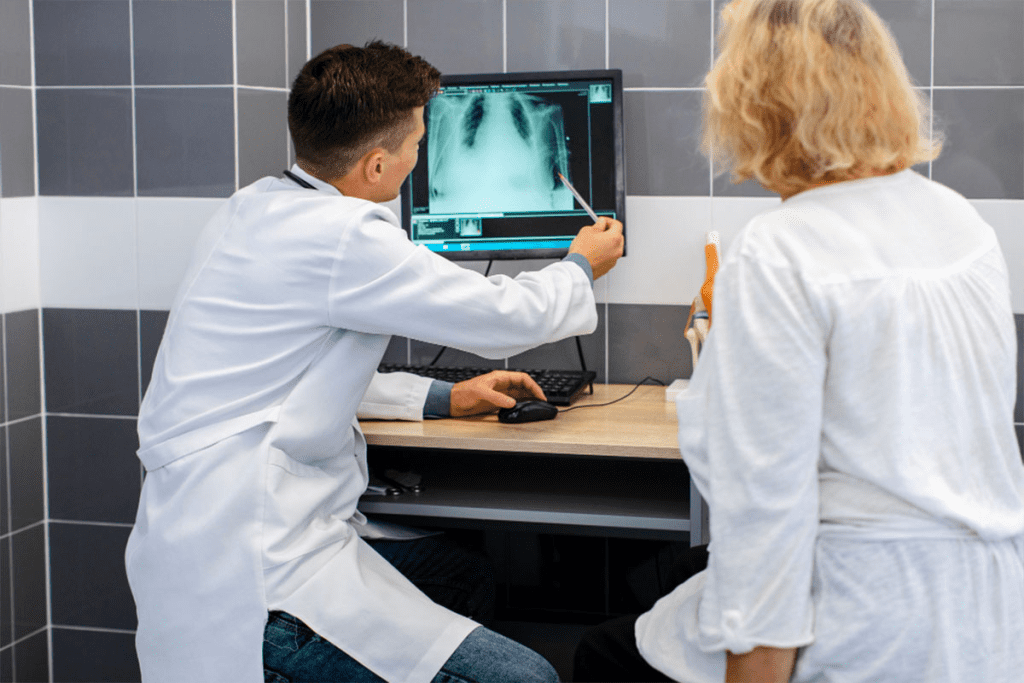
Lung imaging is complex due to the lung’s structure and the many diseases it can face. Different methods are used to diagnose and track lung conditions. These include X-rays, CT scans, MRI, and PET scans.
Common Diagnostic Challenges in Lung Health
Diagnosing lung health is tough because of the lung’s complexity and the many diseases it can get. Accurate diagnosis is key for good treatment.
Challenges include telling apart harmless and harmful nodules, spotting infections, and seeing how far a disease has spread.
Evolution of Lung Imaging Technology
Lung imaging tech has grown a lot, from simple X-rays to advanced tools like CT, MRI, and PET scans. These advancements have made diagnoses more accurate and let us catch lung diseases early.
New hybrid techniques, like PET-CT, have also improved by mixing functional and anatomical info.
Importance of Selecting the Right Imaging Method
Picking the right imaging method is essential for correct diagnosis and treatment plans. Each imaging modality has its own strengths and weaknesses. The choice depends on the specific question being asked.
Things like the lung condition, the patient’s health, and the need for contrast agents affect the choice of imaging method.
X-Ray Imaging for Lung Assessment

X-ray imaging is key in checking lung health. It’s quick and easy to use. Chest X-rays are often the first test for lung problems.
How Chest X-Rays Work
Chest X-rays use X-ray technology to show the inside of the chest. They capture images of the lungs, heart, and blood vessels. This is done by passing X-rays through the chest and catching the image on a digital sensor or film.
The different parts of the chest absorb X-rays at different rates. This creates contrast, helping to see different tissues and any problems.
Benefits and Limitations of X-Rays
Chest X-rays are great because they’re widely available, affordable, and quick. They’re perfect for the first check-up. But, they’re not perfect. They can miss some problems, like early lung cancer or small nodules.
Even with their flaws, X-rays are very useful. They can spot pneumonia, tumors, and other issues in the chest.
Conditions Best Diagnosed with X-Rays
X-rays are good for finding many lung problems. They can spot pneumonia, lung abscesses, and tumors. They also help find other issues like fluid buildup or pneumothorax.
While not as detailed as some tests, X-rays are very helpful. They give important info that helps decide what to do next.
In short, X-ray imaging is very important for checking lung health. It’s easy to get, doesn’t cost much, and works well. Knowing its strengths and weaknesses helps doctors take better care of patients.
CT Scans and Their Role in Lung Diagnostics
Lung diagnostics have made huge strides with CT scan technology. CT scans give detailed images of the lungs. They are more effective than X-rays in spotting lung problems.
CT Scan Technology Explained
CT scan technology combines multiple X-rays from different angles. This creates detailed images of the lungs. It helps see small lung nodules and how much lung disease there is.
Key components of CT scan technology include:
- X-ray tube and detectors that rotate around the patient
- Computer system that reconstructs images
- Advanced software for image analysis
Advantages of CT Scans Over X-Rays
CT scans are better than X-rays in many ways. They can spot small lung nodules and understand lung tissue better. This makes CT scans great for catching lung diseases early.
When CT Scans Are the Preferred Option
CT scans are often the first choice in certain situations. This includes when lung cancer is suspected, to see how much lung disease there is, or for detailed planning before surgery. The choice to use a CT scan depends on the doctor’s judgment and the patient’s needs.
MRI for Lung Imaging
Magnetic Resonance Imaging (MRI) has a special role in lung imaging. It gives detailed views of certain lung conditions. Though it’s not usually the first choice for lung checks, MRI is very helpful for some cases.
Visualizing Lung Tissue with MRI Technology
MRI technology shows lung tissue in high detail. It’s great for looking at tumors that spread to the mediastinum or chest wall. MRI can tell different soft tissues apart without using harmful radiation. This makes it a key tool in some medical situations.
Assessing the Strengths and Weaknesses of Lung MRIs
MRI is good at showing soft tissues and checking blood vessels and mediastinal invasion without contrast. But, it’s not as good as CT scans for lung details. Even with its limits, MRI is very important for diagnosing some lung issues.
Specific Lung Conditions Requiring MRI
MRI is best for looking at tumors that spread to the mediastinum or chest wall. It’s also great for soft tissue checks without harmful radiation. This is good for pregnant women or kids.
Knowing MRI’s good and bad points helps doctors decide when to use it. This improves care for patients.
Why Doctors Recommend PET Scan for Lung Assessment
Doctors often suggest PET scans for lung checks because they’re very accurate. They help find and understand lung cancer better. This tool has changed how we look at lung health by showing how tissues work.
Fundamentals of PET Scan Technology
PET scans use a special tracer that the body absorbs. The scanner then measures how active this tracer is. This shows detailed pictures of what’s inside us. It’s great for spotting cancer because it finds where tissues are very active.
Unique Capabilities of PET in Lung Imaging
PET scans are special for lung pictures. They can see tiny changes in how tissues work. This means they can find lung cancer early, before other tests can.
Metabolic Activity Detection Benefits
Seeing how active tissues are is a big plus of PET scans. Doctors can spot lung cancer early. They can also see how well treatments are working and if cancer comes back.
PET Scan Accuracy and Sensitivity
PET scans are known for being very good at finding lung cancer. Research shows they help doctors diagnose and plan treatments better. This leads to more effective care.
| Diagnostic Tool | Accuracy | Sensitivity |
| PET Scan | High | High |
| CT Scan | Moderate | Moderate |
| X-Ray | Low | Low |
The table shows how PET scans compare to other tools. It clearly shows PET scans are the best for lung checks.
PET-CT Combination: The Gold Standard for Lung Cancer
PET-CT fusion is a key tool in lung cancer diagnosis. It combines PET and CT scans. This gives both metabolic and anatomical details, making it very useful.
How PET-CT Fusion Enhances Diagnostic Accuracy
PET-CT fusion improves accuracy by mixing PET’s metabolic info with CT’s detailed images. This helps doctors spot and stage lung cancer better.
Key benefits of PET-CT fusion include:
- Improved detection of malignant tumors
- Enhanced accuracy in cancer staging
- Better differentiation between benign and malignant nodules
Benefits in Cancer Staging and Treatment Planning
PET-CT is key in cancer staging. It gives a full view of cancer spread. This info is essential for choosing the right treatment.
| Cancer Stage | PET-CT Findings | Treatment Implications |
| Early Stage | Limited tumor activity | Surgery or localized treatment |
| Advanced Stage | Widespread metabolic activity | Systemic therapy or palliative care |
Distinguishing Benign from Malignant Nodules
PET-CT is great at telling benign from malignant nodules. It checks nodules’ metabolic activity. This helps spot cancerous lesions.
Case Studies Demonstrating PET-CT Effectiveness
Many case studies show PET-CT’s role in lung cancer diagnosis and management. They show how PET-CT boosts accuracy and helps plan treatments.
A notable example is a patient with a lung nodule of uncertain significance. PET-CT revealed high metabolic activity, indicating a malignant tumor, which guided the decision for surgical intervention.
Clinical Applications of PET Scans in Pulmonary Medicine
PET scans have changed how we understand lung health. They offer deep insights into lung conditions. This technology helps in diagnosing, managing, and treating lung diseases.
Early Cancer Detection and Characterization
PET scans are key in finding and understanding lung cancer early. They spot tumors by showing where cells are most active. This makes it easier to treat them when they’re small.
Using PET scans for lung cancer has many benefits. These include:
- Improved detection of small tumors
- Enhanced characterization of lung nodules
- Better staging of lung cancer
Infection and Inflammation Assessment
PET scans are also great for checking lung infections and inflammation. They show where the body is fighting off infections like pneumonia or tuberculosis.
They also help track how well treatments are working. This lets doctors make changes if needed.
Treatment Response Monitoring
PET scans are essential for watching how lung cancer responds to treatment. They check if the treatment is working by looking at metabolic changes. This helps doctors decide if they need to change the treatment plan.
This info is key for making better treatment choices. It helps improve patient results.
Recurrence Detection and Surveillance
PET scans are also used to watch for lung cancer coming back in patients who’ve been treated. They help find any signs of cancer early.
Regular scans give patients peace of mind. They also help doctors catch any problems quickly.
The following table summarizes the clinical applications of PET scans in pulmonary medicine:
| Clinical Application | Description | Benefits |
| Early Cancer Detection | Identifying lung cancer at an early stage | Improved treatment outcomes |
| Infection and Inflammation Assessment | Diagnosing and monitoring infections | Targeted treatment approaches |
| Treatment Response Monitoring | Assessing the effectiveness of treatment | Guided treatment decisions |
| Recurrence Detection | Identifying any cancer coming back | Early intervention |
Comparing Lung Imaging Methods: When to Use Which Scan
Choosing the right lung imaging method depends on many factors. Doctors must think about several things to pick the best imaging technique for diagnosing lung conditions.
Decision Factors for Physicians
Doctors look at several things when picking a lung imaging method. They consider the type of lung problem, the patient’s health, and what imaging options are available.
- The nature of the suspected condition (e.g., cancer, infection, inflammation)
- The patient’s medical history and current health status
- The need for detailed imaging versus a general assessment
Cost and Accessibility Considerations
The cost and availability of lung imaging methods are key factors. Cost-effectiveness and availability are important in healthcare choices.
| Imaging Method | Average Cost | Accessibility |
| X-Ray | $200-$500 | High |
| CT Scan | $500-$1,500 | Moderate |
| PET Scan | $1,000-$3,000 | Low to Moderate |
Radiation Exposure and Safety Concerns
Radiation safety is a big deal when choosing lung imaging methods. Different methods expose patients to different amounts of radiation.
Radiation exposure is a big worry, mainly for patients needing many scans. MRI is a safer choice because it doesn’t use radiation.
Patient-Specific Considerations
Each patient’s age, health, and medical conditions affect the choice of imaging method.
For example, pregnant women or those with metal implants need special care in imaging to keep them safe and effective.
Conclusion: The Future of Lung Imaging Technology
The future of lung imaging is advancing rapidly, but PET scans have already proven to be a gold standard. Why doctors recommend PET scan is tied to its accuracy, sensitivity, and ability to guide precise treatment. PET-CT in particular has transformed cancer diagnosis, staging, and treatment planning. With ongoing advancements, PET scans will continue to play a vital role in improving patient care and outcomes.
FAQ
What is a PET scan, and why is it used for lung assessment?
A PET scan uses a radioactive tracer to see how active body tissues are. It’s key for lung checks because it spots cancer well. This makes it vital for lung cancer diagnosis and care.
What are the benefits of using PET scans for lung cancer diagnosis?
PET scans are very good at finding cancer because they show metabolic activity. They help in cancer staging, tracking treatment, and finding cancer again.
How does PET-CT compare to other imaging modalities for lung cancer?
PET-CT is top for lung cancer because it mixes PET’s function with CT’s detail. It’s super accurate for telling cancer from non-cancer and seeing how far it spreads.
What are the clinical applications of PET scans in pulmonary medicine?
PET scans help in many ways in lung medicine. They find cancer early, check infections, see how treatments work, and spot cancer coming back. They’re a big help in lung care.
Why do doctors recommend PET scans over other imaging methods for certain lung conditions?
Doctors pick PET scans for some lung issues because they find metabolic activity. This is great for spotting cancer and seeing how treatments are doing. Other scans can’t do this as well.
What factors influence the choice of imaging modality for lung conditions?
Many things decide which scan to use for lung issues. These include what the doctor needs to know, the patient’s health, what scans are available, cost, and safety. Doctors think about these when choosing a scan.
Are PET scans safe, and what are the risks associated with them?
PET scans are mostly safe, but they do use some radiation. The good they do for serious conditions like lung cancer usually outweighs the risks.
How do PET scans contribute to treatment planning for lung cancer?
PET scans help plan lung cancer treatment by showing how far the disease is and its activity. This info helps doctors plan the best treatment, like surgery or chemo.
Can PET scans be used to monitor treatment response in lung cancer patients?
Yes, PET scans track how lung cancer patients are doing. They show if the treatment is working by looking at metabolic changes. This is key for adjusting treatment plans.
What is the role of PET-CT in cancer staging?
PET-CT is key in cancer staging because it gives both function and anatomy details. This combo makes it very accurate for figuring out how far cancer has spread. This is important for planning treatment.
References
- Greenspan, B. S., Smith, M. R., & Alavi, A. (2017). Role of PET/CT for precision medicine in lung cancer: Perspective of the Society of Nuclear Medicine and Molecular Imaging. Translational Lung Cancer Research. Retrieved from https://pmc.ncbi.nlm.nih.gov/articles/PMC5709134/
- Capitanio, S., Boussoussou, S., Tiseo, M., & others. (2022). PET/CT in nononcological lung diseases: current applications. European Respiratory Review. Retrieved from https://pmc.ncbi.nlm.nih.gov/articles/PMC9487216/
- Sheikhbahaei, S., Lee, S., Yokell, D., & others. (2017). The Value of FDG PET/CT in Treatment Response Assessment and Surveillance in Lung Cancer. AJR. American Journal of Roentgenology. Retrieved from https://ajronline.org/doi/10.2214/AJR.16.16532
- Fischer, B., Lassen, U., Mortensen, J., & others. (2009). Preoperative staging of lung cancer with combined PET“CT. New England Journal of Medicine, 361(1), 32“39. Retrieved from https://www.nejm.org/doi/full/10.1056/NEJMoa0900043