Last Updated on November 26, 2025 by Bilal Hasdemir
Find out will a CT scan show gallstones and how reliable it is for gallbladder diagnosis. Gallstones are hard deposits that form in the gallbladder or biliary tree. They are made of cholesterol, bilirubin, and bile. It’s important to diagnose gallstones correctly for the right treatment.
Ultrasound is the top choice for finding gallstones because it’s very sensitive. CT scans can also spot gallstones, but only those with calcium. Yet, CT scans are not usually the first go-to for gallstone diagnosis.
At Liv Hospital, they use the latest imaging tech and focus on the patient. Knowing how CT scans work for gallstones and comparing them to other tests is key for both patients and doctors.
Key Takeaways
- Ultrasound is the preferred diagnostic test for detecting gallstones.
- CT scans can detect gallstones, specially those with calcium.
- CT scans are not typically used as the first-line diagnostic tool for gallstones.
- Liv Hospital utilizes advanced imaging for accurate diagnosis.
- A patient-focused approach ensures clarity in care options.
Understanding Gallstones: Causes, Types, and Symptoms
It’s key to know about gallstones to treat cholecystolithiasis well. Gallstones are solid lumps in the gallbladder, a small organ under the liver. They store bile. Gallstones can cause problems, so it’s vital to understand their causes, types, and symptoms.
What Are Gallstones and How Do They Form?
Gallstones form from a mix of factors, mainly bad gallbladder function and bile imbalance. Bile helps digest fats and comes from the liver. Too much cholesterol or bilirubin in bile can cause gallstones. Bad gallbladder emptying lets these particles turn into stones.
“The exact mechanisms behind gallstone formation are complex and multifactorial,” notes a study on cholecystolithiasis. Genetics, diet, and certain medical conditions can raise your risk of gallstones.
Types of Gallstones: Cholesterol vs. Pigment Stones
Gallstones come in two types: cholesterol and pigment stones. Cholesterol stones are yellowish-green and mostly made of cholesterol. They’re the most common in the U.S. Pigment stones are smaller, darker, and made of bilirubin and other substances.
- Cholesterol stones are linked to bile that’s too rich in cholesterol.
- Pigment stones are related to hemolytic anemia and liver diseases.
Common Symptoms and Complications of Gallstones
Gallstones might not show symptoms or can cause big problems. Symptoms include severe pain, nausea, and vomiting. If a stone blocks the bile duct, it can lead to cholecystitis, pancreatitis, or jaundice.
“Prompt diagnosis and treatment are key to avoid gallstone complications,” medical guidelines say.
The symptoms and complications of gallstones highlight the need for quick diagnosis and treatment.
The Basics of CT Scan Technology
CT scan technology is key in medical diagnostics. It gives us deep insights into internal injuries and diseases. This tech has changed how we diagnose and treat medical conditions, showing detailed images of the body.
How CT Scanning Works
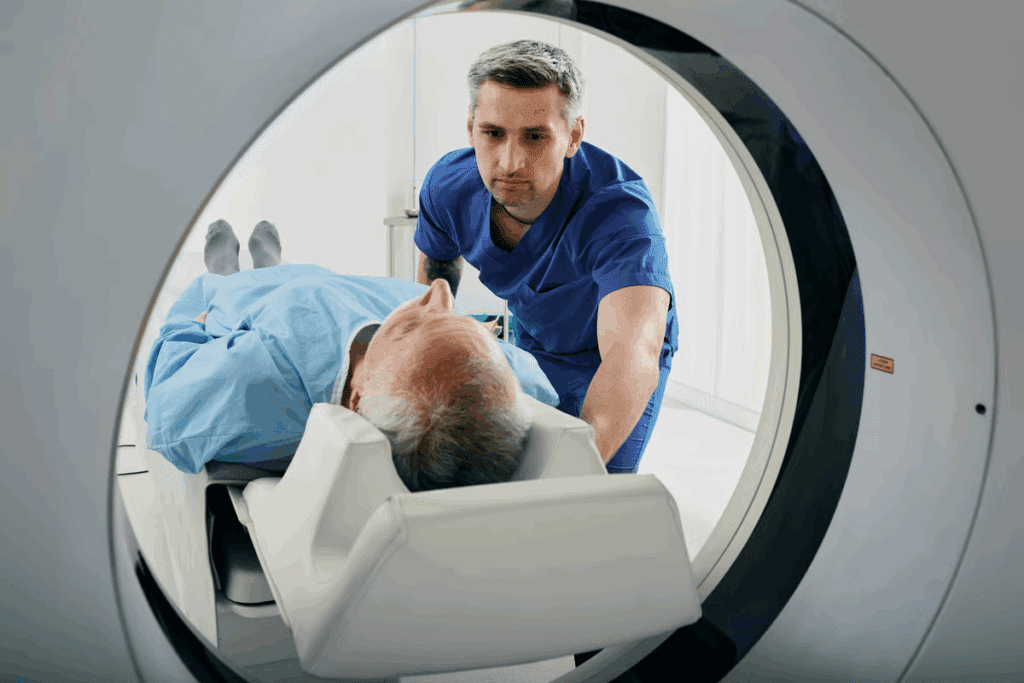
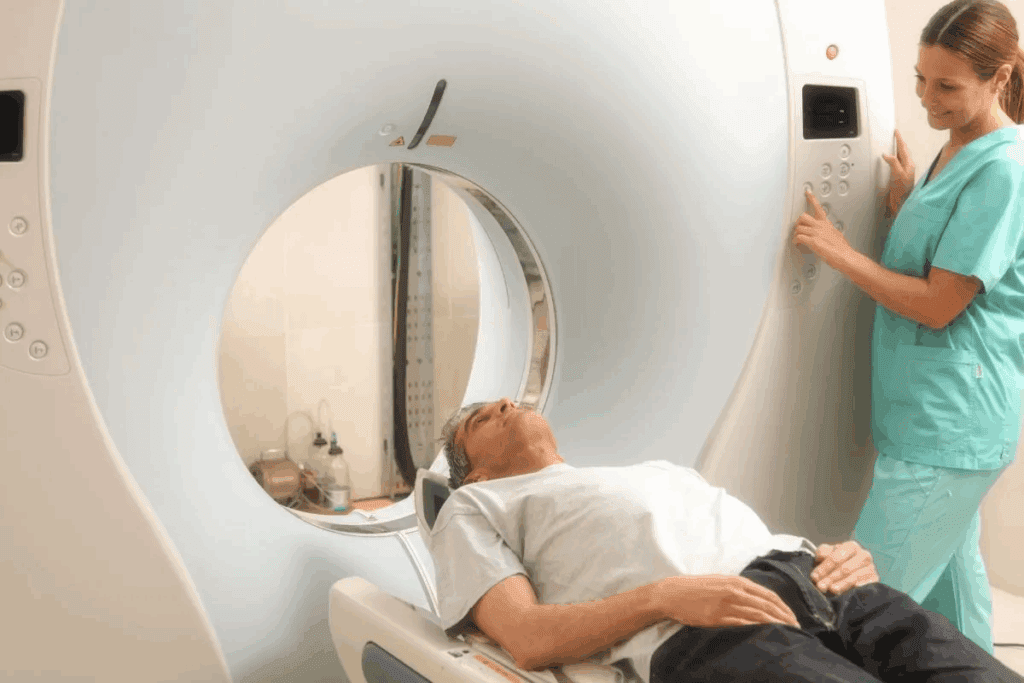
CT scans combine many X-ray images from different angles. This creates a detailed, three-dimensional view of the body’s inside. A CT scanner rotates around the patient, capturing X-rays. A computer then makes these images into detailed pictures.
These images show important details about internal organs, bones, and tissues. This info is vital for diagnosing many medical conditions. It helps doctors spot injuries, infections, cancers, and vascular diseases.
Advantages of CT Imaging in Medical Diagnostics
CT imaging has many benefits in medical diagnostics. Some key advantages include:
- Detailed Imaging: CT scans give high-resolution images. This helps doctors diagnose conditions more accurately.
- Quick Results: The scanning process is fast. This makes it great for emergency situations.
- Comprehensive Evaluation: CT scans can check many body parts at once. This gives a full view of the patient’s condition.
These benefits make CT scans a valuable tool in medical diagnostics. They are very useful for complex cases or when other tests are unclear.
Limitations of CT Technology
While CT scans are very effective, they have some limits. For example:
- Radiation Exposure: CT scans use X-rays, which carry a small risk of harm from radiation.
- Contrast Sensitivity: Some patients may have bad reactions to the contrast dye used in CT scans.
- Cost and Accessibility: CT scans can be pricey. They may not be available in all places.
Knowing these limits is important for healthcare providers. It helps them decide when to use CT scans and how to reduce risks.
Will a CT Scan Show Gallstones? Capabilities and Limitations
CT scans can show gallstones, but it depends on the stone’s makeup. Gallstones are mainly cholesterol or pigment stones. The stone’s calcium content affects how well CT scans can spot them.
Detection of Calcified vs. Non-Calcified Gallstones
CT scans work best on calcified gallstones, which have calcium. Calcified stones show up brighter on CT images, making them easier to see. Non-calcified stones, like cholesterol ones, are harder to spot because they blend in with bile.
Factors Affecting Gallstone Visibility on CT
Several things can change how well CT scans show gallstones. These include:
- The size of the gallstone: Bigger stones are easier to spot.
- The composition of the gallstone: Calcified stones are more visible.
- The technology of the CT scanner: Newer scanners can find smaller stones.
- The presence of other abdominal pathology: Other issues can make it harder to read the scan.
When CT Successfully Identifies Gallstones
CT scans can find gallstones in some cases. For example, if someone has calcified gallstones and is getting a CT scan for pain, the stones will likely be seen. CT scans also help find problems like gallbladder inflammation or obstruction. They’re useful in emergencies when acute cholecystitis is suspected.
In summary, CT scans have their limits, mainly with non-calcified gallstones. Yet, they’re great for spotting calcified stones and related issues. Knowing what CT scans can and can’t do is key for accurate diagnosis and care.
Ultrasound: The Gold Standard for Gallstone Detection
Ultrasound is the top choice for finding gallstones because it’s safe and very accurate. It’s often the first test doctors use to check for gallstones.
Mechanism of Detection
Ultrasound works by sending sound waves through the body to see the gallbladder. A technician applies gel to the belly and uses a transducer to send sound waves. These waves bounce back, creating images on a screen.
Gallstones show up as bright spots with shadows. This makes them easy to spot on the ultrasound.
Sensitivity and Specificity
Ultrasound is very good at finding gallstones. It has a sensitivity of over 95%, which means it misses very few gallstones. It’s also specific, which means it rarely gives false positives.
This makes ultrasound a great first test for gallstones.
Advantages as the First-Line Test
Using ultrasound first has many benefits. It’s non-invasive, so there’s no risk of complications. It’s also safe because it doesn’t use harmful radiation.
Ultrasound is also cost-effective and easy to find. This makes it a good choice for many patients.
In summary, ultrasound is the best choice for finding gallstones. It’s safe, accurate, and easy to get. It’s the go-to test for diagnosing gallstones without the need for invasive methods or harmful radiation.
Comprehensive Guide to Gallstone Tests
There are many tests to find gallstones, not just ultrasound. Each test has its own benefits and is used in different situations. They help check the health of the gallbladder fully.
Hepatobiliary Scintigraphy (HIDA Scan)
A HIDA scan is a nuclear medicine test. It checks the gallbladder and bile ducts. A radioactive tracer is injected into the blood, which goes to the liver and then to the bile.
Advantages of HIDA Scan: It’s great for finding problems like cholecystitis and bile duct blockages. It shows if the gallbladder works right and if there are blockages in the bile ducts.
Magnetic Resonance Cholangiopancreatography (MRCP)
MRCP is a special MRI for the bile and pancreatic ducts. It gives clear images without needing dye in the ducts.
Benefits of MRCP: It’s non-invasive and shows detailed images. It helps find gallstones, bile duct injuries, and other problems in the biliary and pancreatic ducts.
Endoscopic Retrograde Cholangiopancreatography (ERCP)
ERCP is a more detailed procedure. It uses endoscopy and fluoroscopy to look at and treat bile and pancreatic duct issues. An endoscope goes through the mouth and into the duodenum to put dye in the ducts.
ERCP Advantages: It can do both imaging and treatments, like removing gallstones or widening narrowed ducts. It’s good for handling gallstone complications.
| Diagnostic Test | Primary Use | Advantages |
| HIDA Scan | Evaluating gallbladder function and bile duct obstruction | Assesses gallbladder function, diagnoses cholecystitis |
| MRCP | Imaging bile and pancreatic ducts | Non-invasive, high-resolution images, diagnoses gallstones and ductal pathologies |
| ERCP | Diagnosing and treating bile and pancreatic duct conditions | Allows for therapeutic interventions, manages gallstone complications |
Knowing about the different tests for gallstones is key for doctors and patients. Each test has its own use and benefits. Together, they help get a full picture of gallbladder health.
Comparing CT Scans to Other Gallstone Detection Methods
Choosing the right imaging method for gallstones is key. We look at CT scans and ultrasound. Each has its own strengths and weaknesses.
Accuracy Comparison: CT vs. Ultrasound vs. Other Tests
Ultrasound is often the top choice for finding gallstones. It’s very good at spotting them. But, CT scans are better when complications are suspected or the diagnosis is tricky.
CT scans show more details and can find many types of gallstones. Ultrasound is cheaper and safer because it doesn’t use radiation. It’s a good first choice for many patients.
Cost and Accessibility Considerations
The cost and where you can get the test matter too. Ultrasound is cheaper and easier to find than CT scans. But, the choice depends on what’s available in your area.
Radiation Exposure and Safety Concerns
Another big factor is radiation exposure. CT scans use a lot of radiation. This is a big worry, mainly for young people or those needing many tests. Ultrasound is safer because it doesn’t use radiation.
In short, CT scans are detailed but involve radiation. The choice between CT scans and ultrasound depends on many things. These include how accurate they are, how much they cost, where you can get them, and safety concerns.
When CT Is the Preferred Method for Gallbladder Evaluation
CT scans play a key role in checking gallbladder health, mainly in emergency situations. Ultrasound is usually the first choice for gallstones. But, CT scans have special benefits in some cases.
Detecting Complications: Infection, Inflammation, and Blockages
CT scans are great for spotting problems like infections, inflammation, and blockages. They accurately find these issues, making them a top choice for tough cases.
When there’s a chance of gallbladder infection or cholecystitis, CT scans are very helpful. They show how bad the inflammation is and if there are serious problems like gangrene or perforation. This helps doctors figure out how serious it is and what treatment is needed.
| Complication | CT Scan Findings | Clinical Significance |
| Gallbladder Infection | Wall thickening, inflammation | Indicates need for urgent intervention |
| Gangrene | Presence of gas, necrosis | High risk of perforation, requires immediate surgery |
| Blockage | Dilated bile ducts | May require ERCP or surgical intervention |
Emergency Situations and Acute Presentations
In emergency rooms, CT scans are key for checking sudden abdominal pain. When it’s hard to tell what’s wrong, CT scans can find the cause, like gallbladder problems. They’re fast and accurate, making them essential in urgent situations.
CT in the Context of Other Abdominal Pathologies
Patients might have pain that could be from many things. CT scans are good because they look at the whole belly, not just the gallbladder. This helps find other problems like pancreatitis or appendicitis.
Looking at the whole belly, CT scans give a clearer picture of what’s going on. This helps doctors choose the best treatment.
Clinical Decision-Making for Cholecystolithiasis Diagnosis
Diagnosing cholecystolithiasis requires a mix of clinical checks and tests. This method helps get the right diagnosis and treatment plan.
Initial Assessment and Clinical Evaluation
When a patient might have cholecystolithiasis, doctors start with a detailed check. They look at the patient’s medical history and do a physical exam. Signs like right upper quadrant pain, fever, and jaundice are important for deciding what to do next.
- Looking at the patient’s symptoms and medical history
- Doing a physical exam to find signs of gallbladder disease
- Checking lab tests like liver function and blood count
Recommended Testing Sequence for Suspected Gallstones
Choosing tests for gallstones depends on the first check-up. Ultrasound is usually the first test because it’s very good at finding gallstones. Sometimes, a CT scan is used too.
- Ultrasound as the first imaging test
- CT scan for special cases or emergencies
- More tests like HIDA scan, MRCP, or ERCP for complex cases
Interpreting Test Results and Treatment Planning
Understanding test results is key for planning treatment. The size, number, and complications of gallstones help decide treatment. Treatment can be simple or surgery, like cholecystectomy.
- Watching and waiting for small, painless gallstones
- Surgery for painful or complicated gallstones
- Keeping an eye on patients at high risk of problems
By combining clinical checks with test results, doctors can make the best decisions. This helps improve patient care.
Conclusion: Making Informed Decisions About Gallstone Imaging
Choosing the right test for gallstones is key for accurate diagnosis and treatment. The test you pick depends on several things. These include the situation, the patient’s health, and if there are complications.
Gallstone imaging is important for finding gallstones. There are many tests, like CT scans and ultrasound. Knowing what each test can do is important for making good choices.
Healthcare providers should think about the situation and the patient’s needs. This helps pick the best test for gallstones. It ensures patients get the care they need quickly and well. This approach helps improve health outcomes and quality of life.
FAQ
Does a CT scan show gallstones?
A CT scan can spot gallstones, but it depends on the stone type. Calcified stones are easier to see on a CT scan than non-calcified ones.
Can a CT scan detect gallstones?
Yes, a CT scan can find gallstones, mainly calcified ones. But it’s not as good as ultrasound for spotting non-calcified stones.
How to test for gallstones?
Ultrasound is the top choice for finding gallstones because it’s very accurate. Other tests like CT scans, HIDA scans, MRCP, and ERCP might be used too.
What is the best test for diagnosing gallstones?
Ultrasound is the best for finding gallstones. It’s safe, accurate, and doesn’t hurt.
Can CT scans be used to diagnose cholecystolithiasis?
Yes, CT scans can help diagnose cholecystolithiasis. They’re useful in complex cases or when there are complications.
Will a CT scan show gallstones that are not calcified?
Non-calcified gallstones might not show up well on a CT scan. How well they show depends on the stone and the CT technology.
Is a CT scan or ultrasound better for detecting gallstones?
Ultrasound is better for finding gallstones because it’s more accurate and safe. CT scans might be used in emergencies or when complications are suspected.
Can a CT scan detect complications related to gallstones?
Yes, CT scans can spot complications like infection, inflammation, and blockages.
What diagnostic tests are available for gallstones beside ultrasound and CT?
Other tests for gallstones include HIDA scans, MRCP, and ERCP. Each has its own uses and benefits.
References
- Bender, A. J., Shapiro, B., & Jaffe, T. (1996). CT evaluation of acute cholecystitis: Findings and criteria. American Journal of Roentgenology, 166(4), 919-923. https://pubmed.ncbi.nlm.nih.gov/8615248/
- Tan, E., Friesen, J., & Friesen, B. (2018). Acute cholecystitis: Computed tomography (CT) versus ultrasound (US). Open Journal of Radiology, 8(2), 131-139.https://www.scirp.org/journal/paperinformation?paperid=85620