Last Updated on December 1, 2025 by Bilal Hasdemir

A diagnosis of Wilms Tumor can be very scary for families. A three-year-old boy, was diagnosed with Stage IV Wilms Tumor cancer. This shows how important it is to know about this condition.
Detailed statistics on the high Wilms tumor survival rates based on stage and treatment.
Pediatric kidney cancer is rare but serious. Thanks to medical research, childhood cancer survival rates have gotten much better. In this article, we’ll look at the Wilms tumor prognosis and treatment options. We aim to give you all the information you need to manage this condition.
Key Takeaways
- Wilms Tumor is a type of cancer that affects the kidneys in children.
- Survival rates for Wilms Tumor have improved significantly with advances in medical research.
- Understanding the prognosis and treatment options is key to managing the condition.
- Early diagnosis and treatment can greatly improve outcomes for children with Wilms Tumor.
- Families should be aware of the signs and symptoms to look out for.
Understanding Wilms Tumor: The Basics of Pediatric Kidney Cancer

Wilms tumor, or nephroblastoma, is a rare cancer in kids’ kidneys. It mostly hits young ones, under seven years old.
What is Wilms Tumor (Nephroblastoma)?
Wilms tumor grows in one or both kidneys. It’s named after Max Wilms, who first found it. These tumors can grow big before they’re found, and sometimes spread.
We don’t know exactly why Wilms tumor happens. But it’s linked to genetic changes. Kids with certain genetic conditions are more likely to get it.
How Common is Wilms Tumor in Children?
Wilms tumor is the top kidney cancer in kids, making up 90% of cases. The American Cancer Society says about 650 kids in the U.S. get it each year.
- Most cases are in kids under 7.
- Girls are slightly more likely to get it than boys.
- It can happen in both kidneys, but that’s rare.
The Biology of Wilms Tumor
Wilms tumor’s biology is complex, involving genetic and molecular changes. Scientists have found genes linked to higher risk. Knowing this helps create better treatments.
Important parts of Wilms tumor biology include:
- Genetic predisposition: Some genetic syndromes raise the risk.
- Tumor histology: The look of tumor cells under a microscope matters for prognosis.
- Stage at diagnosis: How far the disease has spread affects treatment and survival.
Understanding these points helps doctors create personalized treatment plans. This improves chances of beating pediatric kidney cancer.
Signs and Symptoms: Recognizing Wilms Tumor Early
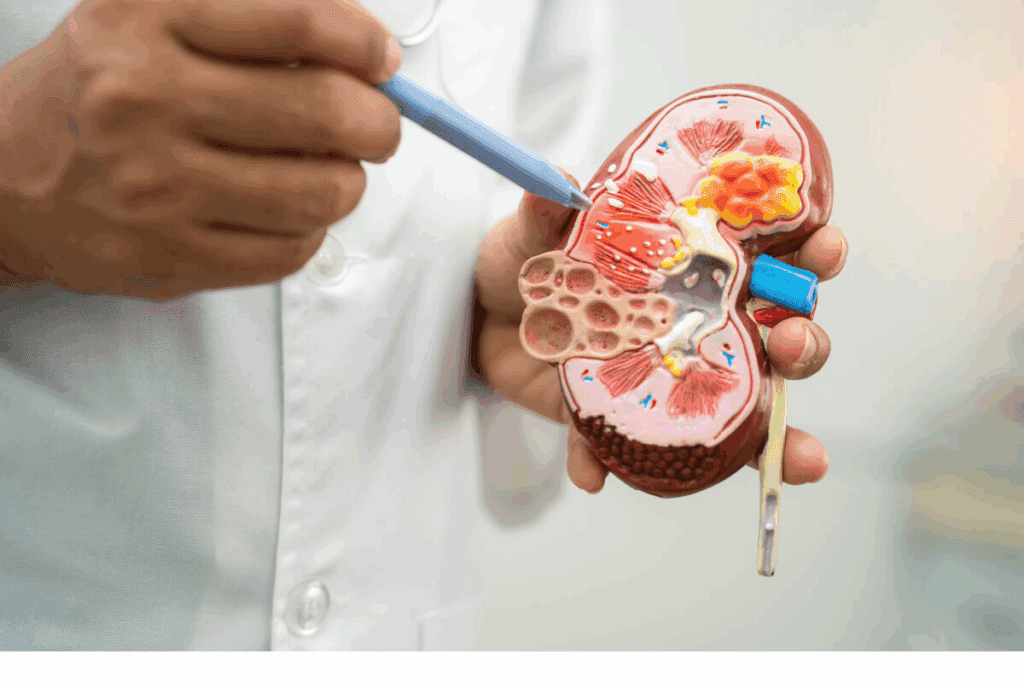
Spotting Wilms tumor early is key to better treatment results. It’s important to know its signs and symptoms.
Common Physical Symptoms
The most common sign is a swelling or lump in the belly. This swelling is usually painless and can be felt while bathing or dressing the child. Sometimes, the tumor can cause belly pain or discomfort. It’s important to watch for any changes in the belly and see a doctor if you notice unusual swelling.
Systemic Symptoms
Wilms tumor can also cause other symptoms. These include fever, loss of appetite, and weight loss. Some kids might have high blood pressure because of the tumor’s effect on the kidney. These symptoms can be hard to spot because they can look like other common childhood illnesses.
When to Seek Medical Attention
If a child shows any unusual or lasting symptoms, get medical help right away. Parents and caregivers should keep an eye on their child’s health. If you see swelling or a lump in the belly, persistent fever, loss of appetite, or other worrying signs, see a doctor. Getting a diagnosis early is vital for better treatment results for kids with Wilms tumor.
Diagnosis Process: From Suspicion to Confirmation
Finding Wilms Tumor accurately is key and takes several steps. It starts with a physical check-up. To diagnose Wilms Tumor, doctors use a mix of physical checks, imaging tests, and lab tests.
Initial Physical Examination
The first step in finding Wilms Tumor is a detailed check-up. A doctor might feel the belly to look for any unusual lumps. Finding a lump in the belly is often the first sign in kids with Wilms Tumor.
Key findings during the physical examination may include:
- Abdominal mass or swelling
- Hypertension due to renal compression
- Hematuria (blood in the urine)
Imaging Studies
After the check-up, imaging tests are done to look closer at the suspected tumor. These tests help see if the tumor is there, how big it is, and if it has spread.
Common imaging modalities used include:
- Ultrasound
- Computed Tomography (CT) scan
- Magnetic Resonance Imaging (MRI)
| Imaging Modality | Purpose |
| Ultrasound | Initial assessment of abdominal mass |
| CT Scan | Detailed evaluation of tumor size and spread |
| MRI | Further characterization of tumor and its relation to surrounding structures |
Biopsy and Pathological Confirmation
The final step to confirm Wilms Tumor is a biopsy and lab test. A biopsy takes a small piece of the tumor for a closer look. This is done to see if there are cancer cells.
The biopsy process involves:
- Needle biopsy or surgical biopsy
- Histopathological examination to identify tumor characteristics
- Classification of the tumor based on histological features
By combining the results from the check-up, imaging tests, and biopsy, doctors can confirm Wilms Tumor. They then plan the best treatment.
Staging of Wilms Tumor: Understanding Disease Extent
Wilms tumor staging is key for doctors to know how far the disease has spread. This info is vital for picking the right treatment and guessing the chance of recovery.
Stage I Through Stage V Explained
The staging of Wilms tumor depends on the tumor’s size and if it has spread. It goes from Stage I, where the tumor is just in the kidney, to Stage V, where it’s in both kidneys.
- Stage I: The tumor is just in the kidney and is removed.
- Stage II: The tumor is bigger than the kidney but is removed.
- Stage III: The tumor can’t be fully removed or has spread to lymph nodes in the abdomen.
- Stage IV: The tumor has spread to distant organs like the lungs, liver, or brain.
- Stage V: The tumor is in both kidneys.
The Significance of Tumor Staging
Tumor staging is very important. It lets doctors tailor treatments based on how far the disease has spread. More advanced stages need stronger treatments like chemotherapy, radiation, and surgery.
| Stage | Treatment Approach | Prognosis |
| Stage I | Surgery, possibly chemotherapy | Excellent |
| Stage IV | Intensive chemotherapy, radiation, and surgery | Guarded |
| Stage V | Complex treatment plan involving both kidneys | Varies |
Bilateral vs. Unilateral Disease
Wilms tumor can be in one kidney (unilateral) or both (bilateral). Bilateral tumors are harder to treat because they need to keep kidney function while fighting cancer.
Knowing if the tumor is in one or both kidneys is key for the best treatment plan and outcome.
Histology and Risk Classification
The study of Wilms Tumor’s microscopic structure is key to understanding its severity. This knowledge helps doctors decide the best treatment. Histology is vital for planning effective care.
Favorable vs. Unfavorable Histology
Wilms Tumor is classified into two types based on its microscopic features. Favorable histology means the tumor cells look mostly normal under a microscope. This suggests a better chance of recovery. On the other hand, unfavorable histology shows anaplasia, which means the tumor is more aggressive and has a worse outlook.
Knowing the difference between these two types is important. It affects how doctors treat the tumor. Tumors with favorable histology usually respond well to standard treatments. But, tumors with unfavorable histology might need more aggressive therapy.
Anaplastic Wilms Tumor
Anaplastic Wilms Tumor is a subtype with anaplasia, showing enlarged nuclei and abnormal cell division. Anaplasia can be either diffuse or focal. Diffuse anaplasia is more dangerous and has a worse prognosis than focal anaplasia. This type of tumor is harder to treat because it grows faster.
- Key Features of Anaplastic Wilms Tumor:
- Enlarged nuclei
- Multipolar mitotic figures
- Diffuse or focal anaplasia
Risk Stratification Systems
Risk stratification systems help doctors understand the chance of tumor recurrence. These systems consider factors like tumor type, stage, and age. The most common system divides patients into low-risk, intermediate-risk, and high-risk groups.
- Low-Risk: Favorable histology and other low-risk features
- Intermediate-Risk: Tumors with certain characteristics that place them between low and high risk
- High-Risk: Presence of diffuse anaplasia or other high-risk features
Accurate risk stratification is critical. It helps tailor treatments to each patient’s needs. This ensures those at higher risk get more aggressive treatment, while those at lower risk avoid unnecessary side effects.
Wilms Tumor Survival: Statistics and Prognosis Factors
It’s important to know the survival rates and what affects them for Wilms tumor. This kidney cancer mainly hits kids. Thanks to better treatments, more kids are surviving.
Overall Survival Rates
Today, over 90% of kids with Wilms tumor can be cured. This big jump in survival rates is thanks to better treatments and teamwork in pediatric oncology.
Survival by Stage
The stage of Wilms tumor at diagnosis is key to knowing the outlook. Survival rates change a lot by stage:
| Stage | Survival Rate |
| Stage I | 98% |
| Stage II | 95% |
| Stage III | 90% |
| Stage IV | 80% |
| Stage V | 70% |
Survival by Histology
The type of tumor cells also matters a lot. Tumors are either favorable or unfavorable. Favorable tumors have a much better chance of survival.
Favorable Histology: Kids with favorable Wilms tumor have a survival rate over 90%.
Unfavorable Histology: But, tumors with unfavorable histology have a survival rate around 70%.
Factors That Influence Prognosis
Many things can affect how well a kid will do with Wilms tumor. These include the kid’s age, the tumor’s stage and type, and how well it responds to treatment. Knowing these helps doctors tailor the treatment just right for each patient.
We know every kid’s fight with Wilms tumor is different. The outcome can depend on many things. Our aim is to give each patient the care they need, to help them have the best chance of a good outcome.
Treatment Approaches: Standard of Care
The standard care for Wilms Tumor includes surgery, chemotherapy, and sometimes radiation therapy. This depends on the tumor’s stage and type. We’ll explain how each treatment helps manage this common kidney cancer in kids.
Surgery Options
Surgery is key in treating Wilms Tumor. The goal is to remove the tumor. The surgery type varies based on how widespread the disease is.
- Radical Nephrectomy: This common surgery removes the kidney, tumor, and nearby tissues.
- Partial Nephrectomy: This is for cases where keeping the kidney is important, like in bilateral tumors or solitary kidneys.
- Lymph Node Sampling: This checks if the cancer has spread to nearby lymph nodes.
Chemotherapy Protocols
Chemotherapy is vital in treating Wilms Tumor. It makes the tumor smaller before surgery and kills any cancer cells left after. The treatment plan depends on the tumor’s stage and type.
| Treatment Stage | Chemotherapy Agents | Purpose |
| Pre-operative | Vincristine, Actinomycin D | Tumor reduction |
| Post-operative | Vincristine, Actinomycin D, Doxorubicin (for higher stages or unfavorable histology) | Eliminate residual disease |
Radiation Therapy Indications
Radiation therapy is used in certain cases, like advanced disease or unfavorable tumor types. It helps control the disease locally and lowers the chance of it coming back.
- Advanced Disease: Radiation is used for Stage III or IV disease.
- Unfavorable Histology: Anaplastic Wilms Tumor patients often get radiation therapy.
Combining these treatments helps achieve the best results for Wilms Tumor patients. It balances effectiveness with the need to avoid long-term side effects.
Stage 4 Wilms Tumor: Managing Advanced Disease
Stage 4 Wilms Tumor is a tough challenge. It needs advanced treatments to help patients live longer. The tumor has spread to distant places like the lungs, liver, or bones. This makes treating it very important.
Treatment Intensification
Patients with Stage 4 Wilms Tumor need stronger treatments. They often get chemotherapy, surgery, and sometimes radiation. The goal is to shrink the tumor, ease symptoms, and stop it from spreading more.
Chemotherapy Protocols: Stronger chemotherapy is key for Stage 4 Wilms Tumor. Doctors use drugs like vincristine, dactinomycin, and doxorubicin. For high-risk patients, they might add cyclophosphamide or etoposide.
Managing Metastatic Disease
It’s very important to manage metastatic disease well. This means finding and treating the spread of the tumor. The treatment plan must be made just for the patient, based on where and how much the tumor has spread.
Survival Outcomes in Advanced Cases
Thanks to new treatments and care, survival rates for Stage 4 Wilms Tumor have gone up. But, the outlook is not always good. Doctors keep looking for better ways to treat this disease.
| Treatment Approach | Survival Rate | Key Components |
| Intensified Chemotherapy | 70-80% | Vincristine, Dactinomycin, Doxorubicin |
| Surgery and Chemotherapy | 80-90% | Nephrectomy, Lymph Node Sampling |
| Multimodal Therapy | 90% | Chemotherapy, Surgery, Radiation Therapy |
High-Risk Wilms Tumor: Special Considerations
High-risk Wilms tumor is a big challenge in treating kids with cancer. It needs a special treatment plan. This type of tumor has factors that make it harder to treat.
Defining High-Risk Disease
High-risk Wilms tumor is known by certain signs. These include anaplasia or how the tumor reacts to first treatments. Also, Stage IV or bilateral disease makes a tumor high-risk. Knowing these signs helps doctors plan better treatments.
| Risk Factor | Description | Implication for Treatment |
| Anaplastic Histology | Presence of anaplastic cells indicating aggressive tumor behavior | Increased intensity of chemotherapy |
| Stage IV Disease | Tumor has metastasized to distant organs | Aggressive treatment including radiation therapy and intensified chemotherapy |
| Bilateral Disease | Tumors in both kidneys | Complex surgical planning and potentially reduced intensity of chemotherapy to preserve renal function |
Intensified Treatment Approaches
High-risk Wilms tumor needs stronger treatments. This includes more powerful chemotherapy and sometimes radiation. The goal is to save lives and reduce long-term side effects.
Intensified Chemotherapy: More drugs or higher doses are used to fight tough tumors.
Radiation Therapy: It’s for those with spread disease or who don’t respond well to chemo.
Emerging Therapies for High-Risk Patients
New treatments give hope for better outcomes in high-risk Wilms tumor. These include targeted therapies that target tumor weaknesses.
- Targeted therapies focusing on specific genetic mutations
- Immunotherapies that boost the body’s fight against tumors
- New chemotherapy agents that are safer and work better
By adding these new treatments to plans, we hope to improve survival and quality of life for kids with high-risk Wilms tumor.
Recurrent Wilms Tumor: When Cancer Returns
It’s important to know why Wilms tumor comes back. This knowledge helps in managing the disease better. Finding out who is at risk and planning the right treatment is key.
Risk Factors for Recurrence
Several things can make Wilms tumor come back. These include:
- Initial Tumor Stage: Those with bigger tumors at first are more likely to see it come back.
- Histology: Some types of tumors are more likely to come back.
- Treatment Intensity: If the first treatment wasn’t enough, the tumor might come back.
- Genetic Factors: Some genetic changes can make it more likely for the tumor to come back.
Knowing these risk factors early can help tailor follow-up care and improve chances of success.
Treatment Options After Relapse
When Wilms tumor comes back, doctors carefully choose the best treatment. They consider where the tumor is, what treatments were used before, and the patient’s health. Common treatments include:
- Salvage Chemotherapy: Strong chemotherapy is often used to treat it again.
- Surgery: Surgery to remove the tumor might be an option in some cases.
- Radiation Therapy: Radiation is used if it hasn’t been tried before or if the tumor is in one place.
- High-Dose Chemotherapy with Stem Cell Rescue: This is a strong treatment option for some patients.
Choosing the right treatment is very personal and needs a team of experts.
Survival After Recurrence
How long someone lives after the tumor comes back can vary a lot. It depends on where the tumor is, when it comes back, and how well it responds to treatment. Generally, people with:
| Factor | Impact on Survival |
| Early Relapse | Poorer prognosis |
| Late Relapse | Better prognosis |
| Localized Relapse | Better outcomes with localized therapy |
| Distant Metastasis | Generally poorer outcomes |
Knowing these factors helps doctors give a better idea of what to expect and plan the best treatment.
Dealing with Wilms tumor that comes back is tough for patients and their families. By understanding the risks, treatment options, and survival chances, we can offer better care.
Genetic Factors and Hereditary Considerations
Wilms Tumor, a common kidney cancer in kids, has a genetic link. This link helps us understand how it develops and its possible family risks. Knowing these genetic factors is key for treatment and family risk assessment.
Known Genetic Syndromes Associated with Wilms Tumor
Several genetic syndromes raise the risk of Wilms Tumor. These include:
- WAGR syndrome (Wilms Tumor, Aniridia, Genitourinary anomalies, and mental Retardation)
- Denys-Drash syndrome
- Beckwith-Wiedemann syndrome
- Familial Wilms Tumor
These syndromes have specific genetic mutations that increase Wilms Tumor risk.
Genetic Testing Recommendations
Genetic testing is advised for kids with Wilms Tumor, mainly those with a family history or birth defects. It can spot genetic mutations linked to Wilms Tumor. This guides treatment and helps understand family risks.
Implications for Family Members
For families with Wilms Tumor or related genetic syndromes, genetic counseling is vital. It helps figure out the risk to siblings and future kids. This guides monitoring and screening plans.
| Genetic Syndrome | Key Features | Wilms Tumor Risk |
| WAGR syndrome | Aniridia, genitourinary anomalies, mental retardation | High |
| Denys-Drash syndrome | Genitourinary anomalies, nephrotic syndrome | High |
| Beckwith-Wiedemann syndrome | Macroglossia, omphalocele, overgrowth | Moderate |
Early Diagnosis Impact on Wilms Tumor Survival
Diagnosing Wilms Tumor early is key to saving children’s lives. Early detection leads to better treatment results and less harsh therapy.
Benefits of Early Detection
Early Wilms Tumor detection boosts survival chances and lowers treatment intensity. Early tumors are easier to remove surgically.
Key benefits of early detection include:
- Higher survival rates due to timely intervention
- Less intensive treatment regimens, reducing long-term side effects
- Improved quality of life for survivors
Screening in High-Risk Populations
Some kids are more likely to get Wilms Tumor, like those with certain genetic syndromes. Screening these groups can catch the tumor early.
| Risk Factor | Screening Recommendation |
| Genetic syndromes (e.g., WAGR, Denys-Drash) | Regular ultrasound examinations starting from infancy |
| Family history of Wilms Tumor | Screening ultrasounds every 3-4 months until age 8 |
Primary Care Physician’s Role
Primary care doctors are vital in spotting Wilms Tumor early. They’re often the first to see symptoms like belly swelling or pain.
Awareness and education among primary care physicians about Wilms Tumor signs can lead to quicker referrals. This improves treatment outcomes.
Research Advances Improving Outcomes
The treatment for Wilms Tumor is getting better fast. This is thanks to new research and clinical trials. We’re learning more about the disease, leading to new ways to treat it.
Recent Clinical Trials
Recent trials have been key in improving Wilms Tumor treatment. They’re looking at new drugs, surgery methods, and radiation plans. This helps make treatments work better and have fewer side effects.
Key findings from recent clinical trials include:
- Improved survival rates for patients with high-risk Wilms Tumor
- Reduced need for radiation therapy in certain patient groups
- Enhanced understanding of the genetic factors influencing treatment response
A leading researcher said, “These trial results are changing how we treat Wilms Tumor. They give hope to families dealing with this disease.”
“The integration of new technologies and therapeutic strategies into clinical practice is revolutionizing the way we treat Wilms Tumor.”
Targeted Therapies in Development
Targeted therapies are a big step forward in treating Wilms Tumor. They focus on specific parts of the tumor to fight it more effectively. This means treatments can be more precise and have fewer side effects.
Researchers are looking at different targeted agents. These include drugs that block certain genetic mutations or pathways. This is important because these are key to how Wilms Tumor grows.
Some of the targeted therapies being explored include:
- Tyrosine kinase inhibitors
- Angiogenesis inhibitors
- Agents targeting the insulin-like growth factor II (IGF-II) pathway
Precision Medicine Approaches
Precision medicine is becoming more important in treating Wilms Tumor. It means treatments are tailored to each patient’s unique genetic and molecular profile. This makes treatments more effective and reduces harm.
The future of Wilms Tumor treatment is in using these advances in real-world care. This way, every patient gets the best and most personal treatment.
Support Resources for Families
Support resources are key for families dealing with Wilms Tumor. The diagnosis and treatment can be tough, affecting everyone in the family. So, it’s important to have good support to get through this tough time.
National Organizations and Support Groups
Many national groups and support groups help families with Wilms Tumor. They offer emotional support, financial help, and educational tools.
- The Children’s Cancer and Blood Foundation
- CureSearch for Children’s Cancer
- The National Wilms Tumor Study (NWTS)
These groups have support meetings, both in-person and online. Families can meet others who understand what they’re going through.
Financial Assistance Programs
Financial help is a big part of the support for families. Treating Wilms Tumor can be very expensive. Financial aid can make things easier for families.
| Organization | Type of Assistance | Eligibility Criteria |
| CureSearch | Financial assistance for families | Families affected by children’s cancer |
| Children’s Cancer and Blood Foundation | Grants for medical expenses | Families with children undergoing treatment |
| Pediatric Cancer Research Foundation | Financial assistance for treatment and travel | Children diagnosed with cancer, including Wilms Tumor |
Educational Resources
Educational resources are very important. They help families learn about Wilms Tumor, its treatment, and the healthcare system.
Places like the National Cancer Institute and the American Cancer Society have lots of info. They cover treatment options, clinical trials, and living after treatment.
Conclusion:
Advances in Wilms tumor treatment have greatly boosted survival rates for kids with this kidney cancer. We’ve looked at Wilms tumor’s biology, diagnosis, treatment, and survival rates. The future of Wilms tumor care looks bright, thanks to ongoing research. New therapies are being developed as our understanding of the disease grows. This means better survival rates and treatment outcomes for kids. Research into targeted therapies and precision medicine is very promising. These approaches could greatly help kids with high-risk or recurrent disease. By learning more about Wilms tumor and how to treat it, we aim to give every child a good chance of survival. It’s vital to keep supporting families dealing with Wilms tumor and to fund research. Together, we can make a difference in the lives of children with Wilms tumor and their families.
FAQ
What is Wilms Tumor, and how common is it in children?
Wilms Tumor, also known as nephroblastoma, is a kidney cancer found mainly in kids under seven. It’s not very common, but catching it early is key to treating it well.
What are the common signs and symptoms of Wilms Tumor?
Signs include a big belly mass, pain, and swelling. You might also feel fever, lose your appetite, or lose weight. If you notice these, see a doctor right away.
How is Wilms Tumor diagnosed, and what are the stages of the disease?
Doctors use exams, scans, and biopsies to find Wilms Tumor. The disease is staged from I to V. Knowing the stage helps plan treatment.
What is the significance of histology in Wilms Tumor, and how does it impact prognosis?
Histology, or tissue type, affects how well a patient will do. Some types are better than others. Doctors use this info to decide the best treatment.
What are the current survival rates for Wilms Tumor, and what factors influence prognosis?
Survival rates for Wilms Tumor have gotten better. They depend on the stage and type of tumor. Age and how well the tumor responds to treatment also matter.
What are the standard treatment approaches for Wilms Tumor, and how do they vary by stage?
Treatment usually includes surgery, chemo, and sometimes radiation. The plan changes based on the stage of the tumor.
What is Stage4 Wilms Tumor, and how is it managed?
Stage4 means the tumor has spread. Treatment is more intense to fight the spread. New treatments have helped improve survival chances.
What are the risk factors for recurrence of Wilms Tumor, and what treatment options are available after relapse?
Risks include certain tumor types and stages. After relapse, treatments like chemo, surgery, and radiation are used. The goal is to live longer.
Are there any genetic factors associated with Wilms Tumor, and what are the implications for family members?
Some genetic syndromes raise the risk of Wilms Tumor. Genetic tests are recommended for some families. This helps identify risks and offers guidance.
How does early diagnosis impact Wilms Tumor survival, and what are the benefits of early detection?
Catching Wilms Tumor early greatly improves survival chances. Screening and quick medical checks can lead to better treatment outcomes.
What are the emerging therapies for high-risk Wilms Tumor, and how are they improving outcomes?
New treatments, like targeted therapies, are being tested. These aim to improve survival for high-risk patients. Precision medicine is also being explored.
What support resources are available to families affected by Wilms Tumor?
Families can find help from national groups, financial aid, and educational resources. These offer emotional, financial, and informational support during treatment.
What is the future of Wilms Tumor treatment and survival, and what advances are being made?
Research is leading to better treatments for Wilms Tumor. Advances include new chemo, radiation, and targeted therapies. Future hopes include precision medicine and better risk assessment.
References
- Leslie, S. W., (2023). Wilms tumor. StatPearls. https://www.ncbi.nlm.nih.gov/books/NBK442004/
- Vujanić, G. M. (2024). Anaplasia in Wilms tumor: A critical review. Pediatric Blood & Cancer. https://onlinelibrary.wiley.com/doi/full/10.1002/pbc.31000
- Elgenidy, A., et al. (2024). Survival characteristics of Wilms Tumor: a reference analysis. Italian Journal of Pediatrics, 50, Article 16 698-7. https://ijponline.biomedcentral.com/articles/10.1186/s13052-024-01698-7