Last Updated on November 27, 2025 by Bilal Hasdemir
Understanding the difference between X-rays and CT scans is key for good diagnosis and care. At Liv Hospital, we stress the need to pick the right imaging for your health needs.
X-rays have been a mainstay in medicine for over a century. They are fast and cheap, showing inside body structures, mainly bones. Yet, they have downsides like 2D images and use harmful radiation. The key xray and ct scan difference is that CT scans give detailed 3D images and help spot more conditions, like internal injuries and soft tissue damage. CT scans involve multiple X-ray images taken from different angles combined by computer to create cross-sectional views of the body, revealing injuries or disease more comprehensively than X-rays. For more on X-rays, CT scans, and MRI.

Key Takeaways
- X-rays are mainly for finding bone fractures and some conditions like pneumonia.
- CT scans give detailed 3D images and are great for spotting internal injuries and soft tissue damage.
- X-rays use harmful radiation but are fast and cheap.
- CT scans are best for looking at organs and structures in detail.
- Choosing between X-ray and CT scan depends on the health issue being checked.
- Both X-rays and CT scans have benefits and risks, important for patients and doctors to know.
Understanding Medical Imaging: The Basics You Need to Know
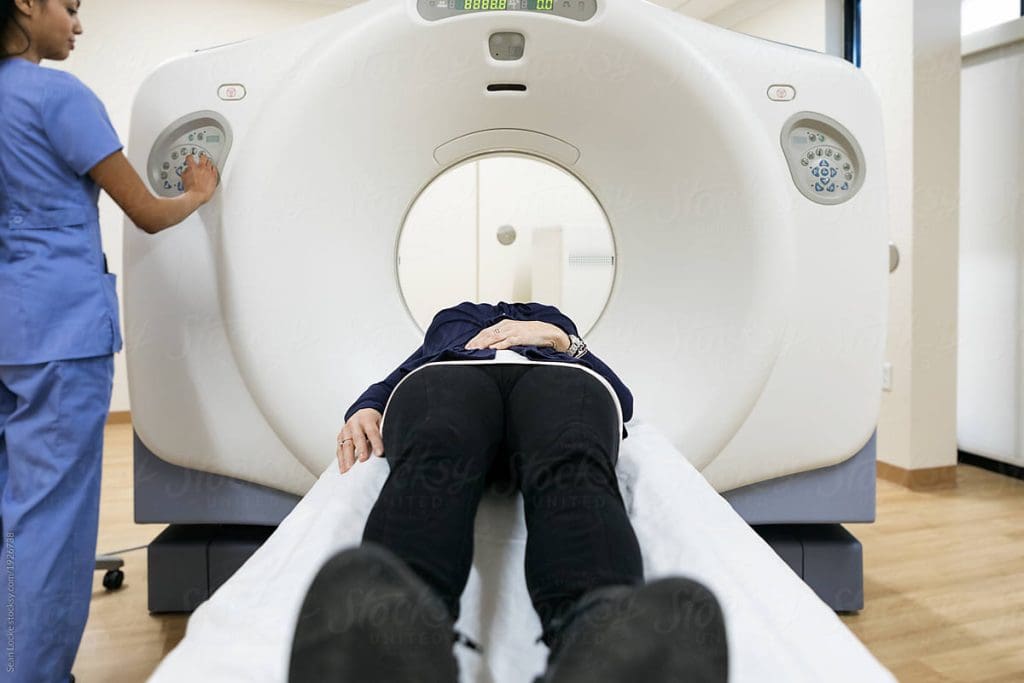
Medical imaging is key in today’s healthcare. It helps doctors diagnose and treat conditions better. Knowing the basics of medical imaging is important for making informed decisions about our health.
Diagnostic imaging is vital in modern medicine. It lets healthcare providers see inside the body. This is important for diagnosing many conditions, from broken bones to complex internal injuries.
Why Diagnostic Imaging Is Essential for Modern Medicine
Diagnostic imaging is key for modern medicine. It helps doctors:
- See inside the body and diagnose conditions accurately
- Guide procedures and surgeries without big cuts
- Check if treatments are working and how diseases are changing
It gives doctors a clear view of the body’s inside. This helps them make better diagnoses and treatment plans.
How Doctors Determine Which Imaging Test Is Right for You
Doctors think about several things when choosing an imaging test. They look at:
- The type of injury or condition
- The patient’s health and medical history
- What each imaging test can do
By looking at these things, doctors pick the best imaging test for each patient. This ensures patients get the best care.
X-ray Technology: The Original Medical Imaging Tool
X-ray technology has been a key tool in medicine for many years. It helps us see inside the body, which is vital for diagnosing health issues. We use X-rays to look at the body’s inner parts, helping us find and understand many medical problems.
How X-rays Create Images of Your Body
X-rays work by sending electromagnetic waves through the body. Different parts of the body absorb these waves at different rates. For example, bones absorb more, while softer tissues let more waves pass through.
This difference in absorption creates contrast. It lets us see the body’s internal structures clearly. This is how X-rays help us see inside the body.
Key Fact #1: X-rays Excel at Visualizing Bones and Some Chest Conditions
X-rays are great for looking at bones. They help doctors spot fractures and some bone problems. They also work well for some chest issues, like pneumonia.
But, X-rays aren’t as good at showing soft tissue injuries. For example, they cannot directly show tendon or ligament damage. That’s why we often use MRI or ultrasound for a full check-up.
Knowing when to use X-rays is important. They’re excellent for bone imaging but have limits. This makes us wonder about the differences between X-rays and CT scans. We’ll dive into that next.
CT Scan Technology: Advanced 3D Imaging
CT scan technology has changed medical imaging by creating detailed 3D images of the body’s inside. It’s a key tool in modern medicine, helping doctors diagnose many health issues.
The Science Behind Computed Tomography
CT scans use X-rays to make cross-sectional images of the body. Unlike regular X-rays, CT scans take images from different angles and make a 3D picture. This helps doctors see complex structures and health problems better.
The technology works by moving an X-ray source and detectors around the patient. The X-ray beam goes through the body, showing how different tissues absorb it. Then, special algorithms turn these readings into detailed images of the body’s inside.
Key Fact #2: CT Scans Create Detailed Cross-Sectional Images
CT scans are great because they make detailed cross-sectional images. These images let doctors see organs, bones, and soft tissues clearly. This helps them make accurate diagnoses and treatment plans.
For example, CT scans are very useful for checking complex injuries and internal damage. They give a quick and complete look at how bad the damage is.
CT scans have many benefits over other imaging methods, including:
- High-resolution images of internal structures
- Ability to detect complex injuries and internal trauma
- Comprehensive evaluation of organs and soft tissues
- Enhanced diagnostic accuracy for a wide range of medical conditions
With detailed 3D images, CT scans help doctors make better decisions about patient care. This leads to better treatment results.
The Xray and CT Scan Difference: 7 Critical Distinctions
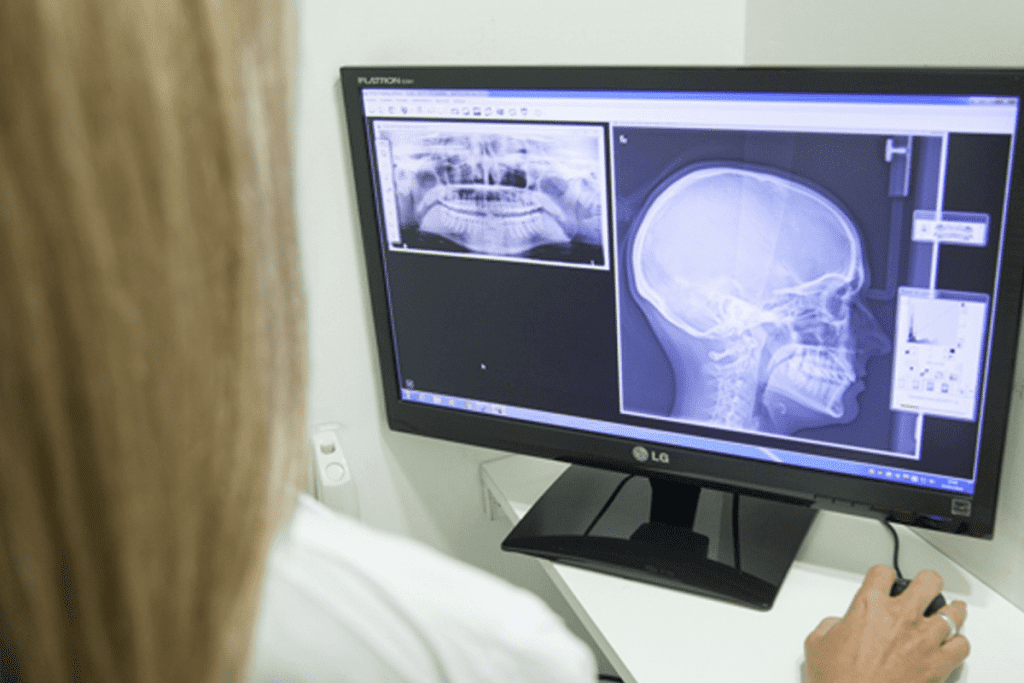
Knowing the differences between X-rays and CT scans is key for accurate diagnoses. These two technologies show the body’s inside in different ways.
2D vs. 3D Imaging Capabilities
X-rays give 2D images, great for checking bone fractures or some chest issues. But, they can’t show the depth needed for complex diagnoses.
CT scans, on the other hand, offer 3D images. This lets doctors see more clearly inside the body. It’s perfect for complex injuries, internal damage, and soft tissue problems.
Significant Differences in Detail and Resolution
X-rays are good for bones and some chest issues but not for soft tissues. They don’t show as much detail as needed.
CT scans, though, give high-resolution images. These are vital for spotting complex conditions. The detailed pictures from CT scans help doctors make more precise diagnoses.
| Feature | X-rays | CT Scans |
| Imaging Dimension | 2D | 3D |
| Detail and Resolution | Limited detail, good for bones and some chest conditions | High resolution, excellent for complex diagnoses and soft tissue evaluation |
It’s vital to understand the differences between X-rays and CT scans. This knowledge helps both doctors and patients make better choices about tests.
Radiation Safety: What Your Doctor Considers
Radiation safety is key when choosing between X-rays and CT scans. Doctors aim to meet diagnostic needs without risking too much radiation.
CT Scans Deliver Higher Radiation Doses Than X-rays
CT scans give out more radiation than X-rays. They take many X-ray images from different angles. This creates detailed pictures of the body.
X-rays are mainly used for specific areas like bones or the chest. But CT scans offer a broader view. This is important for some diagnoses.
For severe injuries or complex conditions, CT scans are very helpful. But they expose patients to more radiation. We must weigh the benefits against the risks.
When the Diagnostic Benefits Outweigh Radiation Risks
Often, the benefits of CT scans are greater than the radiation risks. In emergencies, they can be lifesaving. They help doctors quickly see complex injuries or internal problems.
CT technology has improved, making it safer. New scanners use less radiation to get clear images. Techniques like iterative reconstruction help too.
Choosing between X-rays and CT scans depends on the patient’s needs and the risks. By understanding these, doctors can make safe choices.
When X-rays Are the Right Choice
X-rays are a key tool in medicine, often the first choice for many conditions. They are simple, affordable, and quick, making them perfect for many initial tests.
We suggest X-rays for diagnosing certain conditions because they work well and give important info. Let’s look at when X-rays are most useful.
Simple Fractures and Bone Abnormalities
X-rays are great for finding simple fractures and bone issues. They show bone structures clearly, helping doctors see how bad a fracture is or if there’s osteoporosis. The contrast between bone and soft tissue makes X-rays perfect for bone injuries and conditions.
For example, if someone falls and hurts their wrist, an X-ray is the first step to check for a fracture. X-rays also help track how bones heal over time.
Basic Chest Imaging for Pneumonia and Other Conditions
X-rays are also good for basic chest scans, like for pneumonia. They can spot lung problems like infiltrates or consolidations, signs of infection. Chest X-rays are fast and effective for checking lung health and spotting issues.
If pneumonia is thought, a chest X-ray can confirm it by showing infection patterns. This helps doctors choose the right treatment.
Knowing when to use X-rays helps doctors make better choices for patient care. This ensures patients get the right tests for their needs.
When CT Scans Provide Superior Results
For detailed injuries and conditions, CT scans are the top choice. They give us clear, cross-sectional images. These images help us diagnose and treat complex medical issues.
Complex Injuries and Internal Trauma Assessment
CT scans are great for complex injuries, like those in multiple areas or internal trauma. They quickly give us detailed images of bones, organs, and soft tissues. This is key in emergency situations.
In severe trauma, like from car accidents or falls, CT scans quickly show the extent of injuries. This info is vital for making quick treatment decisions and saving lives.
Organ and Soft Tissue Evaluation
While X-rays are good for bones, CT scans are better for soft tissues and organs. This is very important for diagnosing issues with the liver, spleen, kidneys, and other organs in the abdomen.
CT scans can spot internal bleeding, organ damage, or tumors. The detailed images help us create treatment plans that fit each patient’s needs.
Cancer Detection and Monitoring
CT scans are key in finding and tracking cancer. They help us see tumors, their size, and location. They also check if treatments are working.
The high-resolution images from CT scans let us accurately stage cancer. This is important for choosing the right treatment. CT scans also guide biopsies and other procedures.
Using CT scans, we can make more accurate diagnoses. This helps us create effective treatment plans for complex injuries and conditions.
Can X-rays Detect Tendon or Ligament Damage?
X-rays are a common tool in medical imaging. But, they can’t always spot tendon or ligament damage. They work well for bones and some chest issues. But soft tissue injuries need a different way to be diagnosed.
Key Fact #6: X-rays Cannot Directly Visualize Tendons or Ligaments
Tendons and ligaments are soft tissues that help us move and stay stable. But X-rays can’t see these tissues clearly. The main problem is that X-rays can’t show soft tissues well. This makes it hard to find tendon or ligament damage just with X-rays.
Why Soft Tissue Injuries Require Alternative Imaging
Because X-rays can’t see soft tissues well, we need other ways to check for tendon or ligament damage. MRI and ultrasound are often used for this. They give detailed pictures of soft tissues. This helps doctors diagnose and treat injuries correctly.
| Imaging Modality | Strengths | Limitations |
| X-ray | Excellent for bone visualization, quick, and widely available | Limited soft tissue detail, radiation exposure |
| MRI | High detail for soft tissues, no radiation | Higher cost, longer examination time, claustrophobia issues |
| Ultrasound | Dynamic imaging, no radiation, cost-effective | Operator-dependent, limited deep tissue visualization |
It’s important to know what each imaging method can do. This helps doctors pick the best tool for diagnosing tendon or ligament damage. By choosing wisely, doctors can give patients the right treatment.
Alternatives to MRI for Soft Tissue Imaging
Soft tissue imaging doesn’t always need MRI. Other methods can show tendons, ligaments, and organs well. MRI is great for soft tissues, but it’s not always the best choice for everyone. We’ll look at good alternatives for detailed diagnosis.
Ultrasound: A Valuable Tool for Tendon and Ligament Assessment
Ultrasound is a big help for checking tendons and ligaments. It uses sound waves to show soft tissues in real-time. This is great for looking at tendons and ligaments as they move.
Ultrasound is easy to use and doesn’t use radiation. It’s safe for many patients, including pregnant women. It’s also cheaper than MRI and can be done in many places.
Advanced CT Techniques for Patients Who Cannot Undergo MRI
For those who can’t have MRI, advanced CT scans are a good option. They use high-resolution images and contrast agents. These scans are good for checking injuries and organ damage.
CT scans with special techniques can show soft tissues better. They use radiation, but they’re often needed quickly. This makes them a good choice in emergency situations.
Key Fact #7: Each Imaging Modality Has Specific Strengths and Limitations
It’s important to know what each imaging method can do. The table below shows what MRI, ultrasound, and CT scans can do for soft tissue imaging.
| Imaging Modality | Soft Tissue Contrast | Radiation Exposure | Dynamic Imaging Capability |
| MRI | Excellent | No | Limited |
| Ultrasound | Good | No | Yes |
| CT Scan | Fair to Good (with contrast) | Yes | No |
Healthcare providers can choose the best imaging method for each patient. They consider what’s needed for diagnosis and what’s safe and comfortable for the patient.
Cost and Accessibility: Practical Considerations
Medical imaging costs and accessibility are key in healthcare choices. Patients and doctors must weigh test benefits against their costs and ease of access. This includes looking at the financial and logistical sides of each test.
Insurance Coverage and Out-of-Pocket Expenses
Insurance coverage is a big factor in picking an imaging test. Plans vary in what they cover. For example, X-rays are often covered well for basic checks. But, more detailed tests like CT scans might need extra approval or cost more.
Costs for tests differ a lot. X-rays are cheaper than CT scans, which helps those with tight budgets. Yet, the right test choice should be based on medical need, not just cost.
Availability and Wait Times for Different Imaging Tests
Where and when you can get imaging tests also matters. X-rays are easy to find and often done quickly. But, CT scans might be harder to get and take longer to schedule.
Here’s a quick look at the differences between X-rays and CT scans:
| Imaging Modality | Average Cost | Insurance Coverage | Typical Wait Time |
| X-ray | $100-$300 | Generally well-covered | Same day or 1-2 days |
| CT Scan | $500-$1,500 | May require pre-approval | 2-7 days or longer |
X-rays are cheaper and quicker, but CT scans give more detailed info. Choosing between them depends on your health needs and what’s practical.
X-ray vs. CT Scan vs. MRI: A Detailed Look
Understanding the differences between X-rays, CT scans, and MRI is key to making smart choices about medical tests. We’ll compare these imaging methods, highlighting their strengths and weaknesses. We’ll also look at how they affect patient comfort and how long each test takes.
Diagnostic Capabilities Across Different Body Systems
X-rays are great for seeing bones and finding fractures. CT scans are better at showing detailed images of internal organs and soft tissues. MRI is top-notch for soft tissue, like the brain, spine, and joints.
Choosing the right test depends on what you’re looking for. For bone fractures, an X-ray is often the first choice. But for complex injuries or internal organs, a CT scan is better. For soft tissue issues or tendonitis, MRI is usually the best option.
Patient Comfort and Procedure Duration
Comfort and how long a test takes are also important. X-rays are quick and easy, with little prep and no need to stay in a closed machine. CT scans are fast too, but they use radiation and might need contrast agents.
MRI tests are very informative but can be tough for patients. They need to stay very quiet and calm in a small space for a long time. But, new MRI designs are making these tests more comfortable for patients.
When Each Modality Is the Preferred Choice
The right imaging test depends on many things, like what you’re checking for, the patient’s health, and personal preferences. Here’s when each is usually best:
- X-ray: Great for bone issues, lung problems, and first checks.
- CT Scan: Best for complex injuries, internal damage, and detailed organ views.
- MRI: Ideal for soft tissue injuries, brain and spine issues, and joint problems.
Conclusion: Partnering With Your Doctor for Optimal Imaging Decisions
Understanding the differences between X-rays and CT scans is key. Working closely with your doctor is essential for the best imaging choices. This way, patients and doctors can pick the right tests together.
This teamwork helps doctors give focused care. They use the best imaging tools for each case. Whether it’s an X-ray for bones or a CT scan for complex injuries, the right choice leads to better health.
We urge patients to talk openly with their doctors. Ask about your imaging needs and treatment plans. This way, you can be more involved in your care and make choices that improve your health.
FAQ
Can X-rays detect tendon or ligament damage?
X-rays can’t see tendons or ligaments directly. They’re great for bones but not for soft tissues. Ultrasound or MRI is needed for these injuries.
What’s the difference between an X-ray and a CT scan?
X-rays give 2D images, perfect for bones. CT scans make detailed 3D images, showing more of what’s inside.
Can an X-ray show tendon damage?
No, X-rays can’t show tendons. They might show signs like bone spurs but aren’t the best for tendon damage.
Do X-rays show ligament damage?
No, X-rays can’t see ligament damage. MRI or ultrasound is used for this.
Is there an alternative to an MRI scan?
Yes, ultrasound and advanced CT scans are alternatives. Each has its own strengths and weaknesses, depending on the injury.
What’s the difference between a CT scan and an X-ray in terms of radiation exposure?
CT scans use more radiation than X-rays. But, the benefits often outweigh the risks. Doctors try to keep radiation low.
Can X-rays detect torn ligaments?
No, X-rays aren’t used for torn ligaments. MRI or ultrasound is better for this.
Are CT scans better than X-rays for diagnosing complex injuries?
Yes, CT scans are better for complex injuries. They give detailed 3D images, helping doctors evaluate better.
How do doctors choose between X-rays, CT scans, and MRI?
Doctors pick based on the injury, patient health, and each test’s strengths. They choose the best imaging for each case.
References
- American College of Radiology (ACR). (2022). ACR Appropriateness Criteria ® on Adult Skeletal Trauma. Journal of the American College of Radiology, 19(5S), S136-S146. https://pubmed.ncbi.nlm.nih.gov/33429245/