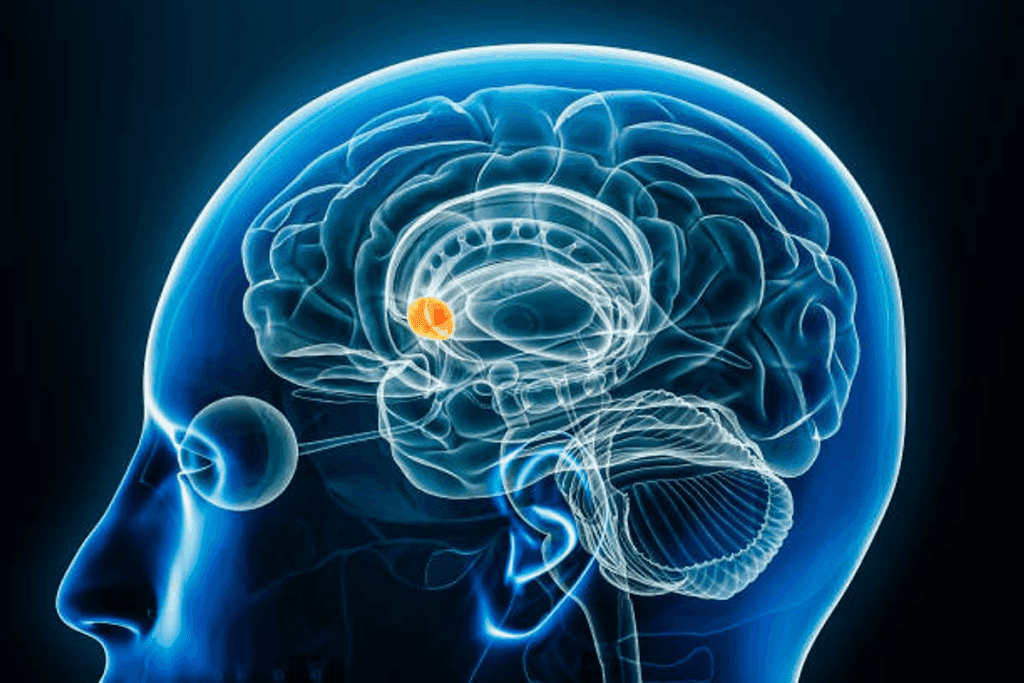
The human nervous system is a complex network. It relies on vital nerve pathways. The 12 cranial nerves are key in controlling many bodily functions. These include sensory perception and motor control.
These nerves come directly from the brain and brainstem. They help with important functions like vision, taste, and facial movement. Knowing the names, numbers, and functions of these nerves is key for diagnosing and treating neurological disorders.
We will dive into the unique role of each cranial nerve. This guide is for healthcare professionals and anyone wanting to understand the systems that control their senses and movements.
Key Takeaways
- The human nervous system relies on 12 pairs of cranial nerves.
- Cranial nerves control various bodily functions, including sensory perception and motor control.
- Understanding cranial nerves is vital for diagnosing and treating neurological disorders.
- The cranial nerves emerge directly from the brain and brainstem.
- Knowledge of cranial nerve functions is essential for healthcare professionals.
The 12 Cranial Nerves: Fundamental Components of the Nervous System
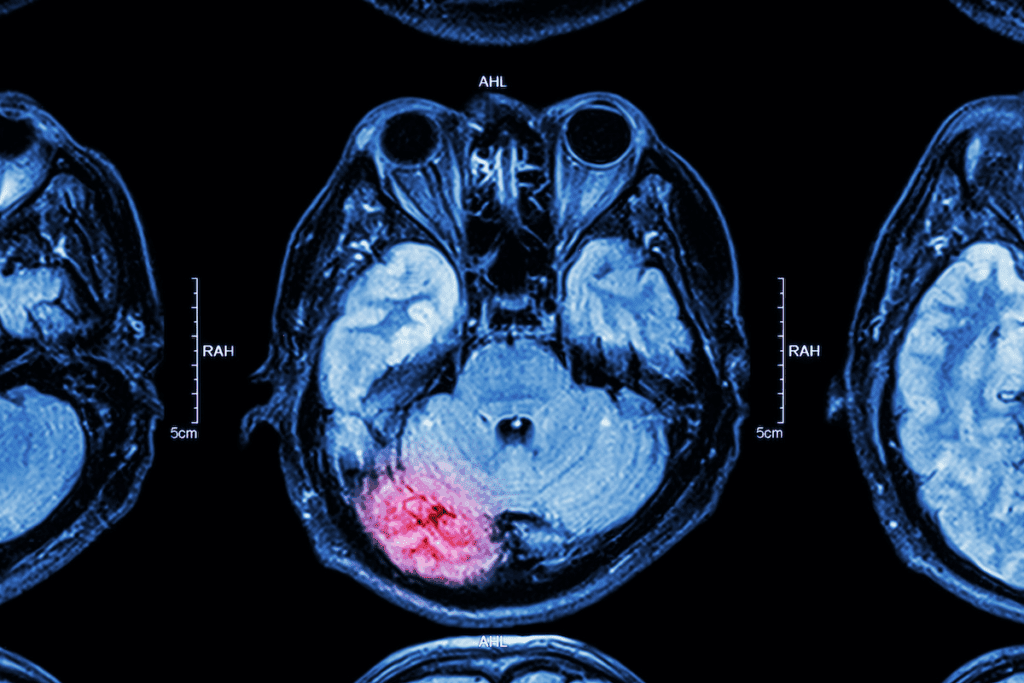
The 12 cranial nerves start from the brain and brainstem. They control many body functions, like how we feel and move.
Origin and Anatomical Significance
The 12 cranial nerves start from different parts of the brain. The first two, the olfactory and optic nerves, come from the cerebrum. The other ten come from the brainstem.
This shows how complex the nerves’ connections are. Knowing where they start helps us understand their role in our body.
General Functions and Importance
The cranial nerves are key for many body functions. They help us sense our surroundings through smell, sight, hearing, and taste.
Damage to these nerves can cause big problems. For example, damage to the optic nerve can make us lose our sight. Damage to the facial nerve can make our face not move right.
“The cranial nerves are a vital part of the nervous system, and their dysfunction can have significant clinical implications.”
Medical Expert, Neurologist
The table below shows what each cranial nerve does:
Cranial Nerve | Function |
Olfactory (CN I) | Smell |
Optic (CN II) | Vision |
Oculomotor (CN III) | Eye movement |
Trochlear (CN IV) | Eye movement |
Trigeminal (CN V) | Sensory and motor functions |
In conclusion, the 12 cranial nerves are very important for our body’s functions. Knowing where they start and what they do helps us see their value in the nervous system.
Anatomical Order and Numbering System of Cranial Nerves

The 12 cranial nerves are numbered from top to bottom. This shows their importance in the nervous system. It helps us understand their roles.
Rostral to Caudal Organization
The nerves are listed from top to bottom. This order is key because it shows where they leave the brain. Nerves at the top handle complex tasks, while those at the bottom deal with basic needs.
This order makes it easier to learn about the nerves. It helps us see how each nerve works. We start with the olfactory nerve (CN I) and end with the hypoglossal nerve (CN XII).
Roman Numeral Designation System
The nerves are named with Roman numerals. This method is clear and widely used. For example, the olfactory nerve is CN I, and the hypoglossal nerve is CN XII.
This system makes it easy to talk about the nerves. It’s useful for doctors and students. It helps us identify and discuss the nerves accurately.
Classification of Cranial Nerves by Function
Understanding how cranial nerves work is key for diagnosing neurological issues. The 12 cranial nerves fall into three main groups. These are based on their functions: purely sensory, purely motor, and mixed nerves.
Purely Sensory Cranial Nerves
Purely sensory cranial nerves send sensory information. There are three nerves that only have sensory fibers.
- Cranial Nerve I (Olfactory Nerve): responsible for the sense of smell.
- Cranial Nerve II (Optic Nerve): involved in visual transmission.
- Cranial Nerve VIII (Vestibulocochlear Nerve): related to hearing and balance.
Purely Motor Cranial Nerves
Purely motor cranial nerves control movement. The nerves that only have motor functions are:
- Cranial Nerve III (Oculomotor Nerve)
- Cranial Nerve IV (Trochlear Nerve)
- Cranial Nerve VI (Abducens Nerve)
- Cranial Nerve XI (Accessory Nerve)
- Cranial Nerve XII (Hypoglossal Nerve)
Mixed Cranial Nerves
Mixed cranial nerves have both sensory and motor fibers. They perform a variety of tasks. Examples include:
- Cranial Nerve V (Trigeminal Nerve): involved in facial sensation and motor functions like chewing.
- Cranial Nerve VII (Facial Nerve): controls facial expressions and carries taste sensations.
- Cranial Nerve IX (Glossopharyngeal Nerve): involved in swallowing and taste.
- Cranial Nerve X (Vagus Nerve): has a wide range of functions including visceral innervation.
The table below summarizes how cranial nerves are classified by function:
Functional Category | Cranial Nerves | Primary Functions |
Purely Sensory | I, II, VIII | Smell, Vision, Hearing & Balance |
Purely Motor | III, IV, VI, XI, XII | Eye Movement, Neck Movement, Tongue Movement |
Mixed | V, VII, IX, X | Facial Sensation, Facial Expression, Swallowing, Visceral Functions |
Cranial Nerves I & II: Special Sensory Functions
Our world starts with Cranial Nerves I and II. They send special sensory info that we need every day.
Olfactory Nerve (CN I): The Sense of Smell
The olfactory nerve, or CN I, handles our sense of smell. It sends special visceral afferent (SVA) info from our nose to our brain. This lets us smell many different scents.
Smelling works when odor molecules meet receptors in our nose. These signals then travel through the olfactory nerve to our brain for understanding.
Optic Nerve (CN II): Visual Pathway
The optic nerve, or CN II, is key for our sight. It carries special somatic afferent (SSA) visual info from our retina to our brain. There, it turns into the images we see.
The optic nerve’s job is complex. It sends info on color, light, and movement to our brain. Our brain then makes sense of it all.
Cranial Nerve | Function | Type of Information |
CN I (Olfactory) | Sense of Smell | Special Visceral Afferent (SVA) |
CN II (Optic) | Vision | Special Somatic Afferent (SSA) |
Knowing about CN I and CN II is key to understanding our senses. These nerves are fundamental to how we see and smell the world.
Both nerves only have sensory fibers. This shows how important they are for our senses. Learning about these nerves helps us see their role in our daily life.
Cranial Nerves III, IV & VI: Ocular Motor Control
Cranial nerves III, IV, and VI are key to how we see the world. They help us move our eyes and control pupil size. This makes it easy for us to look around.
Oculomotor Nerve (CN III): Primary Eye Movement
The oculomotor nerve, or CN III, controls most eye movements. It helps rotate the eyeball and constrict the pupil. It also keeps the eyelid open.
Key Functions of CN III:
- Controls most extraocular muscles
- Regulates pupil constriction
- Maintains eyelid elevation
Trochlear Nerve (CN IV): Superior Oblique Control
The trochlear nerve, or CN IV, is the thinnest cranial nerve. It controls the superior oblique muscle. This muscle helps us look down.
Key Functions of CN IV:
- Innervates the superior oblique muscle
- Controls downward and inward rotation of the eyeball
Abducens Nerve (CN VI): Lateral Rectus Control
The abducens nerve, or CN VI, controls the lateral rectus muscle. This muscle moves the eyeball outward.
Key Functions of CN VI:
- Innervates the lateral rectus muscle
- Controls outward movement of the eyeball
Cranial Nerve | Primary Function | Muscle(s) Innervated |
CN III (Oculomotor) | Primary eye movement, pupil constriction, eyelid elevation | Medial rectus, superior rectus, inferior rectus, inferior oblique |
CN IV (Trochlear) | Superior oblique control, downward and inward rotation | Superior oblique |
CN VI (Abducens) | Lateral rectus control, outward movement | Lateral rectus |
Cranial Nerve V: The Trigeminal Nerve Complex
Cranial Nerve V, or the trigeminal nerve, is a complex nerve. It gives sensation to the face and controls some motor functions. It’s the largest cranial nerve and is key to our daily life, from eating to feeling our surroundings.
Ophthalmic Division (V1): Sensory to Upper Face
The ophthalmic division is the first branch of the trigeminal nerve. It’s responsible for the upper face’s sensory innervation. This includes the eye and areas around it. It gives sensation to the forehead, upper eyelid, and nose.
Maxillary Division (V2): Sensory to Midface
The maxillary division is the second branch. It provides sensory innervation to the midface region. It covers the lower eyelid, cheek, and upper lip. It also covers the nasal cavity and palate.
Mandibular Division (V3): Motor and Sensory Functions
The mandibular division is the third and largest branch. It has both motor and sensory functions. It gives sensation to the lower lip, lower face, and the tongue’s front two-thirds. Its motor part controls the muscles of mastication (chewing).
The trigeminal nerve’s complex structure and functions are vital to our nervous system. Knowing its divisions and roles helps in diagnosing and treating related disorders.
Division | Sensory Function | Motor Function |
Ophthalmic (V1) | Sensation to upper face | No motor function |
Maxillary (V2) | Sensation to midface | No motor function |
Mandibular (V3) | Sensation to lower face and tongue | Innervates muscles of mastication |
Cranial Nerves VII & VIII: Facial Expression and Special Senses
Cranial nerves VII and VIII help us show emotions and see the world. They control our facial expressions and help us taste, hear, and balance.
Facial Nerve (CN VII): Facial Muscles and Taste
The facial nerve is complex, with fibers for movement, autonomic functions, and some touch. It makes our faces move to show feelings. It also helps us taste food from the front part of our tongue.
Functions of the Facial Nerve:
- Motor control of facial muscles
- Taste sensation from the anterior two-thirds of the tongue
- Autonomic innervation to salivary and tear glands
Vestibulocochlear Nerve (CN VIII): Hearing and Balance
The vestibulocochlear nerve sends special info about sound and balance. It has two parts: the cochlear nerve for hearing and the vestibular nerve for balance.
Functions of the Vestibulocochlear Nerve:
Component | Function |
Cochlear Nerve | Hearing |
Vestibular Nerve | Balance and Spatial Orientation |
Medical experts say,
“The vestibulocochlear nerve is critical for our ability to maintain balance and hear sounds around us.”
Cranial Nerves IX & X: Pharyngeal and Visceral Functions
The glossopharyngeal nerve (CN IX) and vagus nerve (CN X) are key for many body functions. They help us swallow, breathe, and keep our body balanced.
Glossopharyngeal Nerve (CN IX): Throat and Taste
The glossopharyngeal nerve helps the stylopharyngeus muscle work during swallowing. It also sends signals from the posterior one-third of the tongue to help us taste.
It also controls the parotid gland through parasympathetic fibers, affecting saliva. This nerve is vital for swallowing and taste.
Vagus Nerve (CN X): The Wandering Nerve
The vagus nerve is called the “wandering nerve” because it goes all over the body. It sends parasympathetic fibers to the heart, stomach, and intestines. It affects heart rate, digestion, and breathing.
CN X also controls the laryngeal and pharyngeal muscles, except for the stylopharyngeus. This nerve is key for swallowing, speaking, and controlling organs.
Knowing how the glossopharyngeal and vagus nerves work shows their big role in health. Problems with these nerves can cause serious issues, making them important to study in medicine.
Cranial Nerves XI & XII: Motor Control of Neck and Tongue
The last two cranial nerves are key for neck and tongue movements. The accessory nerve (CN XI) and the hypoglossal nerve (CN XII) are important for motor control in our bodies.
Accessory Nerve: Neck Movement
The accessory nerve, or CN XI, helps control the sternocleidomastoid and trapezius muscles. These muscles are vital for moving the neck and keeping the shoulders stable.
Hypoglossal Nerve: Tongue Movement
The hypoglossal nerve, or CN XII, controls the tongue’s muscles. It’s key for tongue movements like sticking out, pulling back, and changing shape. These actions are important for speaking and swallowing.
Knowing how CN XI and CN XII work is important for diagnosing and treating neck and tongue issues. Problems with these nerves can make everyday tasks hard.
Clinical Assessment and Disorders of the 12 Cranial Nerves
Checking cranial nerves is key in finding neurological disorders. It’s important to look at each nerve closely. This helps spot many nervous system problems.
Systematic Cranial Nerve Examination
Checking each cranial nerve is a must for a full check-up. We look for any issues or problems. We test senses like smell, taste, and how well the body moves.
For example, checking the smell nerve (CN I) is important. It helps find problems early, like in Alzheimer’s or Parkinson’s.
Cranial Nerve | Function | Clinical Test |
CN I (Olfactory) | Sense of Smell | Identifying different odors |
CN II (Optic) | Vision | Visual acuity and field testing |
CN III, IV, VI (Oculomotor, Trochlear, Abducens) | Eye Movement | Assessing eye movements and pupil reactions |
Common Pathologies and Syndromes
Damage to cranial nerves can cause many problems. For example, a third nerve issue can make the eyelid droop and cause double vision. Knowing these issues helps doctors treat them right.
“The diagnosis of cranial nerve disorders requires a thorough understanding of neuroanatomy and the clinical presentation of various neurological conditions.”
— StatPearls
Some common issues include:
- Trigeminal neuralgia (CN V): Severe facial pain.
- Facial palsy (CN VII): Weakness or paralysis of facial muscles.
- Vestibular disorders (CN VIII): Affect balance and equilibrium.
Understanding cranial nerve disorders helps doctors give the right treatment. This way, patients get the care they need for their nervous system problems.
Conclusion: Integrating Our Understanding of Cranial Nerves
We’ve looked into the complex world of the 12 cranial nerves. We’ve learned their names, numbers, and what they do. Knowing the cranial nerves list helps us see how they control our body’s functions.
These nerves work together to help us interact with our surroundings. They are key to our ability to perform important bodily functions. This is shown by the work of healthcare services like Metropolis Healthcare.
Knowing about the cranial nerves is vital for diagnosing and treating neurological issues. By understanding the cranial nerves list, we can better grasp how our nervous system works. This helps improve care for patients.
FAQ
What are the 12 cranial nerves and their functions?
The 12 cranial nerves control many bodily functions. They help us sense things and move our bodies. They are key for smelling, seeing, moving our eyes, feeling on our face, hearing, and balancing. They also help us swallow and control our internal organs.
Which cranial nerves are purely sensory?
The olfactory nerve (CN I) and the optic nerve (CN II) deal with smell and vision. The vestibulocochlear nerve (CN VIII) is for hearing and balance.
What is the anatomical order of the cranial nerves?
The cranial nerves are listed from front to back with Roman numerals. This makes it easier to remember and understand them.
What are the functions of the trigeminal nerve complex?
The trigeminal nerve controls facial sensations and movements. Its three parts cover the face and jaw muscles.
How do cranial nerves III, IV, and VI control eye movements?
The oculomotor, trochlear, and abducens nerves work together. They control eye movements by innervating specific muscles.
What is the role of the vagus nerve in visceral functions?
The vagus nerve (CN X) controls vital functions. It affects heart rate, digestion, and breathing.
How are cranial nerve disorders diagnosed and treated?
Diagnosing and treating nerve disorders requires a detailed examination. Knowing how the nerves work is key to understanding their role in our bodies.
What are the clinical implications of cranial nerve dysfunction?
Problems with cranial nerves can cause many issues. This includes eye problems, facial weakness, hearing loss, and trouble swallowing.
How many cranial nerves are there and what are their names?
There are 12 cranial nerves. Their names are: Olfactory (CN I), Optic (CN II), Oculomotor (CN III), Trochlear (CN IV), Trigeminal (CN V), Abducens (CN VI), Facial (CN VII), Vestibulocochlear (CN VIII), Glossopharyngeal (CN IX), Vagus (CN X), Accessory (CN XI), and Hypoglossal (CN XII).
What is the significance of understanding cranial nerves in neurological diagnosis?
Knowing about cranial nerves is vital for diagnosing and treating nerve problems. It helps doctors find the source of symptoms and treat them effectively.
References
National Center for Biotechnology Information. Cranial Nerves: Names, Numbers, and Functions. Retrieved from https://pmc.ncbi.nlm.nih.gov/articles/PMC11523702/