
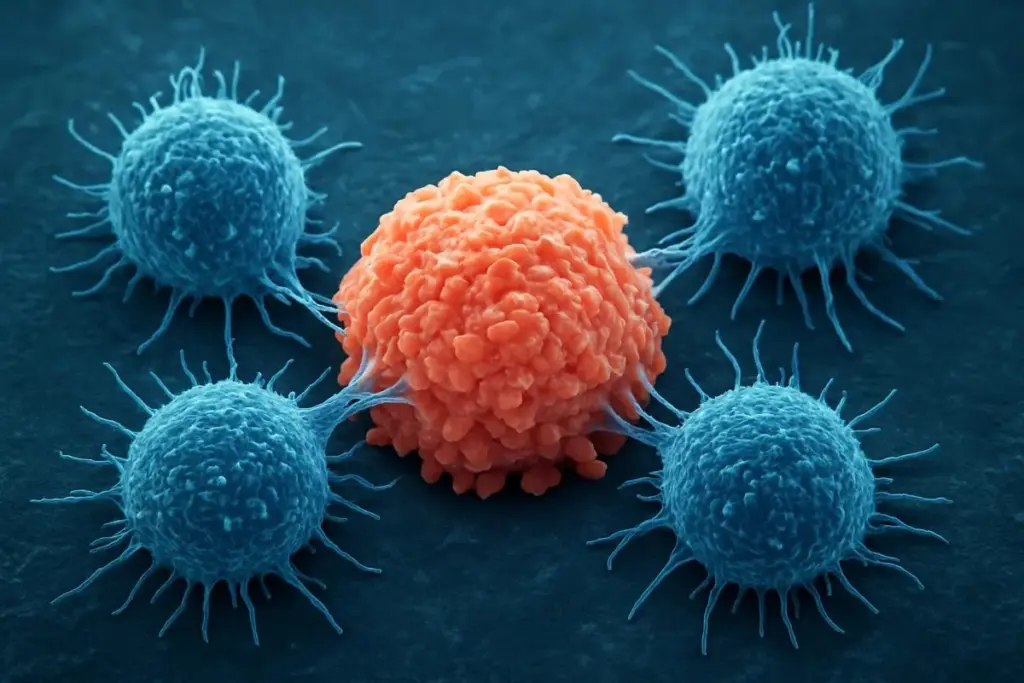
Understanding modern immunology can be tough. Natural killer cells are our primary shield against early infections. They directly attack harmful elements with strong molecules.
Checking the status of biological triggers helps us see how well your immune system fights disease. At Liv Hospital, we use these signs to offer precise advanced care for each patient.
Our experts look for unique protein expressions on these defenders to guide your healing.
We stay ahead in research to give you top-notch support. By watching the state of innate fighters, we tailor treatments to your needs.
This approach makes sure everyone gets the latest scientific advances.
Key Takeaways
- Innate defenders provide the body’s first response against tumors.
- Surface proteins help doctors track how well treatments work.
- Monitoring these signals is essential for effective healing.
- Specialized lymphocytes kill harmful targets without needing prior exposure.
- Liv Hospital uses the latest science to improve patient results.
- Understanding these biological signs leads to more personalized care.
Understanding NK Cell Biology and Activation
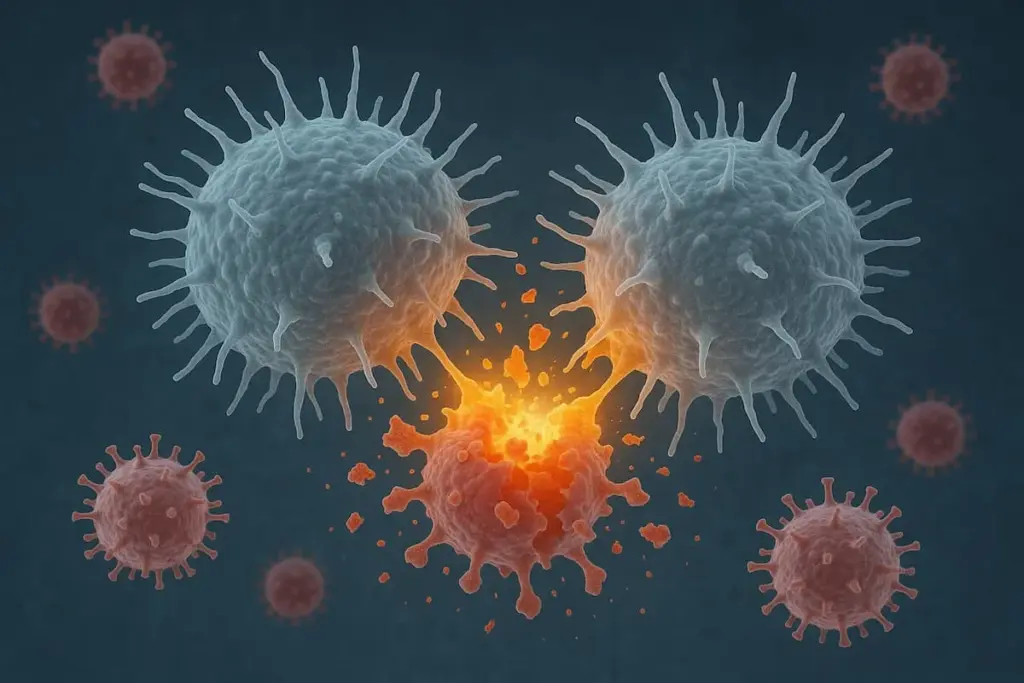
It’s key to know how NK cells grow and get ready to fight. They start from a special cell in the bone marrow. This cell comes from a group of stem cells called CD34+ hematopoietic stem cells (HSCs). The journey to become an NK cell is complex and has many steps.
While we don’t know all about how cNK cells develop, we’ve found some NK cell markers. These markers help us understand NK cells and their role in keeping us healthy.
NK cells go through changes as they grow. Some markers show when they move from one stage to another. Knowing these markers helps us learn more about NK cells and how they can fight cancer.
NK cell growth is made up of several important stages. Each stage has its own markers. Here’s a table that shows some of these markers:
| Marker | Stage/Function | Description |
| CD34 | HSCs | Marker for hematopoietic stem cells |
| CD69 | Early Activation | Universal early activation marker |
| CD25 | IL-2 Receptor Alpha Chain | Involved in NK cell activation and proliferation |
By learning about NK cells and their markers, we can see their importance in our immune system. This knowledge also helps us understand how they can be used in treatments.
The 5 Essential NK Cell Activation Markers

Knowing the right NK cell activation markers is key to understanding their role in the immune system. NK cells are vital for our immune health. Their activation status tells us a lot about how they function.
We will look at five important markers for NK cell activation. These markers give us valuable insights into NK cell function and status.
1. CD69: Universal Early Activation Marker
CD69 is an early sign of NK cell activation. It shows up quickly when NK cells are stimulated. CD69 is important for seeing the start of NK cell activation.
2. CD25: IL-2 Receptor Alpha Chain
CD25, or IL-2Rα, is key for NK cell activation. It helps with IL-2 signaling, which is vital for NK cell growth and survival. CD25 shows NK cells can respond to IL-2, a cytokine important for their development and function.
3. Sca-1: Viral Infection Response Marker
Sca-1 is a marker for NK cell activation in mice during viral infections. It’s important for studying NK cell responses in mouse models. Understanding Sca-1 helps us see how NK cells react to viruses.
In mice, Sca-1 helps identify activated NK cells. Sca-1 is linked to better NK cell function during viral infections. It’s useful for studying the immune response to viruses in mice.
4. NKG2C and CD57: Adaptive NK Cell Markers
NKG2C and CD57 mark adaptive or memory NK cells. NKG2C recognizes viral proteins, often seen in CMV infections. CD57 is on mature and activated NK cells. NKG2C and CD57 show NK cells that have adapted, helping us understand their role in long-term immunity.
Applications in Cancer Immunotherapy and Immune Monitoring
NK cell activation markers are key in understanding how our immune system fights cancer. They help in making cancer treatments more effective.
NK cells are vital in cancer treatment. They kill tumor cells and help the immune system work better. By watching these markers, doctors can see how well treatments are working.
Key Applications of NK Cell Activation Markers:
- Assessing the efficacy of cancer immunotherapy treatments
- Monitoring patient responses to different treatments
- Understanding the immune response against various types of cancer
- Developing personalized cancer treatment plans based on NK cell activation profiles
NK cells do more than just kill cancer cells. They also make substances that boost the immune system. Watching these markers helps doctors improve cancer treatments.
| NK Cell Activation Marker | Role in Cancer Immunotherapy |
| CD69 | Early activation marker indicating NK cell response to tumor cells |
| CD25 | IL-2 receptor alpha chain, important for NK cell growth and action |
| NKG2C and CD57 | Markers linked to adaptive NK cell responses, key for lasting cancer immunity |
By tracking these markers, doctors can better understand how the immune system fights cancer. This leads to more tailored and effective treatments.
Conclusion
Understanding NK cell activation markers is key for moving forward in NK cell research. It helps in creating new treatments. The study of these markers has greatly improved our understanding of their role in fighting diseases and cancer.
We talked about the 5 main NK cell activation markers. These are CD69, CD25, Sca-1, NKG2C, and CD57. They are important for identifying and studying different types of NK cells. These markers help us see how active NK cells are and their role in diseases.
The use of NK cell activation markers in cancer treatment and monitoring is showing great promise. By finding specific markers, researchers can make treatments that better fight cancer. This leads to better results in cancer treatment.
More research on NK cell markers will help improve cancer treatment and our understanding of NK cells. As we learn more about how NK cells work, we can make better treatments. This will help us fight cancer more effectively.
FAQ
What are NK cell markers and why are they significant in modern medicine?
NK cell markers are proteins on the surface of Natural Killer cells. They help us understand how these cells fight off threats. By studying these markers, we can see if the cells are ready to attack or not.
Which n, k cell activation markers are considered the most essential for clinical monitoring?
We focus on a few key markers in our work. CD69 shows early activation of NK cells. CD25 is important for IL-2 signaling. NKG2C and CD57 help us spot specialized NK cells for long-term memory.
How do mouse nk cell markers assist in the development of human immunotherapies?
Mouse NK cell markers are key in early drug testing. Studying them helps us see how immune cells react to stress. This data helps companies like Thermo Fisher and BD Biosciences make better treatments for human cancer.
What is the specific role of the k1.1 marker in laboratory research?
The k1.1 marker helps us find and study Natural Killer cells in mice. It’s not in all mice, but it’s essential for tracking NK cell activity. This helps us make sure our findings can be used in humans.
How does tracking k cell activation improve outcomes in cancer immunotherapy?
Watching how NK cells activate helps us see if treatments are working. Markers like CD69 and CD25 show us how well the immune system is fighting cancer. This helps us make treatments better.
What can the presence of CD57 tell us about a patient’s immune status?
CD57 on NK cells means they are mature and ready to fight. Seeing it with other markers shows we have cells that can handle repeated threats. This gives us a better idea of a patient’s immune health over time.
References
Nature. Evidence-Based Medical Insight. Retrieved from https://www.nature.com/articles/ni1582



 Departments
 Related Videos
 Our Doctors
 News
News